
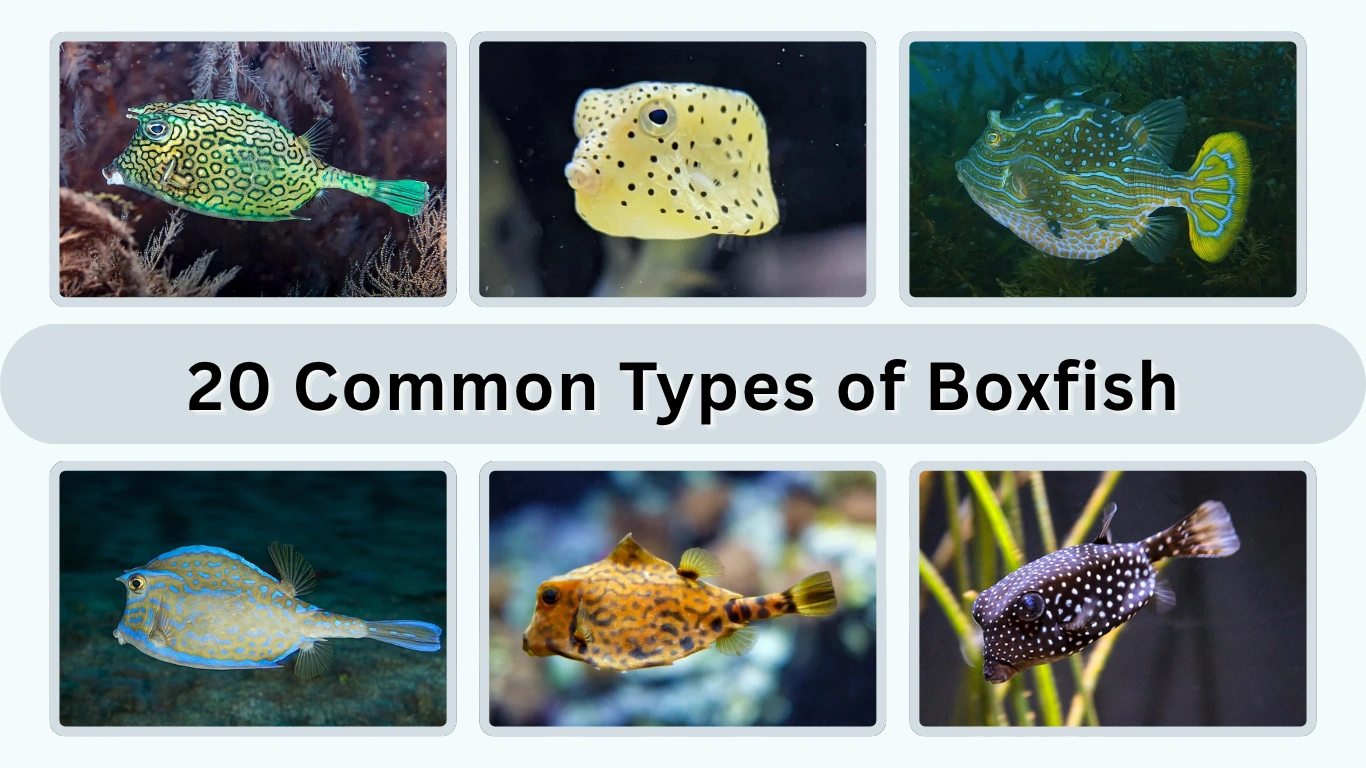
Boxfish are some of the most unusual and fascinating fish found in tropical oceans around the world. Known for their rigid box-shaped bodies and slow swimming movements, these marine fish are easily recognized among coral reef species. Many boxfish display bright colors, decorative spots, and unique horn-like projections that make them visually striking. They inhabit coral reefs, lagoons, and shallow coastal waters where they feed on small marine organisms. This guide explores 20 common types of boxfish, including their identification, habitat, diet, behavior, lifespan, and interesting facts about each remarkable species found in marine environments.
1. Longhorn Cowfish
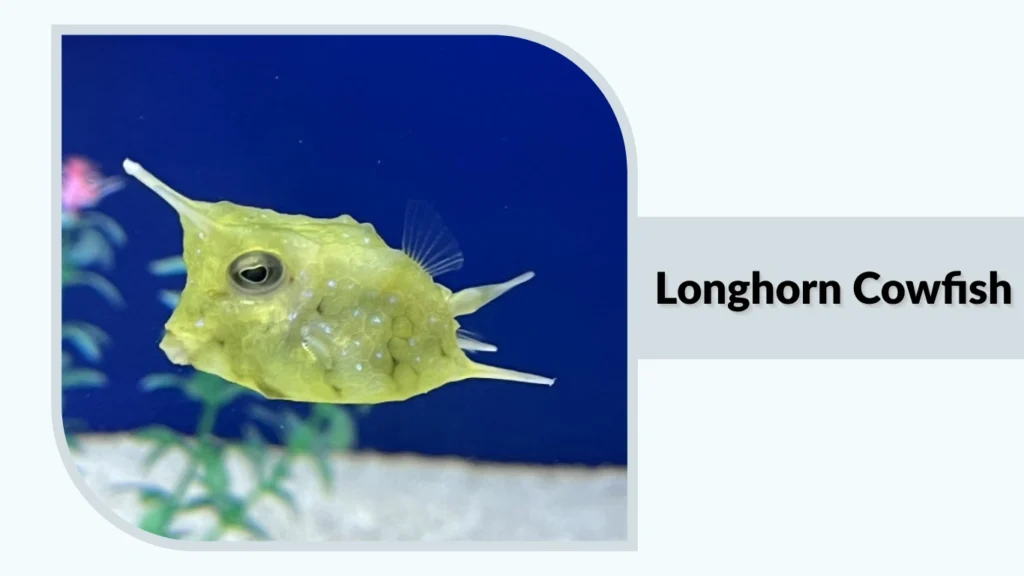
The Longhorn Cowfish is one of the most recognizable boxfish species because of the long horn-like projections extending from its head. Found in tropical Indo-Pacific waters, this unusual fish is admired for its box-shaped body, bright coloration, and slow swimming style. It commonly inhabits coral reefs and lagoons where it searches for small marine organisms. Its unique appearance and peaceful behavior make it popular among divers and marine aquarium enthusiasts.
Identification
- Scientific name: Lactoria cornuta
- Long horn-like projections on the head
- Box-shaped body structure
- Yellow or tan body coloration
- Small fins with slow movement
- Releases toxins when stressed
Habitat
Longhorn Cowfish inhabit tropical coral reefs, lagoons, seagrass beds, and shallow coastal waters throughout the Indo-Pacific region. They prefer calm marine environments with sandy bottoms and coral formations that provide shelter and feeding opportunities. These fish often remain near reef structures where they can safely hide from predators and explore surrounding habitats for food.
Diet
This species mainly feeds on small crustaceans, worms, mollusks, algae, and tiny marine invertebrates found around reefs and sandy ocean floors. Its small mouth allows it to carefully pick food from rocks and sediment. In captivity, Longhorn Cowfish require a varied diet with both protein-rich foods and plant material for proper nutrition.
Behavior
Longhorn Cowfish are generally peaceful and slow-moving fish that spend much of their time exploring reef habitats. They rely on camouflage and toxic secretions rather than speed for protection. When stressed or threatened, they may release toxins into the surrounding water. Their curious swimming movements and unusual appearance make them popular among marine life observers.
Lifespan
In healthy marine environments, Longhorn Cowfish can live for several years under stable conditions. In aquariums, their lifespan depends on excellent water quality, balanced nutrition, and stress-free habitats. Providing spacious tanks, calm surroundings, and suitable marine conditions helps support healthy growth and natural behaviors throughout their development stages and adult life.
Interesting Facts
The Longhorn Cowfish belongs to the boxfish family and is closely related to trunkfish species. Its horn-like projections help discourage predators from swallowing it. Unlike fast-swimming reef fish, it moves slowly using small fin movements for control. When extremely stressed, it can release toxins that may affect nearby fish in enclosed environments.
2. Yellow Boxfish
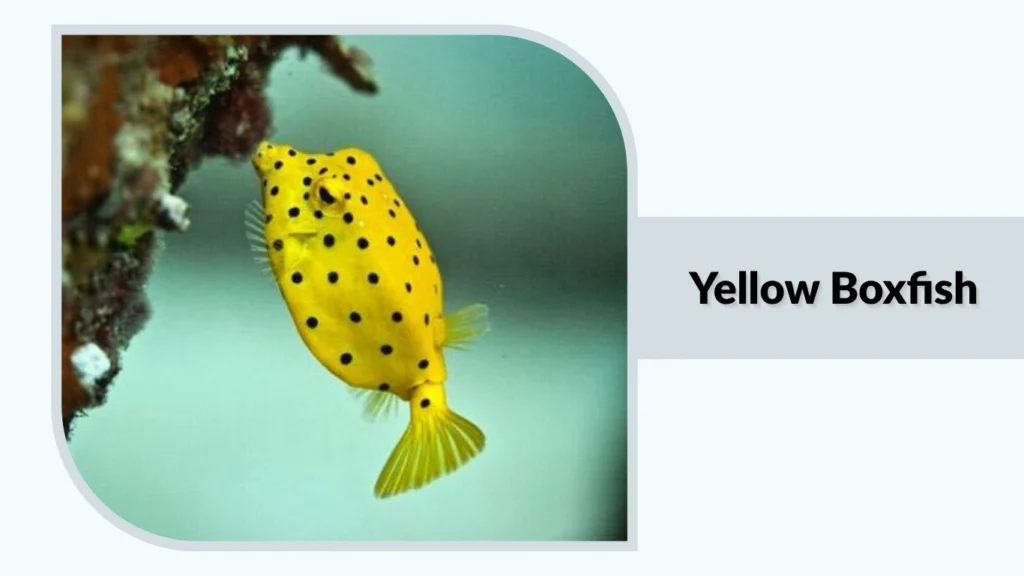
The Yellow Boxfish is a brightly colored marine fish famous for its cube-shaped body and vibrant yellow appearance. Juveniles are especially striking with black spots covering their bodies, while adults develop more complex patterns as they mature. Native to Indo-Pacific coral reefs, this species is popular among divers and aquarium enthusiasts because of its unusual shape and attractive coloration.
Identification
- Scientific name: Ostracion cubicus
- Bright yellow body coloration
- Black spots across the body
- Cube-shaped body structure
- Small fins with slow movement
- Releases toxins when stressed
Habitat
Yellow Boxfish inhabit tropical coral reefs, lagoons, and shallow coastal waters throughout the Indo-Pacific region. They prefer reef environments with coral formations, rocky shelters, and sandy bottoms where they can safely search for food. Juveniles usually remain hidden among corals, while adults explore larger reef areas and nearby marine habitats.
Diet
This species mainly feeds on algae, sponges, worms, small crustaceans, and marine invertebrates found around coral reefs. Its small mouth allows it to carefully pick food from reef surfaces and sandy areas. In captivity, Yellow Boxfish require a varied diet containing both plant material and protein-rich foods for healthy growth and nutrition.
Behavior
Yellow Boxfish are generally peaceful and slow-moving fish that spend much of their time exploring reef habitats. They use gentle fin movements to control their swimming instead of rapid tail motion. When stressed or threatened, they may release toxins into the water for defense. Their curious nature makes them interesting to observe underwater.
Lifespan
In healthy marine environments, Yellow Boxfish can live for several years under stable conditions. In aquariums, proper water quality, balanced nutrition, and stress-free surroundings are essential for long-term survival. Their lifespan depends heavily on maintaining suitable marine conditions, spacious habitats, and reducing environmental stress throughout different stages of development.
Interesting Facts
Juvenile Yellow Boxfish look very different from adults because their body patterns change significantly with age. Their cube-shaped body helps distinguish them from most reef fish species. Like other boxfish, they can release toxins when highly stressed. Their bright yellow coloration and unusual appearance make them popular in marine aquariums worldwide.
3. Spotted Boxfish
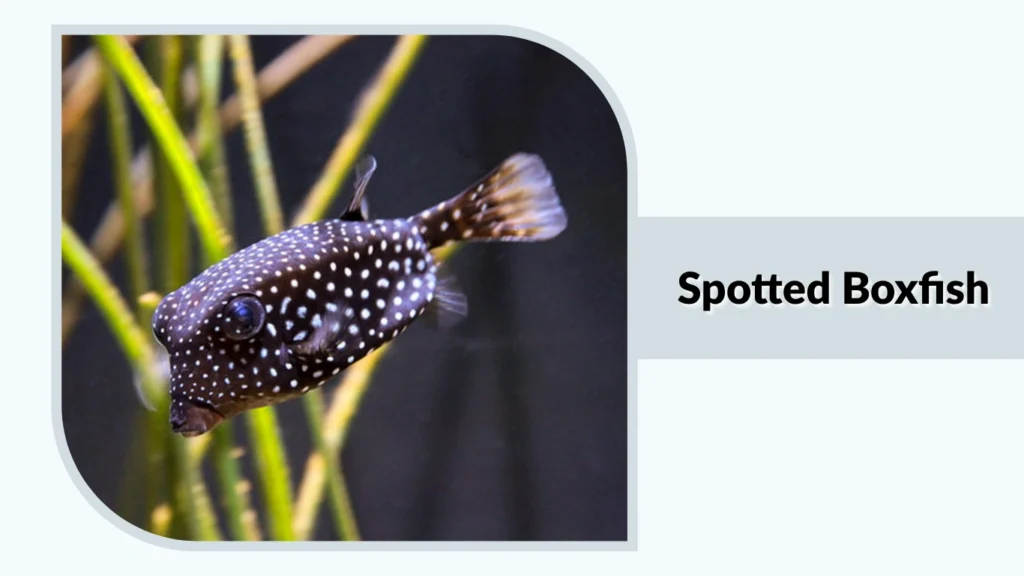
The Spotted Boxfish is a marine fish known for the spotted patterns covering its box-shaped body and its slow, graceful swimming style. Found in tropical Indo-Pacific waters, this species commonly inhabits coral reefs, lagoons, and shallow coastal habitats. It is admired for its unusual appearance, peaceful nature, and colorful markings. Its rigid body structure makes it one of the most unique reef fish species.
Identification
- Scientific name: Ostracion meleagris
- Spotted patterns across the body
- Box-shaped body structure
- Brown, black, or yellow coloration
- Small fins with slow movement
- Releases toxins when stressed
Habitat
Spotted Boxfish inhabit tropical coral reefs, lagoons, seagrass beds, and shallow coastal waters throughout the Indo-Pacific region. They prefer calm marine environments with coral formations and sandy bottoms that provide protection and feeding opportunities. These fish often remain near reef structures where they can safely hide from predators and search nearby areas for food.
Diet
This species mainly feeds on algae, small crustaceans, worms, sponges, and marine invertebrates found around reef habitats. Its small mouth allows it to carefully pick food from rocks, coral surfaces, and sandy ocean floors. In captivity, Spotted Boxfish require a balanced diet containing both plant material and protein-rich marine foods.
Behavior
Spotted Boxfish are generally peaceful and slow-moving fish that explore reef habitats carefully. Instead of rapid swimming, they rely on small fin movements for controlled motion through the water. When stressed or threatened, they may release toxins as a defense mechanism. Their calm behavior and patterned appearance make them attractive to divers and aquarists.
Lifespan
In healthy marine habitats, Spotted Boxfish can live for several years under stable conditions. Aquarium specimens may survive longer with excellent water quality, balanced nutrition, and spacious surroundings. Their lifespan depends on maintaining stress-free marine environments, proper feeding routines, and suitable habitat conditions that support healthy development and natural behavior.
Interesting Facts
The Spotted Boxfish has a rigid body covered by hard bony plates that create its distinctive box-like shape. Its spotted patterns help camouflage it among coral reefs and rocky habitats. Like other boxfish species, it can release toxins when highly stressed. Its unusual body shape and slow swimming style make it easy to recognize underwater.
4. Thornback Cowfish
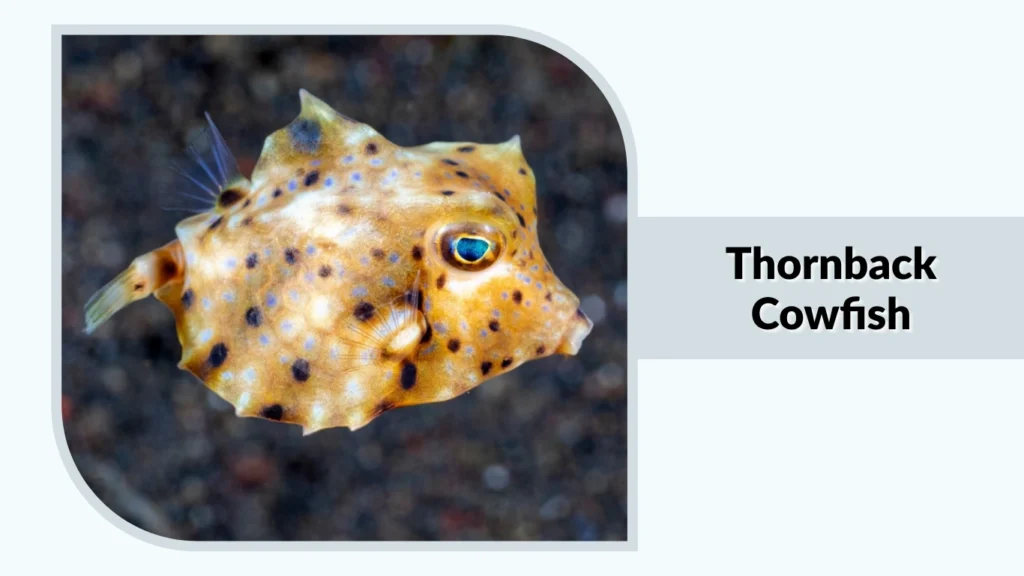
The Thornback Cowfish is a unique marine boxfish recognized for the sharp thorn-like projections extending from its body and back. Native to tropical Indo-Pacific waters, this species inhabits coral reefs, lagoons, and sandy coastal habitats. It is admired for its unusual shape, armored body, and calm swimming style. Its distinctive appearance and slow movements make it one of the most fascinating reef fish species.
Identification
- Scientific name: Lactoria fornasini
- Thorn-like projections on the body
- Box-shaped armored structure
- Yellow or brown body coloration
- Small fins with slow movement
- Releases toxins when stressed
Habitat
Thornback Cowfish inhabit tropical coral reefs, lagoons, seagrass beds, and shallow coastal waters throughout the Indo-Pacific region. They prefer calm marine habitats with sandy bottoms, coral formations, and rocky shelters for protection. These fish often remain close to reef structures where they can safely hide from predators and search nearby areas for food.
Diet
This species mainly feeds on algae, worms, small crustaceans, mollusks, and tiny marine invertebrates found around reefs and sandy ocean floors. Its small mouth allows it to carefully pick food from surfaces and sediment. In captivity, Thornback Cowfish require a varied diet containing both plant material and protein-rich marine foods.
Behavior
Thornback Cowfish are generally peaceful and slow-moving fish that spend much of their time exploring reef habitats. They rely on camouflage, armored protection, and toxins rather than speed for defense. When stressed or threatened, they may release toxins into the water. Their unusual swimming movements and curious behavior attract divers and aquarium enthusiasts.
Lifespan
In healthy marine environments, Thornback Cowfish can live for several years under stable conditions. Aquarium specimens may survive longer with excellent water quality, balanced nutrition, and spacious habitats. Their lifespan depends on maintaining stress-free marine conditions, proper feeding routines, and suitable environmental care throughout their growth and development stages.
Interesting Facts
The Thornback Cowfish belongs to the boxfish family and has a body covered with hard bony plates for protection. Its thorn-like projections help discourage predators from attacking. Unlike many fast-swimming reef fish, it moves slowly using gentle fin movements. When highly stressed, it can release toxins that may affect nearby fish in enclosed spaces.
5. Buffalo Trunkfish
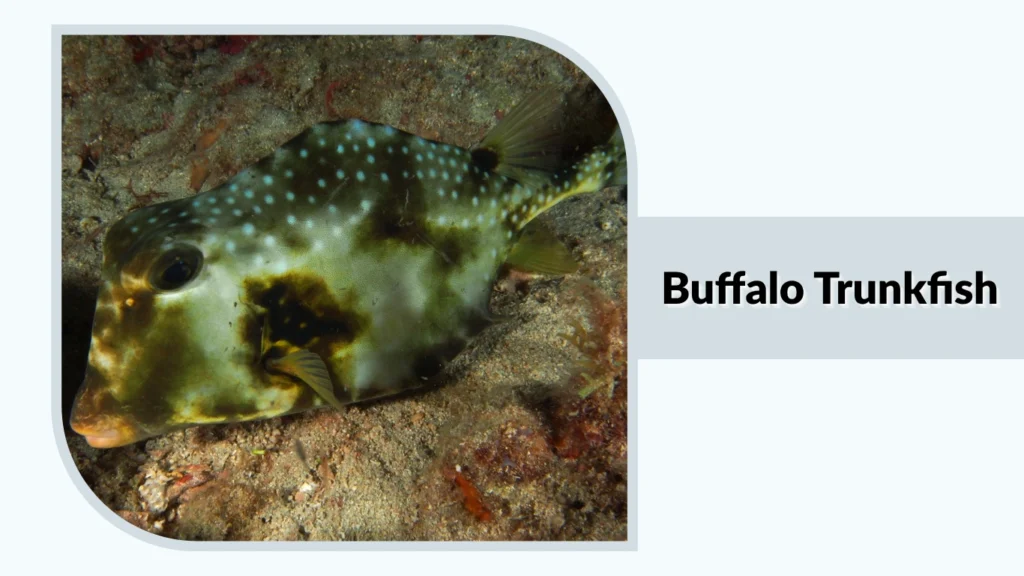
The Buffalo Trunkfish is a large and unusual boxfish species known for its heavy armored body and rounded trunk-like shape. Found in tropical Atlantic waters, this species commonly inhabits coral reefs, seagrass beds, and coastal lagoons. It is admired for its slow swimming style, patterned appearance, and unique body structure. Its rigid outer shell provides strong protection against predators in marine habitats.
Identification
- Scientific name: Lactophrys trigonus
- Thick armored box-shaped body
- Brown or olive body coloration
- Pale spots and markings on skin
- Small fins with slow movement
- Releases toxins when stressed
Habitat
Buffalo Trunkfish inhabit tropical coral reefs, lagoons, seagrass beds, and shallow coastal waters of the Atlantic Ocean and Caribbean Sea. They prefer calm marine habitats with sandy bottoms and coral formations that provide shelter and feeding opportunities. These fish often remain near reef structures where they can safely explore and avoid predators.
Diet
This species mainly feeds on algae, sponges, worms, mollusks, and small marine invertebrates found around reef habitats. Its small mouth allows it to carefully pick food from rocks, coral surfaces, and sandy ocean floors. In captivity, Buffalo Trunkfish require a varied diet containing both plant material and protein-rich marine foods for balanced nutrition.
Behavior
Buffalo Trunkfish are generally peaceful and slow-moving fish that spend much of their time exploring marine habitats. They use small fin movements for controlled swimming rather than strong tail movements. When threatened or stressed, they may release toxins into the water for protection. Their calm behavior makes them interesting to observe in reef environments.
Lifespan
In healthy marine habitats, Buffalo Trunkfish can live for several years under stable conditions. Aquarium specimens may survive longer with proper care, excellent water quality, and balanced nutrition. Their lifespan depends heavily on reducing stress, maintaining spacious environments, and providing suitable marine conditions that support natural behavior and healthy development.
Interesting Facts
The Buffalo Trunkfish has a rigid body covered with hard bony plates that create its armored appearance. Its trunk-like body shape inspired its common name. Like many boxfish species, it can release toxins when highly stressed. Its unusual appearance and slow swimming style make it one of the most recognizable fish found in tropical reefs.
6. Smooth Trunkfish
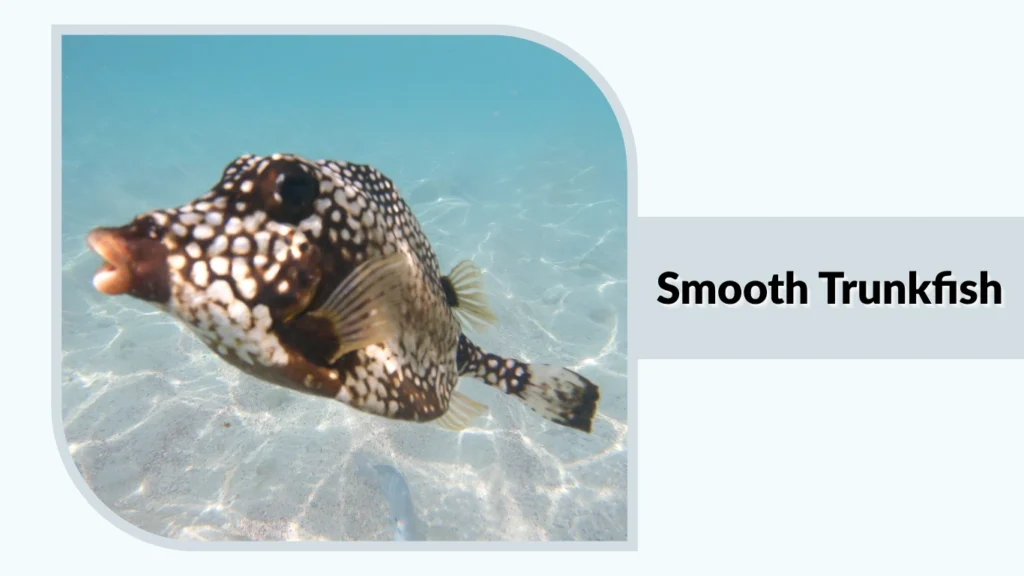
The Smooth Trunkfish is a marine boxfish species recognized for its smooth armored body and rounded trunk-like shape. Native to tropical Atlantic waters, this fish commonly inhabits coral reefs, seagrass beds, and shallow coastal habitats. It is admired for its unique appearance, gentle swimming style, and patterned body coloration. Its hard outer shell provides protection from predators within reef ecosystems.
Identification
- Scientific name: Lactophrys triqueter
- Smooth armored box-shaped body
- Brown, olive, or tan coloration
- Pale spots and body markings
- Small fins with slow movement
- Releases toxins when stressed
Habitat
Smooth Trunkfish inhabit tropical coral reefs, seagrass beds, lagoons, and shallow coastal waters throughout the Atlantic Ocean and Caribbean Sea. They prefer calm marine environments with sandy bottoms, coral formations, and rocky shelters for protection. These fish often remain close to reef structures where they can safely search for food and avoid predators.
Diet
This species mainly feeds on algae, worms, crustaceans, mollusks, and small marine invertebrates found around reefs and sandy habitats. Its small mouth allows it to carefully pick food from coral surfaces and ocean floors. In captivity, Smooth Trunkfish require a varied diet containing plant material and protein-rich marine foods for healthy development.
Behavior
Smooth Trunkfish are generally peaceful and slow-moving fish that spend much of their time exploring reef habitats. Instead of fast swimming, they rely on gentle fin movements for precise control in the water. When threatened or stressed, they may release toxins into surrounding water as a defensive response against predators.
Lifespan
In healthy marine environments, Smooth Trunkfish can live for several years under stable conditions. Aquarium specimens may survive longer with excellent water quality, proper nutrition, and stress-free surroundings. Their lifespan depends on maintaining suitable marine habitats, spacious environments, and balanced care that supports natural behavior and long-term physical health.
Interesting Facts
The Smooth Trunkfish has a rigid body covered with hard bony plates that act like natural armor. Its slow swimming style is controlled mainly by small fin movements rather than strong tail action. Like other boxfish species, it can release toxins when highly stressed. Its unusual body shape makes it easy to recognize underwater.
7. Scrawled Cowfish
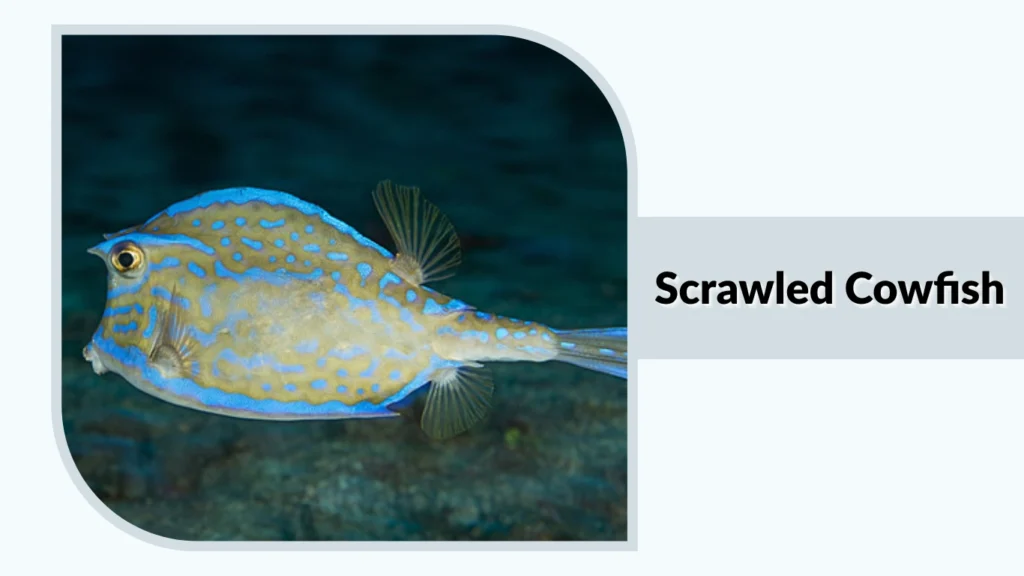
The Scrawled Cowfish is a colorful marine boxfish known for the scribble-like patterns covering its body and its horn-like projections. Native to tropical Atlantic waters, this species inhabits coral reefs, lagoons, and coastal marine habitats. It is admired for its unusual appearance, armored body, and slow swimming style. Its unique markings and calm behavior make it a fascinating reef fish species.
Identification
- Scientific name: Acanthostracion quadricornis
- Scribble-like body patterns
- Horn-like projections above the eyes
- Box-shaped armored body
- Yellow, brown, or blue coloration
- Releases toxins when stressed
Habitat
Scrawled Cowfish inhabit coral reefs, seagrass beds, lagoons, and shallow tropical coastal waters throughout the Atlantic Ocean and Caribbean Sea. They prefer calm marine environments with coral formations and sandy bottoms that provide protection and feeding opportunities. These fish usually remain near reef structures where they can safely search for food and avoid predators.
Diet
This species mainly feeds on algae, sponges, worms, small crustaceans, and marine invertebrates found around reef habitats. Its small mouth allows it to carefully pick food from coral surfaces and sandy ocean floors. In captivity, Scrawled Cowfish require a varied diet with both plant material and protein-rich foods for balanced nutrition.
Behavior
Scrawled Cowfish are generally peaceful and slow-moving fish that spend much of their time exploring reef habitats. They rely on armored protection and toxins rather than speed for defense. When threatened or stressed, they may release toxins into surrounding water. Their unusual swimming style and curious behavior make them popular among divers and aquarium enthusiasts.
Lifespan
In healthy marine environments, Scrawled Cowfish can live for several years under stable conditions. Aquarium specimens may survive longer with proper care, excellent water quality, and balanced nutrition. Their lifespan depends heavily on reducing stress, maintaining spacious habitats, and providing suitable marine conditions that support healthy growth and natural behavior.
Interesting Facts
The Scrawled Cowfish gets its name from the intricate markings that resemble hand-drawn scribbles across its body. Its horn-like projections help discourage predators from attacking. Like many boxfish species, it can release toxins when highly stressed. Its armored body and colorful patterns make it one of the most recognizable reef fish in tropical waters.
8. Camel Cowfish
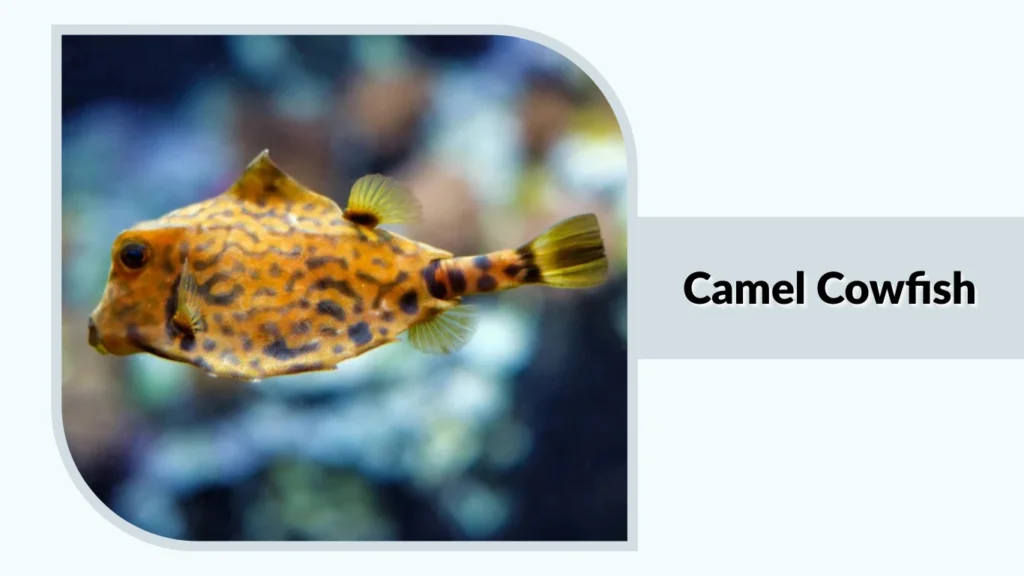
The Camel Cowfish is a distinctive marine boxfish recognized for the hump-like shape on its back that resembles a camel’s hump. Native to tropical Indo-Pacific waters, this species inhabits coral reefs, lagoons, and shallow coastal habitats. It is admired for its armored body, unusual appearance, and slow swimming movements. Its unique body structure makes it one of the most interesting boxfish species found in reef ecosystems.
Identification
- Scientific name: Tetrosomus gibbosus
- Hump-like back structure
- Box-shaped armored body
- Yellow, brown, or green coloration
- Small fins with slow movement
- Releases toxins when stressed
Habitat
Camel Cowfish inhabit tropical coral reefs, lagoons, seagrass beds, and shallow coastal waters throughout the Indo-Pacific region. They prefer calm marine habitats with sandy bottoms, coral formations, and rocky shelters for protection. These fish often remain near reef structures where they can safely search for food and avoid larger marine predators nearby.
Diet
This species mainly feeds on algae, small crustaceans, worms, mollusks, and marine invertebrates found around coral reefs and sandy ocean floors. Its small mouth allows it to carefully pick food from surfaces and sediment. In captivity, Camel Cowfish require a varied diet containing both plant material and protein-rich marine foods for proper nutrition.
Behavior
Camel Cowfish are generally peaceful and slow-moving fish that spend much of their time exploring reef habitats. Instead of fast swimming, they rely on gentle fin movements for controlled motion in the water. When threatened or stressed, they may release toxins as a defensive response against predators within marine environments.
Lifespan
In healthy marine environments, Camel Cowfish can live for several years under stable conditions. Aquarium specimens may survive longer with excellent water quality, balanced nutrition, and spacious habitats. Their lifespan depends heavily on maintaining stress-free conditions, suitable marine care, and proper environmental stability that supports natural behavior and healthy development.
Interesting Facts
The Camel Cowfish gets its common name from the raised hump on its back that resembles a camel’s shape. Its body is covered with hard bony plates that provide natural armor against predators. Like many boxfish species, it can release toxins when highly stressed. Its unusual body design makes it easy to identify underwater.
9. Horn-Nosed Boxfish
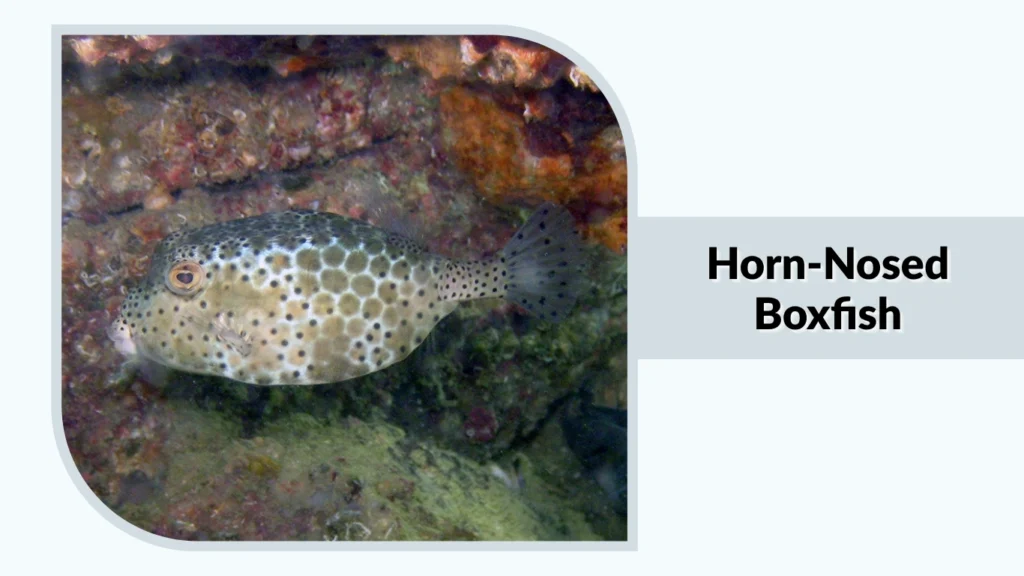
The Horn-Nosed Boxfish is a fascinating marine boxfish species recognized for the horn-like projection extending from its nose area. Native to tropical Indo-Pacific waters, this fish inhabits coral reefs, lagoons, and shallow coastal habitats. It is admired for its armored body, unusual appearance, and slow swimming behavior. Its distinctive nose structure and box-shaped body make it one of the more unique reef fish species.
Identification
- Scientific name: Rhynchostracion nasus
- Horn-like projection on the nose
- Box-shaped armored body
- Yellow or brown body coloration
- Small fins with slow movement
- Releases toxins when stressed
Habitat
Horn-Nosed Boxfish inhabit tropical coral reefs, lagoons, and shallow coastal waters throughout the Indo-Pacific region. They prefer calm marine environments with coral formations, sandy bottoms, and rocky shelters for protection. These fish often remain near reef structures where they can safely explore surrounding habitats and search nearby areas for food sources.
Diet
This species mainly feeds on algae, worms, mollusks, crustaceans, and small marine invertebrates found around coral reefs and sandy habitats. Its small mouth allows it to carefully pick food from reef surfaces and ocean floors. In captivity, Horn-Nosed Boxfish require a varied diet containing both plant material and protein-rich marine foods.
Behavior
Horn-Nosed Boxfish are generally peaceful and slow-moving fish that spend much of their time exploring reef habitats. They rely on armored protection and toxic defenses instead of speed for survival. When threatened or stressed, they may release toxins into the water. Their calm nature and unusual appearance make them interesting to observe underwater.
Lifespan
In healthy marine environments, Horn-Nosed Boxfish can live for several years under stable conditions. Aquarium specimens may survive longer with excellent water quality, balanced nutrition, and stress-free habitats. Their lifespan depends heavily on maintaining proper marine conditions, reducing environmental stress, and providing suitable care that supports natural behavior and healthy development.
Interesting Facts
The Horn-Nosed Boxfish is easily recognized by the horn-like extension projecting from its face. Its body is covered with hard bony plates that provide strong natural armor against predators. Like many boxfish species, it can release toxins when highly stressed. Its unusual body shape and slow swimming movements make it highly distinctive among reef fish.
10. White-Spotted Boxfish
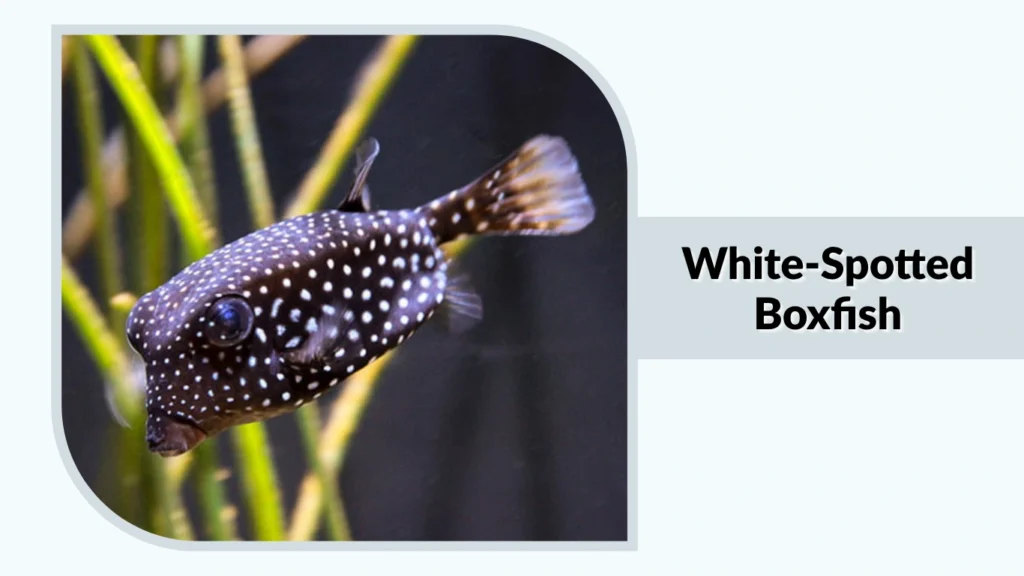
The White-Spotted Boxfish is a marine boxfish species admired for the bright white spots scattered across its armored body. Native to tropical Indo-Pacific waters, this fish inhabits coral reefs, lagoons, and shallow coastal habitats. It is known for its box-shaped structure, slow swimming style, and peaceful nature. Its spotted appearance and unusual body shape make it a visually striking species in reef environments.
Identification
- Scientific name: Ostracion meleagris
- Bright white spots across body
- Box-shaped armored structure
- Dark brown or black coloration
- Small fins with slow movement
- Releases toxins when stressed
Habitat
White-Spotted Boxfish inhabit tropical coral reefs, lagoons, seagrass beds, and shallow coastal waters throughout the Indo-Pacific region. They prefer calm marine habitats with coral formations, rocky shelters, and sandy bottoms for protection and feeding opportunities. These fish often remain close to reef structures where they can safely hide and search nearby areas for food.
Diet
This species mainly feeds on algae, sponges, worms, crustaceans, and small marine invertebrates found around reef habitats. Its small mouth allows it to carefully pick food from coral surfaces and sandy ocean floors. In captivity, White-Spotted Boxfish require a balanced diet containing plant material and protein-rich foods for proper nutrition and healthy development.
Behavior
White-Spotted Boxfish are generally peaceful and slow-moving fish that spend much of their time exploring reef habitats. They rely on armored protection and toxins rather than speed for defense against predators. When stressed or threatened, they may release toxins into surrounding water. Their calm swimming style makes them easy to observe underwater.
Lifespan
In healthy marine environments, White-Spotted Boxfish can live for several years under stable conditions. Aquarium specimens may survive longer with proper water quality, balanced nutrition, and stress-free habitats. Their lifespan depends heavily on maintaining suitable marine conditions, reducing environmental stress, and providing proper care that supports healthy growth and natural behaviors.
Interesting Facts
The White-Spotted Boxfish has a rigid body covered with hard bony plates that act like natural armor. Its white spotted pattern helps camouflage it among reef environments and rocky habitats. Like many boxfish species, it can release toxins when highly stressed. Its unusual body shape and attractive markings make it popular in marine aquariums.
11. Black-Backed Boxfish
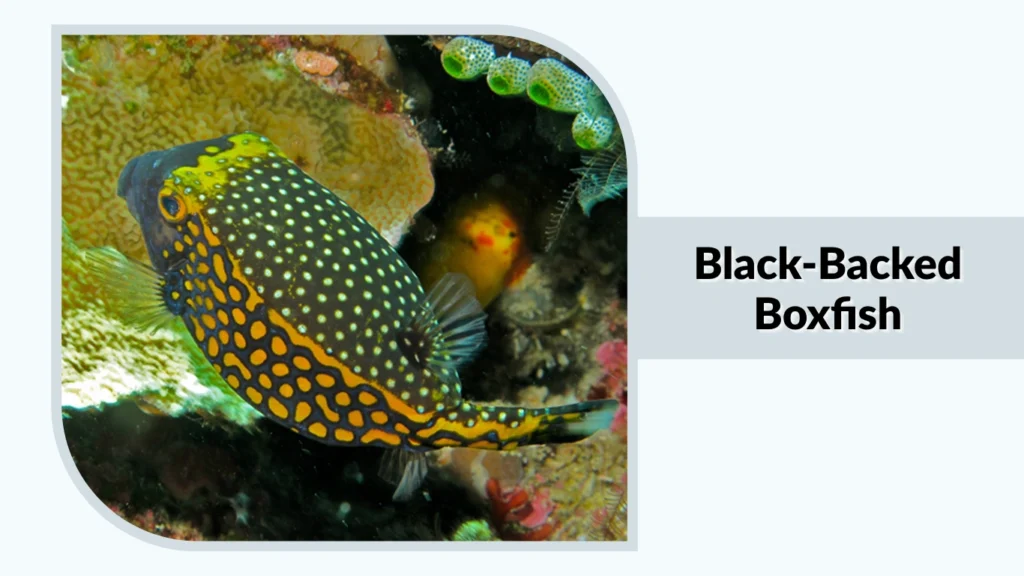
The Black-Backed Boxfish is a unique marine boxfish species recognized for the dark coloration covering its back and its rigid box-shaped body. Found in tropical Indo-Pacific waters, this species inhabits coral reefs, lagoons, and shallow coastal habitats. It is admired for its armored appearance, slow swimming style, and peaceful behavior. Its contrasting body colors make it easy to identify among reef fish species.
Identification
- Scientific name: Ostracion immaculatus
- Dark black coloration on the back
- Box-shaped armored body
- Pale or yellow underside coloration
- Small fins with slow movement
- Releases toxins when stressed
Habitat
Black-Backed Boxfish inhabit tropical coral reefs, lagoons, seagrass beds, and shallow coastal waters throughout the Indo-Pacific region. They prefer calm marine habitats with sandy bottoms, coral formations, and rocky shelters for protection. These fish often remain near reef structures where they can safely explore nearby habitats and search for small marine organisms.
Diet
This species mainly feeds on algae, worms, crustaceans, mollusks, and small marine invertebrates found around reefs and sandy ocean floors. Its small mouth allows it to carefully pick food from coral surfaces and sediment. In captivity, Black-Backed Boxfish require a balanced diet containing both plant material and protein-rich marine foods for healthy growth.
Behavior
Black-Backed Boxfish are generally peaceful and slow-moving fish that spend much of their time exploring reef habitats. They rely on armored protection and toxic defenses instead of speed for survival. When threatened or stressed, they may release toxins into the surrounding water. Their calm swimming behavior makes them easy to observe in marine environments.
Lifespan
In healthy marine environments, Black-Backed Boxfish can live for several years under stable conditions. Aquarium specimens may survive longer with proper water quality, balanced nutrition, and spacious habitats. Their lifespan depends heavily on maintaining stress-free marine conditions, reducing environmental changes, and providing suitable care that supports natural behavior and development.
Interesting Facts
The Black-Backed Boxfish has a body covered with hard bony plates that create its distinctive armored appearance. Its dark upper coloration helps it blend into reef shadows and rocky habitats. Like many boxfish species, it can release toxins when highly stressed. Its unusual body structure and contrasting colors make it a fascinating reef fish.
12. Shaw’s Cowfish
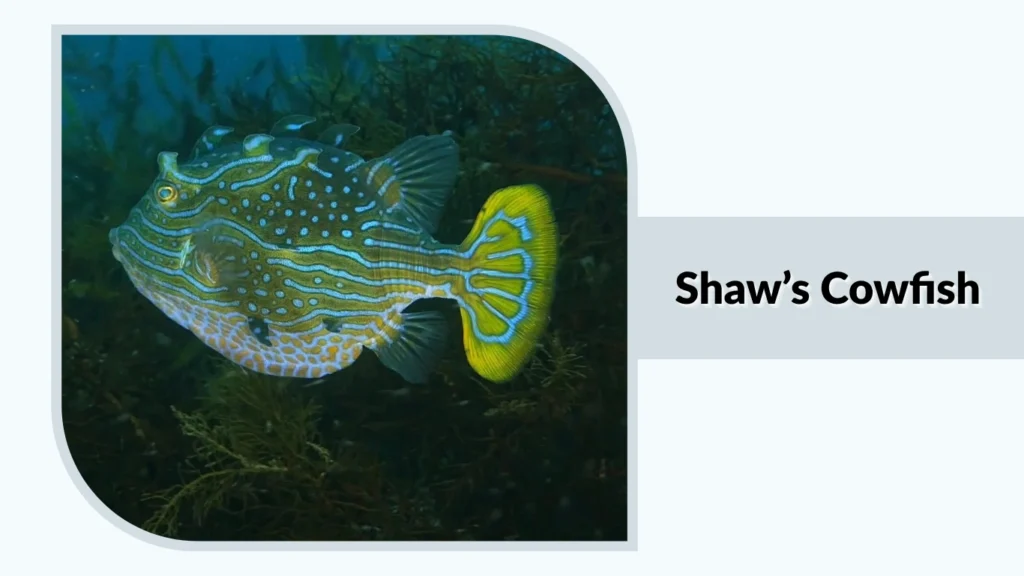
Shaw’s Cowfish is a small marine boxfish species known for its horn-like projections and beautifully patterned armored body. Native to tropical Indo-Pacific waters, this species commonly inhabits coral reefs, lagoons, and shallow coastal habitats. It is admired for its unusual appearance, peaceful temperament, and slow swimming style. Its distinctive markings and box-shaped structure make it a fascinating reef fish for divers and aquarium enthusiasts.
Identification
- Scientific name: Aracana aurita
- Horn-like projections above the head
- Box-shaped armored body
- Yellow, brown, or cream coloration
- Decorative spotted body patterns
- Releases toxins when stressed
Habitat
Shaw’s Cowfish inhabit tropical coral reefs, rocky coastal habitats, lagoons, and shallow marine waters throughout the Indo-Pacific region. They prefer calm environments with coral formations, sandy bottoms, and underwater shelters for protection. These fish often remain near reef structures where they can safely explore surrounding habitats and search nearby areas for food.
Diet
This species mainly feeds on algae, worms, crustaceans, mollusks, and small marine invertebrates found around reefs and sandy ocean floors. Its small mouth allows it to carefully pick food from coral surfaces and sediment. In captivity, Shaw’s Cowfish require a varied diet containing both plant material and protein-rich marine foods for balanced nutrition.
Behavior
Shaw’s Cowfish are generally peaceful and slow-moving fish that spend much of their time exploring reef habitats. They rely on armored protection and toxic defenses instead of speed for survival. When stressed or threatened, they may release toxins into the surrounding water. Their gentle swimming movements and curious behavior make them interesting to observe underwater.
Lifespan
In healthy marine environments, Shaw’s Cowfish can live for several years under stable conditions. Aquarium specimens may survive longer with excellent water quality, balanced nutrition, and stress-free habitats. Their lifespan depends heavily on maintaining suitable marine conditions, reducing environmental stress, and providing proper care that supports healthy development and natural behaviors.
Interesting Facts
Shaw’s Cowfish has a rigid body covered with hard bony plates that act as natural armor against predators. Its horn-like projections help discourage attacks from larger fish. Like many boxfish species, it can release toxins when highly stressed. Its unique body shape and decorative patterns make it one of the more distinctive reef fish species.
13. Reticulated Boxfish
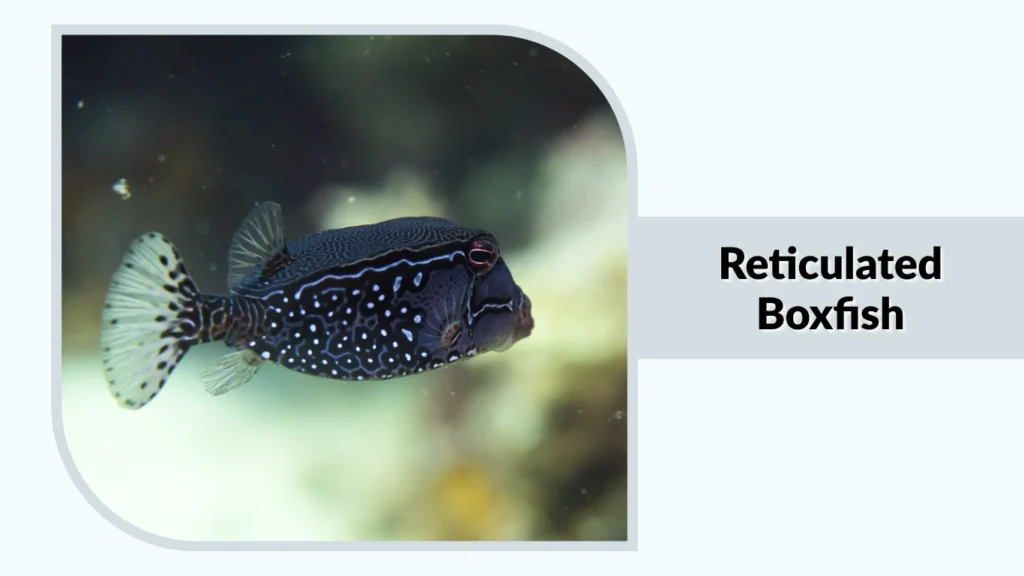
The Reticulated Boxfish is a marine boxfish species known for the net-like patterns covering its armored body. Found in tropical Indo-Pacific waters, this fish commonly inhabits coral reefs, lagoons, and shallow coastal habitats. It is admired for its geometric markings, slow swimming style, and unusual body shape. Its rigid box-like structure and decorative patterns make it one of the most visually interesting reef fish species.
Identification
- Scientific name: Ostracion solorensis
- Net-like reticulated body patterns
- Box-shaped armored structure
- Yellow, brown, or blue coloration
- Small fins with slow movement
- Releases toxins when stressed
Habitat
Reticulated Boxfish inhabit tropical coral reefs, lagoons, seagrass beds, and shallow coastal waters throughout the Indo-Pacific region. They prefer calm marine habitats with sandy bottoms, coral formations, and rocky shelters for protection. These fish usually remain near reef structures where they can safely explore surrounding areas and search for small marine organisms.
Diet
This species mainly feeds on algae, worms, crustaceans, mollusks, and small marine invertebrates found around reef environments. Its small mouth allows it to carefully pick food from coral surfaces and sandy ocean floors. In captivity, Reticulated Boxfish require a balanced diet containing both plant material and protein-rich marine foods for proper nutrition.
Behavior
Reticulated Boxfish are generally peaceful and slow-moving fish that spend much of their time exploring reef habitats. Instead of fast swimming, they rely on small fin movements for controlled motion in the water. When stressed or threatened, they may release toxins into surrounding water as a defense against predators within marine environments.
Lifespan
In healthy marine environments, Reticulated Boxfish can live for several years under stable conditions. Aquarium specimens may survive longer with excellent water quality, balanced nutrition, and spacious habitats. Their lifespan depends heavily on maintaining stress-free marine conditions, reducing environmental changes, and providing suitable care that supports healthy growth and natural behavior.
Interesting Facts
The Reticulated Boxfish gets its name from the net-like pattern covering its body. Its rigid body is made of hard bony plates that provide natural protection from predators. Like many boxfish species, it can release toxins when highly stressed. Its geometric markings and unusual body shape make it highly noticeable in coral reef habitats.
14. Triangular Boxfish
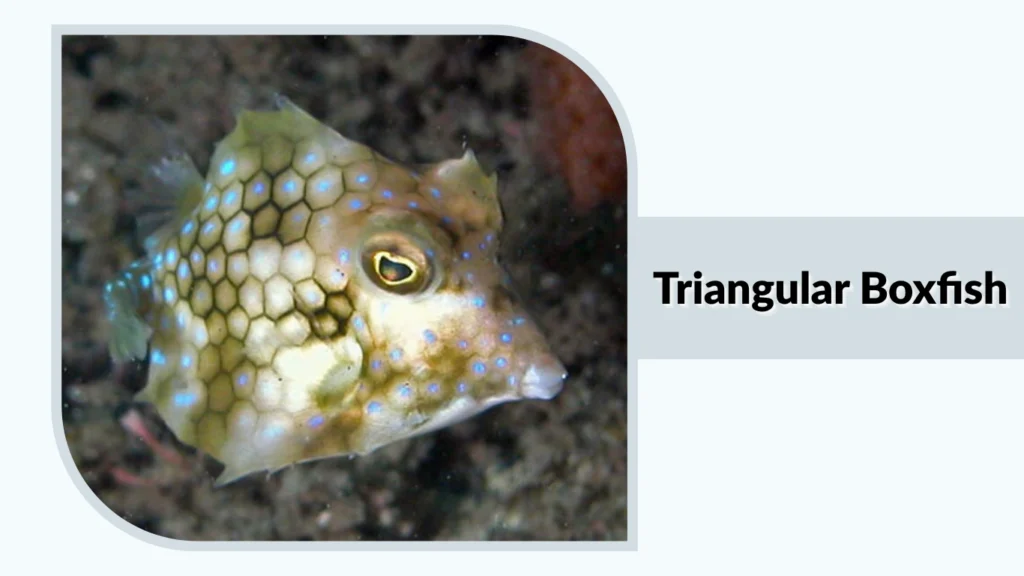
The Triangular Boxfish is a distinctive marine boxfish species recognized for its triangular body shape and armored outer structure. Native to tropical Indo-Pacific waters, this species inhabits coral reefs, lagoons, and shallow coastal habitats. It is admired for its unusual appearance, patterned body coloration, and slow swimming style. Its rigid geometric body makes it one of the most unique fish commonly seen in reef environments.
Identification
- Scientific name: Tetrosomus concatenatus
- Triangular-shaped armored body
- Yellow, brown, or tan coloration
- Decorative spotted body markings
- Small fins with slow movement
- Releases toxins when stressed
Habitat
Triangular Boxfish inhabit tropical coral reefs, lagoons, seagrass beds, and shallow coastal waters throughout the Indo-Pacific region. They prefer calm marine environments with coral formations, sandy bottoms, and rocky shelters for protection. These fish often remain near reef structures where they can safely search nearby habitats for food and avoid larger predators.
Diet
This species mainly feeds on algae, worms, crustaceans, mollusks, and small marine invertebrates found around coral reefs and sandy ocean floors. Its small mouth allows it to carefully pick food from reef surfaces and sediment. In captivity, Triangular Boxfish require a varied diet containing both plant material and protein-rich marine foods for balanced nutrition.
Behavior
Triangular Boxfish are generally peaceful and slow-moving fish that spend much of their time exploring reef habitats. They rely on armored protection and toxic defenses instead of speed for survival. When threatened or stressed, they may release toxins into the surrounding water. Their calm swimming behavior and unusual body shape make them fascinating to observe underwater.
Lifespan
In healthy marine environments, Triangular Boxfish can live for several years under stable conditions. Aquarium specimens may survive longer with proper water quality, balanced nutrition, and spacious habitats. Their lifespan depends heavily on maintaining stress-free marine conditions, reducing environmental changes, and providing suitable care that supports healthy growth and natural behaviors.
Interesting Facts
The Triangular Boxfish has a rigid body covered with hard bony plates that provide natural armor against predators. Its geometric body shape helps distinguish it from many other reef fish species. Like many boxfish, it can release toxins when highly stressed. Its unusual appearance and slow swimming style make it easy to recognize in coral reefs.
15. Honeycomb Cowfish
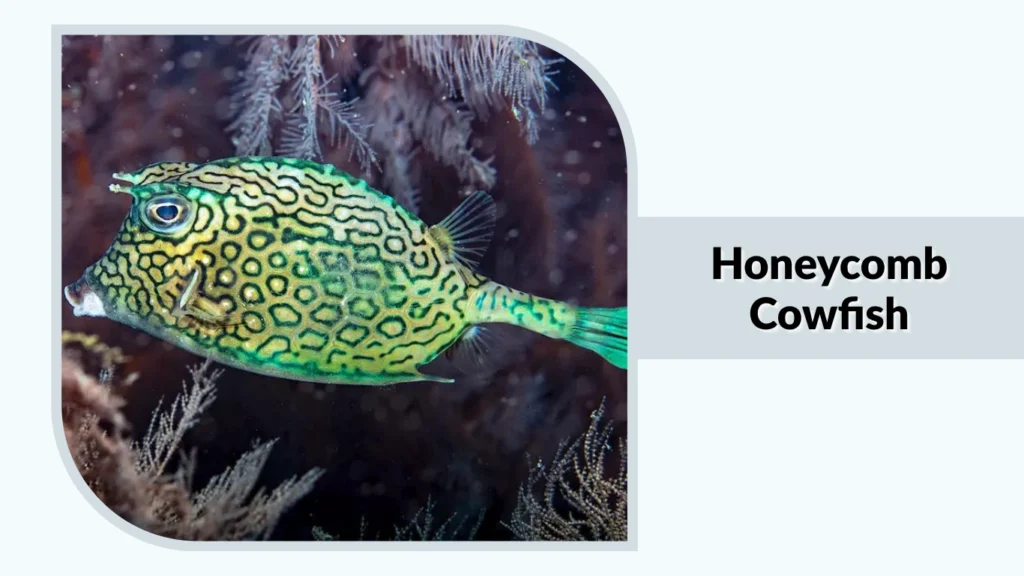
The Honeycomb Cowfish is a marine boxfish species known for the honeycomb-like patterns covering its armored body. Found in tropical Indo-Pacific waters, this fish inhabits coral reefs, lagoons, and shallow coastal habitats. It is admired for its unusual body structure, decorative markings, and calm swimming style. Its patterned appearance and rigid box-shaped body make it one of the most recognizable cowfish species in reef environments.
Identification
- Scientific name: Acanthostracion polygonius
- Honeycomb-like body patterns
- Box-shaped armored body
- Yellow, brown, or tan coloration
- Horn-like projections above the head
- Releases toxins when stressed
Habitat
Honeycomb Cowfish inhabit tropical coral reefs, lagoons, seagrass beds, and shallow coastal waters throughout warm ocean regions. They prefer calm marine environments with sandy bottoms, coral formations, and rocky shelters for protection. These fish often remain near reef structures where they can safely search for food and avoid larger marine predators nearby.
Diet
This species mainly feeds on algae, worms, crustaceans, mollusks, and small marine invertebrates found around coral reefs and sandy ocean floors. Its small mouth allows it to carefully pick food from reef surfaces and sediment. In captivity, Honeycomb Cowfish require a varied diet containing both plant material and protein-rich marine foods for balanced nutrition.
Behavior
Honeycomb Cowfish are generally peaceful and slow-moving fish that spend much of their time exploring reef habitats. They rely on armored protection and toxic defenses instead of speed for survival. When threatened or stressed, they may release toxins into surrounding water. Their calm swimming movements and curious behavior make them interesting to observe underwater.
Lifespan
In healthy marine environments, Honeycomb Cowfish can live for several years under stable conditions. Aquarium specimens may survive longer with excellent water quality, balanced nutrition, and spacious habitats. Their lifespan depends heavily on maintaining stress-free marine conditions, reducing environmental changes, and providing suitable care that supports healthy growth and natural behavior.
Interesting Facts
The Honeycomb Cowfish gets its name from the honeycomb-like pattern covering its body. Its rigid outer shell is made of hard bony plates that provide strong natural armor against predators. Like many boxfish species, it can release toxins when highly stressed. Its decorative patterns and unusual body shape make it highly distinctive in coral reef habitats.
16. Shortnose Boxfish
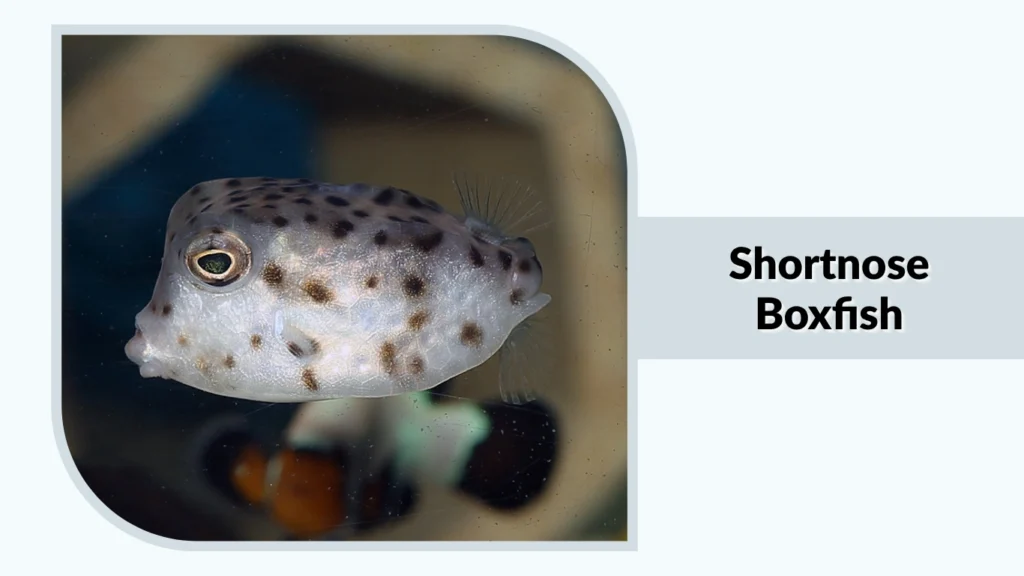
The Shortnose Boxfish is a small marine boxfish species recognized for its short rounded snout and rigid armored body. Native to tropical Indo-Pacific waters, this species commonly inhabits coral reefs, lagoons, and shallow coastal habitats. It is admired for its compact body shape, decorative patterns, and slow swimming style. Its unusual appearance and peaceful nature make it an interesting species for divers and marine aquarium enthusiasts.
Identification
- Scientific name: Ostracion nasus
- Short rounded snout
- Box-shaped armored body
- Yellow, brown, or olive coloration
- Decorative spots and markings
- Releases toxins when stressed
Habitat
Shortnose Boxfish inhabit tropical coral reefs, lagoons, seagrass beds, and shallow coastal waters throughout the Indo-Pacific region. They prefer calm marine habitats with coral formations, sandy bottoms, and rocky shelters for protection. These fish often remain near reef structures where they can safely search nearby areas for food and avoid larger predators.
Diet
This species mainly feeds on algae, worms, crustaceans, mollusks, and small marine invertebrates found around coral reefs and sandy ocean floors. Its small mouth allows it to carefully pick food from reef surfaces and sediment. In captivity, Shortnose Boxfish require a balanced diet containing both plant material and protein-rich marine foods for healthy development.
Behavior
Shortnose Boxfish are generally peaceful and slow-moving fish that spend much of their time exploring reef habitats. They rely on armored protection and toxins rather than speed for defense against predators. When stressed or threatened, they may release toxins into surrounding water. Their calm swimming movements and curious behavior make them easy to observe underwater.
Lifespan
In healthy marine environments, Shortnose Boxfish can live for several years under stable conditions. Aquarium specimens may survive longer with proper water quality, balanced nutrition, and spacious habitats. Their lifespan depends heavily on maintaining stress-free marine conditions, reducing environmental changes, and providing suitable care that supports natural behavior and healthy growth.
Interesting Facts
The Shortnose Boxfish has a rigid body covered with hard bony plates that act as natural armor against predators. Its short snout helps distinguish it from other boxfish species with longer facial structures. Like many boxfish species, it can release toxins when highly stressed. Its compact body shape and patterned appearance make it visually distinctive in reef habitats.
17. Blue-Spotted Boxfish
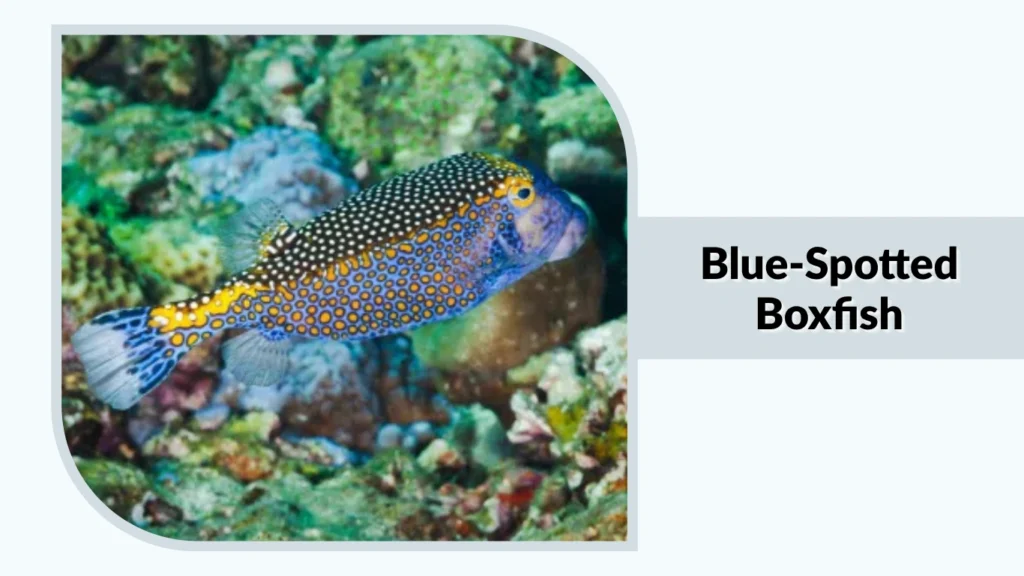
The Blue-Spotted Boxfish is a colorful marine boxfish species admired for the bright blue spots scattered across its armored body. Found in tropical Indo-Pacific waters, this fish commonly inhabits coral reefs, lagoons, and shallow coastal habitats. It is known for its unusual box-shaped structure, slow swimming style, and attractive body patterns. Its vibrant markings make it one of the more visually striking reef fish species.
Identification
- Scientific name: Ostracion cyanurus
- Bright blue spots across the body
- Box-shaped armored structure
- Yellow, brown, or tan coloration
- Small fins with slow movement
- Releases toxins when stressed
Habitat
Blue-Spotted Boxfish inhabit tropical coral reefs, lagoons, seagrass beds, and shallow coastal waters throughout the Indo-Pacific region. They prefer calm marine habitats with coral formations, sandy bottoms, and rocky shelters for protection. These fish often remain near reef structures where they can safely search for food and avoid larger marine predators.
Diet
This species mainly feeds on algae, worms, crustaceans, mollusks, and small marine invertebrates found around coral reefs and sandy ocean floors. Its small mouth allows it to carefully pick food from reef surfaces and sediment. In captivity, Blue-Spotted Boxfish require a varied diet containing both plant material and protein-rich marine foods for balanced nutrition.
Behavior
Blue-Spotted Boxfish are generally peaceful and slow-moving fish that spend much of their time exploring reef habitats. They rely on armored protection and toxic defenses rather than speed for survival. When threatened or stressed, they may release toxins into surrounding water. Their calm swimming movements and colorful appearance make them popular among divers and aquarists.
Lifespan
In healthy marine environments, Blue-Spotted Boxfish can live for several years under stable conditions. Aquarium specimens may survive longer with excellent water quality, balanced nutrition, and spacious habitats. Their lifespan depends heavily on maintaining stress-free marine conditions, reducing environmental changes, and providing suitable care that supports healthy growth and natural behaviors.
Interesting Facts
The Blue-Spotted Boxfish is recognized for the vivid blue spots decorating its rigid armored body. Its hard outer shell is made of bony plates that help protect it from predators. Like many boxfish species, it can release toxins when highly stressed. Its bright coloration and unusual body shape make it easy to identify in reef environments.
18. Rough Boxfish
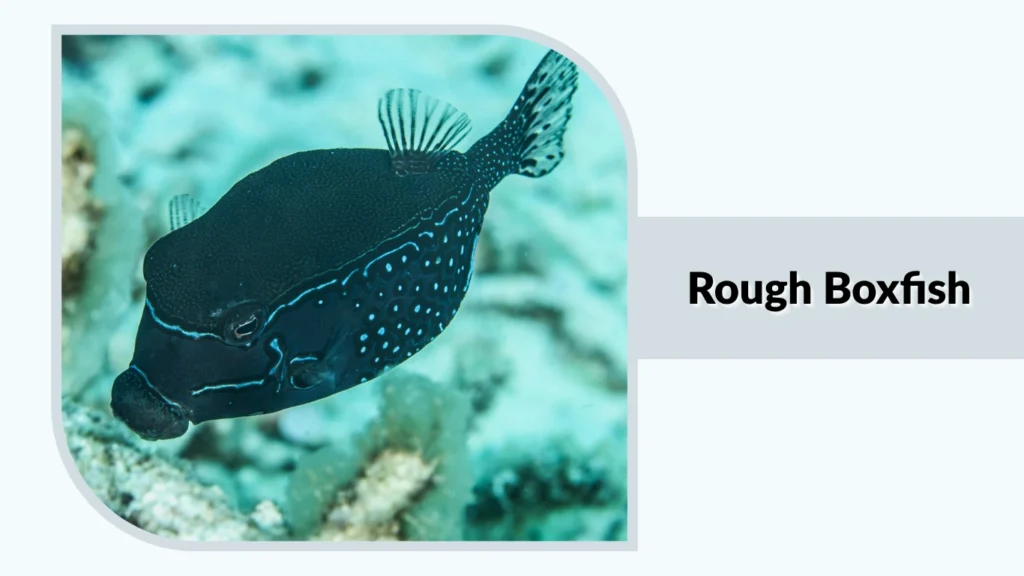
The Rough Boxfish is a marine boxfish species recognized for its textured armored body and unusual geometric shape. Native to tropical and subtropical waters, this species commonly inhabits coral reefs, lagoons, and shallow coastal habitats. It is admired for its protective body armor, slow swimming style, and patterned appearance. Its rough body texture and rigid structure make it one of the more distinctive reef fish species.
Identification
- Scientific name: Aracana ornata
- Rough textured armored body
- Box-shaped body structure
- Brown, yellow, or olive coloration
- Decorative spots and markings
- Releases toxins when stressed
Habitat
Rough Boxfish inhabit tropical coral reefs, rocky coastal habitats, lagoons, and shallow marine waters throughout warm ocean regions. They prefer calm environments with sandy bottoms, coral formations, and underwater shelters for protection. These fish usually remain near reef structures where they can safely search nearby areas for food and avoid larger marine predators.
Diet
This species mainly feeds on algae, worms, crustaceans, mollusks, and small marine invertebrates found around coral reefs and sandy ocean floors. Its small mouth allows it to carefully pick food from reef surfaces and sediment. In captivity, Rough Boxfish require a varied diet containing both plant material and protein-rich marine foods for balanced nutrition.
Behavior
Rough Boxfish are generally peaceful and slow-moving fish that spend much of their time exploring reef habitats. Instead of fast swimming, they rely on gentle fin movements for controlled motion through the water. When threatened or stressed, they may release toxins into surrounding water as a defensive response against predators in marine environments.
Lifespan
In healthy marine environments, Rough Boxfish can live for several years under stable conditions. Aquarium specimens may survive longer with excellent water quality, balanced nutrition, and spacious habitats. Their lifespan depends heavily on maintaining stress-free marine conditions, reducing environmental changes, and providing suitable care that supports healthy growth and natural behavior.
Interesting Facts
The Rough Boxfish has a rigid body covered with hard bony plates that create its armored appearance. Its rough skin texture helps distinguish it from smoother boxfish species. Like many members of the boxfish family, it can release toxins when highly stressed. Its unusual geometric body shape makes it easy to recognize in reef habitats.
19. Cubicus Boxfish
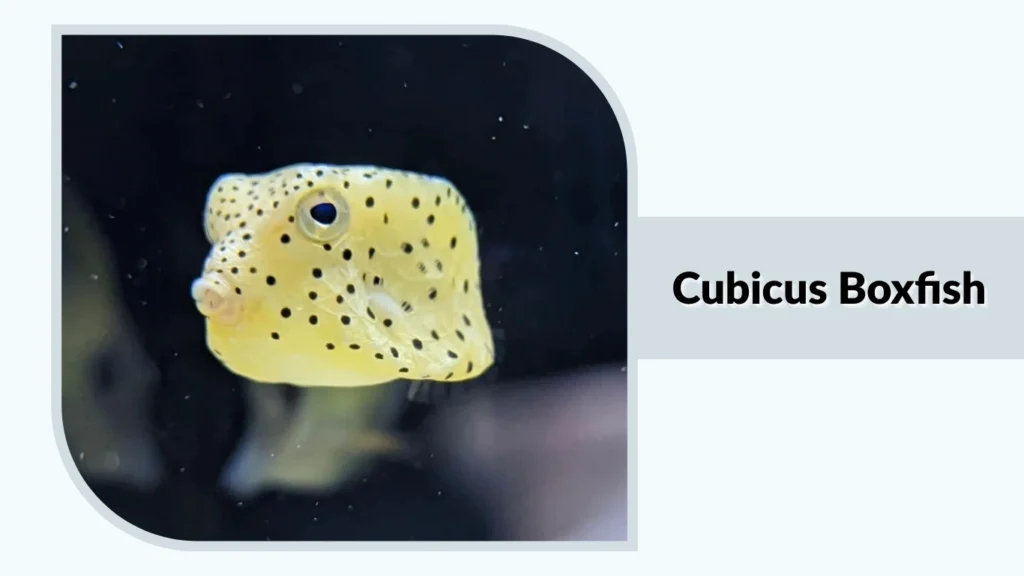
The Cubicus Boxfish is a brightly colored marine boxfish famous for its cube-shaped body and striking spotted appearance. Native to tropical Indo-Pacific waters, this species commonly inhabits coral reefs, lagoons, and shallow coastal habitats. Juveniles are especially vibrant yellow with black spots, while adults develop darker and more complex patterns. Its unusual body shape and peaceful behavior make it popular in marine aquariums.
Identification
- Scientific name: Ostracion cubicus
- Cube-shaped armored body
- Bright yellow juvenile coloration
- Black spots across the body
- Small fins with slow movement
- Releases toxins when stressed
Habitat
Cubicus Boxfish inhabit tropical coral reefs, lagoons, seagrass beds, and shallow coastal waters throughout the Indo-Pacific region. They prefer calm marine environments with coral formations, sandy bottoms, and rocky shelters for protection. Juveniles often remain hidden among corals, while adults explore larger reef areas in search of food and safe resting places.
Diet
This species mainly feeds on algae, sponges, worms, crustaceans, and small marine invertebrates found around reef habitats. Its small mouth allows it to carefully pick food from coral surfaces and sandy ocean floors. In captivity, Cubicus Boxfish require a varied diet containing both plant material and protein-rich marine foods for balanced nutrition.
Behavior
Cubicus Boxfish are generally peaceful and slow-moving fish that spend much of their time exploring reef habitats. Instead of fast swimming, they rely on gentle fin movements for precise control in the water. When threatened or stressed, they may release toxins into surrounding water. Their curious nature makes them fascinating to observe underwater and in aquariums.
Lifespan
In healthy marine environments, Cubicus Boxfish can live for several years under stable conditions. Aquarium specimens may survive longer with excellent water quality, balanced nutrition, and stress-free habitats. Their lifespan depends heavily on maintaining proper marine conditions, reducing environmental stress, and providing suitable care that supports healthy growth and natural behaviors.
Interesting Facts
The Cubicus Boxfish is one of the most recognizable boxfish species because of its cube-shaped body and bright yellow juvenile coloration. As it matures, its body patterns and colors change significantly. Like many boxfish species, it can release toxins when highly stressed. Its unusual appearance makes it highly popular among marine aquarium enthusiasts worldwide.
20. Whitley’s Boxfish
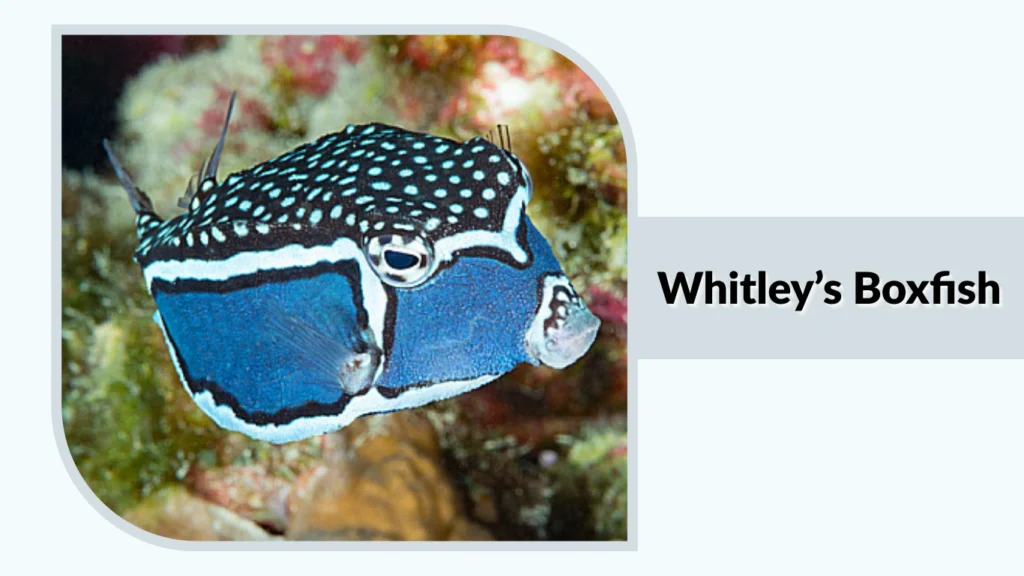
Whitley’s Boxfish is a rare marine boxfish species admired for its compact armored body and beautifully patterned appearance. Native to tropical Indo-Pacific waters, this species inhabits coral reefs, lagoons, and shallow coastal habitats. It is known for its slow swimming movements, peaceful behavior, and distinctive body markings. Its unusual geometric shape and protective body armor make it a fascinating fish found within reef ecosystems.
Identification
- Scientific name: Anoplocapros amygdaloides
- Compact box-shaped armored body
- Decorative spotted body patterns
- Brown, yellow, or tan coloration
- Small fins with slow movement
- Releases toxins when stressed
Habitat
Whitley’s Boxfish inhabit tropical coral reefs, lagoons, rocky coastal habitats, and shallow marine waters throughout the Indo-Pacific region. They prefer calm environments with sandy bottoms, coral formations, and underwater shelters for protection. These fish often remain near reef structures where they can safely explore nearby habitats and search for small marine organisms.
Diet
This species mainly feeds on algae, worms, crustaceans, mollusks, and small marine invertebrates found around reefs and sandy ocean floors. Its small mouth allows it to carefully pick food from coral surfaces and sediment. In captivity, Whitley’s Boxfish require a varied diet containing both plant material and protein-rich marine foods for balanced nutrition.
Behavior
Whitley’s Boxfish are generally peaceful and slow-moving fish that spend much of their time exploring reef habitats. They rely on armored protection and toxic defenses rather than speed for survival. When stressed or threatened, they may release toxins into surrounding water. Their calm swimming style and unusual appearance make them interesting to observe underwater.
Lifespan
In healthy marine environments, Whitley’s Boxfish can live for several years under stable conditions. Aquarium specimens may survive longer with excellent water quality, balanced nutrition, and stress-free habitats. Their lifespan depends heavily on maintaining suitable marine conditions, reducing environmental stress, and providing proper care that supports healthy development and natural behaviors.
Interesting Facts
Whitley’s Boxfish has a rigid body covered with hard bony plates that act as natural armor against predators. Its unusual geometric shape helps distinguish it from many other reef fish species. Like many members of the boxfish family, it can release toxins when highly stressed. Its rare appearance makes it especially valued by marine life enthusiasts and researchers.
FAQs
What is a boxfish?
A boxfish is a marine fish belonging to the family Ostraciidae. These fish are known for their rigid box-shaped bodies covered with hard bony plates. Boxfish are commonly found in tropical and subtropical oceans, especially around coral reefs, lagoons, and shallow coastal habitats.
Are boxfish poisonous?
Yes, many boxfish species can release toxins when stressed or threatened. These toxins help protect them from predators in the wild. In aquariums, the released toxins may sometimes harm nearby fish if water conditions are poor or if the fish experiences extreme stress.
What do boxfish eat?
Boxfish mainly feed on algae, worms, crustaceans, mollusks, sponges, and small marine invertebrates. They use their small mouths to carefully pick food from coral reefs, sandy ocean floors, and rocky surfaces. A varied diet is important for maintaining healthy growth and proper nutrition.
Can boxfish live in aquariums?
Yes, many boxfish species are kept in marine aquariums by experienced fish keepers. They require stable water quality, spacious tanks, balanced nutrition, and peaceful tank environments. Because some species may release toxins under stress, aquarium conditions must be carefully maintained to ensure their health and safety.
Why do boxfish swim slowly?
Boxfish swim slowly because of their rigid armored bodies and box-like structure. Instead of using powerful tail movements, they rely on small fin movements for controlled swimming. Although they are not fast swimmers, their protective armor and toxins help defend them from predators in marine environments.