
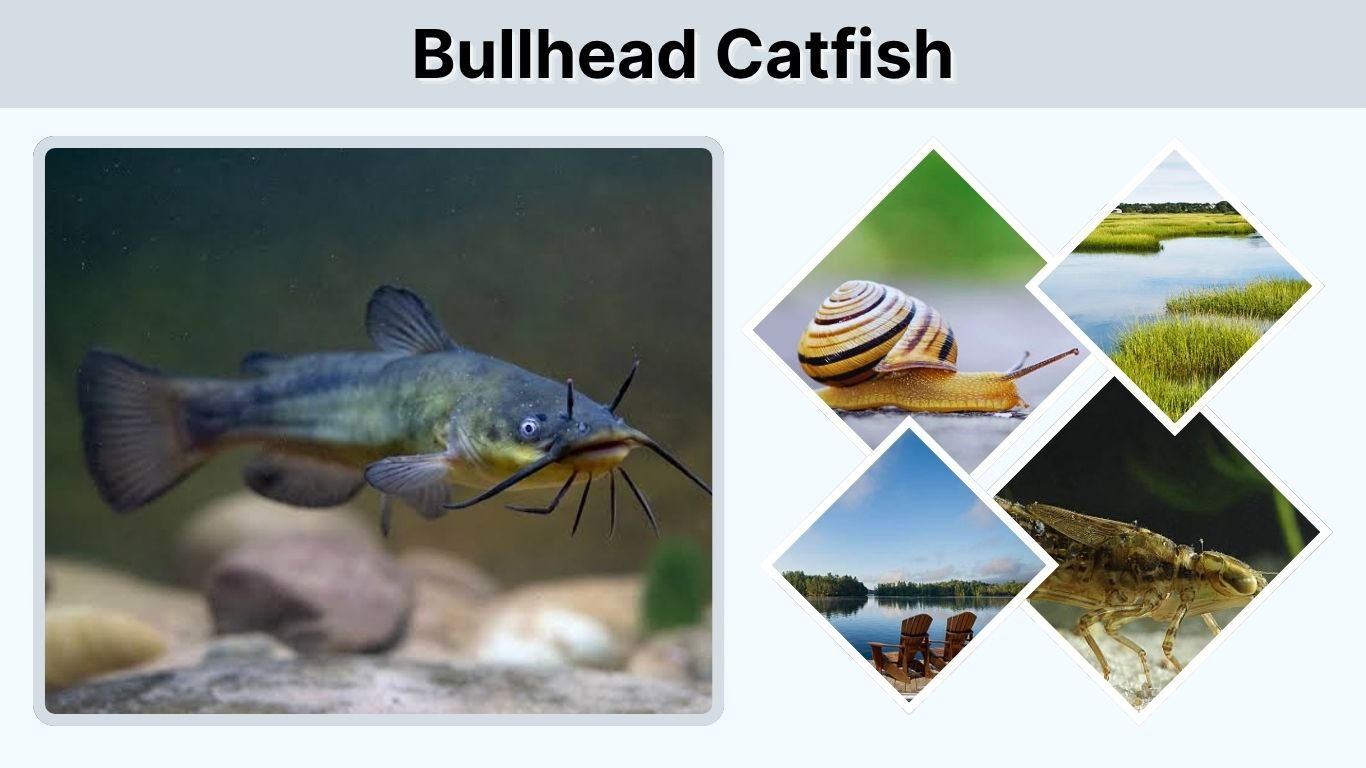
Bullhead catfish are hardy freshwater fish recognized by their broad heads, smooth scaleless bodies, whisker-like barbels, and mostly square tail fins. Although smaller than channel and flathead catfish, bullheads are popular among anglers because they are widespread, easy to catch, and often active after dark. Several species occur across North America, including black, brown, and yellow bullheads. This guide explains their appearance, size, habitat, diet, fishing methods, eating quality, and potential dangers.
What Is a Bullhead Catfish?
A bullhead is a small to medium-sized catfish belonging primarily to the genus Ameiurus. The group contains seven recognized species, although black, brown, and yellow bullheads are the three most familiar to anglers.
Like other catfish, bullheads have sensory barbels around the mouth. However, their broad, rounded heads and square or only slightly notched tails help distinguish them from channel catfish, which have noticeably forked tails.
Bullhead Catfish Identification
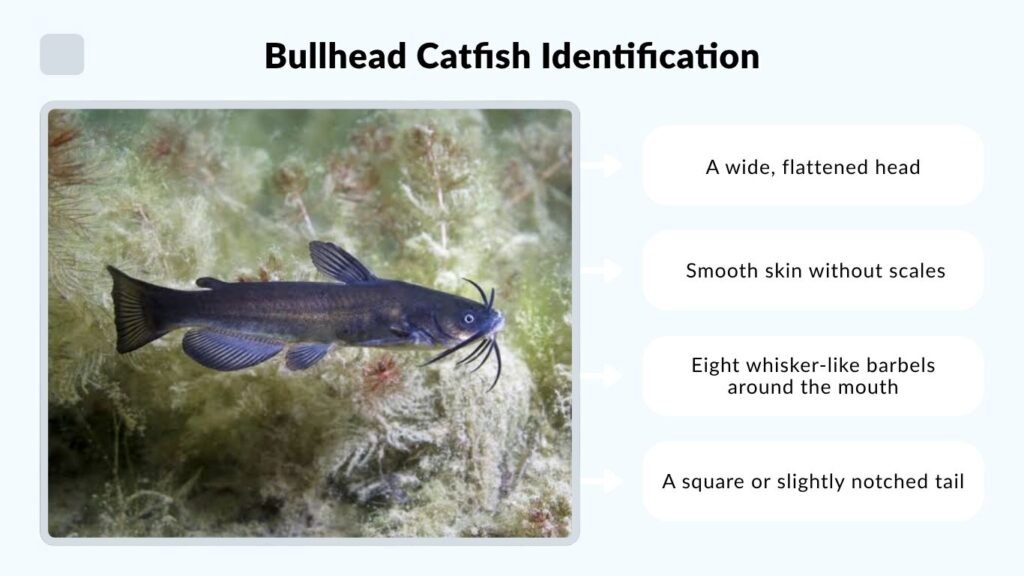
Bullheads are sometimes called mudcats because they frequently live near soft, muddy bottoms. Color alone is not always reliable because water clarity, age, and habitat can affect a fish’s appearance.
Key Identification Features
Look for the following characteristics:
- A wide, flattened head
- Smooth skin without scales
- Eight whisker-like barbels around the mouth
- A square or slightly notched tail
- A short, rounded body
- One sharp dorsal spine
- Sharp spines in both pectoral fins
- A small adipose fin behind the dorsal fin
The barbels are sensory organs that help the fish locate food in dark or muddy water. They do not sting. Injuries occur when a person is punctured by one of the sharp fin spines.
Common Bullhead Catfish Species
The black, brown, and yellow bullhead can look similar, but barbel color, body pattern, fin structure, and tail shape can help separate them.
| Species | Scientific name | Main identifying features | Maximum reported length |
| Black bullhead | Ameiurus melas | Dark chin barbels, uniform body color and slightly notched tail | About 62 cm |
| Brown bullhead | Ameiurus nebulosus | Mottled body, dark chin barbels and toothed pectoral spines | About 50 cm |
| Yellow bullhead | Ameiurus natalis | White or yellow chin barbels and nearly straight tail edge | About 47 cm |
Black Bullhead
Black bullheads usually have dark chin barbels and an olive, brown or nearly black body without the strong mottling associated with brown bullheads. Their tail is slightly notched, and the fin membranes may appear darker than the rays.
Brown Bullhead
Brown bullheads commonly have irregular dark mottling across their sides. Their chin barbels are dark, and the rear edge of each pectoral spine contains several noticeable saw-like teeth. They are often associated with quiet, vegetated lakes, ponds and backwaters.
Yellow Bullhead
Yellow bullheads are best identified by their pale white or yellow chin barbels. They generally have a yellow-brown body, a nearly straight tail edge and a longer anal fin than black or brown bullheads.
How Big Do Bullhead Catfish Get?
Most bullheads caught by anglers are approximately 8–14 inches long. A fish longer than 12 inches may be considered a good-sized bullhead in many waters, although exceptional individuals can grow considerably larger.
Growth varies according to species, water temperature, food availability and population density. Crowded ponds may contain large numbers of small bullheads because the fish compete for limited food. Black bullheads have the highest maximum reported length among the three common species, but extremely large examples are uncommon.
Bullhead Catfish Habitat and Distribution
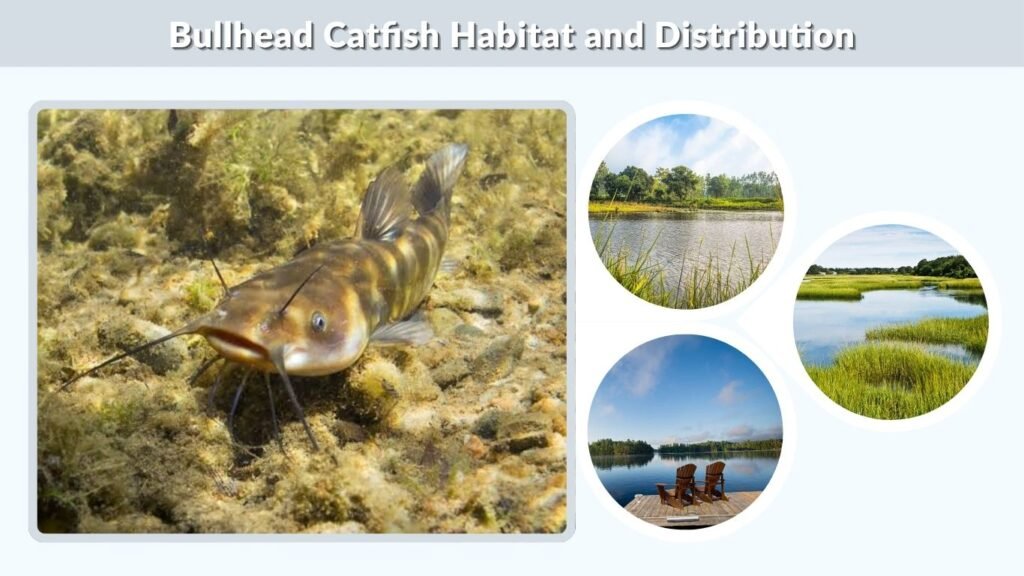
Bullhead catfish inhabit ponds, lakes, reservoirs, oxbows, marshes, backwaters and slow-moving rivers. They normally stay near the bottom, particularly around mud, sand, submerged plants, fallen branches and other cover.
These fish tolerate warm water, low oxygen and conditions that many other game fish avoid. Their ability to survive in difficult environments explains why they sometimes become abundant in old ponds, shallow lakes and sluggish waterways. Most species are native to portions of North America, although stocking has established them outside parts of their original ranges.
What Do Bullhead Catfish Eat?
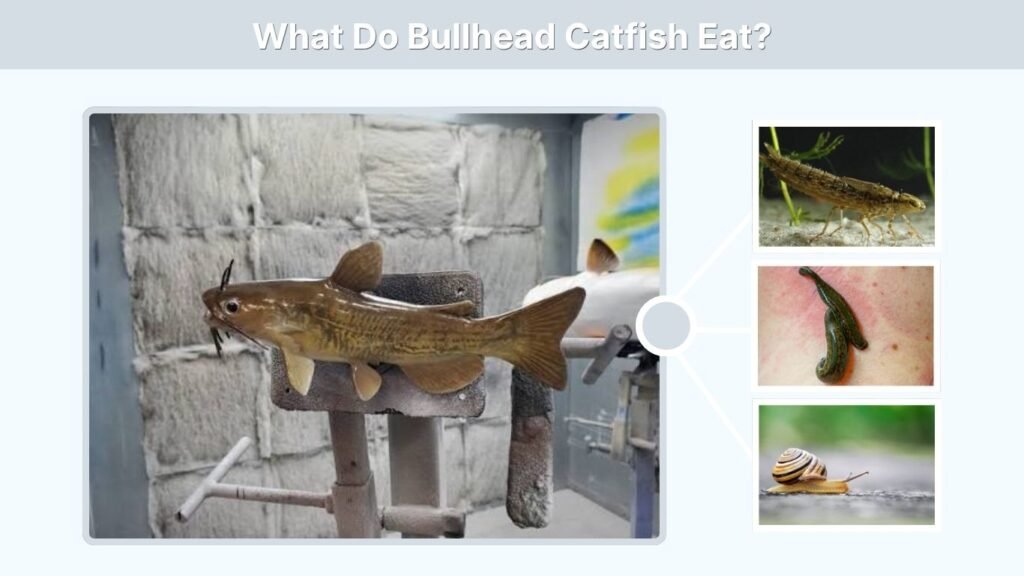
Bullheads are opportunistic omnivores that collect most of their food on or near the bottom. Their diet changes with their size and whatever food is available.
Common foods include:
- Aquatic insect larvae
- Worms and leeches
- Crayfish and small crustaceans
- Snails and other mollusks
- Small fish
- Fish eggs
- Algae and aquatic plants
- Dead animal material
- Organic debris
Bullheads rely heavily on smell, taste and their sensitive barbels while feeding. They are usually most active at night, although hungry fish may feed during daylight, especially in stained or muddy water.
How to Catch Bullhead Catfish
Bullhead fishing does not require expensive equipment. A basic rod, light or medium line, small hook and simple bottom rig are usually enough.
Best Bait for Bullhead Catfish
Nightcrawlers and ordinary garden worms are among the most dependable choices. Other effective baits include:
- Leeches
- Small minnows
- Shrimp
- Liver
- Dough balls
- Crayfish
- Chicken pieces
- Commercial stink bait
Strong-smelling bait can be particularly effective because bullheads possess an excellent sense of smell. Always check local fishing regulations before using live fish, crayfish or other natural bait.
Best Fishing Method
Place the bait directly on or just above the bottom. Use only enough weight to maintain contact with the bottom because excessive resistance may cause a bullhead to drop the bait.
Evening and nighttime fishing are often productive, particularly during late spring and summer when fish move into shallow areas to feed. Watch for several small taps followed by a steady pull before setting the hook.
Are Bullhead Catfish Good to Eat?
Bullhead catfish are edible and can have mild, flavorful meat when taken from cool, clean water. They are commonly skinned before cooking because they have tough, scaleless skin.
Fish from warm, muddy or polluted-looking water may have a stronger flavor. Keep the catch cold, clean it promptly and follow local fish-consumption advisories. Frying is common, but bullheads can also be baked, grilled or added to fish stew.
Are Bullhead Catfish Poisonous or Venomous?
Bullheads are not poisonous to eat when properly cleaned, but their dorsal and pectoral spines can cause painful puncture wounds. Tissue around the spines may introduce irritating substances into the wound, resulting in pain and swelling.
Hold the fish carefully behind the pectoral spines without squeezing it. If punctured, clean the wound thoroughly and watch for increasing redness, swelling, discharge, numbness or severe pain. Seek medical care for deep wounds or signs of infection.
Bullhead vs Channel and Flathead Catfish
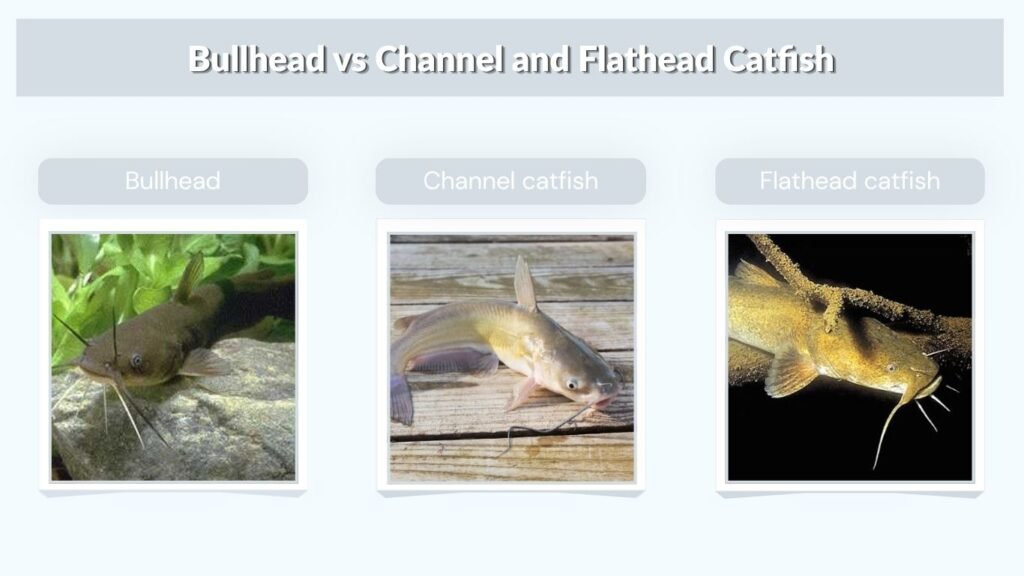
| Feature | Bullhead | Channel catfish | Flathead catfish |
| Tail | Square or slightly notched | Deeply forked | Square or slightly notched |
| Typical build | Short and stocky | Longer and streamlined | Broad, long and heavy |
| Typical size | Usually small | Medium to large | Large to extremely large |
| Feeding style | Omnivorous bottom feeder | Opportunistic omnivore | Primarily predatory |
| Common habitat | Ponds and slow water | Rivers, lakes and reservoirs | Large rivers and reservoirs |
A bullhead is a type of catfish, not a separate group of fish. The term “catfish” covers thousands of species, while “bullhead” refers to a much smaller group recognized by their broad heads, rounded bodies and generally unforked tails.
FAQs
Do bullhead catfish have stingers?
Bullheads do not possess separate stingers like bees. Their dorsal and pectoral fins contain rigid, pointed spines capable of puncturing skin. The barbels around the mouth are harmless sensory structures and are not responsible for the painful injuries sometimes called bullhead “stings.”
Can bullhead catfish live in an aquarium?
Juveniles may survive in a large, properly filtered aquarium, but they grow quickly, produce considerable waste and may eat smaller tank mates. Adult bullheads generally require a very large aquarium or outdoor pond with secure hiding areas and excellent filtration.
Are bullhead catfish invasive?
Bullheads are native to large areas of North America, so they are not invasive everywhere. However, species introduced beyond their natural ranges can become nonnative predators and compete with local wildlife. Their legal status therefore depends on the particular species and location.
What is the best time to catch bullhead catfish?
Late spring through early fall usually provides the most consistent action. Fish during the evening, at night or shortly after rainfall when bullheads move through shallow water searching for food. Winter fishing is generally slower because their activity declines as water temperatures fall.
What is the difference between a bullhead and a catfish?
Every bullhead is a catfish, but not every catfish is a bullhead. Bullheads are generally smaller and stockier than channel or blue catfish. They usually have broad heads and square or slightly notched tails rather than the deeply forked tails seen on channel catfish.