
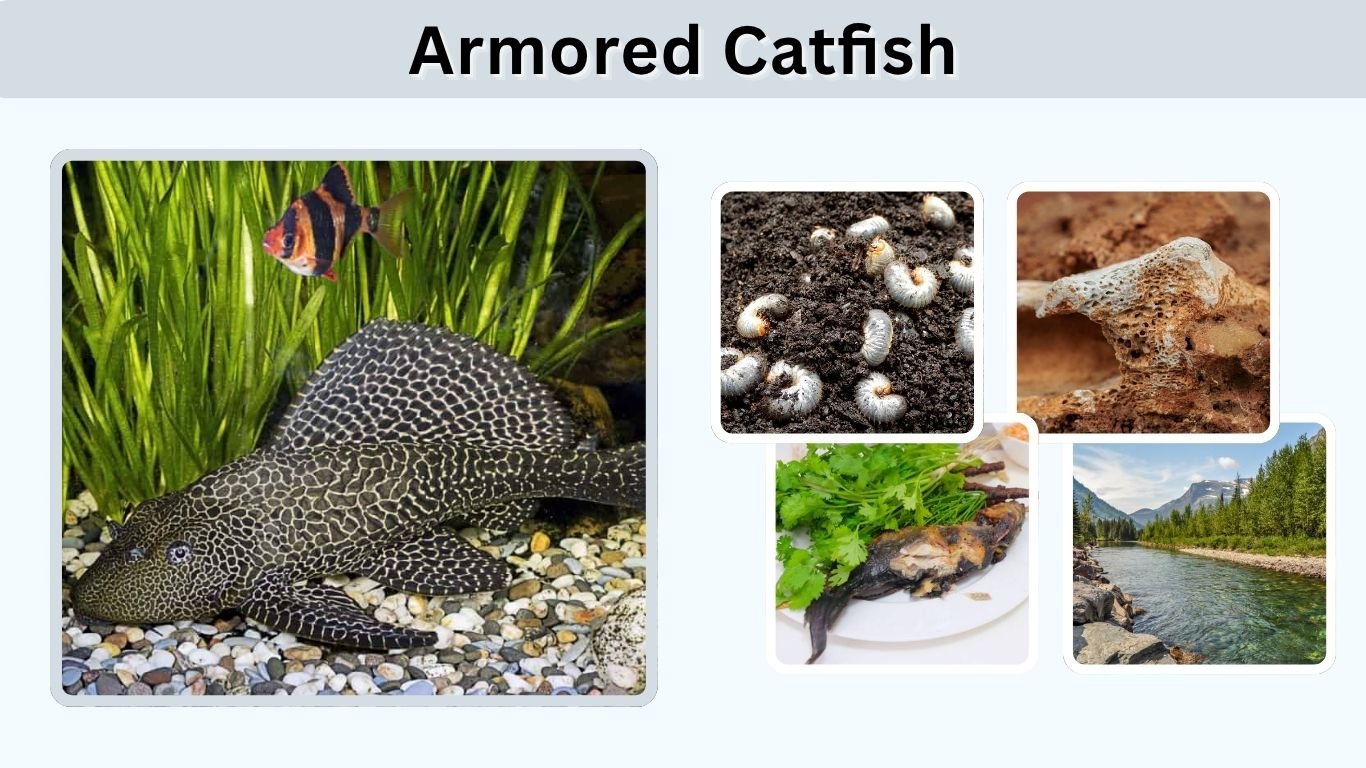
Armored catfish are unusual freshwater fish protected by rows of hard, bony plates instead of ordinary scales. The name commonly refers to suckermouth catfish in the family Loricariidae, including plecos and sailfin catfish. These South American fish are popular in aquariums because they graze on algae and have striking patterns. However, released pets have established invasive populations in Florida, Texas, and other warm regions. Large populations can damage riverbanks, alter aquatic habitats, and disturb native wildlife.
Armored Catfish Quick Facts
“Armored catfish” is a broad name covering many species. In the United States, it most often refers to invasive suckermouth and sailfin catfish belonging to the genera Hypostomus and Pterygoplichthys.
| Feature | Information |
| Main family | Loricariidae |
| Common names | Pleco, suckermouth catfish, sailfin catfish |
| Native range | Primarily South America |
| Habitat | Rivers, streams, canals, lakes and wetlands |
| Diet | Algae, detritus and small bottom-dwelling organisms |
| Maximum Florida size | More than 20 inches |
| Body covering | Flexible bony plates |
| Mouth | Downward-facing suction mouth |
| U.S. status | Nonnative or invasive in several regions |
Sailfin armored catfish are established in Florida, Texas, and Nevada. Their introduction is generally associated with aquarium releases.
What Is an Armored Catfish?
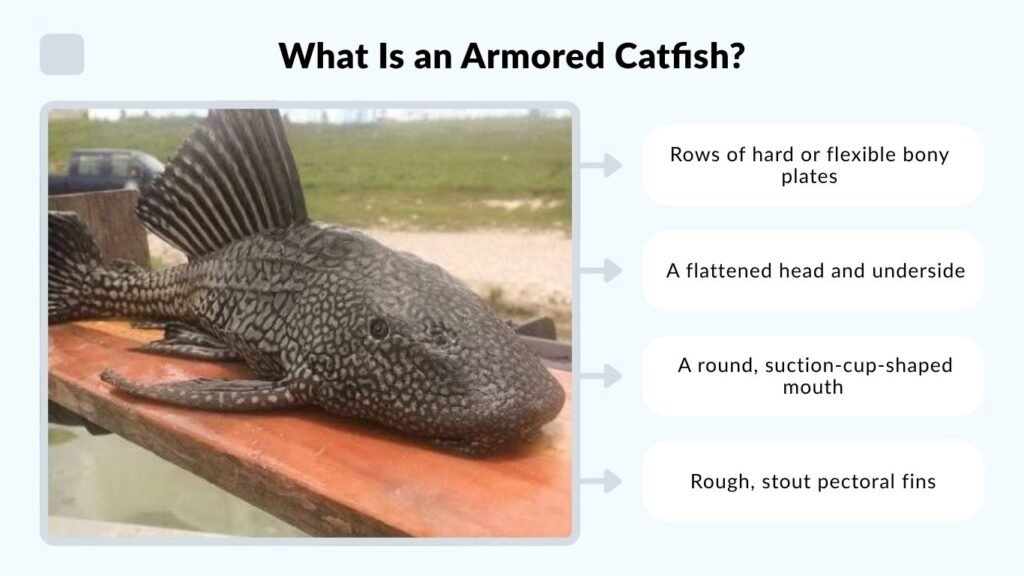
An armored catfish is a bottom-dwelling fish with bony plates covering much of its body. Unlike native North American catfish, which usually have smooth, scaleless skin, loricariids have visible armor and a mouth positioned beneath the head.
Identification Features
Common features include:
- Rows of hard or flexible bony plates
- A flattened head and underside
- A round, suction-cup-shaped mouth
- Rough, stout pectoral fins
- Strong dorsal and pectoral spines
- Brown, gray or black coloration
- Spots, stripes or worm-like markings
- A large dorsal fin in sailfin species
The suction mouth allows the fish to attach to rocks, wood and other surfaces while scraping food. USGS identifies the combination of bony plates and a ventral suction mouth as the clearest distinction between loricariids and native North American catfish.
Why Do They Have Armor and Spikes?
The bony plates protect the body from predators and physical damage. Their raised dorsal and pectoral spines make them difficult for predators to swallow and can also cause painful punctures when the fish is handled.
The fish are not generally considered poisonous, but their sharp spines and rough body can injure bare hands. Thick gloves and appropriate fishing tools should be used when handling a large specimen.
Types of Armored Catfish
The name applies to hundreds of loricariid species, but several groups are particularly familiar to aquarium keepers and anglers.
Common Pleco
The common pleco is often sold as a small algae eater but may eventually become much larger than buyers expect. Fish sold under this name may belong to Hypostomus, Pterygoplichthys or related genera.
Sailfin Armored Catfish
Sailfin catfish have an enlarged dorsal fin containing numerous rays. Species established in Florida include the vermiculated sailfin catfish, Orinoco sailfin catfish and related hybrids.
Bristlenose Pleco
Bristlenose plecos belong to the genus Ancistrus. They remain smaller than common and sailfin plecos, making them generally more suitable for home aquariums.
Twig and Whiptail Catfish
These armored catfish have long, narrow bodies resembling sticks or submerged vegetation. Their shape provides camouflage among roots, leaves and branches.
Hoplo Catfish
Hoplo or hassa catfish are sometimes called armored catfish, but they belong to the family Callichthyidae rather than Loricariidae. They have two rows of bony plates and lack the large suction mouth typical of plecos.
Where Do Armored Catfish Live?
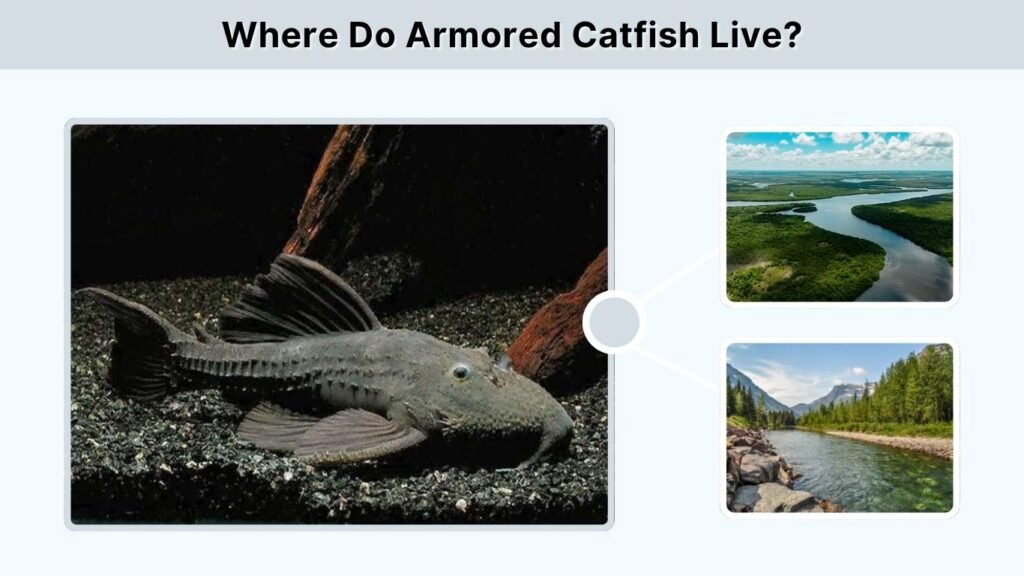
Suckermouth armored catfish are native to tropical freshwater systems in South America. Depending on the species, they inhabit rivers, streams, floodplains and slow-moving waters with rocks, submerged wood or muddy bottoms.
Many species tolerate warm, oxygen-poor environments. Some Pterygoplichthys are facultative air breathers that surface and gulp atmospheric air when oxygen levels in the water fall. Their modified digestive system helps absorb oxygen and increases their ability to survive difficult aquatic conditions.
They are freshwater fish, but some invasive populations can tolerate moderately brackish water. Experiments found certain Pterygoplichthys surviving salinities of up to approximately 10–12 parts per thousand for extended periods, potentially allowing movement through estuaries.
Armored Catfish in Florida
Several armored catfish species have established reproducing populations in Florida’s canals, rivers, lakes and springs. Orinoco sailfin catfish have been recorded in southeastern Florida since about 1971, while other sailfin species later spread into additional river systems.
Florida species include:
- Orinoco sailfin catfish
- Vermiculated sailfin catfish
- Paraná sailfin catfish
- Unidentified or hybrid Pterygoplichthys
- Suckermouth catfish in the genus Hypostomus
Released or escaped aquarium fish are believed to be the main source of these populations. Florida law prohibits releasing nonnative animals into the wild without authorization.
Armored Catfish in Texas
Common plecos and Paraná sailfin catfish are established in parts of Texas. Populations occur in warm springs, rivers and urban waterways, including areas where constant warm-water conditions allow tropical fish to survive winter.
Aquarium releases are considered an important source. Texas invasive-species information warns that armored catfish can burrow into banks, increase erosion and reduce water quality.
Why Are Armored Catfish Considered Bad?
Armored catfish are not harmful within their native ecosystems. Problems develop when large populations become established outside their natural range.
Riverbank Erosion
Male sailfin catfish dig long nesting burrows into shorelines. Numerous burrows can destabilize banks, increase erosion and release sediment into the water. They may also damage retaining walls, dams and other shoreline structures.
Competition and Habitat Changes
Large populations graze heavily on algae and consume detritus and bottom-dwelling organisms. This can change food availability and habitat conditions for native fish and invertebrates.
USGS records possible effects on aquatic vegetation, nutrient cycling, native species and the quality of bottom habitats, although the severity varies by location.
Disturbance to Manatees
In Florida springs, armored catfish have been observed attaching themselves to resting manatees and grazing material from their skin. Manatees carrying these fish showed increased activity, potentially interfering with rest during winter.
What Do Armored Catfish Eat?
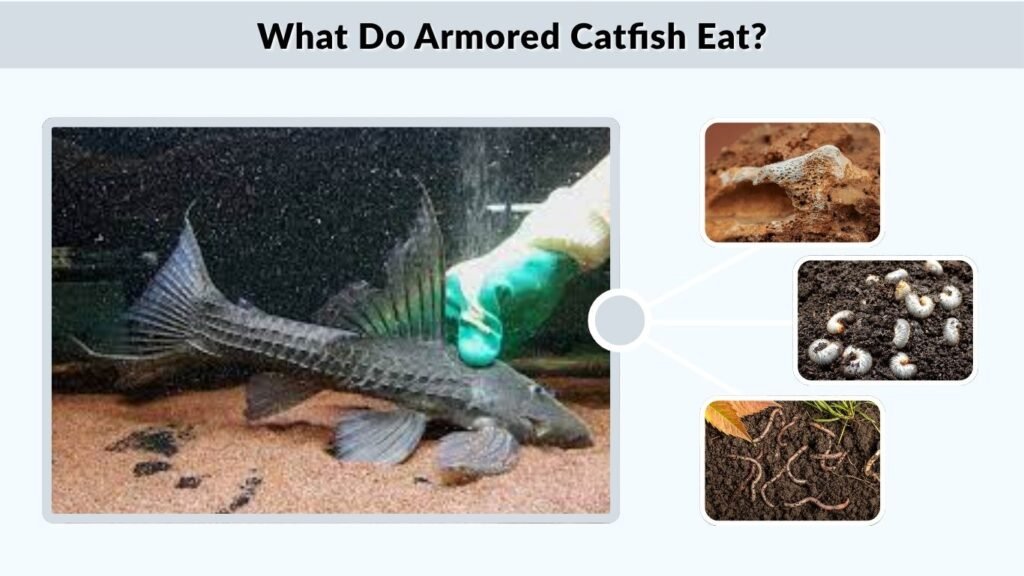
Armored catfish are often marketed as algae eaters, but algae is only part of their diet.
Their food may include:
- Attached algae
- Decaying plant and animal material
- Organic sediment
- Insect larvae
- Worms
- Small crustaceans
- Water fleas
- Tiny freshwater mollusks
- Uneaten fish food in aquariums
Florida examinations found detritus in every studied sailfin catfish stomach. Most also contained algae, sand, small bivalves and other organic material. The fish are especially active around dusk, when they search the bottom for food.
They do not keep an aquarium permanently clean. Captive plecos still require appropriate food, filtration and regular tank maintenance.
How Big Do Armored Catfish Get?
Size varies enormously among species. Small bristlenose and whiptail species may remain only a few inches long, while common and sailfin plecos can outgrow ordinary aquariums.
Florida sailfin catfish can exceed 20 inches and weigh around three pounds. University of Florida guidance notes that common and sailfin plecos commonly reach approximately 18 inches.
| Type | Approximate adult size |
| Small whiptail species | 4–6 inches |
| Bristlenose pleco | 4–6 inches |
| Common pleco | Often 12–18 inches |
| Sailfin pleco | Often 15–20+ inches |
Because stores frequently sell juveniles only a few inches long, buyers should research the adult size before choosing a species.
Can Armored Catfish Survive on Land?
Some armored catfish can breathe atmospheric air and tolerate oxygen-poor water, but they are not true walking catfish. They may remain alive for a period outside water when their bodies and respiratory surfaces stay moist.
The exact survival time varies with species, fish size, temperature, humidity and physical condition. Claims that every armored catfish can live on dry land for days should be treated cautiously. Air-breathing ability primarily helps these fish survive low-oxygen water rather than live permanently on land.
Can You Eat Armored Catfish?
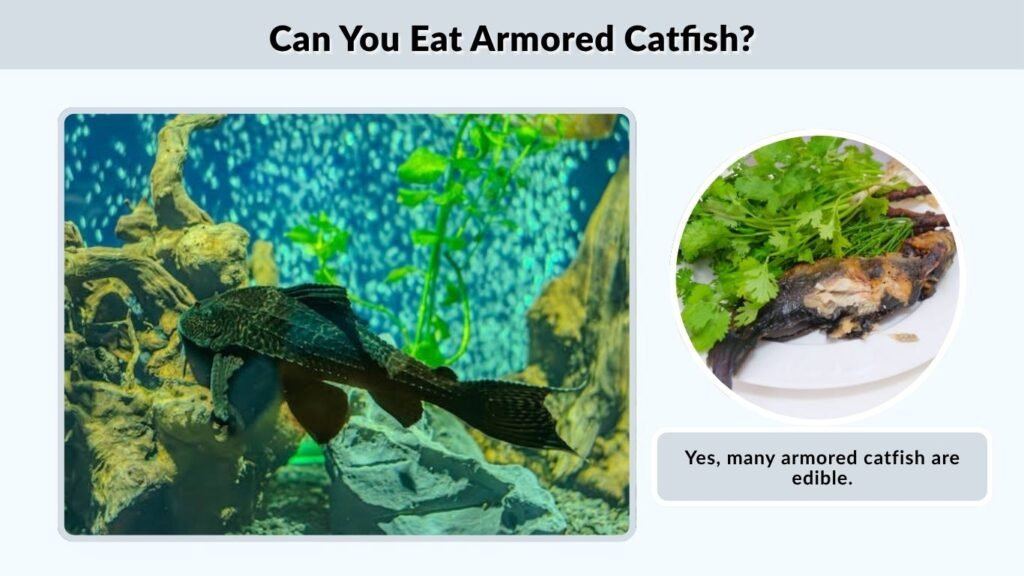
Yes, many armored catfish are edible when collected from clean, legal fishing waters and prepared correctly. Their hard armor makes them more difficult to clean than ordinary catfish.
The Florida Fish and Wildlife Conservation Commission rates sailfin catfish as fair to good eating. It recommends cooking the fish inside its armor and removing the white, flaky meat afterward. Florida currently lists no bag or size limit for sailfin catfish.
Before eating any wild fish, check local harvesting regulations and contamination advisories. Avoid fish from polluted canals or waters subject to consumption warnings.
Armored Catfish in Aquariums
Plecos can be useful and attractive aquarium fish, but species selection is important. Large common and sailfin plecos produce substantial waste and require spacious tanks with powerful filtration.
A proper aquarium should provide:
- Enough space for the species’ adult size
- Strong biological and mechanical filtration
- Driftwood, caves and shaded hiding places
- Good oxygenation
- Sinking algae wafers and vegetables
- Species-appropriate protein foods
- Regular water testing and partial water changes
Never release an unwanted aquarium fish into a river, pond, canal or drainage system. Contact an aquarium store, fish club, rescue organization or local wildlife agency for responsible rehoming options.
FAQs
Are armored catfish and plecos the same?
Plecos are suckermouth armored catfish belonging to the Loricariidae family. However, “armored catfish” can also describe other plated catfish, including hoplos. Therefore, every pleco is an armored catfish, but not every armored catfish is a pleco.
Are armored catfish invasive?
They are native and ecologically important in South America. They become invasive when introduced elsewhere and establish populations that damage habitats or displace native wildlife. Sailfin armored catfish are established in several U.S. states.
Are armored catfish poisonous?
They are not generally considered poisonous, but they have sharp dorsal and pectoral spines capable of causing puncture wounds. Handle them carefully and never pick up a large specimen with unprotected hands.
Where can you catch armored catfish in Florida?
They occur in many warm canals, lakes, rivers and springs across peninsular Florida. Their exact distribution changes as populations expand, so current reports and local regulations should be checked before fishing.
How long do armored catfish live?
Lifespan depends on the species. Many well-maintained aquarium plecos can live for a decade or longer. Water quality, diet, adult tank size and species-specific care strongly influence longevity.