
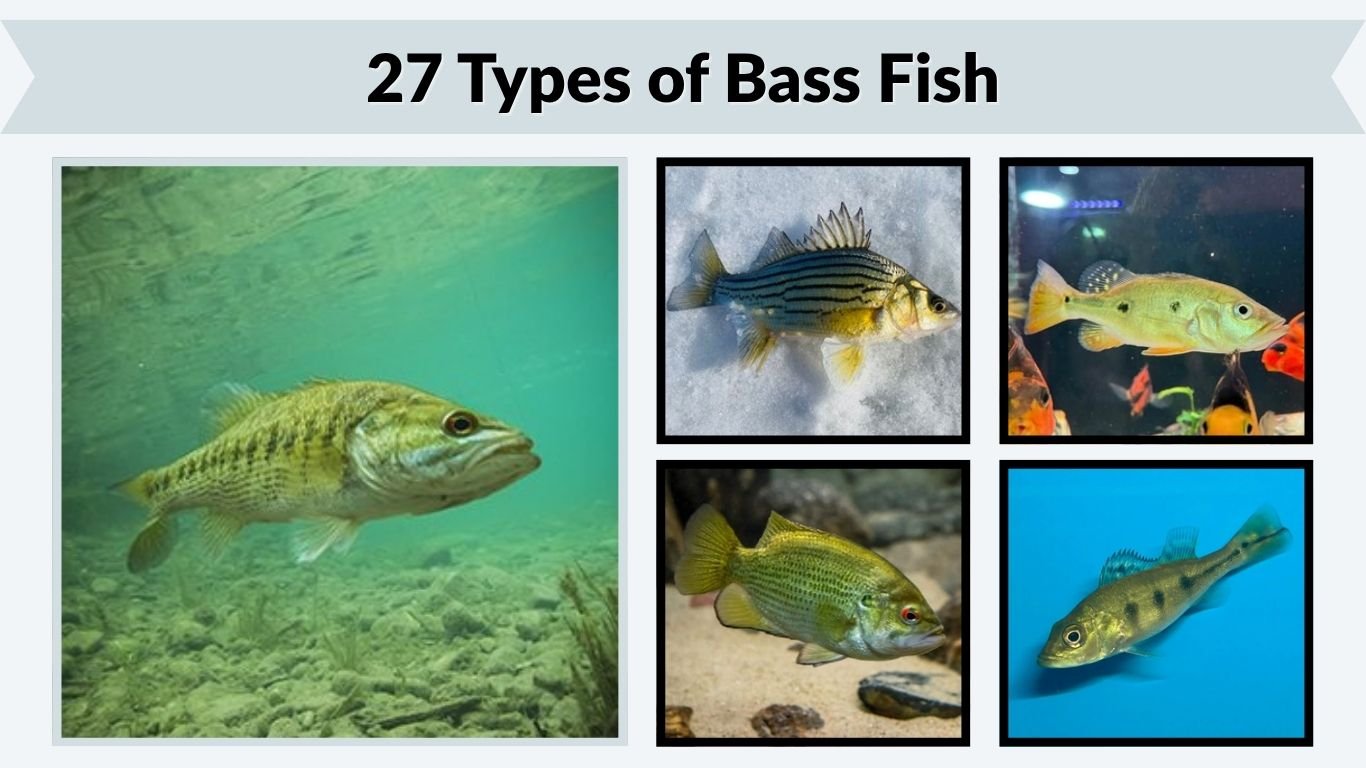
Bass fish are among the most popular freshwater and saltwater game fish in the world. Anglers love them because of their aggressive strikes, powerful fights, and wide variety of species found across rivers, lakes, reservoirs, and coastal waters. From largemouth bass to peacock bass, each species has unique characteristics and habitats.
In this guide, you will discover 27 different types of bass fish along with their identification features, habitats, behavior, diet, and fishing importance. Whether you are a beginner or experienced angler, learning about these bass species can improve your fishing knowledge and help you identify them more easily.
1. Largemouth Bass
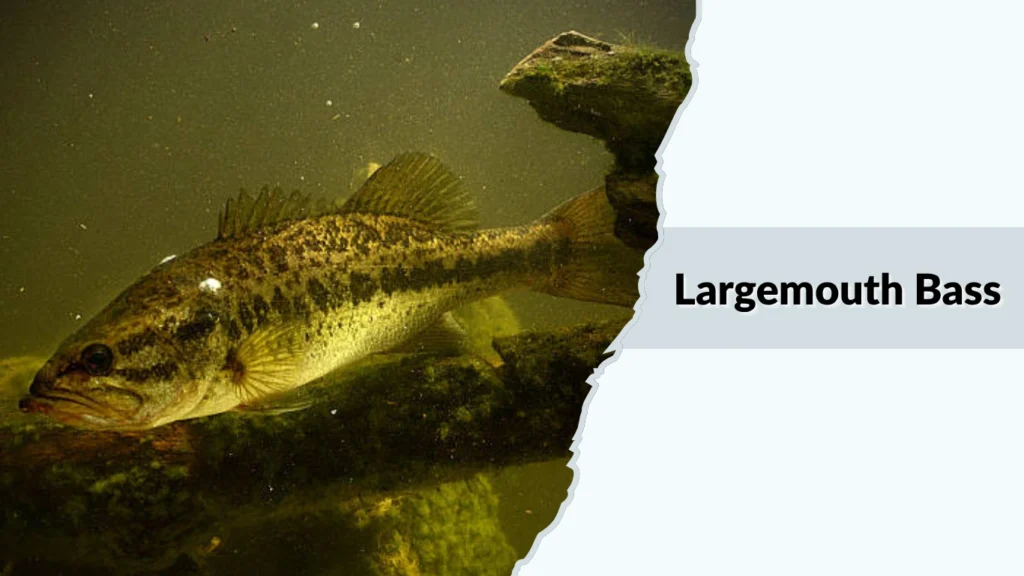
Largemouth Bass is one of the most popular freshwater game fish in North America. It is well known for its aggressive feeding behavior, large mouth, and ability to thrive in lakes, ponds, rivers, and reservoirs. Anglers highly value this species because of its size, strength, and exciting fights.
Identification
- Olive green body with a dark horizontal stripe along the sides
- Large mouth extending past the back edge of the eye
- Upper jaw noticeably larger than most other bass species
- Dorsal fin divided into spiny and soft-rayed sections
- Average size ranges from 12–25 inches
- Can weigh over 20 pounds in ideal conditions
Habitat
Largemouth Bass prefer warm freshwater environments with slow-moving or calm water. They are commonly found near aquatic vegetation, fallen trees, docks, and rocky cover where they can ambush prey. This species thrives in lakes, ponds, reservoirs, and sluggish rivers with abundant cover.
Diet
Largemouth Bass are opportunistic predators that feed on a wide variety of prey. Their diet mainly includes smaller fish, crayfish, frogs, insects, and occasionally small birds or rodents. Younger bass primarily consume insects and tiny aquatic organisms before shifting to larger prey as they grow.
Behavior
This species is highly territorial and aggressive, especially during feeding and spawning periods. Largemouth Bass often hide in cover and strike prey suddenly. They are most active during early morning and late evening when water temperatures are moderate.
Fishing Importance
Largemouth Bass is considered one of the top sport fish worldwide. Bass fishing tournaments attract millions of anglers each year, particularly in the United States. The species is prized for its fighting ability and is commonly targeted using artificial lures, soft plastics, and live bait.
2. Smallmouth Bass
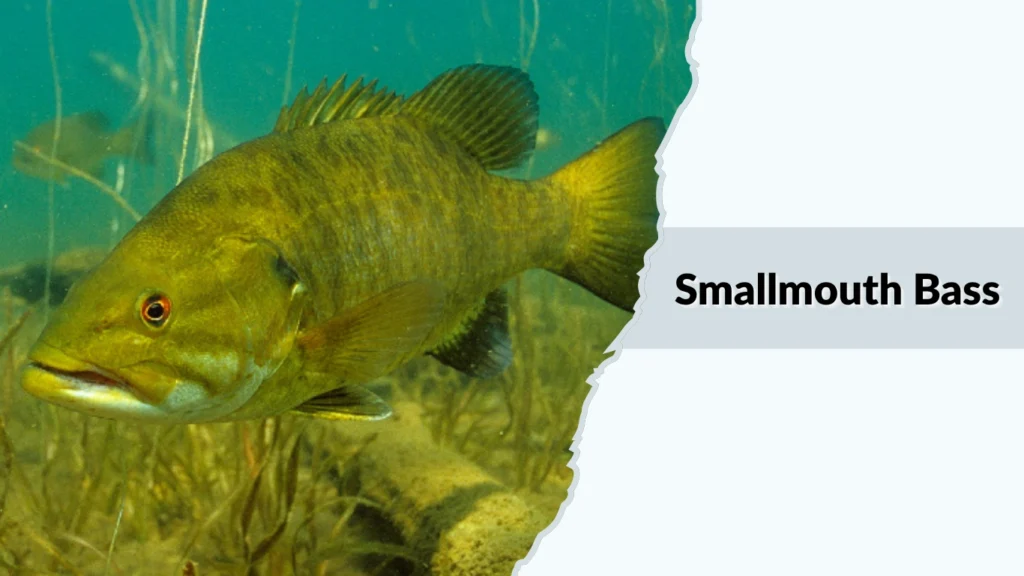
Smallmouth Bass is a popular freshwater fish known for its bronze-colored body and strong fighting ability. It is highly respected among anglers because of its energetic jumps and aggressive strikes. This species is commonly found in clear rivers and rocky lakes throughout North America.
Identification
- Bronze, brown, or olive-colored body
- Vertical dark bars along the sides
- Smaller mouth that does not extend past the eye
- Streamlined and muscular body shape
- Red or orange eyes are common in adults
- Usually grows between 12–20 inches long
Habitat
Smallmouth Bass prefer cooler and clearer water than largemouth bass. They are commonly found in rocky lakes, flowing rivers, and streams with gravel or sandy bottoms. This species usually stays near underwater rocks, ledges, and current breaks where food is abundant.
Diet
Smallmouth Bass feed mainly on crayfish, insects, minnows, and smaller fish. Crayfish are one of their favorite food sources in rocky habitats. Juveniles consume aquatic insects and plankton before transitioning to larger prey as they mature.
Behavior
This species is active, aggressive, and highly responsive to moving prey. Smallmouth Bass often travel in small groups and are known for their fast swimming and acrobatic jumps when hooked. They become more active during warmer months and tend to move deeper during colder seasons.
Fishing Importance
Smallmouth Bass is considered one of the best freshwater sport fish because of its strength and endurance. Anglers commonly catch them using crankbaits, jigs, spinnerbaits, and soft plastic lures. Their aggressive nature and powerful fights make them a favorite target in recreational fishing tournaments.
3. Spotted Bass
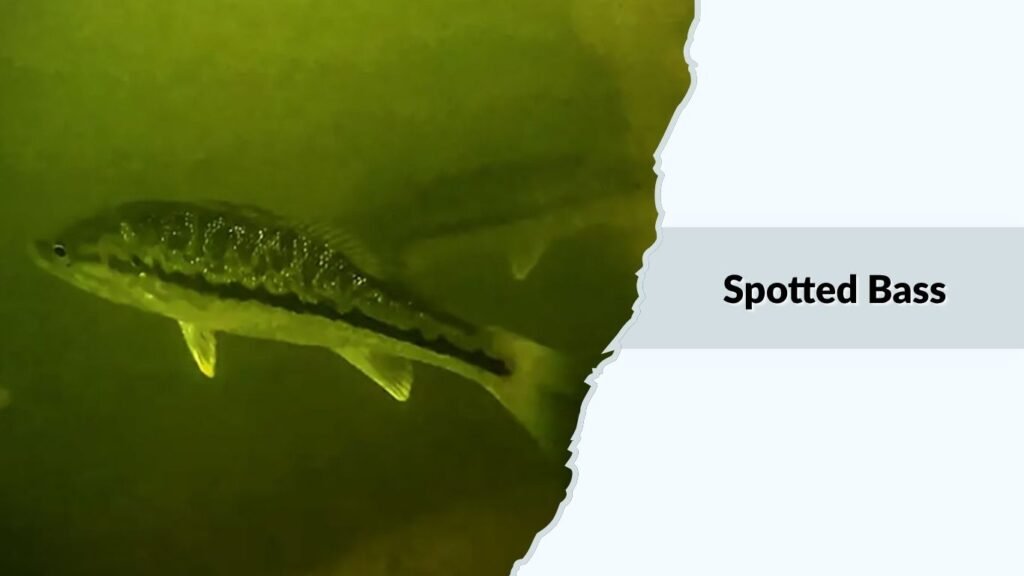
Spotted Bass is a freshwater game fish closely related to largemouth and smallmouth bass. It is recognized for its rows of dark spots and strong fighting behavior. This species is popular among anglers because of its aggressive strikes and ability to thrive in rivers, reservoirs, and clear lakes.
Identification
- Greenish-gray body with dark horizontal rows of spots
- Smaller mouth than largemouth bass
- Jaw usually does not extend beyond the eye
- Rough patch of teeth on the tongue
- Dorsal fins appear more connected than in largemouth bass
- Commonly grows between 10–17 inches long
Habitat
Spotted Bass prefer clear, moderately flowing water with rocky or gravel bottoms. They are often found in reservoirs, rivers, and deep lakes with submerged structures such as rocks, ledges, and fallen timber. This species tolerates stronger currents better than largemouth bass.
Diet
Spotted Bass mainly feed on small fish, crayfish, insects, and aquatic invertebrates. Younger fish consume insects and plankton, while adults target larger prey. They are active hunters and often chase baitfish in open water.
Behavior
This species is energetic and aggressive, especially during feeding periods. Spotted Bass frequently gather near underwater structures and are known for their quick movements and strong resistance when hooked. They remain active in both shallow and deeper waters depending on water temperature and season.
Fishing Importance
Spotted Bass is highly valued in recreational fishing because of its fighting strength and aggressive nature. Anglers often catch them using jigs, crankbaits, soft plastics, and topwater lures. Their popularity continues to grow in competitive bass fishing tournaments across North America.
4. Shoal Bass
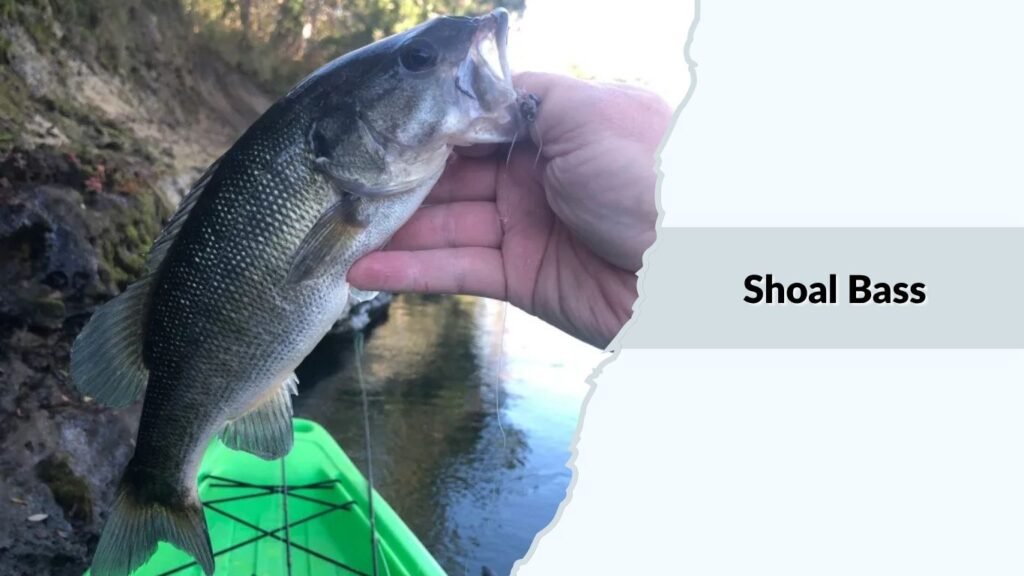
Shoal Bass is a rare freshwater bass species native to flowing river systems in the southeastern United States. It is admired for its strength, beautiful markings, and preference for fast-moving water. Anglers value this fish because of its aggressive behavior and powerful fight in river environments.
Identification
- Olive to bronze-colored body with dark vertical markings
- Distinct dark spot near the tail area
- Mouth larger than smallmouth bass but smaller than largemouth bass
- Scales on the cheeks are usually smaller
- Strong, streamlined body built for river currents
- Typically grows between 12–24 inches long
Habitat
Shoal Bass primarily inhabit clear, rocky rivers and streams with moderate to strong currents. They are commonly found around shoals, ledges, boulders, and submerged logs where water flow is steady. This species depends heavily on healthy river ecosystems with high oxygen levels.
Diet
Shoal Bass feed on crayfish, insects, minnows, and smaller fish. Crayfish make up a major portion of their diet in rocky habitats. Juveniles mostly consume aquatic insects before moving to larger prey as they mature.
Behavior
This species is highly aggressive and well adapted to fast-flowing water. Shoal Bass often stay close to rocks and current breaks where they ambush prey. They are known for their strong swimming ability and explosive strikes when feeding.
Fishing Importance
Shoal Bass is considered a prized sport fish among river anglers. Because of its limited geographic range, it is less commonly caught than other bass species. Anglers usually target them using topwater lures, spinnerbaits, soft plastics, and live bait in rocky river systems.
5. Redeye Bass
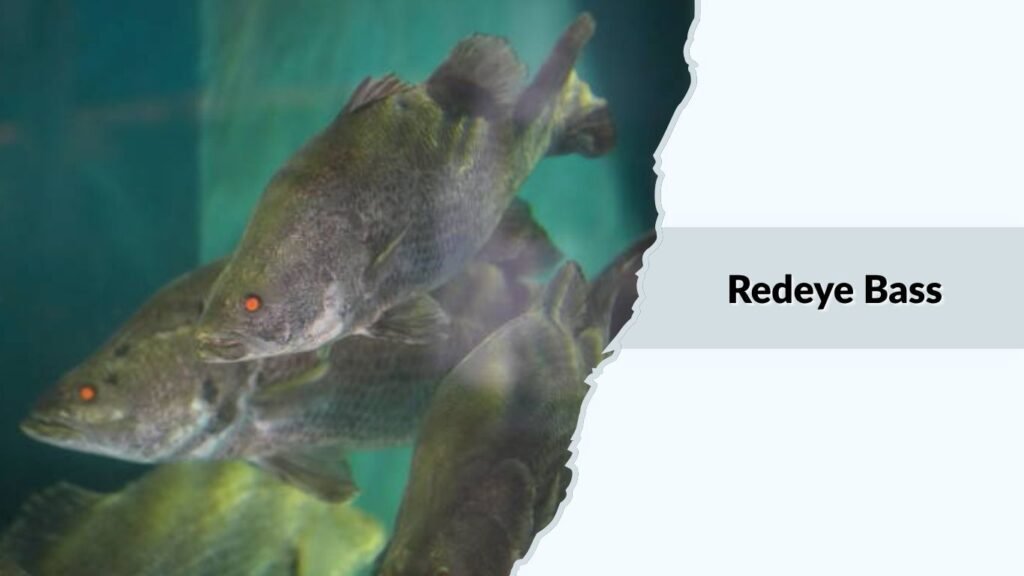
Redeye Bass is a small but aggressive freshwater bass species native to river systems in the southeastern United States. It is especially known for its striking red eyes and energetic fighting ability. Although smaller than many other bass species, it remains highly valued by anglers who enjoy fishing in clear streams and rivers.
Identification
- Olive or bronze-colored body with dark side markings
- Distinct red or orange eyes
- White edges on the tail, anal, and pelvic fins
- Streamlined body adapted for flowing water
- Smaller mouth compared to largemouth bass
- Usually grows between 6–12 inches long
Habitat
Redeye Bass prefer cool, clear rivers and streams with rocky bottoms and moderate currents. They are commonly found near boulders, submerged wood, and shaded areas where they can hide and feed. This species thrives in clean water with high oxygen levels.
Diet
Redeye Bass mainly feed on insects, crayfish, minnows, and small aquatic organisms. Younger fish consume aquatic insects and larvae, while adults target larger prey such as crayfish and baitfish. They are active predators in shallow river habitats.
Behavior
This species is aggressive, territorial, and highly active in moving water. Redeye Bass often remain near rocks and current breaks where food is easily available. Despite their smaller size, they fight hard when hooked and frequently make quick runs in strong currents.
Fishing Importance
Redeye Bass is popular among anglers who enjoy light tackle and river fishing. Their aggressive strikes and energetic fights make them exciting to catch. Small crankbaits, soft plastics, inline spinners, and live bait are commonly used to target this species in streams and rivers.
6. Suwannee Bass
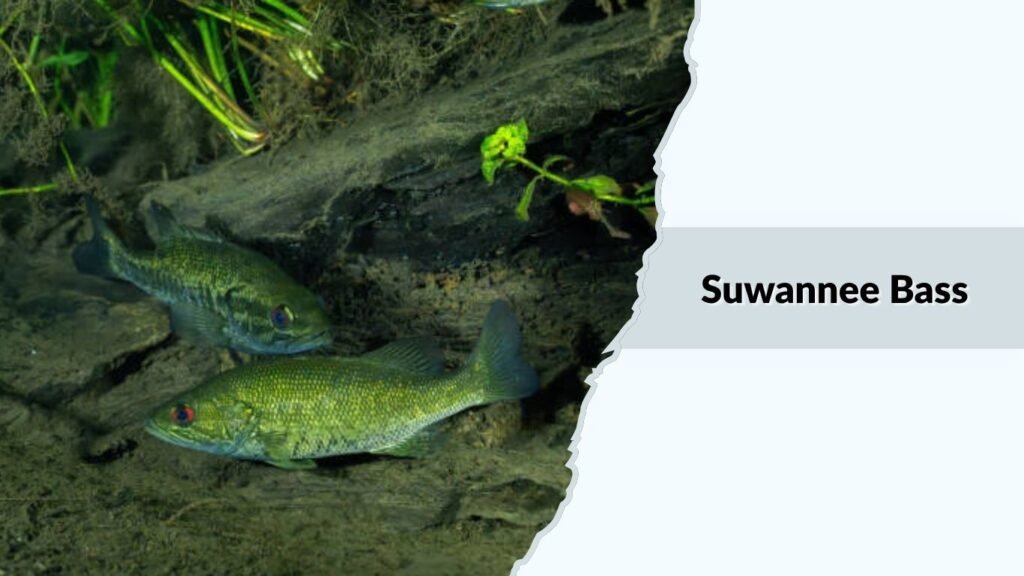
Suwannee Bass is a unique freshwater bass species native to rivers in Florida and southern Georgia. It is recognized for its colorful appearance, compact body, and preference for clean flowing water. This species is popular among local anglers because of its aggressive behavior and strong resistance when caught.
Identification
- Olive green to brown body with dark blotches along the sides
- Turquoise or bluish coloring around the cheeks and fins
- Short and stocky body shape
- Small mouth compared to largemouth bass
- Rounded tail fin with colorful edges
- Usually grows between 8–16 inches long
Habitat
Suwannee Bass inhabit clear rivers, streams, and spring-fed waters with rocky or sandy bottoms. They are commonly found near submerged logs, vegetation, limestone formations, and current breaks. This species depends on healthy freshwater systems with clean, oxygen-rich water.
Diet
Suwannee Bass mainly feed on insects, crayfish, shrimp, and small fish. Juveniles consume aquatic insects and larvae, while adults hunt larger prey near rocks and vegetation. Their feeding activity increases during warmer months.
Behavior
This species is aggressive and highly adapted to river environments. Suwannee Bass often stay near cover where they can ambush prey quickly. They are active swimmers and are known for their strong, fast fights despite their moderate size.
Fishing Importance
Suwannee Bass is an important sport fish in its native range. Anglers commonly use small crankbaits, jigs, soft plastics, and live bait to catch them. Their colorful appearance and energetic fighting ability make them a favorite target for freshwater river fishing enthusiasts.
7. Guadalupe Bass
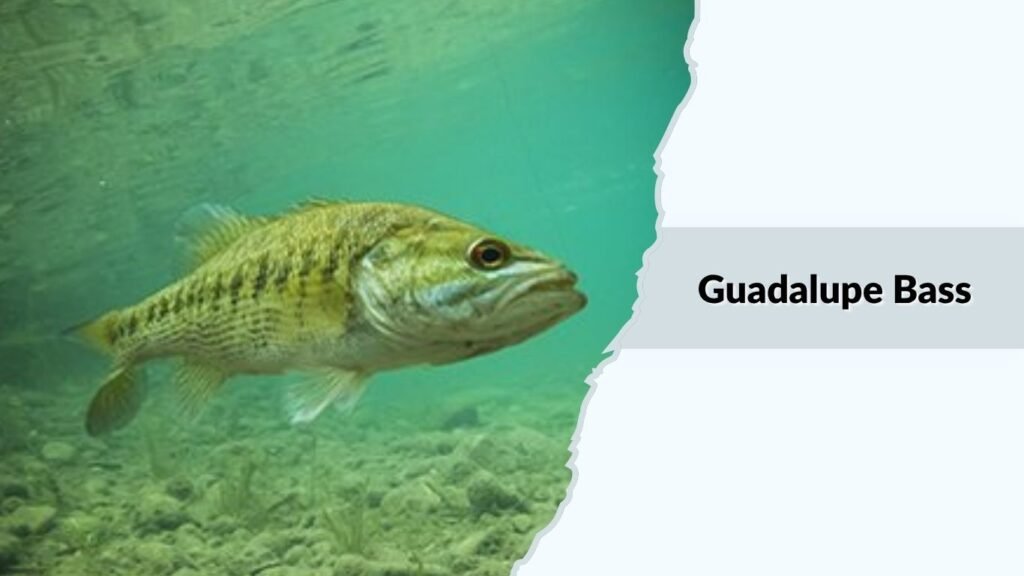
Guadalupe Bass is the official state fish of Texas and one of the rarest black bass species in North America. It is admired for its beautiful markings, river adaptability, and strong fighting behavior. This species mainly inhabits clear streams and rivers within central Texas.
Identification
- Green to olive-colored body with small dark spots
- Distinct horizontal stripe made of diamond-shaped markings
- Body shape similar to smallmouth bass
- Smaller mouth that does not extend beyond the eye
- Streamlined body designed for flowing water
- Typically grows between 10–18 inches long
Habitat
Guadalupe Bass prefer clear, fast-flowing rivers and streams with rocky bottoms. They are commonly found near riffles, pools, submerged rocks, and aquatic vegetation. This species thrives in clean water with steady currents and moderate temperatures.
Diet
Guadalupe Bass feed mainly on insects, crayfish, minnows, and other small aquatic animals. Juveniles mostly consume insect larvae and small invertebrates, while adults target larger prey such as crayfish and baitfish. They actively hunt in shallow moving water.
Behavior
This species is aggressive and highly active in river systems. Guadalupe Bass often stay close to rocks and current breaks where prey is abundant. They are known for their fast strikes, quick movements, and strong resistance when hooked by anglers.
Fishing Importance
Guadalupe Bass is highly valued by freshwater anglers in Texas. Its aggressive nature and energetic fight make it a popular target for light tackle fishing. Anglers commonly use soft plastics, spinnerbaits, topwater lures, and live bait in clear river environments.
8. Choctaw Bass
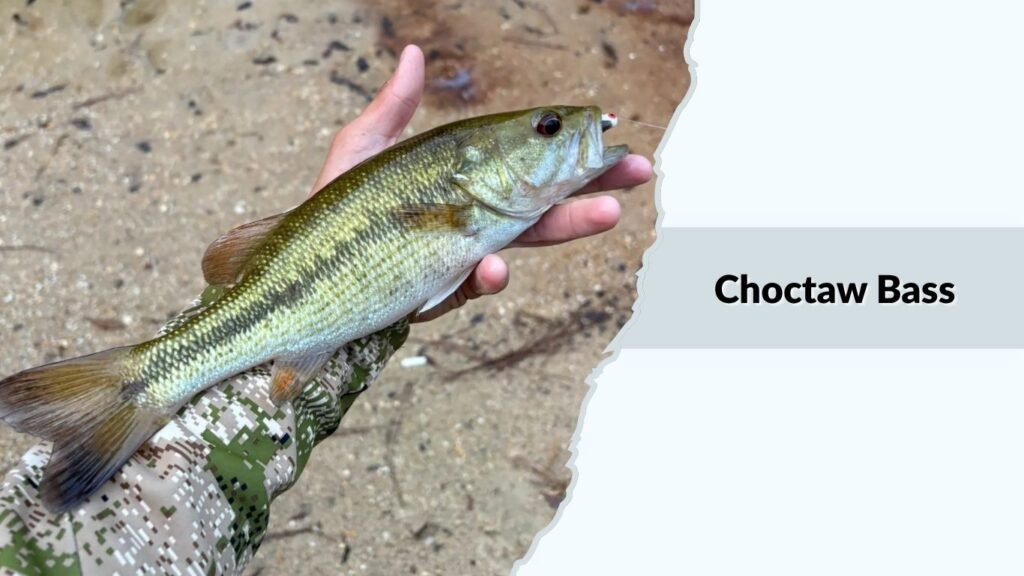
Choctaw Bass is a relatively newly recognized freshwater bass species found in the southeastern United States. It closely resembles spotted and Alabama bass but has unique genetic and physical characteristics. This species is popular among anglers because of its aggressive feeding habits and strong fighting ability.
Identification
- Olive green body with dark lateral markings
- Rows of small dark spots below the horizontal stripe
- Mouth slightly smaller than largemouth bass
- Connected dorsal fins with spiny front section
- Streamlined body suited for rivers and reservoirs
- Commonly grows between 12–18 inches long
Habitat
Choctaw Bass inhabit rivers, streams, and reservoirs with clear to moderately stained water. They are commonly found near rocky structures, submerged wood, vegetation, and areas with moderate current. This species prefers habitats with abundant cover and stable water quality.
Diet
Choctaw Bass feed on small fish, crayfish, insects, and aquatic invertebrates. Juveniles consume insect larvae and tiny prey, while adults actively hunt larger fish and crustaceans. They are opportunistic predators and feed aggressively throughout warmer seasons.
Behavior
This species is energetic, territorial, and aggressive during feeding periods. Choctaw Bass often remain near underwater cover where they ambush prey. They are known for their fast movements, sudden strikes, and strong resistance when caught.
Fishing Importance
Choctaw Bass is becoming increasingly recognized among freshwater anglers. Its aggressive behavior and hard-fighting nature make it an exciting sport fish. Anglers commonly use jigs, crankbaits, spinnerbaits, and soft plastic lures to target this species in rivers and reservoirs.
9. Alabama Bass
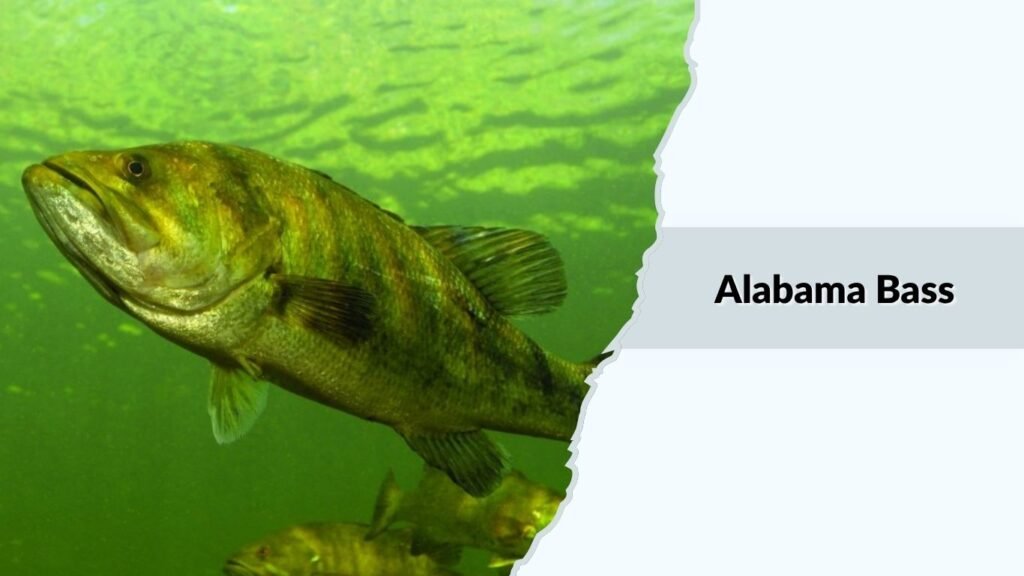
Alabama Bass is a freshwater black bass species native to river systems in the southeastern United States. It is often confused with spotted bass because of its similar appearance, but it has distinct genetic traits and behaviors. This species is known for its aggressive feeding habits and strong fighting ability.
Identification
- Olive green to gray body with dark horizontal markings
- Rows of small dark spots below the lateral stripe
- Mouth smaller than largemouth bass
- Rough patch of teeth present on the tongue
- Connected dorsal fins with spiny front section
- Usually grows between 12–20 inches long
Habitat
Alabama Bass prefer clear rivers, reservoirs, and lakes with rocky or gravel bottoms. They are commonly found near ledges, submerged timber, vegetation, and current breaks. This species adapts well to both flowing and still freshwater environments.
Diet
Alabama Bass mainly feed on minnows, crayfish, insects, and small fish. Juveniles consume aquatic insects and larvae before shifting to larger prey as they mature. They are active predators and often chase baitfish in open water.
Behavior
This species is aggressive, active, and highly competitive during feeding. Alabama Bass frequently stay near underwater structures where prey is concentrated. They are known for their fast strikes, quick swimming movements, and strong resistance when hooked.
Fishing Importance
Alabama Bass is a respected sport fish among freshwater anglers. Its aggressive nature and energetic fights make it a popular target in rivers and reservoirs. Anglers commonly use spinnerbaits, jigs, crankbaits, and soft plastic lures to catch this species.
10. White Bass
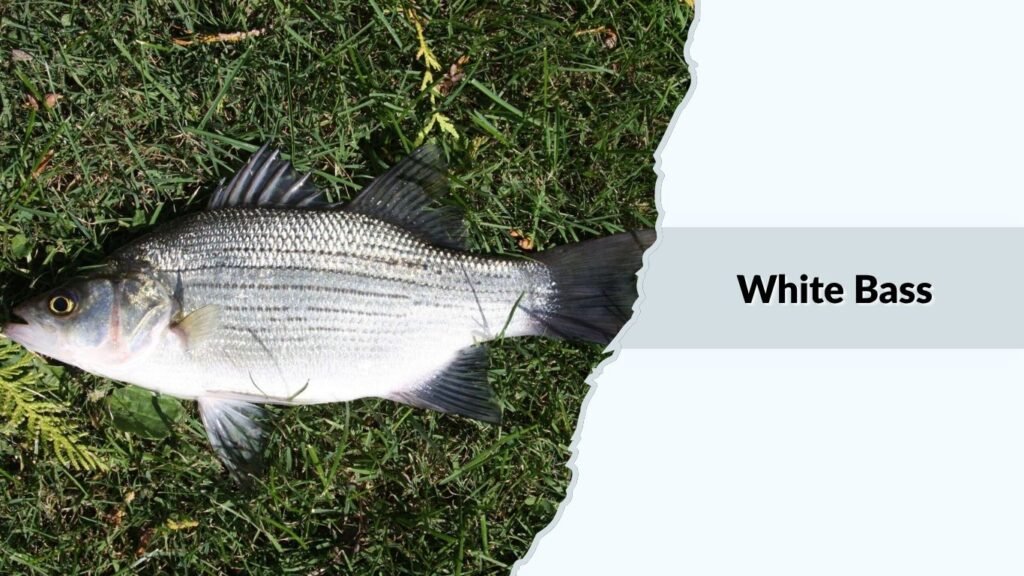
White Bass is a fast-swimming freshwater fish known for its silvery body and schooling behavior. It is widely distributed across North America and is highly valued for both sport fishing and food. This species is especially popular during seasonal spawning runs when large groups move into rivers and streams.
Identification
- Silver-white body with dark horizontal stripes
- Deep and laterally compressed body shape
- Two distinct dorsal fins separated by a gap
- Small mouth compared to black bass species
- Forked tail designed for fast swimming
- Commonly grows between 10–15 inches long
Habitat
White Bass inhabit lakes, reservoirs, rivers, and large streams with open water areas. They often stay in deeper water during warm months and move into shallow rivers for spawning. This species prefers clear to moderately stained freshwater environments.
Diet
White Bass mainly feed on shad, minnows, insects, and small crustaceans. Young fish consume plankton and insect larvae before shifting to larger prey. They are active predators that often hunt in schools to trap baitfish.
Behavior
This species is highly social and usually travels in large schools. White Bass are aggressive feeders and frequently chase prey near the water surface. They become especially active during spawning migrations in spring when they move into flowing rivers.
Fishing Importance
White Bass is a popular target for recreational anglers because of its strong fight and schooling nature. Anglers often catch them using jigs, spoons, crankbaits, and live bait. Their excellent taste also makes them an important food fish in many freshwater regions.
11. Yellow Bass
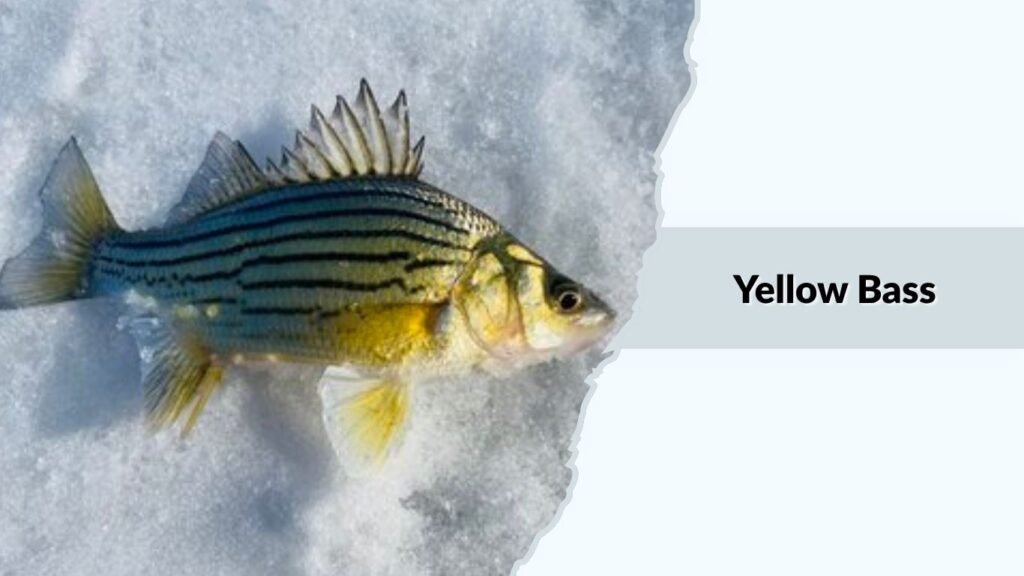
Yellow Bass is a small freshwater fish closely related to white bass and striped bass. It is recognized for its yellowish body color and dark horizontal stripes. This species is popular among anglers because of its schooling behavior, easy catchability, and good table quality.
Identification
- Yellow to olive-colored body with dark horizontal stripes
- Deep-bodied appearance similar to white bass
- Lower stripes are usually broken or irregular
- Small mouth with a slightly pointed snout
- Forked tail for fast swimming
- Typically grows between 6–12 inches long
Habitat
Yellow Bass inhabit lakes, reservoirs, slow-moving rivers, and backwater areas with calm conditions. They often gather near submerged structures, vegetation, and drop-offs where baitfish are abundant. This species prefers warm freshwater environments with moderate depth.
Diet
Yellow Bass mainly feed on insects, plankton, minnows, and small crustaceans. Juveniles consume tiny aquatic organisms, while adults actively hunt small fish and insect larvae. They usually feed in schools, especially during early morning and evening hours.
Behavior
This species is highly social and commonly travels in large schools. Yellow Bass are active feeders and often move together while searching for prey. They are energetic when hooked and can provide steady action for anglers throughout the year.
Fishing Importance
Yellow Bass is valued as both a sport fish and food fish in many freshwater regions. Anglers commonly catch them using small jigs, live minnows, worms, and soft plastic lures. Their schooling behavior allows anglers to catch multiple fish in a short period of time.
12. Striped Bass
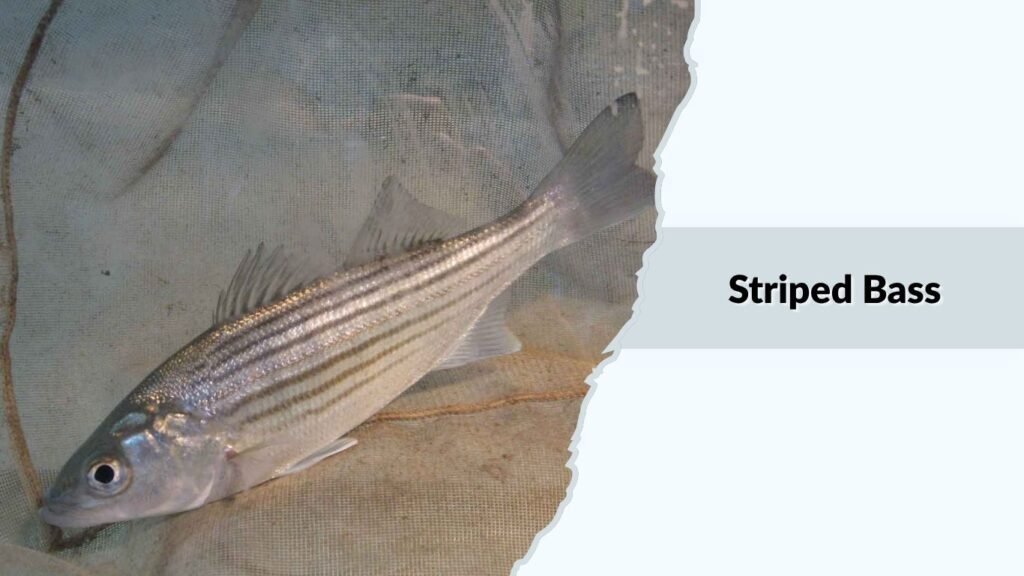
Striped Bass is a large and powerful fish found in both freshwater and saltwater environments. It is famous for its long body, bold horizontal stripes, and strong fighting ability. This species is highly prized by anglers and commercial fisheries throughout North America.
Identification
- Silver body with several dark horizontal stripes
- Long and streamlined body shape
- Large mouth extending below the eyes
- Two separate dorsal fins with spiny front section
- Forked tail designed for powerful swimming
- Commonly grows between 20–40 inches long
Habitat
Striped Bass inhabit coastal waters, estuaries, rivers, lakes, and reservoirs. They are often found in open water, near underwater structures, and in areas with strong currents. Many populations migrate between freshwater rivers and saltwater environments during spawning seasons.
Diet
Striped Bass mainly feed on shad, herring, anchovies, squid, and other smaller fish. Juveniles consume plankton and insects before shifting to larger prey. They are aggressive predators and frequently hunt in schools near the water surface.
Behavior
This species is highly migratory and capable of traveling long distances in search of food and spawning areas. Striped Bass are strong swimmers and active hunters, especially during low-light conditions. They often gather in large schools when feeding on baitfish.
Fishing Importance
Striped Bass is one of the most important sport fish in North America. Anglers target them using live bait, topwater plugs, swimbaits, and trolling techniques. Their large size, strength, and excellent taste make them valuable for both recreational and commercial fishing.
13. Hybrid Striped Bass
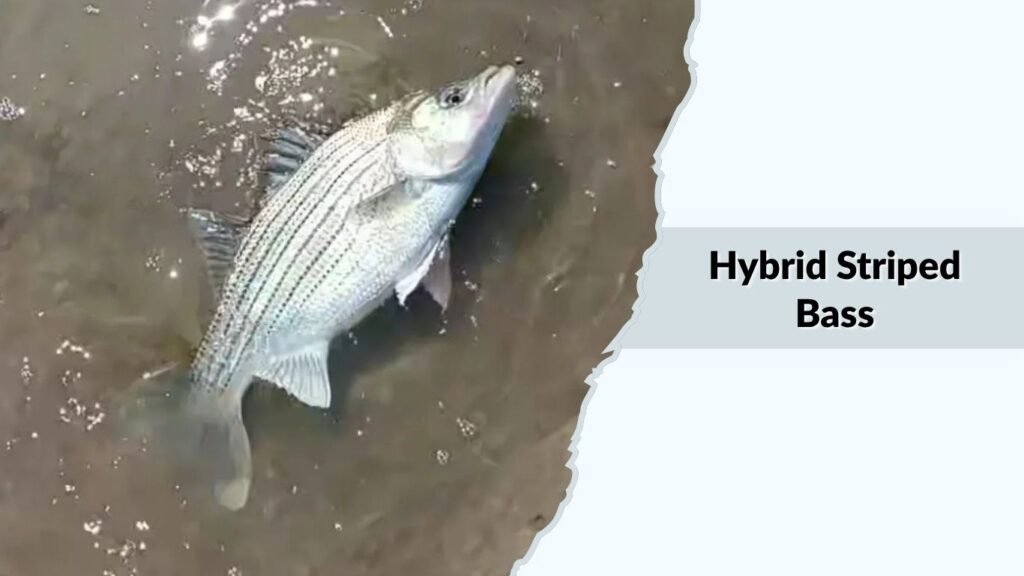
Hybrid Striped Bass is a man-made cross between striped bass and white bass. It was developed to combine the fast growth and strength of striped bass with the adaptability of white bass. This species is widely stocked in lakes and reservoirs because of its aggressive nature and popularity among anglers.
Identification
- Silver body with broken or irregular horizontal stripes
- Deep body shape similar to white bass
- Larger mouth than white bass
- Strong and muscular build
- Forked tail for fast swimming
- Usually grows between 15–30 inches long
Habitat
Hybrid Striped Bass thrive in lakes, reservoirs, and large rivers with open water areas. They prefer cooler, oxygen-rich water and are commonly found near deep channels, submerged structures, and areas with active baitfish populations. Many stocked populations adapt well to artificial reservoirs.
Diet
Hybrid Striped Bass mainly feed on shad, minnows, insects, and other small fish. Juveniles consume plankton and aquatic insects before switching to larger prey. They are aggressive predators that actively chase schools of baitfish.
Behavior
This species is energetic, fast-swimming, and highly aggressive during feeding. Hybrid Striped Bass often travel in schools and feed near the water surface when baitfish are present. They are known for making strong runs and fighting hard when hooked.
Fishing Importance
Hybrid Striped Bass is a favorite among sport anglers because of its strength and rapid growth. Anglers commonly catch them using swimbaits, spoons, crankbaits, and live bait. Their aggressive feeding habits and powerful fights make them an exciting target in freshwater fishing.
14. Black Sea Bass
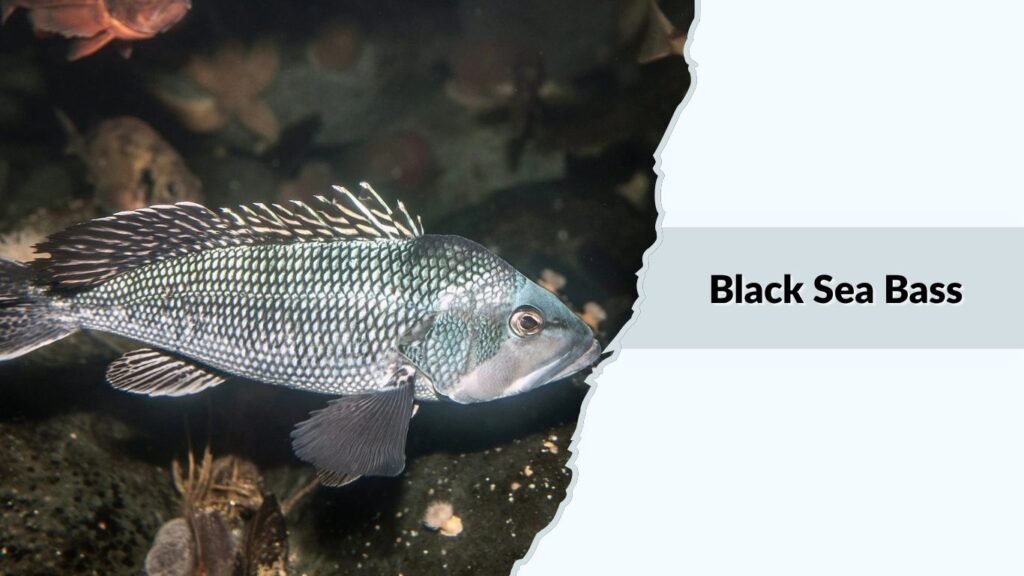
Black Sea Bass is a popular marine fish found along the Atlantic coast of North America. It is well known for its dark coloration, spiny fins, and excellent flavor. This species is highly valued in both recreational and commercial fishing because of its abundance and food quality.
Identification
- Dark gray to black body with lighter spots and markings
- Large eyes and slightly humped back appearance
- Spiny dorsal fin with sharp rays
- Males often develop a bluish hump on the head
- Rounded tail fin in adults
- Commonly grows between 8–24 inches long
Habitat
Black Sea Bass inhabit coastal waters, reefs, rocky bottoms, wrecks, and artificial structures. They are commonly found in shallow coastal areas during warm months and move into deeper offshore waters during colder seasons. Juveniles often stay in estuaries and protected bays.
Diet
Black Sea Bass feed mainly on crabs, shrimp, squid, small fish, and other marine invertebrates. Younger fish consume tiny crustaceans and plankton before shifting to larger prey. They are opportunistic predators that hunt near the ocean floor.
Behavior
This species is territorial and usually stays close to reefs, rocks, or underwater structures. Black Sea Bass are active feeders and often gather in groups around productive feeding grounds. Males may become aggressive during spawning periods to defend territory.
Fishing Importance
Black Sea Bass is highly prized for its mild, white meat and strong fighting ability. Anglers commonly catch them using baited rigs, jigs, squid strips, and small artificial lures. Commercial fisheries also target this species extensively because of its high market demand.
15. Sea Bass
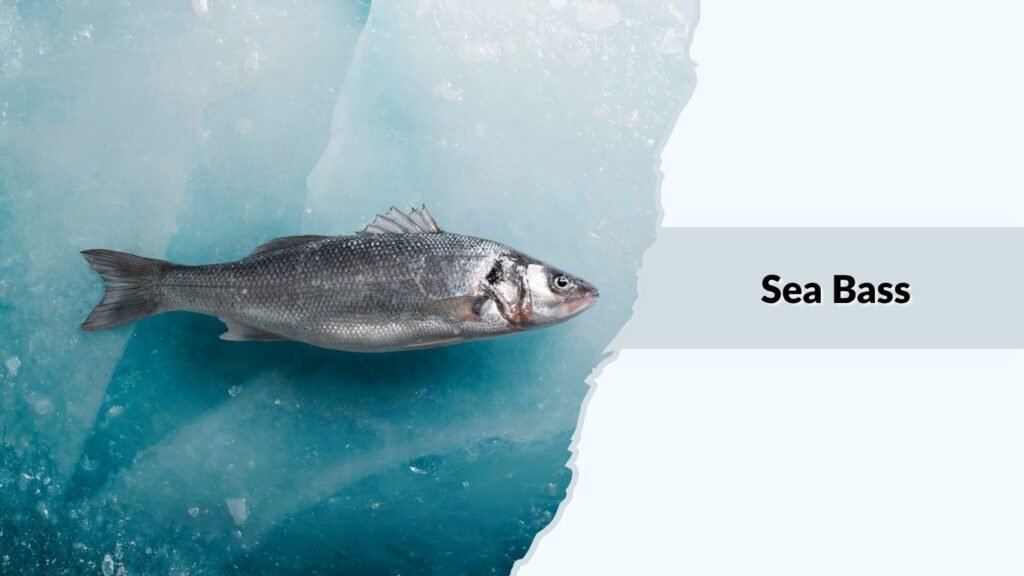
Sea Bass is a general term used for several marine fish species found in oceans around the world. These fish are valued for their delicious meat, strong swimming ability, and importance in commercial and recreational fishing. Different sea bass species vary in size, color, and habitat depending on their region.
Identification
- Streamlined body with strong swimming shape
- Large mouth adapted for hunting prey
- Spiny dorsal fins common in most species
- Body colors range from silver and gray to dark brown or black
- Strong scales and muscular body structure
- Sizes vary widely depending on the species
Habitat
Sea Bass inhabit coastal waters, coral reefs, rocky bottoms, estuaries, and offshore ocean environments. Many species prefer areas with underwater structures such as reefs, wrecks, and kelp forests where food and shelter are abundant. Some species also enter brackish or shallow coastal waters.
Diet
Sea Bass mainly feed on smaller fish, squid, shrimp, crabs, and other marine invertebrates. Juveniles consume plankton and tiny crustaceans before transitioning to larger prey. Most species are active predators that hunt near reefs or along the seafloor.
Behavior
Sea Bass species are generally aggressive hunters and strong swimmers. Some species are solitary, while others gather in groups around productive feeding grounds. Many sea bass become more active during dawn and dusk when prey activity increases.
Fishing Importance
Sea Bass are highly important in both commercial seafood markets and recreational fishing. Anglers commonly use baitfish, squid, jigs, and artificial lures to catch them. Their flavorful meat and fighting strength make them among the most sought-after marine fish worldwide.
16. Peacock Bass
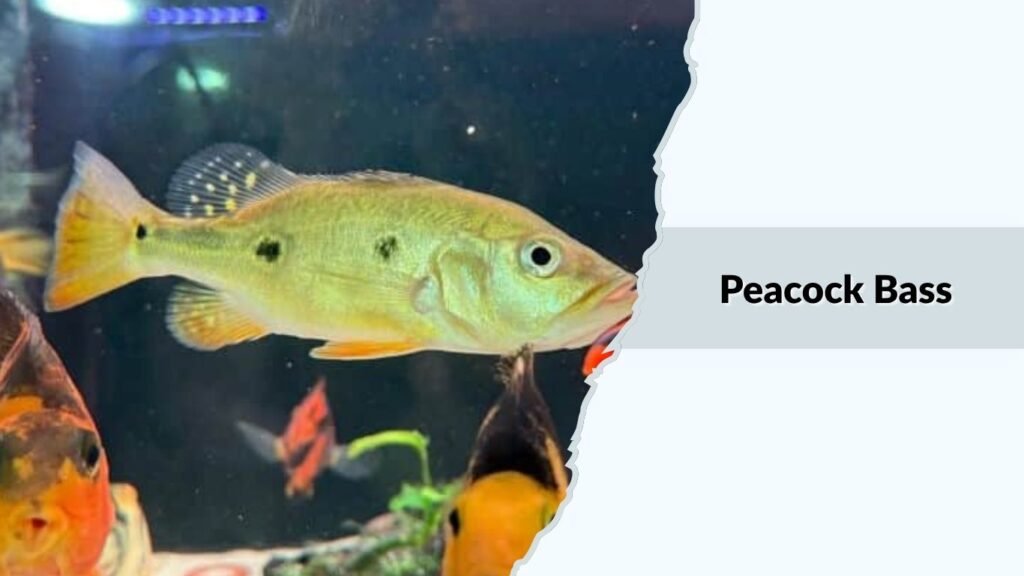
Peacock Bass is a colorful and powerful freshwater fish native to South America. Despite its name, it is actually a member of the cichlid family rather than a true bass species. This fish is famous for its aggressive strikes, vibrant patterns, and exceptional fighting ability, making it highly popular among sport anglers.
Identification
- Bright yellow, green, or golden body coloration
- Dark vertical bars along the sides
- Distinct black spot near the tail with orange or yellow ring
- Large mouth and muscular body
- Prominent hump on the forehead in mature males
- Commonly grows between 12–36 inches long
Habitat
Peacock Bass inhabit warm freshwater rivers, lakes, lagoons, and flooded forests. They are commonly found near submerged trees, vegetation, rocks, and calm waters where prey is abundant. This species thrives in tropical climates with warm temperatures year-round.
Diet
Peacock Bass mainly feed on smaller fish, shrimp, insects, and aquatic animals. They are aggressive ambush predators that rely heavily on sight when hunting. Juveniles consume insects and tiny fish before shifting to larger prey as they mature.
Behavior
This species is extremely aggressive and territorial, especially during spawning periods. Peacock Bass often attack prey with explosive speed and powerful strikes. They are active during daylight hours and frequently patrol shallow areas in search of food.
Fishing Importance
Peacock Bass is considered one of the best freshwater sport fish in the world. Anglers target them using topwater lures, swimbaits, jerkbaits, and live bait. Their explosive attacks, strong runs, and acrobatic fights make them a favorite among trophy fishing enthusiasts.
17. Rock Bass
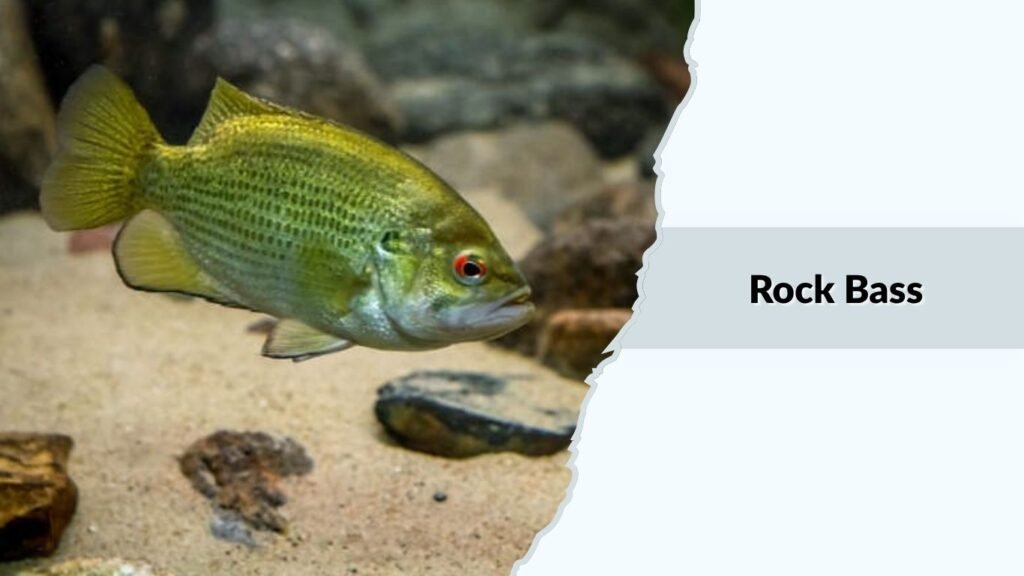
Rock Bass is a small freshwater fish commonly found in rivers, streams, and lakes across North America. Although it is not a true bass, it belongs to the sunfish family and is known for its aggressive behavior and adaptability. Anglers enjoy catching this species because it strikes readily and fights hard for its size.
Identification
- Olive green to bronze-colored body
- Dark mottled or spotted pattern on the sides
- Red or reddish-orange eyes in adults
- Deep and laterally compressed body shape
- Large mouth relative to body size
- Usually grows between 6–12 inches long
Habitat
Rock Bass prefer clear freshwater habitats with rocky bottoms, submerged logs, and aquatic vegetation. They are commonly found in lakes, rivers, streams, and reservoirs with moderate currents. This species often stays near cover where it can hide and ambush prey.
Diet
Rock Bass feed on insects, crayfish, minnows, worms, and small aquatic creatures. Juveniles mainly consume insect larvae and plankton before shifting to larger prey. They are opportunistic feeders and actively hunt near rocks and vegetation.
Behavior
This species is aggressive, territorial, and active during low-light conditions. Rock Bass often remain near submerged structures during the day and move into shallower water to feed at dawn and dusk. They are known for their quick strikes and strong resistance when hooked.
Fishing Importance
Rock Bass is a popular panfish among recreational anglers because of its willingness to bite and widespread availability. Anglers commonly catch them using worms, small jigs, spinners, and live bait. Their mild flavor also makes them a valued food fish in some regions.
18. Calico Bass
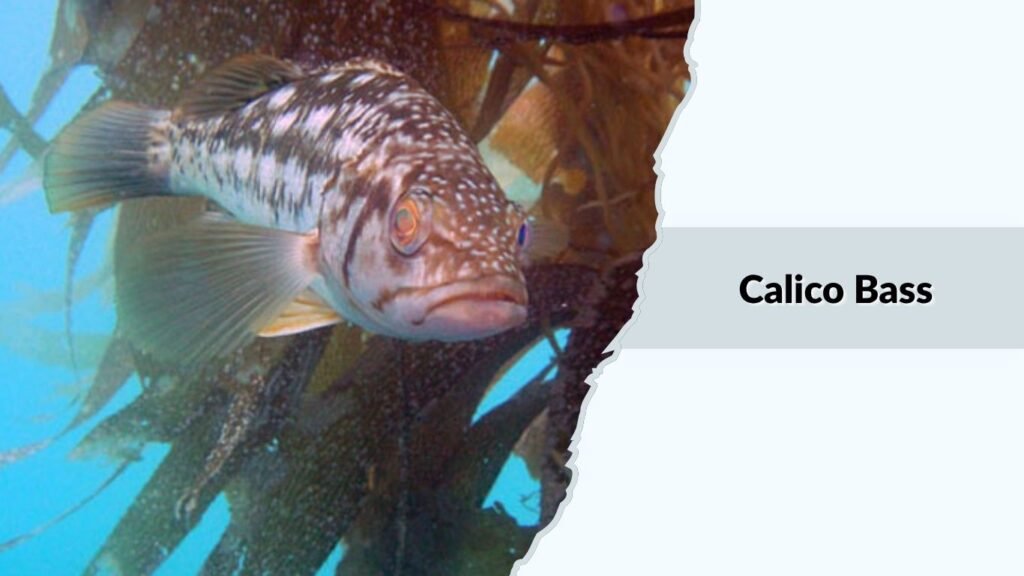
Calico Bass, also known as kelp bass, is a marine fish commonly found along the Pacific coast of North America. It is highly regarded for its aggressive feeding behavior and strong fighting ability. This species is especially popular among saltwater anglers fishing near kelp forests and rocky coastal areas.
Identification
- Brown to olive-colored body with light blotches or calico patterns
- Large mouth with sharp teeth
- Long dorsal fin with spiny front section
- Streamlined body suited for quick movements
- Tail fin slightly rounded
- Usually grows between 12–28 inches long
Habitat
Calico Bass inhabit coastal reefs, rocky shorelines, kelp forests, and artificial structures. They prefer areas with heavy cover where they can hide and ambush prey. Juveniles often remain in shallow protected waters before moving to deeper coastal habitats as they mature.
Diet
Calico Bass mainly feed on anchovies, sardines, squid, crabs, shrimp, and smaller fish. They are active predators that hunt around kelp beds and rocky structures. Younger fish consume small crustaceans and plankton before targeting larger prey.
Behavior
This species is aggressive and territorial, especially around feeding grounds and protective cover. Calico Bass often wait in ambush before attacking prey with sudden bursts of speed. They are most active during warmer months and low-light conditions.
Fishing Importance
Calico Bass is one of the most popular inshore sport fish along the Pacific coast. Anglers commonly target them using swimbaits, jigs, live bait, and topwater lures. Their powerful fights and aggressive strikes make them a favorite among saltwater fishing enthusiasts.
19. Sand Bass
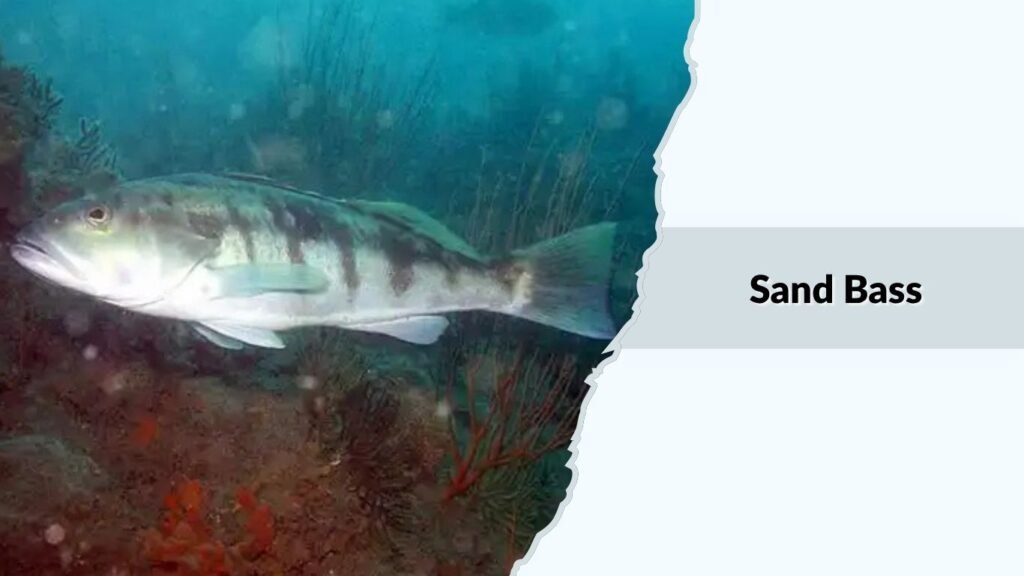
Sand Bass is a popular marine sport fish found along the Pacific coast of North America. It is known for its aggressive feeding habits, strong swimming ability, and excellent taste. This species is commonly targeted by anglers in coastal bays, sandy flats, and near underwater structures.
Identification
- Gray to brown body with darker blotches or stripes
- Deep and muscular body shape
- Large mouth with sharp teeth
- Spiny dorsal fin with connected soft rays
- Slightly forked tail fin
- Commonly grows between 12–26 inches long
Habitat
Sand Bass inhabit sandy-bottom coastal waters, bays, harbors, reefs, and estuaries. They are often found near underwater structures such as rocks, wrecks, piers, and kelp beds. This species prefers shallow to moderately deep marine environments.
Diet
Sand Bass mainly feed on anchovies, sardines, squid, shrimp, crabs, and smaller fish. Juveniles consume tiny crustaceans and plankton before shifting to larger prey. They are active predators that frequently hunt near the seafloor.
Behavior
This species is aggressive, social, and often forms schools during feeding and spawning periods. Sand Bass are known for their quick strikes and powerful runs when hooked. They become especially active during warmer months when baitfish are abundant.
Fishing Importance
Sand Bass is highly valued in recreational saltwater fishing because of its strong fight and tasty meat. Anglers commonly catch them using swimbaits, jigs, squid strips, and live bait. Their abundance in coastal waters makes them a favorite target for both beginner and experienced anglers.
20. Barred Sand Bass
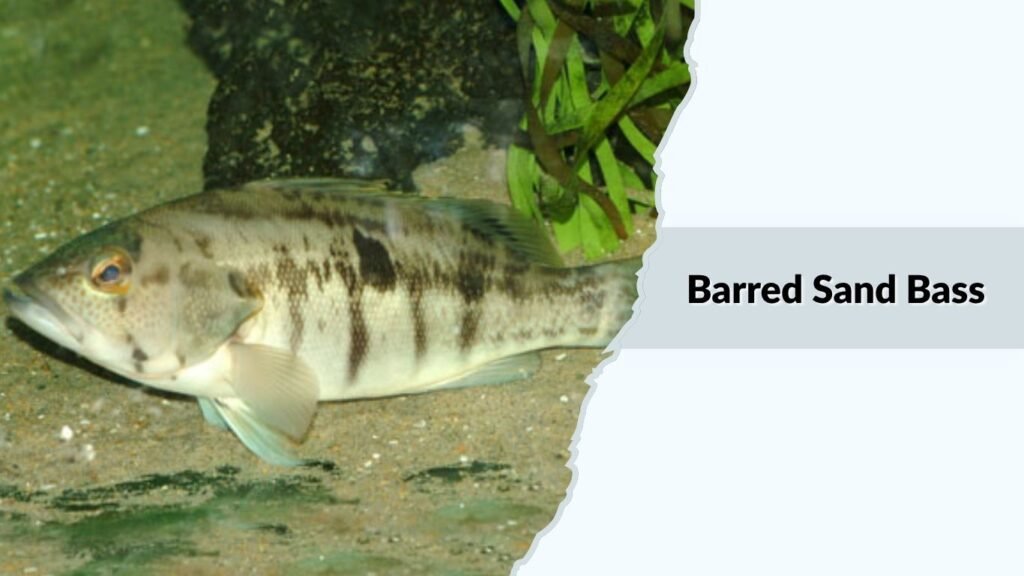
Barred Sand Bass is a marine fish commonly found along the Pacific coastline of North America. It is recognized for its vertical bar markings, aggressive feeding habits, and strong fighting ability. This species is highly popular among coastal anglers and is valued as both a sport fish and food fish.
Identification
- Brown to gray body with dark vertical bars on the sides
- Deep and muscular body shape
- Large mouth with sharp teeth
- Spiny dorsal fin connected to softer rear rays
- Slightly forked tail fin
- Usually grows between 12–24 inches long
Habitat
Barred Sand Bass inhabit sandy flats, bays, harbors, reefs, and rocky coastal waters. They are commonly found near underwater structures such as piers, wrecks, kelp beds, and drop-offs where prey is abundant. This species prefers shallow to moderate depths in warm coastal waters.
Diet
Barred Sand Bass mainly feed on anchovies, sardines, squid, shrimp, crabs, and smaller fish. Juveniles consume small crustaceans and plankton before shifting to larger prey. They are active predators that often hunt near the bottom and around structures.
Behavior
This species is aggressive, territorial, and often forms schools during spawning seasons. Barred Sand Bass are fast swimmers and known for striking bait aggressively. They become especially active during warmer months when food sources are plentiful.
Fishing Importance
Barred Sand Bass is an important recreational sport fish along the Pacific coast. Anglers commonly target them using swimbaits, jigs, live bait, and squid strips. Their strong fights and excellent flavor make them highly desirable among saltwater fishing enthusiasts.
21. Spotted Sand Bass
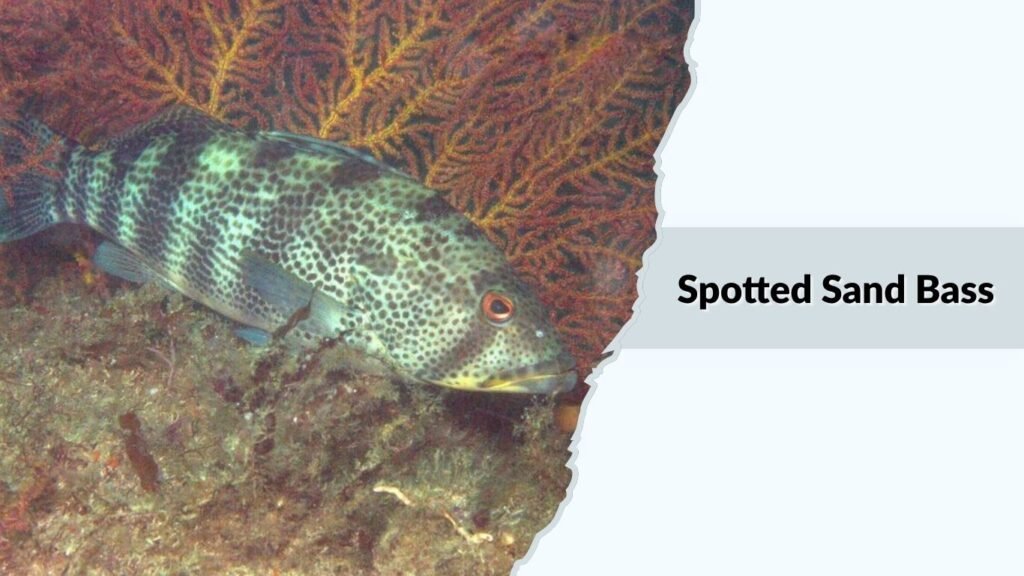
Spotted Sand Bass is a marine sport fish commonly found in bays and coastal waters along the Pacific coast of North America. It is known for its spotted body pattern, aggressive strikes, and strong fighting ability. This species is especially popular among anglers fishing in shallow saltwater environments.
Identification
- Brown to olive-colored body with numerous dark spots
- Deep and compact body shape
- Large mouth with sharp teeth
- Long dorsal fin with spiny front section
- Rounded to slightly forked tail fin
- Typically grows between 10–18 inches long
Habitat
Spotted Sand Bass inhabit bays, estuaries, marinas, rocky shorelines, and sandy-bottom coastal waters. They are commonly found near docks, bridges, eelgrass beds, and submerged structures where food and shelter are available. This species prefers calm, shallow marine environments.
Diet
Spotted Sand Bass mainly feed on anchovies, shrimp, crabs, squid, and smaller fish. Juveniles consume tiny crustaceans and plankton before moving to larger prey. They are opportunistic predators that hunt close to cover and along the seafloor.
Behavior
This species is aggressive and territorial, especially around feeding areas and protective structures. Spotted Sand Bass often remain hidden before ambushing prey with quick strikes. They are active throughout warmer seasons and frequently gather in groups during spawning periods.
Fishing Importance
Spotted Sand Bass is highly valued in recreational saltwater fishing because of its aggressive nature and strong fight. Anglers commonly catch them using swimbaits, soft plastics, live bait, and jigs. Their accessibility in shallow coastal waters makes them a favorite target for inshore anglers.
22. European Seabass
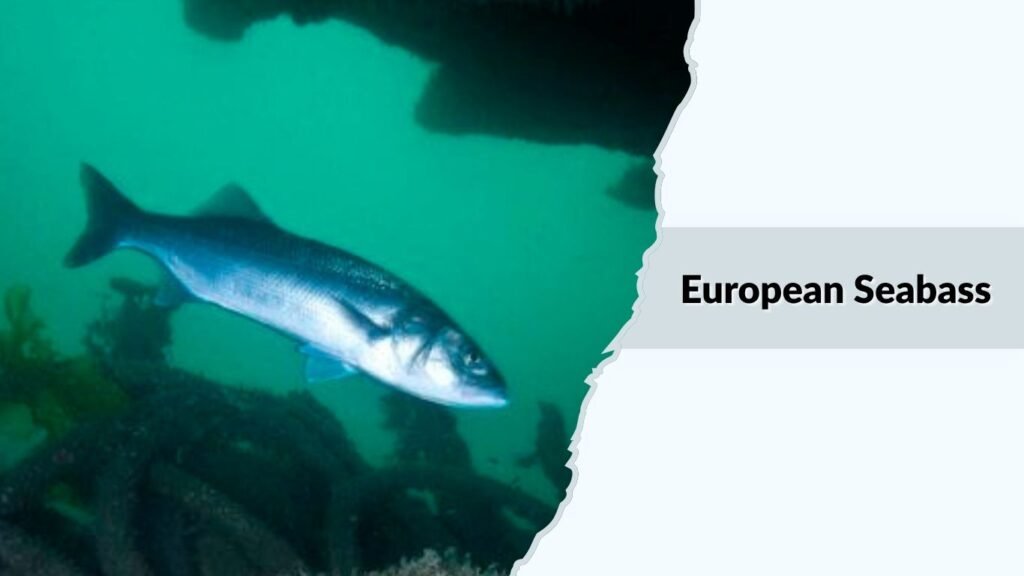
European Seabass is a highly prized marine fish found in coastal waters around Europe and parts of the Mediterranean Sea. It is known for its streamlined body, silver coloration, and excellent taste. This species is important in both commercial fisheries and recreational sport fishing.
Identification
- Silver-gray body with a white underside
- Streamlined and elongated body shape
- Large mouth with sharp teeth
- Two separate dorsal fins
- Dark spot near the upper gill cover in juveniles
- Usually grows between 16–32 inches long
Habitat
European Seabass inhabit coastal waters, estuaries, lagoons, harbors, and rocky shorelines. They are commonly found near reefs, underwater structures, and tidal currents where prey is abundant. Juveniles often stay in sheltered estuaries before moving offshore as they mature.
Diet
European Seabass mainly feed on smaller fish, squid, shrimp, crabs, and marine worms. Juveniles consume plankton and tiny crustaceans before transitioning to larger prey. They are active predators that hunt in both shallow and deeper coastal waters.
Behavior
This species is an aggressive hunter and strong swimmer. European Seabass often patrol coastal areas and feed actively during tidal movements and low-light conditions. They may travel alone or in small groups while searching for prey.
Fishing Importance
European Seabass is one of the most valuable marine sport and food fish in Europe. Anglers commonly use soft plastics, live bait, surface lures, and jigs to catch them. Their excellent flavor, fighting ability, and market demand make them highly important in commercial and recreational fisheries.
23. Japanese Seabass
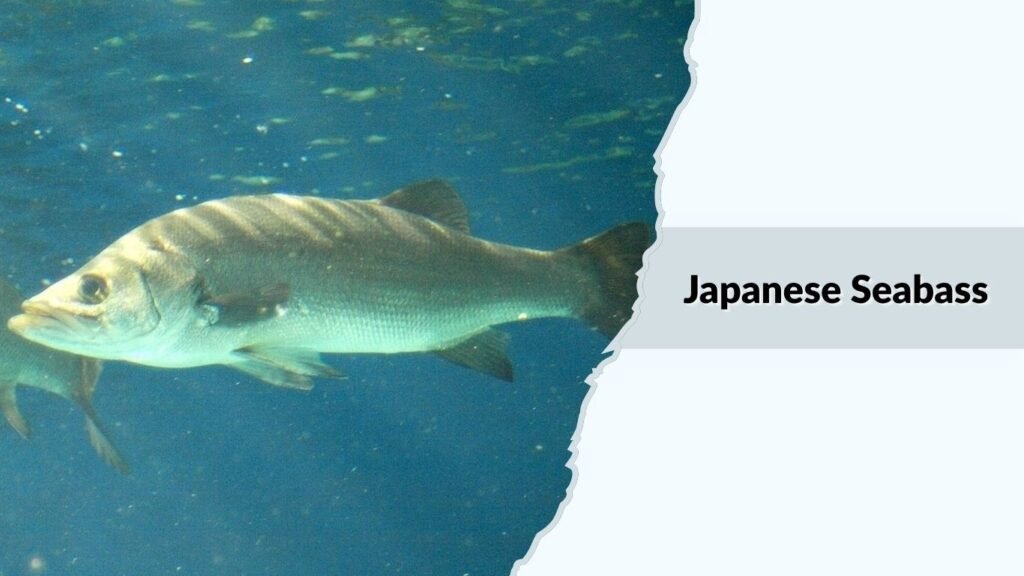
Japanese Seabass is a large marine fish commonly found in coastal waters around Japan, Korea, and parts of East Asia. It is highly valued for its delicious meat, strong swimming ability, and importance in commercial and recreational fishing. This species is also popular in aquaculture across Asian countries.
Identification
- Silver-gray body with a white belly
- Long and streamlined body shape
- Large mouth extending below the eyes
- Two separated dorsal fins
- Slightly forked tail designed for fast swimming
- Commonly grows between 20–40 inches long
Habitat
Japanese Seabass inhabit coastal waters, estuaries, bays, harbors, and river mouths. They are frequently found near rocky shorelines, piers, tidal currents, and submerged structures where prey is plentiful. Juveniles often remain in brackish waters before moving into deeper marine habitats.
Diet
Japanese Seabass mainly feed on anchovies, sardines, shrimp, squid, and smaller fish. Young fish consume plankton and tiny crustaceans before shifting to larger prey. They are active predators that hunt both near the surface and along coastal bottoms.
Behavior
This species is highly active and migratory, especially during spawning and feeding periods. Japanese Seabass are aggressive hunters that often chase baitfish in schools. They are most active during tidal changes and low-light conditions such as dawn and dusk.
Fishing Importance
Japanese Seabass is an important commercial and recreational fish throughout East Asia. Anglers commonly catch them using minnows, vibration lures, soft plastics, and live bait. Their strong fight and excellent meat quality make them one of the most sought-after coastal fish in the region.
24. Chilean Sea Bass
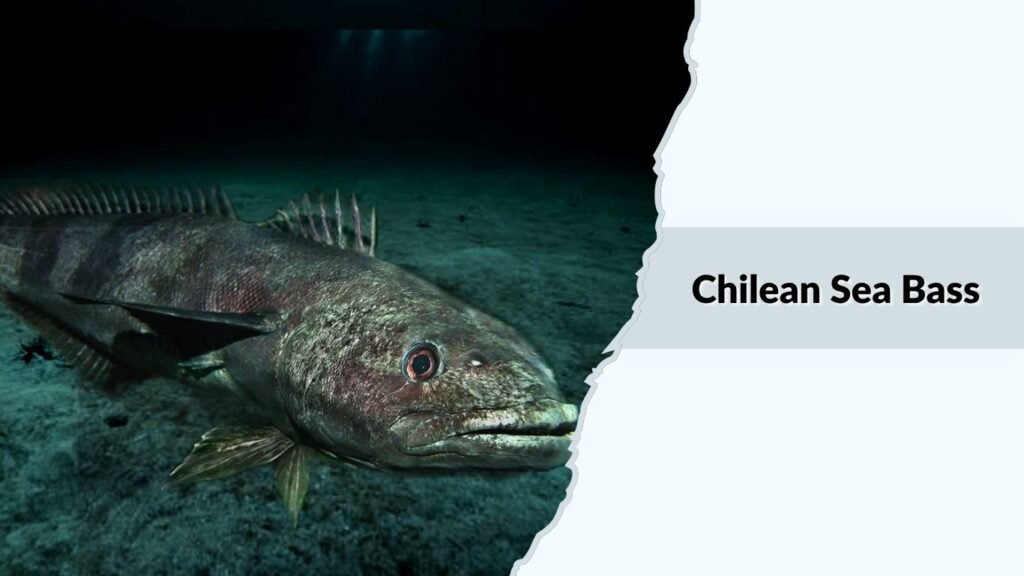
Chilean Sea Bass is a deep-water marine fish famous for its rich flavor, flaky white meat, and high market value. Despite its common name, it is actually a species of toothfish rather than a true bass. This fish is widely sold in seafood markets and served in restaurants around the world.
Identification
- Dark gray to black body coloration
- Large head with a wide mouth
- Thick, elongated body shape
- Smooth scales with lighter underside
- Strong fins adapted for deep-water swimming
- Commonly grows between 24–80 inches long
Habitat
Chilean Sea Bass inhabit deep, cold waters of the Southern Ocean near Antarctica and South America. They are commonly found around underwater slopes, rocky seafloors, and deep ocean trenches at depths ranging from several hundred to thousands of feet.
Diet
Chilean Sea Bass feed mainly on squid, smaller fish, crustaceans, and other deep-sea organisms. Juveniles consume small marine invertebrates before shifting to larger prey. This species is an opportunistic predator that hunts in dark, cold ocean waters.
Behavior
This species is slow-growing and capable of living for many decades. Chilean Sea Bass are powerful swimmers that migrate through deep ocean environments in search of food. They usually remain in cold, high-pressure waters throughout their lives.
Fishing Importance
Chilean Sea Bass is one of the most valuable seafood species in international markets. Commercial fisheries target it because of its buttery texture and rich flavor. Strict fishing regulations and sustainability programs are important to help protect wild populations from overfishing.
25. White Seabass
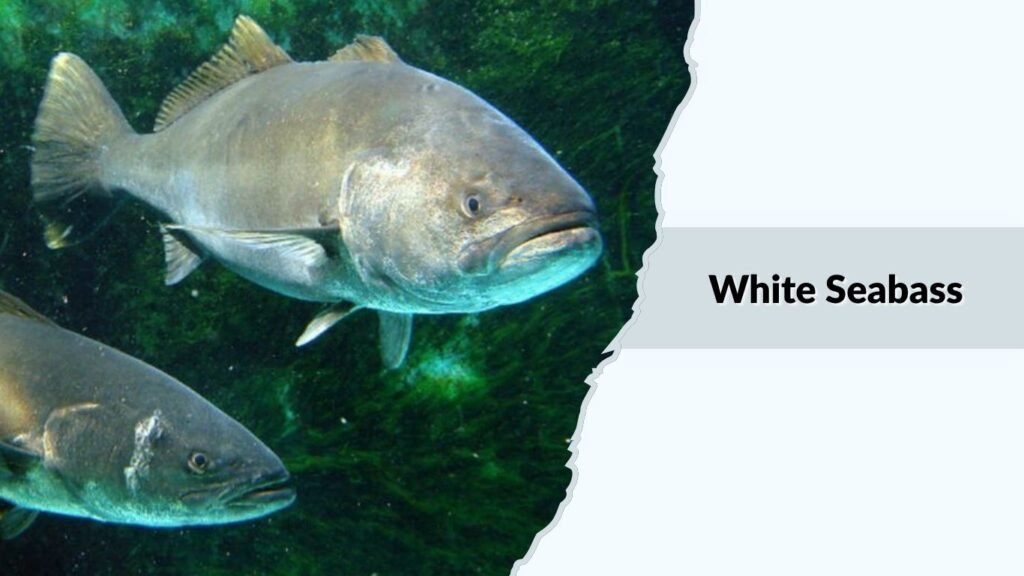
White Seabass is a large marine fish found along the Pacific coast of North America. Despite its name, it is actually a member of the croaker family rather than a true bass. This species is highly respected for its size, fighting ability, and excellent meat quality.
Identification
- Silver to bluish-gray body with darker back
- Long and streamlined body shape
- Large mouth with sharp teeth
- Slightly elongated tail fin
- Dark speckles may appear along the body
- Commonly grows between 20–60 inches long
Habitat
White Seabass inhabit coastal waters, kelp forests, bays, rocky reefs, and offshore islands. Juveniles often remain in shallow bays and estuaries, while adults move into deeper coastal waters. They are commonly found near kelp beds and underwater structures where prey is abundant.
Diet
White Seabass mainly feed on anchovies, sardines, squid, mackerel, and crustaceans. Juveniles consume small fish and marine invertebrates before targeting larger prey as they mature. They are active predators that hunt both near the surface and around kelp forests.
Behavior
This species is migratory and often travels in schools, especially during spawning seasons. White Seabass are strong swimmers and aggressive feeders that become highly active when baitfish are abundant. They are most commonly active during dawn and dusk.
Fishing Importance
White Seabass is one of the most prized sport fish along the Pacific coast. Anglers commonly target them using live bait, swimbaits, jigs, and trolling techniques. Their strong fights and high-quality meat make them valuable in both recreational and commercial fisheries.
26. Butterfly Peacock Bass
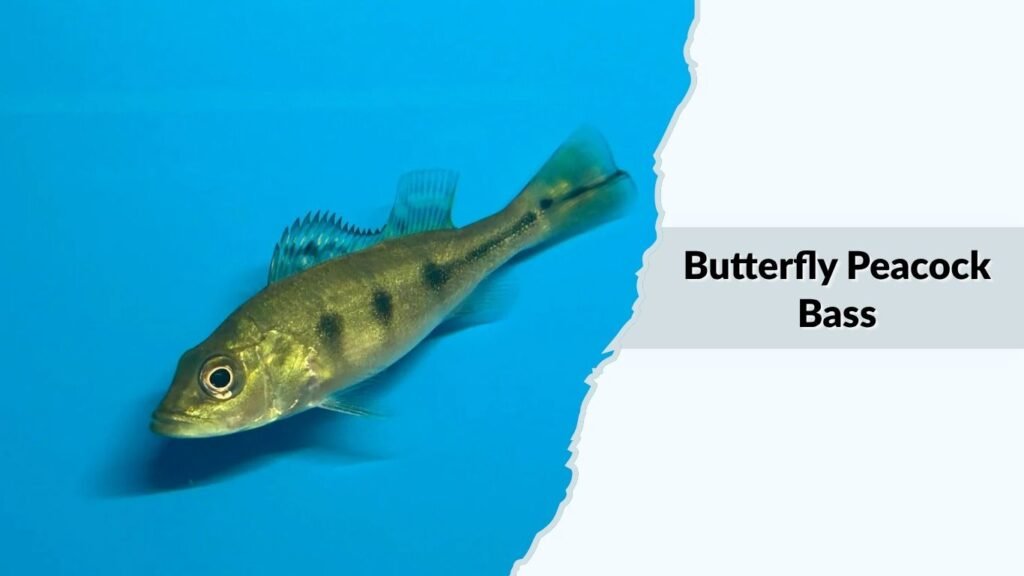
Butterfly Peacock Bass is a colorful freshwater fish native to South America and widely introduced into tropical waters around the world. It is famous for its striking appearance, aggressive behavior, and powerful fighting ability. This species is especially popular among sport anglers targeting trophy freshwater fish.
Identification
- Bright yellow to green body coloration
- Three dark vertical bars along the sides
- Distinct black spot near the tail with orange ring
- Large mouth and muscular body structure
- Mature males often develop a forehead hump
- Usually grows between 12–30 inches long
Habitat
Butterfly Peacock Bass inhabit warm freshwater lakes, canals, rivers, lagoons, and flooded forest areas. They prefer calm waters with submerged vegetation, rocks, and fallen trees where prey fish are abundant. This species thrives in tropical and subtropical climates.
Diet
Butterfly Peacock Bass mainly feed on smaller fish, shrimp, insects, and aquatic animals. Juveniles consume insects and tiny crustaceans before shifting to larger prey. They are visual predators that actively chase and ambush prey in shallow waters.
Behavior
This species is highly territorial and extremely aggressive during feeding and spawning periods. Butterfly Peacock Bass attack prey with explosive speed and often defend nesting areas fiercely. They are active during daylight hours and frequently patrol near cover.
Fishing Importance
Butterfly Peacock Bass is considered one of the top freshwater sport fish because of its explosive strikes and strong fights. Anglers commonly use topwater lures, jerkbaits, swimbaits, and live bait to catch them. Their vibrant colors and aggressive behavior make them highly desirable among trophy fishing enthusiasts.
27. Speckled Peacock Bass
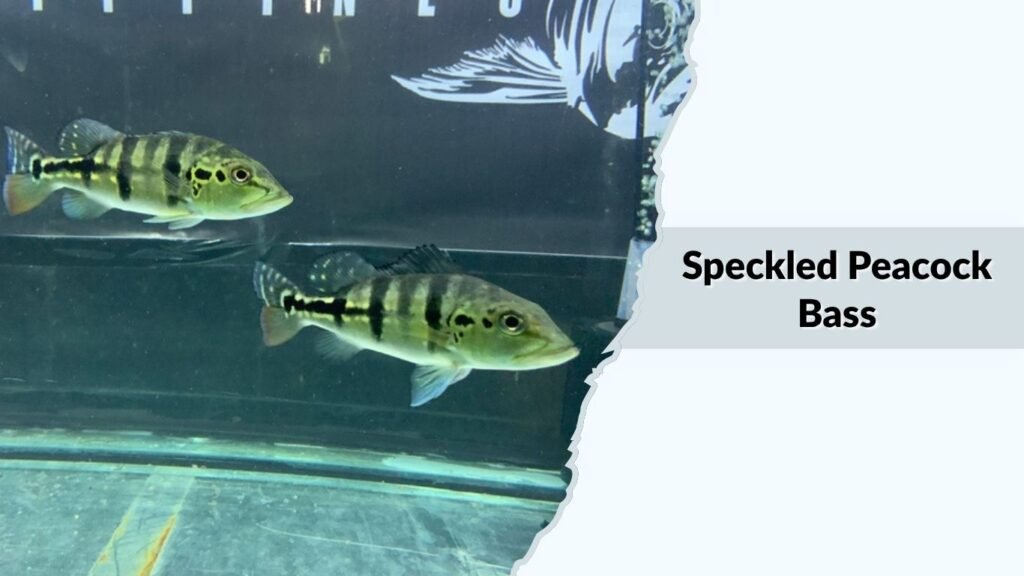
Speckled Peacock Bass is a tropical freshwater fish native to South America and closely related to other peacock bass species. It is admired for its spotted body patterns, aggressive feeding habits, and strong fighting power. This species is highly valued in sport fishing because of its speed, strength, and colorful appearance.
Identification
- Olive green to golden body coloration
- Dark speckled markings across the body
- Distinct black tail spot surrounded by a lighter ring
- Large mouth with a muscular body structure
- Mature males may develop a forehead hump
- Commonly grows between 14–32 inches long
Habitat
Speckled Peacock Bass inhabit warm freshwater rivers, lakes, lagoons, and flooded forest systems. They are commonly found near submerged wood, aquatic vegetation, rocks, and calm shallow waters where prey fish are abundant. This species prefers tropical environments with warm temperatures year-round.
Diet
Speckled Peacock Bass mainly feed on smaller fish, shrimp, insects, and aquatic crustaceans. Juveniles consume tiny aquatic organisms before shifting to larger prey as they grow. They are aggressive visual predators that actively chase moving prey.
Behavior
This species is territorial, aggressive, and highly active during daylight hours. Speckled Peacock Bass often ambush prey from cover and attack with explosive force. During spawning seasons, they become especially protective of nesting areas and nearby territory.
Fishing Importance
Speckled Peacock Bass is highly prized among freshwater anglers because of its powerful fight and aggressive strikes. Anglers commonly target them using topwater lures, swimbaits, jerkbaits, and live bait. Their colorful appearance and energetic behavior make them a favorite trophy fish in tropical sport fishing.
FAQs
What is the most popular type of bass fish?
Largemouth Bass is considered the most popular bass fish because of its large size, aggressive feeding behavior, and widespread availability. It is one of the top sport fish in North America and is commonly targeted in professional bass fishing tournaments.
Which bass fish fights the hardest?
Many anglers consider Smallmouth Bass and Peacock Bass among the hardest-fighting bass species. Both are known for their powerful runs, fast movements, and energetic jumps when hooked.
Are peacock bass true bass fish?
No, Peacock Bass species are not true bass fish. They belong to the cichlid family rather than the black bass family. However, they are called bass because of their appearance and strong sport-fishing qualities.
What is the best bait for bass fishing?
Popular bass fishing baits include soft plastics, crankbaits, spinnerbaits, topwater lures, jigs, and live bait such as minnows or worms. Different bass species respond better to certain lures depending on water conditions, habitat, and feeding activity.
Which bass species is best for eating?
Striped Bass, Black Sea Bass, and Chilean Sea Bass are highly valued for their mild flavor and firm white meat. Many people consider them among the best-tasting bass fish species.