
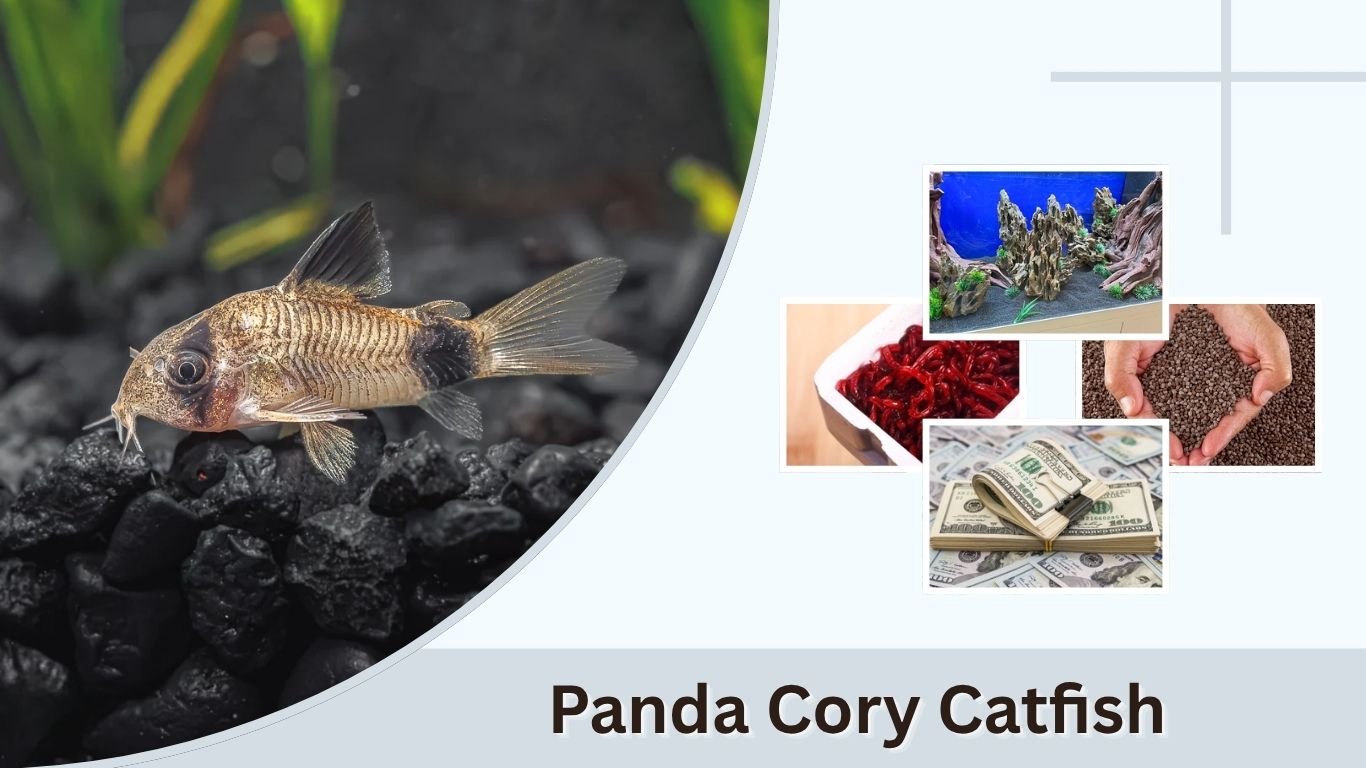
The panda cory catfish is a small, peaceful freshwater fish recognized by its pale body and bold black markings around the eyes, dorsal fin, and tail. Its panda-like appearance, gentle behavior, and active bottom-feeding habits make it popular in community aquariums. However, panda corys should not be treated as tank-cleaning tools. They need a proper school, nutritious sinking food, smooth substrate, stable water, and compatible tank mates. This guide covers their size, tank requirements, temperature, diet, lifespan, breeding, and care.
What Is a Panda Cory Catfish?
The panda cory catfish is a small armored catfish commonly known as Corydoras panda. It originates from the upper Amazon basin in South America and naturally lives close to the bottom of freshwater streams and rivers.
Panda corys have rows of protective bony plates instead of ordinary scales. They also possess sensitive barbels around the mouth, which help them find food in sand and other soft substrates.
FishBase records a maximum standard length of about 3.8 centimeters, although aquarium adults are commonly described as reaching approximately 1.5 to 2 inches in total length. The species naturally tolerates temperatures around 20–25°C and a pH of approximately 6.0–8.0.
Panda Cory Catfish Identification
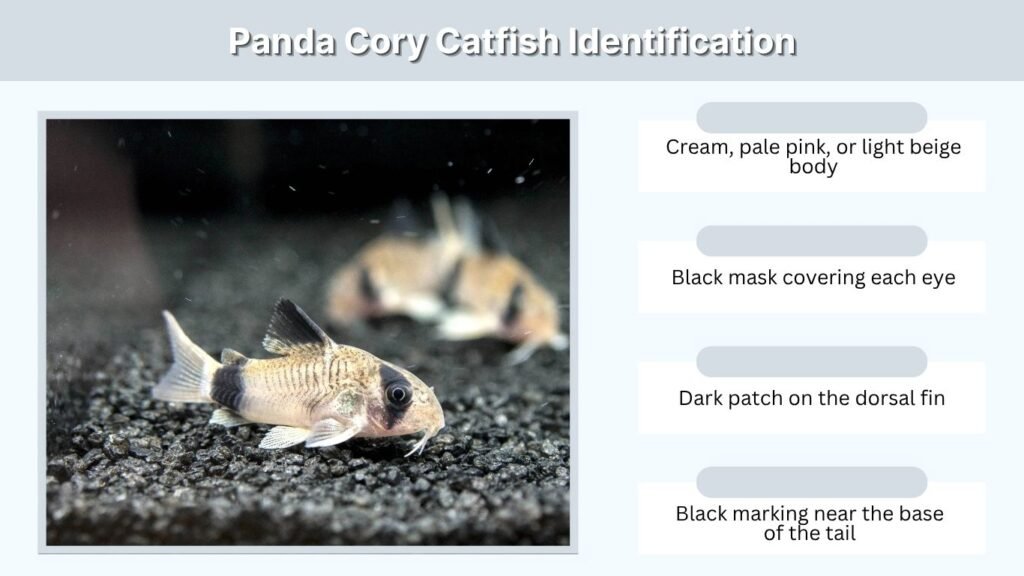
Panda corys have a distinctive black-and-white pattern that separates them from most other cory catfish.
Color and Markings
Their main identification features include:
- Cream, pale pink, or light beige body
- Black mask covering each eye
- Dark patch on the dorsal fin
- Black marking near the base of the tail
- Transparent or lightly colored fins
- Short, rounded head
- Several whisker-like barbels
- Armored body plates
The size and shape of the black markings vary between individuals. Young fish may appear paler or more transparent than full-grown adults.
Panda Cory vs Peppered Cory
Peppered cory catfish have irregular dark spots and marbled markings across most of the body. Panda corys have three larger, more defined black areas around the eyes, dorsal fin, and tail.
Peppered corys also grow larger and usually have a gray-green appearance. The two species are peaceful and may live together, but panda corys still benefit most from companions of their own species.
Panda Cory Catfish Size
Panda cory catfish remain small enough for moderately sized community aquariums. Most full-grown fish measure around 1.5 to 2 inches, with females generally becoming larger and broader than males.
| Growth stage | Approximate size |
| Young juvenile | 0.5–1 inch |
| Growing panda cory | 1–1.5 inches |
| Full-grown adult | 1.5–2 inches |
Small size does not mean they should be kept in tiny tanks. Panda corys are social fish that need sufficient bottom space for a proper group.
Panda Cory Catfish Tank Size
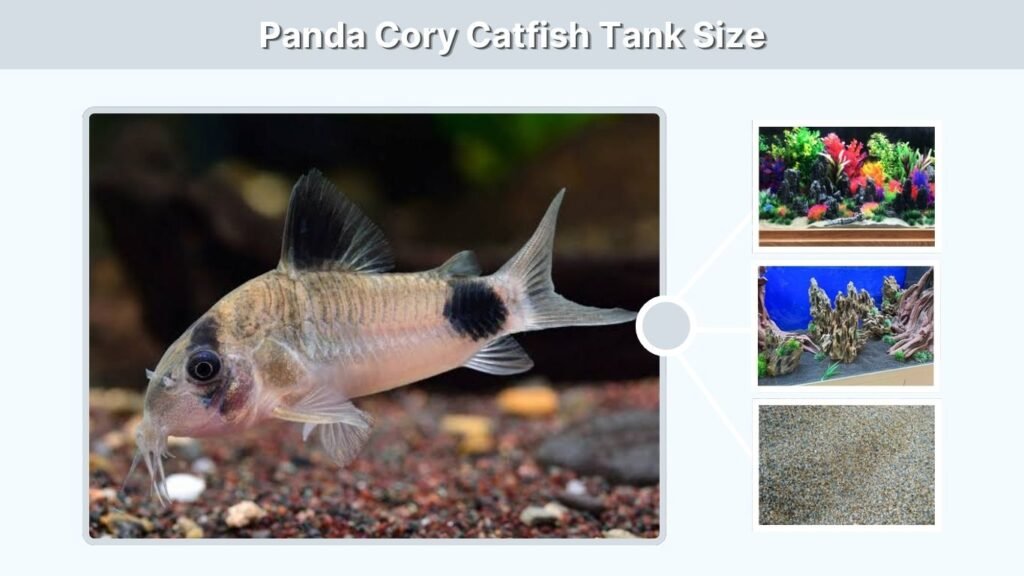
A 20-gallon long aquarium is a practical minimum for a school of six panda corys. Its long footprint provides more bottom area than a tall tank of similar capacity.
Some sources describe smaller aquariums as possible, but a 10-gallon tank offers limited swimming space, restricts school size, and is less forgiving when water quality changes. A larger tank is especially important when other fish are present. Care guides commonly recommend approximately 20 gallons for a small group.
Can Six Panda Corys Live in a 20-Gallon Tank?
Yes. Six panda cory catfish can live comfortably in a properly cycled 20-gallon long tank when stocking remains reasonable.
The aquarium should include:
- Fine sand or smooth rounded gravel
- Open areas for feeding
- Live or artificial plants
- Driftwood and shaded shelters
- Gentle filtration
- Moderate water movement
- Regular partial water changes
Sharp gravel may injure their barbels as they search for food. Dirty substrate and poor water conditions can also contribute to damaged barbels and infections.
School Size and Social Behavior
Panda cory catfish are social and should be kept in a group of at least six. A larger school can display more natural feeding, resting, and swimming behavior when the aquarium has enough space.
Keeping only one or two may leave them shy, inactive, or frequently hidden. Different cory species may interact, but another species does not completely replace a proper group of panda corys.
Are Panda Cory Catfish Aggressive?
Panda corys are not aggressive. They do not usually defend territories or attack healthy tank mates.
They may bump into one another while feeding or chase briefly during breeding activity, but this is normal. Their small spines provide protection from predators rather than weapons for hunting other fish.
Temperature and Water Conditions
Panda corys prefer slightly cooler water than many tropical community fish. FishBase gives a natural temperature range of about 68–77°F, or 20–25°C, with a pH range of approximately 6.0–8.0.
| Water requirement | Recommended level |
| Temperature | 68–77°F |
| pH | Approximately 6.0–8.0 |
| Ammonia | 0 ppm |
| Nitrite | 0 ppm |
| Nitrate | Kept low |
| Water movement | Gentle to moderate |
A stable temperature around 72–76°F works well for many community setups. Avoid sudden changes and consistently high temperatures, which may increase stress and shorten the amount of oxygen available in the water.
Panda corys occasionally swim rapidly to the surface and swallow air. Cory catfish are capable of supplementary air breathing, so an occasional surface visit is normal. Constant gasping, however, may indicate poor water quality, high temperature, or insufficient oxygen.
What Do Panda Cory Catfish Eat?
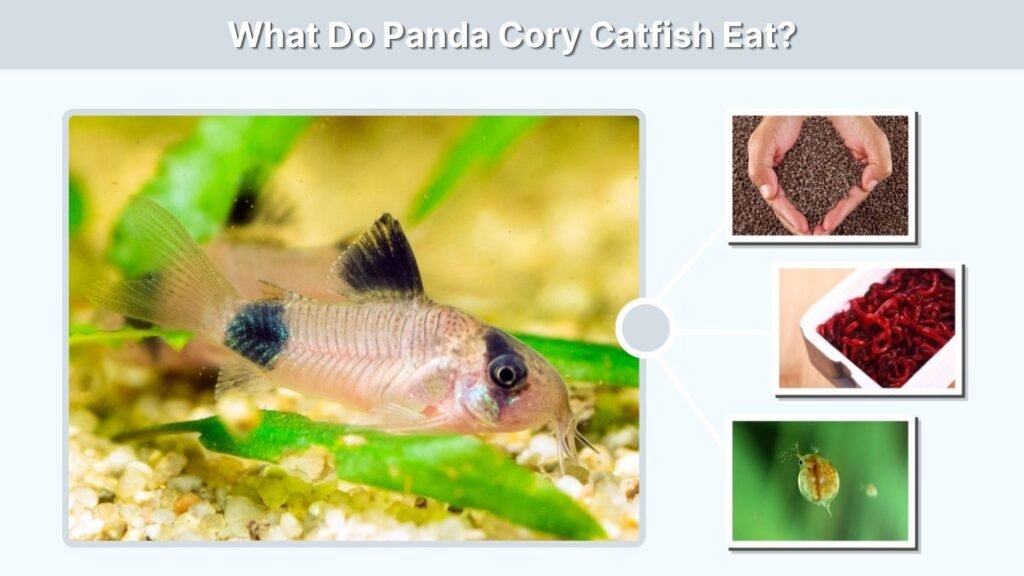
Panda corys are omnivorous bottom feeders. They eat small animal matter, insect larvae, worms, crustaceans, and other edible material they find near the substrate.
In an aquarium, suitable foods include:
- Sinking catfish pellets
- Bottom-feeder wafers
- Frozen bloodworms
- Daphnia
- Brine shrimp
- Tubifex worms from safe sources
- Insect-based granules
- Occasional soft vegetables
Feed a varied diet rather than relying on leftover flakes. Panda corys may eat food that reaches the bottom, but they require meals specifically intended for them.
Feeding Schedule
Offer a small amount once or twice daily. Food should reach the substrate before faster midwater fish consume everything.
Evening feeding can help in busy community tanks. Remove excessive leftovers to prevent waste from decomposing and harming water quality.
Blanched zucchini or similar soft vegetables may be accepted occasionally, but panda corys should not receive a plant-only diet. Animal-based protein remains an important part of their nutrition.
Panda Cory Catfish Tank Mates
The best companions are peaceful species that tolerate similar water temperatures and will not outcompete or injure them.
Suitable tank mates may include:
- Small peaceful tetras
- Harlequin rasboras
- Small danios
- Honey gouramis
- Peaceful dwarf cichlids with caution
- Other compatible cory species
- Otocinclus catfish
- Freshwater shrimp
- Calm betta fish
Avoid large aggressive cichlids, fin-nipping species, predatory catfish, and fish large enough to swallow them.
Panda Cory Catfish With a Betta
Panda corys can sometimes live with a betta because the two fish occupy different areas of the aquarium. Corys remain mainly near the bottom, while bettas usually use the middle and upper levels.
Success depends on the betta’s temperament, tank size, temperature, and available hiding spaces. A 20-gallon setup is safer than a cramped aquarium. The temperature should remain within the comfortable overlapping range of both species.
Panda Cory Catfish With Shrimp
Adult shrimp can usually live peacefully with panda corys. The catfish do not actively hunt healthy adult shrimp.
However, they may eat very small shrimplets or newly hatched shrimp when encountered near the substrate. Dense moss and plant cover improve the survival rate of baby shrimp.
Panda Cory Catfish Lifespan
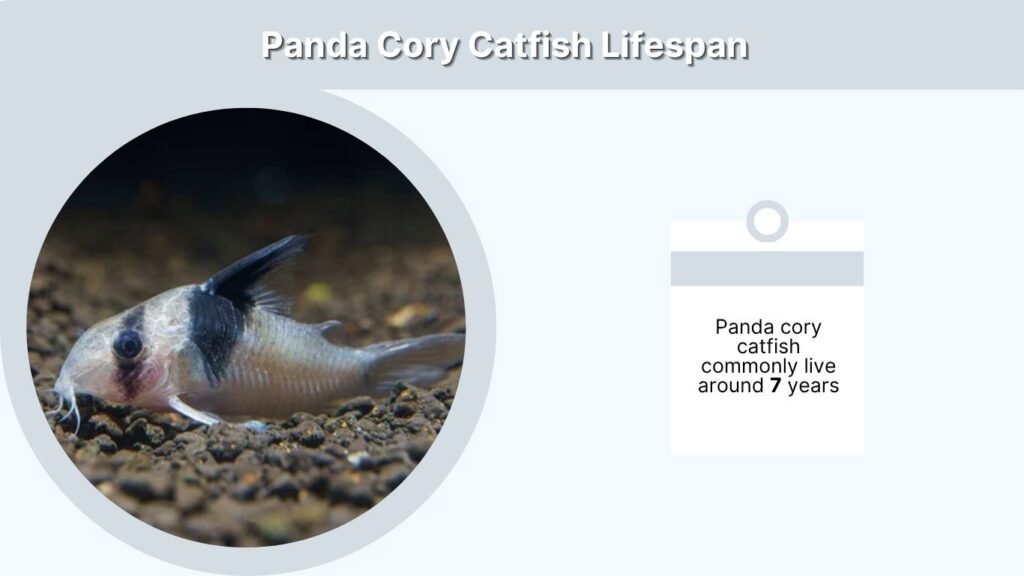
Panda cory catfish commonly live around five years, while well-maintained individuals may survive eight years or longer. Lifespan depends on genetics, water quality, diet, temperature, stress, and disease prevention.
Clean water, a suitable school, stable conditions, and varied food give them the best chance of living a long life.
Panda Cory Catfish Breeding
Healthy, mature panda corys may breed in a community aquarium, although eggs and fry are often eaten before they can grow.
Male and Female Differences
Females are usually larger, broader, and rounder through the abdomen. Viewed from above, mature females appear noticeably wider than males.
Males tend to be smaller and slimmer. Sex differences can be difficult to see in young fish, so purchasing a group of at least six increases the likelihood of obtaining both sexes. Females are generally larger-bodied among cory catfish.
Spawning and Eggs
Conditioning adults with frozen or live foods can encourage breeding. A cooler water change may imitate seasonal rainfall and trigger spawning.
During mating, the fish form the characteristic cory “T-position.” The female carries fertilized eggs between her pelvic fins before attaching them to glass, plants, spawning mops, or decorations.
Adults may eat the eggs, so breeders often move the eggs into a separate container with clean, oxygenated water. Fry can initially receive microscopic foods before progressing to newly hatched brine shrimp and powdered fry food.
Buying Healthy Panda Cory Catfish

When buying panda corys, choose active fish with intact barbels, rounded bodies, clear eyes, and smooth breathing.
Avoid fish showing:
- Sunken stomachs
- Frayed fins or tails
- Missing or shortened barbels
- White spots
- Red sores
- Fuzzy growth
- Rapid breathing
- Inability to remain upright
Quarantine new fish before adding them to an established aquarium. Panda corys sold very young can be sensitive to transport, unstable water, and sudden changes in temperature.
FAQs
Can panda cory catfish live in a 10-gallon tank?
A 10-gallon tank is generally too restrictive for a permanent school of panda corys, especially with other fish. A 20-gallon long aquarium provides more bottom space, better water stability, and enough room to maintain a proper group of at least six.
Is it okay to keep only two panda cory catfish?
Keeping only two is not recommended. Panda corys feel more secure and display more natural behavior in a school. Keep at least six of the same species, provided the aquarium has sufficient bottom area, filtration, and biological capacity.
Why is my panda cory not eating or moving?
Possible causes include poor water quality, incorrect temperature, disease, stress, bullying, or recent transport. Test ammonia, nitrite, nitrate, pH, and temperature immediately. Persistent inactivity, fast breathing, weight loss, or loss of balance requires prompt investigation and isolation when appropriate.
Do panda cory catfish clean the tank?
They eat food from the bottom but do not replace aquarium maintenance. Uneaten waste, fish feces, and decaying material still require removal. Panda corys must also receive their own sinking foods rather than surviving only on leftovers.
Are dwarf panda cory catfish a separate species?
“Dwarf panda cory” is often an informal sales description for a young or naturally small panda cory. Standard panda corys are already small fish. True dwarf cory species include pygmy, habrosus, and hastatus corys, which are separate species.