
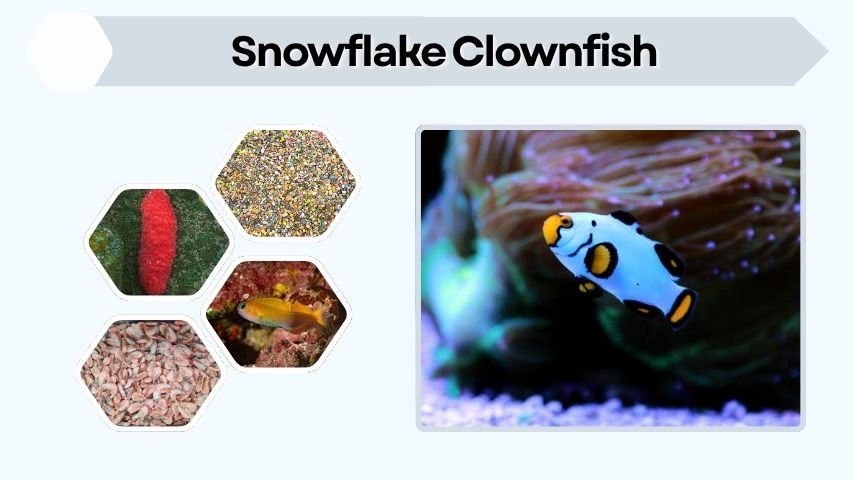
The snowflake clownfish is one of the most eye-catching designer clownfish in the saltwater aquarium hobby. Known for its bold orange body and irregular white “snowflake” patterns, this fish gives a classic ocellaris clownfish a more dramatic look. It is hardy, reef-safe, beginner-friendly, and widely available as a captive-bred fish, making it a popular choice for marine aquariums.
What Is a Snowflake Clownfish?
The snowflake clownfish is not a separate wild species. It is a designer color morph of the ocellaris clownfish, scientifically known as Amphiprion ocellaris. Its care needs are very similar to the standard ocellaris clownfish, but its appearance is more unique.
Instead of clean, simple white bands, snowflake clownfish have thick, uneven white markings. These markings often spread across the sides of the body in jagged shapes, giving each fish a one-of-a-kind pattern.
Appearance and Pattern
A typical snowflake clownfish has a bright orange base color with white markings outlined in black. The middle white band is usually the most irregular and may look like a splash, patch, or snowflake shape.
No two snowflake clownfish look exactly the same. Some have small patches, while others have large white areas covering much of the body. This variation is one reason they are so popular among aquarists.
Size and Lifespan
Most snowflake clownfish grow to around 3 to 4 inches in captivity. Females are usually larger than males, especially in bonded pairs.
With proper care, they can live for many years in a home aquarium. Stable water, a peaceful environment, and a varied diet all play a major role in long-term health.
Snowflake Clownfish Quick Care Table
Snowflake clownfish are considered easy to moderate in care. They are hardy, adaptable, and usually accept prepared foods quickly.
| Care Category | Recommendation |
|---|---|
| Scientific Name | Amphiprion ocellaris |
| Common Name | Snowflake clownfish |
| Fish Type | Designer ocellaris clownfish morph |
| Adult Size | Around 3 to 4 inches |
| Temperament | Peaceful to semi-aggressive |
| Diet | Omnivore |
| Minimum Tank Size | 20 gallons |
| Reef Safe | Yes |
| Care Level | Easy |
| Best For | Beginner to experienced marine keepers |
| Host Anemone Required | No |
Snowflake Clownfish Tank Setup
A snowflake clownfish does not need a huge aquarium, but it does need stable saltwater conditions. Since it is a marine fish, the tank should be fully cycled before adding it.
Tank Size
A single snowflake clownfish can live in a 20-gallon aquarium. A bonded pair can also do well in a 20 to 30-gallon tank if the setup is stable and not overcrowded.
For a community reef tank, a larger aquarium is better. More water volume helps keep conditions stable and gives tankmates enough space.
Water Parameters
Snowflake clownfish are hardy, but poor water quality can still cause stress and disease. Keep the tank clean and avoid sudden changes.
Good target water conditions include:
- Temperature: 72°F to 78°F
- pH: 8.1 to 8.4
- Specific gravity: 1.020 to 1.025
- Ammonia: 0 ppm
- Nitrite: 0 ppm
- Nitrate: as low as possible
Weekly or biweekly water changes can help maintain good water quality. Use a reliable heater, test kit, and filtration system.
Aquascaping
Snowflake clownfish enjoy tanks with live rock, caves, and open swimming space. They often choose one area of the aquarium as their territory and spend much of their time nearby.
Live rock also supports beneficial bacteria and gives the tank a more natural reef appearance. Keep the layout stable so the fish can settle comfortably.
Diet and Feeding
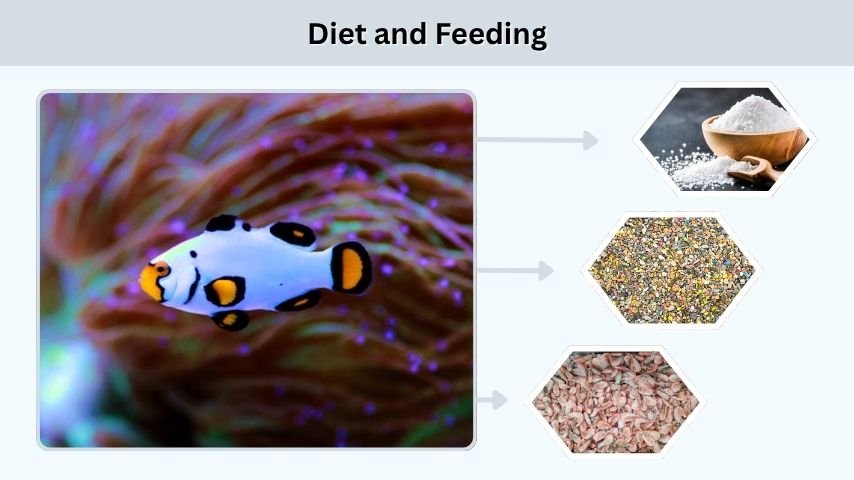
Snowflake clownfish are omnivores. They eat both meaty foods and plant-based foods, which makes them easy to feed in captivity.
Best Foods
Most captive-bred snowflake clownfish readily accept flakes, pellets, and frozen foods. A varied diet helps support color, growth, and immune health.
Good food options include:
- Marine flakes
- Small marine pellets
- Frozen mysis shrimp
- Enriched brine shrimp
- Chopped seafood
- Algae-based foods
- Frozen omnivore blends
Feed small amounts once or twice daily. Only offer what they can eat within a few minutes. Overfeeding can quickly harm water quality in a saltwater aquarium.
Feeding Tips
Choose food small enough for the fish to swallow easily. If pellets are too large, crush them before feeding.
For better health, rotate different foods instead of feeding the same item every day. A mix of protein-rich and algae-based foods is ideal.
Temperament and Behavior
Snowflake clownfish are usually peaceful, especially compared with more aggressive clownfish species like maroon clownfish. However, they can become territorial once they claim a section of the tank.
Personality
Most snowflake clownfish are active, curious, and bold once settled. They often swim with a gentle wiggling motion and may interact with their owner during feeding time.
A single fish may be calm and easygoing. A pair may defend their chosen area more strongly, especially if they begin breeding.
Keeping a Pair
Snowflake clownfish can be kept alone or as a pair. If you want a pair, it is best to buy an established pair or introduce two young fish together.
Clownfish have a social hierarchy. The larger, dominant fish becomes female, while the smaller fish becomes male. Two mature females may fight, so pairing should be done carefully.
Best Tankmates for Snowflake Clownfish
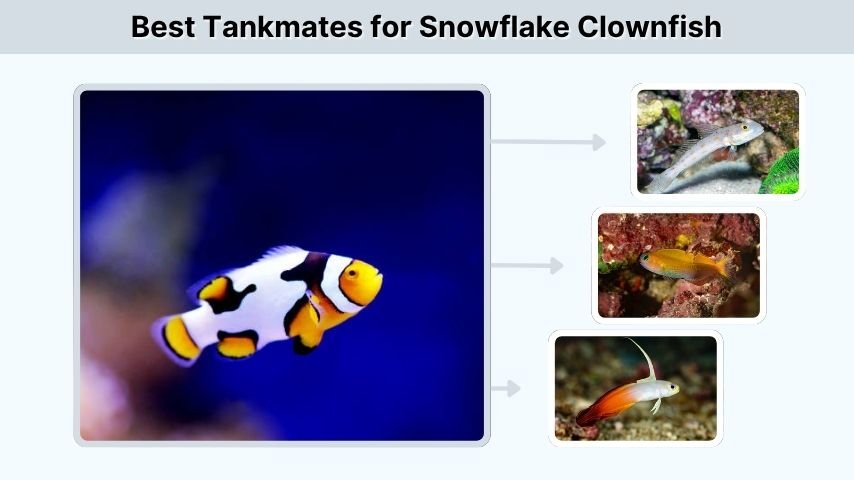
Snowflake clownfish do well with many peaceful reef fish. They are reef-safe and usually ignore corals and invertebrates.
Good Tankmates
Suitable tankmates include:
- Gobies
- Blennies
- Firefish
- Cardinalfish
- Royal gramma
- Peaceful wrasses
- Cleaner shrimp
- Snails and hermit crabs
These fish are generally calm and can live well in a reef community if the tank is large enough.
Tankmates to Avoid
Avoid very aggressive or predatory fish. Snowflake clownfish may be hardy, but they can still be bullied or eaten by larger species.
Tankmates to avoid include:
- Large triggerfish
- Lionfish
- Groupers
- Aggressive damsels
- Large hawkfish
- Maroon clownfish in small tanks
Also avoid keeping too many clownfish together unless the aquarium is very large. Clownfish can become territorial with their own kind.
Do Snowflake Clownfish Need an Anemone?
Snowflake clownfish do not need an anemone to survive. Many captive-bred individuals live happily without one.
Anemone Hosting
In the wild, clownfish often live with sea anemones for protection. In aquariums, snowflake clownfish may host anemones, soft corals, powerhead corners, rockwork, or even aquarium decorations.
A host anemone can create a beautiful natural display, but it is not required for good health.
Should Beginners Add an Anemone?
Beginners should be careful with anemones. Many anemones need strong lighting, stable water, and mature tanks. They can also move around and sting corals.
It is better to master clownfish care first. Once the aquarium is stable and mature, an anemone can be considered.
Captive-Bred Snowflake Clownfish
Most snowflake clownfish sold today are captive-bred. This is one of the biggest advantages of choosing this fish.
Captive-bred clownfish are usually:
- Hardier in aquariums
- Better at eating prepared foods
- Less likely to carry wild parasites
- More sustainable than wild-caught fish
- Easier for beginners to keep
Because snowflake clownfish are designer morphs, they are usually produced by breeders rather than collected from reefs. This makes them a responsible choice for many hobbyists.
Breeding Snowflake Clownfish
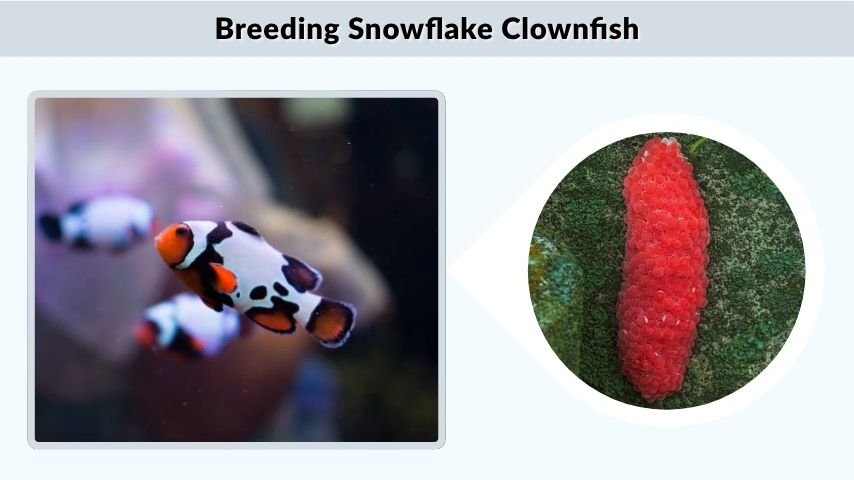
Snowflake clownfish can breed in home aquariums if they are healthy and kept as a bonded pair. Breeding behavior is similar to standard ocellaris clownfish.
Pair Formation
A pair forms when one fish becomes dominant and grows larger. That fish becomes the female. The smaller fish becomes the male.
Once bonded, the pair may clean a flat surface near their territory before spawning.
Eggs and Larvae
The female lays eggs on a hard surface, and the male fertilizes them. The male then guards and fans the eggs until they hatch.
Raising baby clownfish is more difficult than getting adults to spawn. The larvae need special foods, such as rotifers, and a separate rearing tank.
Common Health Problems
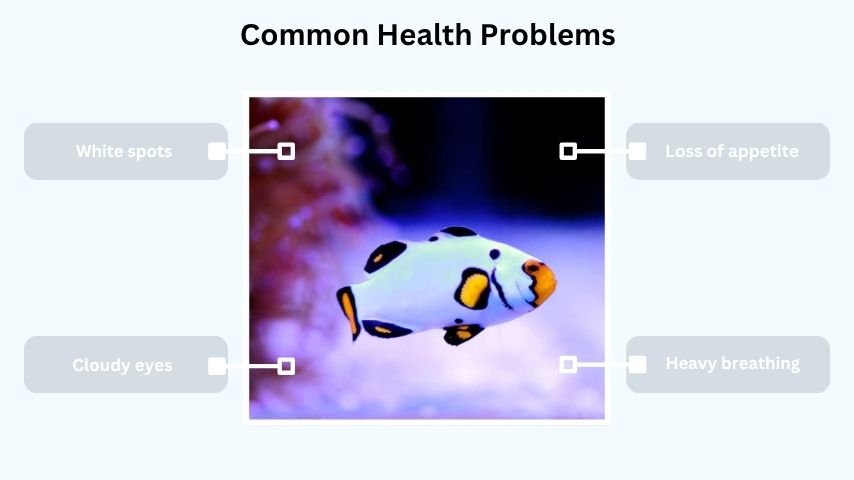
Snowflake clownfish are hardy, but they can still suffer from common saltwater diseases. Stress and poor water quality are the most common causes.
Warning Signs
Watch your fish closely for changes in appearance or behavior.
Common signs of illness include:
- Loss of appetite
- Heavy breathing
- White spots
- Cloudy eyes
- Torn fins
- Scratching on rocks
- Hiding more than usual
- Faded color
Quarantining new fish before adding them to the main tank is a smart way to prevent disease. It also gives the fish time to adjust and begin eating well.
Snowflake Clownfish vs Regular Ocellaris Clownfish
The biggest difference between a snowflake clownfish and a regular ocellaris clownfish is the pattern. Regular ocellaris clownfish have neat white bands, while snowflake clownfish have irregular white markings.
Their care needs are almost the same. Both are hardy, reef-safe, and beginner-friendly. The snowflake variety simply has a more unique designer appearance.
Snowflake clownfish may also cost more because breeders select them for special markings. Premium individuals with larger or more balanced white patterns are often more expensive.
FAQs
Are snowflake clownfish good for beginners?
Yes, snowflake clownfish are good for beginners who are ready to maintain a saltwater aquarium. They are hardy, easy to feed, and usually captive-bred. However, they still need stable water, proper salinity, and a fully cycled tank.
How big do snowflake clownfish get?
Most snowflake clownfish grow to around 3 to 4 inches. Females are usually larger than males. In a bonded pair, the dominant fish becomes female, while the smaller fish becomes male.
Are snowflake clownfish reef safe?
Yes, snowflake clownfish are reef safe. They usually do not harm corals, shrimp, snails, or other common reef invertebrates. They may choose a coral or anemone as a host, but they are not normally destructive.
Do snowflake clownfish need an anemone?
No, snowflake clownfish do not need an anemone. Many captive-bred fish live perfectly well without one. They may host rockwork, corals, or even aquarium equipment instead. Anemones are optional and require extra care.
What do snowflake clownfish eat?
Snowflake clownfish eat marine flakes, pellets, mysis shrimp, enriched brine shrimp, chopped seafood, and algae-based foods. A varied diet is best because it supports strong color, growth, and long-term health.