
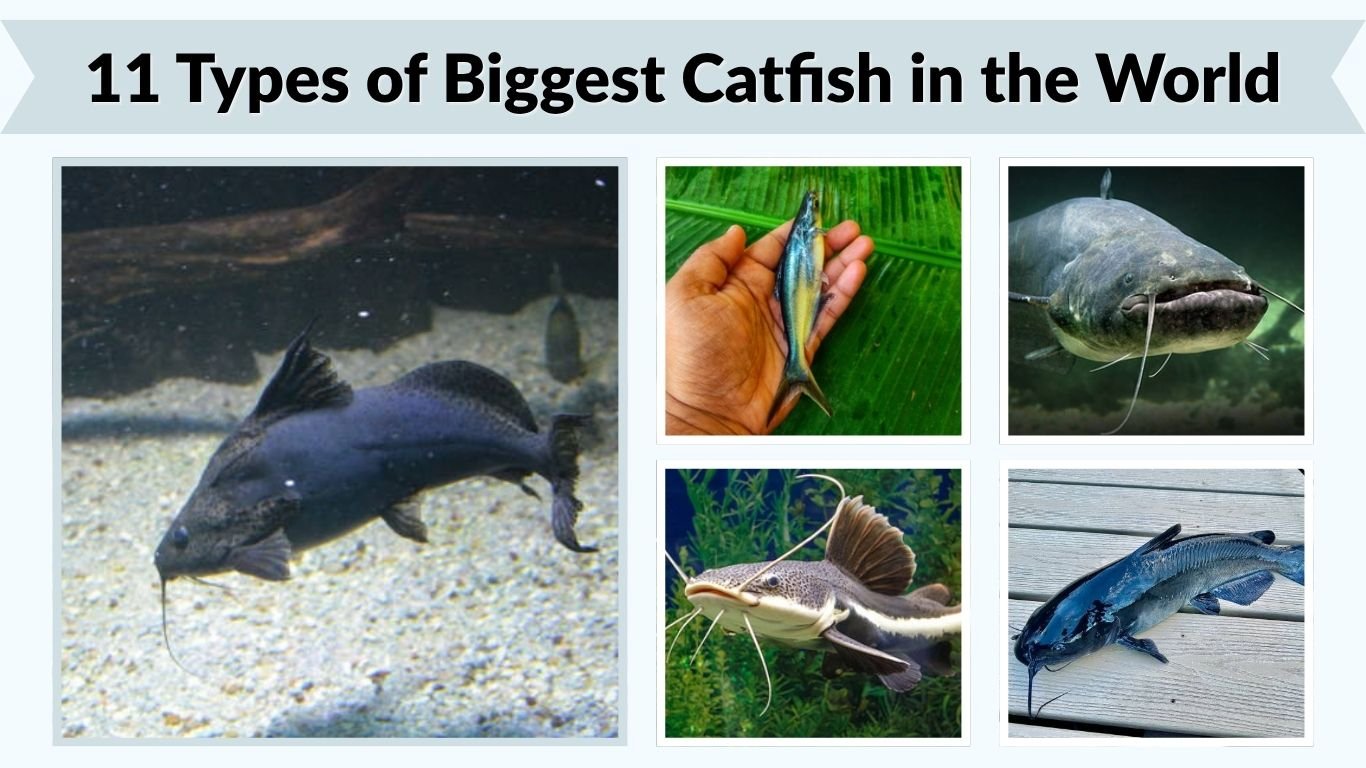
The biggest catfish in the world can reach extraordinary lengths and weights, with some species growing longer than a person and weighing several hundred pounds. From the massive Mekong giant catfish of Southeast Asia to the powerful Piraiba of South America and the giant Wels catfish of Europe, these freshwater predators inhabit some of the world’s largest rivers. This guide explores 11 of the biggest catfish species, including their identification, habitat, diet, maximum size, and notable catch records.
1. Mekong Giant Catfish
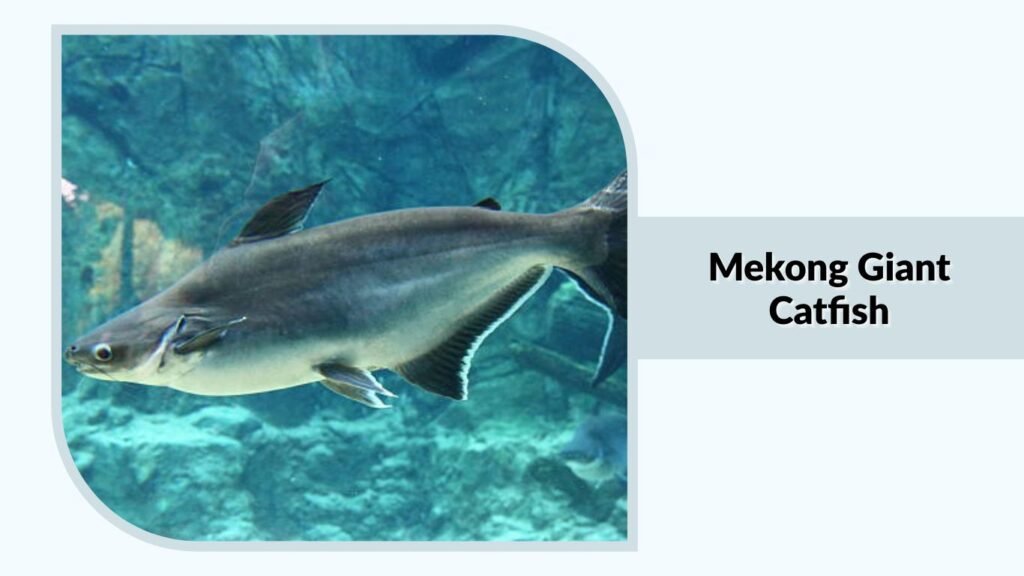
The Mekong giant catfish, Pangasianodon gigas, is one of the biggest catfish species in the world. Native to Southeast Asia’s Mekong River basin, this enormous freshwater fish can grow nearly 10 feet long. Despite its intimidating size, an adult has no functional teeth and mainly consumes algae and plant material. The species is now critically endangered because of overfishing, habitat disruption, and barriers affecting its migrations.
Identification
- Huge, streamlined body with smooth, scaleless skin
- Broad, flattened head and wide mouth
- Small eyes positioned low on the head
- Gray, silver-gray, or dark upper body
- Pale white or cream-colored underside
- Short dorsal fin and deeply forked tail
- Juveniles possess small teeth and barbels that disappear as they mature
- Adults may approach 10 feet in length and weigh hundreds of pounds
Habitat and Natural Range
The Mekong giant catfish is native to the Mekong River system of Southeast Asia. It inhabits large river channels and undertakes long seasonal migrations connected with feeding and reproduction. Maintaining free-flowing river sections is essential because dams, altered water levels, and fragmented habitats can prevent the fish from reaching important spawning and feeding areas.
Diet and Feeding
Young Mekong giant catfish may consume zooplankton and other small aquatic organisms. As they mature, their diet changes and becomes primarily herbivorous. Adults feed on algae, periphyton, and plant material available within the river. Their teeth and gill rakers disappear while they are still relatively small, leaving mature fish adapted to swallowing soft food rather than capturing large prey.
Size and World Record
A Mekong giant catfish caught in northern Thailand in 2005 measured 2.7 metres, or 8 feet 11 inches, and weighed 293 kilograms, or 646 pounds. It remains the heaviest reliably documented catfish specimen. It also held the overall freshwater-fish weight record until a 300-kilogram giant freshwater stingray was recorded in Cambodia in 2022.
2. Wels Catfish
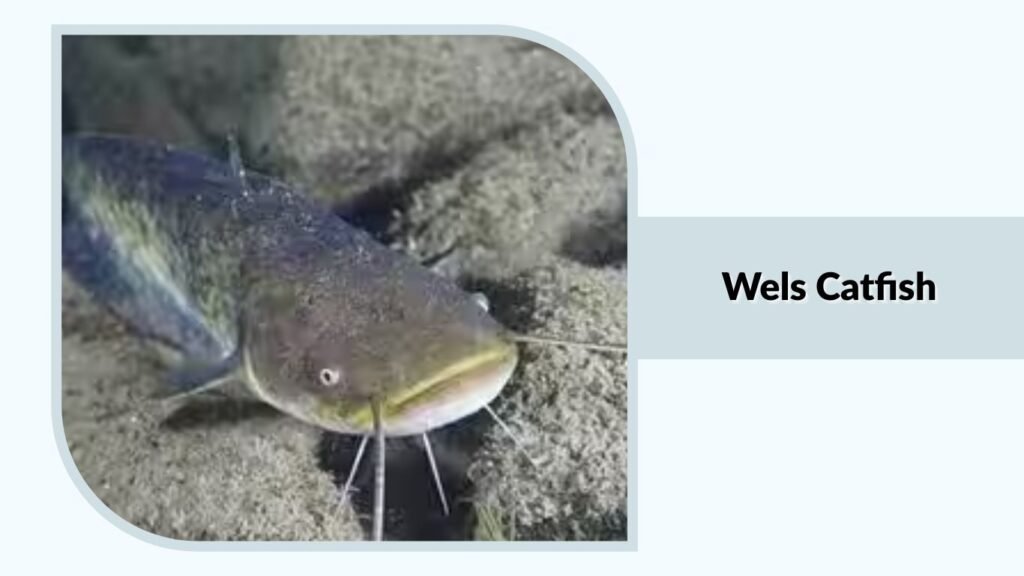
The Wels catfish, Silurus glanis, is one of the biggest freshwater catfish in Europe. It has an elongated body, broad head, enormous mouth, and unusually long anal fin. Although older reports claimed lengths of 5 metres, the largest measurements supported by reliable evidence are approximately 2.73 metres and 130 kilograms.
Identification
- Long, eel-like body with smooth, scaleless skin
- Broad, flattened head and very wide mouth
- Two long upper-jaw barbels and four shorter lower-jaw barbels
- Tiny eyes positioned near the top of the head
- Olive, gray, brown, or nearly black coloration
- Long anal fin extending across much of the underside
- Rounded tail rather than a deeply forked tail
- Verified length reaching approximately 8 feet 11 inches
Habitat and Natural Range
Wels catfish naturally inhabit large and medium-sized lowland rivers, backwaters, reservoirs, and well-vegetated lakes across parts of Europe and western Asia. They prefer slow-moving or still water with deep hiding areas. The species has also been introduced outside its native range, where it may become a dominant predator.
Diet and Feeding
Young Wels catfish eat aquatic invertebrates, small fish, and other bottom-dwelling organisms. Adults are nocturnal predators that consume fish and various aquatic vertebrates. They locate prey using their barbels, hearing, smell, and sensitivity to movements in the surrounding water.
Size and World Record
Older stories of 5-metre Wels catfish weighing more than 300 kilograms resulted partly from identification and measurement errors. The maximum supported by strong evidence is 2.73 metres, or nearly 9 feet, with a weight of 130 kilograms, or about 287 pounds.
3. Piraiba Catfish
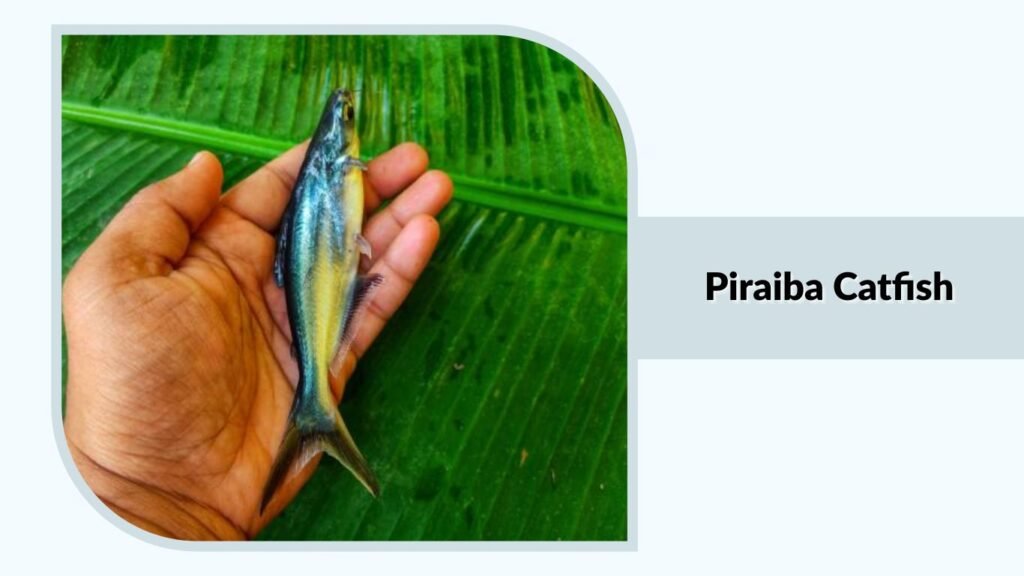
The Piraiba, Brachyplatystoma filamentosum, is a giant long-whiskered catfish from tropical South America. It is one of the largest catfish species in the Amazon Basin and is recognized by its silvery body, enormous mouth, deeply forked tail, and extremely long barbels. Published records list a maximum length of 3.6 metres and weight of 200 kilograms.
Identification
- Long, powerful silver-gray body
- Broad head with an enormous terminal mouth
- White or cream-colored underside
- Very long sensory barbels extending from the mouth
- Tall triangular dorsal fin
- Large, deeply forked tail
- Long, pointed pectoral fins
- Adult length potentially exceeding 10 feet
Habitat and Natural Range
Piraiba catfish live in the Amazon and other major tropical South American river systems. Adults occupy large river channels and deep pools, while younger fish may use connected floodplains and estuarine areas. These powerful swimmers move through extensive river networks while searching for food and suitable habitat.
Diet and Feeding
The Piraiba is a predatory fish that primarily consumes other fish. Its large mouth enables it to swallow sizable prey, while its sensitive barbels help it locate food in deep or muddy water where visibility is limited.
Size and World Record
FishBase reports a maximum published length of 3.6 metres, or about 11 feet 10 inches, and a maximum weight of 200 kilograms, or approximately 441 pounds. More typical adults are much smaller, with a commonly reported length of around 1.2 metres.
4. Giant Pangasius
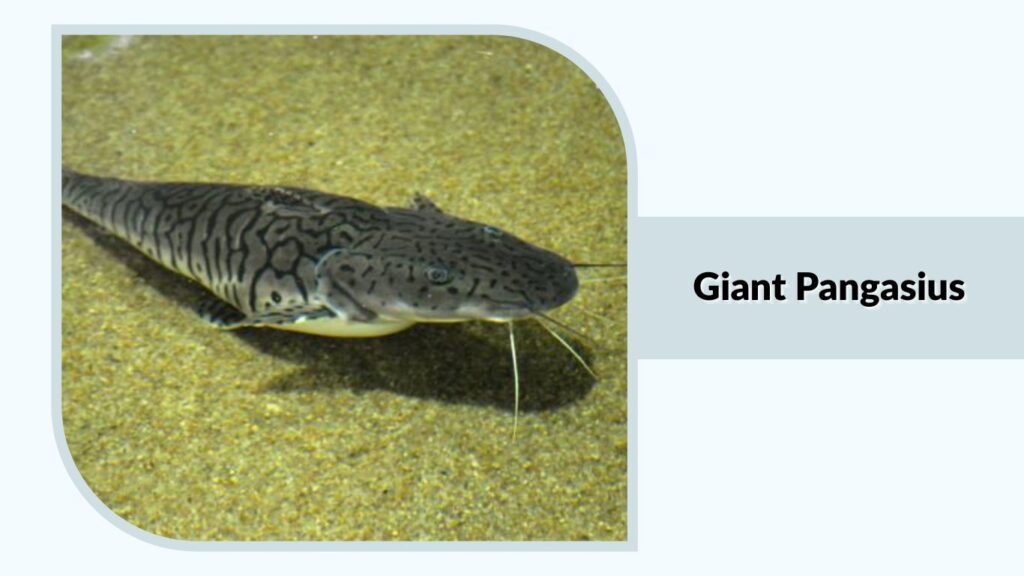
The Giant Pangasius, Pangasius sanitwongsei, is also known as the Paroon shark or Chao Phraya giant catfish. Despite the word “shark” in one of its common names, it is a true freshwater catfish. This Southeast Asian species has a streamlined body, high dorsal fin, and strongly forked tail. It can reportedly reach 3 metres and 300 kilograms.
Identification
- Streamlined gray, blue-gray, or dark body
- Pale silver or white underside
- Broad head with a large mouth
- Small eyes positioned relatively low on the head
- Very tall, shark-like dorsal fin
- Long, pointed fins in younger individuals
- Deeply forked tail built for strong swimming
- Juveniles sometimes sold as Paroon sharks
Habitat and Natural Range
Giant Pangasius are native to the Mekong and Chao Phraya river basins. Adults inhabit large rivers and require extensive open water for swimming and migration. Wild populations have declined because of overharvesting, pollution, habitat loss, and disruption of major river systems.
Diet and Feeding
This species is a powerful opportunistic predator. It consumes fish and other animal prey available in large river environments. Its wide mouth and strong swimming ability allow it to capture relatively large prey, especially as it matures.
Size and World Record
FishBase lists a maximum length of 3 metres, or about 9 feet 10 inches, and a maximum published weight of 300 kilograms, or approximately 661 pounds. These figures place it among the heaviest catfish species, although exceptionally large individuals are now uncommon in the wild.
5. Redtail Catfish
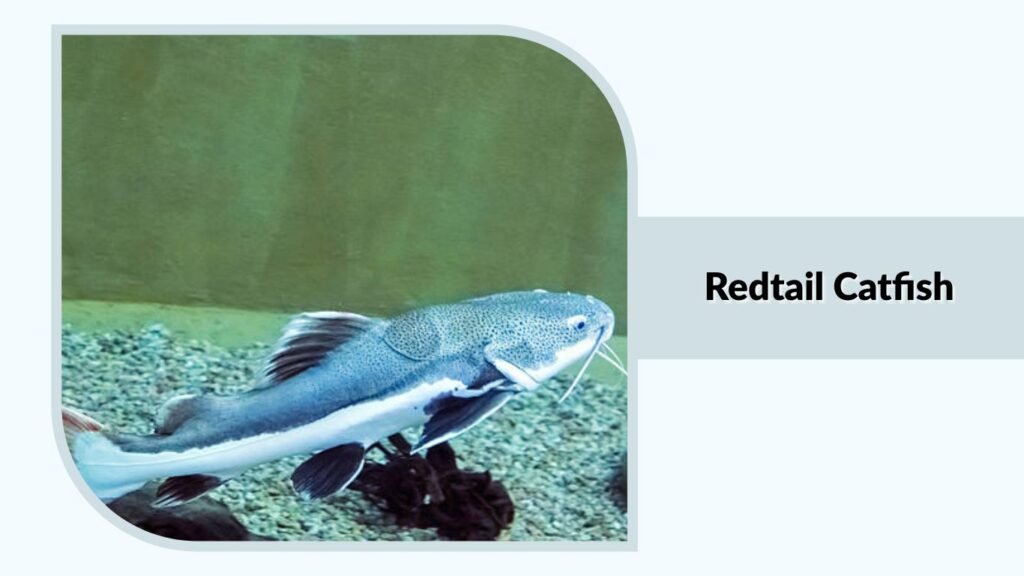
The Redtail catfish, Phractocephalus hemioliopterus, is an unmistakable South American species with a massive head, dark back, white side stripe, and bright reddish-orange tail. It is considerably smaller than the Mekong giant catfish or Piraiba but remains one of the most recognizable large catfish in the world.
Identification
- Extremely broad and flattened head
- Large mouth extending across the front of the head
- Dark gray, brown, or black upper body
- Wide cream or white stripe along each side
- White underside
- Bright orange or red tail fin
- Three pairs of long barbels
- Thick, muscular body
Habitat and Natural Range
Redtail catfish are native to the Amazon and Orinoco river basins. They are freshwater, bottom-associated fish that inhabit tropical rivers, channels, floodplains, and connected waters. Their movements may follow seasonal changes in water levels and food availability.
Diet and Feeding
Adult Redtail catfish eat fish, crabs, and fallen fruit. Their broad diet allows them to take advantage of both aquatic prey and seasonal foods washed into rivers from surrounding forests. They often search for food near the bottom using their sensitive barbels.
Size and World Record
The maximum published length is approximately 1.35 metres, or 4 feet 5 inches, with a published weight of 44.2 kilograms, or about 97 pounds. Its heavy body and enormous head can make it look even larger than its measured length suggests.
6. Goonch Catfish
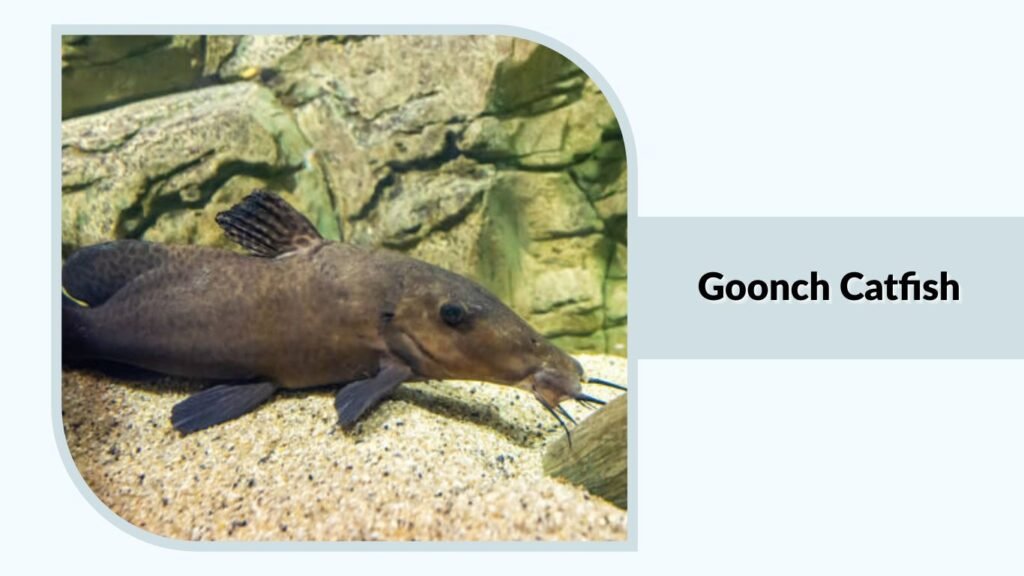
The Goonch is a huge South Asian catfish currently listed by FishBase as Bagarius bagarius. The older name Bagarius yarrelli continues to appear in fishing and aquarium sources. This powerful fish is adapted to fast, rocky rivers and has a broad head, flattened body, large mouth, and long barbels.
Identification
- Broad, heavily flattened head
- Very large mouth with thick lips
- Long barbels around the mouth
- Gray, olive, or brown body with darker markings
- Rough-looking, muscular body
- Large pectoral fins suited to strong currents
- Relatively small eyes
- Potential length exceeding 7 feet
Habitat and Natural Range
Goonch catfish are restricted to the Indian subcontinent. They inhabit freshwater river systems and are particularly associated with deep pools, rocky channels, and areas of strong current. Their flattened bodies and powerful fins help them maintain position near the riverbed.
Diet and Feeding
The Goonch is an opportunistic predator that consumes fish and other aquatic animals. It usually waits near the bottom or among rocks before attacking prey that moves within reach. Its wide mouth, strong body, and sensory barbels make it well adapted to feeding in turbulent or cloudy rivers.
Size and World Record
FishBase lists a maximum length of 230 centimetres, or approximately 7 feet 7 inches. The species is classified as Vulnerable, and its population recovers slowly because it has an extremely low estimated population growth rate.
7. Jau Catfish
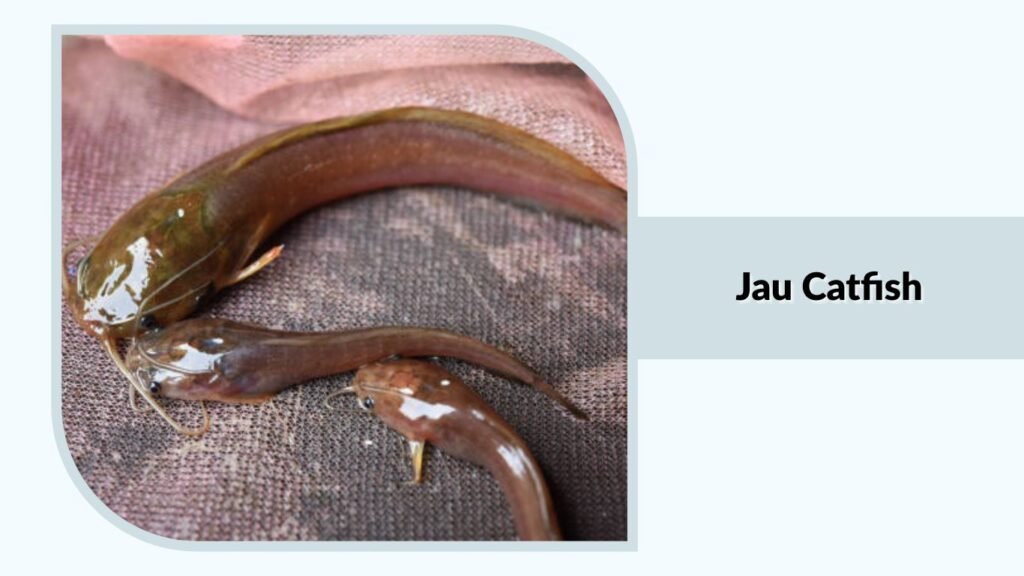
The Jau catfish, Zungaro jahu, is a massive long-whiskered catfish native to the Paraná–Paraguay river system of South America. It is a muscular bottom-associated predator that inhabits large rivers and is valued as a food and sport fish. Habitat destruction, fishing pressure, and the interruption of river migrations have contributed to its decline. FishBase currently lists the species as Near Threatened.
Identification
- Large, thick, muscular body
- Broad, flattened head
- Wide mouth positioned at the front of the head
- Long sensory barbels around the mouth
- Olive-brown, yellowish-brown, or dark gray body
- Small pale spots or mottled markings
- Lighter cream-colored underside
- Broad fins and a strong tail
Habitat and Natural Range
Jau catfish are native to the Paraná and Paraguay river basins. They occupy tropical freshwater environments, including deep channels, pools, and areas near submerged structures. The species can undertake substantial movements through connected rivers. One telemetry study followed a 1.5-metre female after it was moved above a dam in Brazil, demonstrating the species’ association with large river habitats and migratory movement.
Diet and Feeding
The Jau is a high-level aquatic predator. Its broad mouth, strong body, and sensory barbels allow it to locate and capture fish in deep or turbid water. FishBase estimates a trophic level of approximately 4.5, placing it among predominantly carnivorous predators. Younger individuals may consume smaller fish and aquatic invertebrates before taking larger prey as they grow.
Size and Largest Reports
FishBase lists a maximum published standard length of 140 centimetres, or approximately 4 feet 7 inches. Because standard length excludes the tail fin, total length can be greater. The 1.5-metre individual documented in a Brazilian telemetry study demonstrates that exceptionally large adults can exceed the FishBase standard-length measurement when measured from snout to tail.
8. Wallago Catfish
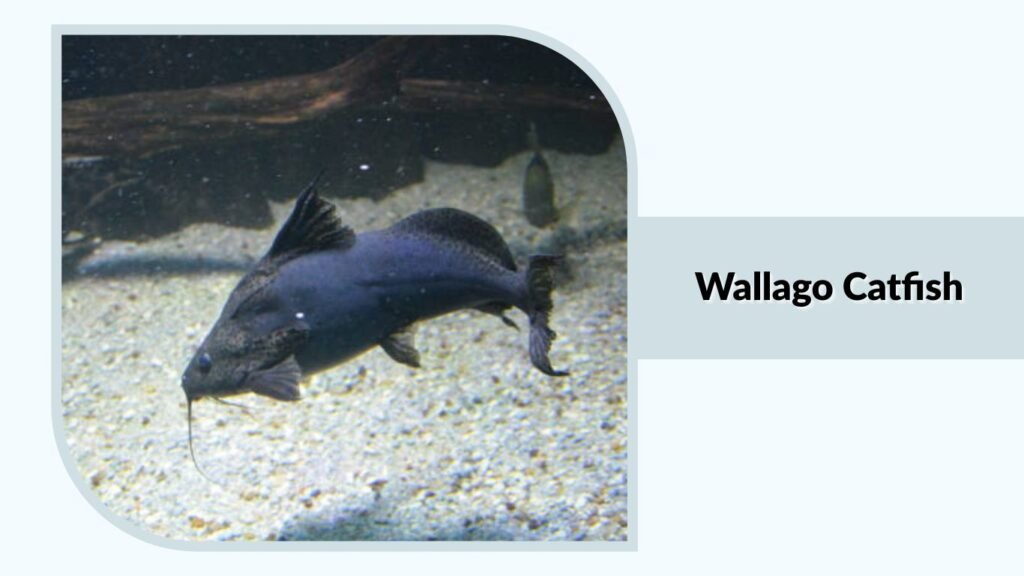
The Wallago catfish, Wallago attu, is a huge predatory sheatfish distributed across southern and Southeast Asia. In Bangladesh, it is commonly known as boal. It has an elongated body, enormous mouth, long anal fin, and powerful jaws. Adults inhabit large rivers, lakes, reservoirs, floodplains, ponds, and other slow-moving waters.
Identification
- Long, strongly compressed body
- Broad head with a depressed snout
- Extremely large mouth extending behind the eyes
- Two pairs of barbels
- Small eyes
- Very small dorsal fin
- Exceptionally long anal fin
- Silver-gray, olive, or brownish body
- Smooth skin without visible scales
Habitat and Natural Range
Wallago catfish occur from Pakistan eastward through India, Bangladesh, Myanmar, Thailand, Vietnam, and parts of Indonesia. They prefer deep, still, or slow-flowing water with muddy or silty bottoms. Adults commonly hide in riverbank holes, canals, deep pools, lakes, and floodplain waters. In Bangladesh, individuals measuring around 180 centimetres are occasionally landed at the Chandpur fish market.
Diet and Feeding
Young Wallago catfish feed primarily on insects and other small aquatic animals. As they mature, they become powerful predators of fish, crustaceans, and mollusks. Adults often remain near muddy bottoms and wait for suitable prey to approach. Their deeply divided mouth, wide bands of teeth, and strong jaws allow them to overpower relatively large animals.
Size and Largest Reports
FishBase lists a maximum total length of 240 centimetres, or approximately 7 feet 10 inches, although a more common adult length is about 75 centimetres. Extremely large individuals are now uncommon in many areas because of intensive harvesting and changes to river habitats. The species is globally classified as Vulnerable.
9. Blue Catfish
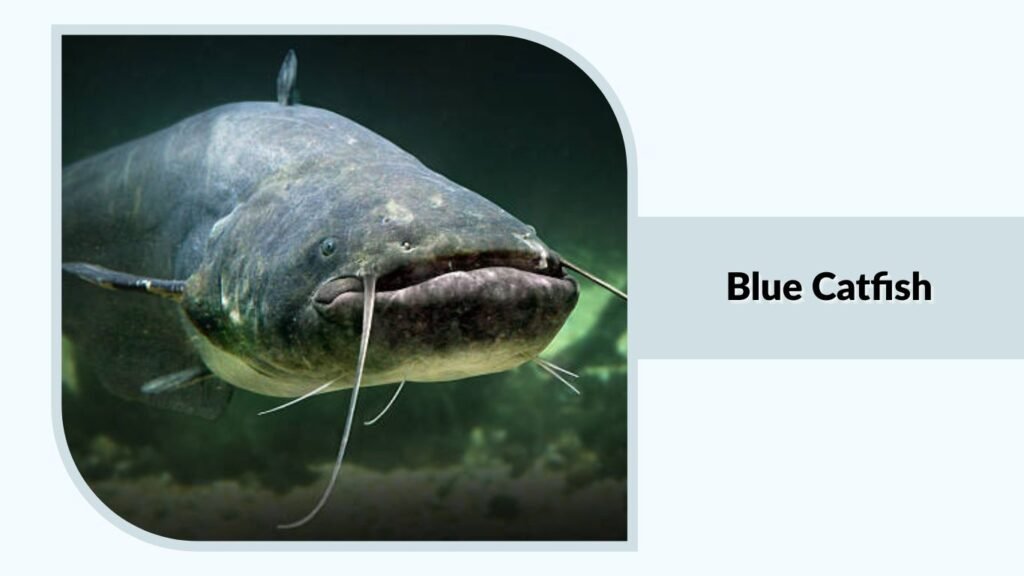
The Blue catfish, Ictalurus furcatus, is the largest native North American catfish species. It is recognizable by its blue-gray body, deeply forked tail, and long anal fin with a nearly straight outer edge. Large adults are powerful open-water predators found in major rivers, reservoirs, channels, backwaters, and dam tailwaters.
Identification
- Blue-gray or slate-colored upper body
- Silvery-white underside
- Smooth, scaleless skin
- Deeply forked tail
- Long anal fin with a straight outer edge
- Broad head and moderately large mouth
- Four pairs of barbels
- Few or no dark body spots on large adults
- Strong dorsal and pectoral spines
Habitat and Natural Range
Blue catfish are native to the Mississippi, Missouri, and Ohio river basins and Gulf Coast drainages extending into Mexico. They live in main river channels, deep flowing pools, reservoirs, backwaters, and embayments. Large adults are frequently associated with deep, swift channels and tailwaters below dams, although the species can tolerate habitats ranging from rocky channels to soft, silty floodplain lakes.
Diet and Feeding
Blue catfish are highly opportunistic omnivores. Their diet can include fish, mollusks, aquatic insect larvae, worms, crustaceans, plant material, and carrion. A lower Mississippi River study cited by the USGS found that fish made up the largest portion of the diet, followed by mollusks and aquatic invertebrates. Diet varies with body size, location, season, and available prey.
Size and World Record
The USGS lists a maximum length of 165 centimetres, or about 5 feet 5 inches, and a typical maximum weight range of 40–50 kilograms, or approximately 88–110 pounds. Larger angling records have been reported, but certified fishing records depend on the organization, tackle category, and weighing requirements.
10. Flathead Catfish
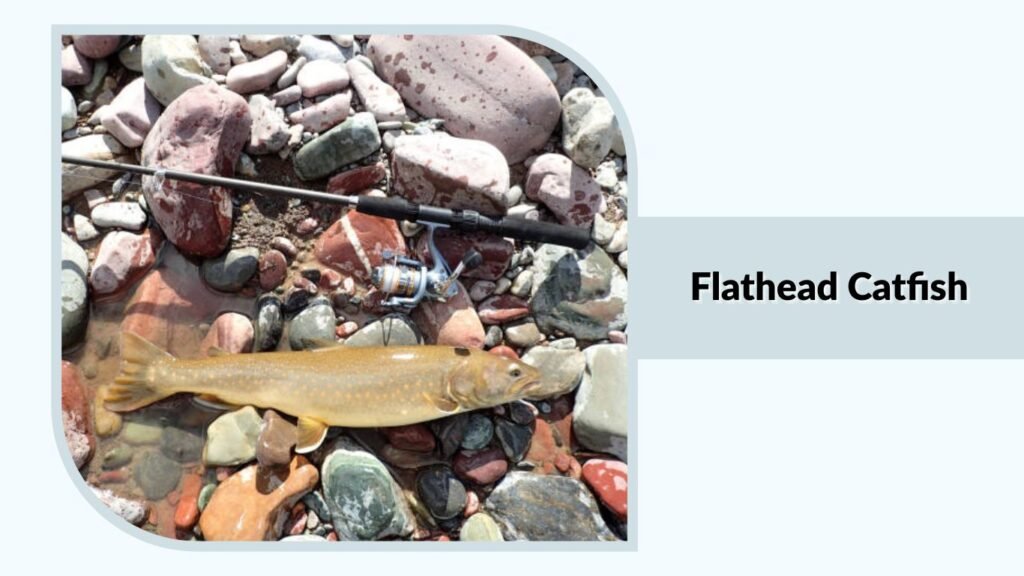
The Flathead catfish, Pylodictis olivaris, is a large North American predator distinguished by its flattened head, projecting lower jaw, mottled coloring, and rounded or slightly notched tail. Unlike the more opportunistic Blue and Channel catfish, large Flatheads strongly favor live animal prey, particularly fish.
Identification
- Broad, flattened head
- Lower jaw extending beyond the upper jaw
- Olive, yellow-brown, or dark mottled body
- Cream or pale yellow underside
- Rounded or slightly notched tail
- Small eyes
- Wide mouth
- Four pairs of barbels
- Short anal fin compared with Blue and Channel catfish
Habitat and Natural Range
Flathead catfish naturally occur in the lower Great Lakes, Mississippi River basin, and Gulf Coast drainages from the southeastern United States into Mexico. Adults prefer deep pools in rivers and streams containing logs, root systems, rocks, and other submerged cover. They also inhabit reservoirs and lakes. Young fish are more commonly associated with rocky or sandy runs and riffles.
Diet and Feeding
Young Flathead catfish consume aquatic insects and other small organisms. Older individuals eat crayfish, clams, and fish, becoming increasingly dependent on live prey as they grow. They often remain near logs, rock piles, undercut banks, and other cover before moving into shallower water to hunt, particularly during low-light periods.
Size and World Record
FishBase lists a maximum published total length of 155 centimetres, or approximately 5 feet 1 inch, and a maximum published weight of 55.8 kilograms, or about 123 pounds. The species can reportedly live for at least 25 years, allowing individuals in productive habitats to reach impressive sizes.
11. Channel Catfish
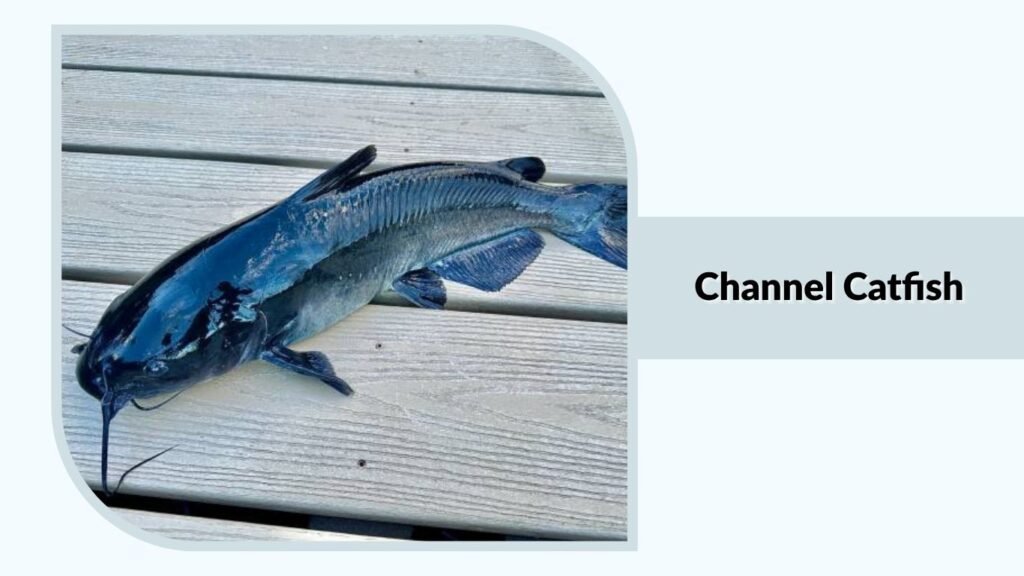
The Channel catfish, Ictalurus punctatus, is one of North America’s most widespread and economically important freshwater fish. It is smaller than the Blue and Flathead catfish but can still reach substantial sizes. Its forked tail, curved anal fin, scattered dark spots, and deeply divided caudal fin help distinguish it from related species.
Identification
- Slender, streamlined body
- Olive, blue-gray, gray, or nearly black back
- White or silvery underside
- Small dark spots on many young and medium-sized fish
- Deeply forked tail
- Anal fin with a rounded outer edge
- Four pairs of barbels
- Strong dorsal and pectoral spines
- Broad head in older males
Habitat and Natural Range
Channel catfish inhabit small streams, major rivers, lakes, ponds, reservoirs, and deep pools. They often occur over sand, gravel, or rock and generally thrive in clean, well-oxygenated water, although they tolerate a broad range of conditions. Because of their popularity in angling and aquaculture, they have been introduced far beyond their original North American range.
Diet and Feeding
Channel catfish are adaptable omnivores. Juveniles consume aquatic insects, small crustaceans, worms, and other invertebrates. Adults may eat fish, crayfish, mollusks, insects, plant material, and carrion. Their barbels contain sensory organs that help them find food in dark or muddy water, but the barbels do not sting. The sharp dorsal and pectoral spines provide physical defense.
Size and World Record
FishBase lists a maximum published total length of 132 centimetres, or approximately 4 feet 4 inches, and a maximum published weight of 26.3 kilograms, or about 58 pounds. It also reports a maximum age of approximately 24 years. Although far smaller than the Mekong giant catfish, a trophy Channel catfish remains a powerful and highly valued freshwater catch.
FAQs
What is the biggest catfish in the world?
The Mekong giant catfish is widely recognized as one of the world’s largest catfish species. A specimen caught in Thailand in 2005 weighed 646 pounds and measured almost 9 feet long, making it the heaviest reliably documented catfish.
What is the biggest catfish ever caught?
The largest reliably recorded catfish was a Mekong giant catfish caught in northern Thailand. It weighed approximately 293 kilograms, or 646 pounds, and measured 2.7 metres, or 8 feet 11 inches, making it a historic freshwater catch.
Which catfish species grows the longest?
The Piraiba is among the longest catfish species, with published reports reaching approximately 11 feet 10 inches. However, verified giant specimens are uncommon. Mekong giant catfish, Wels catfish, and Giant Pangasius can also approach or exceed 9 feet.
What is the biggest catfish in North America?
The Blue catfish is the largest catfish species native to North America. It can exceed 5 feet in length and weigh more than 100 pounds. Flathead catfish are also extremely large, while Channel catfish are generally smaller than both species.
Where are the biggest catfish found?
The world’s largest catfish occur in major tropical and temperate river systems. Mekong giant catfish live in Southeast Asia, Piraiba and Redtail catfish inhabit South America, Wels catfish occur in Europe and western Asia, and giant Blue catfish live in North America.