
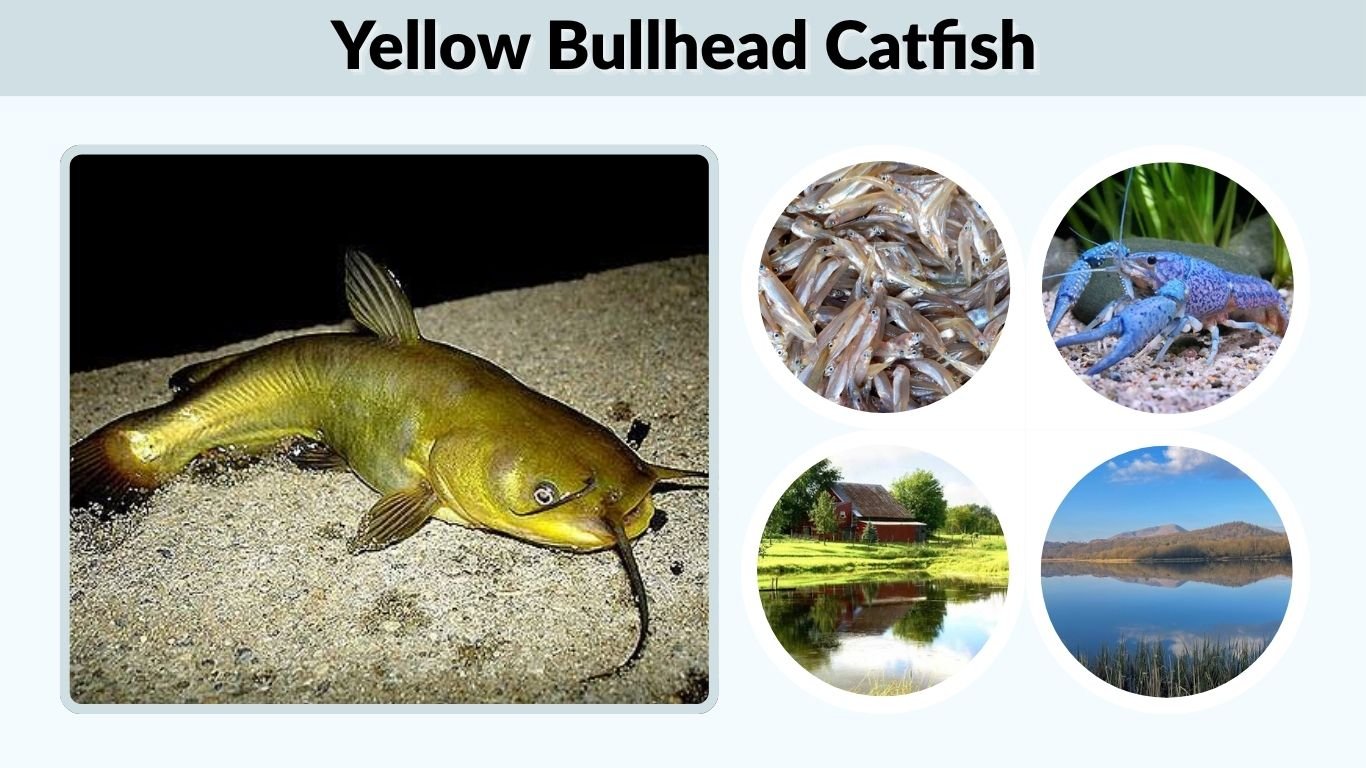
The yellow bullhead catfish is a small-to-medium freshwater catfish native to North America. Known for its yellowish underside, rounded tail, and pale chin barbels, this hardy fish lives in ponds, lakes, streams, and slow-moving rivers. Yellow bullheads are opportunistic bottom feeders that eat insects, small fish, crustaceans, worms, and plant material. They are also popular among anglers because they are relatively easy to catch and can make good table fare when taken from clean water.
Yellow Bullhead Catfish Quick Facts
Yellow bullheads belong to the North American bullhead catfish group and are closely related to brown and black bullheads. Their scientific name is Ameiurus natalis.
| Feature | Yellow Bullhead Catfish |
| Scientific name | Ameiurus natalis |
| Family | Ictaluridae |
| Average length | About 8–14 inches |
| Maximum size | Around 18–20 inches in exceptional fish |
| Typical weight | Usually under 2 pounds |
| Diet | Omnivorous |
| Habitat | Ponds, lakes, rivers, and streams |
| Activity | Mostly nocturnal |
| Lifespan | Commonly several years |
| Native range | North America |
Yellow bullheads are adaptable fish and can survive in warm, slow-moving water where some other species struggle.
What Does a Yellow Bullhead Catfish Look Like?
Yellow bullheads have the familiar whiskered appearance of other bullhead catfish, but several characteristics can help distinguish them.
Yellow Bullhead Catfish Characteristics
Common identification features include:
- Yellow, cream, or whitish belly
- Yellowish-brown to olive upper body
- Rounded or slightly squared tail
- Broad, flattened head
- Smooth, scaleless skin
- Four pairs of barbels around the mouth
- Light-colored chin barbels
- Sharp spines on the dorsal and pectoral fins
- Relatively stocky body
The pale or whitish chin barbels are particularly useful when distinguishing yellow bullheads from similar species.
Yellow Belly Bullhead Catfish
The name “yellow belly bullhead” is sometimes used informally because the underside of the fish can appear yellow, cream, or pale gold.
However, body color can vary depending on water clarity, habitat, age, and individual fish. Identification should therefore rely on several physical characteristics instead of belly color alone.
How Big Do Yellow Bullhead Catfish Get?
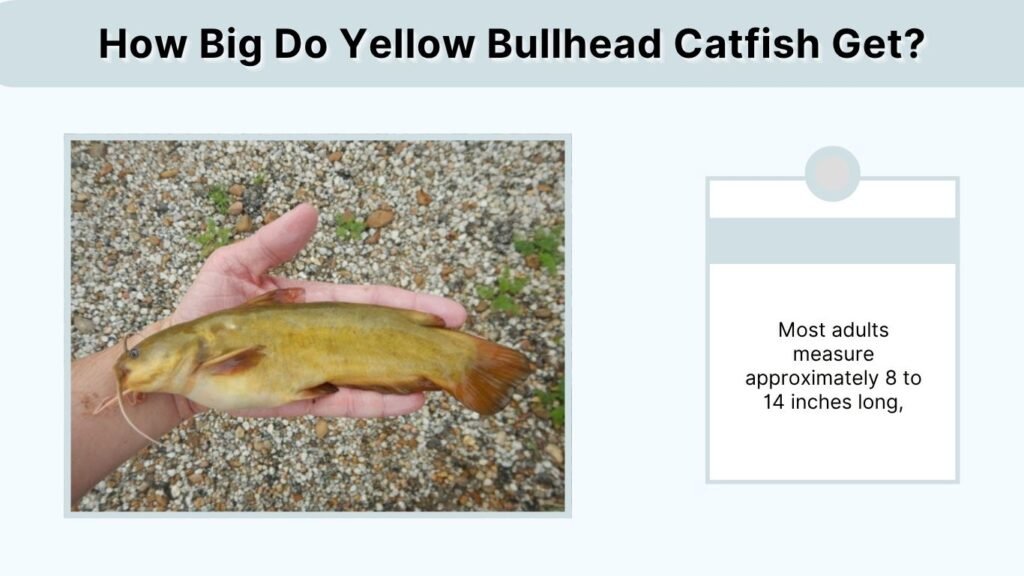
Yellow bullheads are considerably smaller than giant catfish such as blue, flathead, or large channel catfish.
Most adults measure approximately 8 to 14 inches long, although larger individuals can exceed this range.
Full-Grown Yellow Bullhead Catfish Size
A large full-grown yellow bullhead may approach 18 inches or more, although fish of this size are uncommon.
Most anglers encounter individuals considerably smaller than record-sized specimens.
Their relatively compact adult size makes yellow bullheads easier to manage in appropriately designed ponds or large aquariums compared with larger catfish species.
How Fast Do Yellow Bullheads Grow?
Growth depends on:
- Food availability
- Water temperature
- Population density
- Genetics
- Habitat quality
- Competition with other fish
Juveniles grow fastest when food is abundant and water conditions are favorable. Crowded ponds with limited food may produce large numbers of smaller bullheads.
World Record Yellow Bullhead Catfish
Record-sized yellow bullheads are unusually large compared with the fish normally caught by recreational anglers.
Because fishing records can differ between organizations and state agencies, the recognized world record yellow bullhead catfish may not always be the same as individual state records.
Some states maintain their own yellow bullhead records based on verified weight, length, or fishing method.
For anglers, catching a yellow bullhead weighing more than a couple of pounds would generally be considered an exceptional fish.
Yellow Bullhead Catfish Habitat
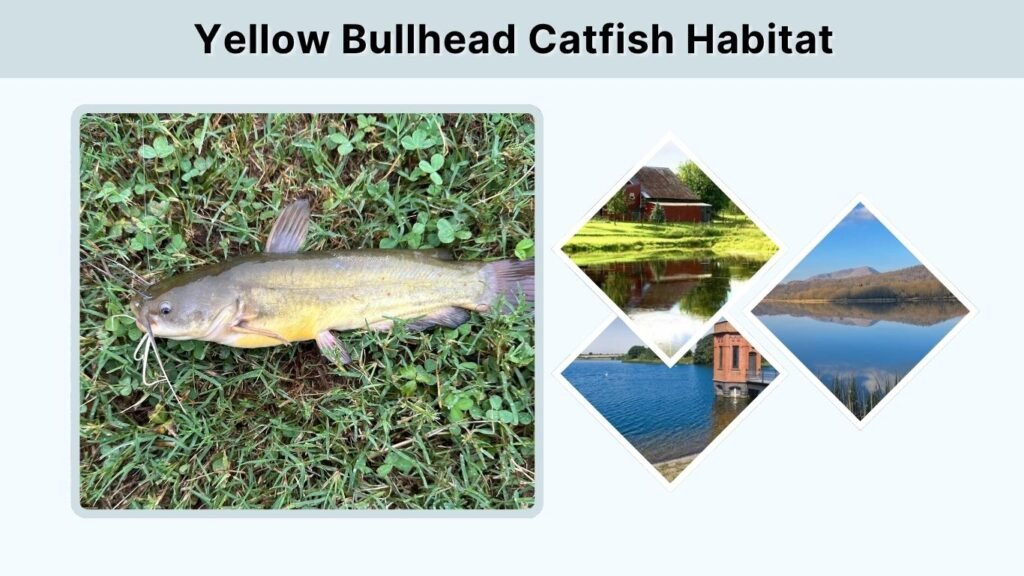
Yellow bullheads inhabit freshwater environments throughout much of eastern and central North America.
They prefer warm, relatively slow-moving water with plenty of cover.
Typical habitat includes:
- Farm ponds
- Small lakes
- Reservoirs
- Slow rivers
- Creeks
- Backwaters
- Marshy areas
Where Do Yellow Bullheads Live?
Yellow bullheads commonly stay near the bottom around vegetation, submerged logs, rocks, muddy areas, and other structures.
They can tolerate relatively turbid water and lower oxygen conditions better than many sensitive freshwater species.
During daylight hours, they may remain hidden near cover. At night, they become more active and move into feeding areas.
What Do Yellow Bullhead Catfish Eat?
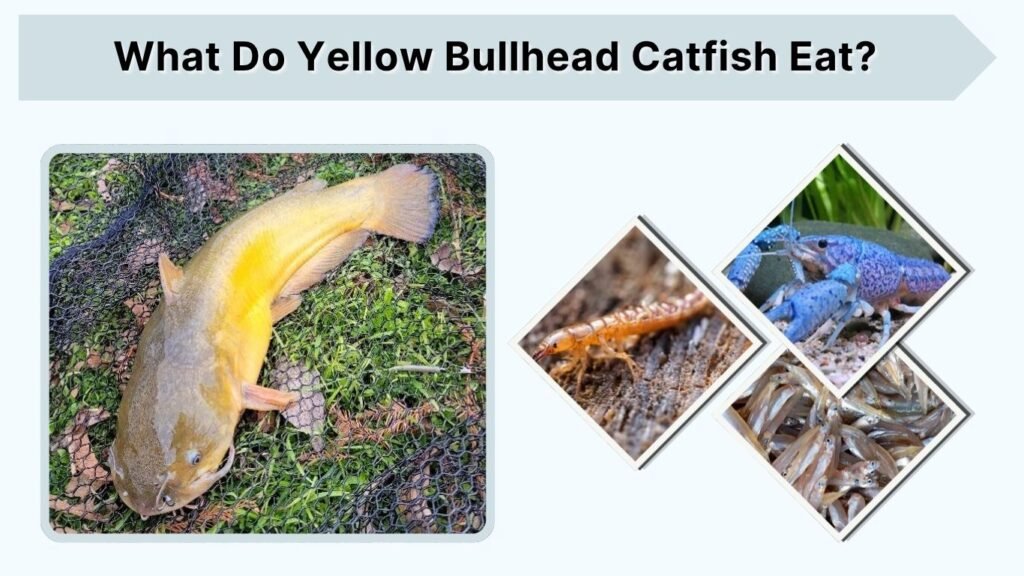
Yellow bullheads are opportunistic omnivores. They search along the bottom using their sensitive barbels to detect potential food.
Their natural diet can include:
- Aquatic insect larvae
- Worms
- Crayfish
- Small fish
- Fish eggs
- Snails
- Small crustaceans
- Carrion
- Plant material
Young yellow bullheads consume smaller organisms, while larger adults can capture small fish and other relatively large prey.
Yellow Bullhead Catfish Feeding Behavior
Yellow bullheads are particularly active feeders after sunset.
Their strong sense of smell allows them to locate food in muddy or dark water where vision is less useful.
This feeding behavior also explains why strongly scented natural baits are commonly effective when fishing for bullheads.
Best Bait for Yellow Bullhead Catfish
Yellow bullheads are not particularly selective feeders, making them relatively easy to catch.
Effective baits can include:
- Nightcrawlers
- Earthworms
- Chicken liver
- Cut bait
- Shrimp
- Small pieces of fish
- Insect larvae
Fishing near the bottom is generally most effective because yellow bullheads spend much of their time searching for food close to the substrate.
How to Catch Yellow Bullhead Catfish
A simple bottom fishing rig is usually enough.
Place the bait close to vegetation, submerged wood, weed edges, or deeper holes. Fishing during the evening or at night can increase your chances because bullheads often become more active after dark.
Light or medium tackle is usually sufficient for most yellow bullheads.
Are Yellow Bullhead Catfish Good to Eat?
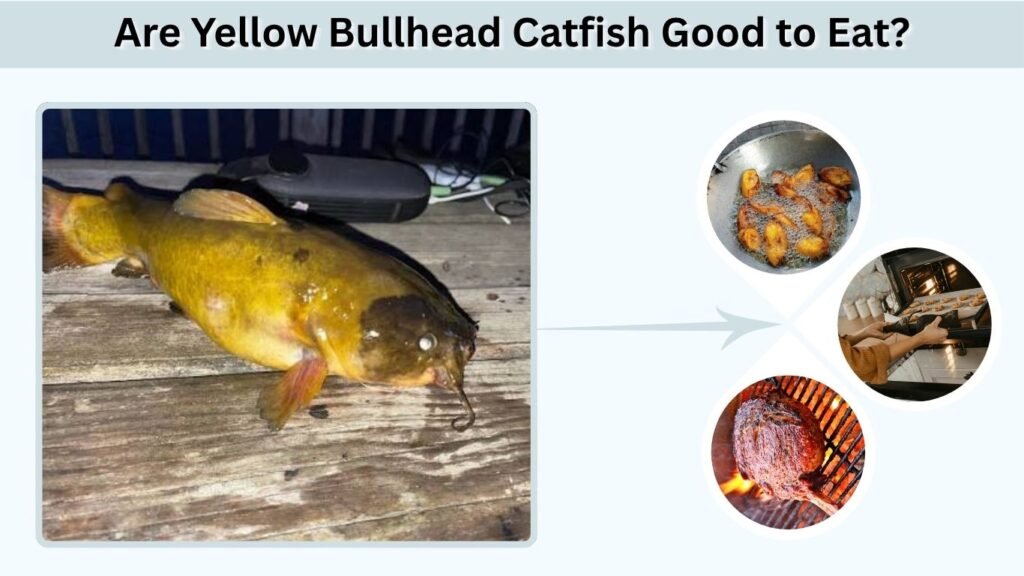
Yes. Yellow bullhead catfish are edible, and many anglers consider them good eating when they come from clean water.
Their flesh is generally mild and firm.
Fish harvested from muddy or polluted locations, however, may have poorer flavor or may not be appropriate for consumption.
Can You Eat Yellow Bullhead Catfish?
You can eat yellow bullheads similarly to other freshwater catfish.
Common cooking methods include:
- Frying
- Baking
- Grilling
- Pan-searing
Always follow local fishing regulations and fish-consumption advisories before keeping or eating wild-caught catfish.
Smaller bullheads can require more cleaning effort relative to the amount of meat they provide, but larger specimens can produce worthwhile fillets.
Yellow Bullhead Catfish Aquarium Care
Yellow bullheads are occasionally kept in native-fish aquariums, although they require considerably more room than ordinary tropical community fish.
Aquarium Requirements
A yellow bullhead aquarium should provide:
- Large floor area
- Strong filtration
- Good oxygenation
- Hiding places
- Smooth rocks or wood
- Secure aquarium lid
- Regular water changes
Because bullheads eat heavily and produce significant waste, water quality can deteriorate quickly in undersized aquariums.
Can Yellow Bullheads Live With Goldfish?
Keeping yellow bullheads with goldfish is generally risky.
A large bullhead may attempt to eat smaller goldfish, particularly at night. Both species also produce substantial waste, increasing filtration requirements.
Tank mates should always be too large for the bullhead to swallow and capable of living under similar water conditions.
Yellow Bullhead Catfish Lifespan
Yellow bullheads can live for several years when conditions are favorable.
Their lifespan depends on habitat quality, predation, food availability, fishing pressure, disease, and environmental conditions.
Fish kept in captivity may live longer when provided with stable water quality, proper nutrition, sufficient space, and appropriate care.
Yellow Bullhead vs Channel Catfish
Yellow bullheads and channel catfish can sometimes be confused by inexperienced anglers, but they differ significantly in size and appearance.
| Feature | Yellow Bullhead | Channel Catfish |
| Typical size | Small to medium | Medium to very large |
| Tail | Rounded | Deeply forked |
| Chin barbels | Usually pale | Usually darker |
| Body shape | Stocky | More streamlined |
| Maximum size | Relatively small | Can exceed 40 pounds |
| Habitat | Ponds and slow water | Lakes, rivers, reservoirs |
The tail is one of the easiest ways to distinguish them. Channel catfish have a noticeably forked tail, while yellow bullheads have a rounded tail.
Yellow Bullhead vs Flathead Catfish
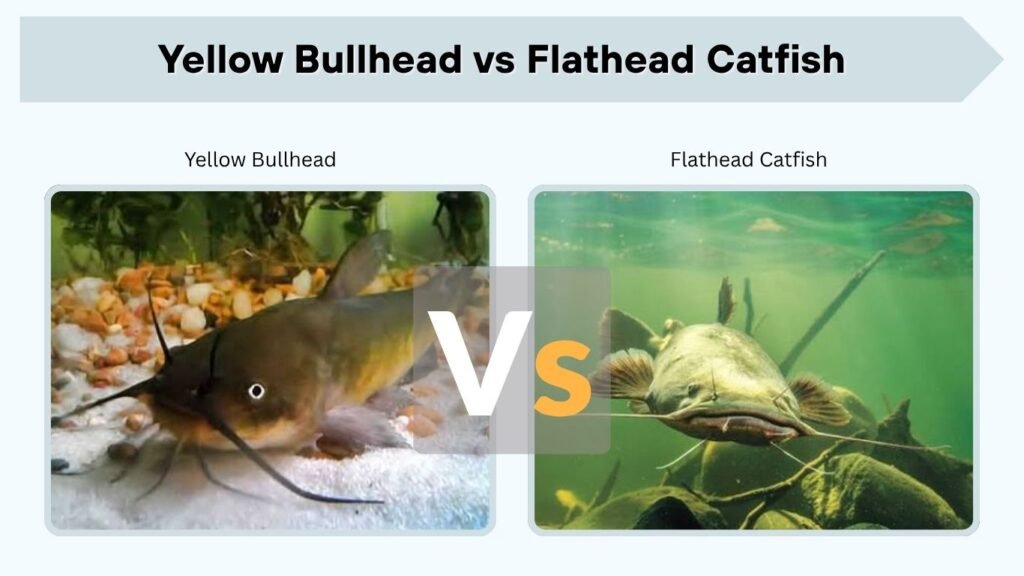
Flathead catfish become dramatically larger than yellow bullheads and are powerful predators.
Yellow bullheads are smaller omnivores that eat a wide variety of bottom-dwelling organisms.
| Feature | Yellow Bullhead | Flathead Catfish |
| Adult size | Usually under 15 inches | Commonly several feet |
| Diet | Omnivorous | Primarily predatory |
| Head | Broad | Very broad and flattened |
| Tail | Rounded | Slightly notched |
| Fishing tackle | Light to medium | Heavy |
| Aquarium suitability | Possible in large setups | Extremely difficult |
A full-grown flathead can potentially prey on smaller bullheads if both species occupy the same habitat.
Yellow Bullhead vs Brown and Black Bullhead
Yellow, brown, and black bullheads are closely related and often share similar habitats.
The yellow bullhead’s light-colored chin barbels are one of its most useful identification characteristics.
Brown bullheads generally have darker mottling and dark chin barbels, while black bullheads tend to have a darker body and different fin characteristics.
Because coloration varies, anglers should consider barbels, fins, tail shape, and overall body pattern when identifying bullheads.
FAQs
Are yellow bullhead catfish aggressive?
Yellow bullheads are predators toward small animals and fish but are not typically considered highly aggressive toward similarly sized fish. However, anything small enough to fit inside their mouth may be treated as food, especially during nighttime feeding.
How big do yellow bullhead catfish get?
Most yellow bullheads are around 8 to 14 inches long. Exceptional adults may reach approximately 18 inches or more. They remain much smaller than channel, blue, and flathead catfish, making giant individuals relatively unusual.
What do yellow bullhead catfish eat?
Yellow bullheads eat worms, aquatic insects, crayfish, snails, small fish, fish eggs, crustaceans, carrion, and some plant material. They usually search along the bottom and rely heavily on their sensitive barbels to locate food.
Are yellow bullhead catfish good to eat?
Yes. Yellow bullheads can provide mild, firm meat when caught from clean water. They are commonly fried, baked, or grilled. Always check local fishing regulations and fish-consumption advisories before eating wild-caught bullheads.
What is the easiest way to identify a yellow bullhead?
Look closely at the chin barbels. Yellow bullheads usually have pale, white, or yellowish chin barbels along with a rounded tail and yellowish underside. Using several characteristics together provides more reliable identification than body color alone.