
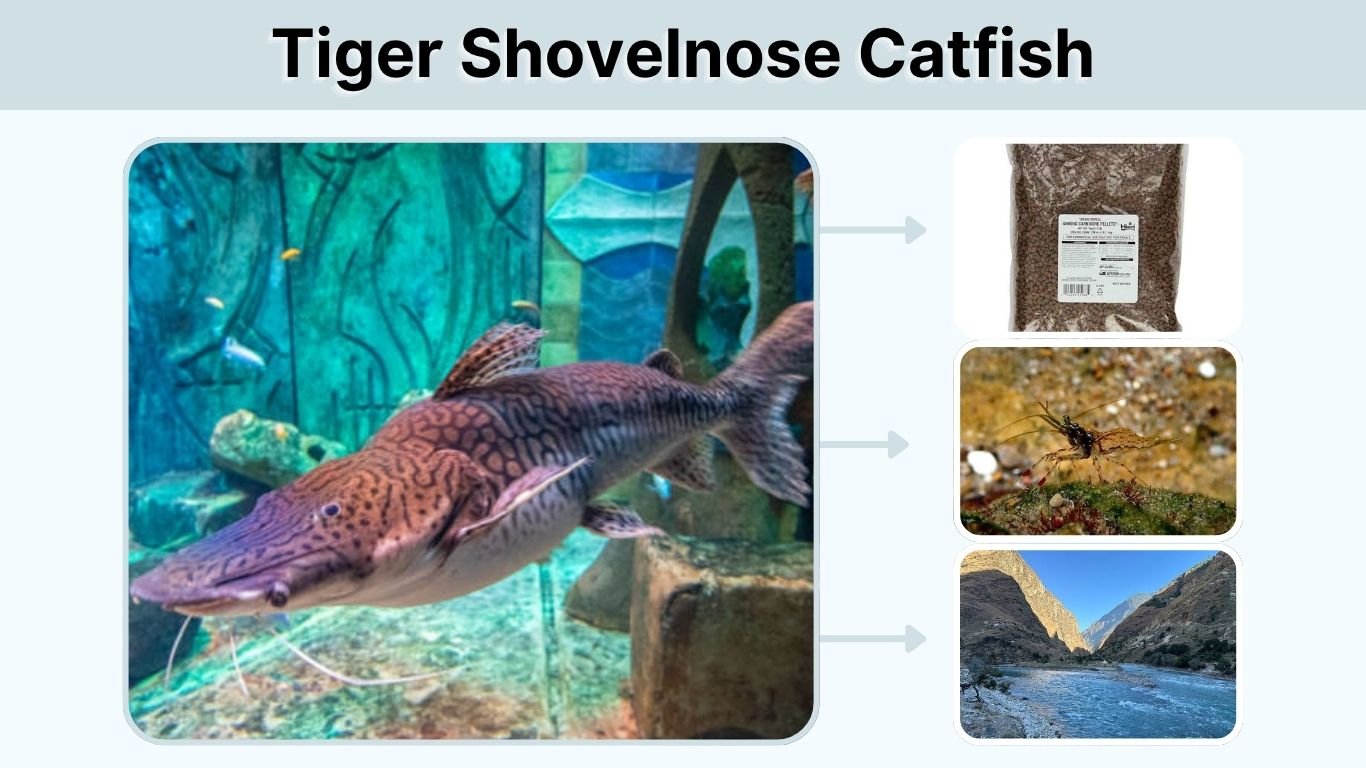
The tiger shovelnose catfish is a spectacular South American freshwater predator known for its long body, flattened shovel-shaped head, bold dark markings, and extremely long whiskers. Although small juveniles sometimes appear in aquarium stores, this is a true monster fish that can become several feet long. Its rapid growth, enormous appetite, and need for swimming space make it far more suitable for huge custom aquariums or indoor ponds than ordinary home tanks.
Tiger Shovelnose Catfish Quick Facts
The name “tiger shovelnose” is used for several closely related Pseudoplatystoma catfish in the aquarium trade. Pseudoplatystoma tigrinum is commonly called the tiger sorubim, while P. fasciatum is the barred sorubim and is also widely sold as a tiger shovelnose catfish.
| Feature | Tiger Shovelnose Catfish |
| Family | Pimelodidae |
| Genus | Pseudoplatystoma |
| Origin | South America |
| Adult size | Commonly 3+ feet; some species reach about 4 feet |
| Diet | Carnivorous/predatory |
| Temperament | Predatory but not usually highly territorial |
| Temperature | About 72–79°F for P. tigrinum |
| Lifespan | Up to about 18 years reported for P. tigrinum |
| Tank level | Mainly lower and middle areas |
| Care level | Advanced |
| Best housing | Huge custom aquarium or indoor pond |
P. tigrinum has a recorded maximum length of about 130 cm (51 inches) and a reported maximum age of 18 years. Its natural temperature range is about 22–26°C (72–79°F).
What Does a Tiger Shovelnose Catfish Look Like?
Tiger shovelnose catfish have the unmistakable appearance of large predatory river catfish. Their streamlined bodies are designed for moving through large waterways, while the broad head and long sensory barbels help them locate prey, including in low-light conditions.
Tiger Shovelnose Catfish Identification
Typical identification features include:
- Long, streamlined body
- Broad, flattened shovel-shaped head
- Extremely long whisker-like barbels
- Dark vertical bars or tiger-like markings
- Spotted or patterned fins
- Pale underside
- Large mouth
- Powerful tail
- Small eyes positioned high on the head
Patterning varies between species and individuals, which is one reason similar Pseudoplatystoma species may be confused in the aquarium trade.
How Big Do Tiger Shovelnose Catfish Get?
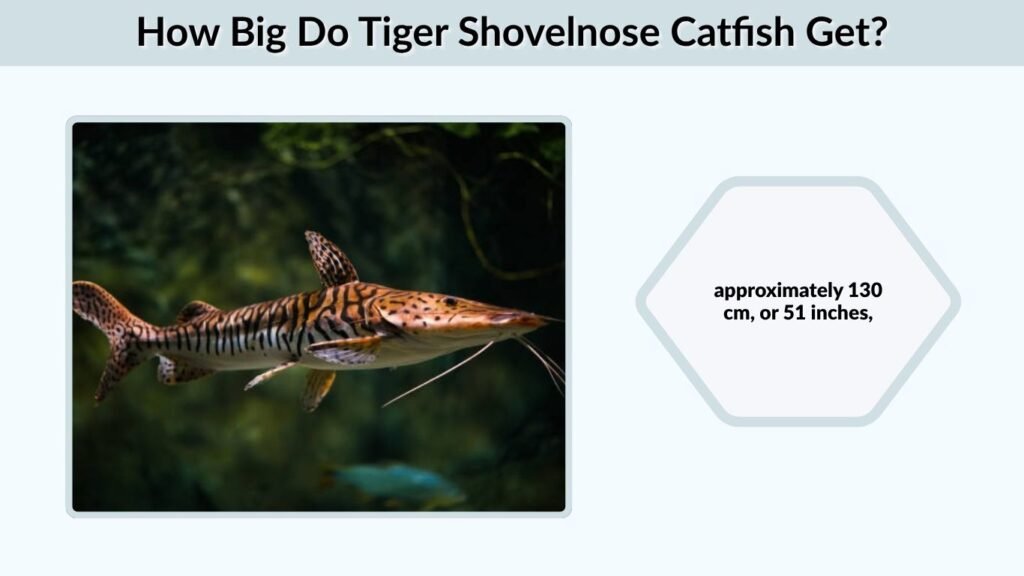
Size is the most important consideration before keeping this fish. Tiger shovelnose catfish may be sold when only a few inches long, but they should never be considered small aquarium catfish.
Full-Grown Tiger Shovelnose Catfish Size
A true Pseudoplatystoma tigrinum can reach approximately 130 cm, or 51 inches, in total length. P. fasciatum is also an exceptionally large species, with FishBase reporting a maximum standard length exceeding one meter.
Captive individuals do not automatically stay small just because they live in an aquarium. Restricting a giant fish to an undersized enclosure is not a safe method of controlling its adult size.
Tiger Shovelnose Catfish Growth Rate
Juvenile tiger shovelnose catfish can grow extremely quickly when they are well-fed and maintained in suitable conditions. Aquarium sellers specializing in these fish specifically warn that young specimens can rapidly outgrow normal tanks.
Growth varies according to genetics, species, diet, water quality, temperature, and available space, so a fixed number of inches per month should not be expected.
Tiger Shovelnose Catfish Tank Size
A baby tiger shovelnose may temporarily fit into a conventional aquarium, but planning only for its juvenile size is one of the most common mistakes owners make.
Minimum Tank Size for an Adult
There is no single gallon figure that works well for every adult because tank dimensions matter as much as volume. A fish measuring three or four feet needs enough length and width to swim and turn naturally.
For long-term care, adults are realistically suited to the largest custom-built aquariums or indoor ponds rather than standard commercially available tanks.
Aquarium Setup
A tiger shovelnose aquarium should provide:
- Extensive open swimming space
- Powerful biological filtration
- Strong oxygenation
- Secure equipment
- Stable water conditions
- Smooth décor without sharp obstacles
- Plenty of floor space
Large predatory catfish produce substantial waste, making filtration and regular aquarium maintenance particularly important.
Water Temperature
For P. tigrinum, its recorded natural tropical temperature range is approximately 22–26°C (72–79°F), with a pH range around 6.2–7.2.
Aquarium specimens should be protected from sudden changes in temperature or water chemistry.
Tiger Shovelnose Catfish Diet and Feeding
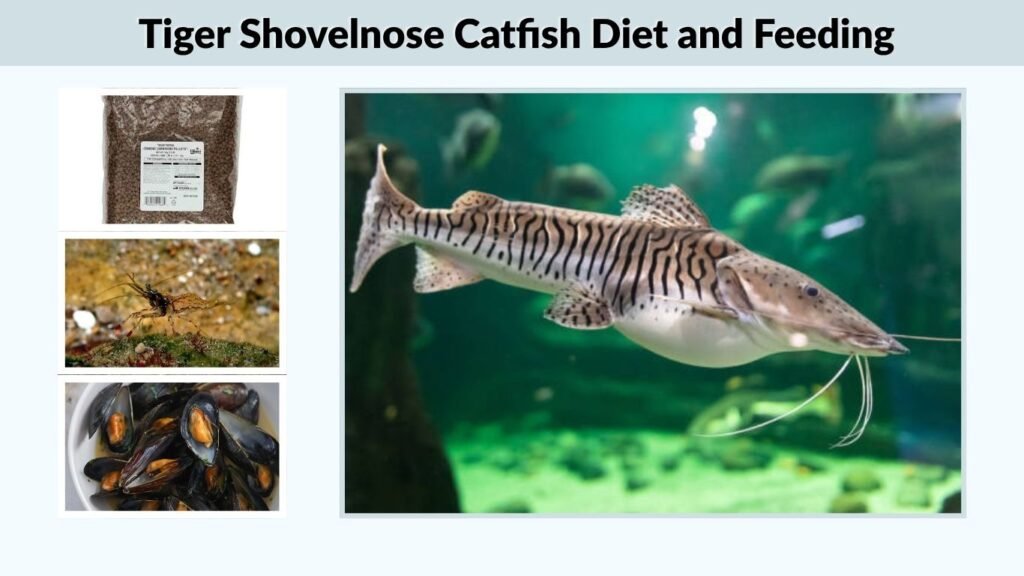
Tiger shovelnose catfish are predators. In the wild, P. tigrinum feeds mainly on fish but may also consume shrimp and crabs. It is primarily nocturnal and often becomes more active when light levels fall.
What Do Tiger Shovelnose Catfish Eat?
Captive fish can be offered appropriately sized carnivore foods such as:
- Quality sinking carnivore pellets
- Shrimp
- Prawns
- Mussels
- Fish-based frozen foods
- Other suitable prepared foods for large predatory fish
Aquarium-raised tiger shovelnose catfish can learn to accept frozen foods and prepared sinking diets rather than requiring live feeder fish.
Avoid constantly overfeeding juveniles simply to increase their growth rate.
Are Tiger Shovelnose Catfish Aggressive?
Tiger shovelnose catfish are better described as predatory rather than extremely aggressive. They may tolerate other large fish, but anything small enough to enter their mouth can potentially become food.
Specialist aquarium suppliers describe them as generally peaceful toward tank mates that are too large to swallow.
Tiger Shovelnose Catfish Tank Mates
Potential tank mates must be very large, robust, and compatible with similar water conditions. Large South American monster fish are sometimes housed together in enormous systems.
Small cichlids, community fish, goldfish, tetras, and similar species are unsuitable because the shovelnose may eventually eat them.
Even a tank mate that appears safe beside a juvenile can become vulnerable as the catfish grows.
Tiger Shovelnose Catfish Habitat
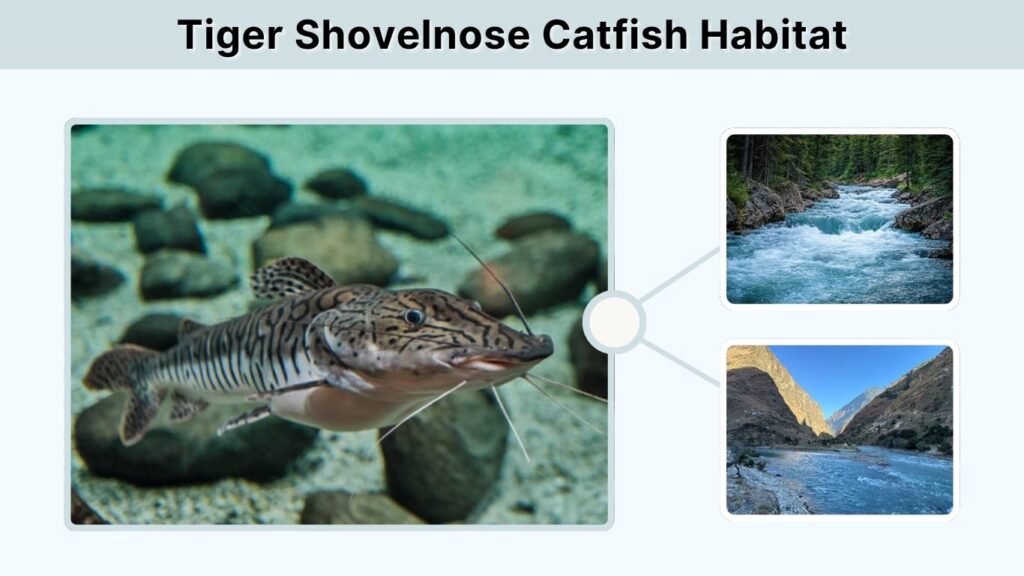
Tiger shovelnose catfish originate from major South American river systems. P. tigrinum occurs in the Amazon and Orinoco basins and occupies main river channels as well as seasonally flooded forests, particularly during juvenile stages.
They are adapted to enormous natural environments, which helps explain why recreating appropriate long-term conditions in a home aquarium can be difficult.
Tiger Shovelnose Catfish Lifespan
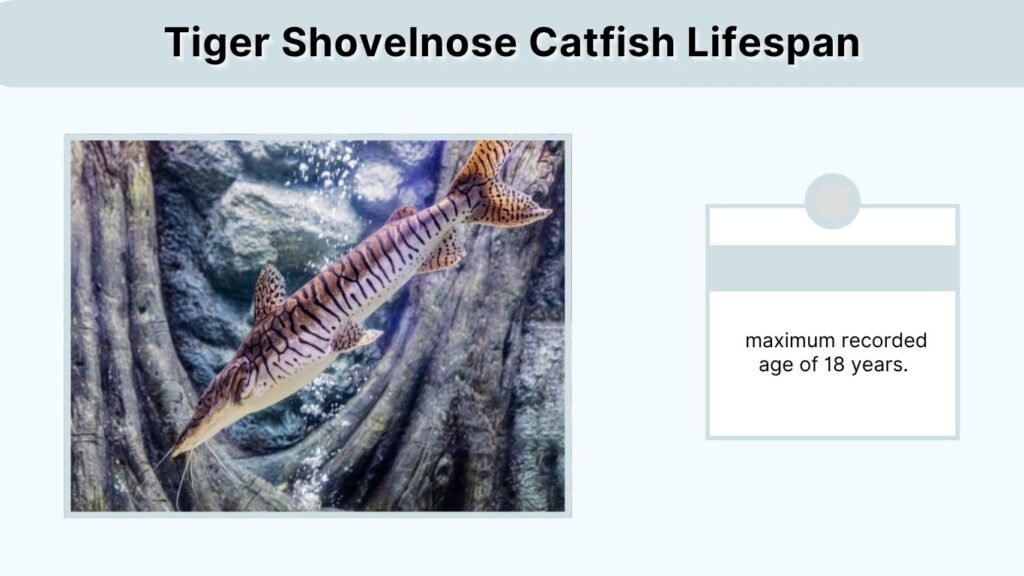
A tiger shovelnose catfish should be considered a long-term commitment. FishBase reports a maximum recorded age of 18 years for Pseudoplatystoma tigrinum.
Actual aquarium lifespan can vary depending on species, water quality, nutrition, available space, injuries, and general husbandry.
Tiger Shovelnose Redtail Catfish Hybrid
One of the most popular monster-catfish hybrids is produced by crossing a redtail catfish (Phractocephalus hemioliopterus) with a tiger shovelnose (Pseudoplatystoma).
These hybrids combine traits from both parents and are often called redtail tiger shovelnose hybrids, RTC × TSN catfish, or redtail shovelnose hybrids.
How Big Does the Hybrid Get?
Redtail tiger shovelnose hybrids become extremely large and can grow rapidly when young. Commercial aquarium sources list adult sizes around 36 inches and recommend an indoor pond or one of the largest custom aquariums for long-term housing.
Their hybrid status does not make them suitable for smaller tanks.
They are also powerful predators capable of swallowing surprisingly large tank mates.
Tiger Shovelnose Catfish Price and Buying Considerations
Tiger shovelnose catfish prices vary significantly depending on species, fish size, breeder, location, and availability. Albino, platinum, unusual-patterned, and other rare specimens may command much higher prices than standard juveniles.
The initial purchase price, however, is often the smallest expense. A future owner should consider the cost of a very large enclosure, filtration, electricity, food, water changes, and potentially an indoor pond before bringing home a baby tiger shovelnose.
Is a Tiger Shovelnose Catfish Poisonous?
Tiger shovelnose catfish are not considered poisonous or venomous to humans. FishBase lists P. tigrinum as harmless in its human-threat classification.
Because adults are powerful, very large fish, they should still be handled carefully and only when necessary.
FAQs
Can tiger shovelnose catfish live in a regular aquarium?
A juvenile can temporarily live in a suitably sized aquarium, but an adult requires dramatically more room. These catfish can grow several feet long, so long-term housing generally means a huge custom aquarium or indoor pond rather than a normal household fish tank.
How big does a tiger shovelnose catfish get?
It depends on the species sold under the common name. Pseudoplatystoma tigrinum has a recorded maximum total length of approximately 130 cm or 51 inches, making it one of the true giant aquarium catfish.
How long do tiger shovelnose catfish live?
They can be long-lived fish. Pseudoplatystoma tigrinum has a maximum reported age of approximately 18 years, although individual lifespan depends heavily on housing, diet, water quality, and overall care.
What should I feed a tiger shovelnose catfish?
Their diet should center on nutritionally appropriate foods for large carnivorous fish. Quality sinking carnivore pellets and suitable frozen seafood can be used. In nature, tiger shovelnose catfish primarily prey on fish and may also consume shrimp and crabs.
Can tiger shovelnose catfish live with other fish?
Yes, but only carefully selected large tank mates should be considered. Tiger shovelnose catfish are predatory and may swallow smaller fish. Large companions that cannot fit inside the catfish’s mouth have a much better chance of being tolerated.