
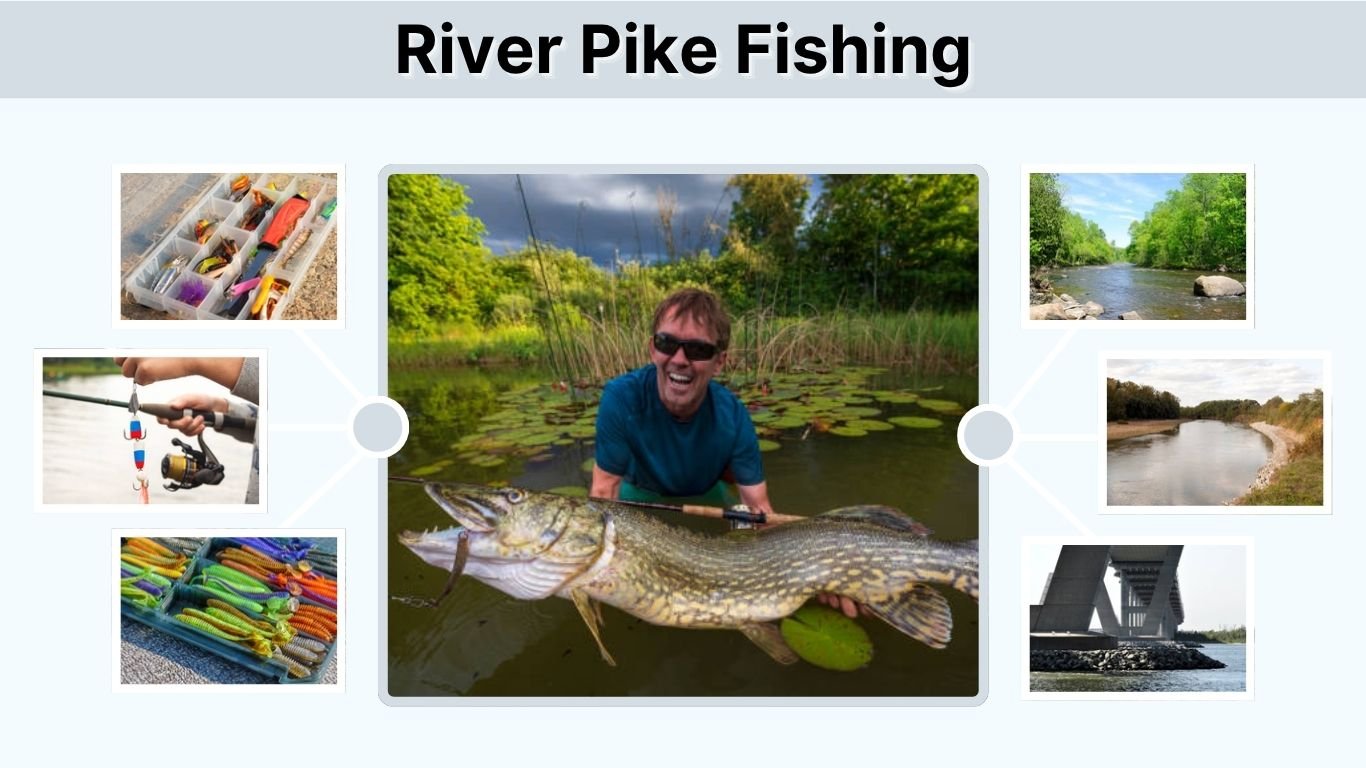
River pike fishing is exciting because northern pike are powerful ambush predators that often strike fast near weeds, current breaks, backwaters, and shallow cover. Unlike lake fishing, river fishing for pike requires reading current, structure, water clarity, and seasonal movement. Whether you are searching for pike fishing on the Cuyahoga River, Connecticut River, St. Lawrence River, or a small local river, the basic pattern is the same: find slow water near prey and cover.
River Pike Fishing Overview
Northern pike, also called Esox lucius, are long, toothy freshwater predators. They prefer quiet, vegetated areas in larger lakes and streams, and they often feed by waiting near vegetation before ambushing fish. Connecticut DEEP notes that pike feed actively through winter and spawn in early spring around flooded vegetation.
| River Pike Factor | Best Approach |
| Best cover | Weeds, wood, grass, undercut banks |
| Best structure | Drop-offs, bends, backwaters, creek mouths |
| Best seasons | Spring and fall |
| Best lures | Spinnerbaits, spoons, jerkbaits, swimbaits |
| Best bait | Large minnows, suckers, shiners |
| Best leader | Wire or heavy fluorocarbon |
| Best retrieve | Slow, twitchy, stop-and-go |
Where to Find Pike in a River
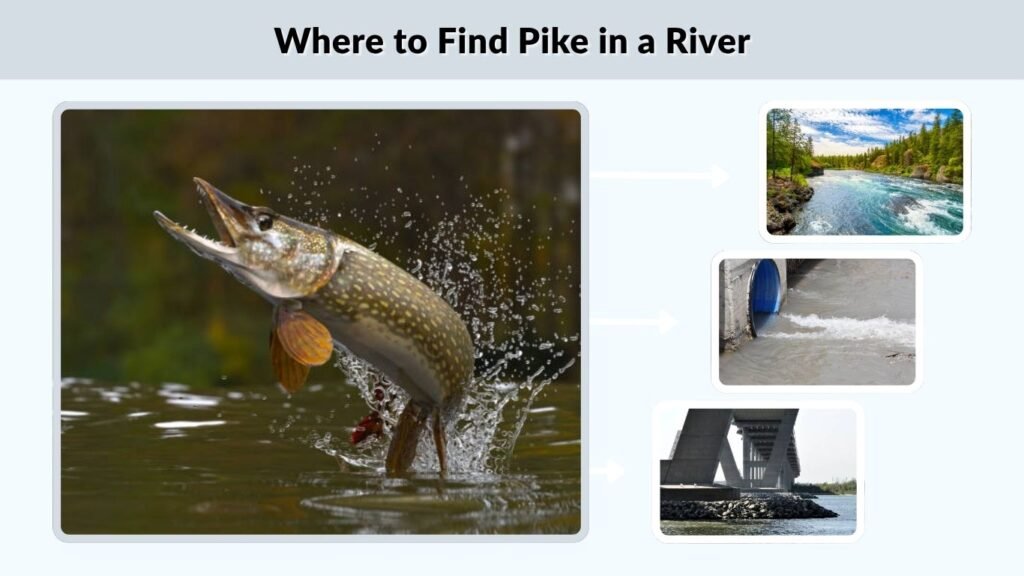
Pike do not usually sit in the strongest current. They prefer places where they can rest and ambush prey. Look for slower pockets close to moving water, because baitfish often pass through these areas.
Good river pike spots include:
- Backwaters connected to the main river
- Weed beds near slow current
- Creek mouths and drainage inflows
- Outside bends with deeper holes
- Fallen trees and logjams
- Shallow bays with flooded grass
- Bridge edges and current seams
- Drop-offs beside flats
Pike are associated with vegetation and are primarily fish-eating predators, so any river area with weeds and baitfish is worth fishing.
Best Time for River Pike Fishing
Spring and fall are usually the best seasons for river pike fishing. In early spring, pike move toward shallow, flooded, weedy areas for spawning. In fall, they often feed heavily before winter.
Spring River Pike Fishing
Spring pike fishing can be excellent near shallow bays, marshy areas, and flooded grass. Fish slower presentations because cold-water pike may follow before striking. Soft swimbaits, suspending jerkbaits, and dead bait can work well.
Summer River Pike Fishing
In summer, pike may move to cooler water, deeper holes, shaded banks, and areas with steady oxygen. Early morning and evening are usually better than the hottest part of the day.
Winter River Pike Fishing
Winter river pike fishing can still produce fish, especially in slow pools, backwaters, and areas connected to deeper water. Safety matters in icy conditions, and rules can vary by state or province.
Best Lures for River Pike
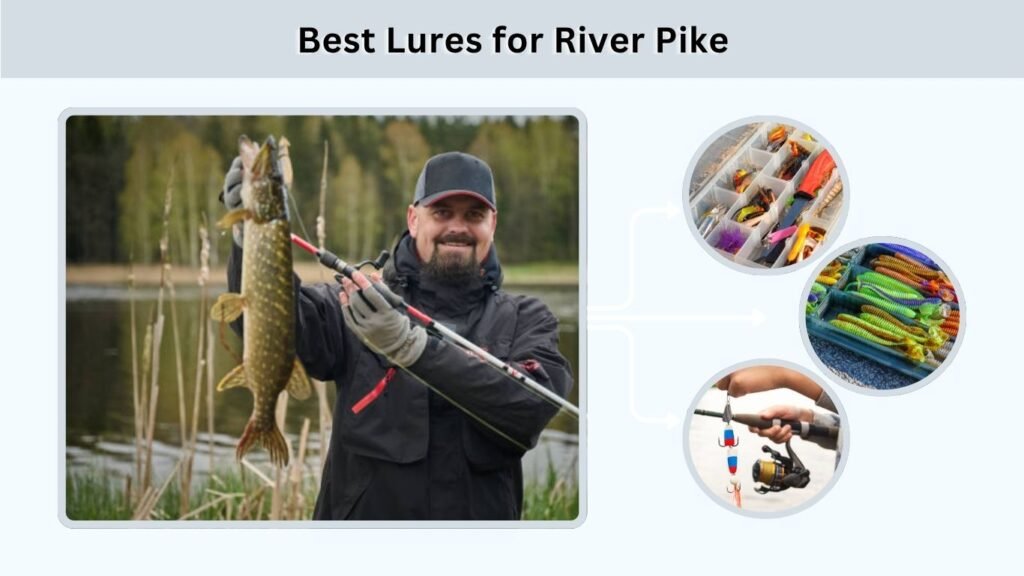
Pike are aggressive, but river conditions can change quickly. Carry lures that cover shallow weeds, deeper holes, and stained water.
Top River Pike Lures
Good lures for pike fishing in rivers include:
- Spinnerbaits
- Inline spinners
- Spoons
- Suspending jerkbaits
- Soft plastic swimbaits
- Paddle-tail minnows
- Large crankbaits
- Bucktail spinners
- Topwater frogs in warm shallow cover
- Glide baits for bigger pike
Use bright or flashy lures in stained water. In clear water, natural baitfish colors often work better.
Best Bait for Pike Fishing in Rivers
Live or dead bait can be very effective for river pike. Large minnows, suckers, shiners, and dead baitfish work because pike often look for easy meals.
| Bait Type | Best Situation |
| Live shiner | Clear water and active pike |
| Sucker minnow | Bigger pike and deeper pools |
| Dead bait | Cold water or less active fish |
| Cut bait | Slow current pockets |
| Large minnow under float | Backwaters and shallow edges |
Always check local bait laws before using live bait. Some rivers have rules about baitfish species, transport, and use.
River Pike Fishing Rigs
A good river pike rig must handle sharp teeth, current, and strong runs. A leader is important because pike can cut light line easily.
Float Rig
A float rig works well in slow backwaters and shallow edges. Use a large float, strong line, wire or heavy fluorocarbon leader, and a live or dead baitfish. Let the bait drift slowly near cover.
Lure Rig
For casting lures, use a medium-heavy spinning or baitcasting rod with braided line and a short leader. This setup is good for covering water along weed edges, bends, and current seams.
Bottom Rig
A bottom rig can work in deeper pools or cold water. Use enough weight to hold the bait near the bottom, but do not use so much weight that the bait looks unnatural.
Pike Fishing on Popular Rivers
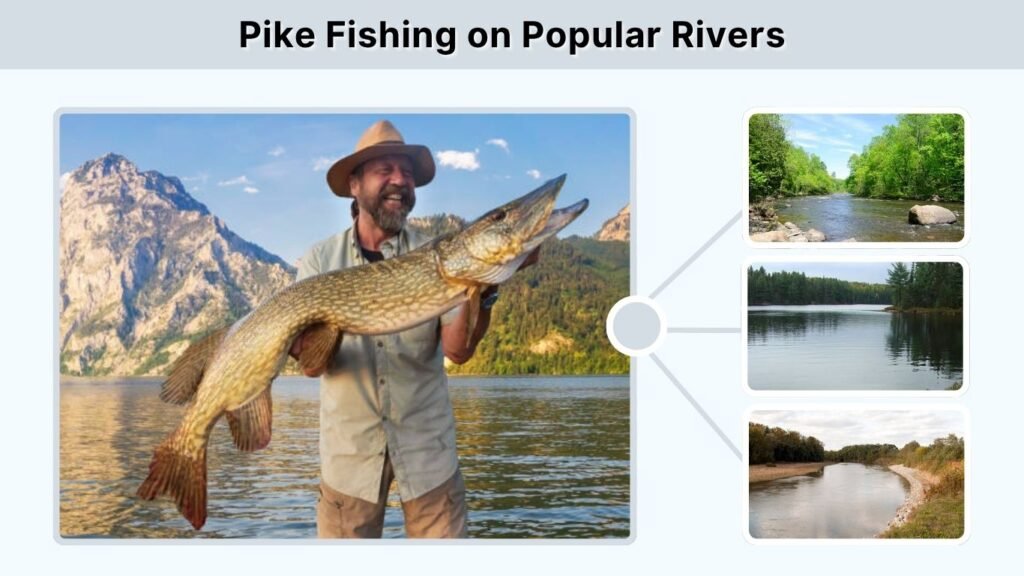
Many searches are location-based because anglers want to know whether a certain river holds pike. Always check local access, licenses, seasons, and size limits before fishing.
Cuyahoga River Pike Fishing
The Cuyahoga River is one of Ohio’s known pike waters. Ohio DNR lists the Cuyahoga River among good streams to fish for pike, along with the upper Scioto River, St. Joseph River, Tiffin River, Portage River, and Killbuck Creek. Summit Metro Parks also lists northern pike among fish species at some Cuyahoga River access areas, including Brust Park and Cascade Valley Metro Park.
Connecticut River Pike Fishing
The Connecticut River has a long-established pike population. Connecticut DEEP says a self-sustaining northern pike population has been present in the Connecticut River for more than 100 years. This makes it one of the better-known river systems for northern pike in the northeastern United States.
Small River Pike Fishing
Small rivers can be excellent because pike are easier to locate. Focus on the deepest pools, slow bends, undercut banks, and weedy backwaters. Quiet casting matters because fish in small rivers can spook easily.
How to Fish for Pike in a River
Start by covering water until you find active fish. Cast across current seams, along weed edges, and beside fallen trees. Let the lure pause near ambush points.
Helpful river pike tips:
- Cast upstream and retrieve naturally with the current
- Pause jerkbaits beside cover
- Use a leader to prevent bite-offs
- Fish slowly in cold water
- Use larger lures for bigger pike
- Work backwaters during spring
- Try deeper holes during summer heat
- Carry long pliers for safe hook removal
Common Mistakes to Avoid
Many anglers fish too fast, too light, or too far from cover. Pike are predators, but they still prefer efficient ambush spots.
Avoid these mistakes:
- Fishing only fast current
- Using no leader
- Using lures that are too small
- Ignoring shallow flooded cover
- Making loud movements in small rivers
- Handling pike without pliers
- Forgetting local regulations
FAQs
What is the best bait for river pike fishing?
Large minnows, shiners, suckers, and dead baitfish are some of the best baits for river pike fishing. Use them near backwaters, weed edges, and slow pools.
What lures work best for pike in rivers?
Spinnerbaits, spoons, jerkbaits, swimbaits, inline spinners, and crankbaits all work well. In stained water, use flash and vibration. In clear water, use more natural baitfish patterns.
Where do pike hide in rivers?
Pike usually hide near weeds, fallen trees, undercut banks, creek mouths, backwaters, and current breaks. They prefer ambush spots close to prey fish.
Is the Cuyahoga River good for pike fishing?
Yes, the Cuyahoga River is listed by Ohio DNR as one of the good Ohio streams to fish for pike. Some park access areas along the Cuyahoga also list northern pike among possible fish species.
Do you need a leader for river pike fishing?
Yes, a leader is strongly recommended. Pike have sharp teeth that can cut regular fishing line. Use wire or heavy fluorocarbon when fishing lures or bait for pike.