
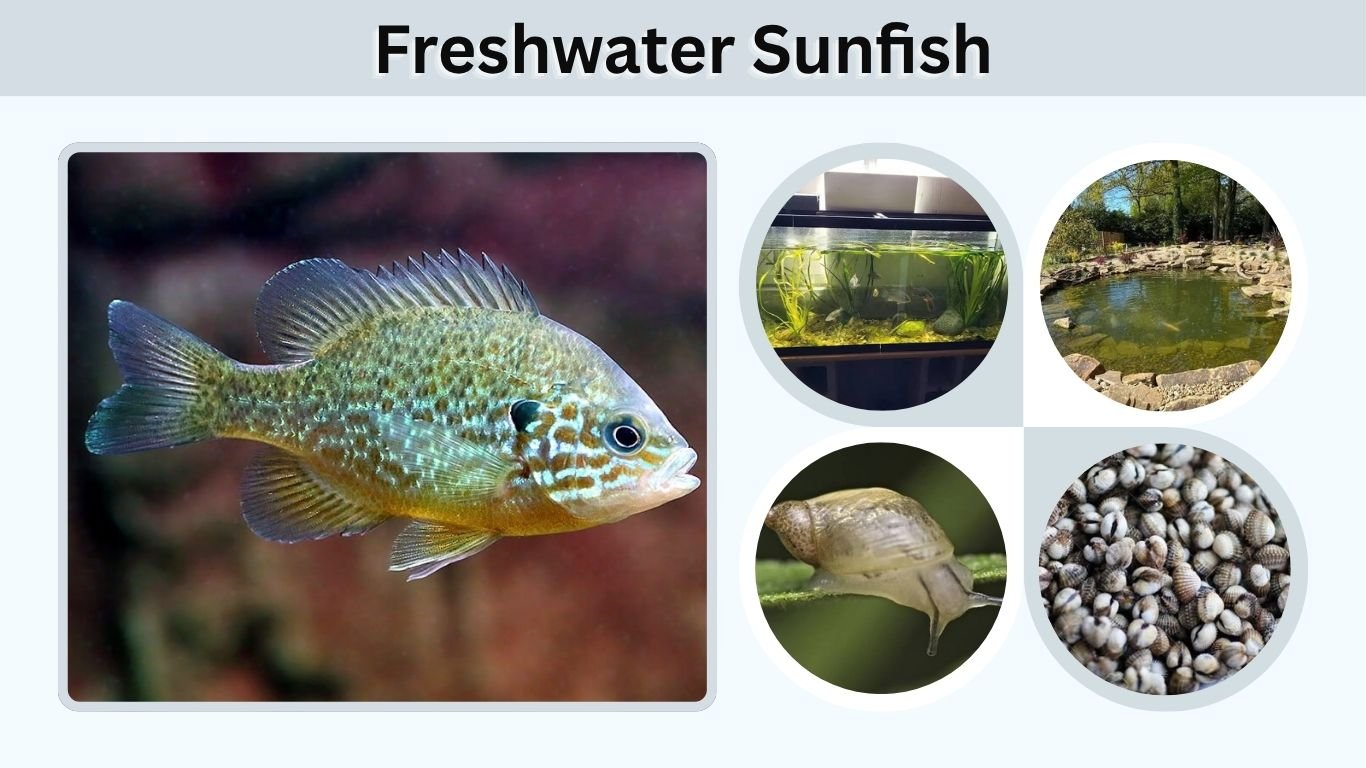
Freshwater sunfish are colorful North American fishes best known for species such as bluegill, pumpkinseed, longear sunfish, green sunfish, and redear sunfish. Many are popular with anglers because they are widespread, relatively easy to catch, and excellent on light tackle. They also play important ecological roles as predators and prey in lakes, ponds, streams, and rivers. This guide covers freshwater sunfish species, identification, habitat, size, diet, lifespan, aquarium care, edibility, bluegill differences, and the largest record-setting specimens.
What Is a Freshwater Sunfish?
Freshwater sunfish generally refers to fishes belonging to the North American sunfish family, Centrarchidae. Taxonomically, this family is broader than many people realize and also contains bass, crappies, rock bass, and several other groups. In everyday fishing language, however, “sunfish” commonly refers more specifically to colorful, deep-bodied species such as bluegill, pumpkinseed, and longear sunfish.
Freshwater Sunfish Identification
Typical sunfish characteristics include:
- Deep, laterally compressed bodies
- Spiny and soft portions of the dorsal fin
- Rounded or slightly forked tails
- Prominent gill-cover or “ear” flaps in many species
- Small to moderately large mouths
- Green, blue, orange, yellow, or red coloration
- Stronger breeding colors in mature males
- Nest-building behavior during spawning season
Individual species can look surprisingly different. Ear-flap shape, mouth size, pectoral-fin length, body markings, and facial coloration are often more reliable than overall color alone.
Why Are They Called Sunfish?
The exact origin of the freshwater name is not completely certain. It is often associated with their habit of occupying shallow, sun-warmed water and their bright, reflective coloration.
Freshwater sunfish should not be confused with the enormous ocean sunfish, or mola. Marine sunfish belong to an entirely different family and are unrelated to North American freshwater sunfishes.
Common Freshwater Sunfish Species
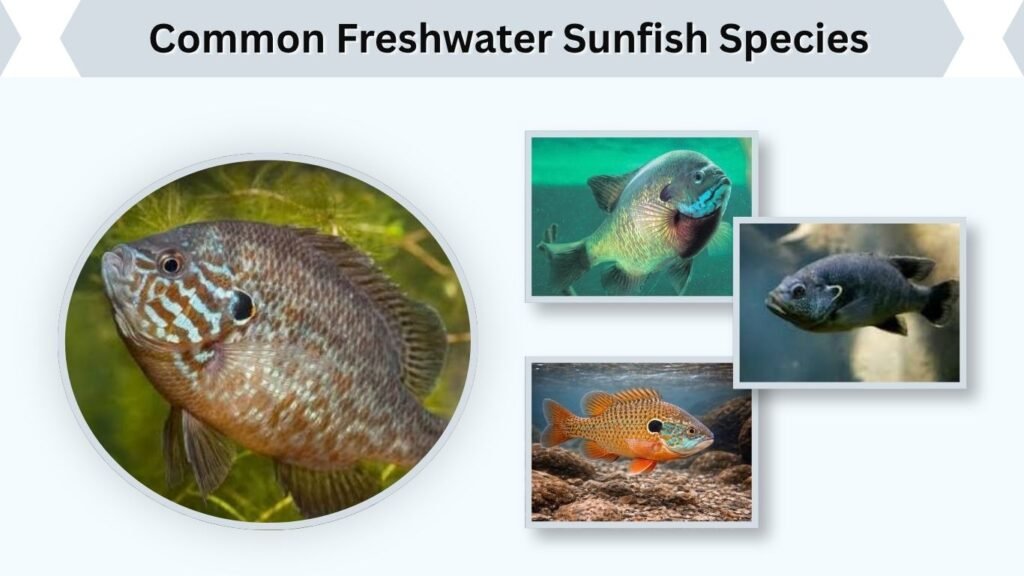
There are numerous species within the freshwater sunfish family, although anglers commonly use the term for members of Lepomis. Some species are widespread throughout North America, while others have much more restricted distributions. Their colors, maximum sizes, preferred habitats, and diets can differ significantly even when they occur in the same lake or river.
Popular Types of Freshwater Sunfish
Common examples include:
- Bluegill – Lepomis macrochirus
- Pumpkinseed – Lepomis gibbosus
- Green sunfish – Lepomis cyanellus
- Longear sunfish – Lepomis megalotis
- Redear sunfish – Lepomis microlophus
- Redbreast sunfish – Lepomis auritus
- Warmouth – Lepomis gulosus
- Orangespotted sunfish – Lepomis humilis
- Redspotted sunfish – Lepomis miniatus
- Northern sunfish – Lepomis peltastes
- Bantam sunfish – Lepomis symmetricus
- Dollar sunfish – Lepomis marginatus
Bluegill is probably the most familiar species because it is widespread and commonly stocked in ponds and recreational fisheries.
What About Pygmy Sunfish?
Freshwater pygmy sunfishes may have “sunfish” in their common names, but they belong to the family Elassomatidae, rather than Centrarchidae.
These tiny fishes are therefore separate from familiar bluegill, pumpkinseed, redear, and longear sunfish despite sharing part of their common name.
Freshwater Sunfish Habitat and Range
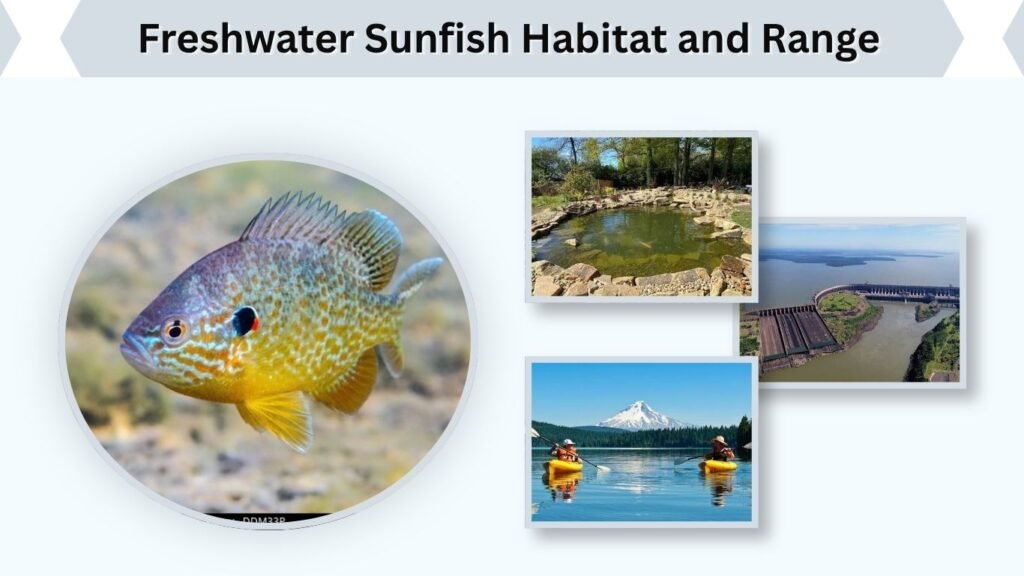
Sunfish occupy an impressive variety of freshwater environments. The family originated in North America, although several species have been introduced elsewhere. Habitat varies by species, but many familiar sunfish prefer warm, relatively calm areas where plants, fallen timber, rocks, docks, and shoreline structures provide both food and protection from larger predators.
Where Do Freshwater Sunfish Live?
Bluegill thrive in ponds, lakes, reservoirs, and warm-water streams, especially around aquatic vegetation and woody cover. Pumpkinseed commonly occupy shallow lakes and slow-moving rivers and can tolerate a surprisingly broad range of environmental conditions.
Other species may favor clearer streams or particular substrates. Longear sunfish, for example, are frequently associated with medium-sized warm-water streams, especially near vegetation and woody debris.
Freshwater or Saltwater?
True freshwater sunfishes are primarily freshwater fishes. Some species can tolerate mildly brackish conditions, but they are fundamentally different from saltwater ocean sunfish.
This distinction is important because searches for “sunfish” can return both bluegill-like freshwater species and gigantic marine molas, despite the two groups being taxonomically unrelated.
What Do Freshwater Sunfish Eat?
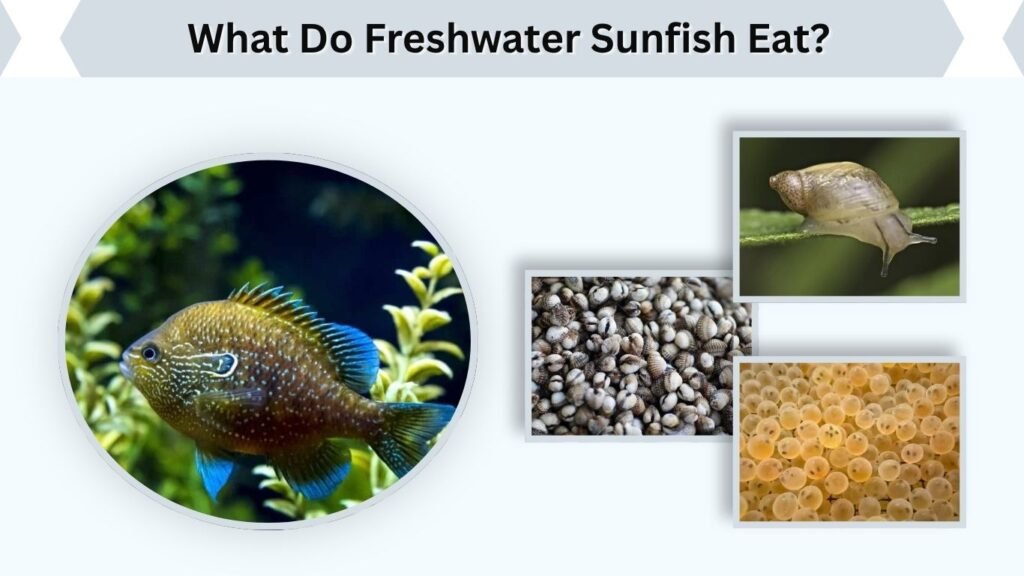
Freshwater sunfish are opportunistic feeders whose diet changes with species, body size, season, and available prey. Younger fish often concentrate on zooplankton and tiny aquatic organisms, while larger sunfish increasingly consume insects, crustaceans, mollusks, fish eggs, and occasionally small fish. Their feeding flexibility helps explain why many species adapt successfully to ponds, reservoirs, and streams.
Common Sunfish Foods
Their diet may include:
- Aquatic insect larvae
- Zooplankton
- Mayflies and midges
- Small crustaceans
- Snails
- Small clams
- Worms
- Fish eggs
- Small minnows
- Terrestrial insects
- Small crayfish
Bluegill primarily consume insects, zooplankton, and other small invertebrates, while pumpkinseed are particularly well equipped to eat snails and other hard-bodied invertebrates.
Feeding Behavior
Most familiar sunfish feed actively during daylight, searching around vegetation, submerged timber, rocks, and shallow shoreline cover.
Their flexible feeding habits also explain why simple fishing baits such as worms, crickets, small jigs, insects, and tiny artificial lures can be remarkably effective.
Freshwater Sunfish Size and World Record
Size varies enormously depending on which member of the sunfish family is being discussed. Familiar Lepomis species are relatively small panfish, while the broader Centrarchidae family also contains large bass. Among the sunfish normally called “sunnies,” redear and bluegill can reach particularly impressive sizes under excellent growing conditions.
How Big Do Freshwater Sunfish Get?
Many adult sunfish encountered by anglers measure around 4–10 inches, although large bluegill and redear sunfish can exceed these dimensions.
Longear and orangespotted sunfish are generally smaller. Habitat productivity, food supply, temperature, genetics, age, and fishing pressure all influence maximum growth.
Biggest Freshwater Sunfish Ever Caught
For the commonly recognized Lepomis sunfishes, an extraordinary redear sunfish weighing 6 pounds 4 ounces (2.83 kg) holds the IGFA All-Tackle record. Thomas Farchione caught the fish at Lake Havasu, Arizona, on May 4, 2021.
That record should not be confused with records for the entire Centrarchidae family, which includes much larger bass species.
Freshwater Sunfish vs Bluegill
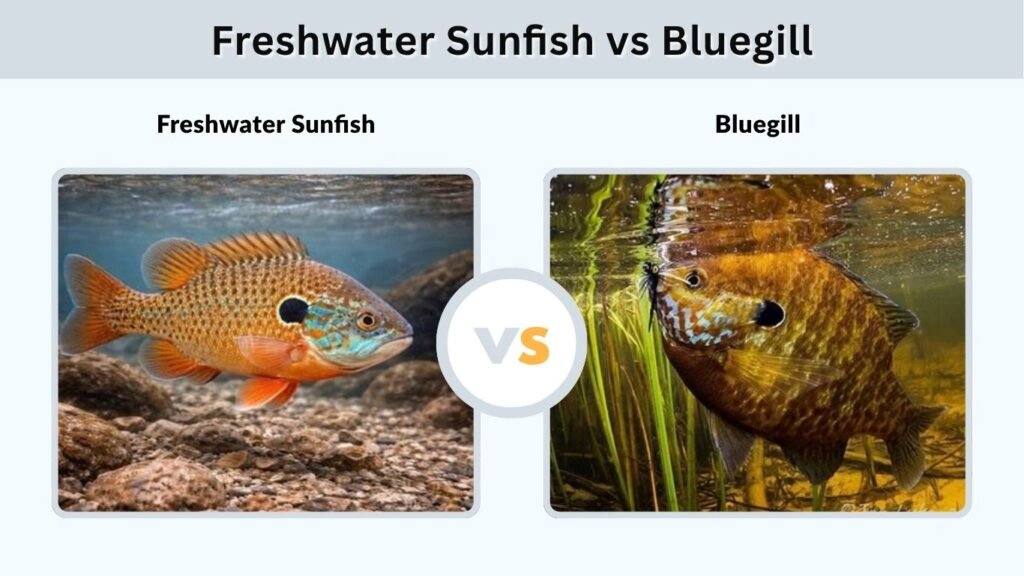
The phrase freshwater sunfish vs bluegill can create confusion because a bluegill is itself a freshwater sunfish. “Sunfish” represents the broader group, while “bluegill” identifies one particular species, Lepomis macrochirus. It is similar to comparing a general category with one specific member of that category.
How to Identify a Bluegill
Bluegill usually have a relatively small mouth, long pointed pectoral fins, and a solid dark ear flap. Adults commonly display dark vertical bars along the sides and a black spot near the rear of the dorsal fin.
By comparison, pumpkinseed have an orange-red spot on the ear flap, while longear sunfish possess an extended ear flap with a pale border.
Are All Sunfish Bluegill?
No. Every bluegill belongs to the sunfish family, but not every sunfish is a bluegill.
A brightly colored fish that resembles a bluegill might instead be a green sunfish, pumpkinseed, redear, longear, redbreast, or another closely related species. Hybridization between some sunfish can make identification even more challenging.
Are Freshwater Sunfish Good to Eat?
Many freshwater sunfish are popular table fish. Bluegill, redear, pumpkinseed, and related species have mild white flesh and are frequently grouped under the general term “panfish.” Their main disadvantage is size: smaller individuals provide relatively little meat compared with crappie, bass, or larger freshwater species.
What Do Freshwater Sunfish Taste Like?
Properly cleaned sunfish generally have mild, slightly sweet flesh with a delicate texture. They can be pan-fried, baked, grilled, or prepared as fillets when fish are large enough.
Whether a sunfish should be harvested depends on local fishing regulations and water-quality advisories. Always check current possession limits, minimum sizes, and consumption recommendations before keeping a catch.
Keeping Freshwater Sunfish in an Aquarium
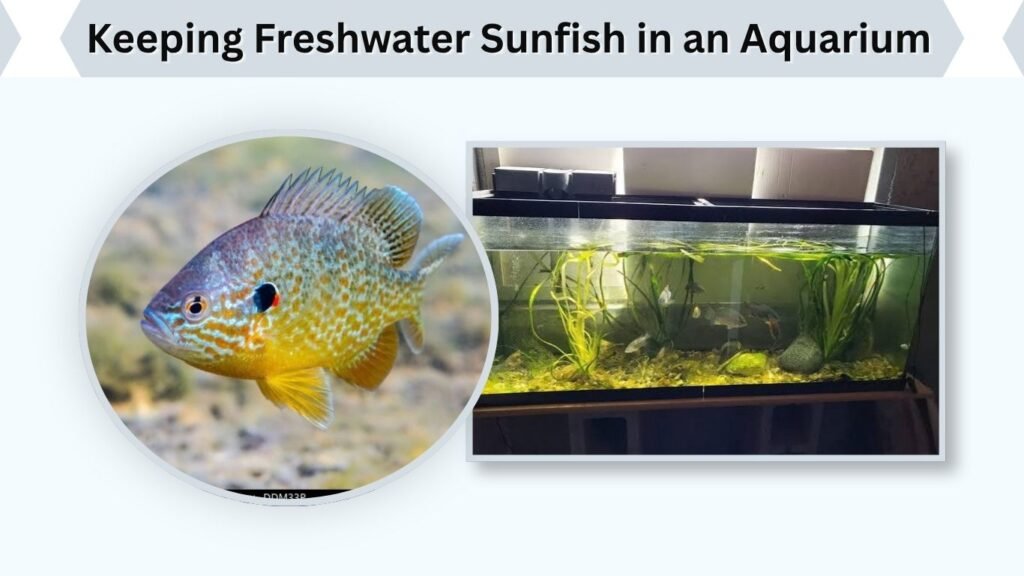
The vivid colors of longear, pumpkinseed, bluegill, and other native sunfish make them attractive aquarium subjects. However, they are considerably more demanding than many conventional aquarium fish. Some species become territorial, grow larger than expected, and require strong filtration, abundant swimming room, and careful selection of tank mates.
Basic Aquarium Requirements
Consider:
- A large aquarium appropriate for adult size
- Strong biological and mechanical filtration
- Well-oxygenated water
- Rocks, wood, and hiding places
- Open swimming areas
- Species-appropriate temperatures
- Protein-rich foods
- Secure tank cover
- Compatible tank mates
- Regular water-quality testing
Wild-caught native fish may also be regulated. Collection, possession, transportation, and sale rules vary by jurisdiction, so local wildlife regulations should always be checked first.
Sunfish Behavior in Captivity
Sunfish can become surprisingly interactive and often learn to associate their keeper with feeding. However, mature males may defend territories aggressively, particularly during breeding conditions.
Providing visual barriers and adequate space can reduce conflict. Aquarium fish should never be released into natural waters because they may spread disease or introduce fish into areas where they do not naturally occur.
Freshwater Sunfish Breeding and Lifespan
Most familiar freshwater sunfish share a fascinating reproductive strategy. Males construct shallow nests and actively guard eggs and newly hatched young. In some waters, many nests occur beside one another, creating large spawning colonies that can be easily seen from shore during the warmer months.
How Freshwater Sunfish Reproduce
A male typically clears a circular depression from sand, gravel, or another suitable substrate. After attracting a female and spawning, he fertilizes the eggs and guards the nest.
The male continually drives away intruders while fanning the eggs to improve water circulation. Young fish eventually leave the nesting area and begin feeding on microscopic organisms and small invertebrates.
How Long Do Freshwater Sunfish Live?
Lifespan varies considerably among species and environments. Many common sunfish can survive several years, while well-established individuals of some species may live considerably longer under favorable conditions.
Predators, fishing pressure, disease, food availability, water quality, and temperature all affect survival, so there is no single lifespan that accurately represents every freshwater sunfish species.
FAQs
What is a freshwater sunfish?
A freshwater sunfish generally refers to a member of the North American Centrarchidae family. In everyday use, the term usually describes fishes such as bluegill, pumpkinseed, green sunfish, longear sunfish, and redear sunfish. Bass and crappies also belong to Centrarchidae taxonomically, although anglers usually call them by their individual names.
Is a bluegill the same as a freshwater sunfish?
A bluegill is a type of freshwater sunfish, not a separate group. Its scientific name is Lepomis macrochirus. Other freshwater sunfish include pumpkinseed, redear, green, longear, and redbreast sunfish. Therefore, all bluegill are sunfish, but many sunfish species are not bluegill.
What do freshwater sunfish eat?
Freshwater sunfish commonly eat aquatic insects, insect larvae, zooplankton, worms, crustaceans, snails, fish eggs, and small fish. Diet varies by species and size. Juveniles usually concentrate on tiny organisms, while larger adults can tackle bigger prey such as crayfish, mollusks, and small minnows.
Can you eat freshwater sunfish?
Yes. Many freshwater sunfish are edible and popular with anglers, particularly bluegill, redear, and pumpkinseed. They generally produce mild white flesh and are commonly prepared as panfish. Because regulations and contaminant advisories vary between waters, anglers should check local harvest limits and fish-consumption guidance before keeping them.
What is the biggest freshwater sunfish ever caught?
Among the commonly recognized Lepomis sunfishes, the IGFA All-Tackle record redear sunfish weighed 6 pounds 4 ounces. It was caught by Thomas Farchione at Lake Havasu, Arizona, in May 2021. The broader sunfish family also includes bass, which can grow substantially larger.