
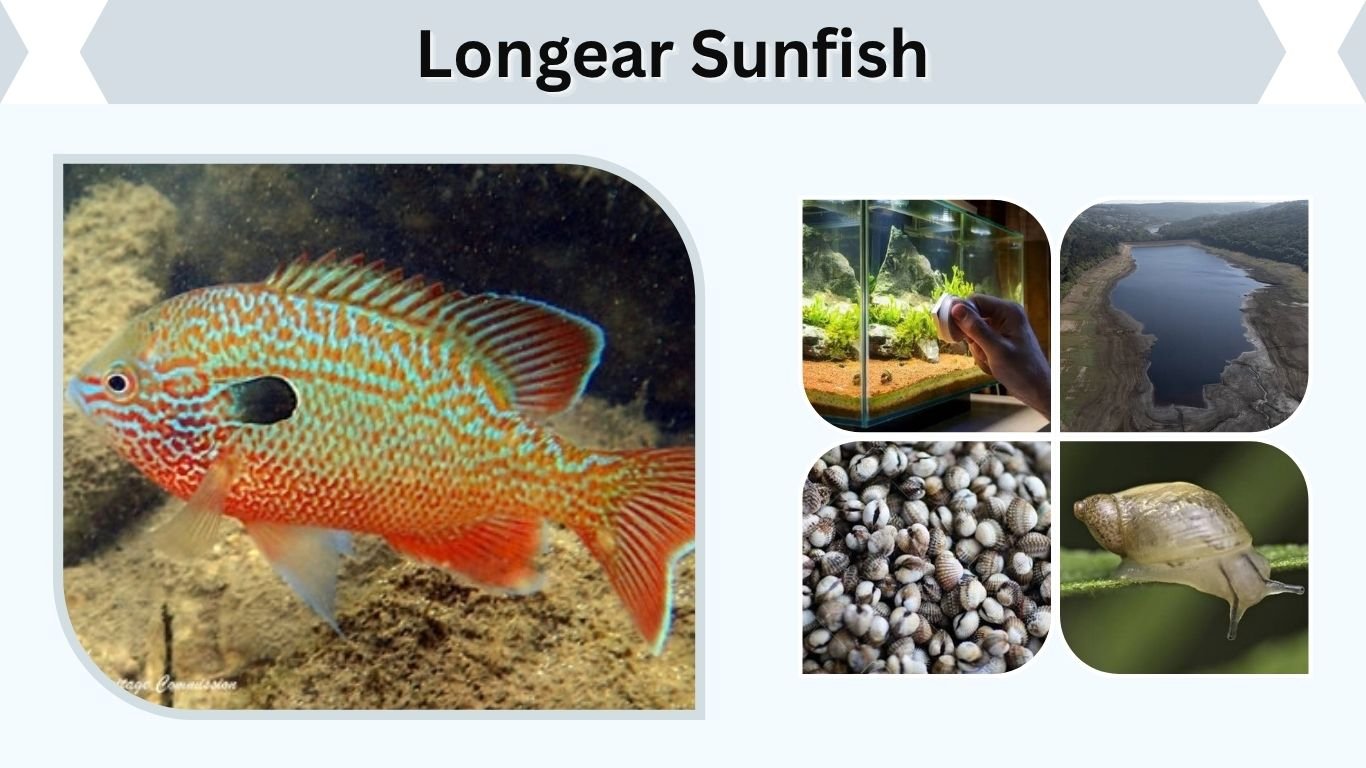
The longear sunfish (Lepomis megalotis) is one of North America’s most colorful freshwater sunfish. It is especially recognizable by its elongated black ear flap, blue-green facial markings, and bright orange belly, which becomes particularly vivid in breeding males. Longear sunfish commonly inhabit clear streams, rivers, ponds, and lakes where vegetation and rocky or sandy bottoms provide food and shelter. This guide explains longear sunfish size, habitat, range, diet, breeding, lifespan, aquarium care, identification, and differences from similar sunfish species.
What Is a Longear Sunfish?
The longear sunfish belongs to the freshwater sunfish family Centrarchidae, which also includes bluegill, pumpkinseed, redear sunfish, and largemouth bass. Its scientific name is Lepomis megalotis. It is a relatively small, deep-bodied fish, but its brilliant colors make mature males among the most striking native freshwater fishes in North America.
Longear Sunfish Identification
Important identification features include:
- Scientific name: Lepomis megalotis
- Deep, laterally compressed body
- Long black opercular or “ear” flap
- Pale or white border around the ear flap
- Blue-green markings across the cheeks
- Yellow to orange belly
- Blue-green or olive back and sides
- Rounded, relatively short pectoral fins
- Especially bright colors in breeding males
The elongated ear flap is the feature responsible for the common name “longear.”
Male vs Female Longear Sunfish
Male longear sunfish are generally more colorful, especially during breeding season. Mature males may develop brilliant orange-red undersides, turquoise or blue facial lines, and strongly contrasting ear flaps.
Females typically have more subdued coloration and shorter opercular flaps. Juveniles are also less colorful, often appearing olive or brownish until they mature.
Longear Sunfish Size and Lifespan
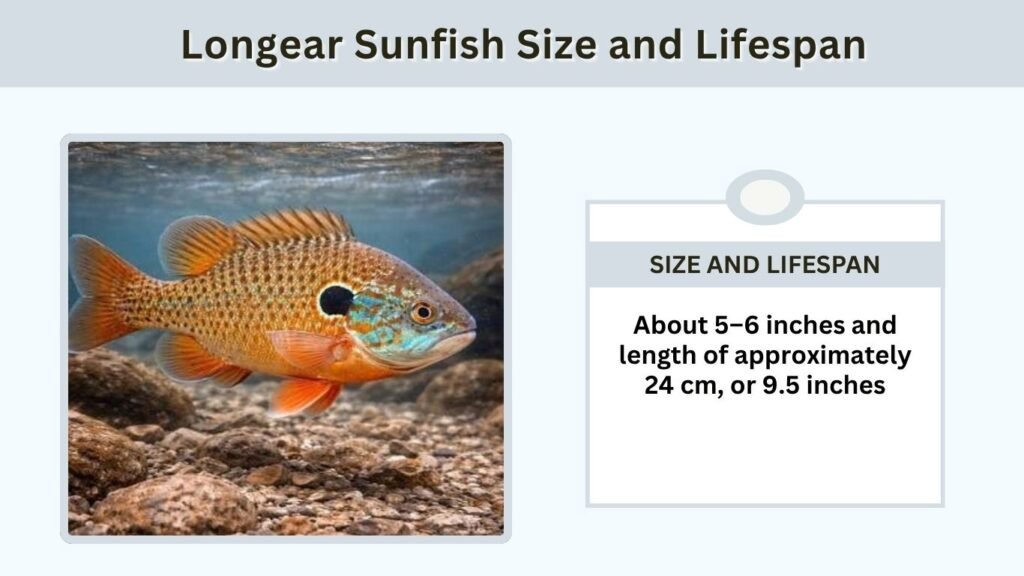
Most longear sunfish are relatively small compared with popular panfish such as bluegill. Their size also varies somewhat by habitat, geographic population, food availability, and age. While most fish encountered by anglers are only several inches long, unusually large individuals can grow considerably beyond the typical adult size.
How Big Do Longear Sunfish Get?
In Missouri, adults commonly measure about 5–6 inches, with the state field guide reporting a local maximum around 7 inches. Across the species’ broader range, FishBase reports a maximum total length of approximately 24 cm, or 9.5 inches.
That means a 5-inch longear is quite normal, while specimens approaching 9 inches are exceptional.
How Long Do Longear Sunfish Live?
Longear sunfish can live for approximately six years. Growth is fastest during the younger stages, although environmental conditions strongly influence development.
Missouri observations indicate young fish may reach around 1½ inches during their first year. Adults eventually become sexually mature and participate in the elaborate colony-based spawning behavior characteristic of the species.
Longear Sunfish Habitat and Range
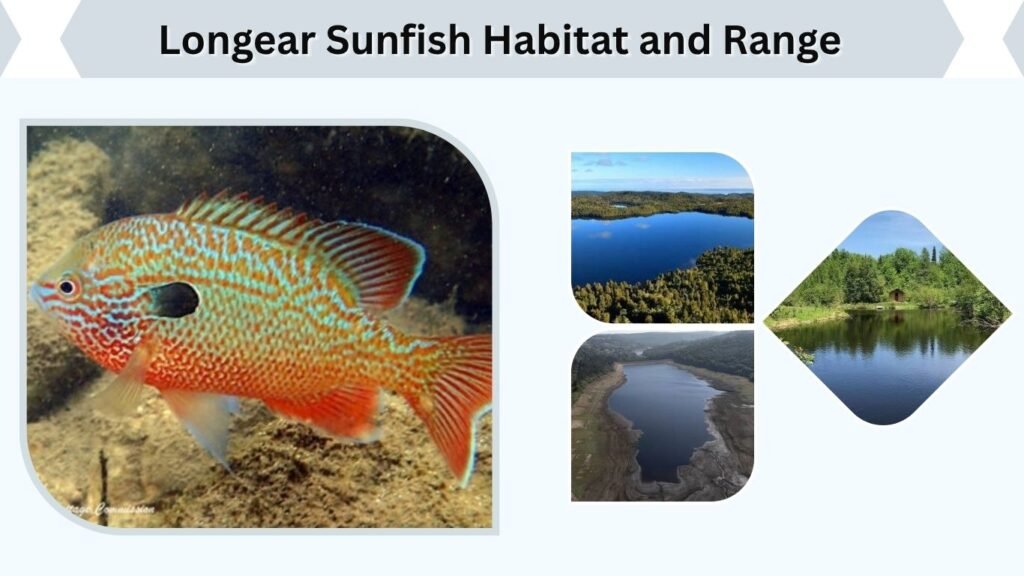
Longear sunfish are native to a broad portion of North America. They are strongly associated with relatively clear freshwater habitats and are particularly common in streams. Unlike species that tolerate heavily muddy water, longears generally perform best where sediment levels are lower and aquatic habitat remains relatively intact.
Where Do Longear Sunfish Live?
They can occur in:
- Clear streams
- Small and medium-sized rivers
- Stream pools
- Lakes
- Ponds
- Reservoirs
- Vegetated shallow water
- Areas with gravel, rock, or sandy bottoms
They generally avoid strong currents and extremely turbid water. Aquatic vegetation, woody cover, and shaded areas can provide feeding habitat and protection from predators.
Geographic Range
Traditional descriptions place the longear sunfish complex across much of central and eastern North America, from the Great Lakes region south toward Gulf drainages and northeastern Mexico. Modern taxonomic work has changed how some western and Gulf populations are classified, so older range maps may include fish now treated as separate species.
Longear Sunfish Diet
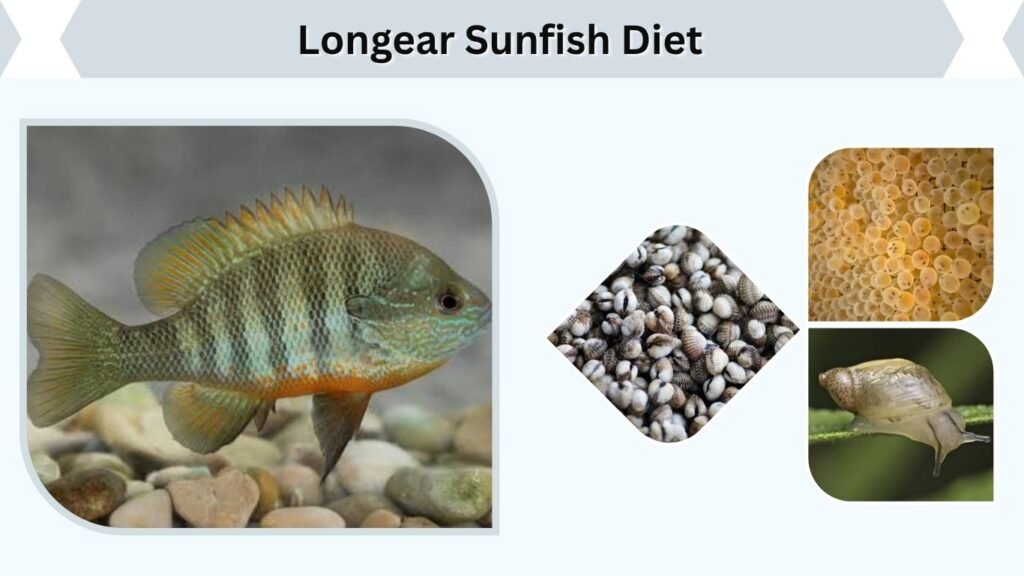
Longear sunfish are primarily carnivorous and feed actively during daylight hours. Their small mouths are well suited to capturing insects and other small prey around vegetation, gravel, and the water’s surface. Larger individuals occasionally consume small fish as well, giving the species a flexible diet across different habitats.
What Do Longear Sunfish Eat?
Their diet may include:
- Aquatic insect larvae
- Midges
- Mayflies
- Dragonfly nymphs
- Small crustaceans
- Small crayfish
- Fish eggs
- Snails
- Leeches
- Terrestrial insects
- Very small fish
Longears sometimes follow bottom-feeding fish and turtles, taking small prey exposed as these animals disturb rocks and sediment.
Feeding Behavior
Longear sunfish frequently feed closer to the water’s surface than some related sunfish. They may pick insects directly from the surface while also searching around rocks and vegetation.
They are opportunistic enough to raid the nests of other sunfish, consuming exposed eggs or fry when the guarding male is temporarily distracted.
Longear Sunfish Breeding and Life Cycle
The breeding season transforms male longear sunfish into exceptionally colorful fish. Males establish shallow nests, court females, and aggressively protect their spawning territories. Multiple males commonly build nests close together, forming colonies in suitable shallow-water habitat. This reproductive behavior is particularly easy to observe in clear streams during warmer months.
Nesting and Spawning
In Missouri, nesting commonly occurs from roughly mid-May through early or mid-August. Males fan rounded nest depressions into gravel substrates.
During courtship, a male may tilt sideways to display his brightly colored body. After spawning, he remains near the nest, fanning the developing eggs and aggressively chasing away potential predators.
Baby and Juvenile Longear Sunfish
After the eggs hatch, the male continues protecting the young until they disperse. Missouri’s conservation agency notes that males may remain with their nests for more than two weeks.
Juveniles look much less spectacular than breeding males. Their colors become increasingly prominent as they mature, with adult males developing particularly intense coloration during future spawning seasons.
Longear Sunfish vs Pumpkinseed and Bluegill
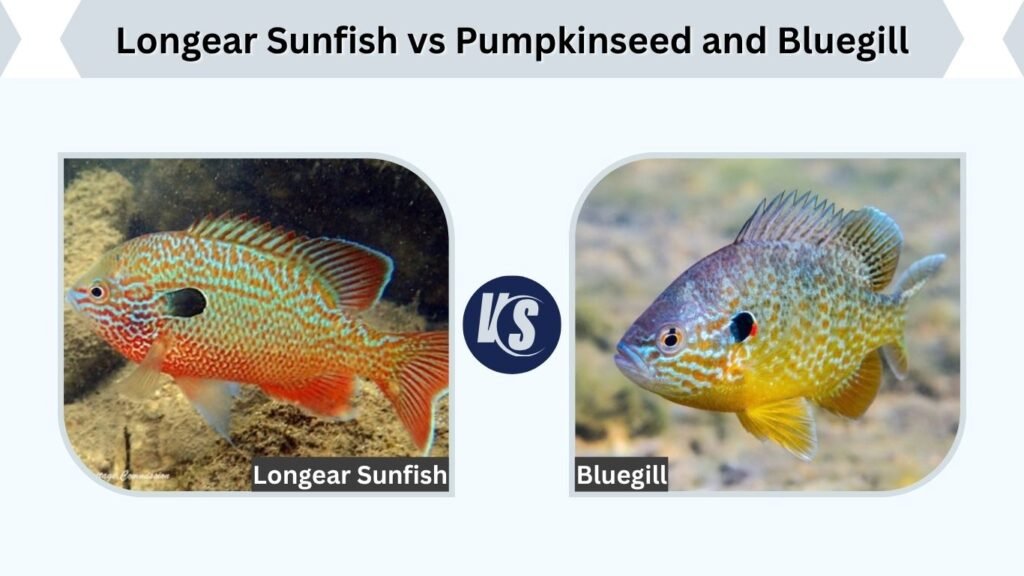
Longear sunfish can be confused with pumpkinseed, bluegill, northern sunfish, and other members of Lepomis. Color alone is not always reliable because appearance changes with age, sex, season, and water conditions. Examining the shape of the opercular flap and other structural features makes identification more dependable.
Longear Sunfish vs Pumpkinseed
Pumpkinseed sunfish typically have a distinctive red or orange spot near the back of the dark ear flap. Longear sunfish generally have a much longer black opercular flap with a pale margin but without the pumpkinseed’s conspicuous red patch.
Breeding longears can also show extensive bright blue markings over the head and orange coloration underneath.
Longear Sunfish vs Bluegill
Bluegill usually have a shorter, rounded black ear flap rather than the elongated flap of a mature longear. They also tend to have dark vertical bars across their sides.
Longears commonly show more intricate blue-green facial markings and vivid orange coloration, particularly in adult breeding males.
Longear Sunfish Aquarium Care
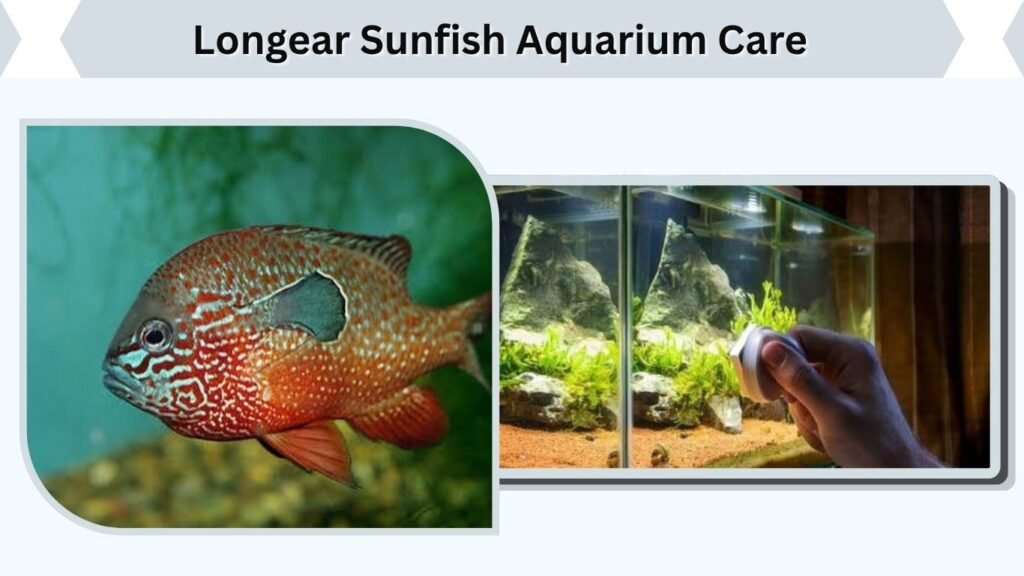
The spectacular colors of longear sunfish create interest among native-fish aquarium keepers. However, they are active wild fish rather than typical community aquarium species. Anyone considering keeping one should first check state or local regulations governing collection, transportation, possession, and sale of native fishes.
Basic Aquarium Considerations
A suitable setup should consider:
- Plenty of swimming space
- Strong filtration
- Clean, oxygenated freshwater
- Rocks and natural hiding structures
- Aquatic vegetation
- Appropriate carnivorous foods
- Compatible tank mates
- Secure aquarium cover
- Stable water conditions
Because males can become territorial, especially during breeding condition, keeping multiple sunfish requires enough space for individual territories.
Can You Buy Longear Sunfish?
Availability depends on local regulations and licensed native-fish sellers. Wild collection may require a fishing license or may be prohibited in certain places.
Never release aquarium fish into a different body of water. Doing so can spread disease, introduce nonnative genetic populations, and disrupt local ecosystems.
Plains, Gulf and Ozark Longear Sunfish
Names such as plains longear, Gulf longear, Ozark longear, central longear, and northern longear appear frequently in older field guides and aquarium discussions. Fish taxonomy has changed as genetic research has clarified relationships among populations formerly grouped within the broad longear sunfish complex.
Recent Taxonomic Changes
Recent North American fish taxonomy recognizes the Plains longear sunfish (Lepomis aquilensis) and Gulf longear sunfish (Lepomis solis) separately from Lepomis megalotis. This means some older photographs, records, range descriptions, and aquarium labels using “longear sunfish” may actually refer to one of these closely related forms.
What About the World Record?
A frequently cited all-tackle record for “longear sunfish” is 1 pound 12 ounces, caught at Elephant Butte Lake, New Mexico, in 1985. However, recent taxonomic revisions place New Mexico fish within the Plains longear lineage, creating a complication in how that older record should now be interpreted.
Are Longear Sunfish Good to Eat?
Longear sunfish are edible freshwater fish, but their relatively small size means they provide less meat than larger panfish such as bluegill or crappie. For many anglers, their value comes more from their striking appearance, abundance in certain streams, and willingness to strike small lures than from their potential as table fish.
Fishing for Longear Sunfish
They readily take small presentations and can provide entertaining fishing on light tackle. Effective options include worms, small insects, tiny minnows, small spinners, flies, jigs, and surface poppers.
Always check current fishing regulations because harvest rules, possession limits, protected populations, and classifications can differ significantly by state and waterbody.
FAQs
What is the scientific name of the longear sunfish?
The scientific name of the longear sunfish is Lepomis megalotis. It belongs to the Centrarchidae family, which includes bluegill, pumpkinseed, redear sunfish, and several bass species. Recent taxonomy separates Plains and Gulf longear sunfish from L. megalotis, so some older references use the name more broadly.
How big does a longear sunfish get?
Most longear sunfish encountered in many streams are roughly 5–6 inches long. However, FishBase reports a maximum total length of approximately 24 cm, or about 9.5 inches. Size varies depending on genetics, food availability, age, habitat quality, competition, and the particular geographic population.
Where do longear sunfish live?
Longear sunfish favor clear freshwater habitats such as streams, rivers, ponds, reservoirs, and lakes. They are often associated with shallow areas containing gravel, rock, sand, vegetation, or woody cover. They generally avoid strong currents and are less tolerant of highly turbid, sediment-filled water than some other sunfish.
What do longear sunfish eat?
Longear sunfish mainly eat insects and small aquatic animals. Their food includes midge larvae, mayflies, dragonfly nymphs, small crustaceans, fish eggs, snails, leeches, and occasionally small fish. They may also capture terrestrial insects from the water’s surface or feed on prey exposed by other bottom-foraging animals.
How long do longear sunfish live?
Longear sunfish can live for approximately six years. During that life they progress from relatively plain-colored juveniles to much more colorful adults. Mature males become especially brilliant during spawning season, establish gravel nests, court females, and guard the eggs and young until the fry eventually disperse.