
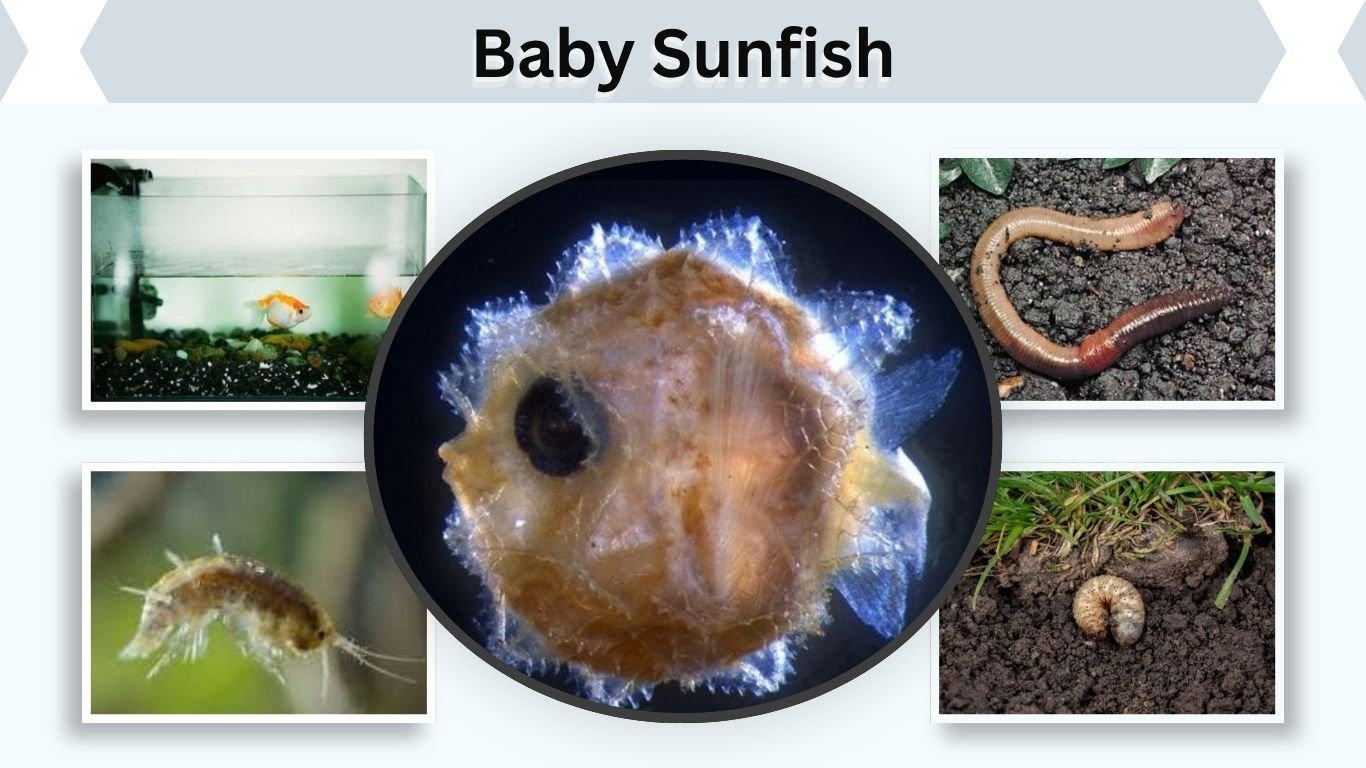
A baby sunfish can refer to a young ocean sunfish (Mola mola) or a juvenile freshwater sunfish such as bluegill, green sunfish, redear sunfish, or longear sunfish. These fish are very different despite sharing the same common name. Baby ocean sunfish begin life as extremely small, spiny larvae before growing into enormous adults, while freshwater sunfish remain much smaller. This guide explains baby sunfish size, appearance, growth, diet, habitat, and basic care.
What Does a Baby Sunfish Look Like?
Baby sunfish appearance depends heavily on whether you mean an ocean sunfish or a freshwater member of the sunfish family. Newly hatched ocean sunfish look surprisingly different from adults, while young freshwater sunfish already resemble miniature versions of mature fish. Identifying body shape, fins, coloration, and habitat can quickly tell the two groups apart.
Baby Ocean Sunfish Appearance
A newly hatched ocean sunfish is tiny, round, and covered with small spines. It looks more like a miniature pufferfish than the huge flattened Mola mola most people recognize. Monterey Bay Aquarium notes that newly hatched molas are round and spiny, reflecting their relationship to pufferfishes.
As the fish develops, its body becomes deeper and flatter. Its unusual adult shape gradually appears as the larval tail changes and the characteristic rear structure called the clavus develops.
Baby Freshwater Sunfish Appearance
Young freshwater sunfish generally have:
- A laterally compressed body
- A relatively small mouth
- Visible dorsal spines
- Rounded or slightly elongated fins
- Juvenile bars or mottled markings
- Large eyes compared with body size
Colors become easier to recognize as the fish grows. Young bluegill, green sunfish, longear sunfish, and redear sunfish can look similar when very small.
How Big Is a Baby Sunfish?
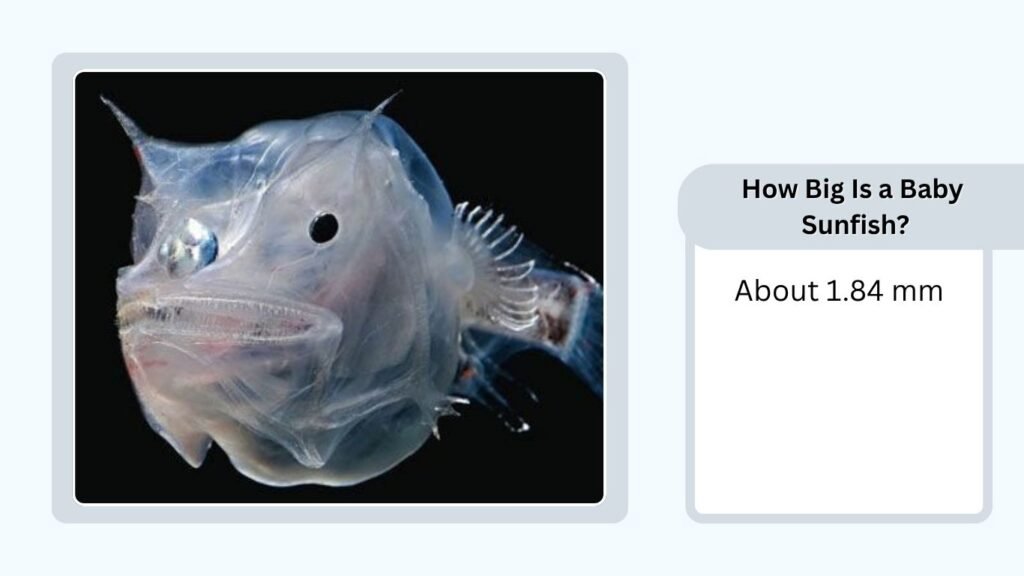
The size difference between a baby ocean sunfish and an adult is extraordinary. Ocean sunfish begin life at only a few millimeters long yet can eventually become some of the heaviest bony fishes on Earth. Freshwater sunfish also begin as tiny larvae, but their adult size is measured in inches rather than hundreds or thousands of pounds.
Baby Ocean Sunfish Size
NOAA’s early-life-history records report a hatch size of about 1.84 mm for Mola mola. Juvenile transformation occurs through a lengthy developmental period between roughly 4 and 59 mm.
That means a newly hatched ocean sunfish is incredibly small compared with its adult form.
Baby Sunfish vs Adult Sunfish
The contrast can be summarized as:
- Newly hatched Mola mola: about 1.84 mm
- Young juvenile: only a few centimeters during early development
- Adult ocean sunfish: potentially hundreds of kilograms
- Freshwater sunfish fry: usually tiny after hatching
- Adult freshwater sunfish: generally far smaller than ocean sunfish
Monterey Bay Aquarium explains that molas undergo an extraordinary increase in body mass as they grow from tiny eggs into gigantic fish.
How Do Baby Ocean Sunfish Grow?
Ocean sunfish have one of the most dramatic growth transformations among fishes. They begin as drifting eggs and larvae in the open ocean before developing the strange, tall-bodied shape associated with adult molas. Their fins and body proportions change substantially during development, making juvenile growth particularly interesting to marine biologists.
From Egg to Larva
Ocean sunfish reproduce by releasing eggs into the water. NOAA describes both their eggs and larvae as pelagic, meaning they develop in the open-water environment rather than inside a nest.
After hatching, larvae possess body spines and a more conventional-looking tail. During development, that tail structure changes considerably.
From Juvenile to Giant Adult
As juvenile sunfish grow, their bodies become increasingly deep and compressed. The prominent dorsal and anal fins become important for swimming while the rear of the body develops into the rounded clavus characteristic of adult molas.
The transformation is remarkable because the tiny juvenile eventually becomes almost unrecognizable compared with its larval form.
Do Sunfish Really Have 300 Million Babies?
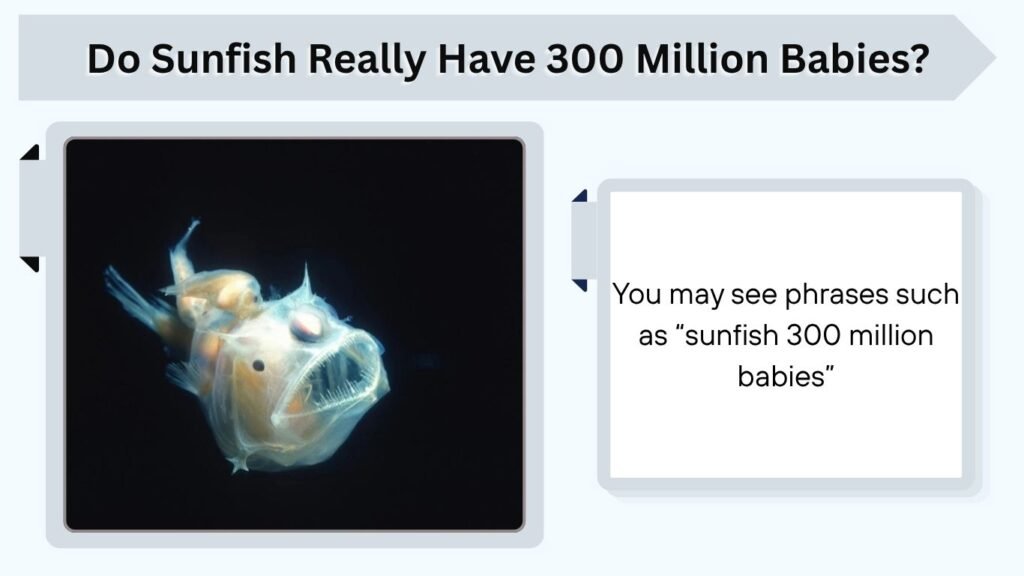
You may see phrases such as “sunfish 300 million babies” online. This comes from observations of extraordinary egg production in female ocean sunfish. However, saying that a sunfish gives birth to 300 million babies is misleading because eggs are not the same as surviving offspring.
The 300 Million Egg Record
A female ocean sunfish has been reported carrying approximately 300 million eggs, giving the species one of the highest known fecundities among vertebrates. NOAA records this figure in its life-history information for Mola mola.
The enormous number compensates for the extremely low probability that each individual egg will survive to adulthood.
Do Parents Care for Baby Sunfish?
Ocean sunfish do not raise their offspring like mammals or birds. Eggs are released into open water, and developing larvae must survive independently.
There is therefore no prolonged parental protection, feeding, or guarding of individual baby ocean sunfish.
What Do Baby Sunfish Eat?
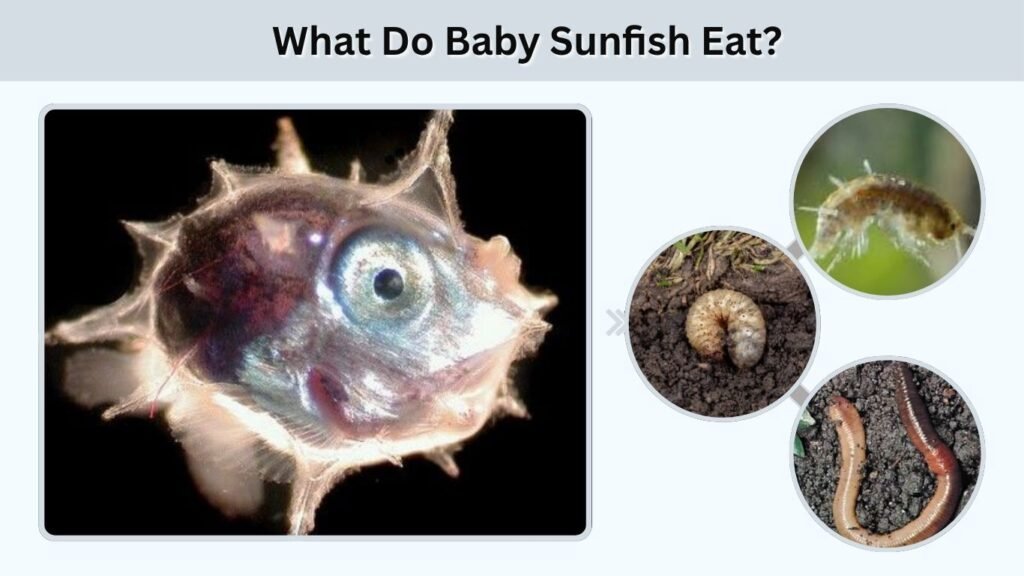
Diet changes as sunfish grow. Tiny larvae cannot immediately consume the same foods as large adults. Young ocean sunfish begin with appropriately small prey available in the planktonic environment, while juvenile freshwater sunfish feed on tiny aquatic organisms before progressing toward insects, crustaceans, and small fish.
Food for Baby Freshwater Sunfish
Young freshwater sunfish may consume:
- Zooplankton
- Tiny aquatic insects
- Insect larvae
- Small crustaceans
- Worms
- Small fish as they grow
Diet varies considerably between species and according to the food available in their habitat.
What Do Ocean Sunfish Eat as They Grow?
Young ocean sunfish eat a broader range of small prey, including crustaceans, fish, squid, algae, and other invertebrates. Larger individuals increasingly consume gelatinous animals such as jellies and salps. Monterey Bay Aquarium notes that their diet shifts substantially as the fish grows.
Freshwater Baby Sunfish Types
Freshwater sunfish belong to a completely different group from ocean sunfish. They are common across North American ponds, lakes, rivers, and streams. Juveniles can be difficult to identify because adult coloration and body proportions may not yet be fully developed.
Common Freshwater Baby Sunfish
Examples include:
- Baby bluegill
- Baby green sunfish
- Baby redear sunfish
- Baby longear sunfish
- Baby pumpkinseed
- Baby warmouth
- Baby redbreast sunfish
- Baby spotted sunfish
A young fish should be identified using several characteristics rather than coloration alone because juvenile patterns often change with age.
Green Sunfish Baby
Baby green sunfish usually develop a relatively large mouth compared with bluegill and may eventually show blue-green markings around the cheeks.
Young green sunfish are opportunistic predators and become increasingly willing to consume insects, crustaceans, and small fishes as they grow.
Baby Redear Sunfish
Juvenile redear sunfish may look similar to young bluegill. Adults become easier to distinguish by the characteristic colored margin on the opercular flap.
Redear sunfish are well known for feeding heavily on snails and other shelled aquatic organisms once sufficiently large.
Baby Sunfish Care in an Aquarium
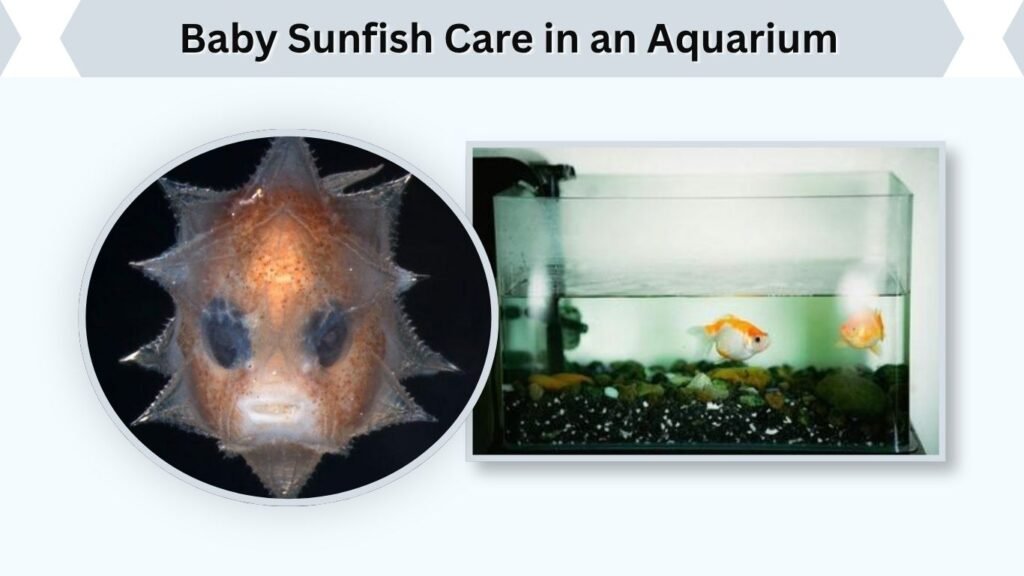
People searching for baby sunfish care are usually referring to freshwater species rather than Mola mola. Ocean sunfish are enormous open-ocean animals with highly specialized requirements and are not suitable for a home aquarium. Freshwater sunfish are more manageable, although adults can still become large, territorial, and demanding.
Basic Aquarium Requirements
For juvenile freshwater sunfish, pay attention to:
- Excellent water quality
- Strong filtration
- Adequate swimming space
- Species-appropriate temperature
- Suitable hiding places
- Properly sized foods
- Compatible tank mates
Do not choose an aquarium based only on the fish’s current baby size. Plan around its expected adult size.
Feeding Baby Sunfish
Very small juveniles require foods small enough to swallow. Depending on their size, suitable aquarium foods may include tiny live or frozen organisms and appropriately sized prepared foods.
As the fish grows, the food size can gradually increase. Avoid chronic overfeeding because leftover food quickly reduces water quality.
Baby Ocean Sunfish Is Not a Baby Whale
Searches such as “baby whale sunfish” and “sunfish baby whale” can cause confusion. An ocean sunfish is not a whale and is not closely related to one. It is a true bony fish belonging to the family Molidae.
Why the Confusion Happens
Adult ocean sunfish become so enormous that photographs can make them appear whale-like. Their unusual shape also makes them difficult to recognize for people seeing them for the first time.
Despite their huge adult size, they remain fishes throughout their lives. They breathe through gills rather than lungs and do not nurse their young.
FAQs
How big is a baby sunfish?
A newly hatched ocean sunfish can be only about 1.84 mm long, according to NOAA data. Freshwater sunfish also hatch extremely small, although exact size varies by species.
What does a baby ocean sunfish look like?
A baby ocean sunfish is small, rounded, and covered with spines. It resembles a tiny pufferfish much more than the flattened adult Mola mola.
How many babies can an ocean sunfish have?
A female ocean sunfish has been documented carrying around 300 million eggs. This does not mean all 300 million become surviving baby sunfish, as mortality during early life is extremely high.
Can you keep a baby sunfish in an aquarium?
Some freshwater sunfish can be maintained in appropriately sized aquariums where possession is legal. Ocean sunfish, however, are enormous marine animals with specialized needs and are unsuitable for ordinary home aquariums.
What is the difference between a baby ocean sunfish and freshwater sunfish?
Baby ocean sunfish are young members of the family Molidae and develop into huge open-ocean fish such as Mola mola. Freshwater sunfish include bluegill, green sunfish, redear sunfish, and related species that live mainly in lakes, ponds, rivers, and streams.