
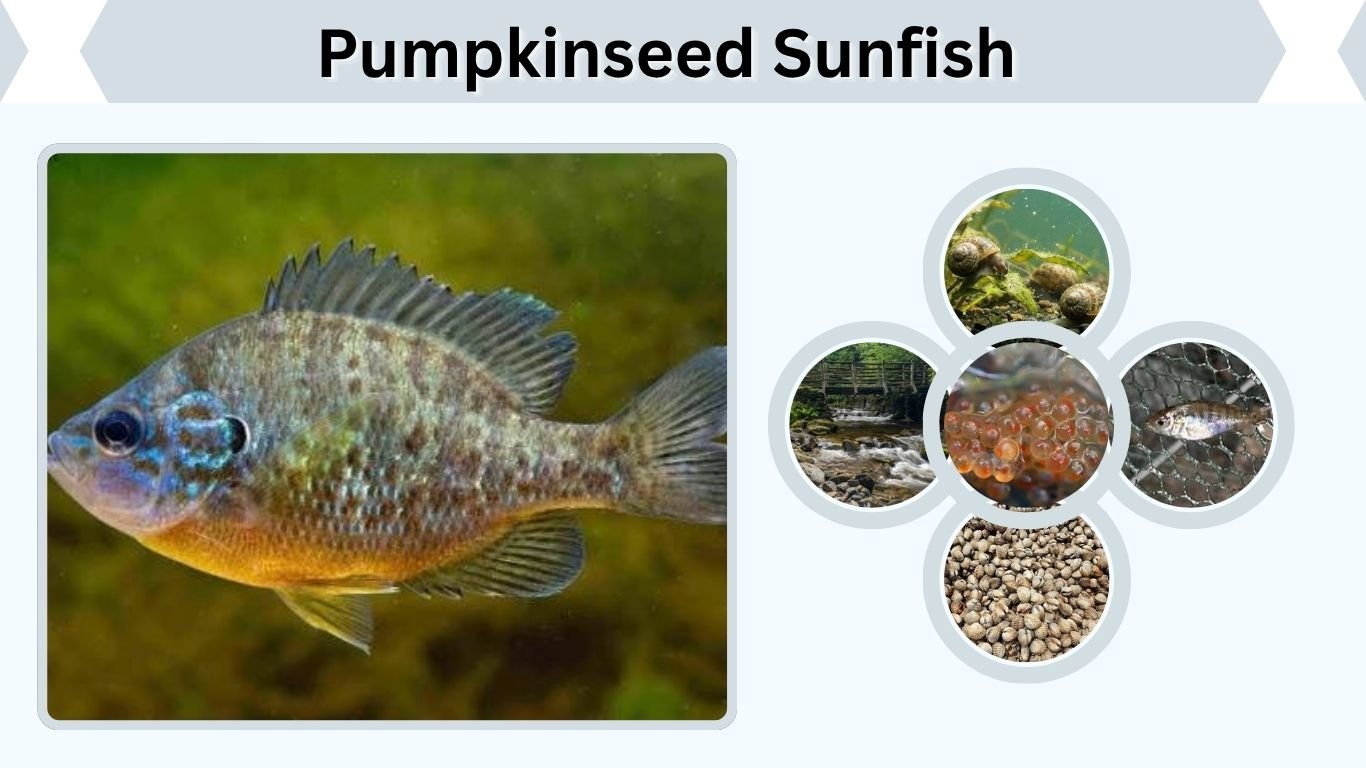
The pumpkinseed sunfish (Lepomis gibbosus) is a colorful freshwater fish recognized by its deep body, bright orange belly, blue-green facial lines, and distinctive red-orange spot on the gill flap. Native to much of eastern and central North America, pumpkinseeds commonly inhabit lakes, ponds, quiet rivers, and vegetated shorelines. They are popular among anglers and can sometimes be kept in large aquariums. This guide covers pumpkinseed sunfish size, identification, diet, habitat, lifespan, breeding, care, and differences from similar sunfish.
Pumpkinseed Sunfish Identification
Pumpkinseed sunfish are among the most colorful members of the sunfish family. Their round, laterally compressed body and small mouth can resemble bluegill and several other Lepomis species, making identification confusing for beginners. The most reliable clues are found around the head, gill cover, body coloration, and fins rather than relying on overall color alone.
Key Identification Features
Look for these characteristics:
- Deep, disk-shaped body
- Dark olive or greenish back
- Orange, yellow, or reddish belly
- Wavy blue-green lines across the cheeks
- Small mouth
- Long, pointed pectoral fins
- Black opercular or “ear” flap
- Bright red-orange spot on the rear of the ear flap
- Rust, orange, or brown markings along the sides
The bright mark on the gill flap is one of the easiest ways to distinguish a pumpkinseed from a typical bluegill.
Male and Female Pumpkinseed Sunfish
Males and females can look similar outside the breeding season. Mature males generally become more intensely colored during spawning, developing brighter orange-red undersides and more noticeable blue markings around the face.
Females are often less intensely colored. Sexing very young pumpkinseed sunfish can be difficult because their mature breeding characteristics have not developed fully.
How Big Do Pumpkinseed Sunfish Get?
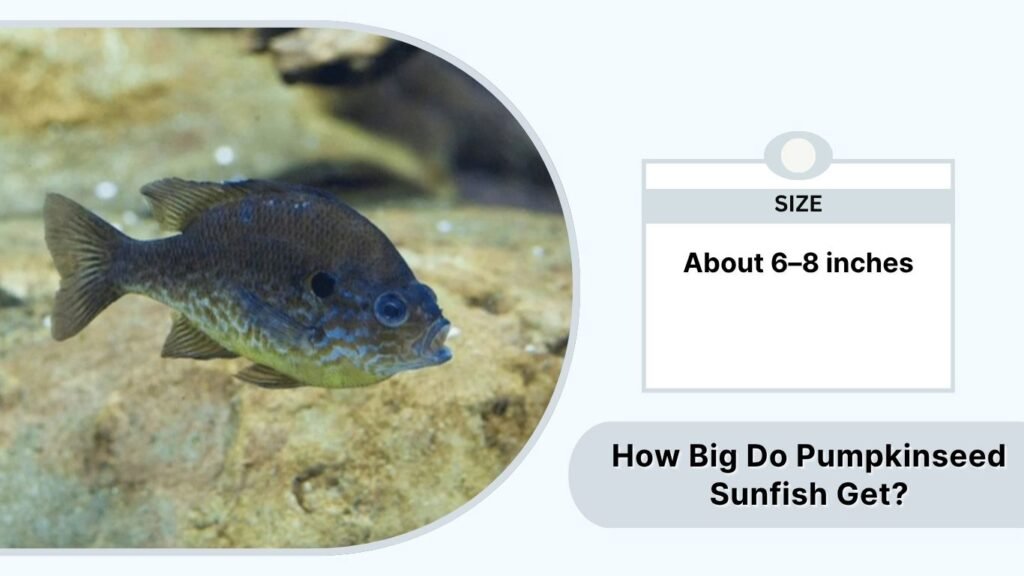
Pumpkinseeds are relatively small freshwater sunfish, although their deep body can make mature individuals look larger than their actual length. Growth depends on water temperature, food availability, fish density, competition, and habitat quality. Fish living in productive lakes with abundant food generally have better opportunities to reach impressive sizes than individuals living in overcrowded waters.
Average Pumpkinseed Sunfish Size
Typical size ranges include:
- Average adult: about 6–8 inches
- Large adult: around 8–10 inches
- Juveniles: considerably smaller depending on age
- Exceptional fish: may exceed typical local averages
Michigan DNR reports an average adult length of roughly 6–8 inches, with some fish reaching about 10 inches, while Maine reports a typical adult range of approximately 6–10 inches.
Biggest Pumpkinseed Sunfish
A truly large pumpkinseed usually stands out because of its thick, deep body rather than extreme length. Local growth potential varies considerably, so a fish considered unusually large in one pond might be more common in another productive lake.
Food abundance, predator numbers, competition with bluegill, and age all influence how large pumpkinseed sunfish become.
Pumpkinseed Sunfish Habitat and Range
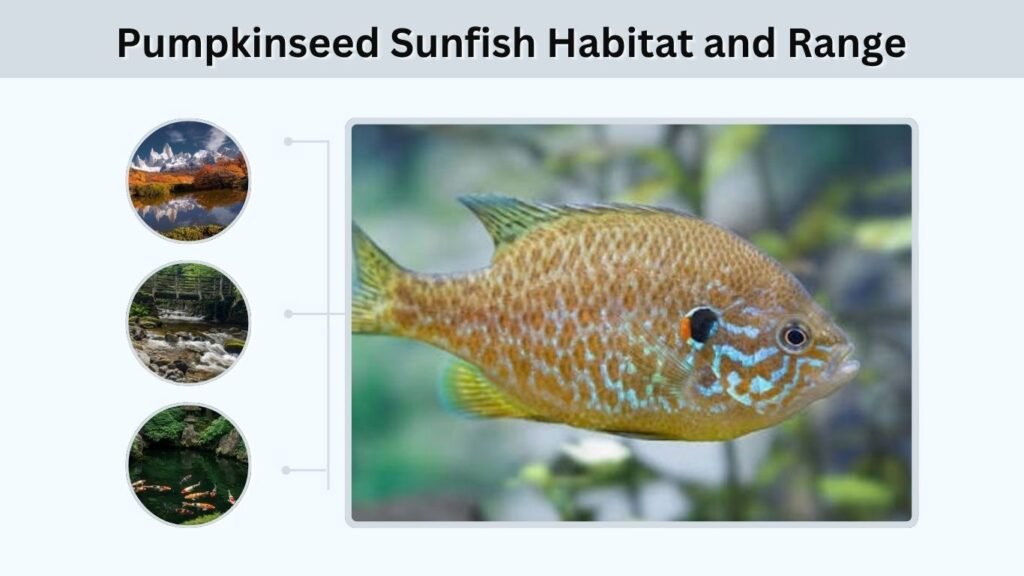
Pumpkinseed sunfish thrive in freshwater environments containing cover and relatively calm water. They frequently live among aquatic plants where they can feed, hide from predators, and reproduce. Although often associated with lakes and ponds, pumpkinseeds can also occupy rivers and streams when suitable slow-moving habitat is available.
Preferred Habitat
Common pumpkinseed habitat includes:
- Lakes
- Ponds
- Slow-moving rivers
- Quiet streams
- Backwaters
- Weed beds
- Submerged logs
- Docks
- Shallow shoreline areas
- Deeper pools with limited current
Vegetation is particularly useful because it provides cover while supporting aquatic insects, snails, crustaceans, and other prey. Michigan DNR notes their association with weed patches, submerged logs, and docks.
Pumpkinseed Sunfish Range
Pumpkinseeds are native to substantial portions of North America and have also been introduced well beyond their original distribution.
Introductions have established populations in numerous locations, and the species can have ecological effects when introduced outside its native range. USGS records pumpkinseed as established in many introduced locations and notes that it can hybridize with other Lepomis species.
What Do Pumpkinseed Sunfish Eat?
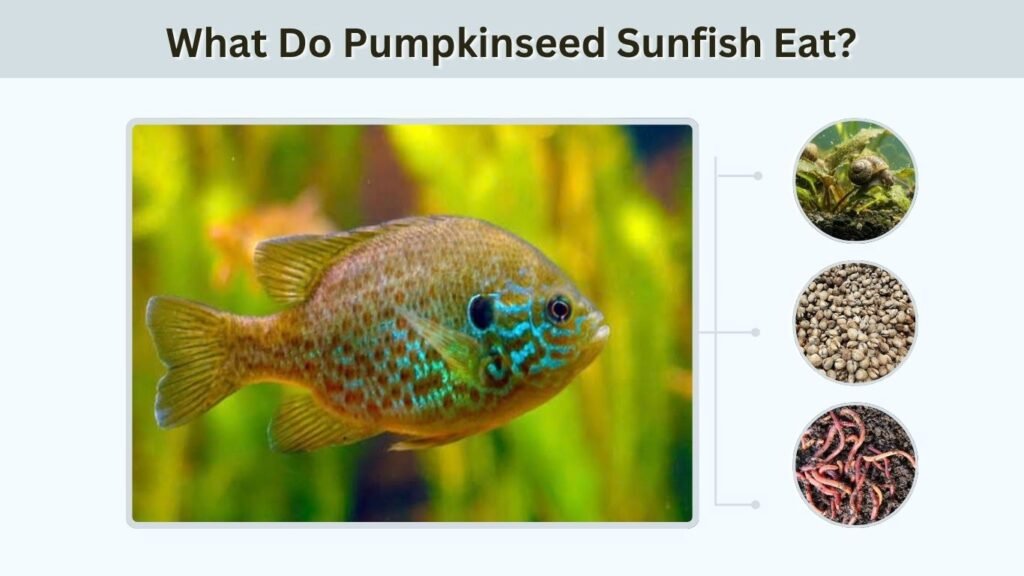
Pumpkinseed sunfish are opportunistic feeders whose diets change as they grow. Their relatively small mouth limits the size of prey they can consume, but they are efficient at feeding on small aquatic animals. Snails and other mollusks can become particularly important because pumpkinseeds are well equipped to crush hard-shelled prey.
Pumpkinseed Sunfish Diet
Common foods include:
- Zooplankton
- Aquatic insect larvae
- Adult insects
- Snails
- Small mollusks
- Small crustaceans
- Worms
- Small fish
- Algae and some plant material
Young fry initially consume zooplankton and algae before adding insects, small fish, and other foods as they grow.
Why Pumpkinseeds Eat So Many Snails
Pumpkinseed sunfish are particularly effective snail predators. Their feeding anatomy allows them to process hard-shelled prey that some competing fish use less efficiently.
This dietary specialization can reduce direct food competition with bluegill even when both species occupy the same lake.
Pumpkinseed Sunfish vs Bluegill
Pumpkinseed and bluegill sunfish frequently live together and can look remarkably similar. Both have deep bodies, relatively small mouths, and dark ear flaps. Hybrids can make identification even more challenging because offspring may display features from both species. Several physical characteristics are useful when separating a typical pumpkinseed from a typical bluegill.
Pumpkinseed vs Bluegill Identification
A pumpkinseed usually has a red or orange mark at the back of the dark ear flap, while a bluegill typically has a solid dark flap without that bright red tip.
Pumpkinseeds also show prominent wavy blue-green facial lines. Bluegills often display vertical bars along their sides and commonly have a dark blotch toward the rear of the dorsal fin.
Pumpkinseed vs Green Sunfish
Green sunfish generally have proportionally larger mouths and shorter, rounder pectoral fins. Pumpkinseeds have smaller mouths and long, pointed pectoral fins.
Because pumpkinseeds can hybridize with green sunfish, some individuals may show intermediate characteristics rather than fitting perfectly into either identification pattern.
Pumpkinseed vs Redear Sunfish
Redear sunfish can also have reddish coloration along the ear flap, which creates confusion. Pumpkinseeds are usually more colorful around the cheeks, displaying distinctive wavy blue-green lines.
Redear sunfish tend to show a red or orange border along their opercular flap rather than the classic pumpkinseed pattern.
Pumpkinseed Sunfish Breeding and Life Cycle
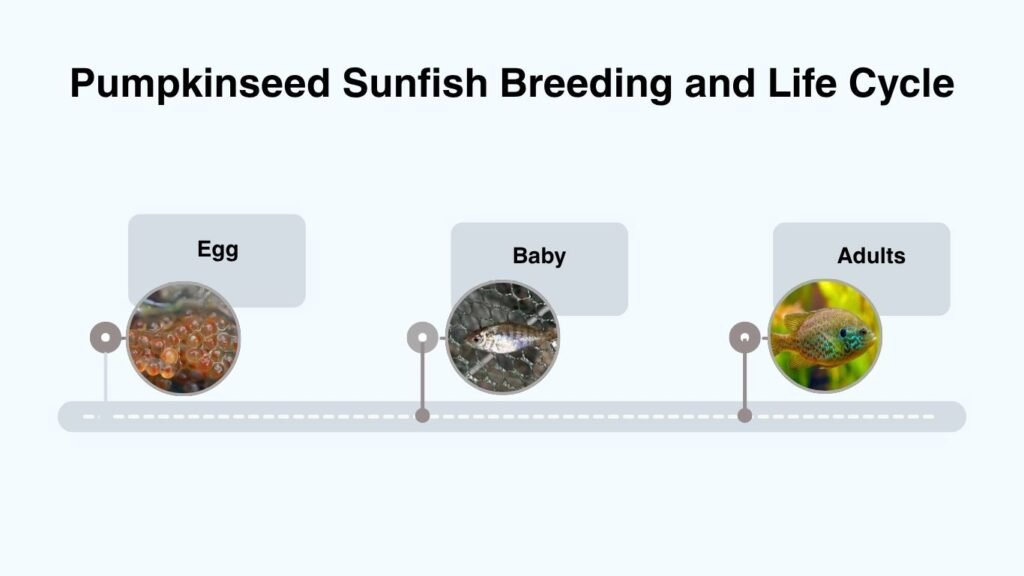
Pumpkinseed reproduction generally occurs during warmer spring and early-summer conditions. Males establish shallow nests and defend them during spawning. In suitable habitat, numerous fish may nest relatively close together, creating colonies similar to those formed by bluegill. Young fish remain vulnerable to predators despite the temporary protection provided by the nesting male.
Spawning Behavior
The male creates and guards a shallow nest where a female deposits eggs. After fertilization, the male continues defending the nest and developing young for a period.
Spawning activity can make pumpkinseeds easier for anglers to locate because many individuals concentrate in shallow areas.
Baby Pumpkinseed Sunfish
Newly hatched pumpkinseed fry are extremely small and initially feed mainly on tiny organisms such as zooplankton.
As juveniles grow, they gradually add aquatic insects and other prey. Young pumpkinseeds typically remain close to protective vegetation where the risk from larger predatory fish is reduced.
How Long Do Pumpkinseed Sunfish Live?
Pumpkinseed lifespan depends on environmental conditions, predation, fishing pressure, food availability, and population density. Many individuals do not survive long enough to reach their biological maximum, but those living in favorable conditions can persist for several years.
Average Pumpkinseed Lifespan
Michigan DNR lists an average lifespan of approximately 5–6 years. Animal Diversity Web similarly reports a typical wild lifespan of around 5–6 years, although older individuals have been documented, particularly in captivity.
Pumpkinseeds generally reach reproductive maturity within the first several years of life. Growth is typically fastest when young before slowing as the fish matures.
Can You Eat Pumpkinseed Sunfish?
Yes, pumpkinseed sunfish are edible and are commonly grouped with other small panfish. Their relatively small body means each fish provides less meat than a large game fish, but larger pumpkinseeds can still be worthwhile table fish where harvesting them is legal.
Are Pumpkinseed Sunfish Good to Eat?
Pumpkinseed flesh is generally mild and can be prepared using many of the same techniques used for bluegill and other panfish.
Before keeping fish, check local fishing regulations, possession limits, minimum sizes, and water-quality advisories. These rules vary significantly between locations and can change over time.
Pumpkinseed Sunfish Aquarium Care
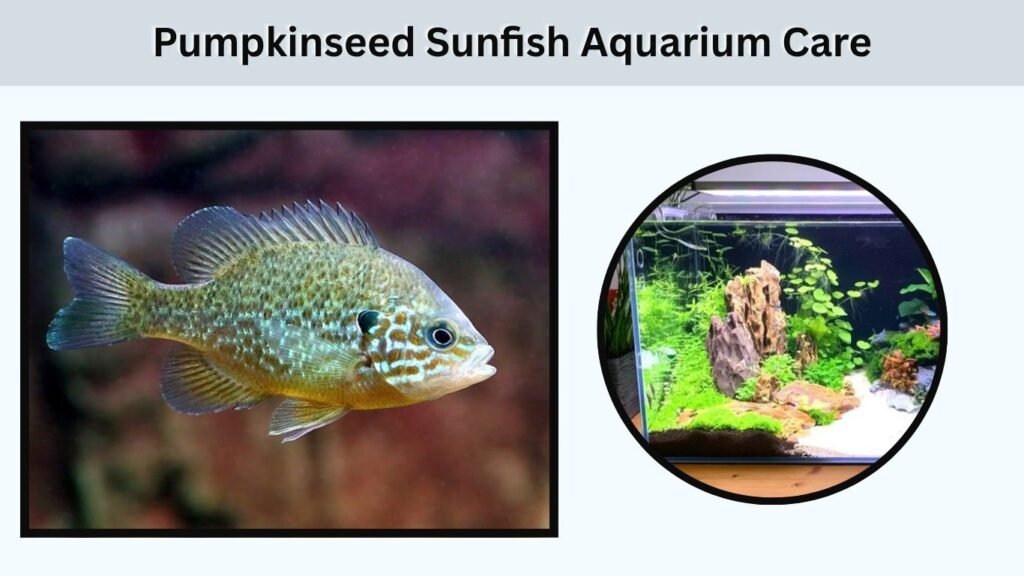
Pumpkinseeds can sometimes be maintained in aquariums, but they are not comparable to small tropical community fish. Adults require substantial swimming space, strong filtration, appropriate water conditions, and carefully selected tank mates. Local laws should also be checked before collecting or possessing native game fish.
Basic Care Requirements
Consider:
- A spacious aquarium sized for the adult fish
- Powerful biological filtration
- Good oxygenation
- Clean, stable water
- Rocks, wood, or vegetation for cover
- Appropriate freshwater temperatures
- High-quality carnivorous or omnivorous foods
- Tank mates too large to be swallowed or bullied
Pumpkinseed behavior can become territorial, especially as fish mature or enter breeding conditions.
Choosing an Aquarium Size
Do not choose a tank solely for a juvenile pumpkinseed’s current size. An adult can reach roughly 6–10 inches and has a deep body that requires considerable swimming room.
Providing more space also makes water quality easier to maintain and reduces competition between fish.
FAQs
Are pumpkinseed and sunfish the same?
A pumpkinseed is a type of freshwater sunfish. The term “sunfish” describes a broader group that includes pumpkinseed, bluegill, green sunfish, redear sunfish, and several other species.
How big do pumpkinseed sunfish get?
Most adult pumpkinseed sunfish are around 6–8 inches long, although individuals can reach approximately 10 inches in favorable conditions.
What do pumpkinseed sunfish eat?
Pumpkinseeds eat zooplankton, aquatic insects, insect larvae, crustaceans, snails, small mollusks, and occasionally small fish. Young fish begin with much smaller foods.
What is the difference between a bluegill and pumpkinseed?
Pumpkinseeds normally have wavy blue-green facial markings and a bright red-orange spot on the rear of the dark gill flap. Bluegills typically lack this red tip and often have vertical body bars and a dark dorsal-fin blotch.
How long do pumpkinseed sunfish live?
Pumpkinseed sunfish commonly live about 5–6 years, although some individuals can survive longer under favorable conditions.