
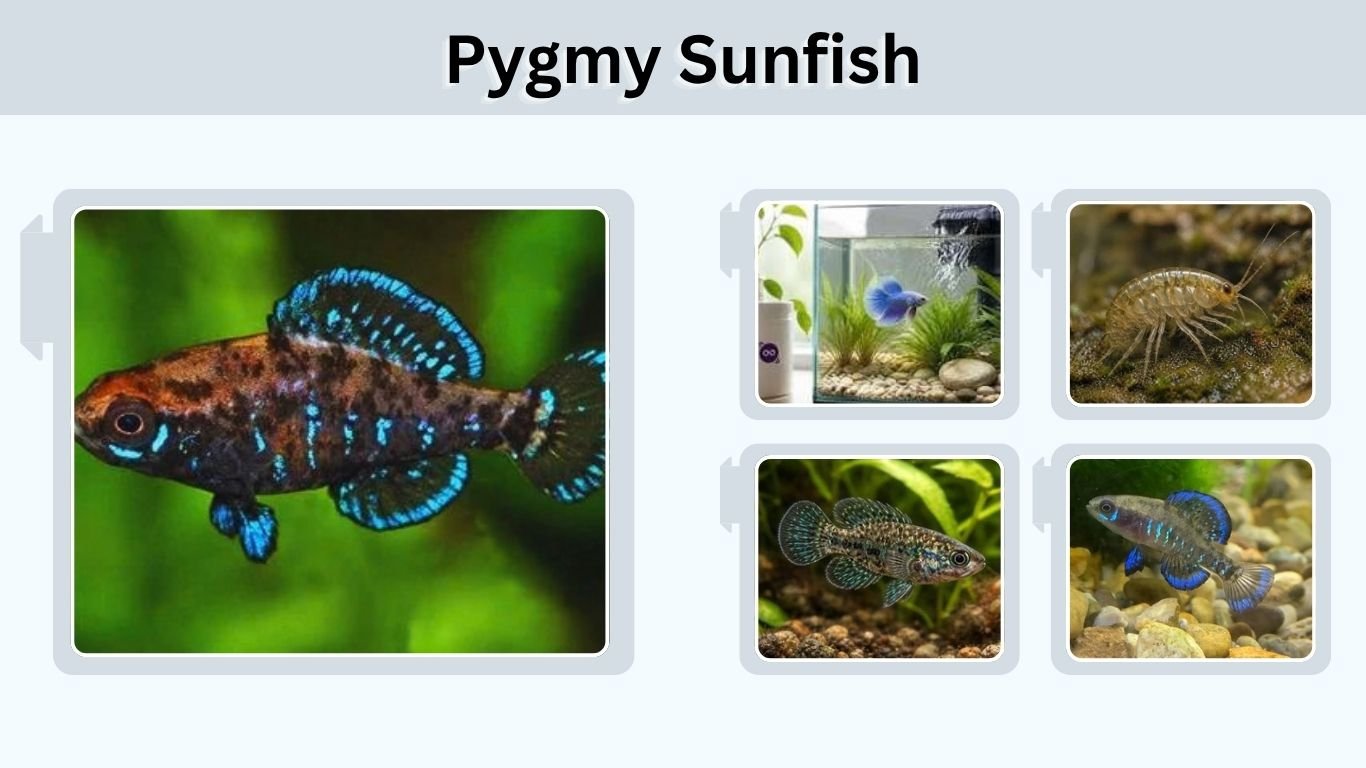
Pygmy sunfish are tiny North American freshwater fish admired for their remarkable colors and quiet behavior. Although they resemble miniature sunfish, they belong to the distinct genus Elassoma and require different aquarium care from familiar bluegills. Species such as the Gulf Coast pygmy sunfish and Everglades pygmy sunfish are especially interesting to aquarists who enjoy planted nano tanks. This guide covers pygmy sunfish size, identification, natural habitat, tank conditions, food, breeding, lifespan, and responsible purchasing, helping you understand whether these delicate fish suit your aquarium.
What Is a Pygmy Sunfish?
Pygmy sunfish are small freshwater fish belonging to the family Elassomatidae. They are native to parts of the southeastern United States, where they inhabit slow-moving waters with abundant aquatic vegetation. Unlike larger sunfish, these miniature species are not popular sport fish. Their colorful breeding displays and unusual behaviors make them particularly appealing to dedicated aquarium enthusiasts.
Pygmy Sunfish Size and Appearance
Most pygmy sunfish grow approximately 1–1.5 inches long, although the banded pygmy sunfish can reach about 1.9 inches.
Their bodies are relatively deep, with rounded fins and small mouths. Females usually display subtle brown or olive coloration, while breeding males of several species develop dark bodies decorated with striking blue or green markings.
7 Commonly Recognized Pygmy Sunfish Species
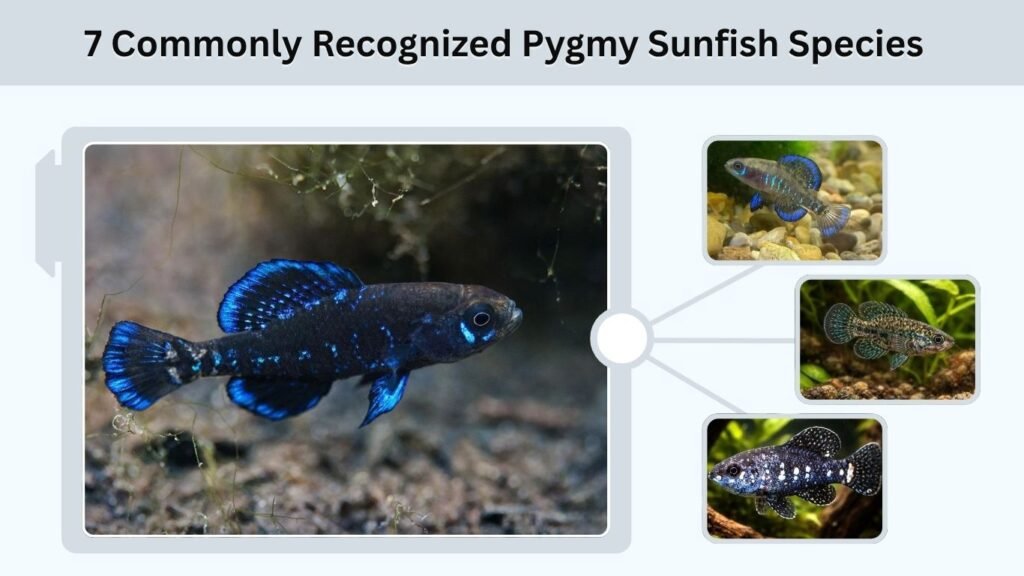
There are seven recognized species in the genus Elassoma.
- Gulf Coast Pygmy Sunfish (Elassoma gilberti): A small Florida species known for its attractive blue markings.
- Everglades Pygmy Sunfish (Elassoma evergladei): Popular among native-fish enthusiasts for its colorful breeding males.
- Banded Pygmy Sunfish (Elassoma zonatum): Recognized by its vertical body markings and relatively broad distribution.
- Okefenokee Pygmy Sunfish (Elassoma okefenokee): Found in vegetated waters of Georgia and Florida.
- Carolina Pygmy Sunfish (Elassoma boehlkei): A localized species associated with coastal plain freshwater habitats.
- Bluebarred Pygmy Sunfish (Elassoma okatie): A species with attractive iridescent markings and a restricted natural range.
- Spring Pygmy Sunfish (Elassoma alabamae): A rare, federally protected species associated with spring-fed waters in Alabama.
Natural Habitat and Distribution
Pygmy sunfish generally inhabit shallow ponds, swamps, marshes, and slow-moving streams.
They prefer areas containing dense aquatic plants, submerged roots, and leaf litter. These habitats provide protection from predators and support the tiny invertebrates they eat.
Pygmy Sunfish Tank Size and Aquarium Setup
A pygmy sunfish aquarium should resemble the fish’s natural freshwater environment. Although these species remain extremely small, they require clean water, suitable temperatures, and sufficient vegetation. A densely planted aquarium helps reduce stress and encourages natural behavior. Proper filtration, stable water conditions, and appropriate stocking are more important than simply choosing the smallest available tank.
Recommended Tank Size and Water Parameters
Requirements vary by species, but the following provide a practical starting point for commonly kept pygmy sunfish.
- Tank size: A 10-gallon aquarium is a sensible starting point for a pair or small group.
- Temperature: Approximately 60–75°F is suitable for many commonly kept species, depending on their origin.
- Water pH: Mildly acidic to near-neutral water is commonly preferred.
- Filtration: Gentle sponge filtration helps avoid excessive currents.
- Substrate: Fine sand or smooth aquarium gravel works well.
- Lighting: Moderate lighting supports plant growth while maintaining shaded areas.
Check species-specific requirements rather than assuming all pygmy sunfish tolerate identical conditions.
Best Plants and Decorations
Java moss, hornwort, floating plants, and other fine-leaved vegetation create excellent cover.
Dense planting allows shy fish to establish small territories and provides spawning surfaces. Driftwood and leaf litter can make the environment more natural.
Leave some open space for observation while maintaining sheltered areas throughout the aquarium.
Pygmy Sunfish Tank Mates
Pygmy sunfish are generally peaceful toward other species but may display territorial behavior toward one another.
Larger or fast-moving aquarium fish can intimidate them or consume food before they can feed.
A species-only aquarium is usually the most reliable choice, particularly when breeding is planned.
Pygmy Sunfish Diet and Feeding Habits
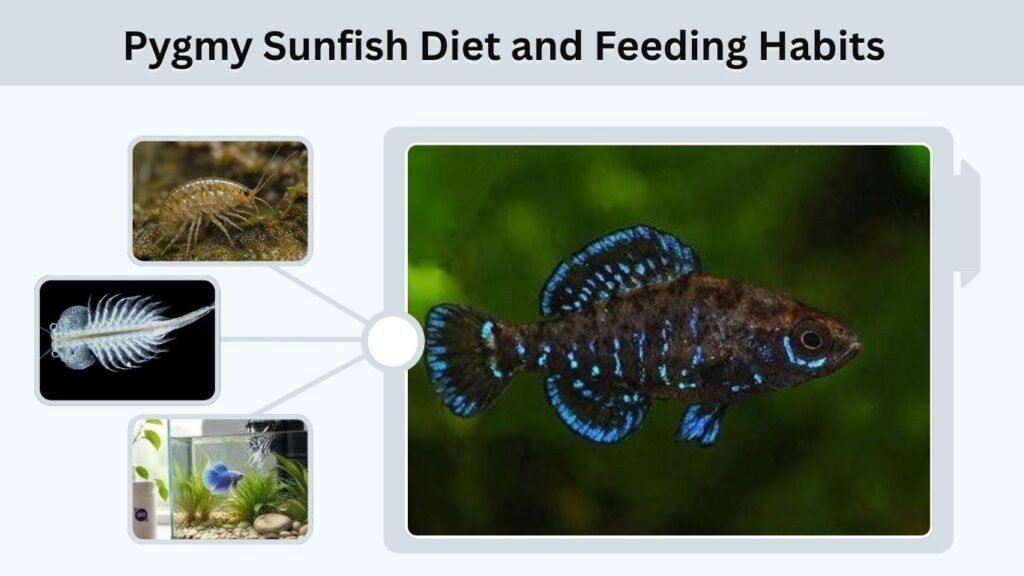
Pygmy sunfish are carnivorous micropredators that naturally consume tiny aquatic animals. Their small mouths and deliberate feeding behavior make them different from many common aquarium fish. They often prefer moving prey and may refuse ordinary flakes or pellets. Providing appropriately sized live foods is therefore an important part of maintaining their health and supporting successful reproduction.
Best Food for Pygmy Sunfish
A varied diet of appropriately sized foods helps meet their nutritional needs.
- Live daphnia: Small freshwater crustaceans that stimulate natural feeding behavior.
- Baby brine shrimp: Nutritious food suitable for many adults and growing juveniles.
- Grindal worms: Useful live food for maintaining adult fish.
- Cyclops: Tiny crustaceans suitable for small predatory fish.
- Microworms: A practical feeding option for juveniles and smaller individuals.
- Frozen foods: Some individuals accept appropriately sized frozen invertebrates.
How Often Should You Feed Them?
Offer small portions once or twice daily, adjusting the quantity according to fish size, appetite, and water quality.
Observe whether each fish receives food, particularly when several males share an aquarium.
Remove uneaten food promptly to prevent water quality problems.
Pygmy Sunfish Behavior
These fish are generally quiet and spend considerable time moving among plants.
During breeding periods, males may defend small territories and display their colorful fins to attract females.
Their shy nature makes them especially interesting to observe in a peaceful aquarium.
Pygmy Sunfish Breeding and Lifespan
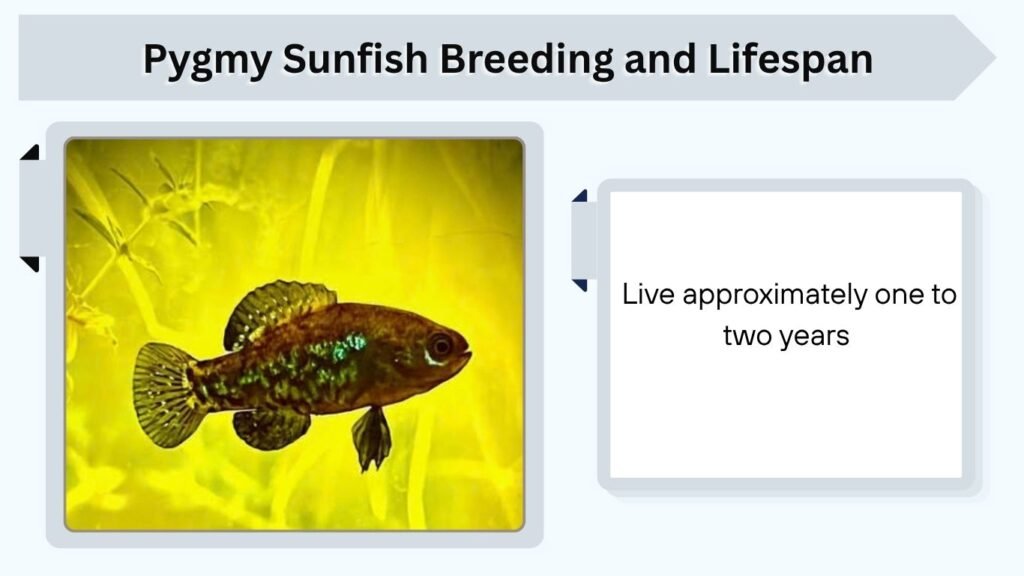
Breeding pygmy sunfish can be rewarding for experienced aquarium keepers. Several species reproduce in densely planted freshwater aquariums when provided with suitable food and stable environmental conditions. Their courtship behavior includes colorful male displays and territorial interactions. Successful breeding also requires attention to egg protection and the extremely small food needed by newly hatched fry.
How Do Pygmy Sunfish Breed?
Breeding males usually establish territories among dense aquatic vegetation.
They attract females through fin movements and color displays. Females deposit small adhesive eggs among plants, where they develop before hatching.
Depending on the species and temperature, eggs may hatch within a few days.
Caring for Pygmy Sunfish Fry
Newly hatched fry are extremely small and require microscopic foods such as infusoria during their earliest feeding stage.
As they grow, they can begin consuming larger foods, including newly hatched brine shrimp.
A mature planted aquarium supports small microorganisms that help young fish survive.
Pygmy Sunfish Lifespan
Many commonly kept pygmy sunfish live approximately one to two years, although longevity varies with species and conditions.
Consistent water quality, suitable nutrition, and low-stress environments are important for maintaining their health.
Where to Find Pygmy Sunfish for Sale
Pygmy sunfish are specialty aquarium fish rather than common pet-store species. Availability varies depending on location, breeding activity, and legal collection restrictions. Everglades and Gulf Coast pygmy sunfish may occasionally be offered by specialized breeders. Before purchasing, aquarists should identify the exact species, confirm its origin, and ensure that suitable aquarium conditions are already available.
What to Check Before Buying Pygmy Sunfish
Consider these factors when looking for healthy aquarium specimens.
- Species identification: Confirm the scientific name before purchasing.
- Captive breeding: Prefer legally sourced, captive-bred fish when available.
- Fish condition: Look for normal swimming behavior and healthy body shape.
- Feeding requirements: Ask whether the fish accepts live or frozen food.
- Shipping arrangements: Choose sellers experienced with transporting small freshwater fish.
- Legal requirements: Check applicable state and federal regulations.
Pygmy Sunfish Price and Availability
Prices vary according to species, availability, shipping costs, and breeder location.
Rarely offered species may be more expensive than commonly bred Everglades pygmy sunfish.
Avoid collecting protected species or purchasing fish of uncertain origin.
Conservation of Spring Pygmy Sunfish
The spring pygmy sunfish is federally listed as threatened in the United States.
Its limited habitat and dependence on healthy spring systems make conservation particularly important.
This species should not be treated as an ordinary aquarium-trade option. Responsible enthusiasts should support habitat protection and lawful captive-breeding efforts.
Pygmy Sunfish Locations in Skyrim
The term pygmy sunfish also appears in The Elder Scrolls V: Skyrim, where it refers to a collectible fish associated with the Fishing content. This creates a separate search interest from real-world aquarium care. Players looking for Skyrim pygmy sunfish locations need gameplay information rather than water chemistry, breeding advice, or aquarium recommendations intended for living fish.
Where to Find Pygmy Sunfish in Skyrim
Players can catch pygmy sunfish in temperate lakes, particularly during rainy weather.
They can also find catchable fish in particular locations, including Ancestor Glade. Availability depends on the fishing location and game conditions.
For detailed fishing maps, consult a dedicated Skyrim pygmy sunfish location guide.
FAQs
Pygmy sunfish attract interest because of their miniature size, colorful males, and unusual care requirements. However, choosing the right aquarium, understanding feeding behavior, and selecting compatible companions can be challenging for beginners. These frequently asked questions address important concerns about pygmy sunfish size, lifespan, tank requirements, and suitability for home aquariums, helping keepers make informed decisions.
1. How Big Do Pygmy Sunfish Get?
Most species reach approximately 1–1.5 inches, although banded pygmy sunfish can grow larger, approaching 2 inches.
2. Can Pygmy Sunfish Live in a 5-Gallon Tank?
Experienced aquarists sometimes keep individual fish or pairs in carefully maintained five-gallon aquariums. However, a planted 10-gallon aquarium offers more stable water conditions and additional space.
3. Are Pygmy Sunfish Good Community Fish?
They are usually better suited to species-only aquariums. Larger or faster fish may intimidate them, compete for food, or prey on them.
4. What Do Gulf Coast Pygmy Sunfish Eat?
Gulf Coast pygmy sunfish primarily consume tiny aquatic invertebrates, including small crustaceans, insect larvae, and worms. Live foods are particularly valuable in captivity.
5. Can You Keep One Pygmy Sunfish Alone?
Yes. A single pygmy sunfish can be maintained in a suitable planted aquarium. However, keeping compatible individuals together allows observation of courtship and other natural social behaviors.