
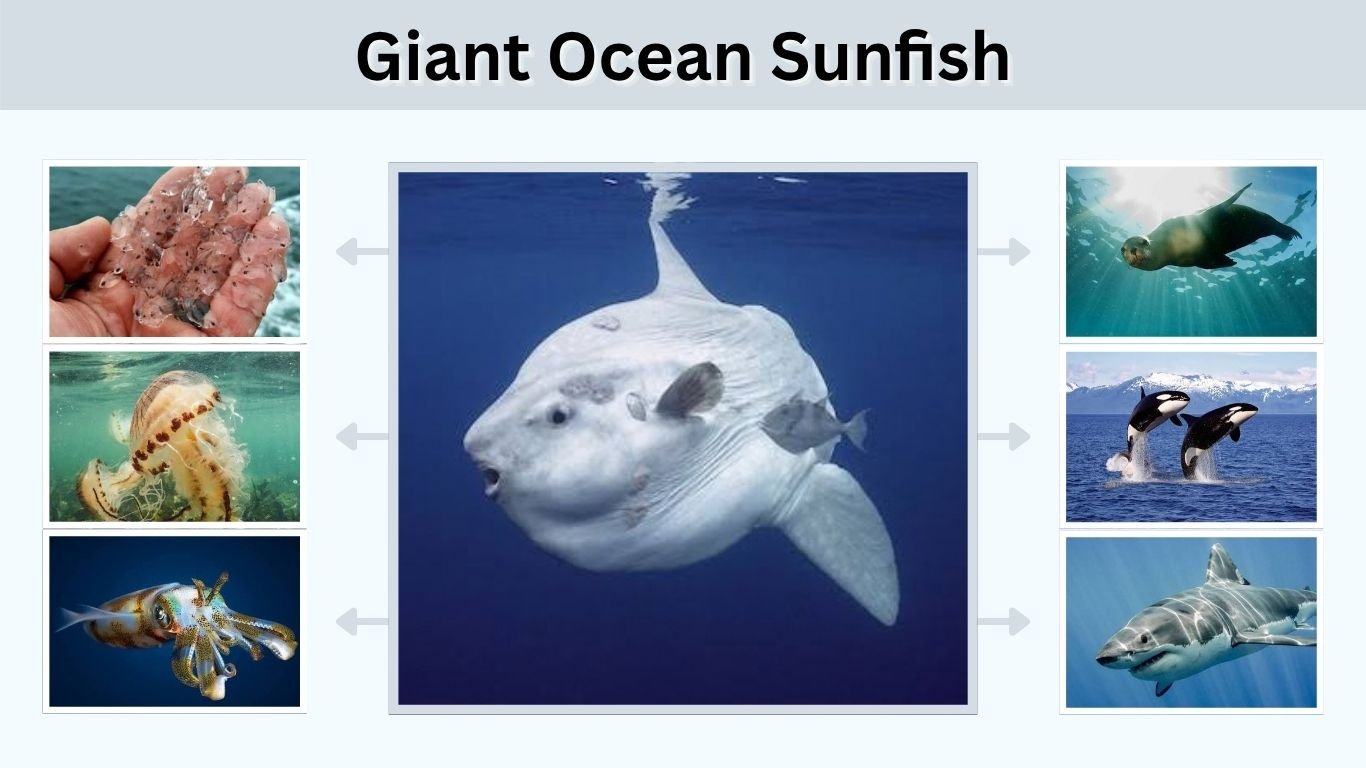
The giant ocean sunfish is one of the most extraordinary creatures swimming in the world’s oceans. With its enormous flattened body, unusual fins, and surprisingly small mouth, this marine fish looks unlike almost any other species. Often called a mola, it can reach remarkable sizes and spends time both near the ocean surface and in deeper waters. Despite its intimidating appearance, the sunfish is generally harmless to humans. This guide explores giant ocean sunfish size, habitat, diet, behavior, predators, reproduction, and fascinating encounters with divers.
What Is a Giant Ocean Sunfish?
Giant ocean sunfish belong to the family Molidae, a group of unusually shaped marine fish. The common ocean sunfish, Mola mola, and the giant sunfish, Mola alexandrini, are closely related but scientifically distinct species. Both possess large, flattened bodies and distinctive swimming movements. Understanding their differences helps explain why the terms giant ocean sunfish and mola mola are sometimes confused.
Giant Sunfish vs. Ocean Sunfish (Mola mola)
The common ocean sunfish (Mola mola) inhabits temperate and tropical oceans worldwide.
The giant sunfish (Mola alexandrini), also called the bump-head sunfish, is a separate species known for its enormous size and prominent head shape.
Although both are frequently called mola mola in popular media, Mola alexandrini holds the documented record for the heaviest bony fish.
Giant Ocean Sunfish Identification
Several physical characteristics make ocean sunfish recognizable.
- Body shape: Extremely flattened, broad, and almost circular.
- Color: Usually gray, silver, brownish, or mottled.
- Dorsal fin: A tall fin extending upward from the body.
- Anal fin: A large lower fin used alongside the dorsal fin for swimming.
- Tail: A short, rounded structure called the clavus replaces the typical tail fin.
- Mouth: Small, with fused teeth forming beak-like plates.
- Skin: Thick and rough, sometimes supporting numerous parasites.
How Big Can a Giant Ocean Sunfish Get?
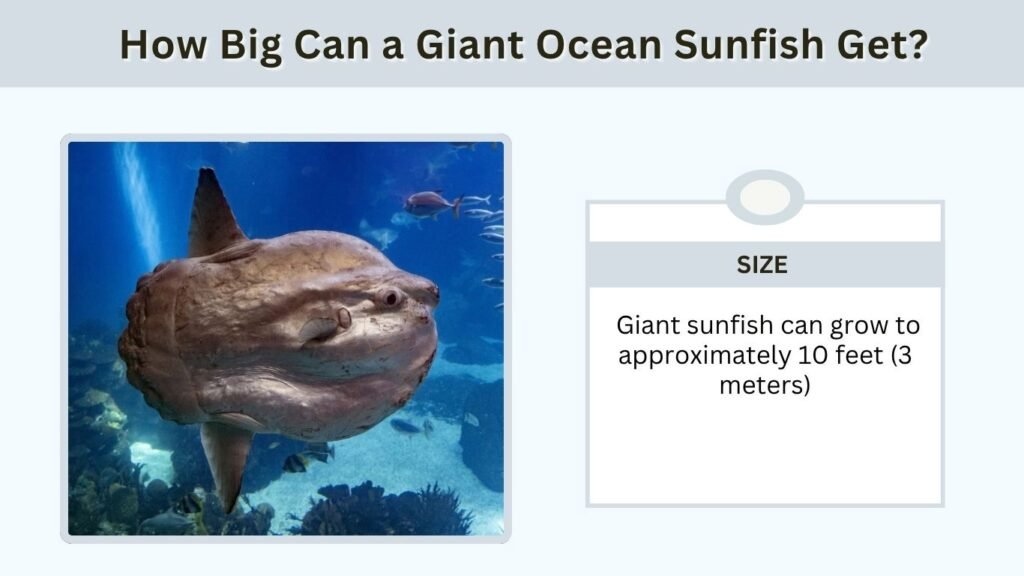
Ocean sunfish rank among the largest bony fish on Earth. Their extraordinary weight and unusual body proportions have attracted scientific interest for generations. Unlike sharks, which have primarily cartilaginous skeletons, sunfish belong to the bony-fish lineage. Their impressive size becomes especially noticeable when photographed beside divers, where their bodies can appear considerably taller than an adult human.
Giant Ocean Sunfish Size and Weight
Large individuals can reach extraordinary dimensions.
- Length: Giant sunfish can grow to approximately 10 feet (3 meters).
- Fin-to-fin height: Exceptional specimens may approach 14 feet (4.3 meters).
- Weight: Very large individuals can exceed 4,000 pounds.
- Body proportions: Their vertical height can exceed their horizontal body length.
- Growth: They develop from tiny eggs into fish weighing thousands of pounds.
Exact maximum sizes depend on the species and reliability of individual measurements.
Largest Giant Ocean Sunfish Ever Recorded
One remarkable giant sunfish was discovered near Faial Island in the Azores, Portugal, in December 2021.
Scientists identified the specimen as Mola alexandrini and recorded its weight at approximately 2,744 kilograms (6,049 pounds).
The finding, published in the Journal of Fish Biology, established a documented record for the heaviest bony fish.
Where Do Giant Ocean Sunfish Live?
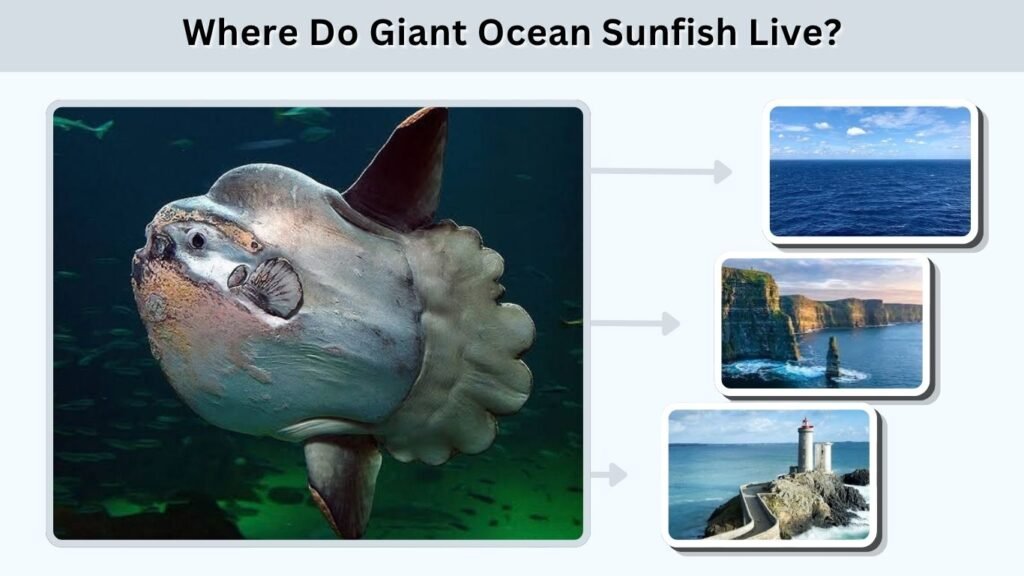
Giant ocean sunfish inhabit extensive marine environments, including temperate and tropical waters. Although they are frequently photographed floating near the surface, they also travel through deeper ocean layers while searching for food. Their distribution extends across multiple ocean basins, and sightings occur near coastlines, offshore islands, and open-water habitats where favorable temperatures and prey are available.
Natural Habitat and Distribution
Ocean sunfish occur in the Atlantic, Pacific, and Indian Oceans.
They generally favor open-water environments but occasionally approach coastal areas. Satellite tracking has revealed that sunfish make substantial vertical movements and travel considerable distances.
These movements allow them to exploit food sources at different depths.
Giant Ocean Sunfish Near Boston and Cape Cod
Ocean sunfish are regularly observed in waters around Massachusetts, particularly during warmer months.
Cape Cod provides seasonal feeding opportunities when jellyfish and other gelatinous organisms become abundant.
Unfortunately, some sunfish become trapped in shallow coastal waters or experience cold-stunning as temperatures decline during autumn.
Giant Ocean Sunfish Encounters in Bali
Bali, Indonesia, is famous for encounters with exceptionally large sunfish.
Divers frequently observe them around Nusa Penida, where cooler water and cleaning stations attract these marine animals.
Scientific observations indicate that the sunfish commonly encountered around Bali belong predominantly to Mola alexandrini, despite being locally called mola mola.
What Do Giant Ocean Sunfish Eat?
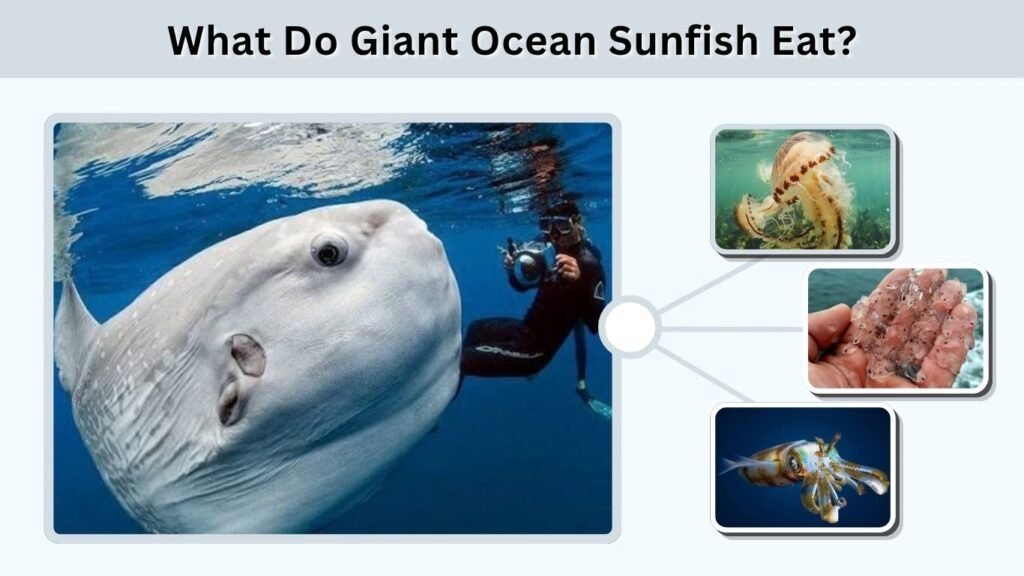
Despite their enormous bodies, ocean sunfish consume relatively small marine organisms. Their diet includes jellyfish, gelatinous plankton, and other soft-bodied animals found throughout the water column. Scientists have discovered that feeding habits may change as sunfish grow. Smaller individuals consume a broader variety of prey, while larger ocean sunfish often rely heavily on gelatinous organisms.
Giant Ocean Sunfish Diet
Their natural diet can include several types of marine animals.
- Jellyfish: An important food source for larger ocean sunfish.
- Salps: Transparent, gelatinous animals that drift through open water.
- Comb jellies: Soft-bodied marine organisms found at various depths.
- Small fish: Occasional prey depending on size and availability.
- Crustaceans: Small marine animals consumed particularly by younger sunfish.
- : Another food source recorded in ocean sunfish diets.
How Do Giant Ocean Sunfish Feed?
Ocean sunfish have small mouths relative to their enormous bodies.
Their fused teeth form plates that help break down food, while repeated suction movements assist in handling prey.
They can descend into deeper, cooler water to feed before returning to shallower depths.
This behavior allows them to access prey distributed across different ocean layers.
Giant Ocean Sunfish Behavior and Swimming
Ocean sunfish have an unusual swimming style that makes them instantly recognizable. Instead of moving a powerful tail from side to side, they propel themselves using synchronized movements of their dorsal and anal fins. Scientists have discovered that these fish actively swim, dive, and travel considerable distances despite appearing slow or motionless when resting near the surface.
Why Do Ocean Sunfish Float Near the Surface?
Sunfish are sometimes seen lying sideways near the ocean surface, creating the impression that they are sunbathing.
Researchers have suggested several possible explanations, including warming after deep dives and allowing other animals to remove parasites.
Their surface behavior likely serves different purposes depending on environmental conditions.
Why Do Birds Gather Around Giant Ocean Sunfish?
Some seabirds, including albatrosses, have been observed removing external parasites from ocean sunfish.
The birds gain food while the fish may benefit from having parasites removed.
This unusual cleaning relationship illustrates how different marine animals can interact in the open ocean.
Are Giant Ocean Sunfish Dangerous to Divers?
Ocean sunfish are generally harmless to humans and do not actively hunt or attack divers.
Their impressive size can appear intimidating, but they usually swim calmly when encountered.
Divers should avoid touching, chasing, feeding, or disturbing them. Maintaining a respectful distance protects both the fish and the observer.
Reproduction, Lifespan, and Natural Predators
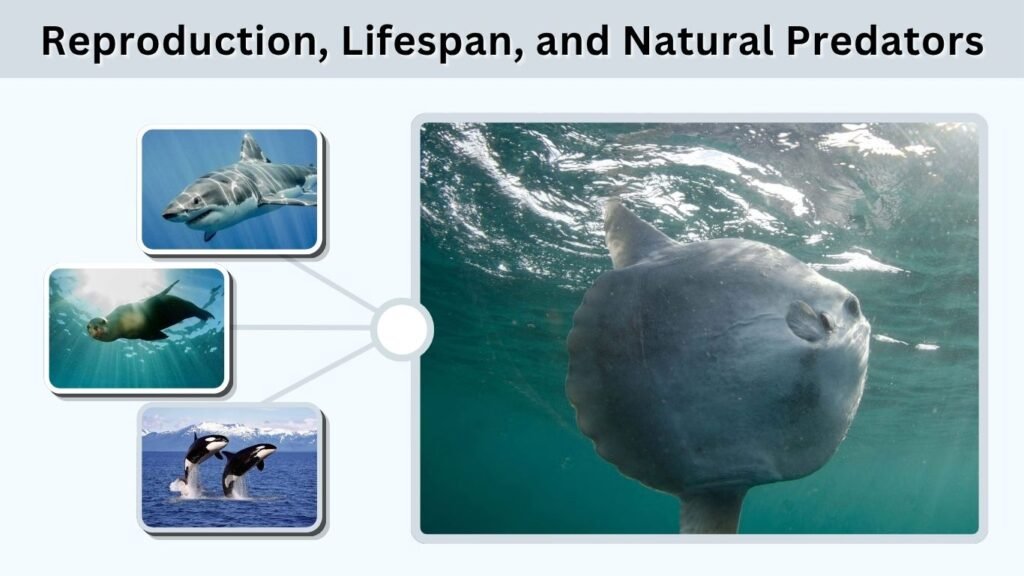
Ocean sunfish have fascinating life histories involving rapid growth, enormous reproductive potential, and complex marine food relationships. Despite their size, they remain vulnerable to predators, parasites, and environmental hazards. Scientists continue studying their reproduction, survival, and longevity because several important aspects of their biology remain poorly understood, particularly for giant sunfish living far offshore in deep water.
How Do Giant Ocean Sunfish Reproduce?
Ocean sunfish reproduce by releasing eggs and sperm into the surrounding water.
A female Mola mola has been estimated to carry approximately 300 million eggs, demonstrating extraordinary reproductive potential.
The tiny larvae look very different from adults and undergo major physical changes as they develop.
Giant Ocean Sunfish Predators
Even enormous sunfish face threats from other marine animals.
- Large sharks: May attack and consume ocean sunfish.
- Sea lions: Have been observed feeding on sunfish.
- Killer whales: Can prey on large marine fish, including sunfish.
- Humans: Fishing activities can cause mortality through capture or accidental entanglement.
How Long Do Giant Ocean Sunfish Live?
The exact lifespan of wild giant ocean sunfish remains uncertain.
Determining age is challenging because researchers rarely follow individual fish throughout their entire lives.
Studies of growth and aging continue to improve understanding of how long different sunfish species survive.
Conservation Status and Major Threats
Although ocean sunfish are widespread, their populations face several human-related threats. Commercial fishing equipment, floating plastic waste, and vessel collisions can injure or kill these animals. The International Union for Conservation of Nature lists the common ocean sunfish, Mola mola, as Vulnerable. Conservation assessments differ among sunfish species, making accurate identification particularly important for research and protection efforts.
Threats to Giant Ocean Sunfish
Several environmental pressures affect these unusual marine fish.
- Fishing bycatch: Sunfish can unintentionally become trapped in fishing nets and other equipment.
- Plastic pollution: Floating plastic bags may resemble gelatinous prey and can be swallowed.
- Boat collisions: Large fish swimming near the surface risk being struck by vessels.
- Marine debris: Abandoned equipment and discarded materials may cause entanglement.
- Habitat changes: Altered ocean conditions may influence prey availability and movement patterns.
Why Giant Ocean Sunfish Conservation Matters
Sunfish are part of complex marine food webs and interact with numerous organisms, including jellyfish, predators, parasites, and cleaning animals.
Protecting ocean biodiversity, reducing plastic pollution, and improving fishing practices can help reduce threats.
Continued scientific research is essential for understanding their populations and long-term conservation needs.
FAQs
Giant ocean sunfish inspire curiosity because of their unusual appearance, extraordinary body size, and encounters with divers. Many people wonder whether these enormous fish are dangerous, how much they weigh, and why they spend time near the ocean surface. The following questions address common misconceptions and provide straightforward answers about these fascinating marine animals and their remarkable adaptations.
1. What Is the Largest Giant Ocean Sunfish Ever Found?
A Mola alexandrini weighing approximately 2,744 kilograms (6,049 pounds) was recorded near the Azores in 2021, establishing the documented heaviest-bony-fish record.
2. Are Giant Ocean Sunfish Dangerous to Humans?
No. Ocean sunfish are generally harmless to humans. However, their large bodies and fins require divers and boat operators to maintain a safe distance.
3. What Do Giant Ocean Sunfish Eat?
They eat jellyfish, salps, comb jellies, small crustaceans, fish, and other marine organisms. Dietary composition varies with species, size, and habitat.
4. Why Do Ocean Sunfish Let Birds Sit Near Them?
Seabirds sometimes remove parasites from the skin of sunfish. This interaction can provide food for the birds and potential parasite relief for the fish.
5. Is the Giant Ocean Sunfish the Largest Fish in the World?
No. The whale shark is the world’s largest living fish. However, the giant sunfish (Mola alexandrini) holds the documented record for the heaviest bony fish.