
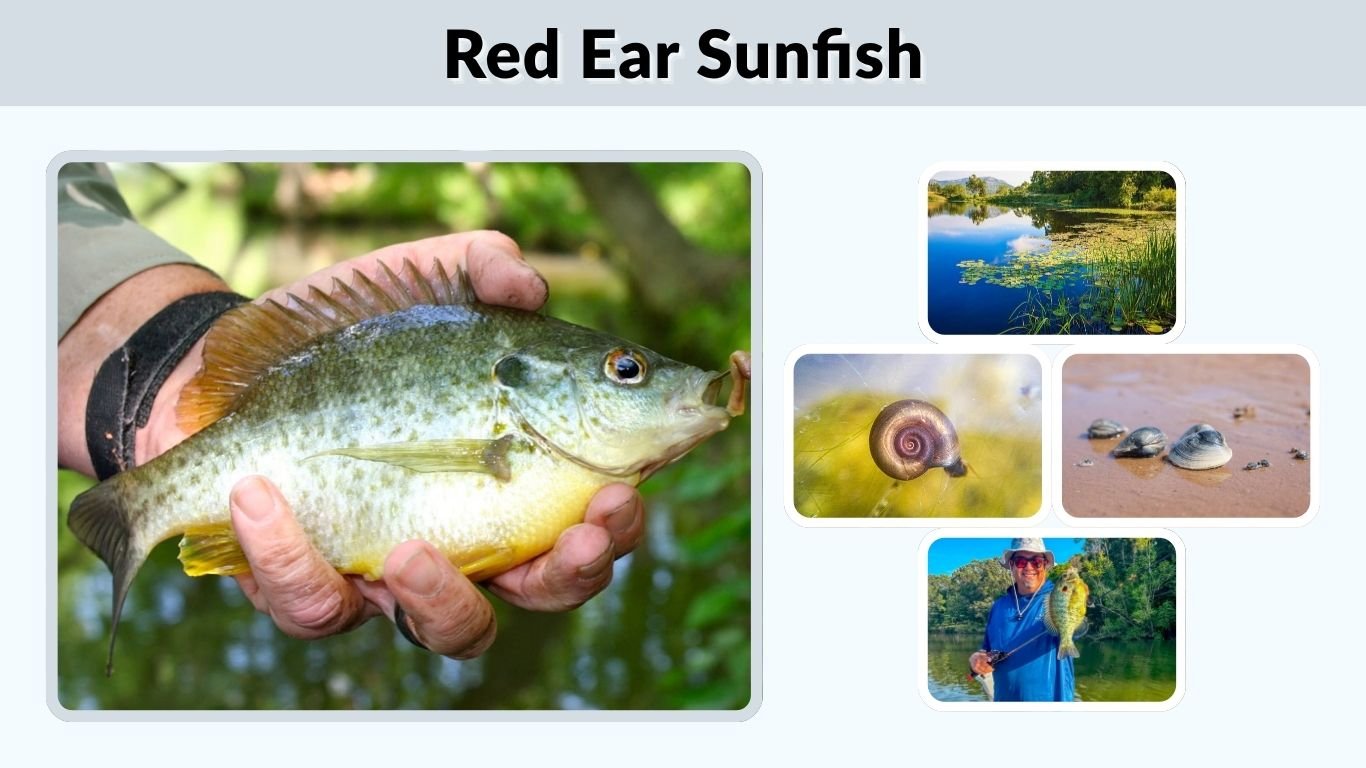
The redear sunfish (Lepomis microlophus), often called the shellcracker, is a popular freshwater fish recognized by its colorful ear flap, deep body, and strong appetite for snails. Found in lakes, ponds, reservoirs, and slow-moving rivers, this species is especially popular among anglers because of its impressive size and excellent eating quality. Redear sunfish are frequently confused with bluegill and pumpkinseed sunfish, but several distinctive features make identification easier. This guide explores their size, habitat, diet, spawning behavior, world record, and important characteristics.
Redear Sunfish Identification and Characteristics
Redear sunfish belong to the family Centrarchidae, which includes bluegill, bass, and other freshwater sunfish. They have deep, laterally compressed bodies, relatively small mouths, and distinctive markings around their gill covers. Their coloration varies depending on sex, age, and environmental conditions. One of their most recognizable features is the reddish-orange marking along the edge of the ear flap.
Redear Sunfish Identification
- Scientific Name: Lepomis microlophus
- Family: Centrarchidae
- Common Names: Redear Sunfish, Shellcracker, Bream
- Body Shape: Deep, rounded, and laterally compressed
- Body Color: Olive-green to golden, with a pale yellow belly
- Ear Flap: Black with a red or orange margin
- Dorsal Fin: Connected spiny and soft-rayed sections
- Mouth: Relatively small, with slightly pointed jaws
- Typical Length: Approximately 8–11 inches
- Lifespan: Commonly up to about six years
Male vs. Female Redear Sunfish
Male and female redear sunfish look similar, but their coloration can provide identification clues.
Males typically display a brighter red edge around the black opercular flap, while females generally have a more orange-colored margin.
During spawning season, males may develop stronger body coloration as they establish and defend nesting territories.
Juvenile redear sunfish often have less noticeable markings and may resemble young bluegill or pumpkinseed sunfish.
Redear Sunfish Habitat and Distribution
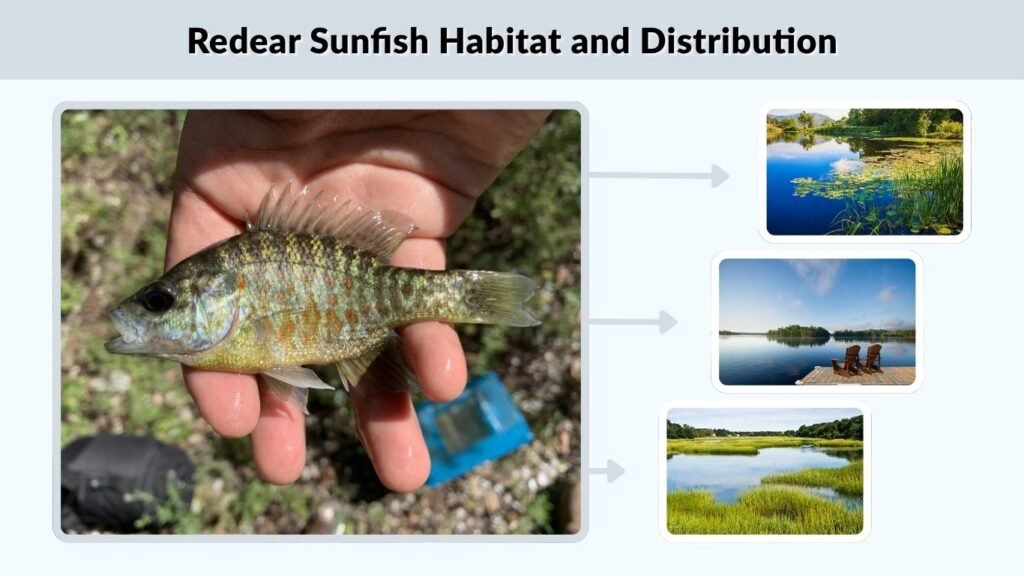
Redear sunfish naturally inhabit freshwater environments throughout the southeastern United States. However, their popularity as sport fish has led to introductions in many other regions. They prefer relatively warm, clear water containing aquatic vegetation and suitable bottom habitats. Unlike some sunfish that frequently occupy shallow shorelines, redears often remain near deeper vegetation, submerged structures, and areas rich in snails.
Where Do Redear Sunfish Live?
Redear sunfish naturally occur in much of the southeastern United States, including Florida, Georgia, Alabama, Mississippi, and neighboring states.
Stocking programs have expanded their distribution into additional regions, including parts of the Midwest and western United States.
They commonly inhabit ponds, lakes, reservoirs, marshes, and slow-moving rivers.
Water bodies containing submerged vegetation, sandy or muddy bottoms, and abundant invertebrates provide favorable feeding conditions.
Where Do Redear Sunfish Live in Summer?
During summer, redear sunfish frequently occupy slightly deeper water than bluegill.
They may gather around submerged timber, vegetation edges, underwater ledges, and other protected structures.
In warm weather, adults search bottom habitats for snails and insect larvae.
However, their exact depth varies with water temperature, oxygen levels, food availability, and spawning activity.
What Do Redear Sunfish Eat?
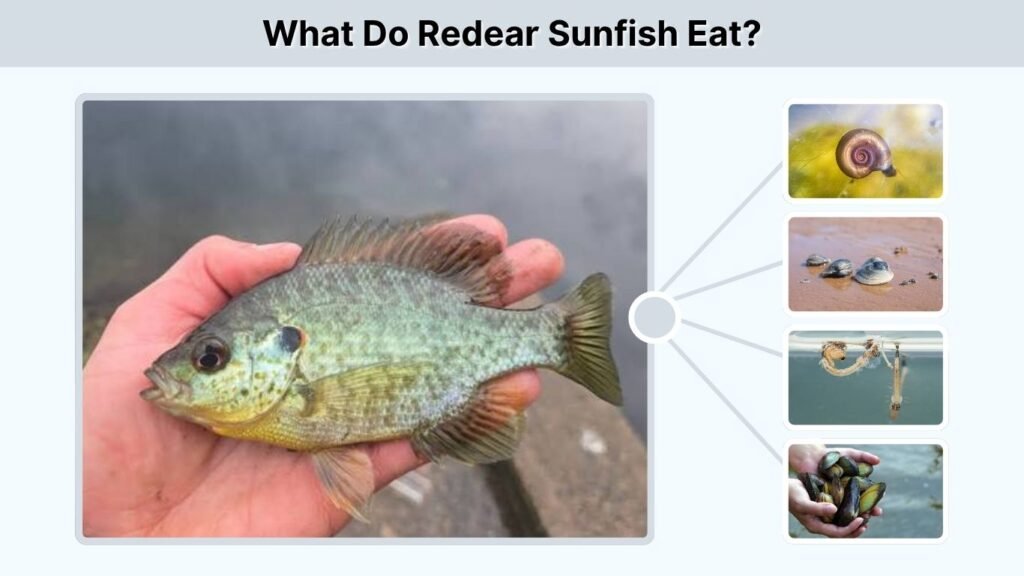
Redear sunfish are carnivorous freshwater fish that specialize in consuming mollusks and other aquatic invertebrates. Their preference for snails explains the popular nickname “shellcracker.” Unlike many sunfish species, redears possess specialized throat teeth capable of crushing hard shells. However, their diet is not limited to snails, and younger fish frequently consume smaller aquatic organisms.
Common Foods Redear Sunfish Eat
- Aquatic Snails: One of their most important natural foods.
- Small Clams: Consumed using specialized crushing teeth.
- Aquatic Insect Larvae: Important for juveniles and adults.
- Small Crustaceans: Including tiny freshwater invertebrates.
- Mussels: Suitable small mussels may be consumed when available.
- Other Bottom-Dwelling Invertebrates: Supplement their natural diet.
Do Redear Sunfish Eat Zebra Mussels?
Redear sunfish can consume certain invasive mussels, including zebra or quagga mussels, when the mussels are small enough to handle.
Their strong pharyngeal teeth help them crush the shells of aquatic mollusks.
In Lake Havasu, redear sunfish are known to feed on quagga mussels.
However, these fish should not be considered a reliable solution for eliminating invasive mussel populations.
Their feeding behavior may reduce some mollusk populations without providing complete ecological control.
Redear Sunfish Size, Growth Rate, and Lifespan
Redear sunfish are among the larger members of the commonly targeted freshwater sunfish group. Their growth depends on food availability, water quality, temperature, competition, and habitat conditions. Although most individuals remain relatively small, exceptional fish can reach several pounds. Productive lakes containing abundant mollusks sometimes support especially large redear populations.
How Big Do Redear Sunfish Get?
Most adult redear sunfish measure approximately 8–11 inches long.
Typical individuals weigh less than one pound, although larger fish exceeding 12 inches and one pound are regularly caught in favorable waters.
Exceptionally large specimens may weigh several pounds.
Lake Havasu in Arizona is particularly famous for producing unusually heavy redear sunfish.
How Fast Do Redear Sunfish Grow?
Growth rates vary according to water temperature, food supply, and population density.
Young redears initially consume tiny aquatic organisms before gradually transitioning toward larger invertebrates and mollusks.
Many individuals reach reproductive maturity around their second year.
In productive habitats, rapid growth can produce impressive fish within several growing seasons.
Redear sunfish commonly live for approximately six years, although individual longevity varies.
Redear Sunfish Spawning and Reproduction
Redear sunfish reproduce during the warmer months, usually in late spring and early summer. Males construct shallow nesting depressions along suitable lake or pond bottoms. Like bluegill, redears sometimes establish closely spaced nesting colonies. However, they often choose slightly deeper nesting locations. Spawning conditions vary with water temperature, geographic region, and habitat characteristics.
When Do Redear Sunfish Spawn?
Redear sunfish generally spawn during late spring and early summer when water temperatures become sufficiently warm.
In southern areas, spawning may begin earlier than in northern habitats.
Males establish nesting territories and prepare shallow depressions in sand, gravel, or silt.
Females visit these nests to deposit eggs, which males fertilize externally.
A second spawning peak may occur in some regions when conditions remain favorable.
Redear Sunfish Eggs and Juveniles
After spawning, males guard the eggs and developing young against predators.
The eggs hatch after a short incubation period influenced by water temperature.
Newly hatched fish initially depend on their yolk reserves before beginning to feed on microscopic organisms.
Juvenile redear sunfish gradually develop the body shape and ear-flap markings characteristic of adults.
Redear Sunfish vs. Bluegill and Pumpkinseed
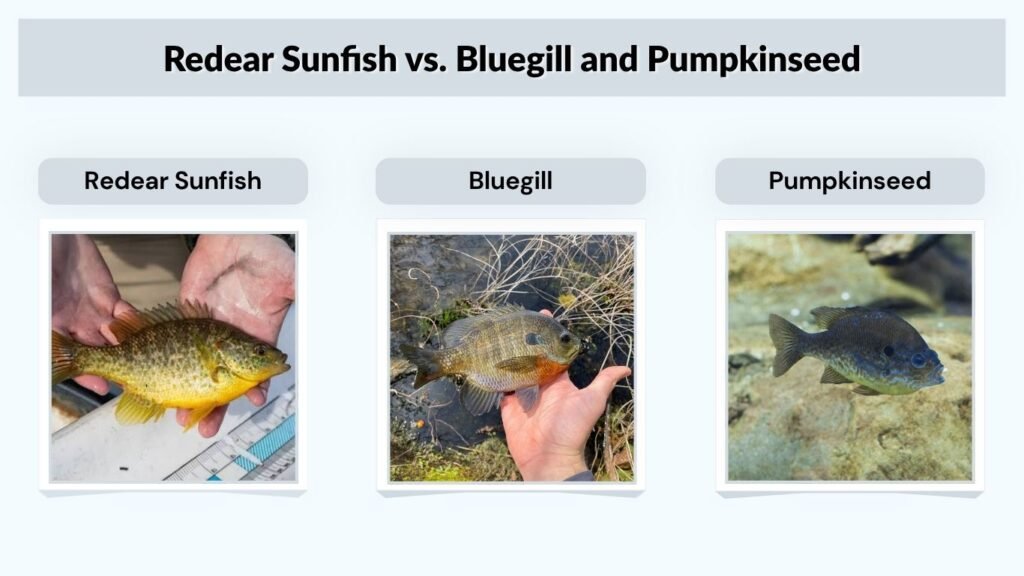
Redear sunfish are frequently confused with bluegill and pumpkinseed because all three belong to the genus Lepomis. They share deep bodies, spiny dorsal fins, and broadly similar freshwater habitats. Nevertheless, differences in ear-flap markings, body coloration, feeding habits, and preferred water depths help distinguish these species. Understanding these features is useful for anglers and wildlife observers.
Redear Sunfish vs. Bluegill
The easiest identification difference is the marking around the gill-cover flap.
Redear sunfish have a red or orange margin, while bluegill usually have a completely dark ear flap without the distinctive red edge.
Bluegill often display dark vertical body bars and a noticeable dark spot near the rear of the dorsal fin.
Redears also consume more snails and mollusks, whereas bluegill rely heavily on insects and other small aquatic animals.
Redear Sunfish vs. Pumpkinseed
Pumpkinseed sunfish usually display brighter blue-green facial lines, orange body markings, and a distinctive red or orange spot on the ear flap.
Redear sunfish generally have more subdued olive-green or golden coloration.
Their ear flaps are typically black with a red or orange border rather than the more elaborate markings seen on pumpkinseeds.
Although both species consume snails, redears are especially specialized for crushing mollusks.
Redear Sunfish vs. Shellcracker
There is no biological difference between redear sunfish and shellcracker.
Both names refer to the same species, Lepomis microlophus.
The nickname shellcracker comes from the fish’s ability to crush snails and other hard-shelled aquatic animals.
World Record Redear Sunfish
Redear sunfish have attracted considerable attention because unusually large specimens have been captured in Lake Havasu, Arizona. This reservoir provides productive feeding habitats and abundant mollusks. Several exceptional catches have challenged previous records, making the lake particularly famous among trophy panfish anglers. The officially recognized all-tackle world record demonstrates how large redear sunfish can become under favorable conditions.
Biggest Redear Sunfish Ever Caught
The IGFA all-tackle world record redear sunfish weighed 6 pounds, 4 ounces (approximately 2.83 kilograms).
Angler Thomas Farchione caught the fish on May 4, 2021, at Lake Havasu, Arizona.
The exceptional specimen measured approximately 17 inches long with a 20-inch girth.
Farchione used a nightcrawler as bait.
The International Game Fish Association officially approved the catch as the all-tackle world record.
Why Does Lake Havasu Produce Giant Redear Sunfish?
Lake Havasu offers favorable conditions for redear growth, including suitable water temperatures, productive feeding areas, and abundant aquatic mollusks.
Quagga mussels provide an additional food resource that these specialized fish can consume.
A combination of food availability, habitat conditions, and individual growth differences may help explain the lake’s unusually large redears.
Redear Sunfish Fishing and Pond Management
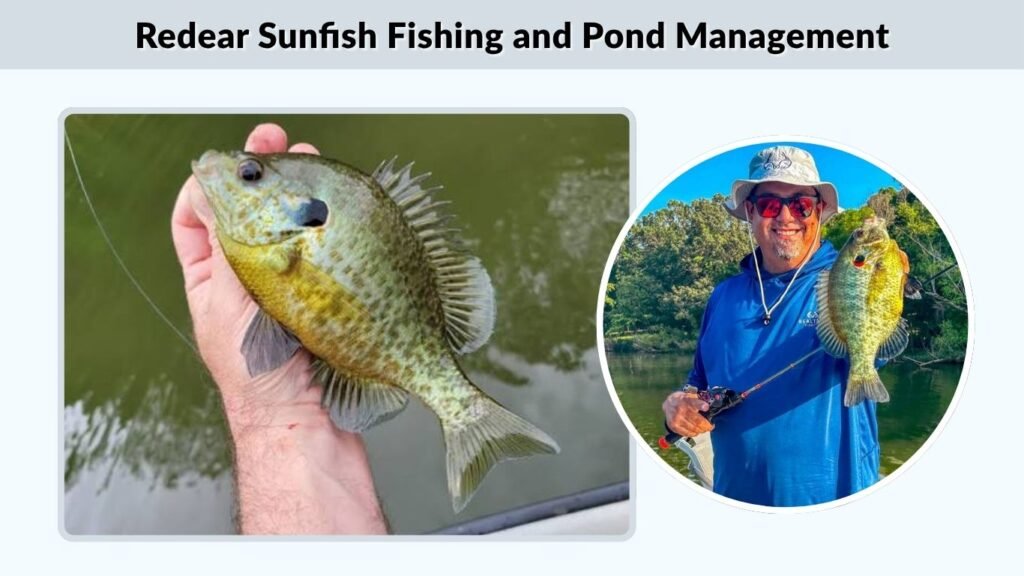
Redear sunfish are popular sport fish because they provide enjoyable fishing opportunities and are widely considered excellent table fare. Anglers commonly target them near submerged structures and spawning beds. Their mollusk-based diet also makes them useful in some managed ponds. However, proper stocking practices and local fishing regulations are essential for maintaining healthy freshwater ecosystems.
Best Bait for Redear Sunfish
- Nightcrawlers: Among the most effective natural baits.
- Red Worms: Suitable for bottom fishing near vegetation.
- Small Grubs: Useful for targeting actively feeding fish.
- Small Jigs: Can work when presented slowly near the bottom.
Are Redear Sunfish Good to Eat?
Yes, redear sunfish are considered excellent freshwater food fish.
Their flesh is generally white, mild, and flaky, making them popular for pan-frying and other cooking methods.
Always follow local harvest regulations and fish-consumption advisories.
Can You Stock Redear Sunfish in Ponds?
Redear sunfish are commonly stocked alongside bluegill and largemouth bass in managed ponds.
Their consumption of snails can help reduce some parasite-related risks.
However, stocking should follow regional fisheries recommendations because introducing fish into unsuitable waters can disrupt existing ecosystems.
FAQs
Redear sunfish are interesting to anglers and freshwater enthusiasts because of their unique feeding adaptations, impressive growth potential, and resemblance to other sunfish. Questions commonly focus on their maximum size, natural diet, identification, and habitat requirements. The following answers explain several important characteristics of this popular freshwater species.
1. Are Redear Sunfish and Bluegill the Same?
No. Redear sunfish and bluegill are separate species. Redears have distinctive red or orange markings on their gill-cover flaps and specialize in eating mollusks.
2. What Is the World Record Redear Sunfish?
The recognized IGFA all-tackle world record is 6 pounds, 4 ounces, caught by Thomas Farchione at Lake Havasu, Arizona, on May 4, 2021.
3. Do Redear Sunfish Eat Snails?
Yes. Snails are one of their primary food sources. Specialized pharyngeal teeth allow redear sunfish to crush hard shells and consume the animals inside.
4. How Long Do Redear Sunfish Live?
Redear sunfish commonly live for approximately six years. Their lifespan varies depending on environmental conditions, predators, food availability, and fishing pressure.
5. Are Redear Sunfish Good for Ponds?
Yes, redear sunfish can be beneficial in properly managed ponds because they consume snails and provide additional recreational fishing opportunities. However, suitable stocking ratios and predator populations are essential for maintaining a balanced ecosystem.