
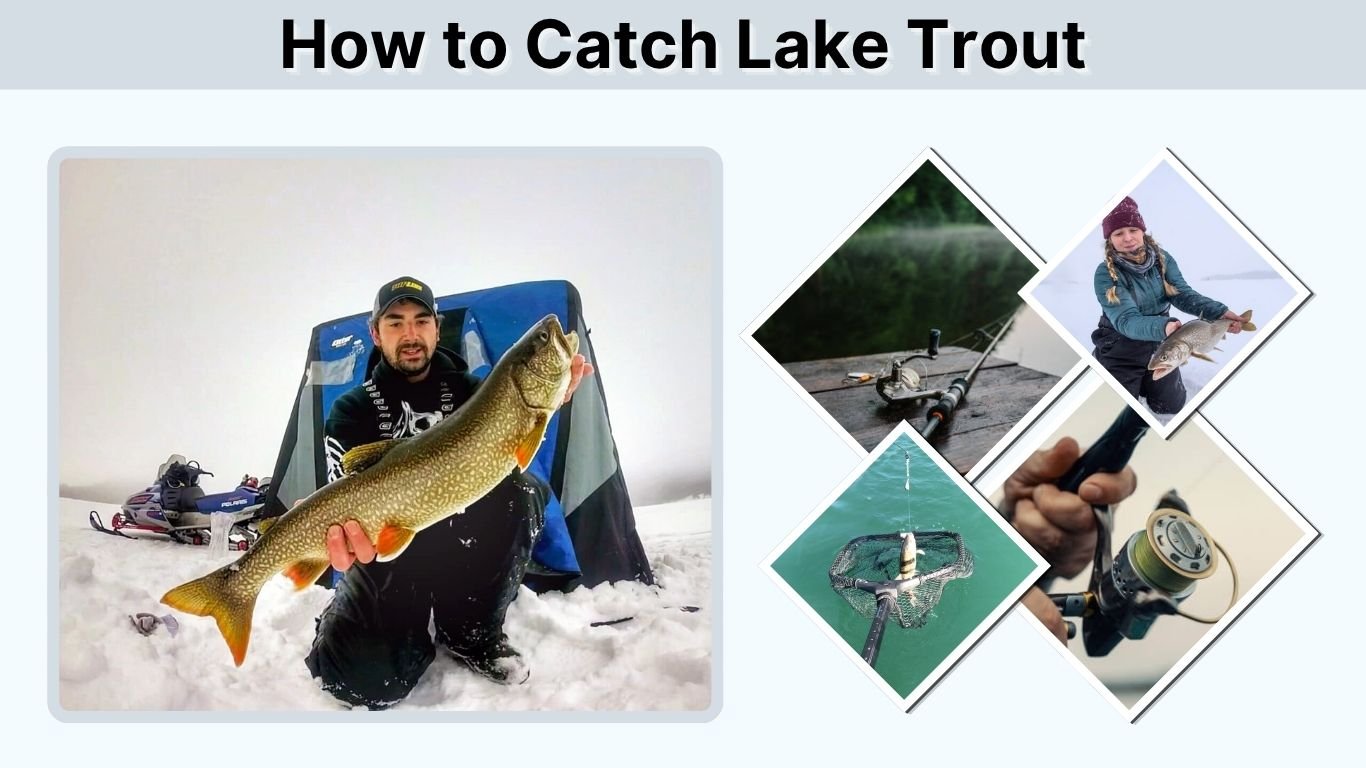
Learning how to catch lake trout requires understanding their feeding habits, seasonal movements, and preferred underwater habitats. These powerful freshwater predators inhabit deep, cold lakes throughout North America, where they feed on smaller fish and other aquatic organisms. Whether you’re fishing from shore, trolling from a boat, or jigging in deep water, choosing the right location and presentation makes a difference. This guide explains where to find lake trout, the best bait and lures to use, effective fishing techniques, and practical tips for catching larger fish throughout the year.
Where to Find Lake Trout in a Lake
Lake trout (Salvelinus namaycush) prefer cold, oxygen-rich water and commonly inhabit deep lakes with abundant forage fish. Unlike rainbow trout and brown trout, lake trout belong to the char family. Their location changes with seasonal water temperatures, prey movement, and lake structure. Understanding these factors helps anglers identify productive fishing areas instead of searching randomly across large bodies of water.
Best Depth for Catching Lake Trout
During summer, lake trout often occupy depths between 40 and 100 feet, although they may live considerably deeper in large lakes.
In spring and fall, cooler surface temperatures allow them to move closer to shore and shallower underwater structures.
Water temperature is more informative than depth alone. Lake trout commonly favor temperatures around 42–52°F.
Best Lake Trout Fishing Locations
Rocky points, underwater humps, steep drop-offs, and deep basins frequently attract lake trout.
These locations provide opportunities to feed on ciscoes, smelt, and other small fish.
Look for transitions between shallow reefs and deeper water. A fish finder and detailed contour map can help identify promising locations.
Best Time to Catch Lake Trout
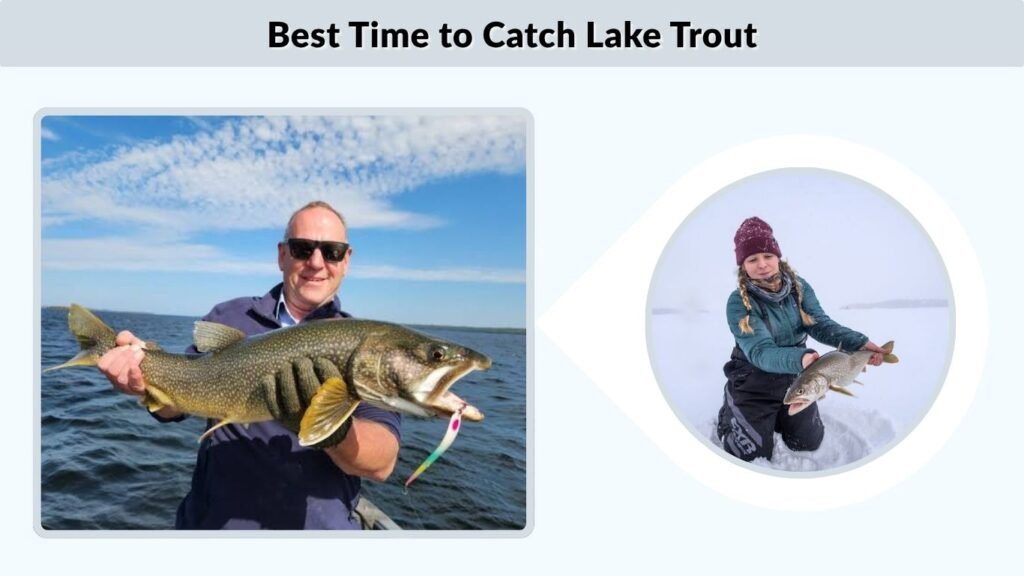
Lake trout remain active throughout the year, but their location and feeding behavior change with seasonal conditions. Cold water allows them to occupy a wider range of depths, while summer warmth pushes many fish toward deeper habitats. Recognizing these movements helps anglers decide whether shoreline casting, trolling, or vertical jigging will provide the most effective fishing opportunities.
Spring and Fall Lake Trout Fishing
Spring is often one of the easiest seasons for catching lake trout because fish move into shallower water after ice-out.
Casting spoons and crankbaits near rocky shorelines can be productive.
During fall, lake trout may return to shallower reefs associated with spawning activity. Always check seasonal fishing restrictions around spawning areas.
Catching Lake Trout in Summer and Winter
Summer lake trout generally seek deeper, cooler water. Trolling and vertical jigging become particularly useful during this period.
In winter, anglers target lake trout through the ice using jigging spoons, tube jigs, and appropriate baitfish where permitted.
Safe ice conditions and local fishing regulations are essential considerations.
Best Fishing Gear for Catching Lake Trout
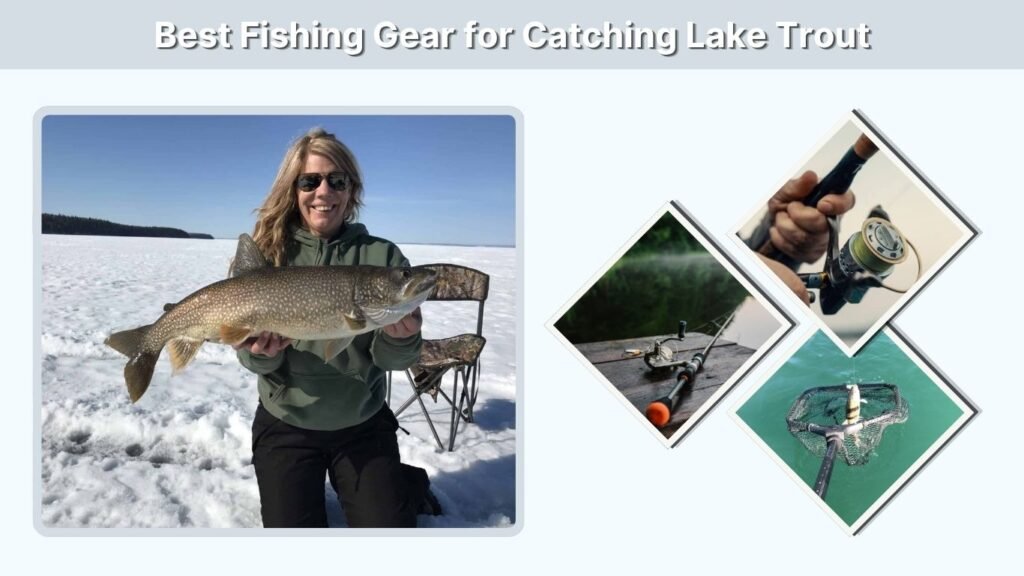
Lake trout can grow large and make strong runs after being hooked, so reliable equipment is important. The ideal setup depends on whether you plan to cast, troll, or jig. Medium-action spinning equipment can handle smaller lake trout, while larger fish and deep-water presentations may require stronger rods and specialized reels.
Essential Lake Trout Fishing Equipment
- Fishing rod: Medium to medium-heavy power for general fishing.
- Spinning reel: A smooth drag system and sufficient line capacity.
- Fishing line: Braid or monofilament appropriate for the expected fish size.
- Fluorocarbon leader: Useful for abrasion resistance and subtle presentations.
- Fish finder: Helps locate baitfish, underwater structure, and suspended trout.
- Landing net: A rubber-coated net supports careful fish handling.
Best Rod, Reel, and Line Setup
A 6½- to 7½-foot medium or medium-heavy spinning rod is a versatile starting choice.
A 2500–4000-size spinning reel can handle many casting and jigging applications.
Consider 10–20-pound braided line with a suitable fluorocarbon leader. For heavy trolling equipment or trophy lake trout, stronger tackle may be necessary.
Best Bait and Lures for Lake Trout
Lake trout are opportunistic predators that frequently feed on smaller fish. Effective lures usually imitate natural prey through movement, vibration, and flash. Artificial presentations are popular because they can cover different depths and attract active fish. Natural bait can also produce results, particularly when trout are less aggressive or holding close to the bottom.
Best Lures to Catch Lake Trout
Popular lake trout lures include:
- Jigging spoons: Produce flash and movement in deep water.
- Tube jigs: Imitate baitfish with a soft, natural-looking presentation.
- Soft-plastic swimbaits: Provide realistic swimming action.
- Crankbaits: Useful when casting or trolling.
- Flutter spoons: Create an attractive falling motion.
- Bucktail jigs: Offer subtle movement during slower presentations.
Silver, white, chartreuse, and natural baitfish colors are useful choices depending on visibility and conditions.
Best Natural Bait for Lake Trout
Minnows, smelt, ciscoes, and other suitable baitfish can attract lake trout where their use is legal.
Dead baitfish may be particularly effective during slower feeding periods.
Avoid transporting or releasing live baitfish illegally because doing so can spread invasive species and diseases.
How to Catch Lake Trout: Effective Fishing Methods
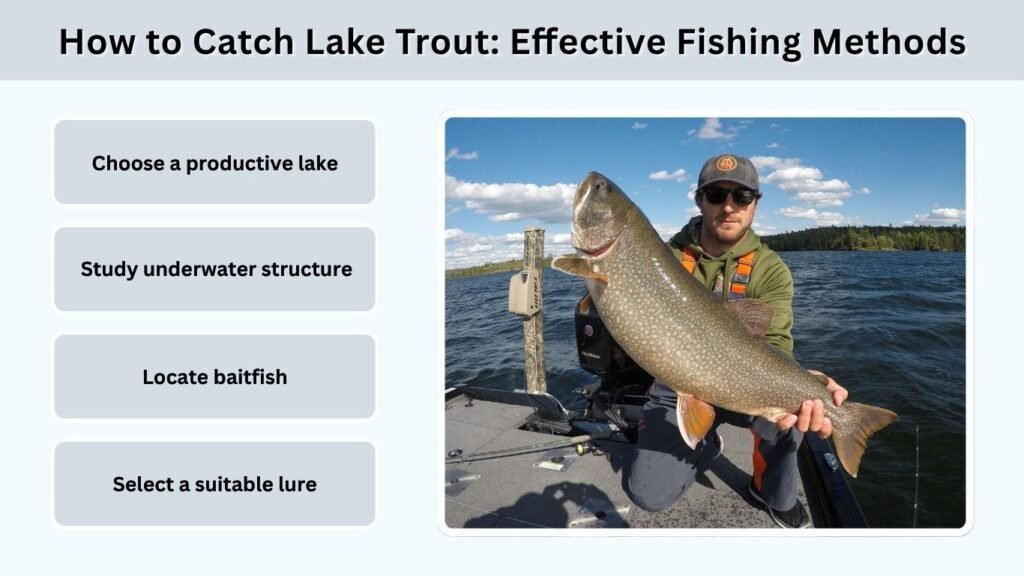
The best way to catch lake trout depends on water depth, available equipment, and seasonal fish behavior. Trolling helps cover large areas, while vertical jigging offers precise control over lure movement. Shore fishing is also possible when cooler temperatures bring fish within casting distance. Beginners should focus on finding fish before experimenting extensively with presentations.
Step-by-Step Guide to Catching Lake Trout
- Choose a productive lake: Look for deep, cold water supporting lake trout populations.
- Study underwater structure: Identify rocky points, reefs, and steep drop-offs.
- Locate baitfish: Use sonar or local fishing information to narrow your search.
- Select a suitable lure: Match its size and appearance to available forage.
- Adjust fishing depth: Present the lure near the depth where fish are holding.
- Experiment with movement: Change retrieval speed or jigging action.
- Land fish carefully: Maintain steady pressure and avoid prolonged fights.
How to Catch Lake Trout by Trolling
Trolling is particularly effective when lake trout occupy deeper areas during summer.
Use spoons, plugs, or baitfish imitations behind a moving boat. Downriggers, diving planers, or lead-core line can help reach the appropriate depth.
Watch your fish finder and adjust lure depth according to fish activity.
How to Catch Lake Trout by Jigging
Vertical jigging works well around underwater humps, reefs, and deep structure.
Lower a jig near the bottom, lift it with controlled rod movements, and experiment with different retrieval speeds.
Lake trout sometimes chase rising lures aggressively, so varying the presentation can trigger strikes.
How to Catch Lake Trout From Shore
Shore fishing is most productive when lake trout move into accessible shallow areas during spring or fall.
Cast spoons, spinners, or minnow-style plugs near rocky points and steep shorelines.
Choose locations with quick access to deeper water and retrieve your lure at different depths until fish respond.
Tips for Catching Bigger Lake Trout
Catching trophy-sized lake trout requires patience, careful location selection, and suitable equipment. Larger individuals may occupy different feeding areas than smaller fish and often respond to substantial baitfish presentations. Understanding seasonal movements and monitoring sonar can improve your chances. However, anglers should also consider how deep-water capture affects fish survival when planning to release their catch.
Common Lake Trout Fishing Mistakes
Avoid these common problems:
- Fishing one depth: Trout may move through different parts of the water column.
- Ignoring baitfish: Predators frequently follow their food sources.
- Using inappropriate tackle: Light equipment may prolong fights with larger fish.
- Retrieving too consistently: Varying lure movement can trigger more strikes.
- Ignoring temperature: Warm surface water often pushes lake trout deeper.
- Overlooking regulations: Seasons, harvest limits, and bait rules vary by location.
Catch-and-Release and Fishing Regulations
Lake trout brought rapidly from deep water can experience barotrauma caused by changes in pressure.
If releasing fish, minimize handling and air exposure. Deep-water releases may require species-appropriate techniques or equipment.
Check local fishing seasons, size restrictions, and possession limits before traveling.
FAQs
Lake trout fishing can raise questions about depth, lure selection, fishing techniques, and seasonal conditions. Beginners often struggle to locate trout, while experienced anglers concentrate on refining their presentations. These answers address some of the most common questions and provide practical starting points for planning a successful fishing trip.
1. What Is the Easiest Way to Catch Lake Trout?
Trolling with spoons or plugs is an effective way to cover water and locate feeding lake trout. Vertical jigging also works well once fish are located.
2. What Is the Best Bait to Catch Lake Trout?
Minnows, smelt, and other locally permitted baitfish are popular natural choices. Artificial spoons, jigs, and swimbaits can also be highly effective.
3. Can You Catch Lake Trout From Shore?
Yes. Spring and fall offer particularly good opportunities when cooler water allows lake trout to move near accessible shorelines.
4. How Deep Should You Fish for Lake Trout?
Depth varies by season and lake. Many summer fish occupy water around 40–100 feet deep or more, while spring and fall fish may move much shallower.
5. What Is the Best Time of Day to Catch Lake Trout?
Early morning and late afternoon can be productive, but lake trout may feed throughout the day. Water temperature, baitfish activity, and location often matter more.