
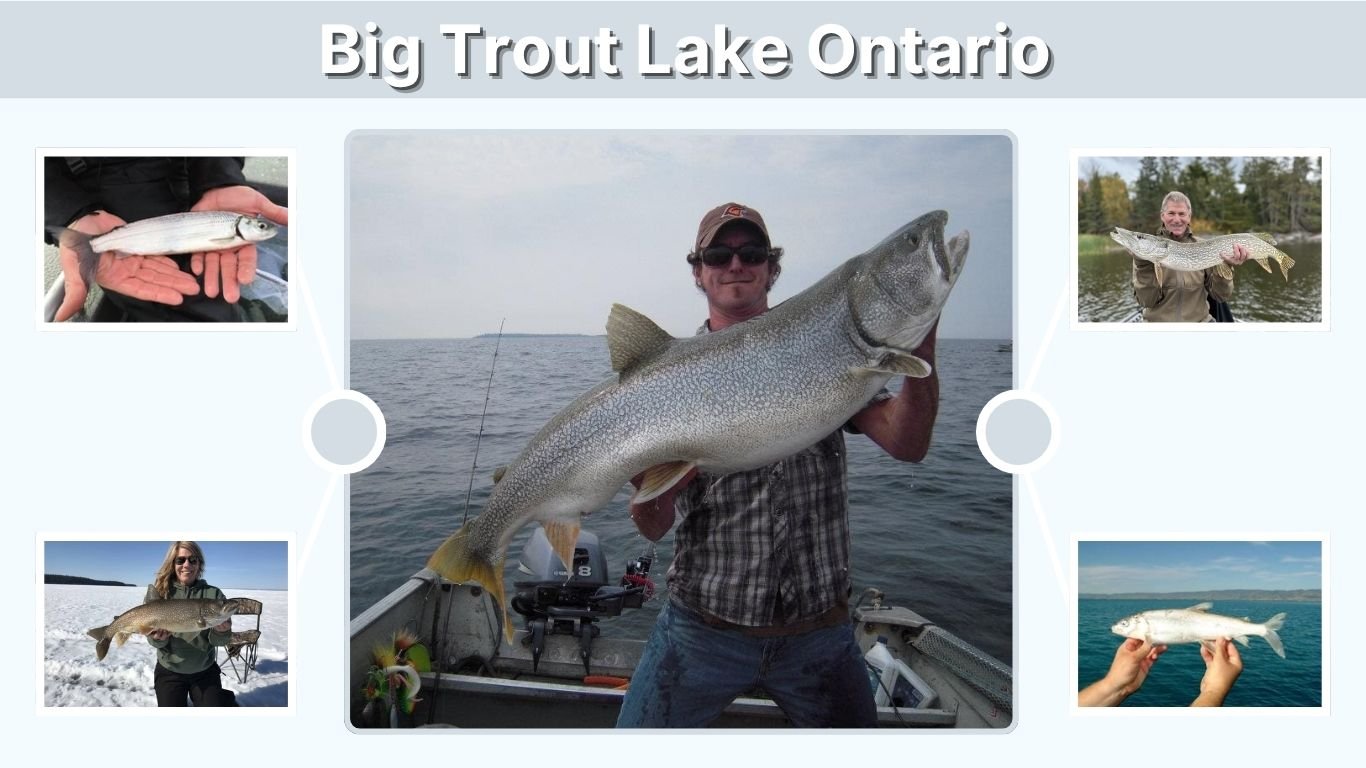
Big Trout Lake Ontario is a remote freshwater lake in northwestern Canada, known for its vast waters, abundant fish populations, and surrounding boreal wilderness. Located in the Kenora District, the lake is closely connected to the Kitchenuhmaykoosib Inninuwug First Nation, whose community occupies part of its northern shoreline. Anglers interested in lake trout, northern pike, and walleye may find the region particularly fascinating. This guide explores Big Trout Lake’s location, fish species, fishing methods, seasonal conditions, travel access, maps, and important regulations for visitors.
Where Is Big Trout Lake in Ontario?
Big Trout Lake is situated in northwestern Ontario, far from the province’s major cities and developed tourist destinations. The lake lies within the Kenora District and forms part of the Fawn River watershed. Its remote location, extensive shoreline, and surrounding forests make it an important northern freshwater ecosystem. Access requires considerably more planning than visiting typical roadside fishing lakes.
Big Trout Lake Location and Geography
Big Trout Lake lies approximately 580 kilometers north of Thunder Bay. It covers more than 600 square kilometers, making it one of Ontario’s larger inland lakes.
The Fawn River enters the lake from the west and continues eastward, connecting it to the wider northern drainage system.
Notable islands include Big Island and Post Island, where the nearby First Nation community is situated.
Kitchenuhmaykoosib Inninuwug First Nation
Big Trout Lake is closely associated with Kitchenuhmaykoosib Inninuwug, an Oji-Cree First Nation whose traditional territory surrounds the lake.
The community has maintained longstanding cultural, historical, and subsistence connections with these waters.
Visitors should respect community authority, traditional land use, and local access requirements when planning recreational activities.
What Fish Species Live in Big Trout Lake?
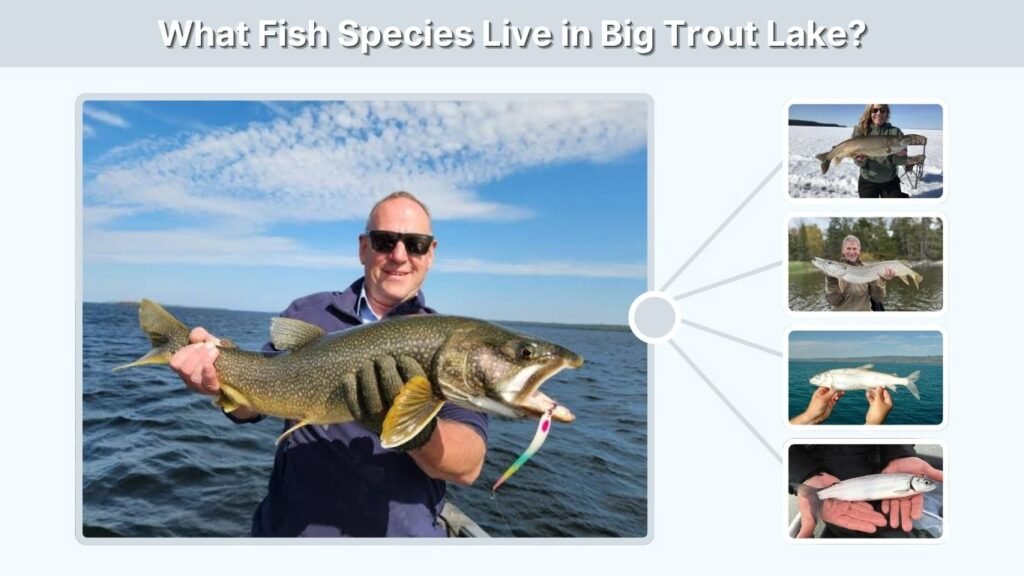
Big Trout Lake supports several freshwater fish species adapted to northern lake environments. Its mixture of deeper water, rocky habitat, and connected river systems provides opportunities for different feeding and spawning behaviors. Fisheries research has documented lake trout, walleye, northern pike, and several other species. Understanding these fish populations helps anglers select suitable techniques and recognize the lake’s ecological importance.
Common Fish Species in Big Trout Lake
- Lake trout: Cold-water predators commonly associated with deeper lake habitats.
- Northern pike: Ambush predators that frequent vegetated bays and shallower areas.
- Walleye: Popular game fish often associated with underwater structure and low-light feeding.
- Lake whitefish: Cold-water fish that feed primarily on aquatic invertebrates.
- Cisco: Schooling fish that provide important forage for larger predators.
- Burbot: Bottom-oriented predators that remain active in cold water.
- Sauger: A close relative of walleye documented in the lake.
- Yellow perch: Smaller fish that occupy various nearshore habitats.
Lake Trout Fishing Opportunities
Lake trout are among the most interesting species for anglers visiting Big Trout Lake.
These fish typically seek cold, oxygen-rich water and may occupy different depths as temperatures change.
Rocky reefs, underwater slopes, and areas containing forage fish are useful locations to investigate. A fish finder can help identify productive depths without unnecessarily disturbing sensitive shoreline habitat.
How to Fish Big Trout Lake Ontario
Fishing a large northern lake requires preparation, local knowledge, and equipment suited to remote conditions. Big Trout Lake contains expansive open water, numerous shoreline features, and different habitat types. Techniques commonly used for northern Ontario lake trout, pike, and walleye may be applicable here, although specific fishing locations should be selected using reliable local information and safe navigation practices.
Potential Fishing Areas to Explore
- Rocky points: Useful areas to investigate for lake trout and walleye.
- Underwater reefs: Submerged structure that may attract feeding fish.
- Sheltered bays: Potential habitat for northern pike.
- Steep drop-offs: Transitions between shallow and deep water that may concentrate predators.
- River-connected areas: Locations influenced by current and seasonal fish movements.
These are general habitat recommendations, not verified fishing hotspots or public access points.
Effective Fishing Techniques
Trolling can help anglers cover extensive water while targeting lake trout with spoons or diving lures.
Vertical jigging is another practical method for fishing around underwater structure.
For northern pike, casting spinnerbaits, spoons, and suitable swimbaits near accessible habitat may produce results.
Walleye anglers often use controlled jigging or trolling presentations, adjusting lure depth according to fish activity.
Best Time to Fish Big Trout Lake
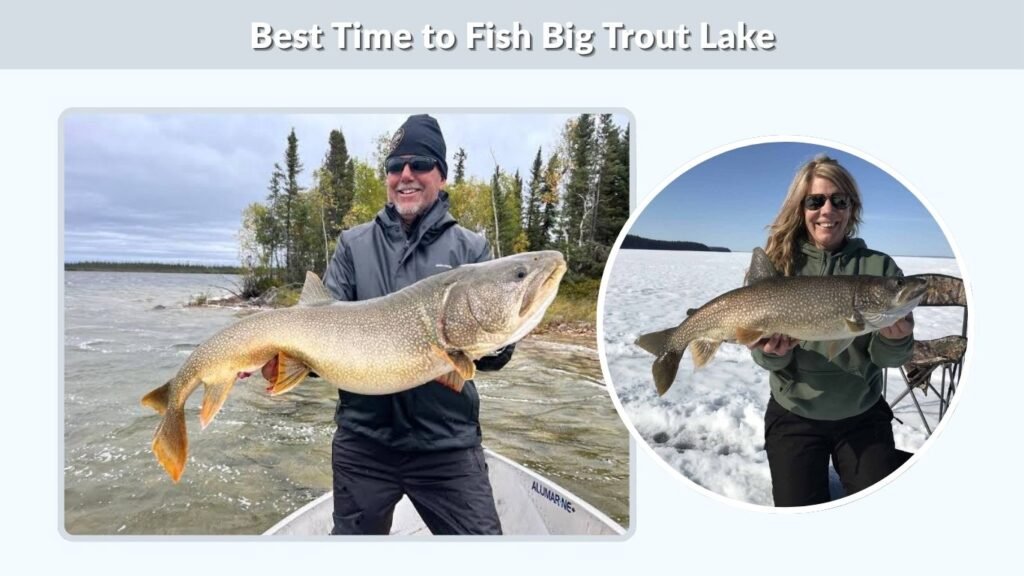
Seasonal conditions strongly influence recreational fishing in northern Ontario. Big Trout Lake experiences long, cold winters and relatively short open-water seasons. Water temperature, fish movements, and weather conditions affect which fishing techniques are practical. Travelers must also consider transportation availability and seasonal access restrictions before arranging a trip to this remote northern region.
Spring and Summer Fishing
Following ice-out, cold-water species may use a wider range of depths.
Lake trout can become more accessible around suitable structures before summer warming pushes them toward cooler water.
During warmer months, deeper presentations may become more effective. Northern pike and walleye can also provide fishing opportunities where conditions and regulations permit.
Fall and Winter Fishing
Autumn brings declining water temperatures and changing fish behavior. Lake trout may move toward shallower spawning habitats during this period.
Winter fishing requires special preparation because northern lakes develop extensive ice cover.
Ice thickness, weather, local access permissions, and emergency arrangements must be checked before any ice fishing activity.
How to Visit Big Trout Lake Ontario
Unlike easily accessible lakes in southern Ontario, Big Trout Lake is associated with a fly-in community. Transportation, accommodation, and local permissions require advance arrangements. The First Nation community has its own infrastructure, administration, and travel considerations. Visitors should contact appropriate local representatives before making plans rather than assuming public recreational access or commercial fishing services are available.
Transportation and Access
Air transportation provides year-round access to the Kitchenuhmaykoosib Inninuwug community, subject to weather and service availability.
A seasonal winter road may provide temporary access during suitable conditions, but it is not a permanent highway.
Big Trout Lake Airport serves the community. Travelers should confirm available flights, local transportation, accommodation, and permission to visit before departure.
Big Trout Lake Travel Checklist
- Contact local authorities: Confirm visitor access and community requirements.
- Arrange transportation: Verify flights and baggage restrictions.
- Confirm accommodation: Do not assume fishing lodges or rooms are available.
- Check fishing rules: Obtain required licenses and verify applicable restrictions.
- Pack safety supplies: Include suitable clothing, navigation equipment, and emergency communication.
- Review the weather: Prepare for sudden changes in northern conditions.
Big Trout Lake Maps and Fishing Regulations
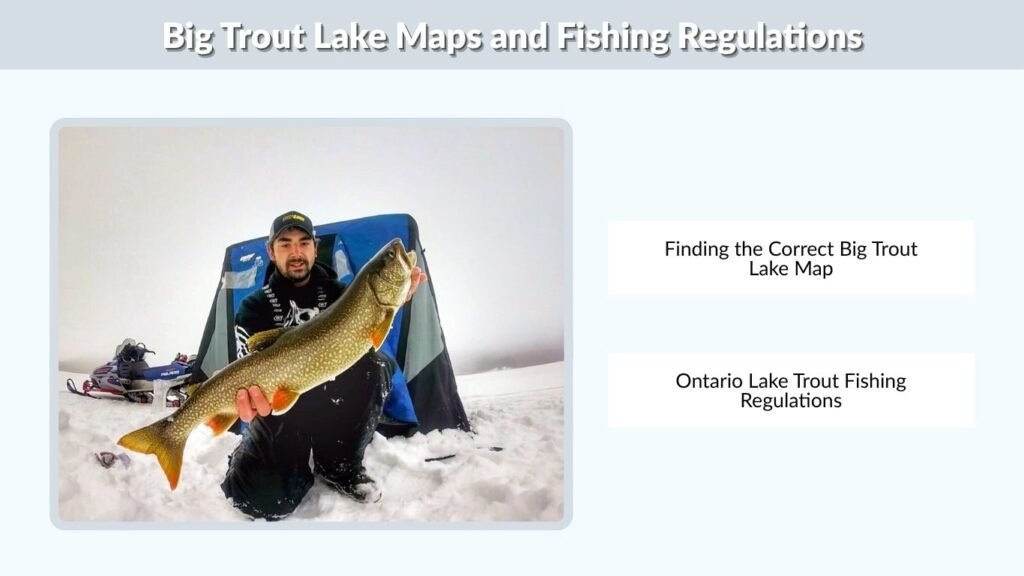
Accurate maps and fishing regulations are essential when planning a trip to Big Trout Lake. Several Ontario lakes have similar names, so anglers should verify the correct geographical location before using a depth chart or choosing a fishing destination. Ontario also divides recreational fishing waters into management zones, each with specific rules governing seasons, limits, bait, and equipment.
Finding the Correct Big Trout Lake Map
Look for Big Trout Lake in the Kenora District near Kitchenuhmaykoosib Inninuwug.
The large northern lake should not be confused with Trout Lake near North Bay, the Trout Lake near Ear Falls, or Big Trout Lake in Algonquin Provincial Park.
Ontario’s Fish ON-Line mapping service can help anglers examine fisheries management information and identify the correct waterbody.
Ontario Lake Trout Fishing Regulations
Big Trout Lake lies in Ontario’s far northern fisheries region, where Fisheries Management Zone 1 rules are relevant.
Zone 1 generally requires one barbless hook per line and prohibits live fish as bait.
The published 2026 zone-wide lake trout limits are three under a Sport Fishing Licence and one under a Conservation Fishing Licence, subject to applicable exceptions.
Anglers must verify the exact waterbody regulations, licensing requirements, seasons, and any community restrictions before fishing.
Fishing Safety and Environmental Responsibility
Remote fishing destinations require additional care because emergency assistance may be difficult to obtain quickly. Big Trout Lake’s large open-water areas can become hazardous during strong winds, storms, and periods of poor visibility. Responsible fishing also involves protecting fish populations, respecting Indigenous communities, and minimizing environmental disturbance throughout every visit.
Essential Safety Considerations
Wear a properly fitted life jacket when traveling by boat and carry reliable navigation and communication equipment.
Check weather forecasts before departure and avoid crossing exposed water during dangerous conditions.
Tell someone your travel route and expected return time. Do not rely entirely on cellular coverage in remote areas.
Respecting the Lake and Community
Fishing visitors should follow local access requirements, observe conservation regulations, and avoid disturbing culturally important locations.
Remove fishing line and other waste, handle released fish carefully, and avoid transporting prohibited bait species.
Respectful planning helps protect both the lake’s ecosystem and the community connected to it.
FAQs
Big Trout Lake attracts interest from anglers, travelers, and people researching Ontario’s northern freshwater environments. Common questions concern its location, fish populations, transportation options, and differences from similarly named lakes. These answers summarize important information for understanding the destination and planning appropriately before traveling to this remote region.
1. Where Is Big Trout Lake Located in Ontario?
Big Trout Lake is in the Kenora District of northwestern Ontario, approximately 580 kilometers north of Thunder Bay, near Kitchenuhmaykoosib Inninuwug First Nation.
2. What Fish Can You Catch in Big Trout Lake?
Documented species include lake trout, northern pike, walleye, sauger, lake whitefish, and yellow perch. All recreational fishing must follow applicable regulations.
3. Can You Drive to Big Trout Lake Ontario?
There is no permanent all-season road connection to the community. Air travel is the primary access method, while a temporary winter road may operate under suitable conditions.
4. Is Big Trout Lake the Same as Lake Ontario?
No. Big Trout Lake is a separate inland lake in northwestern Ontario. Lake Ontario is one of the five Great Lakes, located much farther south.
5. Is Big Trout Lake Good for Lake Trout Fishing?
The lake has a documented lake trout population and suitable cold-water habitat. Actual fishing success depends on seasonal conditions, local access, fishing regulations, and experience.