
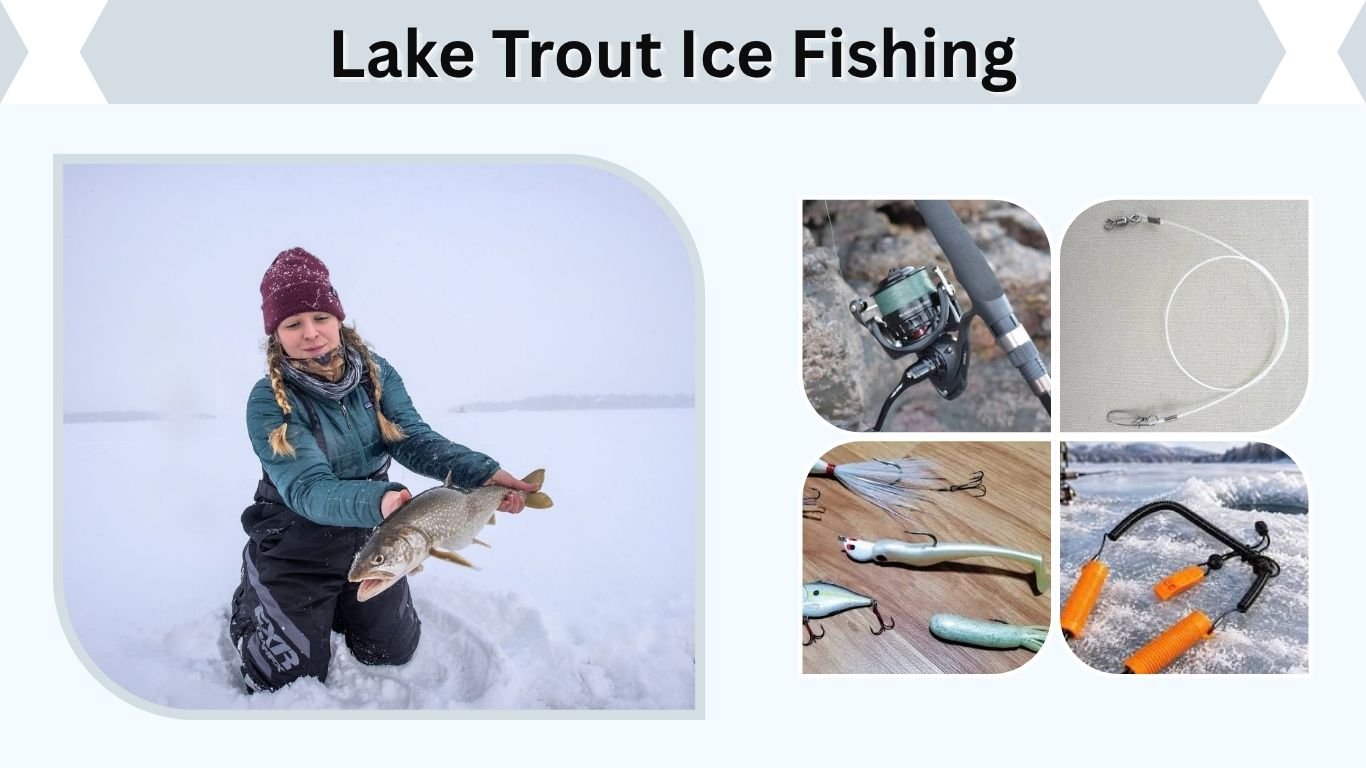
Lake trout ice fishing offers an exciting opportunity to catch powerful freshwater predators during the winter months. These cold-water fish inhabit deep lakes, where they hunt baitfish around underwater structures and open-water basins. Successfully catching lake trout through the ice requires choosing suitable lures, locating productive depths, and using reliable fishing equipment. Whether you’re a beginner learning to jig or an experienced angler targeting trophy-sized trout, understanding their winter behavior can improve your results. This guide covers lake trout ice fishing techniques, rods, lures, bait, fishing depths, and safety essentials.
Where to Find Lake Trout When Ice Fishing
Finding lake trout beneath a frozen lake requires understanding their winter movements and preferred habitats. Unlike many freshwater fish, lake trout remain active in cold water and frequently travel through different depths while searching for food. They commonly inhabit deep, clear lakes containing abundant baitfish. Productive fishing locations often include underwater points, steep drop-offs, rocky reefs, and deep-water basins.
Best Depth for Lake Trout Ice Fishing
Lake trout can occupy a wide range of depths during winter. In many inland lakes, anglers begin searching between 30 and 100 feet.
In very deep lakes, such as Lake Superior, productive water can extend beyond 100 feet.
There is no universal ideal depth. Water temperature, lake structure, forage availability, and local conditions influence where trout gather.
Finding Lake Trout Around Underwater Structure
Rocky points, submerged reefs, and steep underwater slopes are promising starting locations.
Lake trout often follow schools of ciscoes, smelt, and other forage fish. Finding baitfish on sonar can indicate nearby predators.
Underwater contour maps help identify transitions between shallow structures and deep basins.
Essential Lake Trout Ice Fishing Gear
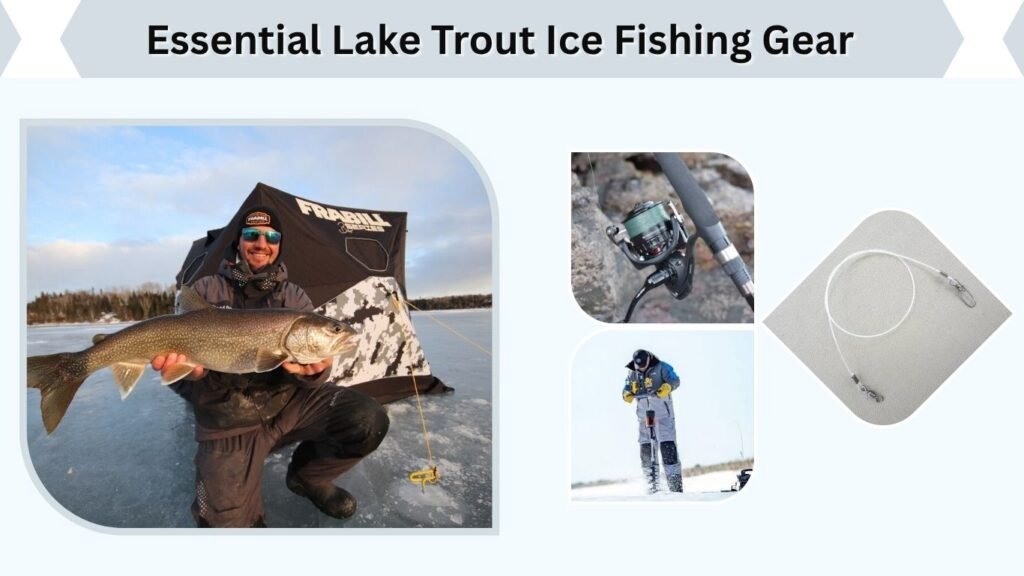
Lake trout are strong fighters capable of making powerful runs, especially when hooked in deep water. Appropriate equipment improves lure control, hook-setting ability, and fish handling. Compared with equipment designed for smaller panfish, lake trout setups generally require stronger rods, reliable reels, and sufficient line capacity. The ideal combination depends on fish size, fishing depth, and lure weight.
Best Lake Trout Ice Fishing Rod and Reel
A medium-heavy or heavy-action ice fishing rod is often suitable for lake trout.
Rods approximately 32–42 inches long provide useful leverage when jigging larger lures and fighting powerful fish.
Choose a spinning reel with a smooth drag and enough line capacity for deep-water fishing. Models around the 2500–3000 size range are commonly suitable.
Lake Trout Ice Fishing Line and Equipment
Useful equipment includes:
- Braided fishing line: Approximately 10–20-pound test provides strength and sensitivity.
- Fluorocarbon leader: Helps reduce line visibility in clear water.
- Ice auger: Creates appropriate fishing holes.
- Fish finder: Helps locate suspended fish and underwater structure.
- Ice scoop: Removes slush from fishing holes.
- Landing equipment: Supports safe handling of larger trout.
Match line strength and tackle to the expected fish size and fishing conditions.
Best Lake Trout Ice Fishing Lures and Bait
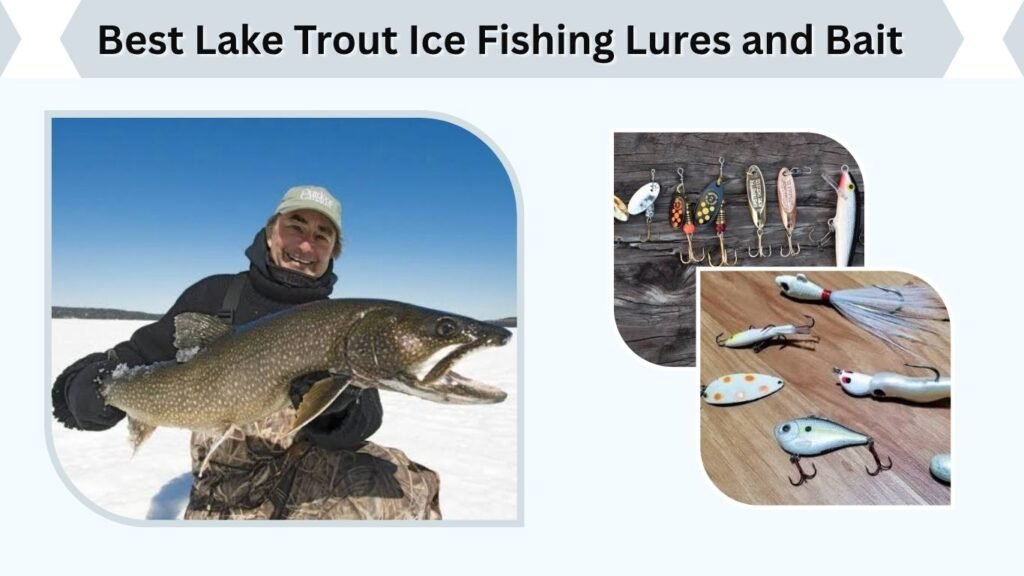
Choosing effective lake trout ice fishing lures depends on water depth, available prey, and fish activity. Lake trout are predatory fish that frequently respond to moving presentations resembling injured baitfish. Large spoons, tube jigs, and soft-plastic swimbaits are popular choices. Natural bait can also be productive, particularly when trout are less responsive to artificial presentations.
Best Lures for Ice Fishing Lake Trout
Popular lure choices include:
- Jigging spoons: Flash and vibration help attract lake trout.
- Tube jigs: Soft bodies imitate baitfish and provide natural movement.
- Swimbaits: Realistic swimming action can trigger aggressive strikes.
- Blade baits: Vibration helps attract attention in deeper water.
- Jigging minnows: Erratic movement resembles distressed baitfish.
- Bucktail jigs: Hair movement creates a lifelike presentation.
White, silver, and baitfish-colored lures are useful starting choices. Bright colors may perform better under certain conditions.
Best Bait for Lake Trout Ice Fishing
Lake trout commonly feed on ciscoes, smelt, minnows, and other available fish species.
Where regulations permit, live minnows or dead baitfish can be effective on suitable rigs.
Some anglers tip artificial jigs with pieces of permitted baitfish to add scent.
Always verify local restrictions on bait species, live bait, and fish transportation before fishing.
How to Ice Fish for Lake Trout Step by Step
Jigging is one of the most popular techniques for catching lake trout beneath the ice. Unlike passive fishing methods, active jigging allows anglers to search different depths and imitate moving prey. Lake trout may chase lures several feet through the water column before striking. Varying lure speed, movement, and presentation helps determine what attracts fish on a particular day.
Step-by-Step Lake Trout Jigging Technique
- Locate suitable water: Begin around rocky structures or deep drop-offs.
- Lower your lure: Drop the jig near the bottom while maintaining line control.
- Create movement: Lift and drop the rod to imitate an injured baitfish.
- Vary your retrieve: Raise the lure through different depths to encourage chasing.
- Watch for strikes: Maintain contact because trout may strike while the lure falls.
- Set the hook: Respond to a confirmed bite and maintain steady pressure.
Using Sonar to Catch Lake Trout
A fish finder can reveal approaching trout, suspended baitfish, and the lure’s position.
If a fish follows your lure without striking, experiment with faster upward movement or a different presentation.
Lake trout sometimes accelerate toward rising lures, making active retrieves particularly productive.
Lake Trout Ice Fishing During Different Winter Periods
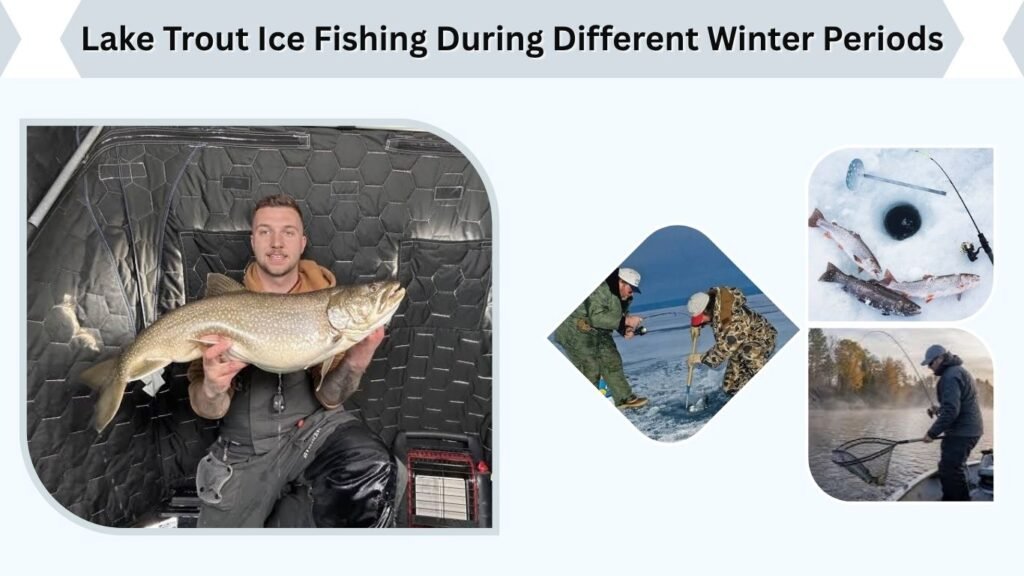
Lake trout behavior can change throughout the ice fishing season as weather, available forage, and underwater conditions shift. However, fish movements are not identical across lakes. Understanding seasonal patterns can help anglers select productive areas, although locating baitfish remains important. Local fishing reports and underwater contour information are useful when choosing where to begin searching.
Early Ice vs. Midwinter Lake Trout Fishing
During early ice, lake trout may use rocky reefs, points, and nearby deep-water areas.
As winter progresses, they can continue roaming between structures and open-water basins while following baitfish.
Experimenting with different depths is often more useful than fishing one location throughout the day.
Lake Trout Ice Fishing in Popular Regions
Minnesota and Ontario contain numerous lakes suitable for winter lake trout fishing.
Colorado’s Blue Mesa Reservoir, Flaming Gorge Reservoir, and Montana’s Fort Peck Reservoir are also known for lake trout fisheries.
Lake Superior can provide exceptional fishing when ice conditions permit, but its ice is often unstable or absent.
Always confirm local access, regulations, and safe ice conditions before traveling.
Ice Fishing Safety and Regulations
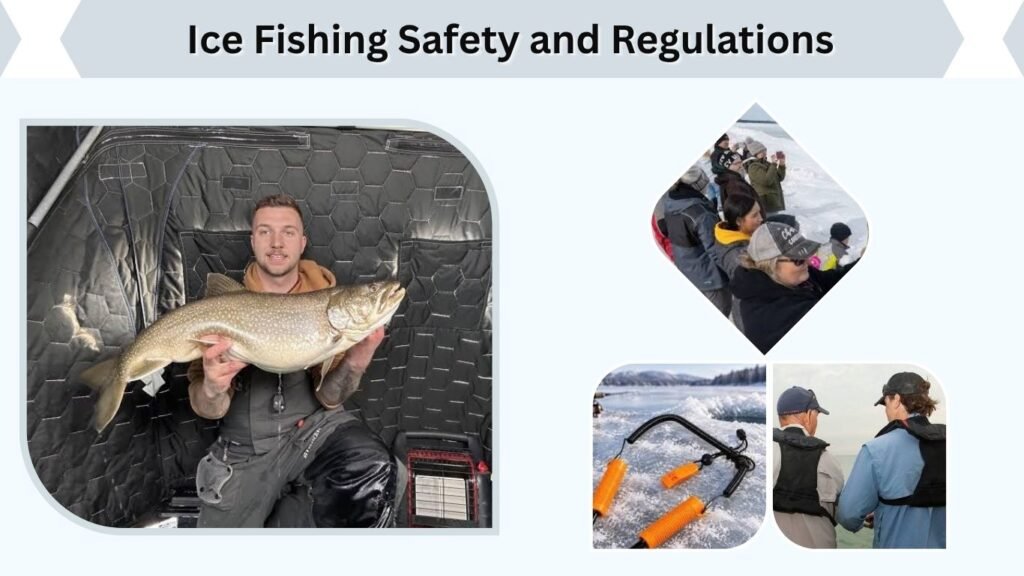
Ice fishing can be dangerous when frozen lakes contain weak areas, moving water, pressure cracks, or changing weather conditions. Ice thickness is not consistent across an entire lake, and apparently solid surfaces can conceal serious hazards. Before starting a trip, anglers should inspect conditions, carry appropriate emergency equipment, and check applicable fishing regulations. No ice surface can be guaranteed completely safe.
Essential Ice Fishing Safety Checklist
- Check ice thickness: Minnesota DNR advises at least four inches of new, clear ice for travel on foot, but this does not guarantee safety.
- Carry ice picks: Keep emergency self-rescue tools accessible.
- Wear flotation equipment: Use a suitable float coat or life jacket.
- Avoid dangerous areas: Stay away from currents, inlets, pressure ridges, and visibly damaged ice.
- Travel with a partner: Avoid isolated trips whenever possible.
- Check conditions frequently: Measure ice thickness along your intended route.
Fishing Regulations and Catch-and-Release Tips
Lake trout seasons, harvest limits, permitted bait, and equipment rules vary by jurisdiction.
Consult current fisheries regulations before traveling, especially when fishing across state or provincial boundaries.
When releasing lake trout, minimize handling time, use wet hands, and return the fish to the water promptly.
FAQs
Lake trout ice fishing presents challenges involving lure selection, fishing depths, equipment, and seasonal fish movement. Beginners often struggle to locate fish, while experienced anglers focus on improving presentations and targeting larger trout. These commonly asked questions address practical concerns and provide useful starting points for planning a successful winter fishing trip.
1. What Is the Best Depth for Lake Trout Ice Fishing?
Many anglers begin between 30 and 100 feet, although lake trout may occupy shallower or considerably deeper water depending on the lake.
2. What Are the Best Lures for Lake Trout Ice Fishing?
Jigging spoons, tube jigs, swimbaits, blade baits, and jigging minnows are popular options. White and silver patterns often imitate natural prey.
3. What Size Rod Is Best for Lake Trout Ice Fishing?
A medium-heavy or heavy-action rod approximately 32–42 inches long is a useful choice, depending on fishing conditions and trout size.
4. Can You Catch Lake Trout With Live Bait Through the Ice?
Yes, where permitted. Live minnows and other legally approved baitfish can work with tip-ups or appropriate stationary fishing rigs.
5. What Is the Best Time to Ice Fish for Lake Trout?
Lake trout can feed throughout the day. Early morning and periods of active baitfish movement may provide good opportunities, but local conditions matter.