
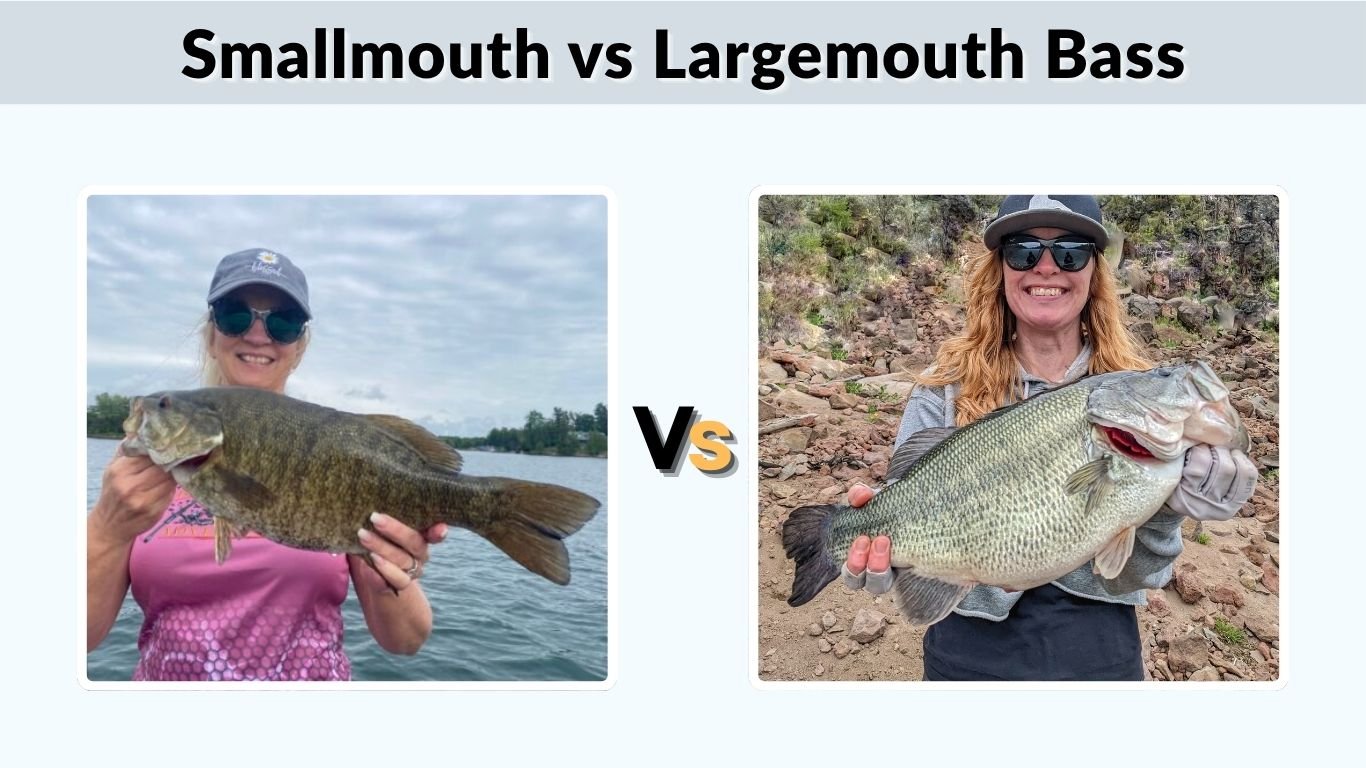
Smallmouth vs largemouth bass—which one are you catching? Although these popular freshwater game fish look similar, they differ in mouth size, body color, habitat, feeding behavior, and fishing techniques. Largemouth bass are famous for their oversized jaws and preference for vegetation, while smallmouth bass are known for their bronze coloration and powerful fights. Understanding these differences helps anglers identify each species, choose suitable lures, and improve their fishing success.
Smallmouth vs Largemouth Bass: Quick Comparison
Smallmouth bass (Micropterus dolomieu) and largemouth bass (Micropterus salmoides) belong to the sunfish family, Centrarchidae. Both are native to North America and highly valued by recreational anglers. However, their physical characteristics, environmental preferences, and behavior make them distinct species. The following comparison highlights their most noticeable differences.
| Feature | Smallmouth Bass | Largemouth Bass |
| Scientific name | Micropterus dolomieu | Micropterus salmoides |
| Mouth size | Smaller jaw | Larger jaw |
| Body color | Bronze or brown | Green or olive |
| Body markings | Vertical bars | Dark horizontal stripe |
| Dorsal fin | Shallow notch | Deep notch |
| Typical habitat | Rocky lakes and rivers | Weedy lakes and ponds |
| Size potential | Generally smaller | Generally larger |
| Fighting style | Strong, sustained runs | Powerful strikes and bursts |
| Popular lures | Tubes, jigs, crankbaits | Worms, frogs, spinnerbaits |
Smallmouth vs Largemouth Bass Identification
Identifying smallmouth and largemouth bass becomes easier when examining their mouths, coloration, and dorsal fins. While both species have elongated bodies and similar overall shapes, several physical characteristics provide reliable identification clues. Anglers should consider multiple features rather than relying entirely on body color, which can change depending on habitat and water conditions.
1. Mouth Size and Jaw Structure
The most reliable difference between smallmouth and largemouth bass is the position of the upper jaw.
A largemouth bass has a noticeably larger mouth, with its upper jaw extending beyond the rear edge of the eye when closed.
A smallmouth bass has a shorter upper jaw that typically reaches approximately the rear edge of the eye but does not extend beyond it.
This difference remains useful even when both fish are approximately the same size.
2. Body Color and Markings
Smallmouth bass usually have bronze, brown, or golden-green bodies with irregular vertical bars along their sides. Their coloration often blends with rocky environments.
Largemouth bass typically display green or olive-colored bodies with a distinctive dark horizontal stripe.
Their bellies are generally lighter, ranging from pale yellow to white. Color alone is not always reliable because water clarity and environmental conditions influence appearance.
3. Dorsal Fin Differences
Both species have dorsal fins containing spiny and soft-rayed sections.
Smallmouth bass have a relatively shallow notch between these sections, giving the fin a more continuous appearance.
Largemouth bass have a deeper notch that creates a more noticeable separation between the two sections.
Examining the dorsal fin alongside the jaw and body markings can improve identification accuracy.
Smallmouth vs Largemouth Bass Size and Habitat
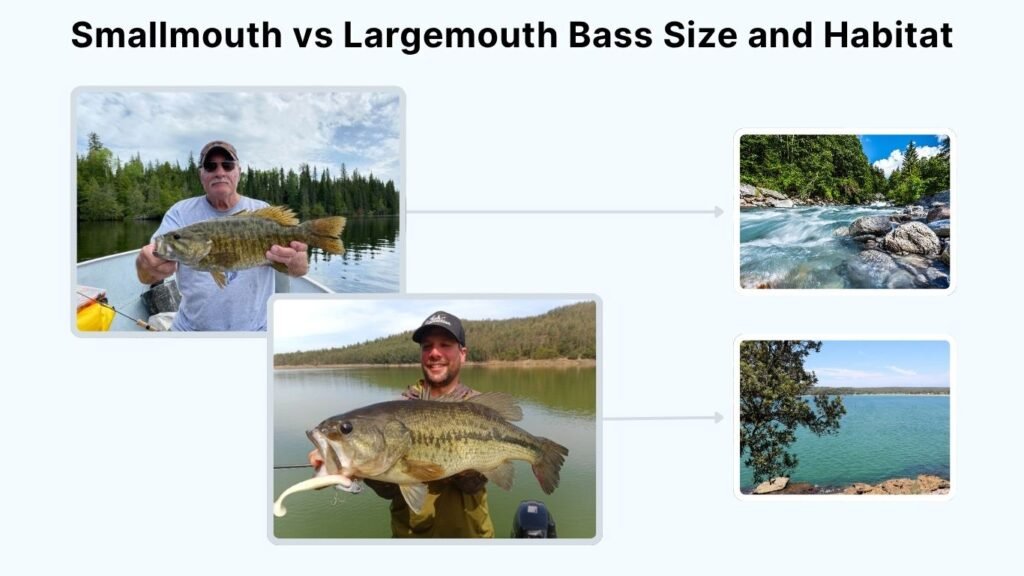
Body size and environmental preferences create additional differences between these species. Although largemouth bass generally reach greater maximum weights, both can grow into impressive fish under suitable conditions. Their preferred habitats also influence where anglers encounter them, particularly when comparing rocky rivers with vegetation-filled lakes and reservoirs.
4. Size and Weight Differences
Largemouth bass generally grow larger and heavier than smallmouth bass.
Adult largemouth commonly measure approximately 12–20 inches, although trophy specimens can grow considerably longer.
Smallmouth bass frequently measure around 12–18 inches in productive fisheries, with exceptional individuals exceeding 20 inches.
Largemouth bass have the greater maximum recorded weight, exceeding 22 pounds, while the recognized smallmouth bass record is 11 pounds, 15 ounces.
However, growth depends heavily on food availability, water temperature, and habitat quality.
5. Habitat and Water Preferences
Smallmouth bass generally prefer clearer water, rocky bottoms, and areas with moderate current.
Common smallmouth habitats include:
- Rocky rivers and streams.
- Clear lakes and reservoirs.
- Gravel bottoms and underwater ledges.
- Boulder fields and rocky shorelines.
Largemouth bass typically favor warmer, slower-moving water with abundant cover.
They frequently inhabit vegetated ponds, shallow lake bays, river backwaters, and areas containing submerged timber.
Both species can occupy the same lake, although they often concentrate in different habitats.
6. Fighting Strength and Behavior
Smallmouth bass are famous for their aggressive fighting behavior. They often make powerful runs, change direction suddenly, and leap above the surface after being hooked.
Largemouth bass are equally exciting but frequently rely on explosive strikes and short, powerful bursts toward vegetation or submerged cover.
Many anglers consider smallmouth bass stronger fighters pound for pound. However, fighting performance varies with fish size, water conditions, and fishing tackle.
Smallmouth vs Largemouth Bass Fishing Techniques
Catching these two bass species requires understanding their preferred environments and feeding behavior. Although many artificial lures work for both, successful anglers often adjust their presentations according to water clarity, available cover, and seasonal conditions. Choosing appropriate fishing locations can be just as important as selecting the right bait.
Best Lures for Smallmouth Bass
Smallmouth bass commonly feed around rocky structures, gravel bottoms, and areas with moving water.
Effective lure options include:
- Tube jigs resembling crayfish.
- Small crankbaits.
- Ned rigs and soft-plastic minnows.
- Spinnerbaits.
- Drop-shot rigs.
Casting near rock piles, current breaks, and underwater ledges can produce strikes. Slower presentations are often useful when fish become less active.
Best Lures for Largemouth Bass
Largemouth bass frequently ambush prey from vegetation, docks, submerged trees, and other cover.
Popular lures include:
- Soft-plastic worms.
- Hollow-body frogs.
- Spinnerbaits.
- Creature baits and jigs.
- Topwater poppers.
Weedless presentations help anglers fish around dense vegetation without frequent snagging.
During warmer months, early morning and evening can provide excellent shallow-water fishing opportunities.
Smallmouth vs Largemouth Bass Diet and Taste
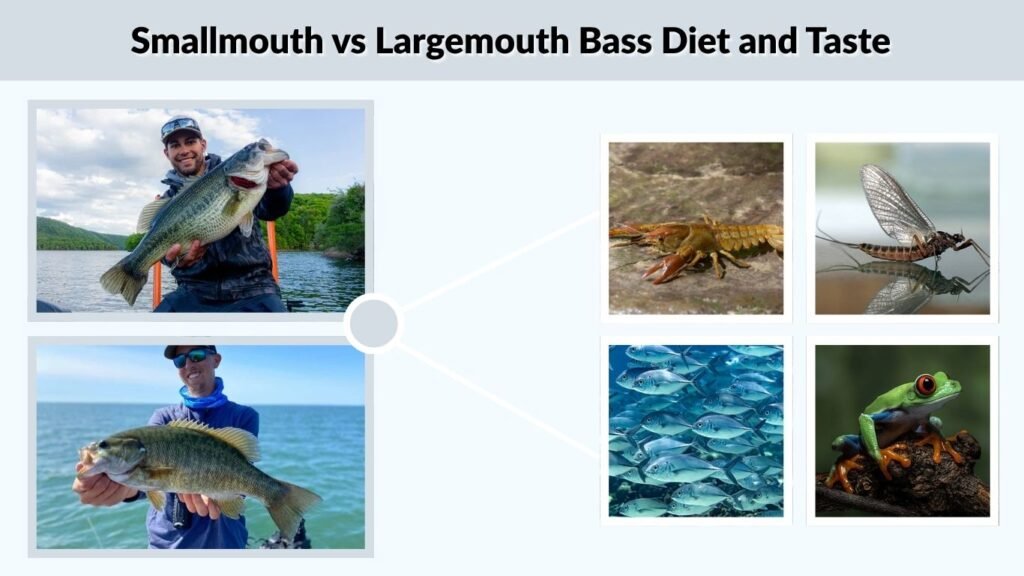
Both bass species are carnivorous predators that consume available aquatic animals. Their diets overlap considerably, but differences in habitat and prey availability can influence feeding preferences. Anglers also compare their flavor and texture, although taste depends on water quality, fish condition, handling, and cooking methods.
What Do Smallmouth and Largemouth Bass Eat?
Smallmouth bass commonly consume crayfish, small fish, aquatic insects, and other invertebrates.
Largemouth bass eat fish, crayfish, insects, frogs, and other appropriately sized prey.
Their larger mouths allow largemouth bass to swallow relatively large prey items.
Both species are opportunistic feeders, meaning their diets change depending on seasonal conditions and available food sources.
Which Bass Tastes Better?
Both smallmouth and largemouth bass have edible white flesh with relatively mild flavors.
Some anglers prefer smallmouth bass for its firm texture and delicate taste. Largemouth bass can also provide good eating, particularly when harvested from clean water.
Taste preferences are subjective, and habitat conditions can influence flavor.
Always check local consumption advisories and fishing regulations before keeping bass for food.
Smallmouth vs Largemouth vs Spotted Bass
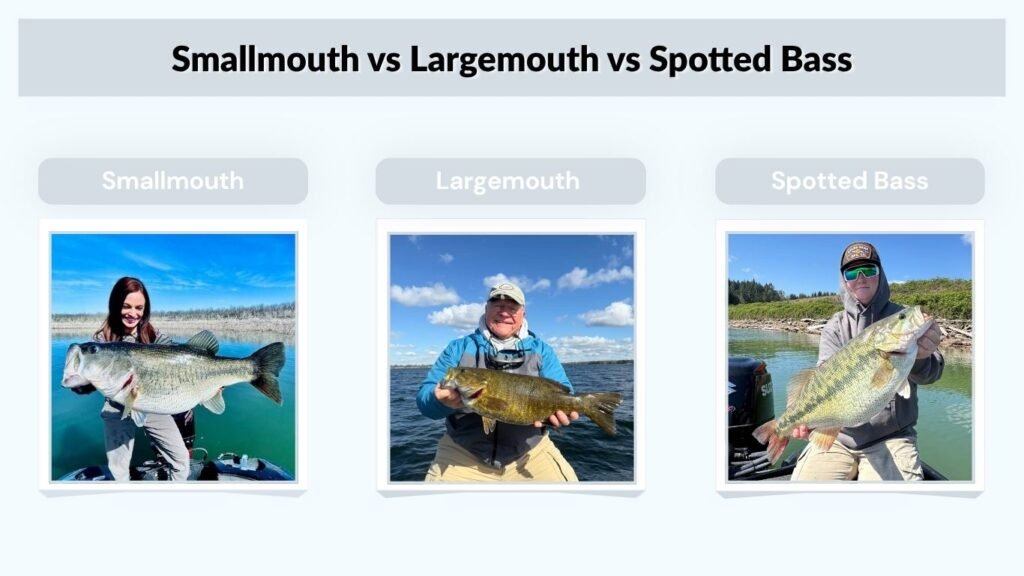
Spotted bass (Micropterus punctulatus) are another popular freshwater species that anglers sometimes confuse with smallmouth and largemouth bass. They share several characteristics with both species, making identification challenging for beginners. Examining jaw position, body markings, and fin structure provides useful clues.
How to Identify Spotted Bass
Spotted bass generally have greenish bodies with broken horizontal markings similar to largemouth bass.
However, their upper jaws typically do not extend beyond the rear edge of the eye.
They also have more clearly connected dorsal-fin sections and often display rows of dark spots along their lower sides.
Unlike smallmouth bass, spotted bass usually lack prominent vertical body bars.
FAQs
1. How can you tell a smallmouth from a largemouth bass?
Examine the upper jaw when the mouth is closed. A largemouth bass has a jaw extending beyond the eye, while a smallmouth bass has a shorter jaw ending near the rear edge of the eye.
2. Which is bigger, smallmouth or largemouth bass?
Largemouth bass generally reach greater maximum sizes and weights. However, large smallmouth bass can be heavier than smaller adult largemouth bass.
3. Do smallmouth bass fight harder than largemouth bass?
Many anglers believe smallmouth bass fight harder relative to their body weight because of their sustained runs and energetic movements. However, both species provide exciting fishing experiences.
4. Can smallmouth and largemouth bass live together?
Yes. Both species can inhabit the same lakes and reservoirs. Smallmouth bass often prefer rocky areas, while largemouth bass concentrate around vegetation and submerged cover.
5. Are smallmouth bass or largemouth bass better to eat?
Both species are edible and have relatively mild white flesh. Smallmouth bass are often preferred by some anglers, but flavor depends on habitat, freshness, preparation, and personal preference.