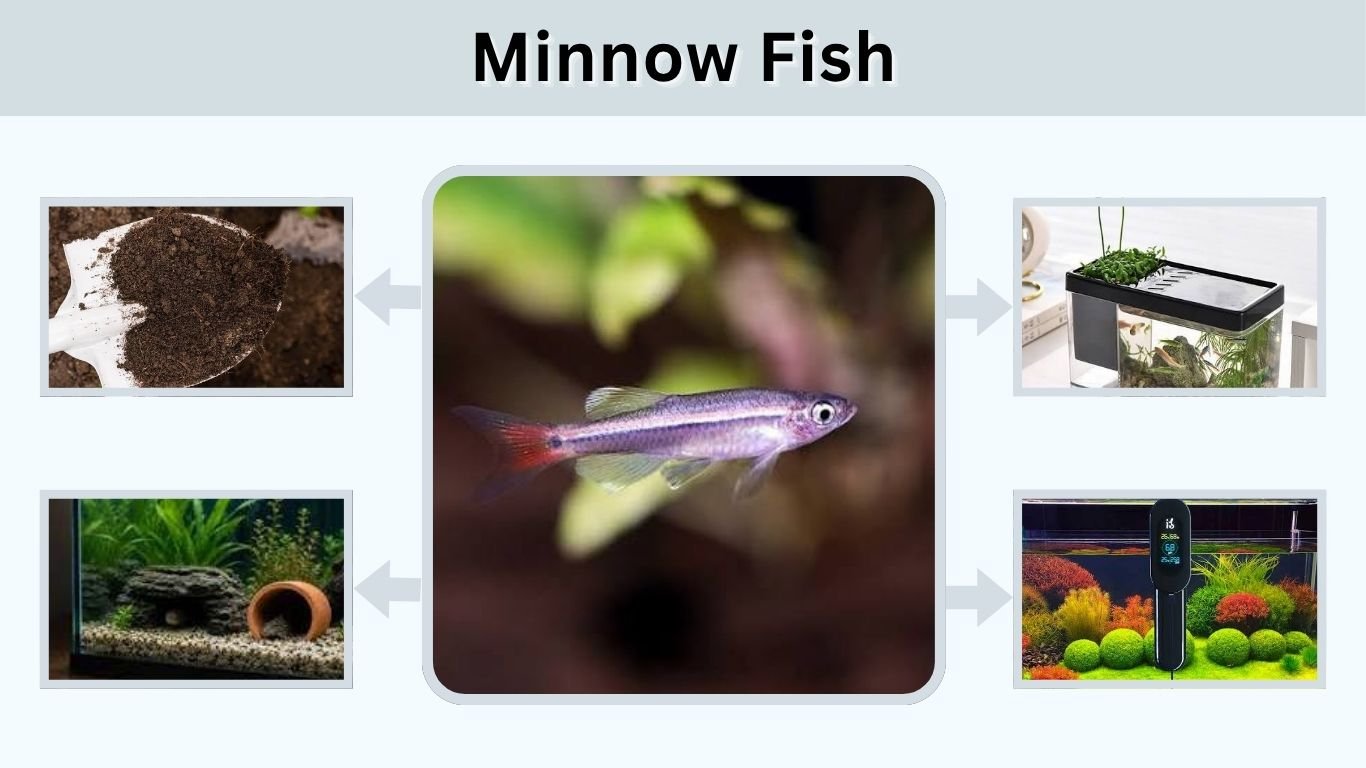
Minnow fish are small freshwater fish commonly found in rivers, lakes, ponds, and streams worldwide. Known for their slender bodies, quick swimming movements, and schooling behavior, minnows play an important role in freshwater ecosystems. They also attract attention from aquarium enthusiasts and anglers who use minnows for fishing. However, different minnow species have unique appearances, diets, and habitat requirements. Understanding minnow fish types, sizes, feeding habits, and care needs can help you identify these fascinating fish and maintain them successfully in a home aquarium.
What Is a Minnow Fish?
A minnow fish is a small freshwater fish belonging to one of several related groups of fish. Many North American minnows belong to the family Leuciscidae, while other fish commonly called minnows belong to different families.
Minnows are recognized for their streamlined bodies, active swimming behavior, and ability to survive in various freshwater environments.
Although people sometimes call any small fish a minnow, the term does not represent a single species. Different minnows have distinct physical characteristics, feeding behaviors, and habitat preferences.
Are Minnows Baby Fish?
Minnows are not necessarily baby fish. Many are naturally small species that remain relatively small throughout adulthood.
A young bass or trout might resemble a minnow, but it belongs to a different group of fish. True minnows grow into mature adults capable of reproducing.
How to Identify a Minnow Fish
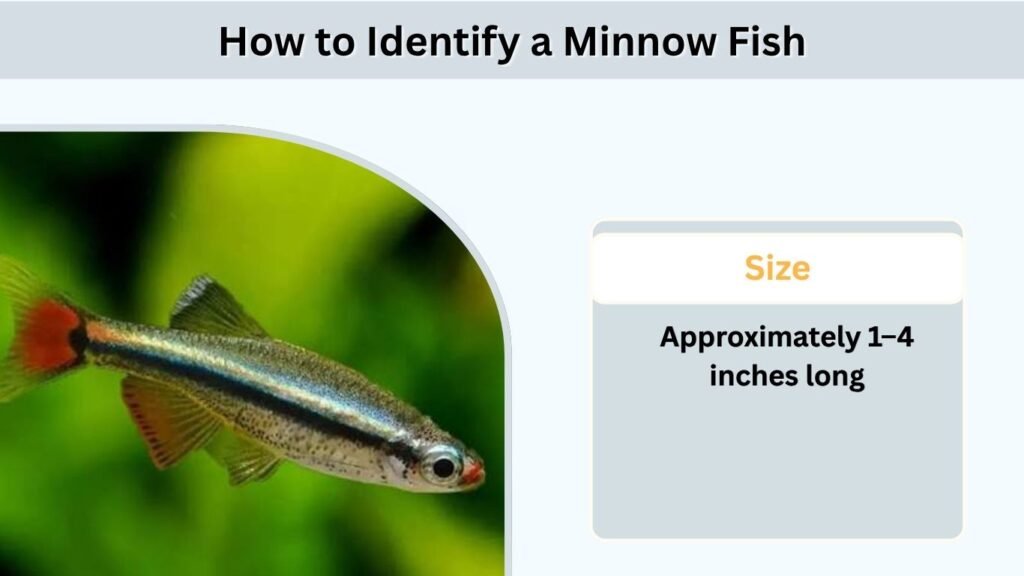
Minnow fish identification depends on body shape, coloration, fins, and species-specific markings.
Most minnows have elongated bodies designed for efficient swimming. Their scales are generally silver, gray, olive, or golden, helping them blend into aquatic environments.
Their mouths are relatively small, although mouth shape varies depending on feeding habits.
Minnow Fish Size and Appearance
Most commonly encountered small minnows measure approximately 1–4 inches long. However, some species grow considerably larger.
White cloud mountain minnows usually reach around 1.5 inches, while fathead minnows commonly reach approximately 2–3 inches.
Minnows frequently swim together in schools, which helps them detect predators and avoid danger.
5 Common Types of Minnow Fish
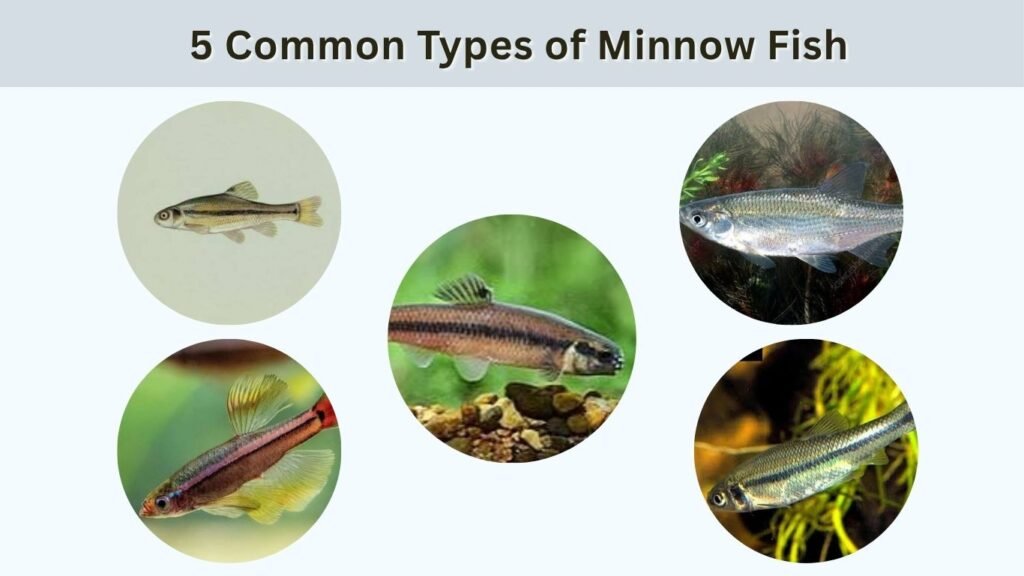
Different minnow species inhabit freshwater environments across North America, Europe, and Asia. Some are popular aquarium fish, while others are commonly used as fishing bait.
1. Fathead Minnow
Fathead minnows (Pimephales promelas) have blunt heads and olive-gray bodies. They typically grow 2–3 inches long and tolerate varied freshwater conditions. They are commonly used as baitfish.
2. White Cloud Mountain Minnow
White cloud mountain minnows (Tanichthys albonubes) are peaceful aquarium fish with colorful stripes and reddish fins. They prefer cooler, well-oxygenated water and are best maintained in groups.
3. Bluntnose Minnow
Bluntnose minnows (Pimephales notatus) are small North American freshwater fish with rounded snouts and dark lateral markings. They inhabit streams, rivers, and lakes, feeding on algae and tiny aquatic organisms.
4. Golden Shiner
Golden shiners (Notemigonus crysoleucas) have compressed bodies with golden or silvery coloration. They inhabit ponds and slow-moving freshwater and are widely recognized as baitfish for larger predatory species.
5. Rosy Red Minnow
Rosy red minnows are colorful varieties of fathead minnows. Their pinkish-orange bodies make them attractive aquarium inhabitants, although they are also sold as fishing bait.
Where Do Minnow Fish Live?
Minnow fish inhabit freshwater environments such as ponds, lakes, streams, rivers, and wetlands.
Their preferred habitats depend on the species. Some thrive in clear, flowing streams, while others prefer shallow, slow-moving water containing vegetation.
Aquatic plants, submerged branches, and rocks provide protection against predators. These features also offer feeding opportunities and potential breeding sites.
Fathead minnows are particularly adaptable and can tolerate muddy water and lower oxygen levels than many other freshwater fish. However, aquarium minnows still require clean, properly maintained water.
What Do Minnow Fish Eat?

Most commonly encountered minnows are omnivorous, consuming both plant and animal materials. Their diets vary according to species, habitat, and available food.
Common Foods Minnows Eat
- Algae: Provides nutrients for many freshwater minnows.
- Aquatic insects: Small insect larvae are common food sources.
- Zooplankton: Tiny drifting organisms provide protein.
- Small crustaceans: Includes organisms such as daphnia.
- Plant matter: Some species consume soft plant material.
- Organic debris: Certain minnows feed on decomposing material and microorganisms.
Fathead and bluntnose minnows consume various combinations of algae, small invertebrates, and other microscopic foods.
What to Feed Minnows in an Aquarium
Aquarium minnows can receive quality fish flakes, appropriately sized pellets, and occasional frozen or live foods.
Daphnia, brine shrimp, and small insect larvae provide dietary variety.
Feed small amounts that the fish can consume quickly. Excess food decomposes and reduces water quality, potentially causing health problems.
How to Care for Minnows in a Fish Tank
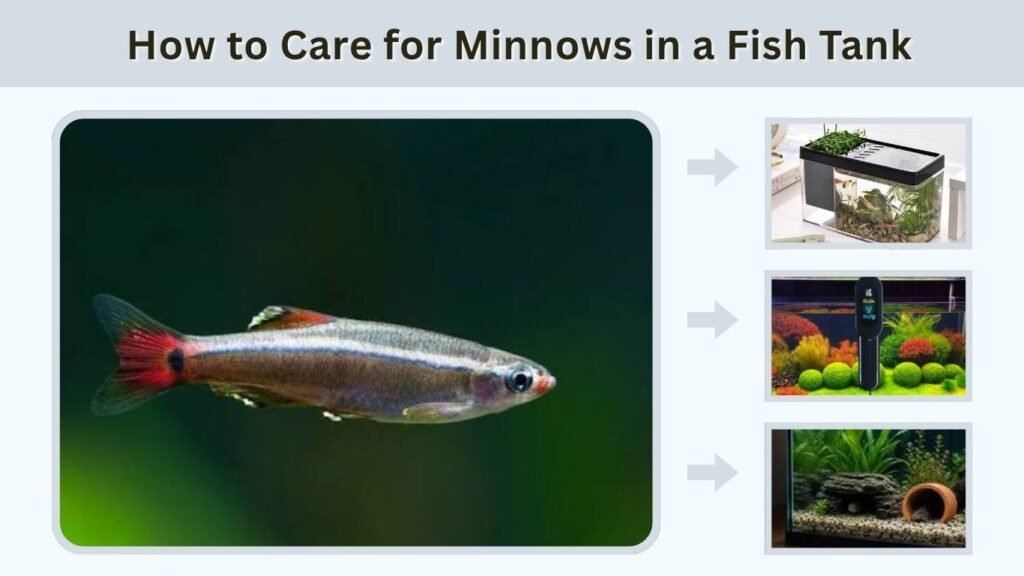
Minnow fish can make interesting aquarium inhabitants because many species are active and social. However, their care requirements vary, making proper species identification important.
Basic Minnow Fish Tank Requirements
- Choose an appropriate aquarium: A 10-gallon aquarium can accommodate a small school of white cloud mountain minnows, although larger tanks provide more swimming space.
- Maintain suitable temperatures: White cloud mountain minnows generally prefer cooler water around 60–72°F (16–22°C).
- Use proper filtration: Install a filter that maintains clean, oxygenated water without creating excessive current.
- Provide hiding places: Add aquatic plants, smooth rocks, and decorations while preserving open swimming areas.
- Keep compatible groups: Many aquarium minnows prefer groups of at least six individuals, with larger groups often encouraging natural behavior.
A properly cycled aquarium, regular water testing, and partial water changes are essential for maintaining healthy fish.
How Do Minnow Fish Reproduce?
Minnow reproduction varies by species, although many reproduce by laying eggs.
During breeding seasons, males may develop brighter colors or distinctive physical features that help attract females.
Fathead minnows often deposit eggs beneath submerged rocks or other surfaces. Males guard the nesting area and protect developing eggs until they hatch.
Other minnows scatter eggs among plants or suitable substrates.
Water temperature, food availability, and environmental conditions influence reproductive activity.
How Are Minnows Used for Fishing?
Minnows are widely used as natural fishing bait because their appearance and swimming movements attract predatory fish.
Anglers often use live minnows when targeting bass, crappie, walleye, and other freshwater species.
Popular Ways to Fish With Minnows
- Live minnow fishing: Hooking a live minnow carefully allows it to swim naturally and attract predators.
- Float fishing: Suspending a minnow beneath a bobber helps control fishing depth.
- Bottom fishing: A suitable rig presents minnows near fish feeding close to the bottom.
- Ice fishing: Where permitted, anglers use minnows beneath the ice to target species such as walleye and crappie.
Artificial minnow fishing lures imitate the shape, movement, and coloration of small baitfish.
Before using live minnows, check local fishing regulations. Transporting baitfish or releasing unused minnows can spread invasive species and aquatic diseases.
What Fish Eat Minnows?
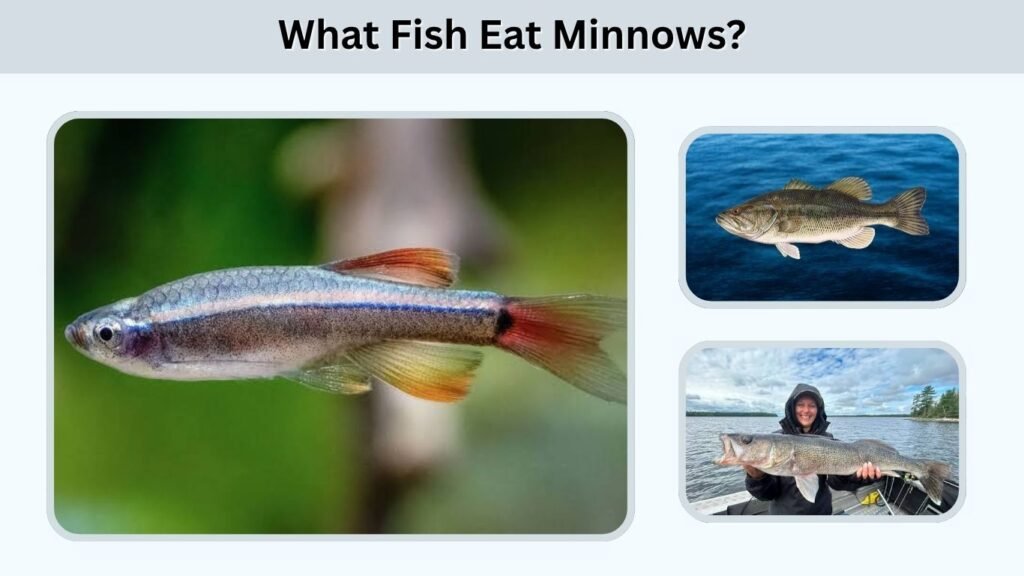
Minnows are an important food source for many freshwater predators. Their small size and abundance make them accessible prey.
Largemouth bass, northern pike, walleye, yellow perch, and trout may consume minnows, depending on the habitat and fish species.
Aquatic birds, turtles, and larger predatory animals also feed on minnows.
Their position in freshwater food webs makes them ecologically important because they transfer energy from smaller organisms to larger predators.
FAQs
1. How Long Do Minnow Fish Live?
Minnow fish lifespan varies by species and environmental conditions. Fathead minnows commonly live approximately two to three years in the wild, while some aquarium species can survive longer with proper feeding, suitable temperatures, and consistent water quality.
2. Can Minnow Fish Live With Goldfish?
Some minnows can coexist with goldfish when their temperature needs and sizes are compatible. However, larger goldfish may eat small minnows. Aquarium size, filtration, feeding requirements, and potential disease transmission should be considered before combining these fish.
3. Do Minnows Grow Into Bigger Fish?
Minnows grow from young fish into mature adults of their own species. They do not transform into bass, trout, or other fish. Adult size varies considerably, with some minnows remaining tiny and others growing substantially larger.
4. Can Minnows Survive Without an Air Pump?
Minnows can survive without an air pump if the aquarium provides sufficient dissolved oxygen through surface movement, filtration, or other means. However, overcrowding, warm temperatures, and poor circulation can reduce oxygen levels and threaten their health.
5. Are Minnow Fish Good for Beginners?
Certain species, especially white cloud mountain minnows, are suitable for beginner aquarium owners. They are generally peaceful and adaptable when maintained in appropriate conditions. However, beginners must still provide suitable group sizes, filtration, water parameters, and regular aquarium maintenance.