
Shubunkin goldfish are colorful freshwater fish known for their beautiful calico patterns, active swimming behavior, and hardy nature. These attractive goldfish feature combinations of blue, orange, red, black, and white, making them popular choices for aquariums and outdoor ponds. Unlike many fancy goldfish, Shubunkins have streamlined bodies and strong swimming abilities. With proper feeding, spacious living conditions, and clean water, they can live for many years. Understanding Shubunkin goldfish size, lifespan, tank requirements, breeding habits, and different varieties helps fishkeepers provide the best possible care.
Shubunkin Goldfish Overview
Shubunkin goldfish (Carassius auratus) are a selectively bred variety of common goldfish, originally developed in Japan. Their distinctive multicolored appearance and single tail distinguish them from many fancy goldfish varieties. They are peaceful, active, and relatively easy to maintain when provided with sufficient space and effective filtration.
| Characteristics | Details |
| Scientific Name | Carassius auratus |
| Common Name | Shubunkin Goldfish |
| Origin | Japan |
| Adult Size | Usually 8–12 inches; sometimes larger |
| Lifespan | Commonly 10–15 years or longer |
| Temperature | Approximately 60–75°F (16–24°C) |
| Diet | Omnivorous |
| Temperament | Peaceful and active |
| Care Level | Easy to moderate |
Shubunkin Goldfish Appearance and Types
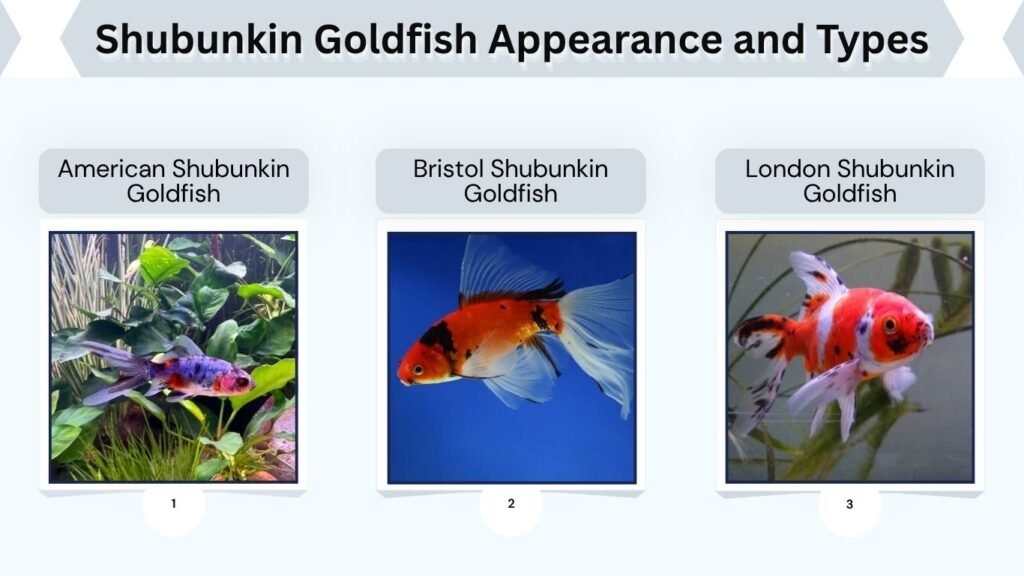
Shubunkins have elongated bodies, prominent dorsal fins, and beautiful multicolored scales. Their appearance resembles common and comet goldfish, but their calico coloration creates a distinctive look. Different Shubunkin varieties have unique tail shapes and body characteristics, although they share similar care requirements.
Types of Shubunkin Goldfish
Three main Shubunkin varieties are commonly recognized:
- American Shubunkin Goldfish: Also called Japanese Shubunkins, these fish have slender bodies and long, deeply forked tails resembling comet goldfish.
- Bristol Shubunkin Goldfish: This variety features a broad, rounded, heart-shaped tail. It is especially popular among goldfish enthusiasts.
- London Shubunkin Goldfish: London Shubunkins have shorter, rounded fins and body proportions similar to common goldfish.
Shubunkin Goldfish Colors
Shubunkins display a combination of orange, red, white, black, gray, and blue. Their distinctive appearance comes from nacreous scales, which create a mixture of translucent and reflective areas.
Blue Shubunkin goldfish are particularly admired for their blue-gray coloration. Black and orange patterns may also appear across their bodies and fins. Every Shubunkin has a unique color pattern, and its appearance can change as it matures.
Shubunkin Goldfish Size and Lifespan
Shubunkin goldfish can grow considerably larger than many beginners expect. Their adult size depends on genetics, diet, water quality, and available swimming space. These active fish also have a relatively long lifespan, making them a significant long-term commitment.
How Big Do Shubunkin Goldfish Get?
Full-grown Shubunkin goldfish commonly reach 8–12 inches (20–30 cm), although some individuals grow to 14 inches (35 cm) or more under favorable conditions.
Young Shubunkins may measure only 2–4 inches when purchased, but their growth can be rapid during the early years.
A spacious aquarium or pond, nutritious food, and stable water conditions support healthy development. Keeping these fish in undersized tanks can restrict movement and contribute to poor health.
How Long Do Shubunkin Goldfish Live?
The typical Shubunkin goldfish lifespan is approximately 10–15 years, but well-maintained individuals may survive for 20 years or longer.
Clean water, appropriate nutrition, low stress, and adequate swimming space are important factors in longevity. Poor filtration, overcrowding, and untreated diseases can significantly shorten their lives.
Shubunkin Goldfish Tank Size and Water Requirements

Providing the correct aquarium environment is essential for healthy Shubunkin goldfish. Unlike small ornamental fish, Shubunkins produce substantial waste and require powerful biological filtration. Their active swimming behavior also makes horizontal swimming space particularly important.
Shubunkin Goldfish Tank Size
A long aquarium of approximately 75 gallons (284 liters) or more is a useful starting recommendation for one adult Shubunkin. A pair generally benefits from a substantially larger aquarium, often 100–125 gallons or more, depending on their size and filtration.
Small bowls and compact aquariums are unsuitable for adult Shubunkins.
Choose a tank with ample open swimming space, smooth decorations, and a properly established filtration system.
Ideal Water Conditions
Maintain stable water quality rather than allowing sudden changes in temperature or chemistry.
| Water Parameter | Recommended Conditions |
| Temperature | 60–75°F (16–24°C) |
| pH | Approximately 6.5–8.0 |
| Ammonia | 0 ppm |
| Nitrite | 0 ppm |
| Nitrate | Keep low with regular maintenance |
| Filtration | Strong biological filtration |
Aquarium Maintenance
Perform regular partial water changes, generally around 20–25% weekly, adjusting according to water test results.
Remove uneaten food and waste using an aquarium siphon. Treat replacement tap water with a suitable conditioner and avoid sudden temperature changes.
Test ammonia, nitrite, nitrate, and pH regularly. A fully cycled biological filter is essential before introducing fish.
Shubunkin Goldfish Pond Care
Shubunkins are excellent candidates for properly designed outdoor ornamental ponds because they tolerate seasonal temperature variations better than many delicate fancy goldfish. Their strong swimming abilities and bright colors make them attractive pond fish.
Ideal Pond Setup for Shubunkin Goldfish
A pond of several hundred gallons provides a more suitable environment than a small decorative water feature. For a small group, consider approximately 300 gallons or more, with additional volume strongly preferred.
The pond should include:
- Adequate depth: Around 2–3 feet or deeper where climate conditions require it.
- Filtration: Efficient biological and mechanical filtration.
- Aeration: A waterfall, fountain, or air pump to maintain oxygen.
- Shelter: Aquatic plants and shaded areas that offer protection.
- Predator protection: Appropriate measures against birds and other animals.
During winter, maintain suitable water conditions and prevent the entire pond from freezing. In hot weather, shade and aeration help prevent overheating.
Shubunkin Goldfish Food and Tank Mates

Shubunkins are omnivorous fish that eat a wide variety of plant and animal-based foods. They are also generally peaceful and can coexist with compatible goldfish varieties. However, their strong swimming abilities and feeding habits must be considered when choosing companions.
What Do Shubunkin Goldfish Eat?
A balanced diet should consist mainly of quality goldfish pellets or flakes, supplemented occasionally with vegetables and suitable protein-rich foods.
Useful foods include blanched peas, leafy greens, daphnia, and brine shrimp.
Feed small portions once or twice daily, depending on temperature, age, and activity. Only offer what the fish can consume quickly, and remove leftovers to prevent water pollution.
Reduce feeding substantially during cold pond conditions when digestion slows.
Best Tank Mates for Shubunkin Goldfish
Shubunkins usually get along well with other single-tailed goldfish, including common and comet goldfish.
Avoid combining them with delicate fancy goldfish such as bubble eyes or slow-moving fantails. Faster Shubunkins may outcompete these fish during feeding.
Always provide sufficient swimming space and monitor feeding behavior when keeping multiple fish together.
Shubunkin Goldfish Breeding
Shubunkin goldfish can breed in aquariums or outdoor ponds when they reach sexual maturity and experience suitable environmental conditions. Breeding commonly occurs during spring as water temperatures begin to rise. Healthy adults, appropriate nutrition, and suitable spawning surfaces improve breeding opportunities.
How to Breed Shubunkin Goldfish
During breeding, males may develop small white breeding tubercles around their gill covers and pectoral fins. Females often become fuller-bodied as their eggs develop.
Males chase females during spawning, and females release adhesive eggs that attach to plants or spawning mops. Fertilization occurs externally.
The eggs commonly hatch within several days, depending on water temperature.
Separate the eggs from adult fish if you want to raise the offspring, because goldfish frequently eat their own eggs and newly hatched fry.
Feed free-swimming fry suitable microscopic foods before gradually introducing larger fry foods.
Shubunkins can also breed with common and comet goldfish because they belong to the same species. However, their offspring may display different colors and body characteristics.
Common Shubunkin Goldfish Diseases
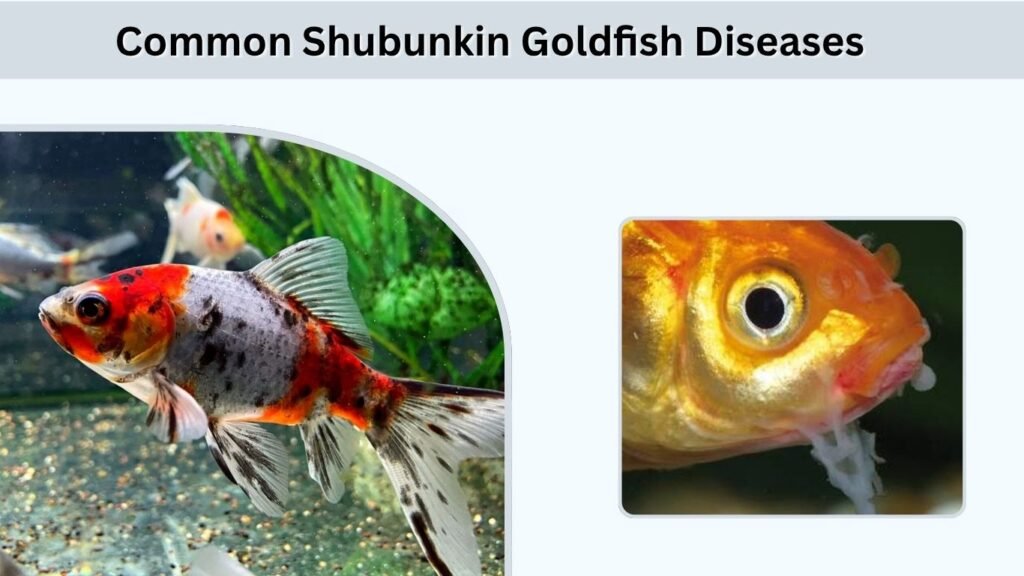
Although Shubunkin goldfish are relatively hardy, they can develop health problems when living conditions deteriorate. Poor water quality, overcrowding, stress, and introducing infected fish increase the likelihood of disease.
Common Health Problems and Symptoms
- Ich: Small white spots appearing on the body and fins.
- Fin rot: Frayed or deteriorating fins.
- Fungal infections: Cotton-like growths on the body.
- Buoyancy problems: Difficulty maintaining normal swimming position.
Regular water testing, appropriate quarantine procedures, and prompt diagnosis are important. Seek guidance from an aquatic veterinarian when illness persists or symptoms become severe.
FAQs
1. Are Shubunkin Goldfish Aggressive?
No. Shubunkin goldfish are generally peaceful and social. However, they may compete for food with slower fish, particularly in overcrowded aquariums.
2. Can Shubunkin Goldfish Live in a Pond?
Yes. Shubunkins are well suited to properly maintained outdoor ornamental ponds with sufficient depth, filtration, oxygen, and protection from predators.
3. Can Shubunkins Live With Common Goldfish?
Yes. Shubunkins and common goldfish have similar environmental requirements, swimming abilities, and feeding habits, making them compatible companions when enough space is available.
4. How Fast Do Shubunkin Goldfish Grow?
Shubunkins often grow fastest during their first few years. Their growth rate varies depending on genetics, nutrition, water quality, and living conditions.
5. Are Blue Shubunkin Goldfish Rare?
Shubunkins with extensive, well-defined blue coloration can be especially desirable and less commonly encountered than ordinary calico patterns. Availability depends on breeding lines and local suppliers.