

The clown loach (Chromobotia macracanthus) is a colorful freshwater fish known for its bright orange body, bold black stripes, and playful personality. Native to Indonesia, this social aquarium fish is popular among tropical fish enthusiasts. However, clown loaches grow much larger than many beginners expect and require spacious aquariums, stable water conditions, and suitable companions. Understanding their adult size, tank requirements, feeding habits, and lifespan is essential before bringing them home. This guide covers everything you need to know about clown loach care and keeping these fascinating fish healthy.
What Is a Clown Loach?
The clown loach is a tropical freshwater fish belonging to the family Botiidae. Its scientific name is Chromobotia macracanthus, although it was previously classified as Botia macracanthus. These fish are popular because of their attractive appearance, active swimming behavior, and interesting social interactions.
Clown Loach Appearance
Clown loaches have elongated bodies with bright orange or yellow coloring and three distinctive black vertical bands. Their fins are generally reddish-orange, and their mouths have small sensory barbels used to locate food.
Adult fish develop thicker bodies, and their colors may become less vibrant with age.
Natural Habitat and Origin
Wild clown loaches inhabit rivers and floodplain environments in Sumatra and Borneo, Indonesia.
Their natural habitats contain submerged roots, vegetation, and sheltered areas. Seasonal changes in water levels influence their movement and breeding behavior.
Clown Loach Size: How Big Do They Get?
Clown loaches are commonly sold as small aquarium fish, but they can eventually become surprisingly large. Their slow growth often leads inexperienced owners to underestimate their adult space requirements. Understanding clown loach size before purchasing is important because these fish may continue growing for many years.
Juvenile vs. Full-Grown Clown Loach
Most juvenile clown loaches sold in aquarium stores measure approximately 2–4 inches.
A full-grown clown loach commonly reaches 10–12 inches, with some aquarium specimens reaching 12–13 inches. Exceptionally large individuals may approach 16 inches.
How Fast Do Clown Loaches Grow?
Clown loaches generally grow faster while young, with growth slowing as they mature. Their growth rate depends on genetics, nutrition, aquarium space, and water quality.
Proper feeding and a spacious environment support healthy development, although reaching full adult size can take many years.
Clown Loach Tank Size and Aquarium Setup
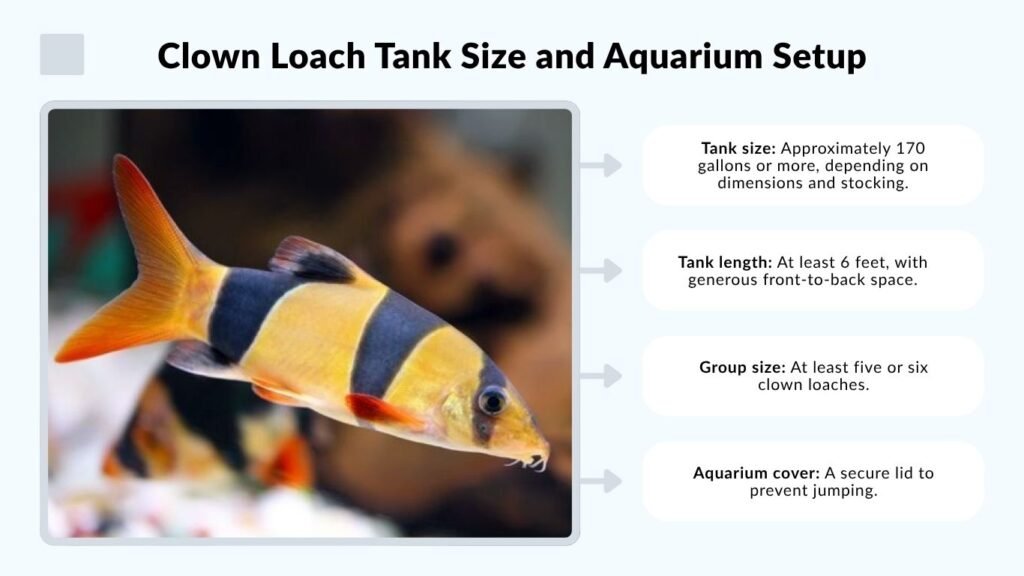
Providing a suitable clown loach tank is essential for long-term health. These fish are active swimmers that enjoy exploring decorations, searching for food, and interacting with their companions. Because they grow large and prefer groups, their aquarium must offer sufficient swimming space and sheltered resting areas.
Recommended Clown Loach Tank Size
For a properly maintained adult group, consider these aquarium requirements:
- Tank size: Approximately 170 gallons or more, depending on dimensions and stocking.
- Tank length: At least 6 feet, with generous front-to-back space.
- Group size: At least five or six clown loaches.
- Filtration: Strong biological filtration and adequate water movement.
- Aquarium cover: A secure lid to prevent jumping.
Smaller aquariums may temporarily accommodate juveniles, but they are unsuitable permanent homes.
Best Substrate and Decorations
Use fine sand or smooth, rounded gravel to protect the fish’s delicate barbels.
Driftwood, caves, smooth rocks, and hardy aquatic plants provide shelter. Avoid sharp decorations or narrow spaces where growing clown loaches could become trapped.
Clown Loach Temperature and Water Conditions
Clown loaches prefer warm, clean, well-oxygenated freshwater. Maintaining consistent water conditions is particularly important because sudden changes can cause stress and increase susceptibility to disease. A mature aquarium with effective biological filtration provides a more reliable environment than a newly established tank.
Ideal Water Parameters
Recommended conditions include:
- Temperature: 75–86°F (24–30°C), preferably toward the warmer end.
- pH: Approximately 6.0–7.5, with stable conditions.
- Water hardness: Generally soft to moderately hard water.
- Ammonia and nitrite: 0 ppm in a properly cycled aquarium.
- Water changes: Regular partial changes based on water quality and stocking.
Maintaining Water Quality
Test aquarium water regularly and remove accumulated waste from the substrate.
Clown loaches produce increasing amounts of waste as they grow. Reliable filtration, good oxygenation, and regular aquarium maintenance help prevent stressful conditions.
Clown Loach Food: What Do Clown Loaches Eat?
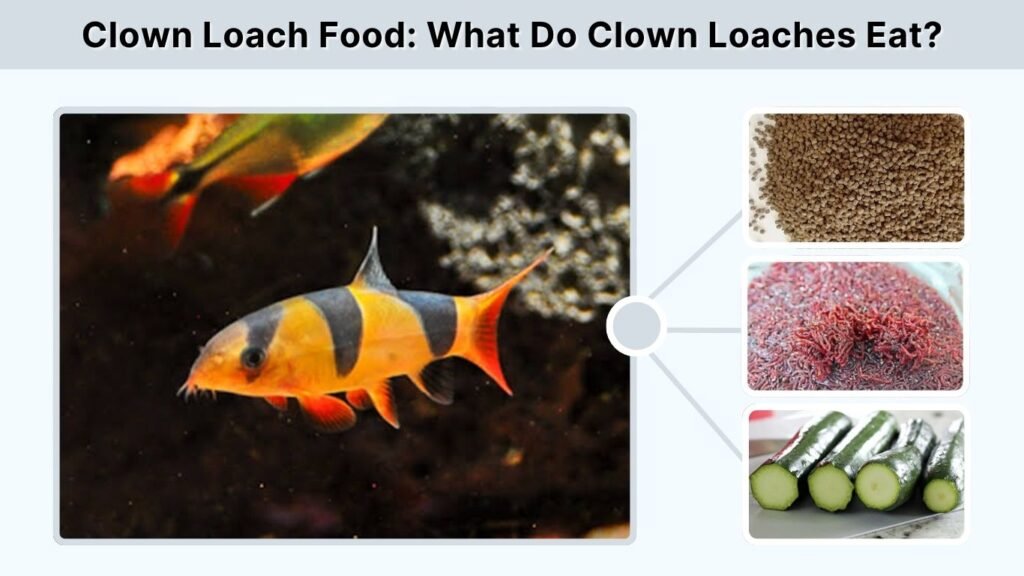
Clown loaches are omnivorous fish with a strong preference for animal-based foods. In natural environments, they consume aquatic invertebrates, including worms, insect larvae, and mollusks. Aquarium clown loaches benefit from a varied diet that supports their growth, immune function, and overall health.
Best Food for Clown Loaches
Suitable foods include:
- High-quality sinking pellets or bottom-feeder tablets.
- Frozen or live bloodworms.
- Brine shrimp and other small aquatic invertebrates.
- Blanched zucchini, spinach, and cucumber.
- Commercial foods formulated for omnivorous bottom-dwelling fish.
Feed appropriate portions once or twice daily, adjusting quantities to appetite and water quality.
Do Clown Loaches Eat Snails?
Yes, clown loaches eat many aquatic snails and may consume both small snails and snail eggs.
However, they should not be purchased solely to control aquarium snails. Their large adult size and social requirements make them unsuitable for many smaller aquariums.
Clown Loach Tank Mates and Behavior
Clown loaches are generally peaceful community fish, although they can become boisterous during feeding or social interactions. They naturally establish group hierarchies and communicate through movements and audible clicking sounds. Keeping several together helps them display normal behavior and reduces stress associated with isolation.
Best Tank Mates for Clown Loaches
Suitable companions for sufficiently spacious aquariums may include:
- Peaceful, appropriately sized barbs.
- Larger, active rainbowfish with matching water requirements.
- Compatible peaceful catfish.
- Other suitable loach species.
- Peaceful, medium-sized schooling fish.
All companions must tolerate warm water and have enough space to avoid competition.
Tank Mates to Avoid
Very small fish, slow-moving species, and fish with long, delicate fins may be unsuitable.
Bettas and fancy guppies are generally poor choices. Goldfish also have different temperature requirements, while aggressive cichlids can create territorial problems.
Are Clown Loaches Aggressive?
Clown loaches are not usually aggressive toward suitable community fish. However, chasing and dominance displays between group members are normal.
Keeping only one or two can increase stress or social conflict. A group of at least five or six is preferable.
Clown Loach Lifespan and Common Health Problems
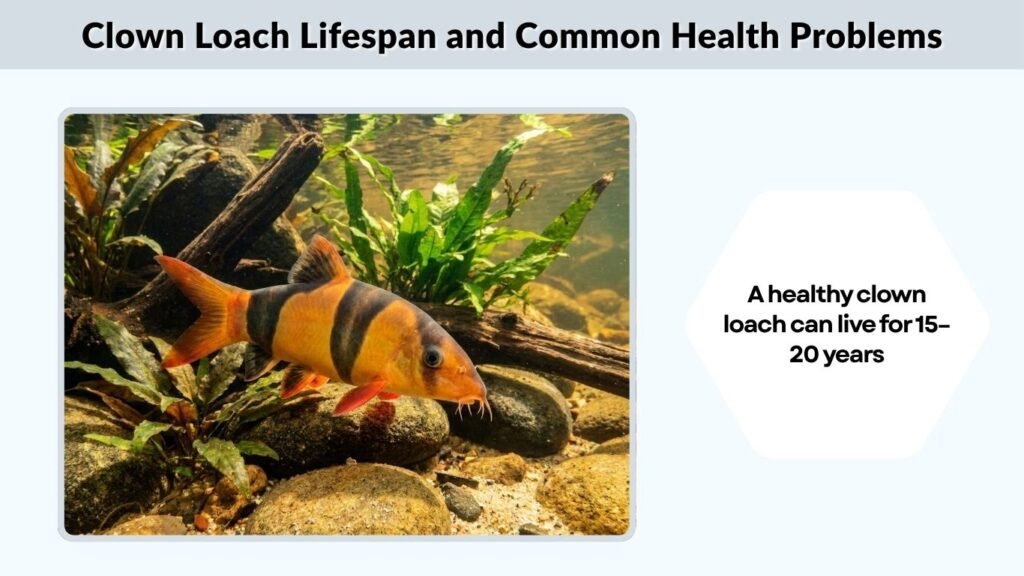
Clown loaches are long-lived aquarium fish requiring a substantial commitment. With appropriate space, nutrition, and stable water conditions, they can remain healthy for many years. However, poor water quality, overcrowding, and unsuitable tank mates can contribute to stress and disease.
How Long Do Clown Loaches Live?
A healthy clown loach can live for 15–20 years, and well-maintained individuals may exceed 20 years.
Their long lifespan makes planning for adult aquarium requirements particularly important.
Common Health Problems
Clown loaches can develop freshwater ich, external parasites, and problems associated with chronic stress.
Watch for white spots, unusual breathing, appetite loss, rubbing against objects, or unexplained weight loss.
Because clown loaches can be sensitive to certain medications, confirm the treatment is safe for scaleless or small-scaled loaches before use.
Clown Loach Breeding and Buying Guide
Breeding clown loaches in home aquariums is exceptionally difficult. In nature, they undertake seasonal spawning migrations associated with rainfall and changing river conditions. Their reproduction is challenging to reproduce in ordinary aquariums, making successful home breeding uncommon.
Can Clown Loaches Breed in Captivity?
Commercial breeding has been achieved under specialized conditions, sometimes using hormone-assisted techniques.
Ordinary home aquariums rarely provide the conditions needed for successful spawning and raising fry.
Clown Loach Price and Buying Tips
Clown loach prices vary depending on size, availability, location, and supplier.
Before purchasing, look for active individuals with clear eyes, healthy body weight, intact fins, and normal swimming behavior.
Avoid fish showing white spots, excessive thinness, or unusual respiratory distress. Select reputable suppliers and quarantine new fish when possible.
FAQs
1. Are clown loaches good for beginners?
Clown loaches are generally better suited to experienced aquarium keepers. Their large adult size, need for social groups, warm water, and long lifespan make them more demanding than many smaller freshwater community fish.
2. Can clown loaches live in a 20-gallon tank?
No. A 20-gallon aquarium is unsuitable for long-term clown loach care. Even though juveniles are small, these fish eventually require a much larger aquarium with sufficient swimming space for several adults.
3. Are clown loaches nocturnal?
Clown loaches are often most active during low-light periods, but they also explore and feed during daylight. Providing sheltered spaces and subdued lighting can make them more comfortable and encourage natural behavior.
4. Do clown loaches eat shrimp?
Yes. Clown loaches may eat small shrimp, particularly juveniles and vulnerable individuals. They are not dependable tank mates for ornamental dwarf shrimp colonies, even when other foods are provided.
5. How many clown loaches should be kept together?
Keep at least five or six clown loaches together, provided the aquarium is large enough. They establish social hierarchies and benefit from regular interaction with their own species. Larger groups can work in appropriately sized aquariums.