

The Golden Dojo Loach is a fascinating freshwater fish known for its bright golden-yellow body, peaceful temperament, and playful personality. Also called the Gold Dojo Loach or Golden Weather Loach, this attractive fish is popular among aquarium enthusiasts who enjoy active bottom-dwelling species. Unlike many tropical aquarium fish, golden dojo loaches prefer cooler water and spacious tanks with soft substrates. Understanding their adult size, diet, tank mates, temperature requirements, and lifespan is essential for keeping them healthy. This guide covers everything you need to know about golden dojo loach care.
Golden Dojo Loach Overview and Quick Facts
The Golden Dojo Loach (Misgurnus anguillicaudatus) is a golden color variety of the traditional dojo loach, also known as the Oriental Weatherfish. It belongs to the Cobitidae family and originates from a species native to East Asia. Its distinctive coloration, curious behavior, and adaptability make it a popular choice for suitable freshwater aquariums.
| Characteristics | Details |
| Scientific Name | Misgurnus anguillicaudatus |
| Common Names | Golden Dojo Loach, Gold Dojo Loach, Golden Weather Loach |
| Origin | East Asia (species) |
| Adult Size | Commonly 8–10 inches |
| Lifespan | Approximately 7–10 years, sometimes longer |
| Minimum Tank Size | 55 gallons for a small group |
| Temperature | 60–75°F (16–24°C) |
| pH Level | 6.5–8.0 |
| Diet | Omnivorous |
| Temperament | Peaceful and social |
| Care Level | Easy to moderate |
Golden Dojo Loach Appearance and Identification

Golden dojo loaches have elongated, eel-like bodies with smooth-looking skin and relatively small fins. Their bright coloration makes them easily distinguishable from standard brown dojo loaches. They also possess sensitive whisker-like barbels around their mouths, which help them locate food hidden in the substrate. Despite their unusual appearance, they are true freshwater fish rather than eels.
Key Identification Features
- Body Color: Bright golden-yellow, pale orange, or creamy yellow.
- Body Shape: Long, cylindrical, and eel-like.
- Eyes: Dark, reddish, or pinkish, depending on pigmentation.
- Barbels: Five pairs of sensitive barbels surrounding the mouth.
- Fins: Small, rounded fins that may appear translucent.
- Body Pattern: Usually solid-colored, although some individuals develop darker patches.
Golden dojo loaches often become more vibrant as they mature, although coloration varies between individuals.
Golden Dojo Loach Size and Lifespan
Understanding golden dojo loach size is important because these fish grow considerably larger than many other aquarium bottom feeders. Young specimens sold in aquarium stores may measure only a few inches, but adults need enough space to swim, explore, and burrow. Proper nutrition, water quality, and tank conditions influence their overall development and longevity.
How Big Do Golden Dojo Loaches Get?
A full-grown golden dojo loach commonly reaches approximately 8–10 inches (20–25 cm). Some individuals may grow to around 11 inches under favorable conditions.
Golden dojo loaches reach approximately the same adult size as regular dojo loaches because they belong to the same species.
Their elongated bodies require spacious aquariums with sufficient horizontal swimming space.
Golden Dojo Loach Lifespan
The typical golden dojo loach lifespan is approximately 7–10 years, although some well-maintained individuals may live longer.
Stable temperatures, nutritious food, compatible tank mates, and good aquarium maintenance help support a healthy lifespan.
Golden Dojo Loach Tank Size and Aquarium Setup

A suitable aquarium environment is essential for keeping golden dojo loaches healthy and active. These fish naturally explore the bottom of their habitat and frequently burrow into soft sediment. They need spacious aquariums, hiding places, and stable water conditions. Providing a setup that supports their natural behaviors can reduce stress and prevent injuries.
Golden Dojo Loach Tank Size
A 55-gallon aquarium with sufficient length is a reasonable starting point for a small group of golden dojo loaches.
Larger groups and particularly large adults benefit from a 75-gallon or larger aquarium.
A 20-gallon tank is not suitable as a permanent home for a full-grown golden dojo loach.
Golden Dojo Loach Temperature and Water Conditions
Golden dojo loaches prefer cooler freshwater conditions than most tropical aquarium species.
Recommended aquarium conditions include:
- Water Temperature: 60–75°F (16–24°C).
- pH Range: 6.5–8.0.
- Substrate: Fine, smooth sand.
- Water Flow: Gentle to moderate.
- Filtration: Efficient biological filtration.
- Ammonia and Nitrite: 0 ppm.
- Water Changes: Regular partial changes based on water testing.
Avoid maintaining these fish at consistently high tropical temperatures, even though they can tolerate temporary fluctuations.
Aquarium Decorations and Substrate
Soft sand is ideal for golden dojo loaches because they enjoy digging and occasionally burying themselves.
Smooth driftwood, rounded stones, caves, and live plants provide hiding places.
Avoid sharp gravel that could injure their delicate barbels. A secure aquarium lid is also necessary because dojo loaches are excellent escape artists.
What Do Golden Dojo Loaches Eat?

Golden dojo loaches are omnivorous fish that consume a combination of animal-based and plant-based foods. In their natural habitat, dojo loaches search for worms, insects, larvae, and other small aquatic organisms. Aquarium specimens usually accept sinking commercial foods alongside frozen or live treats, making them relatively easy to feed.
Best Food for Golden Dojo Loaches
Suitable golden dojo loach foods include:
- Sinking Pellets: Provide balanced everyday nutrition.
- Bloodworms: Offer protein and encourage natural feeding behavior.
- Earthworms: Chopped earthworms are nutritious for larger individuals.
- Brine Shrimp: Provide variety and additional protein.
- Frozen Daphnia: Can supplement the regular diet.
- Blanched Vegetables: Offer occasional plant-based variety.
Feed appropriate portions and remove uneaten food to maintain clean water conditions.
Do Golden Dojo Loaches Eat Snails?
Yes, golden dojo loaches may eat small snails, snail eggs, and other tiny invertebrates.
However, they are not reliable snail-control fish. Larger snails may remain untouched, and individual feeding preferences vary.
They may also eat small shrimp, so shrimp-breeding aquariums are generally unsuitable.
Golden Dojo Loach Tank Mates

Golden dojo loaches have a peaceful temperament and are generally compatible with other non-aggressive freshwater fish. However, selecting tank mates requires attention to water temperature, adult size, and feeding behavior. Fish that tolerate cooler temperatures are usually more suitable than species requiring consistently warm tropical conditions.
Best Golden Dojo Loach Tank Mates
Potentially compatible tank mates include:
- Other golden dojo loaches.
- Regular brown dojo loaches.
- White Cloud Mountain Minnows.
- Zebra Danios in appropriate conditions.
- Some goldfish, provided the aquarium is sufficiently spacious.
Golden and regular dojo loaches can live together because they are color varieties of the same species.
Tank Mates to Avoid
Aggressive cichlids, territorial bottom dwellers, and very small shrimp are generally poor choices.
Bettas are also unsuitable because their preferred temperatures are typically warmer.
Adult dojo loaches may opportunistically consume tiny fish or invertebrates, even though they are not normally aggressive hunters.
Golden Dojo Loach Behavior and Personality
Golden dojo loaches are active, curious fish known for their entertaining behavior. They frequently explore aquarium decorations, search through sand, and interact with other loaches. Their common name, Weather Loach, comes from their tendency to become unusually active during changes in atmospheric pressure. However, this behavior is not a dependable weather forecast.
Are Golden Dojo Loaches Aggressive?
No, golden dojo loaches are generally peaceful.
They may become energetic during feeding, but serious aggression is uncommon.
Keeping three or more dojo loaches together is preferable when adequate tank space is available.
Why Is My Golden Dojo Loach Floating?
Golden dojo loaches can swallow atmospheric air and absorb oxygen through a specialized section of their intestines.
Occasional trips to the surface or unusual resting positions may be normal. However, persistent uncontrolled floating, loss of balance, or difficulty swimming can indicate health problems.
Check water quality and monitor other symptoms if this behavior continues.
Golden Dojo Loach vs Albino Dojo Loach
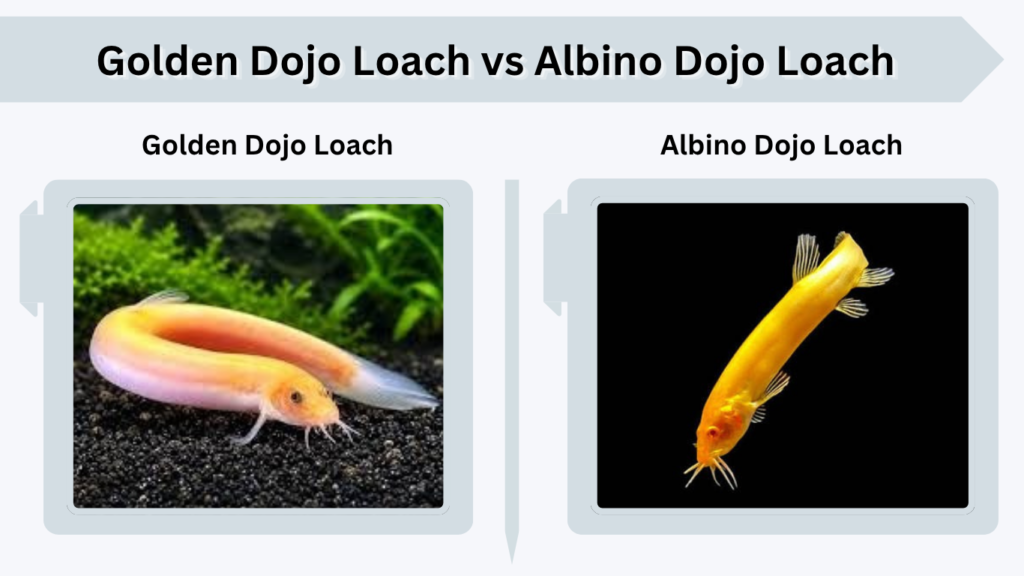
Golden and albino dojo loaches can look similar, especially when they have pale yellow coloration. However, their pigmentation may differ. Golden varieties can display dark eyes and bright yellow bodies, while true albino specimens lack normal melanin pigmentation and typically have reddish or pink eyes.
Some golden dojo loaches are leucistic rather than truly albino.
The term golden leopard dojo loach may be used commercially for individuals with golden coloration and darker markings, but it is not a separate scientifically recognized species.
Both golden and albino varieties require essentially the same aquarium care.
Golden Dojo Loach Breeding and Male vs Female
Breeding golden dojo loaches in home aquariums is possible but relatively uncommon. Seasonal changes in water temperature and environmental conditions may influence spawning. Like regular dojo loaches, golden varieties reproduce by releasing eggs that are fertilized externally rather than giving birth to live young.
Golden Dojo Loach Male vs Female
Mature females often have fuller, rounder bodies, particularly when carrying eggs.
Males typically have larger, more triangular pectoral fins with a noticeably thickened fin ray.
These differences become easier to identify as fish mature.
Golden Dojo Loach Eggs and Fry
During spawning, the female releases eggs while the male fertilizes them.
Eggs may become scattered among plants or other aquarium surfaces. Adult fish can consume eggs, so breeding setups may require protection for developing embryos and newly hatched fry.
Common Golden Dojo Loach Health Problems
Golden dojo loaches are relatively hardy, but unsuitable water conditions and physical injuries can cause problems. Their sensitive skin and barbels require particular care, especially when selecting aquarium substrates or treating diseases. Early identification of abnormal behavior helps prevent minor problems from becoming serious.
Common warning signs include:
- Fin Rot: Frayed or deteriorating fins associated with injury or infection.
- Skin Irritation: Redness, sores, or damaged skin.
- Unusual Floating: Persistent difficulty maintaining normal swimming position.
- White Spots: Possible external parasite infection.
- Loss of Appetite: A potential sign of stress or illness.
- Damaged Barbels: Often associated with substrate injuries or poor water conditions.
Test water parameters whenever unusual symptoms appear. Consult an aquatic veterinarian for persistent or severe problems rather than using medications without a clear diagnosis.
Buying a Healthy Golden Dojo Loach
Golden dojo loaches are sometimes available through specialist aquarium stores, fish breeders, and online ornamental fish retailers. Before purchasing, consider the fish’s eventual adult size, suitable temperature range, and social requirements. Because dojo loaches can establish invasive populations, ownership and sales may also be restricted in certain locations.
Look for a fish with clear eyes, intact barbels, healthy skin, and normal swimming behavior.
Choose reputable sellers offering healthy, appropriately quarantined specimens. Confirm local regulations before purchasing, and never release dojo loaches into natural waterways.
FAQs
1. How Big Does a Full-Grown Golden Dojo Loach Get?
A full-grown golden dojo loach commonly measures 8–10 inches, although some individuals grow larger. A spacious aquarium is necessary for proper development.
2. Can Golden Dojo Loaches Live With Regular Dojo Loaches?
Yes. Golden and regular dojo loaches are varieties of the same species. They can live together peacefully when provided with suitable conditions and enough space.
3. Can Golden Dojo Loaches Live in a 20-Gallon Tank?
A 20-gallon aquarium is too small for a full-grown golden dojo loach. A larger aquarium of approximately 55 gallons or more is preferable for a small group.
4. Do Golden Dojo Loaches Need Sand?
Fine sand is strongly recommended because golden dojo loaches naturally dig and burrow. Smooth, rounded substrates may be tolerated, but sharp gravel should be avoided.
5. Are Golden Dojo Loaches Hard to Keep?
Golden dojo loaches are relatively easy to care for when their requirements are met. Their main needs are cooler water, a spacious aquarium, appropriate food, compatible companions, and regular maintenance.