

The hillstream loach is a unique freshwater fish known for its flattened body, beautiful patterns, and ability to cling to rocks in fast-moving water. Popular among aquarium enthusiasts, this peaceful fish is an excellent addition to a well-maintained freshwater aquarium. However, hillstream loaches require specific water conditions, proper nutrition, and sufficient oxygen to remain healthy. Understanding their natural habitat and behavior is essential for successful fishkeeping. This guide covers everything about hillstream loach care, including tank size, water temperature, diet, lifespan, breeding, and compatible tank mates.
What Is a Hillstream Loach?
A hillstream loach is a small freshwater fish native to fast-flowing rivers and streams in Asia. The name refers to several related species, including the popular reticulated hillstream loach (Sewellia lineolata), which originates primarily from Vietnam.
These fish have flattened bodies, wide pectoral and pelvic fins, and specialized adaptations that help them grip smooth surfaces in strong currents. Their unusual appearance often makes them resemble miniature stingrays.
Unlike many tropical aquarium fish, hillstream loaches prefer relatively cool, oxygen-rich water with continuous movement.
Hillstream Loach Identification
You can identify a hillstream loach by several distinctive physical characteristics:
- Body Shape: Flattened body with a broad head and rounded fins.
- Color: Brown, yellow, or cream markings, depending on the species.
- Patterns: Spotted, striped, or reticulated patterns across the body.
- Mouth: Small underside mouth adapted for grazing on surfaces.
- Fins: Wide pectoral and pelvic fins that help grip rocks.
- Size: Most commonly kept species grow approximately 2–3 inches long.
Their appearance makes them one of the most recognizable bottom-dwelling freshwater aquarium fish.
Hillstream Loach Size and Growth Rate
Hillstream loaches remain relatively small throughout their lives, making them suitable for appropriately designed medium-sized aquariums.
The adult size depends on the species, diet, and environmental conditions. The commonly kept reticulated hillstream loach generally reaches around 2–2.5 inches in length, although some individuals may approach 3 inches.
How Big Do Hillstream Loaches Get?
Most aquarium hillstream loaches reach approximately 2–3 inches (5–7.5 cm) when fully grown.
Juvenile fish are considerably smaller and develop gradually as they mature. Their growth depends on adequate nutrition, stable water conditions, and overall health.
Although these fish are small, they need more aquarium space than their body length might suggest. They spend much of their time grazing across rocks and other surfaces.
Hillstream Loach Tank Size and Setup
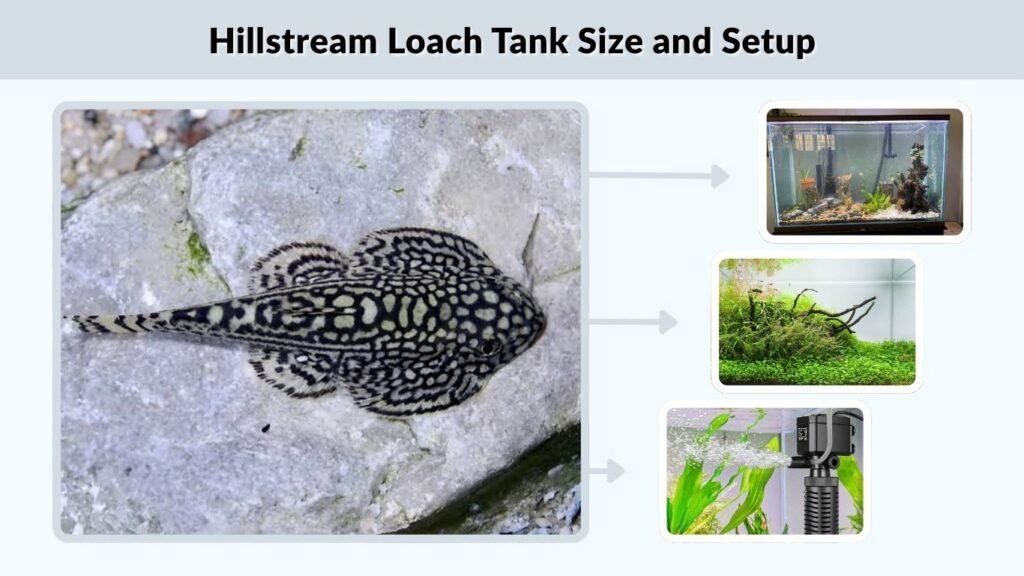
Creating a suitable hillstream loach aquarium involves more than simply adding water and decorations. These fish naturally inhabit rocky streams with strong currents, so their aquarium should provide similar conditions.
A properly established tank helps support natural feeding behavior, reduces stress, and promotes healthy activity.
Minimum Tank Size
A 20-gallon long aquarium is a practical starting point for a small group of reticulated hillstream loaches.
A larger 30-gallon aquarium is preferable when keeping multiple individuals because it provides additional grazing surfaces and territories.
Tank length and bottom area are especially important because these fish spend most of their time attached to rocks, glass, and decorations.
Best Substrate and Decorations
The ideal aquarium setup includes smooth stones, rounded gravel, and stable rock formations.
Large, flat rocks provide excellent surfaces for natural algae and biofilm growth. Smaller stones create hiding places and allow fish to establish individual feeding territories.
Aquatic plants such as Anubias and Java fern can also be included. These plants tolerate flowing water and provide additional surfaces for beneficial microorganisms.
Water Flow and Filtration
Strong water movement is essential for hillstream loaches because their natural habitats contain highly oxygenated flowing water.
Use an efficient aquarium filter combined with a powerhead or additional circulation pump when necessary.
Good surface agitation also improves oxygen exchange. However, the aquarium should include sheltered areas where fish can rest away from the strongest currents.
Hillstream Loach Water Temperature and Parameters
Hillstream loaches require stable water conditions to remain healthy. Unlike many tropical species, they generally prefer cooler temperatures and consistently high oxygen levels.
Maintaining appropriate water chemistry and performing regular maintenance will help prevent unnecessary stress.
| Water Parameter | Recommended Range |
|---|---|
| Temperature | 68–75°F (20–24°C) |
| pH Level | 6.0–7.5 |
| Water Hardness | 1–10 dGH |
| Ammonia | 0 ppm |
| Nitrite | 0 ppm |
| Nitrate | Ideally below 20 ppm |
| Water Movement | Strong, well-oxygenated flow |
Do Hillstream Loaches Need a Heater?
Hillstream loaches do not always need an aquarium heater if the room naturally maintains a stable temperature within their preferred range.
However, a heater may be necessary in colder environments to prevent sudden temperature fluctuations.
In warmer climates, aquarium cooling fans or other cooling equipment may be more important than heating.
Temperatures above their preferred range can reduce dissolved oxygen availability, making effective aeration especially important.
What Do Hillstream Loaches Eat?

Hillstream loaches primarily feed by grazing on algae, biofilm, and tiny organisms attached to submerged surfaces.
In the wild, they spend considerable time searching rocks for food. Their diet includes natural algae and microorganisms, along with occasional small aquatic invertebrates.
A varied diet is important because ordinary aquarium algae may not supply all the nutrients they need.
Best Foods for Hillstream Loaches
Suitable foods for hillstream loaches include:
- Natural Algae: Soft green algae growing on aquarium rocks.
- Biofilm: Microorganisms developing on mature aquarium surfaces.
- Algae Wafers: Sinking aquarium foods containing algae or spirulina.
- Blanched Zucchini: Soft vegetables offered in small portions.
- Spinach: Occasionally offered after gentle blanching.
- Gel Foods: Specialized grazing diets containing plant-based ingredients.
- Small Frozen Foods: Occasional brine shrimp or bloodworms for additional protein.
Remove uneaten vegetables and prepared foods before they begin deteriorating.
Do Hillstream Loaches Eat Algae?
Yes, hillstream loaches eat certain types of algae, particularly softer green algae and diatoms.
However, they are not complete aquarium-cleaning solutions and generally do not consume every type of algae.
They should receive supplementary food even when visible algae are present.
Hillstream Loach Lifespan and Behavior
Hillstream loaches can live approximately 5–8 years in a properly maintained aquarium, although individual lifespans vary with species and care.
Their long-term health depends on clean water, suitable temperature, sufficient oxygen, and consistent access to nutritious food.
These fish are generally peaceful but may show territorial behavior when competing for preferred feeding surfaces.
Are Hillstream Loaches Aggressive?
Hillstream loaches are not usually aggressive toward unrelated peaceful aquarium fish.
However, males may chase other hillstream loaches or compete over algae-covered rocks.
Providing multiple feeding areas and sufficient aquarium space helps reduce territorial disputes.
They are most commonly observed grazing on rocks, resting against aquarium glass, or moving quickly between feeding locations.
Best Hillstream Loach Tank Mates

Choosing appropriate tank mates is important because hillstream loaches require cooler, flowing water rather than the warm, relatively calm conditions preferred by many tropical fish.
Suitable companions should tolerate similar water temperatures, oxygen levels, and aquarium currents.
Compatible Tank Mates
Several species may coexist successfully with hillstream loaches:
- White Cloud Mountain Minnows: Peaceful fish that appreciate cooler aquarium conditions.
- Zebra Danios: Active swimmers capable of tolerating flowing water.
- Certain Stream Gobies: Bottom-dwelling fish adapted to moving water.
- Other Hillstream Loaches: Suitable when sufficient territories and food are available.
- Some Freshwater Shrimp: Potential companions in peaceful, established aquariums, although very small shrimp may be vulnerable.
Avoid large aggressive fish, predatory species, and tank mates requiring consistently warm water.
Compatibility also depends on available space and feeding competition.
Hillstream Loach Breeding and Reproduction
Breeding hillstream loaches in captivity is possible, particularly with Sewellia lineolata. However, successful reproduction requires mature aquarium conditions and suitable spawning areas.
These fish reproduce by laying eggs rather than giving birth to live young.
Providing stable water conditions and appropriate hiding places can encourage natural breeding behavior.
Male vs Female Hillstream Loach
Male and female reticulated hillstream loaches have subtle physical differences.
Males generally develop broader, more angular front portions of their pectoral fins and may have noticeable raised structures around the fin edges.
Females often have a rounder body profile, particularly when carrying eggs.
These differences are easiest to observe in mature fish.
How Do Hillstream Loaches Breed?
During breeding, adults may perform chasing and courtship displays before releasing eggs.
The eggs can settle into spaces between gravel and stones, where they are relatively protected.
After hatching, young fish feed on microscopic organisms before becoming capable of consuming larger foods.
A mature aquarium with rounded gravel, biofilm, and excellent oxygenation offers favorable conditions for fry survival.
Common Hillstream Loach Health Problems

Hillstream loaches are generally resilient when maintained under suitable conditions, but poor water quality and inappropriate aquarium environments can cause health problems.
Their specialized requirements make prevention particularly important.
Signs of an Unhealthy Hillstream Loach
Watch for these warning signs:
- Rapid Breathing: May indicate low dissolved oxygen, poor water quality, or illness.
- Loss of Appetite: Can result from stress, disease, or unsuitable food.
- Weight Loss: May indicate insufficient grazing opportunities or internal health problems.
- Unusual Inactivity: Can suggest temperature stress or deteriorating water conditions.
- Damaged Fins: May result from injury, territorial conflicts, or infection.
Test the aquarium water promptly when unusual symptoms appear. Persistent or severe symptoms may require assessment by an aquatic veterinarian.
FAQs
1. Are hillstream loaches easy to care for?
Hillstream loaches are moderately challenging aquarium fish. They require a mature aquarium, strong water movement, stable temperatures, and high oxygen levels. They are best suited to aquarists who can maintain these conditions consistently.
2. Can hillstream loaches live in a 10-gallon tank?
A 10-gallon aquarium is generally too small for a group of hillstream loaches. A 20-gallon long aquarium or larger provides more stable water conditions, grazing surfaces, and room for natural behavior.
3. Do hillstream loaches need to be kept in groups?
Hillstream loaches benefit from living with others of their species. Keeping at least three individuals, preferably in a larger group when space permits, encourages natural interactions. Provide enough feeding territories to prevent excessive competition.
4. Can hillstream loaches live with betta fish?
Hillstream loaches and bettas are generally not recommended as tank mates. Bettas typically prefer warmer, calmer water, while hillstream loaches need cooler temperatures and stronger circulation. Their environmental requirements are difficult to accommodate together.
5. Do hillstream loaches clean aquarium glass?
Yes, hillstream loaches frequently graze on algae and biofilm growing on aquarium glass. However, they do not remove every type of algae and should not be relied upon as the aquarium’s primary cleaning method. They still require regular feeding and proper tank maintenance.