

The Pakistani loach is a lively freshwater fish known for its striking patterns, playful behavior, and appetite for snails. Often called the yoyo loach, this bottom-dwelling fish explores every corner of the aquarium and interacts closely with its own kind. However, keeping Pakistani loaches healthy requires more than a small tank and occasional feeding. Their adult size, social needs, water conditions, and compatibility with other fish all matter. This guide explains Pakistani loach care, including diet, lifespan, breeding, aggression, and common health concerns.
What Is a Pakistani Loach?
The Pakistani loach is the aquarium trade name commonly used for the yoyo loach, usually labeled Botia almorhae. Its pale silver or golden body carries dark markings that can resemble the letters “YOYO,” particularly in young fish.
Despite its common name, true B. almorhae is associated with northern India and possibly Nepal, not Pakistan. Several closely related Botia species are also sold as Pakistani or yoyo loaches, which makes exact identification difficult.
Pakistani Loach Size and Lifespan
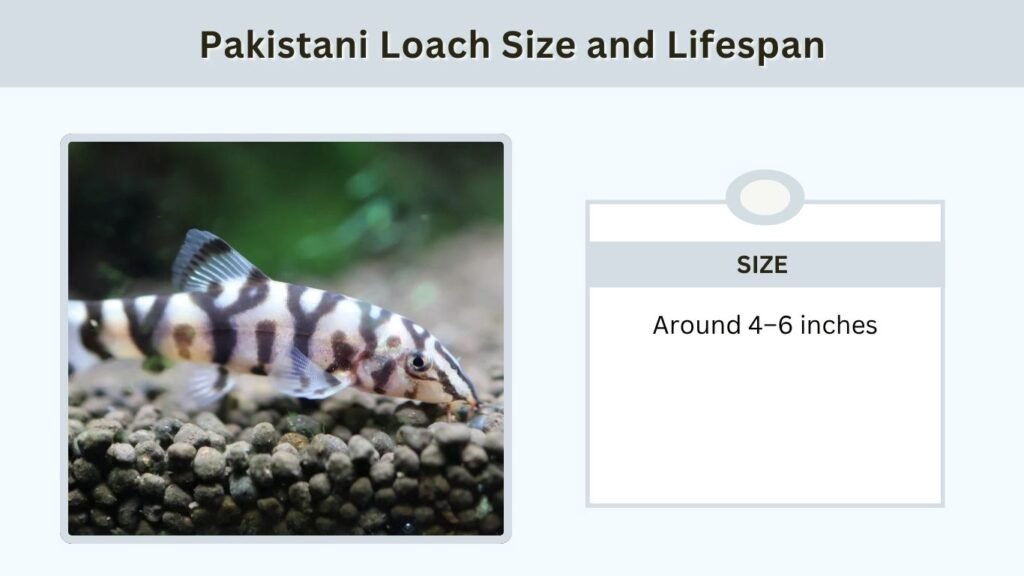
Pakistani loaches commonly reach around 4–6 inches (10–15 cm) as adults, with some reaching approximately 6 inches or slightly more. Juveniles sold in aquarium shops are much smaller, so their eventual size should guide tank planning.
With excellent care, these loaches may live roughly 8–15 years. Consistent water quality, sufficient swimming room, nutritious food, and a stable social group can support a longer, healthier life.
Pakistani Loach Tank Size and Setup
These energetic fish need horizontal swimming space and plenty of cover. A mature aquarium around 48 inches (120 cm) long, holding approximately 60–65 gallons (225–245 liters) or more, is a sensible starting point for a group.
Ideal Tank Requirements
- Temperature: Approximately 72–81°F (22–27°C).
- pH: Around 6.0–7.5, with stable conditions.
- Group size: Keep at least five or six loaches together.
- Substrate: Choose smooth sand or fine, rounded gravel.
- Decorations: Supply driftwood, caves, rocks, and shaded hiding places.
- Filtration: Maintain clean, well-oxygenated water with moderate movement.
Creating a Safe Habitat
Avoid sharp decorations and narrow holes where curious loaches might become trapped. Add a secure aquarium lid because they can jump. Perform regular partial water changes and introduce these fish only after the aquarium has fully cycled.
What Do Pakistani Loaches Eat?

Pakistani loaches are omnivorous, although animal-based foods make up an important part of their natural diet. They investigate the substrate for worms, insect larvae, mollusks, and other small invertebrates.
Best Foods for Pakistani Loaches
- Sinking pellets: Use a nutritious staple designed for bottom feeders.
- Frozen foods: Offer bloodworms, brine shrimp, or similar foods.
- Live foods: Provide suitable worms or insect larvae occasionally.
- Vegetables: Try small portions of blanched zucchini or spinach.
- Snails: Allow them to hunt small pest snails when available.
Do Pakistani Loaches Eat Snails?
Yes. Pakistani loaches often eat small aquarium snails and may help reduce their numbers. However, they should not be purchased solely for snail control. They need varied meals and a properly sized group aquarium, whether snails are present or not.
Pakistani Loach Behavior and Aggression
Pakistani loaches are active, curious, and highly social. They frequently chase one another, investigate caves, and sometimes produce clicking sounds. Their social hierarchy can involve harmless disputes, especially around feeding or favorite shelters.
Are Pakistani Loaches Aggressive?
They are not typically aggressive predators of healthy adult fish, but their boisterous behavior can intimidate timid species. Individuals kept alone or in undersized groups may become unusually defensive or nip fins. Adequate space, food, and companions reduce these problems.
Hiding, Shaking, and Losing Color
Resting sideways, hiding during the day, brief chasing, and becoming pale while sleeping can be normal. However, persistent fading, frantic swimming near the surface, rapid breathing, or repeated attempts to jump warrant a water-quality and health check.
Pakistani Loach Tank Mates and Compatibility

Good companions should tolerate an energetic bottom-dweller without being easily bullied. Choose fish with similar water needs and provide plenty of space to avoid crowding.
Suitable Pakistani Loach Tank Mates
- Larger tetras: Active, robust species can share the middle levels.
- Rasboras and barbs: Peaceful, quick-moving species are often suitable.
- Rainbowfish: Many are compatible in appropriately sized aquariums.
- Other suitable loaches: Similar-sized species may work where space permits.
Fish and Invertebrates to Avoid
Bettas, slow-moving long-finned fish, and delicate guppies can suffer fin nipping. Small ornamental shrimp may be eaten, while snails are likely to become food. Discus are usually poor companions because their warmer conditions and calm feeding habits do not match those of active yoyo loaches.
Pakistani Loach Breeding and Pregnancy
Breeding Pakistani loaches in ordinary home aquariums is extremely uncommon. Although these fish are egg layers, reliably documented home breeding is lacking; commercial production of some related loaches has involved hormonal techniques.
What Does a Pregnant Pakistani Loach Look Like?
A mature female may become fuller-bodied, especially when carrying eggs. However, a swollen belly does not confirm pregnancy or spawning readiness. Overfeeding, constipation, or disease can produce similar changes. Watch for normal appetite and swimming, and investigate unusual swelling rather than assuming eggs are present.
Pakistani Loach Diseases and Health Problems

Like other aquarium fish, Pakistani loaches can become ill when water quality deteriorates or they experience prolonged stress. Early recognition improves the chance of successful treatment.
Warning Signs to Watch For
- White spots: May indicate ich or another skin problem.
- Weight loss: A noticeably thin body can suggest parasites or illness.
- Damaged fins: May result from conflict or infection.
- Labored breathing: Can indicate oxygen or water-quality problems.
- Persistent lethargy: Requires attention when combined with other symptoms.
How to Keep Them Healthy
Quarantine new fish when possible, monitor ammonia and nitrite, and maintain regular water changes. Avoid sudden temperature changes or inappropriate medications; loaches can be sensitive to some treatments. Seek knowledgeable aquatic veterinary guidance for persistent symptoms.
FAQs
How Big Does a Pakistani Loach Get?
Most Pakistani loaches grow to approximately 4–6 inches in home aquariums. A young fish may look suitable for a small tank, but adults need much more space. Plan around the mature size and keep several together.
Can Pakistani Loaches Live With Bettas?
Pakistani loaches are generally unsuitable companions for bettas. Their energetic swimming and occasional fin nipping may stress a slow-moving betta, especially one with long fins. The two species also have different preferences for tank activity and water movement.
Will Pakistani Loaches Eat Shrimp?
Yes, Pakistani loaches may eat small shrimp, including juveniles and smaller ornamental varieties. Larger shrimp are not guaranteed to be safe either. A separate shrimp aquarium is preferable if breeding or preserving a shrimp colony is important.
Why Is My Pakistani Loach Hiding?
Hiding is often normal, especially after introduction to a new aquarium or during resting periods. However, constant hiding can also result from stress, bullying, or poor water conditions. Check group size, shelter availability, and water parameters.
Can Pakistani Loaches Breed in an Aquarium?
Pakistani loaches are egg-laying fish, but successful breeding in typical home aquariums is extremely rare. A round female is not necessarily carrying viable eggs. Keep them for their behavior and appearance rather than expecting predictable aquarium reproduction.