
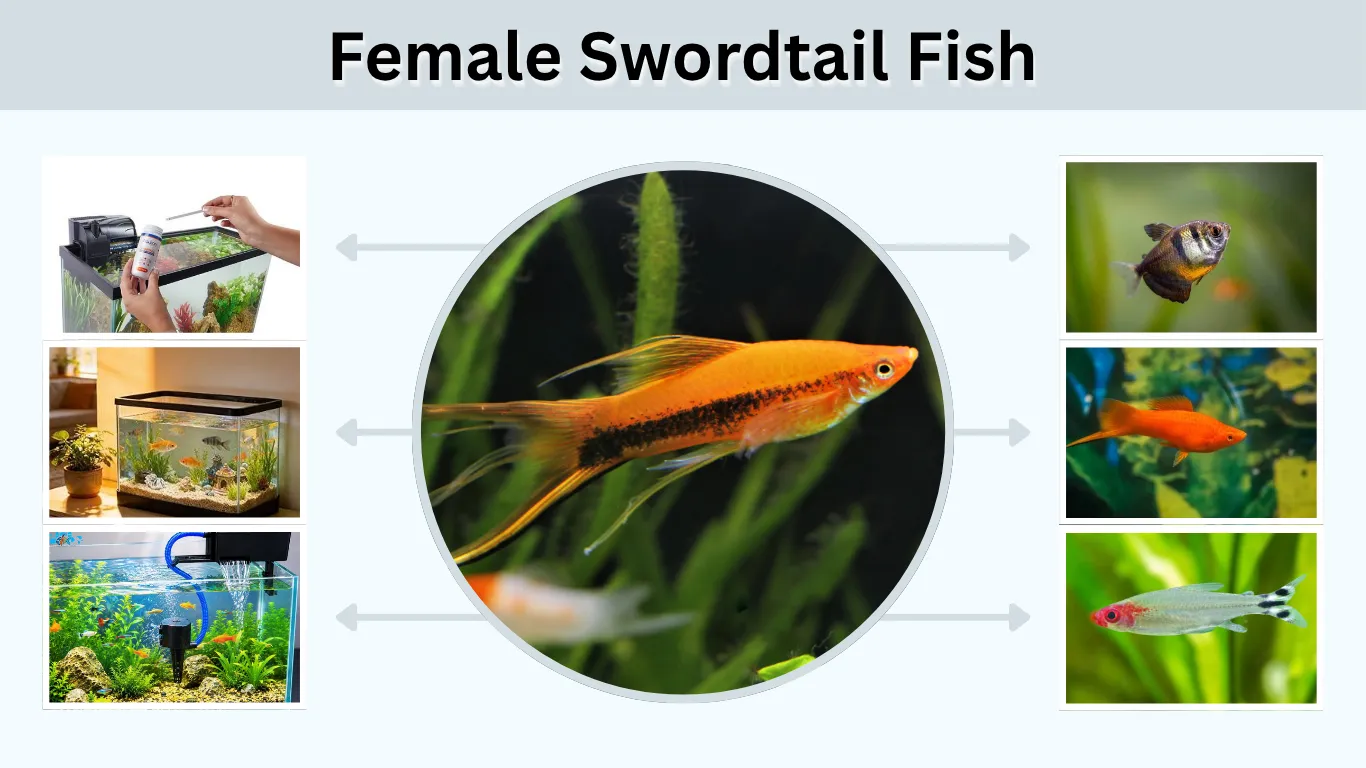
Female swordtail fish are colorful freshwater livebearers known for their peaceful appearance, active swimming behavior, and impressive reproductive abilities. Unlike males, females typically have rounded bodies, fan-shaped anal fins, and tails without the distinctive sword extension. These popular aquarium fish come in several attractive varieties, including red, koi, pineapple, and Sanke swordtails. Understanding how to identify a female swordtail, recognize pregnancy, manage aggression, and provide proper aquarium care is essential for successful fishkeeping. This guide explains female swordtail characteristics, breeding behavior, tank requirements, and differences between males and females.
How to Identify a Female Swordtail Fish
Female swordtails belong to the species Xiphophorus hellerii, a freshwater livebearer native to parts of Central America. They are generally larger and fuller-bodied than males, especially when carrying and developing young. Although body shape and tail length offer identification clues, examining the anal fin is the most dependable way to distinguish mature females from males.
Female Swordtail Identification Features
Female swordtails have several recognizable physical characteristics:
- Body shape: Usually larger, deeper, and rounder than males.
- Tail fin: Typically lacks the long, sword-shaped extension.
- Anal fin: Broad and fan-shaped rather than narrow and pointed.
- Body color: May be red, orange, green, black, white, or multicolored.
- Adult size: Often reaches approximately 4–6 inches, depending on the strain.
- Gravid spot: Some females show a darker area near the rear abdomen.
Female Swordtail Size and Lifespan
Female swordtails can grow larger than their male counterparts, sometimes reaching approximately 6 inches (15 cm) in total length.
Their typical aquarium lifespan is around three to five years. Genetics, nutrition, water quality, and stress levels influence their overall health and longevity.
Male vs. Female Swordtail Fish: Key Differences
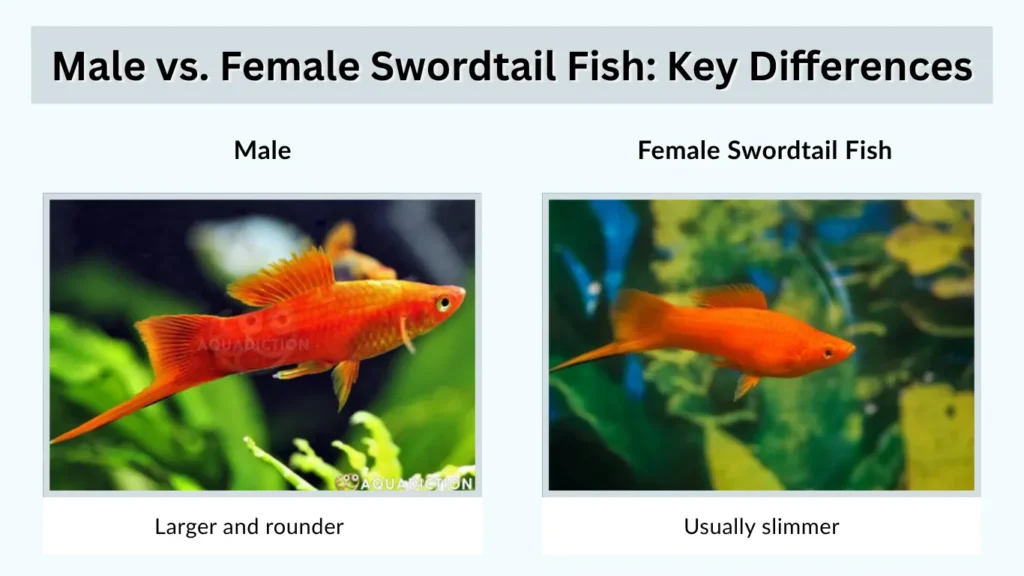
Male and female swordtails display distinct physical characteristics as they mature. The most recognizable feature is the male’s elongated lower tail extension, commonly called the sword. However, immature males may initially resemble females, making early identification difficult. The anal fin provides a more reliable distinction because mature males develop a specialized reproductive structure.
Difference Between Male and Female Swordtail Fish
| Feature | Female Swordtail | Male Swordtail |
| Body shape | Larger and rounder | Usually slimmer |
| Tail extension | Usually absent | Distinctive sword |
| Anal fin | Broad, fan-shaped | Narrow gonopodium |
| Adult size | Generally larger | Generally smaller |
| Reproductive role | Gives birth to fry | Fertilizes females |
| Behavior | Usually less territorial | May compete with males |
Do Female Swordtails Have Swords?
Female swordtails typically do not develop the long tail extension associated with mature males. Their tails are generally rounded or fan-shaped.
However, ornamental fin variations can complicate identification. A fish with an unusual tail should be sexed by examining its anal fin rather than relying entirely on tail appearance.
Female Swordtail Pregnancy and Giving Birth
Female swordtails reproduce through internal fertilization and give birth to free-swimming young rather than laying eggs. They can reproduce repeatedly under favorable aquarium conditions, sometimes producing several broods after a single mating. Pregnancy usually causes visible changes in abdominal shape, although swelling alone does not confirm that a fish is carrying young.
How to Tell if a Female Swordtail Is Pregnant
Common signs of pregnancy include:
- Rounded abdomen: The belly gradually becomes larger as embryos develop.
- Gravid spot: A darker area may become noticeable near the rear abdomen.
- Reduced activity: Some females become less active shortly before delivery.
- Hiding behavior: Pregnant females may seek shelter among plants.
- Changes in feeding: Appetite may fluctuate as birth approaches.
These symptoms are not definitive. Severe swelling, raised scales, or abnormal swimming may indicate illness rather than pregnancy.
How Long Are Female Swordtails Pregnant?
Female swordtails generally have a gestation period of approximately four to six weeks, depending on temperature and individual conditions.
A mature female may produce dozens of fry in one brood, occasionally more than 100. Because female swordtails can store sperm, additional pregnancies may occur without another mating.
Female Swordtail Giving Birth
Before giving birth, some females become less active and move into heavily planted areas. Newborn swordtails emerge as fully formed miniature fish capable of swimming independently.
Dense vegetation provides protection because adult swordtails may eat their fry. A separate nursery aquarium can improve survival when breeding is the goal.
Female Swordtail Care and Aquarium Requirements
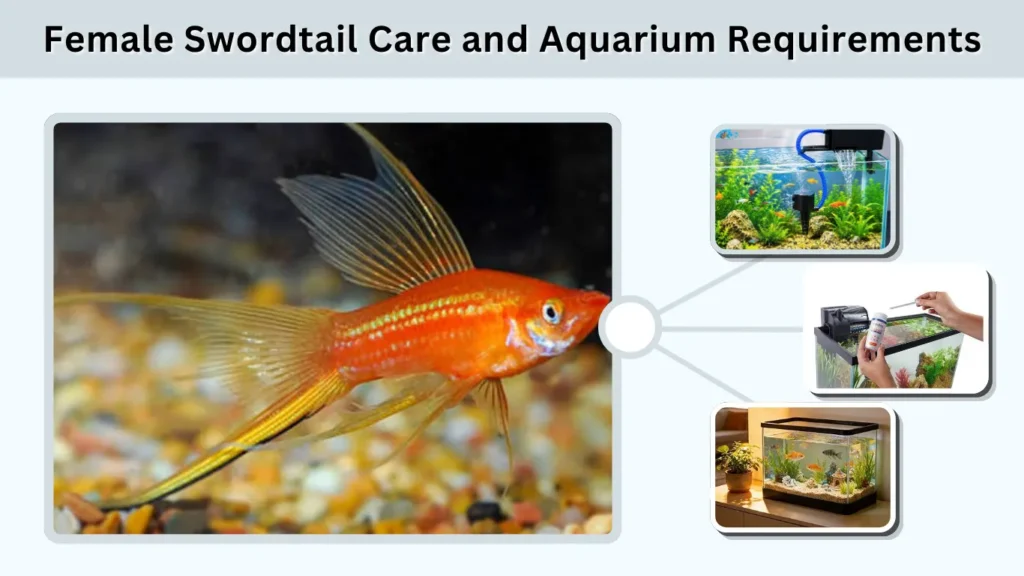
Female swordtails are relatively hardy freshwater fish, making them suitable for beginner and intermediate aquarists. However, they require sufficient swimming space, stable water chemistry, and appropriate social conditions. Female fish may experience stress when repeatedly chased by males, so careful aquarium stocking is important. A planted tank with open swimming areas supports natural behavior.
Female Swordtail Tank Size and Water Parameters
Recommended aquarium conditions include:
- Tank size: At least 30 gallons for a small group.
- Temperature: 72–82°F (22–28°C).
- pH: Approximately 7.0–8.0.
- Water hardness: Moderately hard to hard water.
- Filtration: Reliable filtration and good oxygenation.
- Decorations: Live plants, driftwood, and sheltered areas.
- Lighting: Moderate aquarium lighting.
Female Swordtail Diet and Feeding
Female swordtails are omnivorous fish that eat plant material, small aquatic organisms, and prepared aquarium foods.
Provide quality flakes or pellets supplemented with spirulina, blanched vegetables, brine shrimp, and daphnia. Feed small portions once or twice daily while avoiding excessive food that could damage water quality.
Why Is My Female Swordtail Aggressive?
Although female swordtails are generally peaceful, occasional chasing, fin nipping, and territorial behavior can occur. Aggression may develop when fish compete for food, occupy overcrowded aquariums, or experience stressful social conditions. Understanding the underlying cause helps aquarists reduce conflicts and maintain healthier fish.
Common Causes of Female Swordtail Aggression
Female swordtails may become aggressive because of limited swimming space, competition, or stressful interactions with other fish.
A female may chase another female during feeding or when establishing dominance. Repeated harassment from males can also contribute to stress and unusual defensive behavior.
How to Reduce Female Swordtail Aggression
Provide a spacious aquarium with planted hiding places and visual barriers. Avoid overcrowding, maintain suitable water parameters, and distribute food across multiple areas.
A common breeding-group recommendation is one male for every two or three females, with three or more females often preferable. This helps distribute courtship pressure rather than concentrating it on one female.
Can Female Swordtails Turn Into Males?
The question of whether female swordtails can change sex is frequently discussed among aquarium enthusiasts. Some fish initially identified as females later develop male characteristics, including a gonopodium and sword-shaped tail. In many cases, these fish are late-maturing males that were incorrectly identified during their development. However, scientific studies have also documented exceptional cases of genuine female-to-male sex reversal in certain swordtail strains.
Why Some Female Swordtails Develop Male Features
Swordtail males do not all mature at the same rate. Some develop their characteristic sword and gonopodium considerably later than others.
As a result, a young male may appear female for several months before becoming recognizable. This delayed development explains many reported cases of apparent sex change.
Can a True Female Swordtail Become Male?
Rare cases of functional female-to-male sex reversal have been documented scientifically, including fish that previously produced offspring as females.
However, such changes should not be considered normal or predictable aquarium behavior. A late-developing male is often a more likely explanation when a supposedly female fish begins growing a sword.
Popular Female Swordtail Fish Types
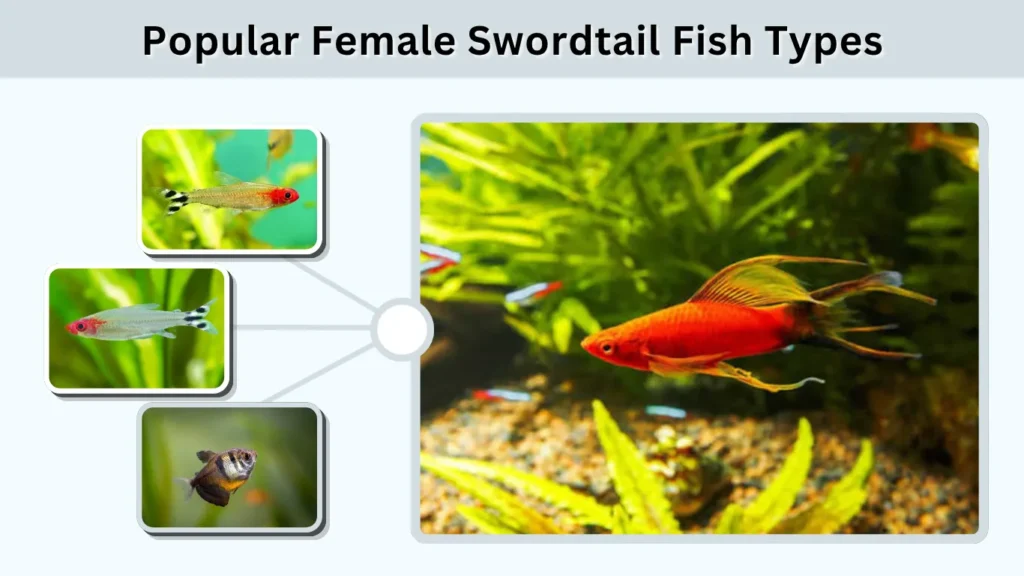
Female swordtails are available in numerous ornamental varieties developed through selective breeding. Although their basic care requirements remain similar, they differ in coloration, body patterns, and fin shape. Correct identification is particularly important when selecting breeding fish or maintaining a specific aquarium strain.
Common Female Swordtail Varieties
Popular varieties include:
- Red Swordtail Female: Displays bright red or orange coloration across the body.
- Sanke Swordtail Female: Features attractive white, orange, and black koi-like markings.
- Koi Swordtail Female: Has patterned red, white, or orange coloration.
- Pineapple Swordtail Female: Shows warm yellow-orange coloration with reddish areas.
- Red Velvet Swordtail Female: Features rich, relatively uniform red coloration.
- Lyretail Swordtail Female: Displays elongated upper and lower tail-fin extensions.
- Neon Swordtail Female: May exhibit bright, reflective coloration depending on its breeding line.
Female Swordtail vs. Female Swordtail Guppy
A female swordtail and a female swordtail guppy are not the same fish. The term “swordtail guppy” usually describes a guppy variety with sword-like tail-fin extensions.
Swordtail fish belong to Xiphophorus hellerii, while guppies belong to Poecilia reticulata. These species differ in size, body shape, and reproductive genetics.
FAQs
1. Can Female Swordtails Live Without Males?
Yes. Female swordtails can live in female-only groups when provided with appropriate aquarium conditions. However, previously mated females may continue producing fry because they can store sperm after mating.
2. How Many Female Swordtails Should Be Kept With One Male?
A common recommendation is one male with two or three females, preferably three or more when space permits. This ratio helps reduce constant male attention toward an individual female and supports more balanced group behavior.
3. Can Female Swordtails Breed With Male Platies?
Yes. Swordtails and platies belong to the genus Xiphophorus and can produce hybrids. However, intentional crossbreeding may produce unpredictable coloration and reduce the consistency of established ornamental breeding lines.
4. Why Is My Female Swordtail Hiding?
Female swordtails may hide because of stress, aggression, unfamiliar surroundings, or approaching birth. Persistent hiding accompanied by poor appetite, abnormal breathing, or difficulty swimming may indicate a health problem requiring investigation.
5. Can Female Swordtails Give Birth Without a Male Present?
Yes. Female swordtails can store viable sperm from previous mating encounters and produce additional broods without a male currently present. Therefore, newly purchased females may give birth even when maintained in female-only aquariums.