
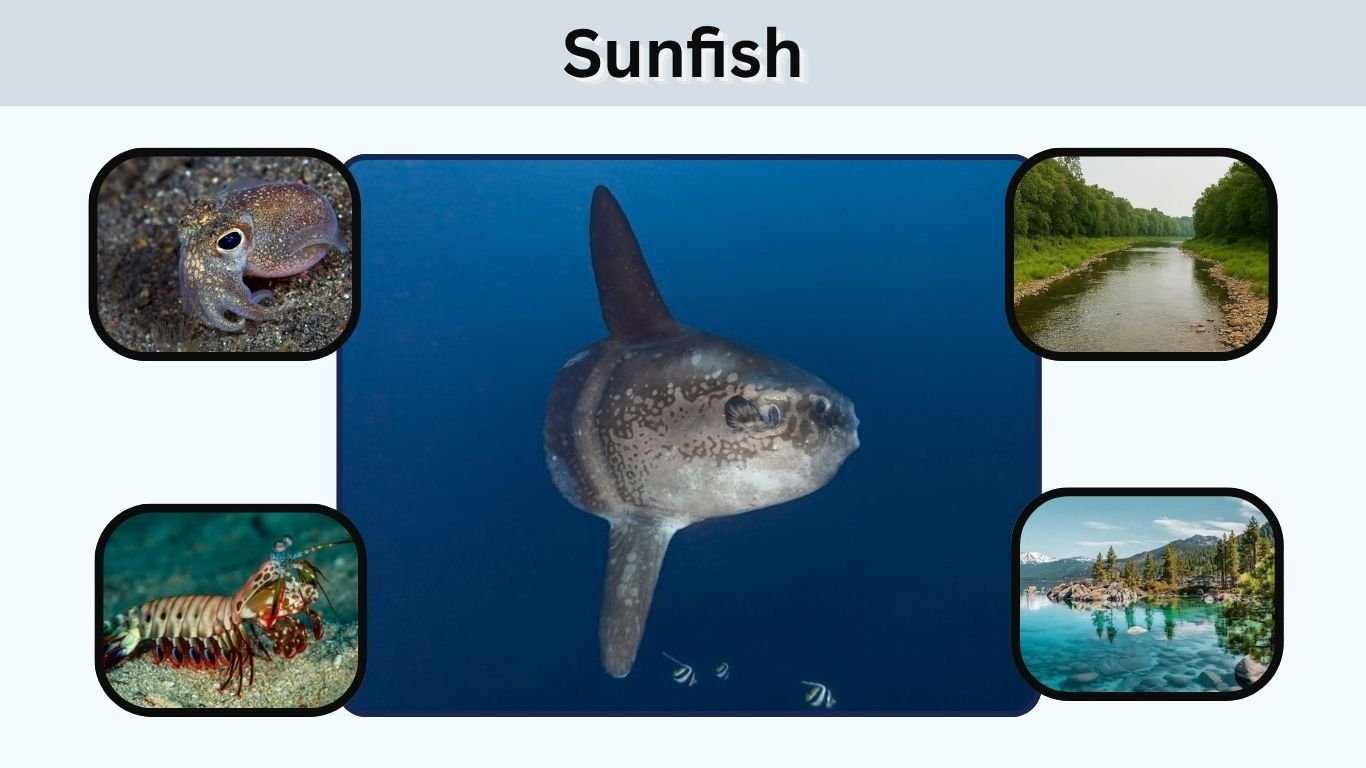
The name sunfish can describe two very different groups of fish. In the ocean, it commonly refers to huge molas such as the ocean sunfish (Mola mola), famous for their flattened bodies and unusual appearance. In freshwater, “sunfish” refers to species such as bluegill, green sunfish, pumpkinseed, and redear sunfish. These fish differ dramatically in size, habitat, diet, and behavior. Understanding the distinction makes it much easier to identify a sunfish and learn where each type lives.
What Is a Sunfish?
“Sunfish” is a common name rather than one specific type of fish. Marine sunfishes belong to the family Molidae and include enormous open-ocean species. Freshwater sunfishes generally belong to the family Centrarchidae, which also contains familiar North American sport fish. The two groups are not close equivalents despite sharing the same common name.
Ocean Sunfish
The ocean sunfish, or Mola mola, is a large marine fish with a tall, flattened body and an abbreviated rear end. Instead of a normal tail fin, adults have a structure called a clavus that functions somewhat like a rudder.
Ocean sunfish occur in tropical and temperate oceans worldwide and can travel considerable distances through open water.
Freshwater Sunfish
Freshwater sunfish are much smaller fishes commonly found in North American lakes, ponds, reservoirs, streams, and rivers.
Bluegill, green sunfish, pumpkinseed, redear sunfish, longear sunfish, and orangespotted sunfish are examples. Many have deep, laterally compressed bodies and colorful markings that become particularly noticeable during the breeding season.
Types of Sunfish
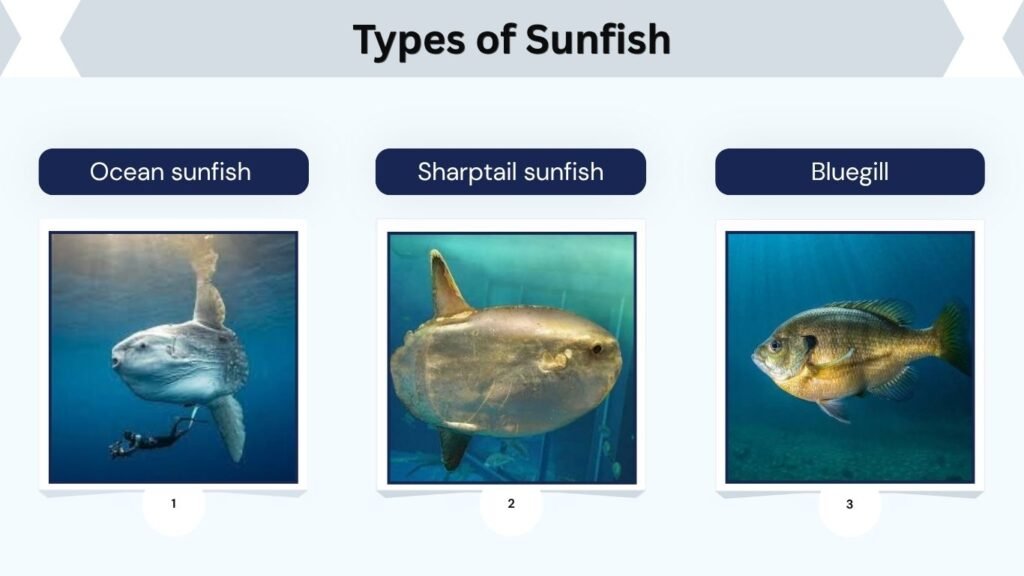
There are numerous fishes commonly called sunfish, so identification begins by determining whether the fish came from saltwater or freshwater. Marine molas form one distinctive family, while freshwater species represent several genera within Centrarchidae.
Common Sunfish Types
Some well-known sunfish include:
- Ocean sunfish – Mola mola
- Giant sunfish – Mola alexandrini
- Hoodwinker sunfish – Mola tecta
- Sharptail sunfish – Masturus lanceolatus
- Slender sunfish – Ranzania laevis
- Bluegill – Lepomis macrochirus
- Green sunfish – Lepomis cyanellus
- Pumpkinseed – Lepomis gibbosus
- Redear sunfish – Lepomis microlophus
- Longear sunfish – Lepomis megalotis
- Orangespotted sunfish – Lepomis humilis
Five living species are currently recognized within the marine sunfish family Molidae.
Green Sunfish
The green sunfish is a relatively small freshwater species recognizable by its large mouth, compressed body, and greenish coloration with blue markings around the head.
It tolerates a broad range of environmental conditions and commonly occupies ponds, creeks, rivers, and reservoirs. Green sunfish can also hybridize with other freshwater sunfish, including bluegill.
Bluegill Sunfish
Bluegill are among the most familiar freshwater sunfish in North America. They usually inhabit lakes, ponds, reservoirs, and slow-moving waters containing vegetation and structure.
The characteristic dark spot near the rear of the dorsal fin and dark ear flap can help with identification. Bluegill have also been widely introduced outside their original range for sport fishing and as forage fish.
Ocean Sunfish: Mola Mola
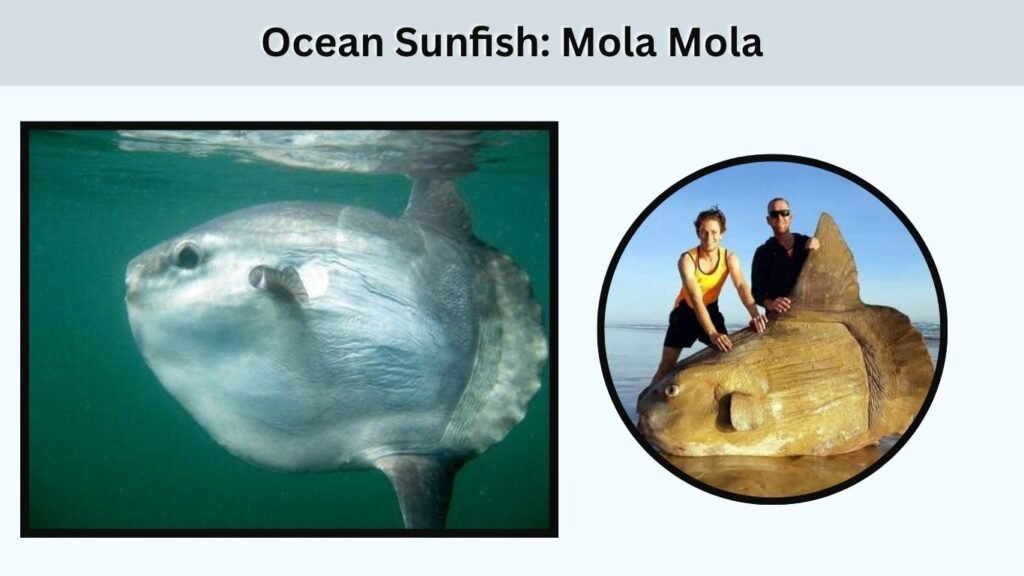
The ocean sunfish has one of the most unusual body shapes among large marine fishes. Its body is extremely deep and laterally compressed, with large dorsal and anal fins but no conventional adult tail. Although it may look awkward, research has shown that molas are active swimmers capable of vertical dives and substantial movements through the ocean.
What Does an Ocean Sunfish Look Like?
Important identifying characteristics include:
- Huge, flattened body
- Gray to silvery coloration
- Small mouth relative to body size
- Large dorsal and anal fins
- No conventional tail fin
- Rounded clavus at the rear
- Small pectoral fins
- Thick, rough-looking skin
Its round shape explains the name Mola, derived from a Latin word referring to a millstone.
Why Is It Called a Sunfish?
Ocean sunfish are sometimes observed lying near the ocean surface on their sides, which can create the appearance that they are basking in sunlight.
However, they are not simply surface-dwelling fish. Tagging research has shown that molas regularly dive and move vertically through the water column while feeding and traveling.
How Big Do Sunfish Get?
Sunfish size depends completely on which group is being discussed. Freshwater species can fit easily into a person’s hands, while marine molas can become enormous. In fact, members of the Molidae family rank among the world’s largest bony fishes, creating one of the most dramatic size differences among animals sharing the same common name.
Ocean Sunfish Size
Mola mola can grow several meters across and reach enormous weights. Monterey Bay Aquarium describes it as one of the giant fishes of the open ocean, while the closely related giant sunfish, Mola alexandrini holds the record for the heaviest known bony fish.
The giant sunfish can exceed 2,700 kilograms, making it dramatically heavier than any freshwater sunfish.
Freshwater Sunfish Size
Most freshwater sunfish remain comparatively small.
Bluegill commonly measure only several inches long, although large specimens can grow considerably bigger under favorable conditions. Green sunfish and pumpkinseed are similarly modest in size.
Water quality, food availability, age, genetics, and competition all influence adult size.
Sunfish Habitat
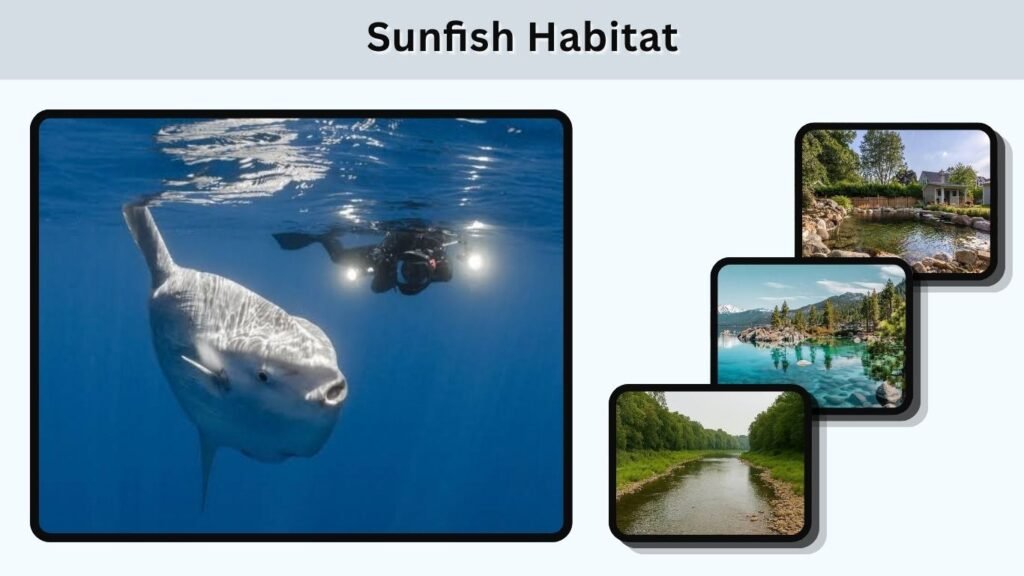
The two major sunfish groups occupy completely different environments. Marine sunfish roam tropical and temperate oceans, whereas freshwater sunfish live in inland waters. Even among freshwater species, habitat preferences differ according to water flow, vegetation, depth, clarity, temperature, and availability of food and spawning sites.
Ocean Sunfish Habitat
Ocean sunfish occur worldwide in tropical and temperate seas.
They inhabit the open ocean and may travel between surface waters and considerable depths. Rather than drifting helplessly with currents, tagged individuals have demonstrated the ability to swim actively and cover substantial distances.
Freshwater Sunfish Habitat
Freshwater sunfish can occupy:
- Ponds
- Lakes
- Reservoirs
- Creeks
- Small rivers
- Slow-moving streams
- Vegetated shorelines
- Backwaters
For example, orangespotted sunfish prefer slow-moving or still waters in creeks, rivers, ponds, and lakes.
What Do Sunfish Eat?
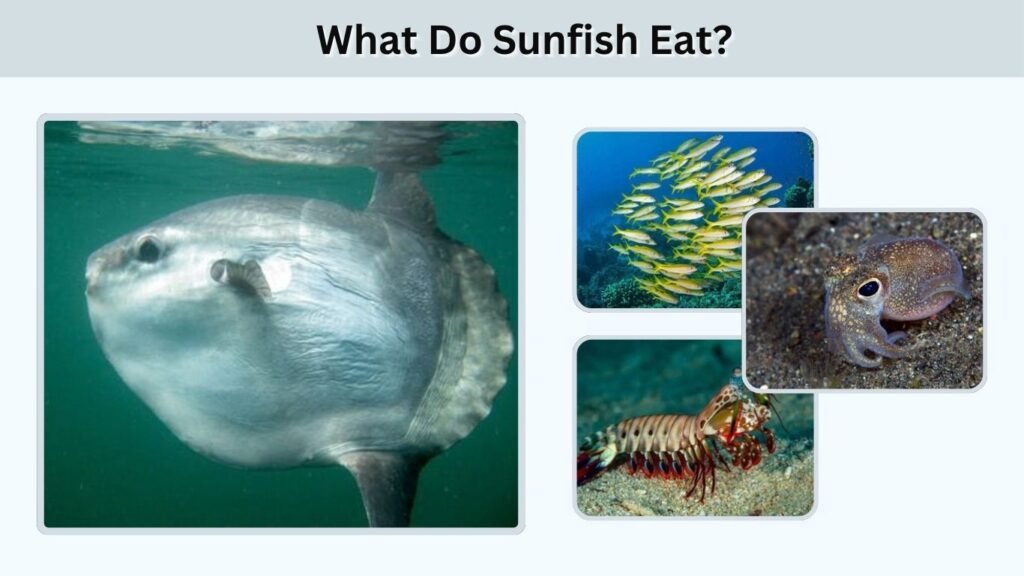
Sunfish diets vary greatly between marine and freshwater species. Ocean molas feed on marine animals found throughout the water column, while freshwater sunfish eat insects, crustaceans, plankton, and smaller aquatic animals. Diet also changes with age and prey availability.
What Ocean Sunfish Eat
Ocean sunfish can consume:
- Jellyfish
- Salps
- Other gelatinous zooplankton
- Squid
- Small fish
- Crustaceans
- Various invertebrates
- Some algae
Larger Mola mola rely heavily on gelatinous prey, although describing them as animals that eat only jellyfish would be inaccurate.
What Freshwater Sunfish Eat
Freshwater species generally eat aquatic insects, insect larvae, small crustaceans, zooplankton, worms, and small fish.
Diet differs by species and size. Orangespotted sunfish, for example, consume zooplankton, insect larvae, and smaller fishes.
Sunfish Reproduction
Reproduction differs enormously between marine molas and freshwater sunfish. The breeding behavior of freshwater species is relatively easy to observe in shallow water, whereas many aspects of ocean sunfish reproduction remain difficult for scientists to study because the adults spend much of their lives far offshore.
Freshwater Sunfish Nests
Male freshwater sunfish commonly construct circular nests in shallow areas.
They clear depressions in gravel, sand, or other bottom material. After spawning, males of many species remain near the nest and guard the eggs until they hatch.
Orangespotted sunfish males, for example, build round gravel nests and guard and fan the eggs.
Baby Ocean Sunfish
Baby ocean sunfish look remarkably different from adults.
Young molas begin life extremely small and may have prominent spines, giving them an appearance more reminiscent of their pufferfish relatives. As they mature, they undergo dramatic changes until they develop the enormous rounded body associated with adult molas.
Sunfish Predators and Parasites
Ocean sunfish are famous for carrying numerous external and internal parasites. Their enormous bodies provide habitat for many parasite species, while cleaner fish and seabirds may sometimes remove parasites from their skin. Freshwater sunfish face an entirely different community of predators.
Ocean Sunfish Predators
Known predators include sea lions, sharks, and killer whales. Humans also catch sunfish in some regions.
Monterey Bay Aquarium notes that nearly 40 kinds of parasites have been observed living in or on ocean sunfish.
Freshwater Sunfish Predators
Smaller freshwater sunfish may be eaten by largemouth bass, pike, catfish, birds, turtles, and larger members of their own species.
Juveniles are particularly vulnerable because their small size makes them suitable prey for many freshwater predators.
Ocean Sunfish vs Freshwater Sunfish
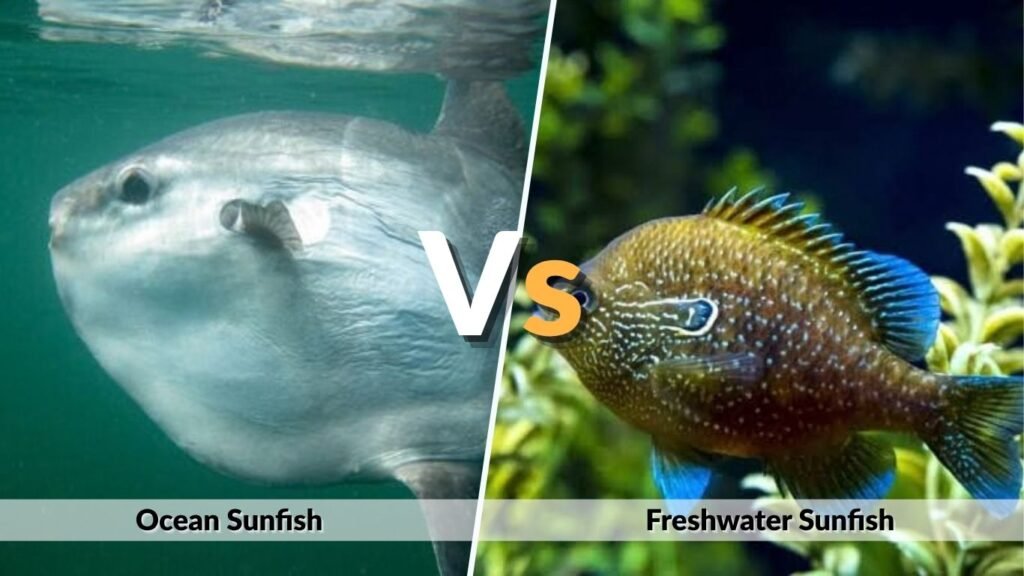
Despite sharing a common name, ocean and freshwater sunfish are fundamentally different fishes. The easiest way to separate them is by habitat and size. A massive, almost circular fish encountered offshore is a marine mola, while a small colorful fish from a North American pond is probably a freshwater sunfish.
Main Differences
- Habitat: Ocean vs lakes, ponds and rivers
- Family: Molidae vs Centrarchidae
- Size: Marine species can be enormous; freshwater species are much smaller
- Shape: Molas have unusual truncated bodies; freshwater species have conventional tails
- Diet: Marine prey vs freshwater insects, crustaceans and small fish
- Distribution: Molas occur globally in suitable oceans; freshwater sunfish are strongly associated with North America
FAQs
1. What is a sunfish?
Sunfish can mean a marine fish belonging to the family Molidae or one of several freshwater fishes in the family Centrarchidae. Ocean sunfish and freshwater sunfish are very different animals.
2. Is a bluegill a sunfish?
Yes. Bluegill (Lepomis macrochirus) belongs to the freshwater sunfish family Centrarchidae.
3. How big can an ocean sunfish get?
Ocean sunfish can reach enormous sizes of several meters and hundreds of kilograms. The related giant sunfish, Mola alexandrini, can exceed 2,700 kilograms.
4. What do ocean sunfish eat?
Ocean sunfish eat gelatinous animals such as jellyfish and salps along with squid, fish, crustaceans, and other marine organisms.
5. Are ocean sunfish and freshwater sunfish related?
They are not members of the same family. Ocean sunfish belong to Molidae, whereas familiar freshwater sunfish such as bluegill and green sunfish belong to Centrarchidae.