
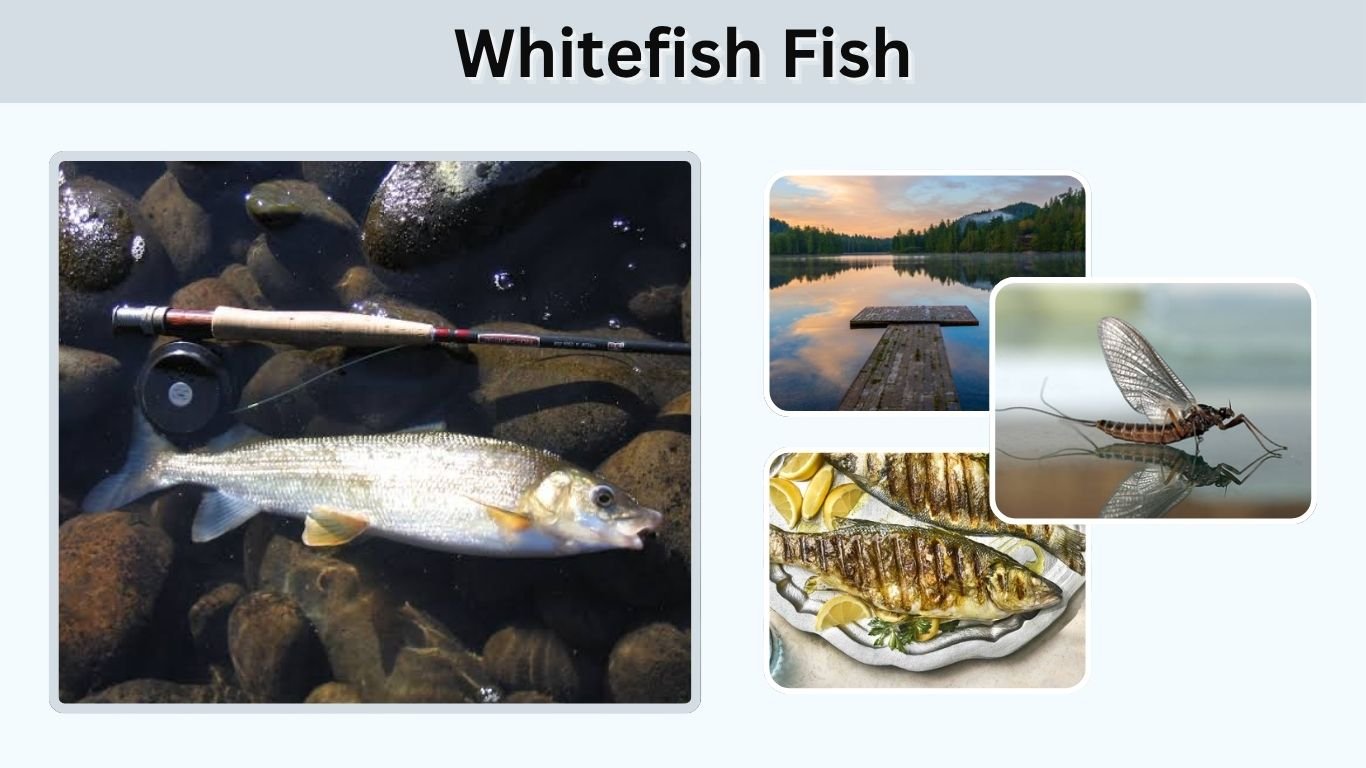
Whitefish fish are freshwater and marine fish valued for their mild flavor, nutritious flesh, and importance in aquatic ecosystems. The term commonly refers to freshwater species such as lake whitefish and mountain whitefish, although seafood markets also use “white fish” to describe various pale-fleshed fish. These species differ in appearance, habitat, size, and feeding behavior. Many inhabit cold lakes and rivers across North America, while others live in saltwater environments. This guide explores whitefish identification, common species, diet, habitat, taste, nutrition, and popular cooking methods.
What Is a Whitefish Fish?
Whitefish are a group of freshwater fish closely related to salmon and trout, particularly species belonging to the subfamily Coregoninae. They generally have streamlined bodies, silvery scales, and relatively small mouths. However, the term whitefish can also describe unrelated marine fish or seafood with white flesh. Understanding these different meanings helps distinguish true freshwater whitefish from commercially marketed white fish.
Whitefish Fish Identification
Freshwater whitefish generally share several recognizable characteristics:
- Body shape: Streamlined, elongated, and moderately compressed.
- Body color: Silvery sides with darker gray, olive, or brownish backs.
- Scales: Smooth-looking, reflective scales covering the body.
- Mouth: Relatively small, often positioned beneath an overhanging snout.
- Fins: Usually include a small adipose fin behind the dorsal fin.
- Size: Varies substantially depending on species and environment.
Is Whitefish the Same as White Fish?
Not necessarily. The term “whitefish” often refers to freshwater species such as lake whitefish, while “white fish” is a broader culinary description.
For example, cod, haddock, pollock, and tilapia are commonly marketed as white fish because of their pale flesh.
These seafood species are not necessarily closely related to freshwater whitefish, despite their similar culinary uses.
Common Types of Whitefish Fish
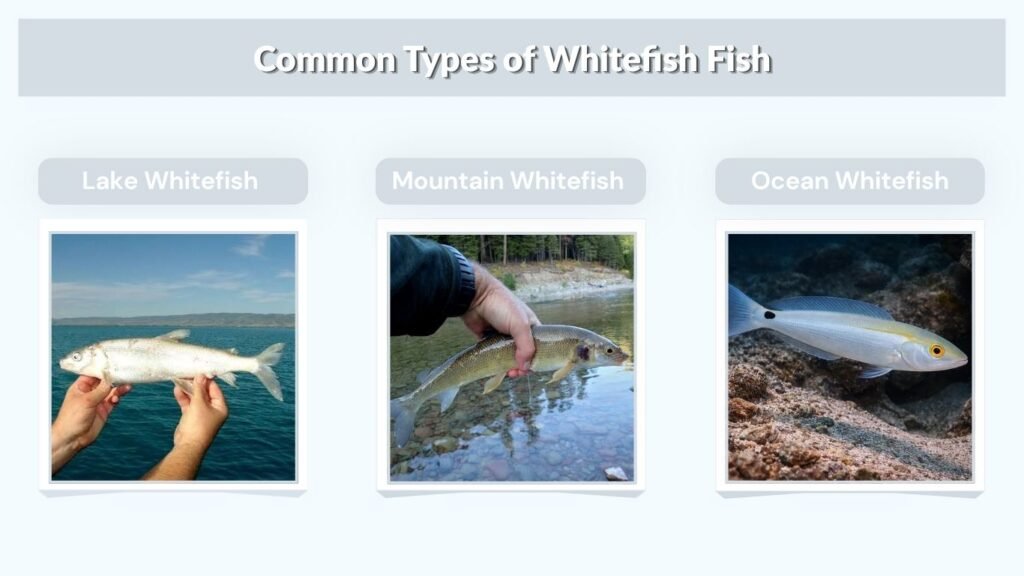
Several fish species carry the name whitefish, but they do not all belong to the same genus or inhabit similar environments. Freshwater whitefish are especially common in northern North America and Europe, while ocean whitefish occupy marine habitats. Recognizing these differences is useful for anglers, seafood consumers, and anyone interested in freshwater fish identification.
Lake Whitefish (Coregonus clupeaformis)
Lake whitefish inhabit cold freshwater lakes, particularly throughout the Great Lakes region of North America.
They have silvery bodies, relatively small heads, and small mouths adapted for feeding near the lake bottom.
This species supports important commercial fisheries and is widely appreciated for its delicate flavor.
Mountain Whitefish (Prosopium williamsoni)
Mountain whitefish live in cold rivers, streams, and some lakes across western North America.
They are particularly common in suitable Montana waterways.
Their cylindrical bodies, pointed snouts, and small mouths distinguish them from many trout species.
Ocean Whitefish (Caulolatilus princeps)
Ocean whitefish are marine fish belonging to the tilefish family rather than the freshwater whitefish group.
They inhabit Pacific coastal waters, including areas around Southern California and Baja California.
Their diet consists mainly of bottom-dwelling invertebrates and small marine animals.
Where Do Whitefish Fish Live?
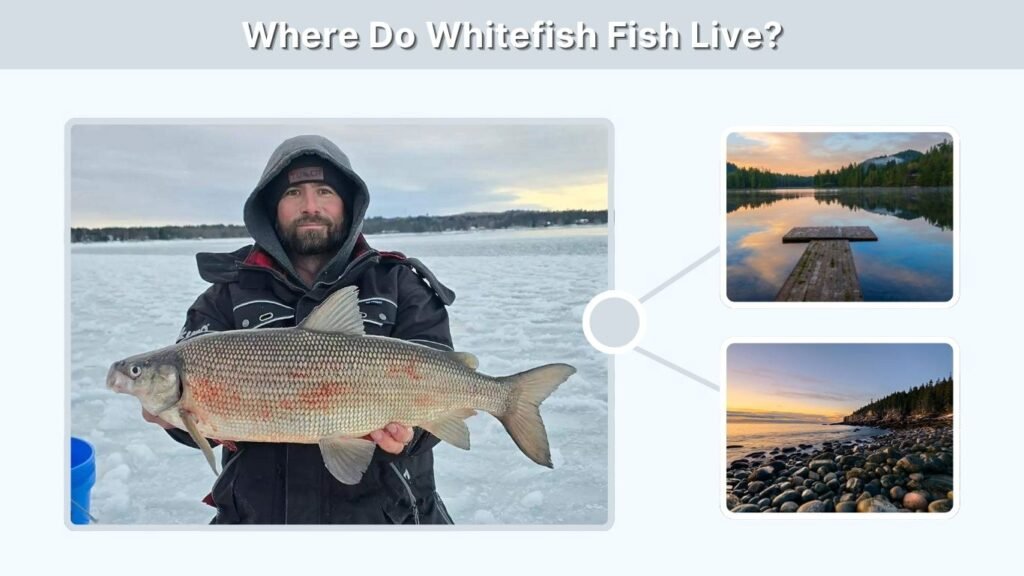
Whitefish inhabit diverse aquatic environments, but most true freshwater species prefer cold, well-oxygenated water. Some occupy deep lakes, while others thrive in rivers with gravel bottoms and steady currents. Ocean whitefish have different habitat requirements and live in marine environments. Their distribution depends on water temperature, food availability, spawning conditions, and geographic range.
Freshwater Whitefish Habitat
Lake whitefish generally occupy cool, deeper lake environments, often feeding near the bottom.
During autumn spawning, they may move toward shallow reefs, rocky shorelines, and suitable tributaries.
Mountain whitefish commonly inhabit cold, flowing rivers and streams, although they also occur in reservoirs and lakes.
Whitefish Fish in Montana and Ontario
Montana is particularly well known for mountain whitefish, which inhabit many western rivers and streams.
These fish are native to the region and contribute to freshwater ecosystems alongside trout and other species.
Ontario supports lake whitefish populations throughout the Great Lakes and numerous inland lakes. Whitefish are also important to regional fisheries and traditional food systems.
Do Whitefish Live in Saltwater?
Some fish called whitefish inhabit saltwater, but freshwater whitefish and ocean whitefish are different taxonomic groups.
Ocean whitefish commonly occur near rocky reefs, sandy areas, and offshore island habitats.
Meanwhile, many fish marketed as white fish, including cod and haddock, live in marine environments.
What Do Whitefish Eat and How Big Do They Get?

Whitefish feeding habits vary according to species, age, and available food sources. Many freshwater species consume small aquatic invertebrates living near lake or river bottoms. Their relatively small mouths are adapted for collecting these organisms. Growth and maximum body size also vary significantly, with some species remaining small while others develop into commercially valuable food fish.
What Do Whitefish Fish Eat?
Common food sources include:
- Aquatic insect larvae: Important prey for mountain whitefish.
- Small crustaceans: Found in freshwater and marine habitats.
- Zooplankton: Particularly important for some juvenile whitefish.
- Mollusks: Consumed by larger lake whitefish.
- Aquatic insects: Captured near river and lake bottoms.
- Small marine animals: Eaten by ocean whitefish species.
Whitefish Size and Growth
Lake whitefish commonly reach lengths of approximately 15–25 inches, although larger individuals occur.
Mountain whitefish often measure around 10–16 inches in Montana waterways.
Growth depends on food availability, temperature, and habitat quality.
Ocean whitefish can grow considerably larger than many small freshwater species, sometimes exceeding three feet.
Whitefish Reproduction and Lifecycle
Many freshwater whitefish reproduce during autumn as water temperatures decrease.
Females release eggs over gravel, rocky bottoms, or other suitable spawning substrates.
The eggs typically develop through winter and hatch during spring.
Young fish initially consume small organisms before gradually transitioning toward the adult diet.
What Does Whitefish Fish Taste Like?
Whitefish is popular because many species have mild, pleasant flavors that work well with different cooking styles. However, taste and texture depend on the particular fish. Lake whitefish generally offers a richer flavor than very lean marine white fish such as cod. Freshness, fat content, preparation, and cooking time all influence the final taste and eating experience.
Whitefish Taste and Texture
Lake whitefish has tender, pale flesh with a mild, slightly sweet flavor.
Its natural fat content can make it taste richer than some lean white-fleshed fish.
When properly cooked, the flesh separates into delicate flakes.
Mountain whitefish also has edible, mild-flavored meat, making it suitable for several freshwater fish recipes.
Is Whitefish Good to Eat?
Yes. Whitefish can provide protein, vitamin B12, and other essential nutrients. The amount of fat and omega-3 fatty acids varies by species.
Whitefish can be part of a balanced diet when properly handled and prepared.
For wild-caught freshwater fish, check local fish-consumption advisories because contaminant levels vary by waterbody and species.
Popular Whitefish Fish Recipes
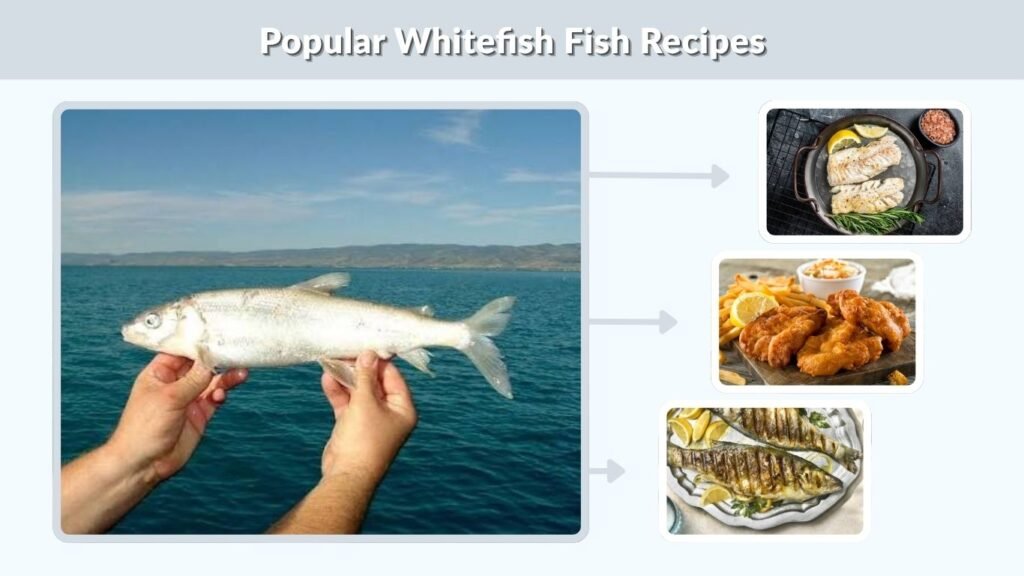
Whitefish can be prepared through baking, frying, grilling, smoking, and other cooking techniques. Its mild flavor pairs well with lemon, garlic, herbs, butter, and light seasonings. Different species may require different cooking methods because their flesh varies in thickness and fat content. Traditional regional dishes also demonstrate how whitefish has become an important food source.
Easy Ways to Cook Whitefish
Popular cooking methods include:
- Baked whitefish: Season fillets with lemon, garlic, and herbs before baking.
- Pan-fried whitefish: Cook in a lightly oiled skillet until flaky.
- Grilled whitefish: Use firm fillets and gentle heat to prevent sticking.
- Smoked whitefish: Prepare with appropriate curing and temperature controls.
- Whitefish tacos: Add cooked fish to tortillas with cabbage and fresh toppings.
- Whitefish cakes: Combine cooked, flaked fish with potatoes and seasonings.
Whitefish Fish and Chips
Whitefish can be used in fish and chips because its mild flavor complements crispy batter.
Cod and haddock are traditional choices, but suitable freshwater whitefish can also be used.
The fish should be cooked thoroughly without drying out its delicate flesh.
Traditional Whitefish Fish Boil
A traditional Great Lakes fish boil often features lake whitefish cooked with potatoes and onions.
This regional dish is particularly associated with Wisconsin’s Door County.
The ingredients are boiled together, producing a simple meal that highlights the natural flavor of the fish.
FAQs
Whitefish are often confused with other freshwater and saltwater species because their common name has several meanings. Anglers and seafood consumers frequently ask about their habitat, flavor, nutritional value, and identification. These answers clarify important differences between lake whitefish, mountain whitefish, and fish sold commercially under the general name “white fish.”
1. Is Whitefish a Freshwater or Saltwater Fish?
True freshwater whitefish inhabit lakes and rivers. However, ocean whitefish and several unrelated marine species also carry the name whitefish.
2. What Does Whitefish Taste Like?
Whitefish generally has a mild, slightly sweet flavor. Lake whitefish has tender, relatively rich flesh, while lean marine white fish may taste more delicate.
3. Is Whitefish Healthy to Eat?
Yes. Whitefish provides protein and important nutrients. Nutritional content varies by species, and locally caught fish should be checked against consumption advisories.
4. What Is the Most Common Whitefish in Montana?
Mountain whitefish (Prosopium williamsoni) is a widespread native species found in Montana’s cold rivers, streams, and some lakes.
5. Are Whitefish Related to Trout?
Freshwater whitefish belong to the salmon family, Salmonidae, which also includes trout and salmon. Ocean whitefish are not members of this family.