
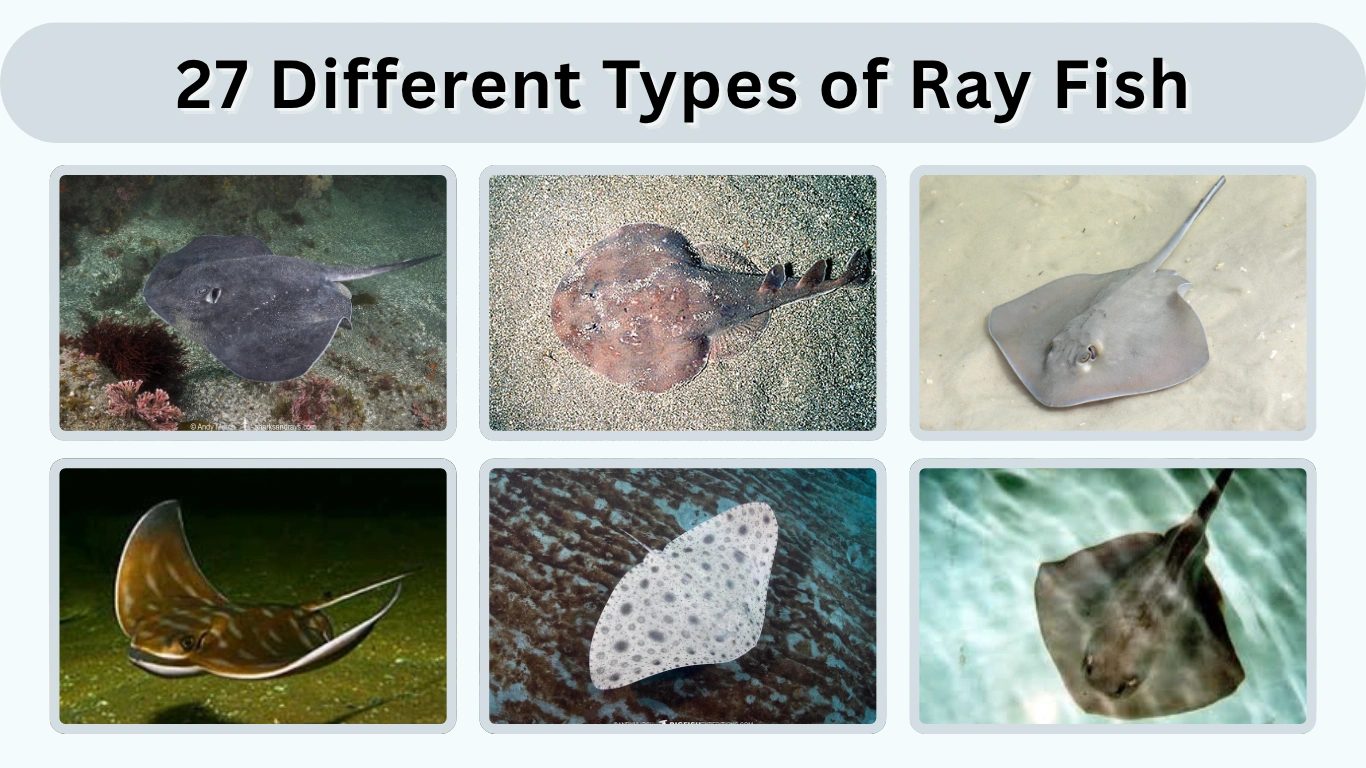
Ray fish are fascinating marine creatures known for their flat bodies, wide fins, and graceful movements. Found in oceans and some freshwater systems around the world, they come in many different shapes and sizes. Some rays live on the ocean floor, while others swim freely in open water. From stingrays with defensive spines to manta rays that filter plankton, each species has unique features. This guide explores 27 types of ray fish, helping you understand their characteristics, habitats, and behaviors in a simple and organized way.
1. Manta Ray
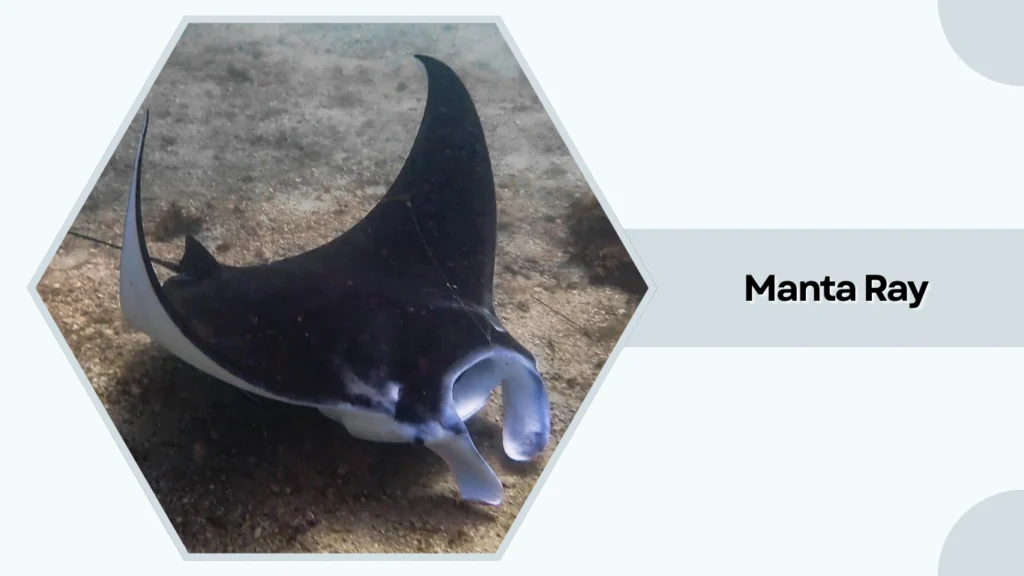
The manta ray is one of the largest ray species in the world, known for its wide, wing-like fins and graceful swimming style. Found in tropical and subtropical oceans, manta rays are gentle giants that often glide through open waters and around coral reefs. They are highly intelligent and are popular among divers due to their calm and curious nature.
Identification
- Large, flat body with triangular, wing-like fins
- Broad head with forward-facing cephalic lobes
- Dark upper body with lighter underside
- Wide mouth located at the front of the head
- Long, slender tail without a stinger
- Distinctive spot patterns on the underside
Habitat
Manta rays inhabit warm ocean waters, typically in tropical and subtropical regions. They are commonly found near coral reefs, coastal areas, and open ocean environments. Some species migrate long distances between feeding and breeding areas. They prefer areas rich in plankton, which is their main food source. Their habitat often overlaps with popular diving locations.
Behavior
Manta rays are known for their slow, graceful movements and often appear to “fly” underwater. They are social animals and can sometimes be seen in small groups, especially during feeding. They frequently visit cleaning stations where smaller fish remove parasites from their bodies. Manta rays are also known for breaching, where they leap out of the water, possibly for communication or parasite removal.
Diet
Manta rays are filter feeders, primarily consuming plankton, small fish, and tiny crustaceans. They swim with their mouths open, using their cephalic lobes to guide food into their mouths. They often feed in areas where plankton is abundant, sometimes forming feeding chains or groups to maximize intake.
2. Stingray
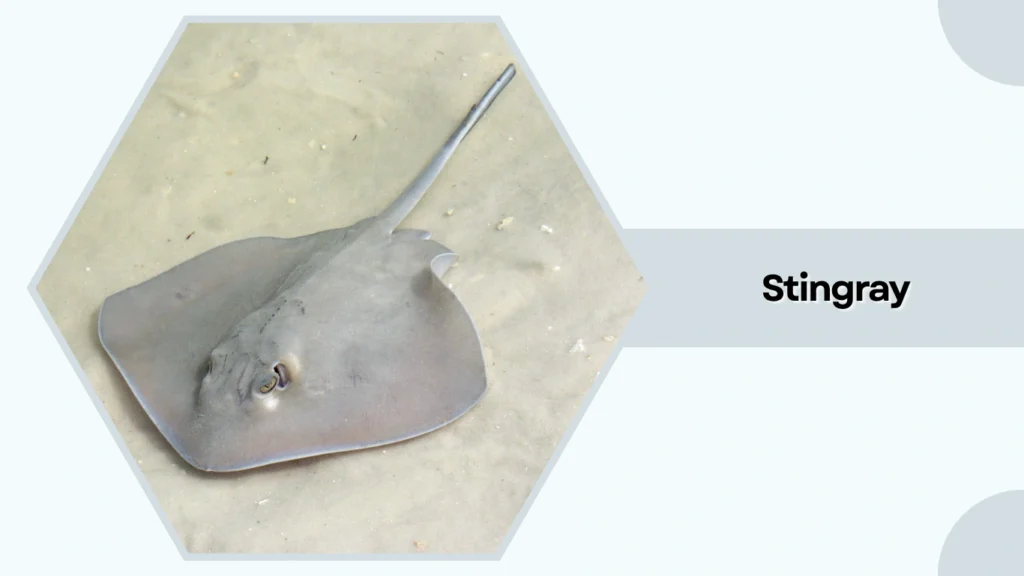
Stingrays are a diverse group of rays known for their flat bodies and long, whip-like tails. Many species possess a venomous stinger used for defense. They are commonly found in coastal waters and are well adapted to life on the ocean floor. Stingrays are generally calm but can defend themselves if disturbed.
Identification
- Flat, disc-shaped body
- Long, slender tail often with a venomous stinger
- Eyes located on top of the body
- Mouth and gills on the underside
- Smooth or slightly rough skin
- Coloration varies from sandy brown to gray
Habitat
Stingrays are typically found in shallow coastal waters, lagoons, and sandy seabeds. They prefer areas where they can bury themselves in the sand for protection. Some species also live in freshwater rivers. Their habitats often provide both shelter and easy access to food sources.
Behavior
Stingrays are mostly bottom-dwellers and spend much of their time partially buried in sand. They are generally non-aggressive and prefer to avoid contact. When threatened, they may use their tail stinger for defense. They move gracefully by undulating their fins and are often seen gliding along the ocean floor.
Diet
Stingrays are carnivorous and feed on small fish, crustaceans, mollusks, and worms. They use their flattened bodies to uncover prey hidden in the sand. Their strong jaws help crush hard-shelled animals, making them effective bottom feeders.
3. Electric Ray
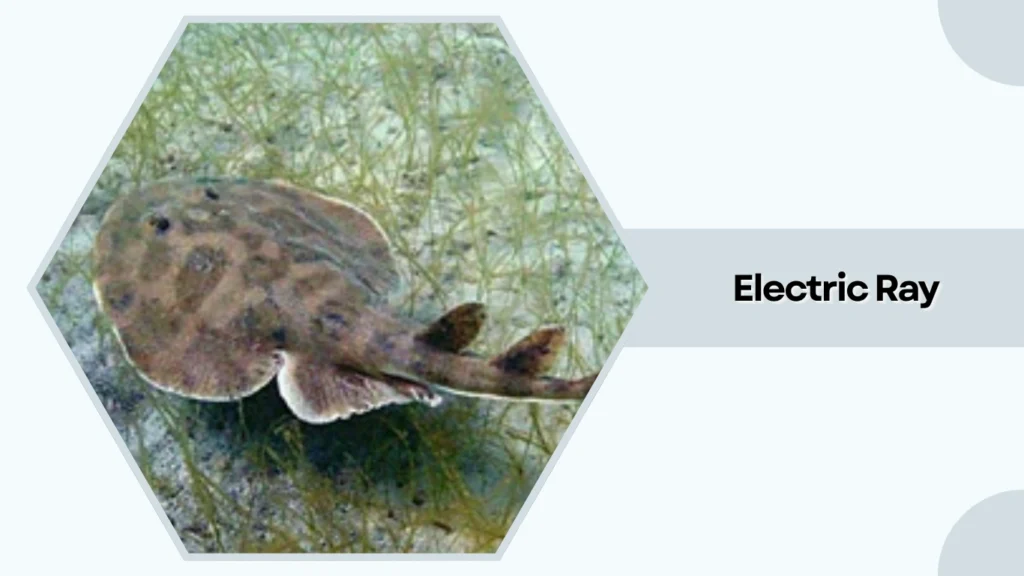
The electric ray is a unique type of ray known for its ability to generate electric shocks. These rays use electricity for both hunting and defense. They are found in marine environments around the world, typically in warmer waters. Their rounded bodies and slow movements make them different from many other ray species.
Identification
- Rounded, disc-shaped body
- Soft, smooth skin
- Short, thick tail
- Eyes positioned on top of the head
- Electric organs located on each side of the head
- Usually brown, gray, or mottled coloration
Habitat
Electric rays live in coastal marine environments, often on sandy or muddy seabeds. They prefer shallow waters but can also be found at greater depths depending on the species. These habitats allow them to hide easily and ambush prey. They are commonly found resting on the ocean floor.
Behavior
Electric rays are slow-moving and spend much of their time resting on the seabed. They use their ability to produce electric shocks to stun prey and protect themselves from predators. They are generally solitary and not aggressive unless threatened. Their electrical ability makes them highly effective hunters despite their slow movement.
Diet
Electric rays are carnivorous and feed on fish, crustaceans, and small marine animals. They use electric discharges to immobilize prey before consuming it. Their feeding strategy relies on ambush rather than speed, allowing them to capture prey efficiently on the ocean floor.
4. Eagle Ray
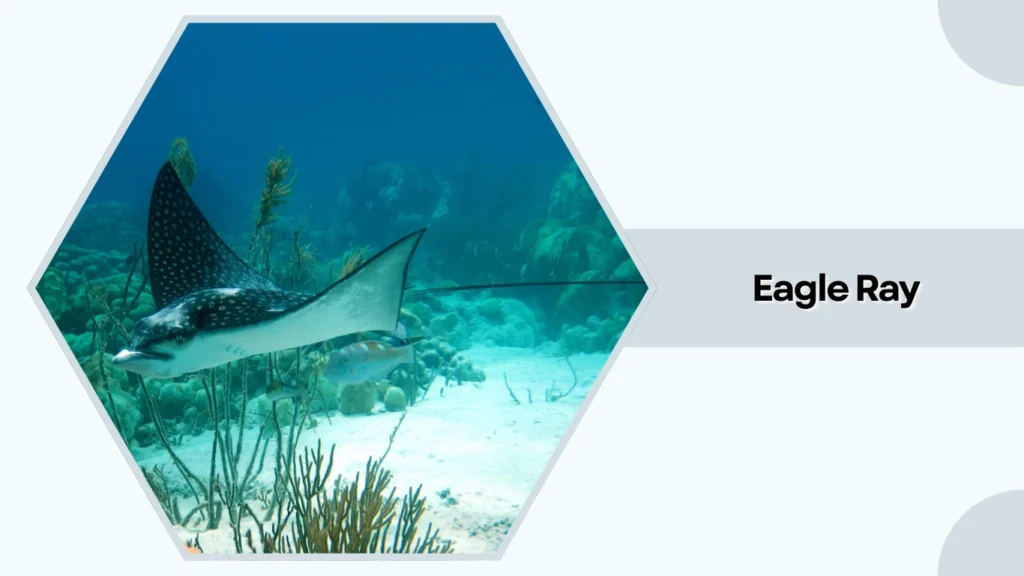
The eagle ray is a graceful and fast-swimming ray known for its long, pointed wings and distinctive spotted patterns. It is often seen gliding through open water rather than resting on the seabed like many other rays. These rays are commonly found in warm oceans and are admired for their elegant movement.
Identification
- Broad, diamond-shaped body with pointed wing tips
- Long, whip-like tail often with a stinger
- Dark upper body with white spots or patterns
- White underside
- Head slightly raised from the body
- Eyes located on the sides of the head
Habitat
Eagle rays inhabit tropical and subtropical oceans, often found in coastal waters, lagoons, and near coral reefs. Unlike many bottom-dwelling rays, they are frequently seen swimming in open water. They prefer areas with sandy bottoms where they can search for food, but they are also comfortable in deeper offshore environments.
Behavior
Eagle rays are active swimmers and are often seen gliding gracefully through the water. They may travel alone or in small groups. Some species are known to leap out of the water. They are generally not aggressive and tend to avoid humans. Their strong swimming ability allows them to cover large distances.
Diet
Eagle rays are carnivorous and mainly feed on shellfish such as clams, oysters, and crabs. They use their strong, flat teeth to crush hard shells. They search for food along the seabed but often swim above it while hunting.
5. Cownose Ray
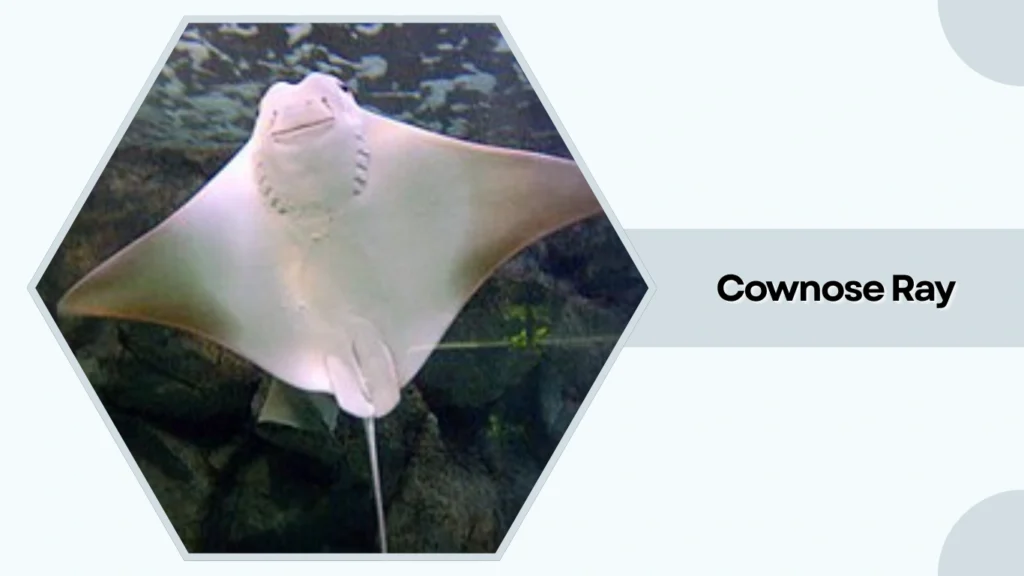
The cownose ray is a social and migratory ray species known for its distinctive head shape that resembles a cow’s nose. It is commonly found in coastal waters and is often seen traveling in large groups. These rays are strong swimmers and are known for their seasonal migrations.
Identification
- Diamond-shaped body with pointed wing tips
- Distinctive head with two rounded lobes (cow-like nose)
- Long, slender tail with a venomous spine
- Brown to olive coloration on the upper body
- Pale underside
- Smooth skin texture
Habitat
Cownose rays inhabit coastal and estuarine waters in warm and temperate regions. They are commonly found in bays, lagoons, and shallow coastal areas with sandy or muddy bottoms. These habitats provide abundant food and safe conditions for group movement. They are also known to migrate long distances between feeding and breeding grounds.
Behavior
Cownose rays are highly social and often form large schools that can include hundreds or even thousands of individuals. They are active swimmers and are known for their synchronized movements. Seasonal migration is a key part of their behavior. While generally peaceful, they may use their tail spine for defense if threatened.
Diet
Cownose rays are carnivorous and primarily feed on shellfish such as clams, oysters, and other mollusks. They use their strong jaws to crush hard shells. They often dig into the seabed to uncover buried prey, making them effective bottom feeders.
6. Butterfly Ray
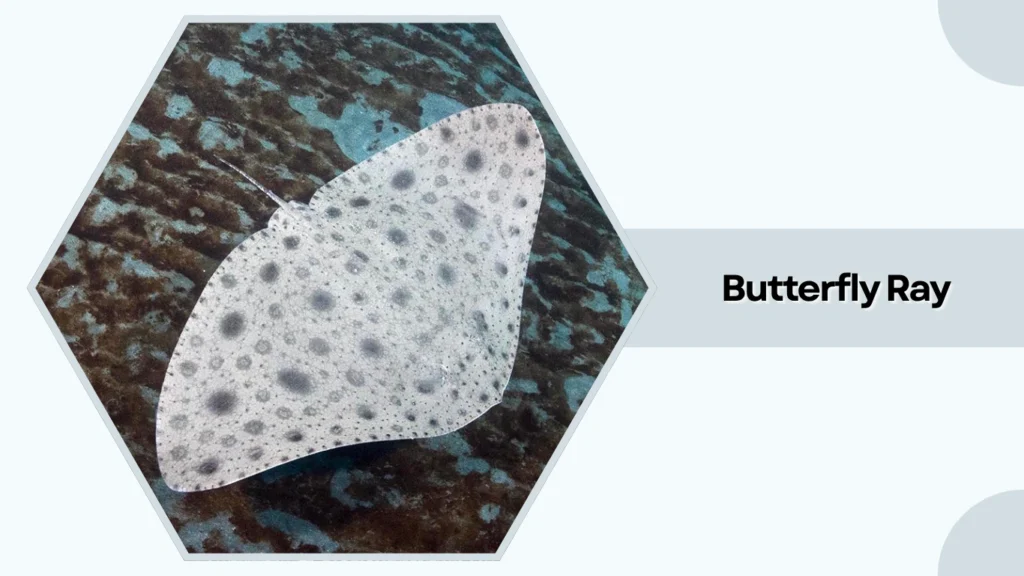
The butterfly ray is a flat-bodied ray known for its wide, rounded shape that resembles butterfly wings. It is commonly found resting on sandy ocean floors in warm coastal waters. Unlike many other rays, it has a very short tail and lacks a stinger, making it less defensive but well adapted for camouflage.
Identification
- Broad, rounded body resembling butterfly wings
- Very short, thin tail without a stinger
- Smooth, flat body shape
- Eyes positioned on top of the body
- Sandy brown or gray coloration
- Ability to blend with the seabed
Habitat
Butterfly rays live in shallow coastal waters, especially in sandy or muddy seabeds. They prefer warm, tropical and subtropical regions. These environments allow them to bury themselves for protection and ambush prey. They are often found resting on the ocean floor, where their coloration helps them remain hidden from predators.
Behavior
Butterfly rays are mostly bottom-dwellers and spend much of their time lying still on the seabed. They rely on camouflage to avoid detection. When disturbed, they can quickly swim away using smooth, wing-like movements. They are generally solitary and not aggressive toward humans.
Diet
Butterfly rays are carnivorous and feed on small fish, crustaceans, and worms. They hunt by uncovering prey hidden in the sand. Their flat bodies help them stay close to the ocean floor while searching for food.
7. Round Ray
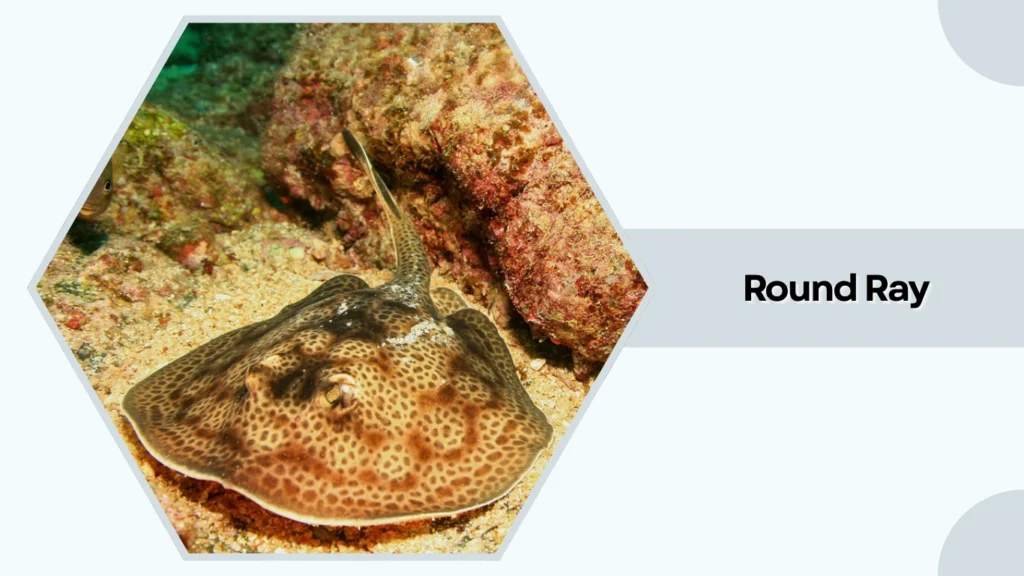
The round ray is a small, bottom-dwelling ray known for its circular body shape and smooth movement along the ocean floor. It is commonly found in shallow coastal waters and is one of the more frequently encountered ray species in sandy habitats. Despite having a stinger, it is generally harmless unless stepped on or threatened.
Identification
- Nearly circular, disc-shaped body
- Short, slender tail with a venomous spine
- Smooth skin texture
- Brown, gray, or olive coloration
- Eyes located on top of the body
- Pale underside
Habitat
Round rays inhabit shallow coastal waters, especially sandy or muddy seabeds. They are commonly found in bays, estuaries, and nearshore environments. These areas provide ideal conditions for burrowing and feeding. They prefer calm waters where they can easily hide beneath the sand.
Behavior
Round rays are mostly sedentary and spend much of their time partially buried in the sand. They rely on camouflage to avoid predators. They are generally non-aggressive and will only use their stinger for defense if threatened. Their slow, gliding movement helps them conserve energy.
Diet
Round rays are carnivorous and feed on small invertebrates such as worms, crustaceans, and mollusks. They use their mouths to dig into the sand and uncover hidden prey. Their feeding habits make them effective bottom feeders in their environment.
8. Thornback Ray
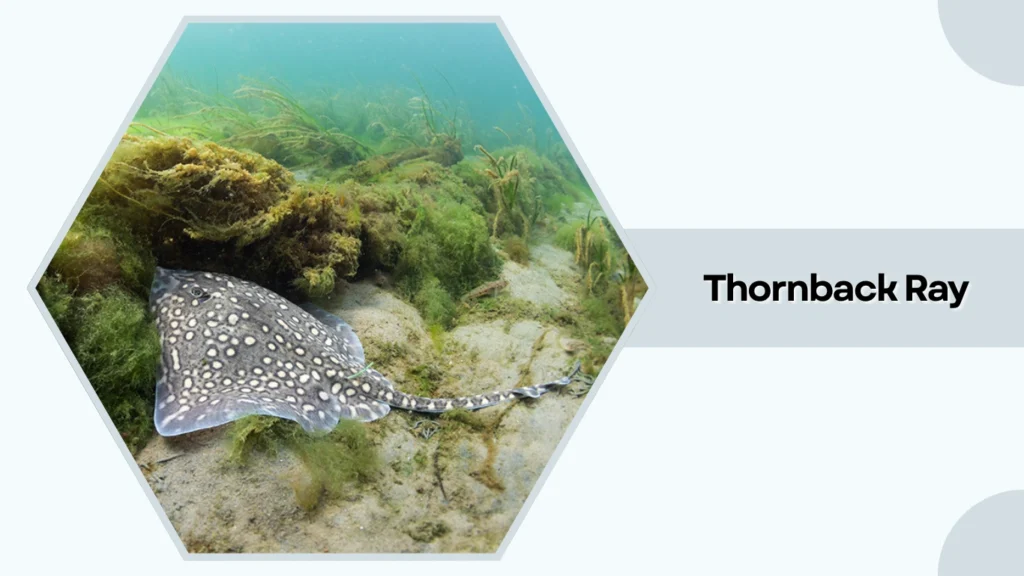
The thornback ray is a medium-sized ray known for the row of sharp spines, or “thorns,” along its back and tail. It is commonly found in coastal waters and is easily recognized by its rough texture and patterned body. This species is well adapted to life on the seabed.
Identification
- Diamond-shaped, flattened body
- Rough skin with thorn-like spines on the back
- Brown or gray coloration with dark spots
- Long tail with additional small spines
- Eyes positioned on top of the body
- Pale underside
Habitat
Thornback rays live in shallow coastal waters, particularly on sandy or muddy seabeds. They are commonly found in temperate marine environments and prefer areas where they can rest and blend into the ocean floor. These habitats provide both protection and access to food sources.
Behavior
Thornback rays are bottom-dwellers and spend much of their time lying still on the seabed. They rely on camouflage and their rough, spiny skin for protection. They are generally solitary and move slowly, using gentle wing-like motions. They are not aggressive and typically avoid contact.
Diet
Thornback rays are carnivorous and feed on small fish, crustaceans, and worms. They search for food along the seabed, using their mouths to uncover hidden prey. Their diet depends on the availability of organisms in their habitat.
9. Blue-Spotted Stingray
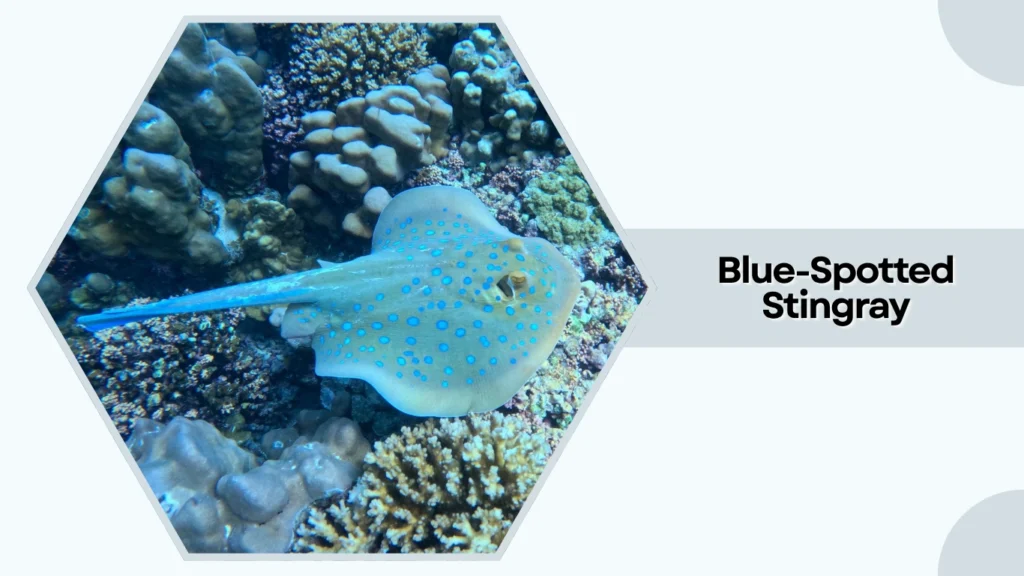
The blue-spotted stingray is a visually striking species known for its bright blue spots scattered across its body. It is commonly found in coral reef environments in the Indo-Pacific region. Its bold pattern makes it one of the most easily recognizable rays. Despite its beauty, it has a venomous spine used for defense.
Identification
- Oval, flattened body
- Bright blue spots on a sandy or brown background
- Long, slender tail with a venomous stinger
- Smooth skin texture
- Eyes located on top of the body
- White underside
Habitat
Blue-spotted stingrays inhabit shallow coastal waters, especially around coral reefs, sandy flats, and lagoons. They prefer warm, tropical environments where they can easily hide in sand or among reef structures. These habitats provide both protection and access to food. They are often seen in clear, shallow waters.
Behavior
Blue-spotted stingrays are generally solitary and spend much of their time resting on the seabed. They are more active at night when they move around to hunt. When threatened, they may raise their tail as a warning. They rely on camouflage and quick movements to avoid predators.
Diet
Blue-spotted stingrays are carnivorous and feed on small fish, crustaceans, worms, and mollusks. They use their flattened bodies to uncover prey hidden in the sand. Their feeding habits make them effective hunters in reef and sandy environments.
10. Southern Stingray
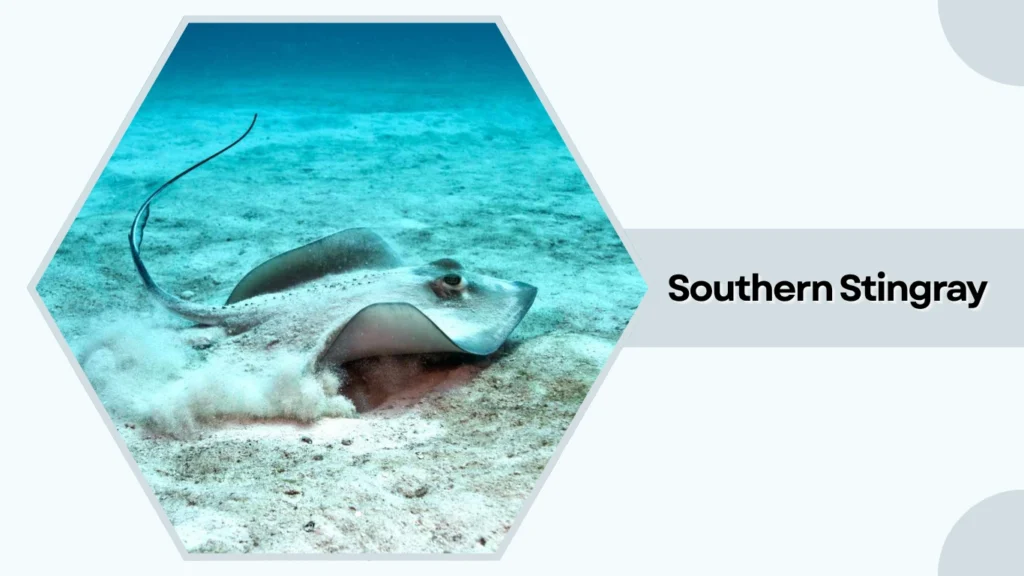
The southern stingray is a large and common ray species found in warm coastal waters of the Atlantic Ocean. It is known for its broad, diamond-shaped body and long tail equipped with a venomous spine. This species is often seen in shallow waters and is familiar to snorkelers and divers.
Identification
- Broad, diamond-shaped body
- Smooth skin with uniform gray or brown coloration
- White underside
- Long, whip-like tail with a venomous stinger
- Eyes located on top of the body
- Large size compared to many other stingrays
Habitat
Southern stingrays inhabit shallow coastal waters, including sandy flats, seagrass beds, and coral reef areas. They are commonly found in warm tropical and subtropical regions. These environments provide ideal conditions for feeding and resting. They often stay close to the seabed where they can easily bury themselves in sand.
Behavior
Southern stingrays are mostly solitary but may gather in groups in feeding areas. They spend much of their time gliding over the seabed or resting partially buried in sand. They are generally calm and not aggressive, but they can use their tail spine for defense if threatened. They move gracefully using wing-like fin movements.
Diet
Southern stingrays are carnivorous and feed on small fish, crustaceans, worms, and mollusks. They use their bodies to uncover prey hidden in the sand and crush hard shells with their strong jaws. Their feeding behavior plays an important role in maintaining balance in their ecosystem.
11. Atlantic Stingray
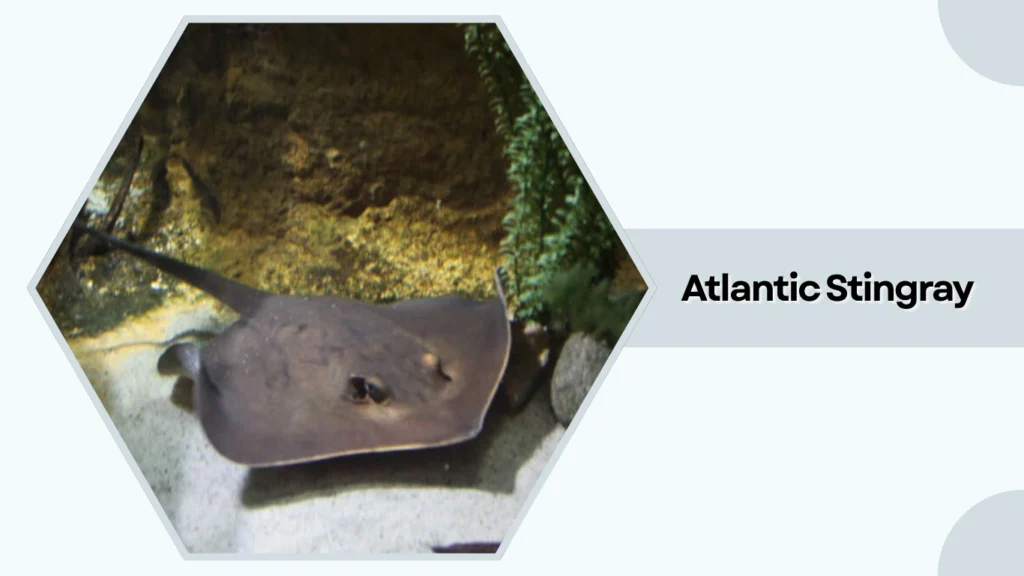
The Atlantic stingray is a small to medium-sized ray commonly found along the western Atlantic coast. It is well known for its adaptability, as it can live in both saltwater and freshwater environments. This species is often seen in shallow coastal areas and estuaries, making it one of the more familiar stingrays in its range.
Identification
- Rounded to diamond-shaped body
- Smooth skin with brown or gray coloration
- Pale underside
- Long, slender tail with a venomous spine
- Eyes located on top of the body
- Relatively small size compared to other stingrays
Habitat
Atlantic stingrays inhabit coastal waters, estuaries, lagoons, and even freshwater rivers. They prefer shallow environments with sandy or muddy bottoms where they can easily hide. Their ability to tolerate different salinity levels makes them highly adaptable. They are often found in calm, warm waters.
Behavior
Atlantic stingrays are generally solitary and spend much of their time resting on or partially buried in the seabed. They are mostly active during warmer periods and may move with the tides. They are not aggressive and typically avoid contact with humans, using their stinger only for defense.
Diet
Atlantic stingrays are carnivorous and feed on small invertebrates such as worms, crustaceans, and mollusks. They use their mouths to dig into the sand and uncover hidden prey. Their feeding habits help maintain the balance of bottom-dwelling organisms in their habitat.
12. Freshwater Stingray
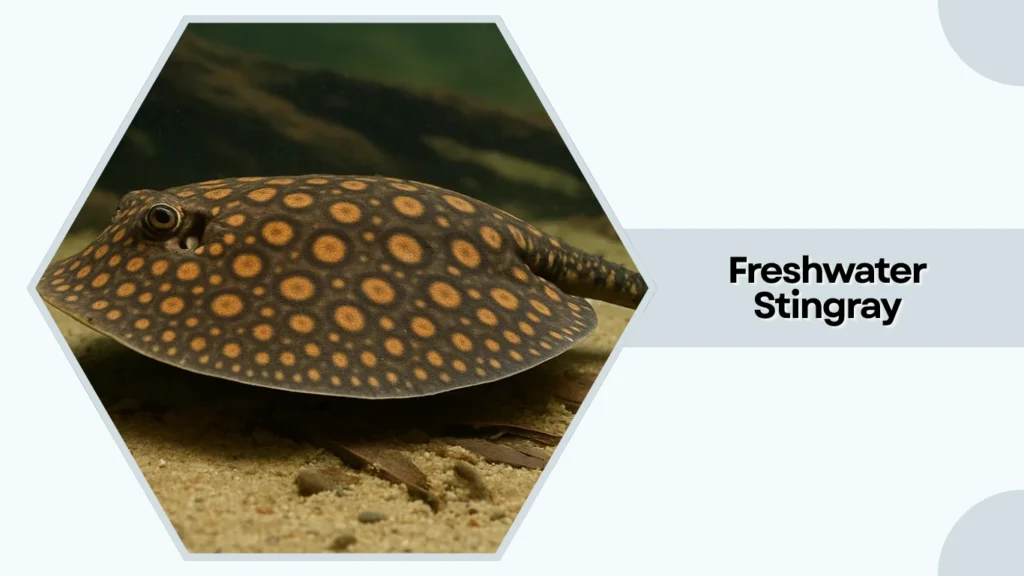
The freshwater stingray is a unique group of rays that live entirely in rivers and freshwater systems. They are mainly found in South America, especially in the Amazon River basin. Unlike most rays, which live in the ocean, these species have fully adapted to freshwater environments and are known for their striking patterns and round bodies.
Identification
- Round, disc-shaped body
- Smooth skin with spotted or patterned designs
- Brown, black, or yellowish coloration
- Long tail with a venomous spine
- Eyes positioned on top of the body
- Flattened body adapted for riverbeds
Habitat
Freshwater stingrays inhabit rivers, streams, and floodplains, especially in tropical regions. They prefer sandy or muddy bottoms where they can easily bury themselves. These environments provide both protection and access to food. They are commonly found in slow-moving or calm waters within river systems.
Behavior
Freshwater stingrays are mostly bottom-dwellers and spend much of their time partially buried in sediment. They are generally solitary and become more active at night. They rely on camouflage to avoid predators. Although not aggressive, they will use their venomous spine for defense if disturbed.
Diet
Freshwater stingrays are carnivorous and feed on small fish, insects, crustaceans, and worms. They use their mouths to uncover prey hidden in the riverbed. Their feeding habits make them effective hunters in freshwater ecosystems.
13. Marble Ray
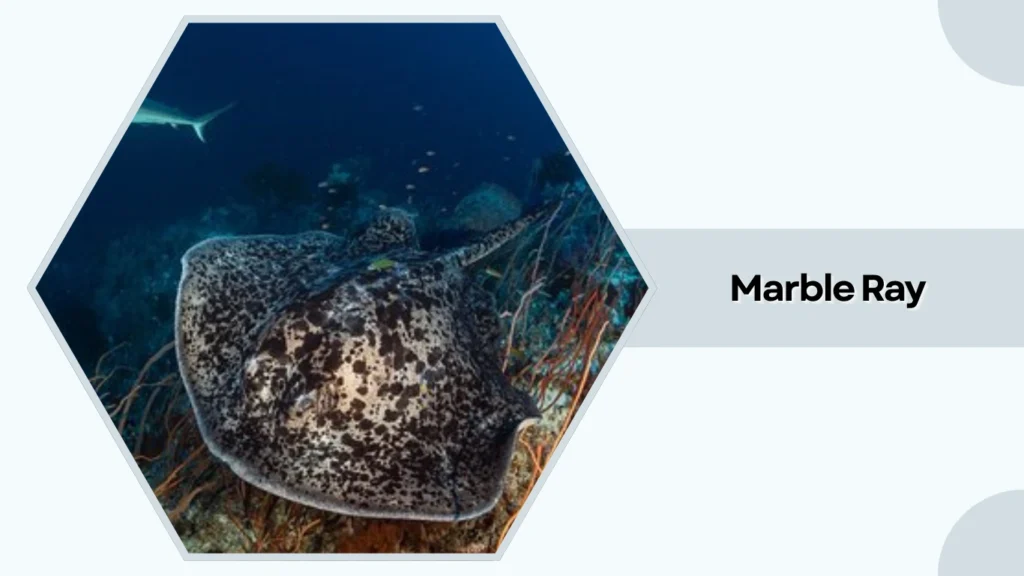
The marble ray is a bottom-dwelling species known for its marbled pattern that helps it blend into the ocean floor. It is commonly found in coastal waters and is well adapted for life on sandy or muddy seabeds. Its camouflage makes it difficult to spot, providing protection from predators.
Identification
- Flattened, diamond-shaped body
- Distinct marbled or mottled pattern
- Brown, gray, or sandy coloration
- Long tail, sometimes with small spines
- Eyes located on top of the body
- Smooth or slightly rough skin
Habitat
Marble rays inhabit shallow coastal waters, particularly sandy and muddy seabeds. They are often found in bays, lagoons, and nearshore environments. These habitats allow them to blend in with their surroundings and remain hidden. They prefer calm waters where they can rest on the ocean floor.
Behavior
Marble rays are mostly sedentary and spend much of their time lying still on the seabed. They rely heavily on camouflage to avoid predators. They are generally solitary and not aggressive. When disturbed, they can quickly swim away using smooth, wing-like movements.
Diet
Marble rays are carnivorous and feed on small fish, crustaceans, worms, and mollusks. They search for food along the seabed, using their mouths to uncover hidden prey. Their feeding habits make them efficient bottom feeders in their environment.
14. Spotted Eagle Ray
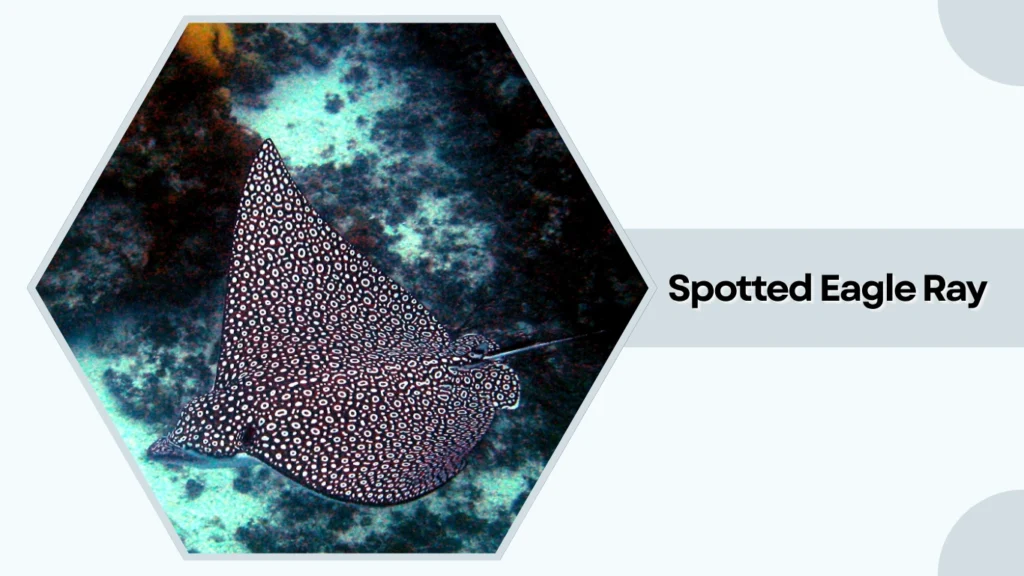
The spotted eagle ray is a graceful and fast-swimming ray known for its striking pattern of white spots on a dark body. It is commonly found in tropical and subtropical oceans and is often seen swimming in open water. Its elegant movement and unique appearance make it a favorite among divers.
Identification
- Diamond-shaped body with pointed wing tips
- Dark body covered with white spots
- Long, whip-like tail with a venomous spine
- White underside
- Distinct head that extends slightly from the body
- Smooth skin texture
Habitat
Spotted eagle rays inhabit coastal waters, coral reefs, lagoons, and open ocean environments. They prefer warm tropical and subtropical regions. Unlike many rays, they are often seen swimming above the seabed rather than resting on it. These habitats provide access to both shelter and feeding areas.
Behavior
Spotted eagle rays are active swimmers and are often seen gliding through open water. They may travel alone or in small groups. Some are known to leap out of the water. They are generally not aggressive and tend to avoid humans. Their strong swimming ability allows them to cover long distances.
Diet
Spotted eagle rays are carnivorous and feed mainly on shellfish such as clams, oysters, and crabs. They use their strong jaws to crush hard shells. They often search for food along the seabed but may swim above it while hunting.
15. Giant Oceanic Manta Ray
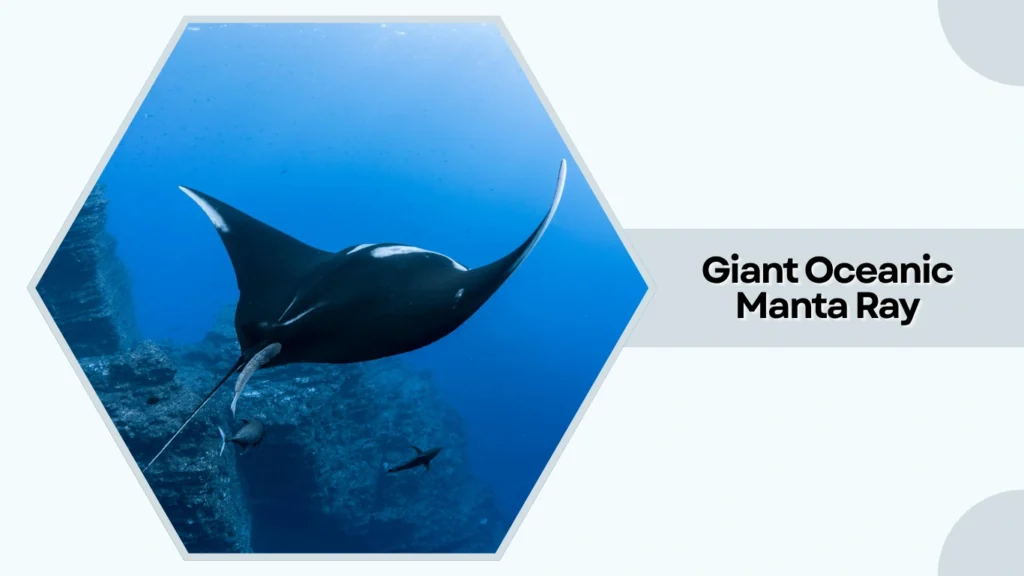
The giant oceanic manta ray is the largest ray species in the world, known for its massive wingspan and gentle nature. It is commonly found in tropical and subtropical oceans, often in open water far from shore. This species is highly migratory and is admired for its graceful movement and intelligence.
Identification
- Extremely large, flat body with wide wingspan
- Triangular, wing-like fins
- Dark upper body with white underside patterns
- Large mouth located at the front
- Prominent cephalic lobes near the mouth
- Long tail without a stinger
Habitat
Giant oceanic manta rays inhabit open ocean waters, often far from coastal areas. They are also found near coral reefs, seamounts, and feeding zones rich in plankton. These rays prefer warm waters and are known to travel long distances between feeding and breeding areas. Their wide range reflects their migratory behavior.
Behavior
These manta rays are active swimmers and are often seen gliding gracefully through the water. They may travel alone or gather in groups where food is abundant. They are known to visit cleaning stations where smaller fish remove parasites. Their calm nature makes them popular among divers.
Diet
Giant oceanic manta rays are filter feeders that consume plankton, small fish, and tiny crustaceans. They swim with their mouths open, using their cephalic lobes to guide food inward. Their feeding often occurs in areas with high plankton concentration.
16. Reef Manta Ray
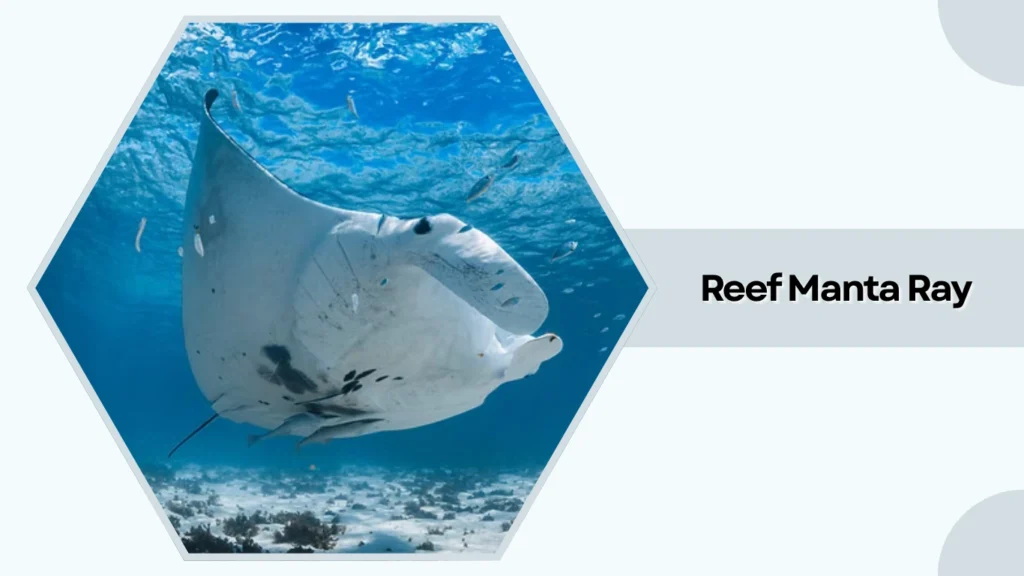
The reef manta ray is a large, graceful species commonly found in tropical and subtropical coastal waters. It is slightly smaller than the giant oceanic manta ray and is often seen around coral reefs and cleaning stations. This species is known for its friendly behavior and frequent interactions with divers.
Identification
- Large, flat body with broad, wing-like fins
- Shorter wingspan compared to giant manta ray
- Dark upper body with lighter underside
- Distinct spot patterns on the belly
- Forward-facing cephalic lobes
- Long tail without a stinger
Habitat
Reef manta rays inhabit coastal areas, coral reefs, lagoons, and cleaning stations in warm tropical waters. They prefer shallow environments where food is abundant and where cleaner fish are present. These habitats provide both feeding opportunities and parasite removal. They tend to stay closer to reefs compared to oceanic manta rays.
Behavior
Reef manta rays are social and often seen in groups, especially at cleaning stations. They glide gracefully through the water and may circle repeatedly while being cleaned by smaller fish. They are curious and often approach divers. Their movements are smooth and energy-efficient, allowing them to travel easily within reef environments.
Diet
Reef manta rays are filter feeders that consume plankton, small fish, and tiny crustaceans. They swim with their mouths open and use their cephalic lobes to direct food inward. They often feed in areas where plankton is concentrated, sometimes forming groups to maximize feeding efficiency.
17. Bull Ray
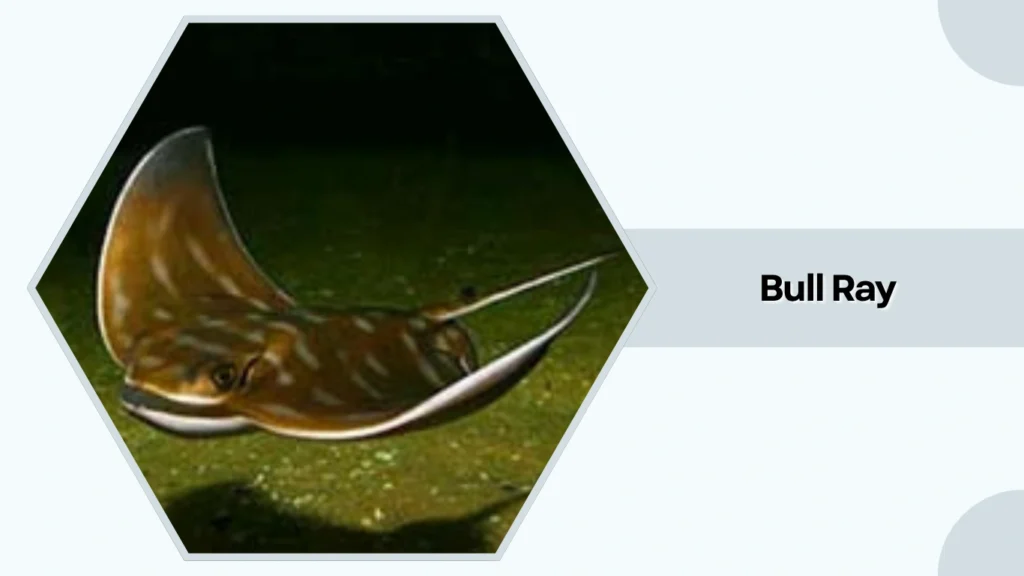
The bull ray is a large, strong-bodied ray often associated with coastal and open ocean environments. It is sometimes confused with other large rays due to its size and shape. This species is known for its powerful swimming ability and presence in warm marine waters.
Identification
- Broad, diamond-shaped body
- Thick, muscular build
- Long, whip-like tail with a venomous spine
- Dark brown or gray coloration
- Pale underside
- Eyes located on top of the body
Habitat
Bull rays inhabit coastal waters, bays, and open ocean areas in tropical and subtropical regions. They are often found near sandy seabeds but can also swim in open water. These habitats provide both feeding opportunities and space for movement. They may travel across different مناطق depending on environmental conditions.
Behavior
Bull rays are active swimmers and may be seen alone or in small groups. They glide smoothly through the water using their large fins. They are generally not aggressive but can defend themselves using their tail spine if threatened. Their movement is powerful and steady, allowing them to cover wide areas.
Diet
Bull rays are carnivorous and feed on fish, crustaceans, and mollusks. They use their strong jaws to crush prey and may search along the seabed for hidden food. Their feeding habits depend on the availability of prey in their environment.
18. Shovelnose Ray
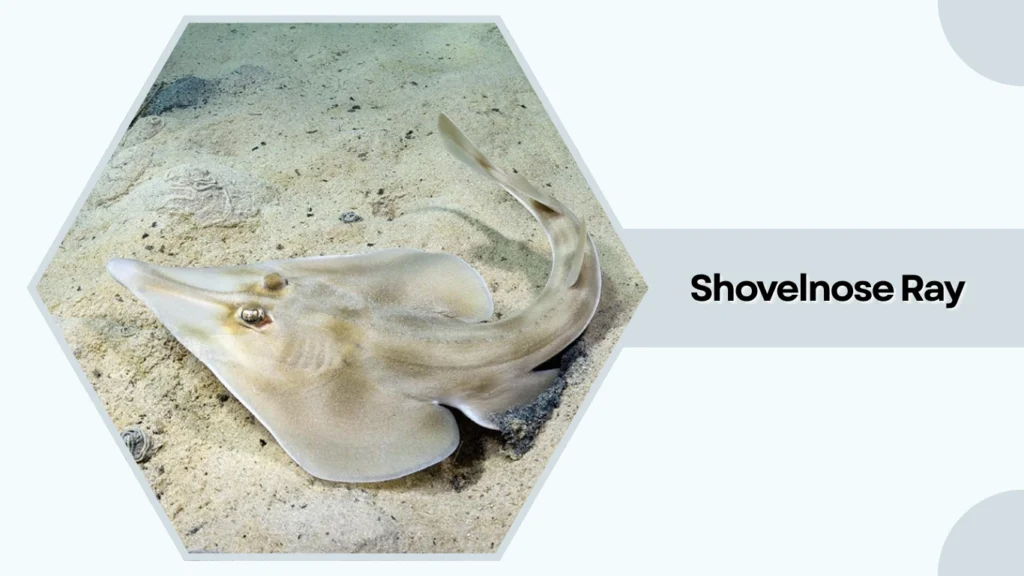
The shovelnose ray is a unique ray species with a body shape that blends features of both sharks and rays. It has a flattened body with a pointed, shovel-like snout. This species is commonly found in coastal waters and is known for its ability to move easily along the seabed.
Identification
- Flattened body with a pointed, shovel-shaped snout
- Shark-like tail and body structure
- Smooth skin with sandy or brown coloration
- Eyes located on top of the head
- Strong, elongated body
- Underside mouth adapted for bottom feeding
Habitat
Shovelnose rays inhabit shallow coastal waters, sandy bays, and estuaries. They prefer environments with soft bottoms where they can easily search for food. These habitats provide both shelter and feeding opportunities. They are commonly found in warm and temperate marine regions.
Behavior
Shovelnose rays are mostly bottom-dwellers and spend much of their time swimming close to the seabed. They are generally solitary and move steadily rather than quickly. They are not aggressive and tend to avoid threats. Their body shape allows them to move efficiently in shallow waters.
Diet
Shovelnose rays are carnivorous and feed on small fish, crustaceans, and worms. They use their snout to dig into the sand and uncover hidden prey. Their feeding behavior makes them effective hunters along the ocean floor.
19. Guitarfish
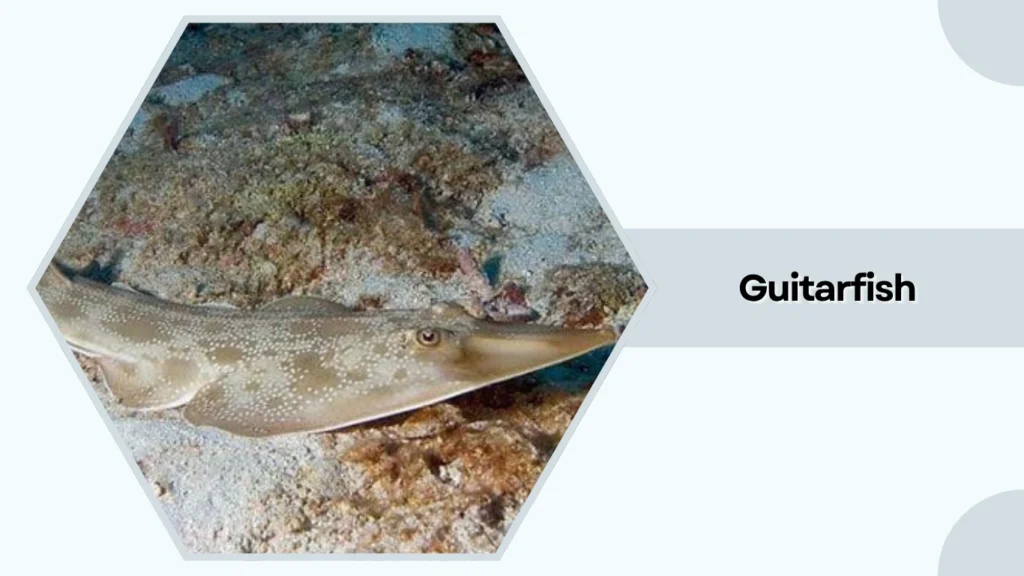
The guitarfish is a unique ray that has a body shape resembling both a shark and a ray. Its front is flattened like a ray, while the back tapers like a shark. It is commonly found in coastal waters and is known for its smooth movement along the seabed.
Identification
- Flattened front body with a shark-like rear
- Long, pointed snout
- Smooth skin with sandy or gray coloration
- Eyes located on top of the head
- Strong tail with small dorsal fins
- Underside mouth adapted for bottom feeding
Habitat
Guitarfish inhabit shallow coastal waters, sandy beaches, and estuaries. They prefer areas with soft bottoms where they can easily rest and search for food. These environments provide both protection and feeding opportunities. They are commonly found in warm and temperate regions.
Behavior
Guitarfish are generally solitary and spend much of their time resting on or moving slowly along the seabed. They rely on camouflage to avoid predators. They are not aggressive and tend to swim away when disturbed. Their movement is smooth and controlled, similar to both sharks and rays.
Diet
Guitarfish are carnivorous and feed on small fish, crustaceans, and worms. They use their snout to dig into the sand and uncover hidden prey. Their feeding habits make them effective bottom feeders in coastal environments.
20. Bowmouth Guitarfish
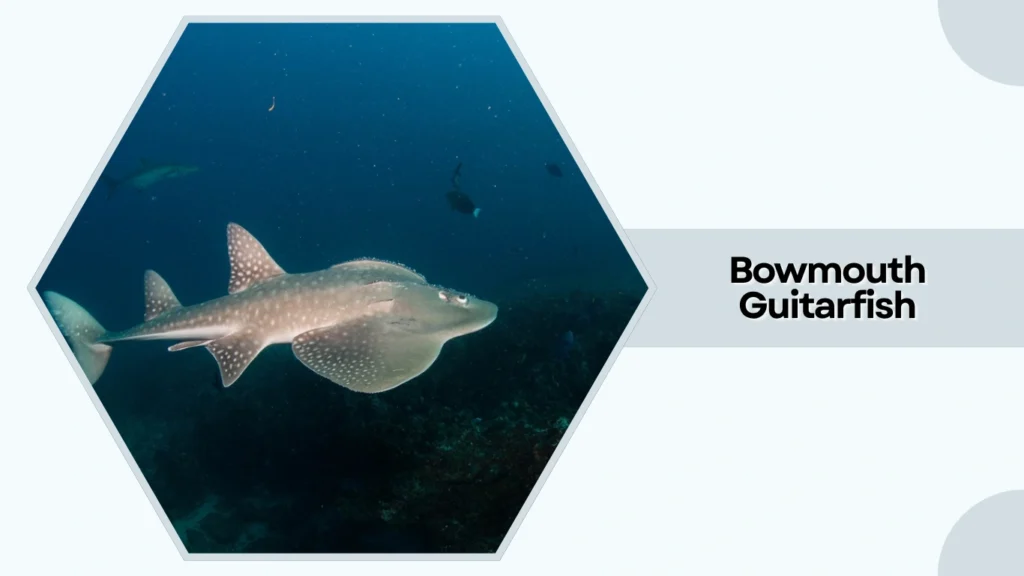
The bowmouth guitarfish is a large and distinctive ray species that combines features of rays and sharks. It is easily recognized by its broad head and heavily armored body. This species is found in tropical coastal waters and is known for its strong build and unique appearance.
Identification
- Broad, flattened head with a shark-like body
- Row of bony ridges and spines along the back
- Gray or brown coloration with white spots
- Strong tail with dorsal fins
- Eyes located on top of the head
- Thick, armored skin
Habitat
Bowmouth guitarfish inhabit shallow coastal waters, coral reefs, and sandy seabeds in tropical regions. They prefer environments where they can rest on the ocean floor and blend into their surroundings. These habitats provide both protection and access to food. They are often found in warm, clear waters.
Behavior
Bowmouth guitarfish are mostly bottom-dwellers and spend much of their time resting on the seabed. They are generally solitary and move slowly. When disturbed, they can swim away with steady, powerful movements. They are not aggressive and rely on their size and armor for protection.
Diet
Bowmouth guitarfish are carnivorous and feed on small fish, crustaceans, and mollusks. They use their strong jaws to पकड़ and crush prey. Their feeding behavior involves searching along the seabed for hidden food.
21. Sand Tiger Ray
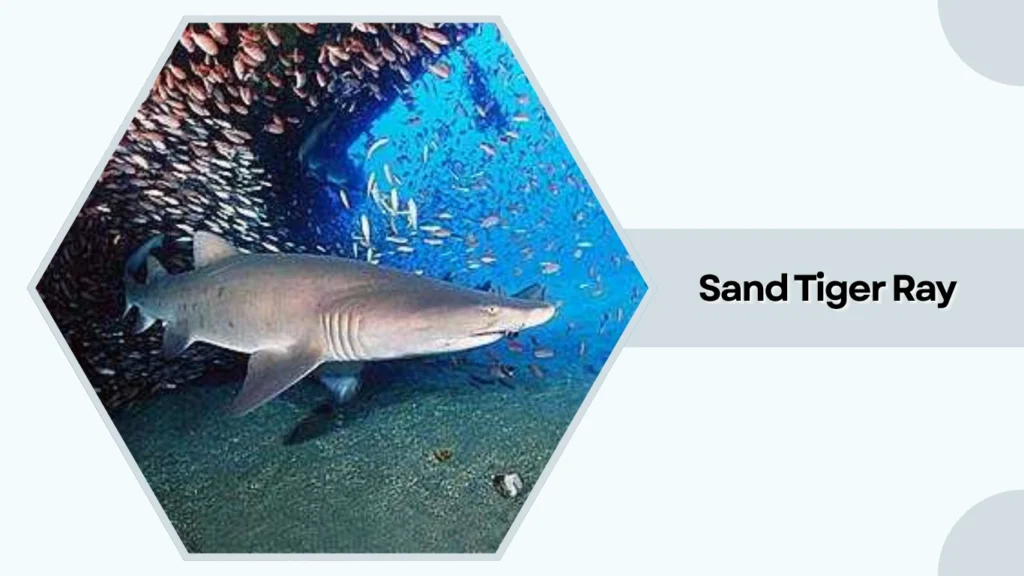
The sand tiger ray is a lesser-known ray species associated with sandy coastal environments. It is adapted for life close to the seabed, where it can rest and hunt for prey. Its body structure allows it to blend into sandy habitats, making it an effective bottom-dwelling predator.
Identification
- Flattened, disc-like body
- Sandy brown or gray coloration
- Smooth skin texture
- Eyes positioned on top of the body
- Long, slender tail
- Body adapted for camouflage on seabeds
Habitat
Sand tiger rays inhabit shallow coastal waters with sandy or muddy bottoms. They are commonly found in bays, lagoons, and nearshore environments. These habitats provide ideal conditions for hiding and feeding. They prefer calm waters where they can remain undisturbed and blend into their surroundings.
Behavior
Sand tiger rays are mostly sedentary and spend much of their time resting on the ocean floor. They rely on camouflage to avoid predators and remain hidden from prey. They are generally solitary and not aggressive. When disturbed, they can swim away using smooth, gliding movements.
Diet
Sand tiger rays are carnivorous and feed on small fish, crustaceans, and worms. They search for food along the seabed, using their mouths to uncover hidden prey. Their feeding habits make them effective bottom feeders in sandy environments.
22. Yellow Stingray
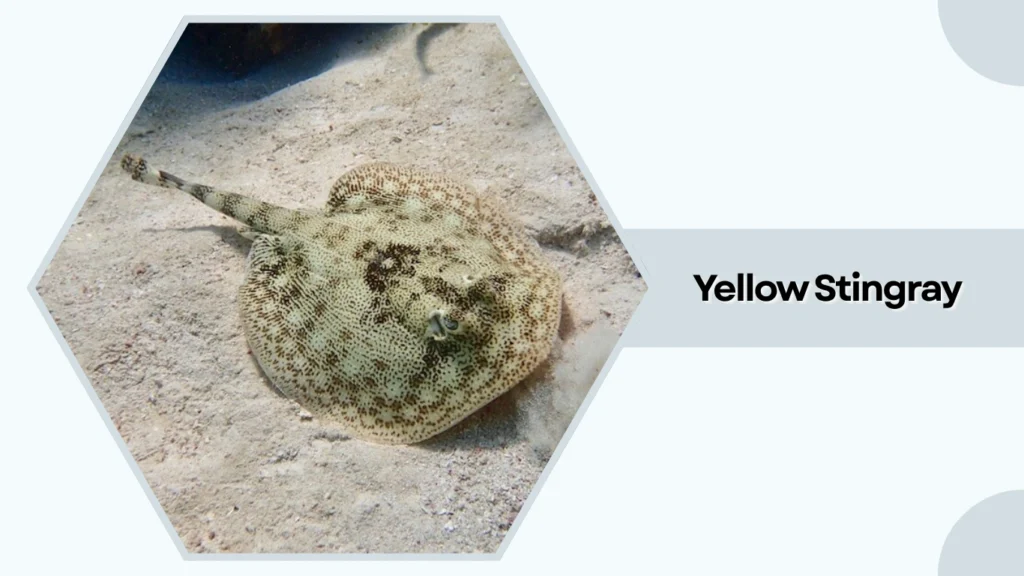
The yellow stingray is a small and colorful ray species commonly found in shallow coastal waters. It is known for its bright yellow to golden coloration and attractive patterns. This species is often seen resting on sandy seabeds and is well adapted to blending into its environment.
Identification
- Rounded, disc-shaped body
- Yellow to golden coloration with spots or patterns
- Smooth skin texture
- Long, slender tail with a venomous spine
- Eyes located on top of the body
- Pale underside
Habitat
Yellow stingrays inhabit shallow coastal waters, sandy flats, seagrass beds, and lagoons. They are commonly found in warm tropical regions. These habitats provide ideal conditions for hiding and feeding. They prefer calm, clear waters where they can easily blend into the seabed.
Behavior
Yellow stingrays are mostly bottom-dwellers and spend much of their time resting on or partially buried in the sand. They are generally solitary and not aggressive. When disturbed, they may quickly swim away or use their tail spine for defense. Their calm nature makes them less noticeable in their environment.
Diet
Yellow stingrays are carnivorous and feed on small invertebrates such as worms, crustaceans, and mollusks. They search for food along the seabed, using their mouths to uncover hidden prey. Their feeding habits help maintain balance in their ecosystem.
23. Roughtail Stingray
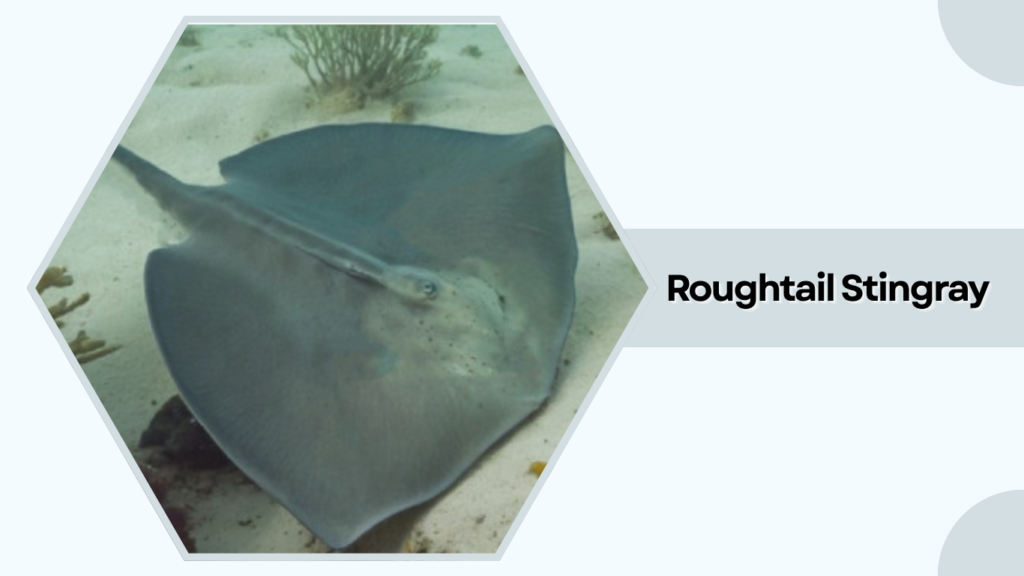
The roughtail stingray is a large marine ray known for its thick tail and rough-textured skin. It is commonly found in coastal waters and is one of the larger stingray species. Its strong build and defensive spine make it a well-protected bottom-dweller.
Identification
- Broad, diamond-shaped body
- Thick, rough-textured tail
- Dark brown, gray, or olive coloration
- Pale underside
- Long tail with a venomous spine
- Eyes located on top of the body
Habitat
Roughtail stingrays inhabit coastal waters, estuaries, and sandy seabeds in tropical and subtropical regions. They prefer shallow to moderately deep environments where they can rest on the ocean floor. These habitats provide both protection and feeding opportunities.
Behavior
Roughtail stingrays are mostly solitary and spend much of their time resting on the seabed. They are generally calm and not aggressive but will defend themselves if threatened. They move slowly and gracefully, using their fins to glide along the bottom.
Diet
Roughtail stingrays are carnivorous and feed on fish, crustaceans, and mollusks. They use their strong jaws to crush prey and often search along the seabed for hidden food.
24. Longtail Stingray
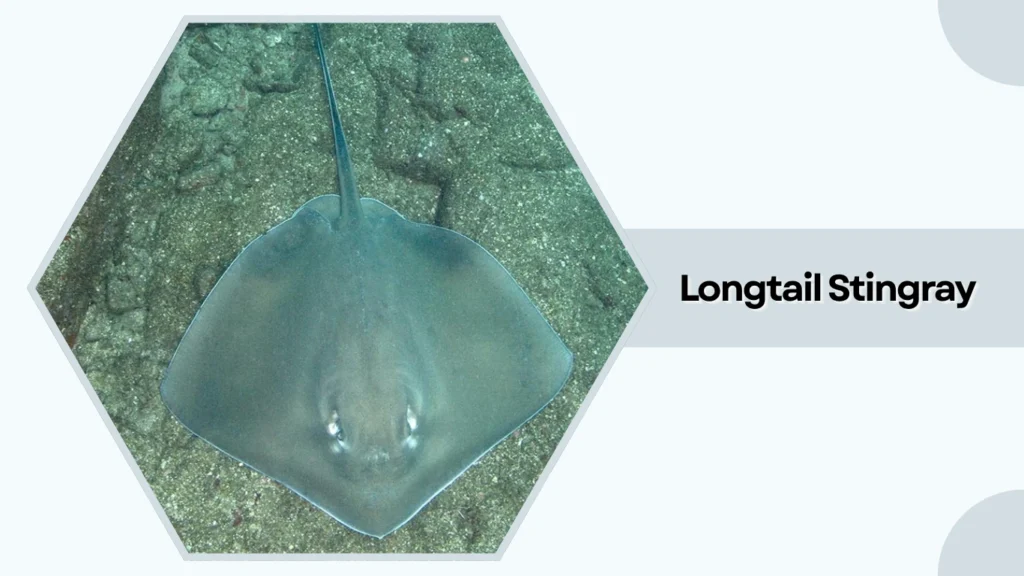
The longtail stingray is a large marine species recognized for its exceptionally long, whip-like tail. It is commonly found in coastal waters and estuaries across tropical and subtropical regions. This ray is known for its strong body and wide distribution, making it one of the more notable stingray species.
Identification
- Broad, diamond-shaped body
- Extremely long, whip-like tail
- Smooth skin with gray or brown coloration
- Pale underside
- Venomous spine located on the tail
- Eyes positioned on top of the body
Habitat
Longtail stingrays inhabit coastal waters, estuaries, lagoons, and sandy seabeds. They prefer shallow to moderately deep environments where they can rest and feed along the ocean floor. These habitats provide both shelter and access to prey. They are often found in warm tropical and subtropical regions.
Behavior
Longtail stingrays are mostly solitary and spend much of their time resting on or partially buried in the seabed. They are generally calm and avoid interaction. When disturbed, they may use their long tail for defense. They move slowly and gracefully using their broad fins.
Diet
Longtail stingrays are carnivorous and feed on small fish, crustaceans, and mollusks. They search for food along the seabed, using their mouths to uncover hidden prey. Their feeding habits make them effective bottom feeders.
25. Masked Stingaree
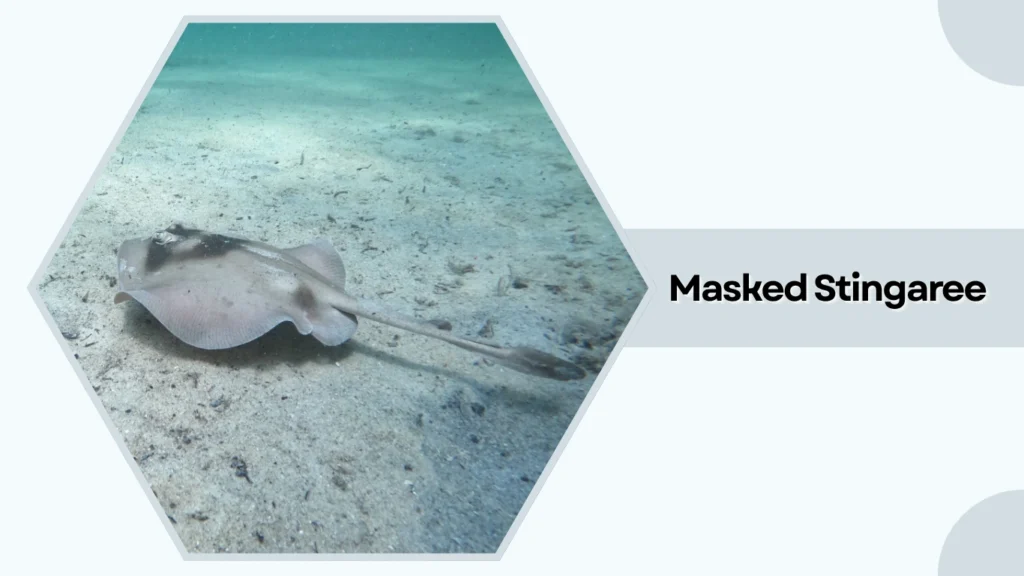
The masked stingaree is a small bottom-dwelling ray known for its distinct facial marking that resembles a mask. It is commonly found in coastal waters and sandy seabeds. This species is well adapted to blending into its surroundings, making it difficult to spot in the wild.
Identification
- Rounded, disc-shaped body
- Distinct dark “mask-like” marking near the eyes
- Smooth skin with sandy or brown coloration
- Short tail with a small venomous spine
- Eyes located on top of the body
- Pale underside
Habitat
Masked stingarees inhabit shallow coastal waters, especially sandy and muddy seabeds. They are commonly found in calm marine environments where they can rest and hide. These habitats provide ideal conditions for camouflage and feeding. They prefer areas with soft substrates that allow easy burrowing.
Behavior
Masked stingarees are mostly sedentary and spend much of their time resting on or partially buried in the seabed. They rely on camouflage to avoid predators. They are generally solitary and not aggressive, using their spine only for defense when threatened.
Diet
Masked stingarees are carnivorous and feed on small invertebrates such as worms, crustaceans, and mollusks. They search along the seabed for prey, using their mouths to uncover hidden food. Their feeding habits help maintain the balance of bottom-dwelling organisms.
26. Short-Tail Stingray
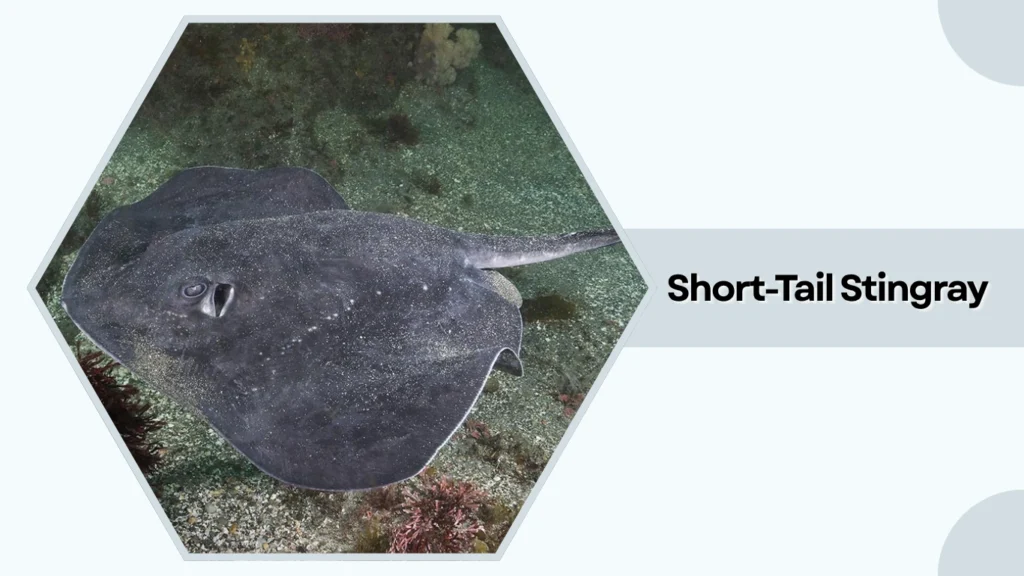
The short-tail stingray is one of the largest stingray species, known for its massive body and relatively short, thick tail. It is commonly found in coastal waters of the Southern Hemisphere. Despite its size, it is generally calm and slow-moving, often seen resting on the seabed.
Identification
- Very large, broad, diamond-shaped body
- Short, thick tail compared to body size
- Smooth skin with gray or brown coloration
- Pale underside
- Large eyes positioned on top of the body
- Venomous spine located on the tail
Habitat
Short-tail stingrays inhabit coastal waters, bays, and sandy seabeds in temperate and warm regions. They prefer shallow environments where they can rest on the ocean floor. These habitats provide both protection and feeding opportunities. They are often found near rocky areas and coastal zones.
Behavior
Short-tail stingrays are mostly solitary and spend much of their time resting on the seabed. They are slow-moving and generally non-aggressive. When disturbed, they may swim away calmly or use their spine for defense. Their large size helps deter most predators.
Diet
Short-tail stingrays are carnivorous and feed on fish, crustaceans, and mollusks. They use their strong jaws to crush prey and often search along the seabed for food. Their feeding behavior makes them effective bottom predators.
27. Pelagic Stingray
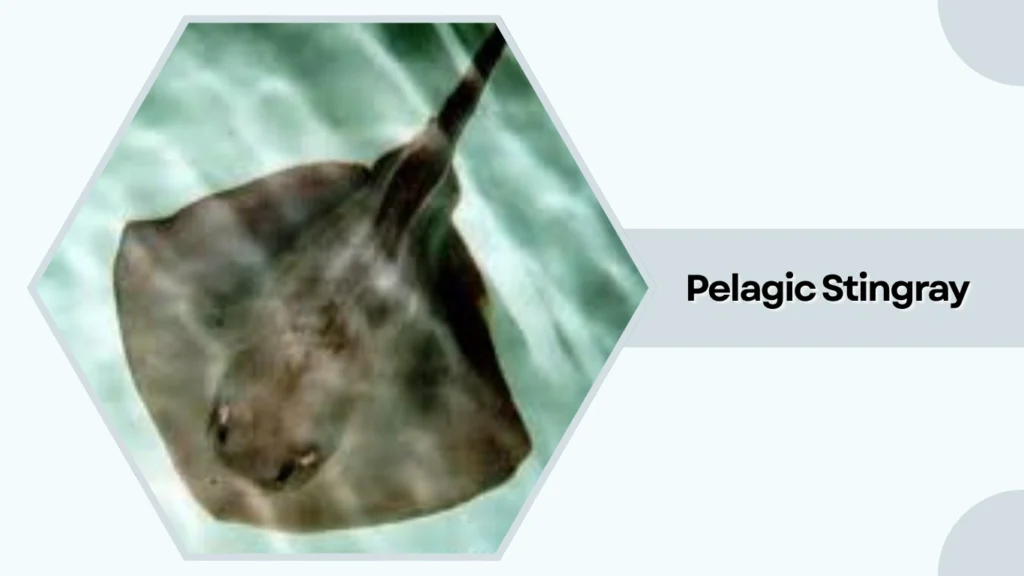
The pelagic stingray is a unique species that lives in the open ocean rather than on the seabed like most other rays. It is one of the few stingrays adapted to a fully pelagic lifestyle. This species is widely distributed in tropical and subtropical oceans and is often seen swimming near the surface.
Identification
- Diamond-shaped, flattened body
- Dark purplish or bluish coloration
- Smooth skin texture
- Long, slender tail with a venomous spine
- Eyes located on top of the body
- Lighter underside
Habitat
Pelagic stingrays inhabit open ocean waters, often far from coastlines. They are commonly found near the surface or in midwater zones rather than resting on the seabed. These environments differ greatly from typical ray habitats, as they lack hiding places and require constant swimming. They are widely distributed across warm ocean regions.
Behavior
Pelagic stingrays are active swimmers and are often seen gliding through open water. Unlike bottom-dwelling rays, they do not bury themselves in sand. They are generally solitary and move continuously in search of food. Their behavior is well adapted to life in the open ocean.
Diet
Pelagic stingrays are carnivorous and feed on small fish, squid, and planktonic organisms. They capture prey while swimming in open water rather than searching along the seabed. Their diet reflects their pelagic lifestyle and the availability of prey in the open ocean.
FAQs
What is a ray fish?
Ray fish are flat-bodied marine animals belonging to the group of cartilaginous fish, which also includes sharks. They are known for their wide, wing-like fins and bottom-dwelling behavior. Some species, however, live in open water and swim actively rather than staying on the seabed.
Where do ray fish live?
Ray fish are found in oceans all around the world, from shallow coastal waters to deep-sea environments. Some species also live in freshwater rivers. Most rays prefer sandy or muddy seabeds, while others, like manta rays, inhabit open ocean waters.
Are ray fish dangerous to humans?
Most ray fish are not dangerous and prefer to avoid humans. Some species, like stingrays, have venomous spines used for defense. Injuries usually happen when they are accidentally stepped on. Rays generally only use their defense mechanisms when threatened.
What do ray fish eat?
Ray fish are mostly carnivorous and feed on small fish, crustaceans, mollusks, and worms. Some species, like manta rays, are filter feeders that eat plankton. Their diet depends on their habitat and size, with bottom-dwelling rays often searching for prey in the sand.
How do ray fish move?
Ray fish move by flapping their large, wing-like fins, which creates a smooth gliding motion through the water. This movement is often compared to flying. Some rays stay close to the seabed, while others swim freely in open water using strong, graceful motions.