
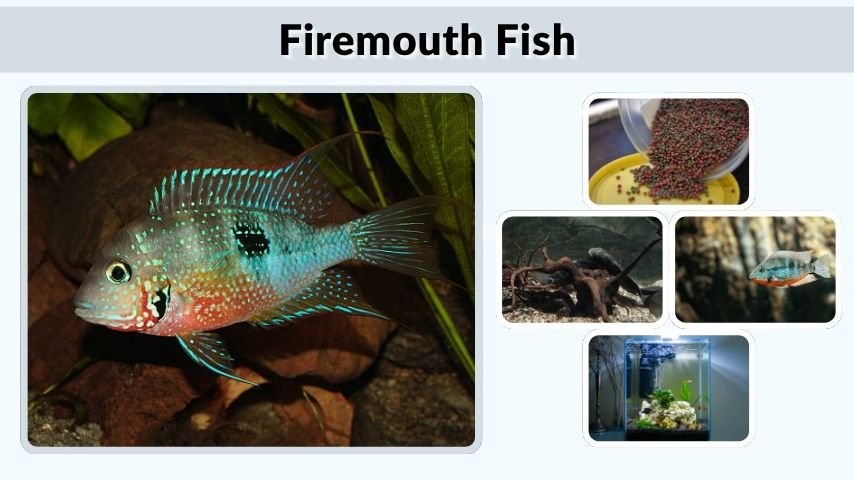
Firemouth fish are colorful freshwater cichlids admired for their bright red throat, active behavior, and relatively manageable care requirements. Scientifically known as Thorichthys meeki, these fish originate from Central America and are popular among aquarium hobbyists looking for an attractive and hardy species. Firemouth Cichlids are known for their territorial displays, unique personalities, and compatibility with various medium-sized tank mates. Understanding their care needs, tank requirements, and behavior is essential for maintaining a healthy and thriving aquarium.
What Is a Firemouth Fish?
The Firemouth Fish is a freshwater cichlid species native to rivers, streams, and slow-moving waters of Mexico, Belize, and Guatemala. It is named after the vibrant red coloration found on its throat and lower body. Firemouth Cichlids are considered one of the more peaceful cichlid species, making them suitable for many community aquarium setups when provided with adequate space.
Scientific Classification
Firemouth fish belong to the following classification:
- Kingdom: Animalia
- Phylum: Chordata
- Class: Actinopterygii
- Family: Cichlidae
- Genus: Thorichthys
- Species: Thorichthys meeki
Why Firemouth Fish Are Popular
Aquarium keepers appreciate Firemouth fish for several reasons:
- Attractive coloration
- Hardy nature
- Moderate care requirements
- Interesting behavior
- Compatibility with many fish species
Firemouth Fish Characteristics
Firemouth fish are easily recognized by their striking appearance and unique territorial displays. They possess a laterally compressed body and develop brighter coloration as they mature. Their famous red throat becomes especially visible when they feel threatened or are attempting to establish dominance.
Physical Appearance
Adult Firemouth fish typically display silver-gray bodies with subtle blue highlights and vivid red coloration extending from the throat to the belly. Dark vertical markings may appear along the body, adding to their distinctive appearance.
Firemouth Fish Colors
Color intensity varies depending on age, genetics, health, and environmental conditions. Healthy specimens often display vibrant red, blue, and silver coloration that becomes more pronounced during breeding periods.
Male vs Female Firemouth Fish
Male Firemouth fish are usually larger and more colorful than females. They also tend to have longer dorsal and anal fins. Females often display rounder body shapes, especially when carrying eggs.
How Big Do Firemouth Fish Get?
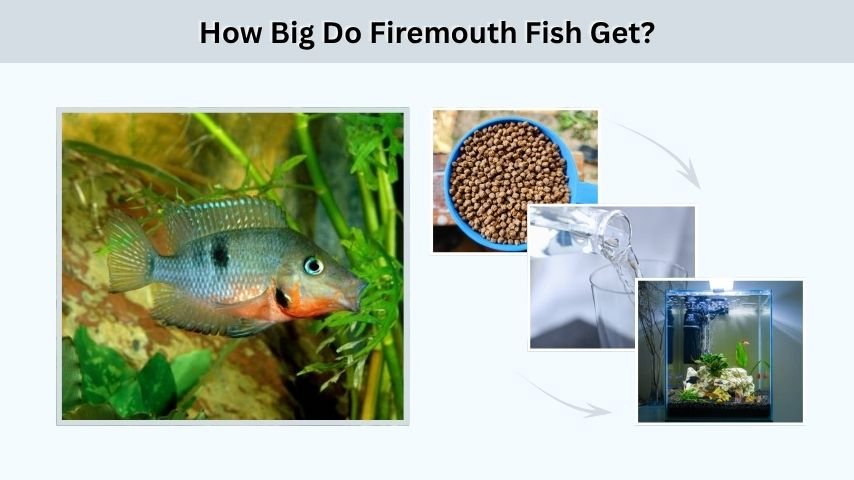
Firemouth fish are medium-sized cichlids that remain manageable for most home aquariums. Although they are not as large as Oscars or some other cichlid species, they still require adequate swimming space and proper tank conditions to reach their full size.
Average Adult Size
Most adult Firemouth fish grow between 5 and 7 inches in length. Males are generally larger than females and may develop more elongated fins as they mature.
Growth Rate
Firemouth fish grow steadily during their first year when provided with proper nutrition and water quality. Growth slows as they approach adulthood, but healthy fish continue developing coloration and body mass.
Factors Affecting Growth
Several factors influence Firemouth fish size:
- Tank size
- Water quality
- Diet quality
- Genetics
- Stress levels
Firemouth Fish Lifespan
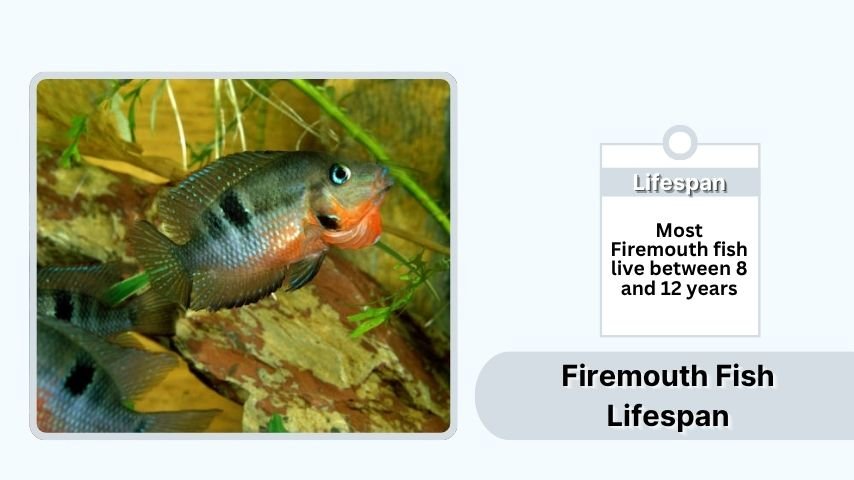
Firemouth fish are relatively long-lived aquarium pets when cared for properly. Consistent maintenance, high-quality food, and stable water conditions contribute significantly to their longevity.
Average Lifespan
Most Firemouth fish live between 8 and 12 years in captivity. Some individuals may exceed this range when maintained in ideal aquarium environments.
Life Expectancy in Captivity
Clean water and a balanced diet are among the most important factors influencing lifespan. Fish exposed to poor water quality often experience health problems that reduce life expectancy.
Common Health Concerns
Like other freshwater cichlids, Firemouth fish may develop diseases when stressed or kept in poor conditions. Maintaining excellent water quality is one of the best ways to support long-term health.
Firemouth Fish Tank Requirements
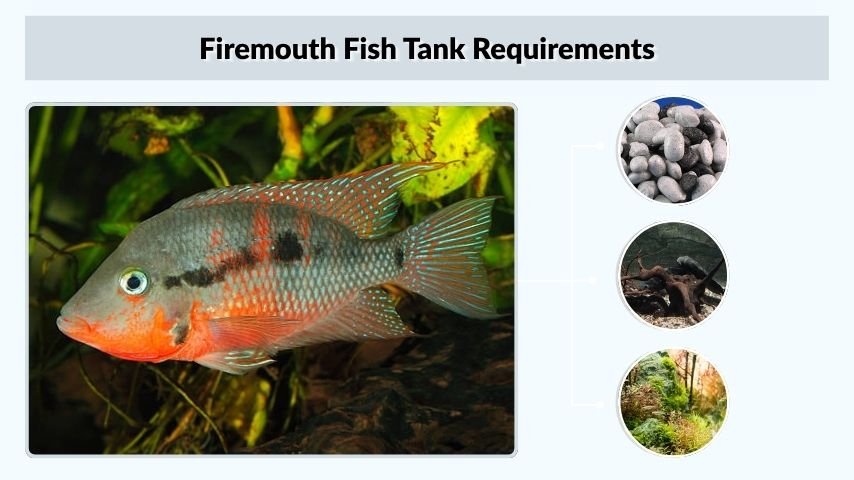
Creating a suitable aquarium environment helps Firemouth fish remain healthy and reduces territorial aggression. Proper tank size, filtration, and water parameters are essential components of successful Firemouth care.
Minimum Tank Size
A single Firemouth fish generally requires at least a 30-gallon aquarium, while pairs and community setups benefit from larger tanks. Additional space helps reduce aggression and provides more swimming room.
Water Temperature
Firemouth fish thrive in warm tropical conditions. Stable water temperatures help support metabolism, immune function, and overall well-being.
Water Parameters
These fish prefer slightly alkaline to neutral water with good filtration and regular maintenance. Consistent water quality helps prevent disease and encourages natural behavior.
Aquarium Decorations
Providing suitable decorations helps Firemouth fish feel secure and establish territories. Useful additions include:
- Rocks
- Driftwood
- Caves
- Live plants
- Sandy substrate
Firemouth Fish Diet and Feeding
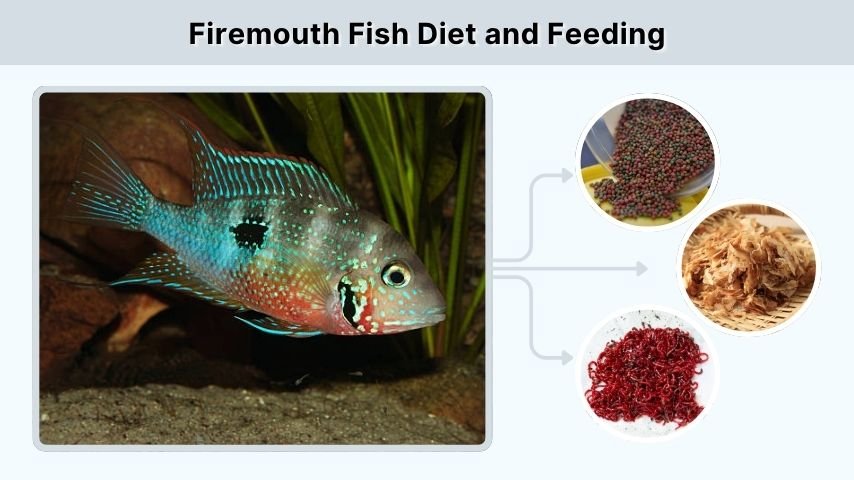
Firemouth fish are omnivorous and require a varied diet to maintain their health, coloration, and activity levels. In their natural habitat, they consume small insects, crustaceans, plant matter, and organic debris. In captivity, providing a balanced diet helps promote healthy growth and strengthens their immune system.
Best Foods for Firemouth Fish
A nutritious Firemouth diet may include:
- High-quality cichlid pellets
- Flake foods
- Bloodworms
- Brine shrimp
- Daphnia
- Vegetables such as peas and spinach
Feeding Schedule
Adult Firemouth fish generally do well with one or two feedings per day. Juveniles may require more frequent meals to support growth. Offering small portions helps prevent overfeeding and water quality issues.
Foods to Avoid
Avoid feeding excessive fatty foods or relying on a single food source. A varied diet provides the nutrients necessary for proper coloration, growth, and long-term health.
Firemouth Fish Tank Mates
Selecting appropriate tank mates is important because Firemouth fish can become territorial, especially during breeding periods. Although they are considered less aggressive than many cichlids, they still require compatible companions that can tolerate similar water conditions.
Best Tank Mates
Suitable tank mates for Firemouth fish include:
- Rainbowfish
- Larger tetras
- Severums
- Plecos
- Swordtails
Fish to Avoid
Very small fish may be viewed as prey, while highly aggressive cichlids can create constant conflict. Careful species selection helps maintain harmony within the aquarium.
Can Firemouth Fish Live With Oscars?
Housing Firemouth fish with Oscars can be challenging because Oscars grow significantly larger and may intimidate or injure Firemouths. Large aquariums and careful monitoring are essential if attempting this combination.
What Fish Can Live With Firemouth Cichlids?
Firemouth Cichlids can coexist with several medium-sized fish species when aquarium space is sufficient. Compatibility depends on temperament, tank size, and individual behavior patterns.
Rainbowfish
Rainbowfish are active swimmers that occupy different areas of the aquarium, making them popular companions for Firemouth fish.
Larger Tetras
Certain larger tetra species can coexist peacefully with Firemouths while adding movement and color to the tank.
Bottom-Dwelling Fish
Plecos and other peaceful bottom dwellers often work well because they occupy different territories within the aquarium.
Firemouth Fish Breeding
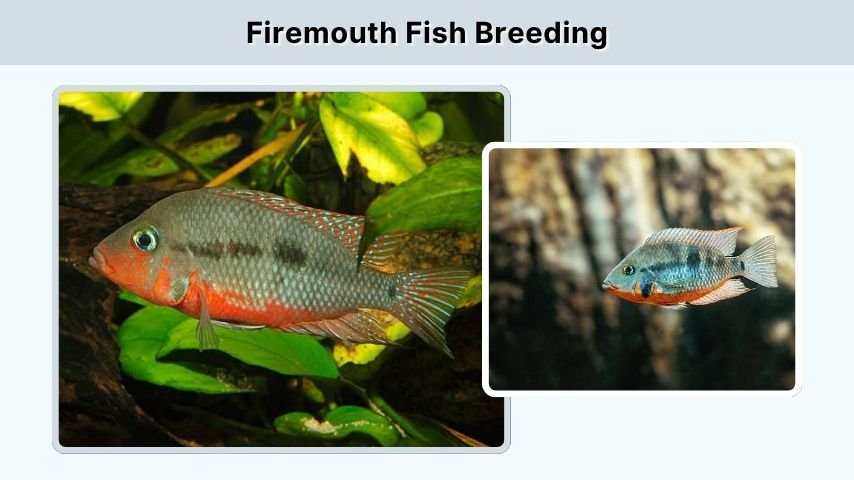
Firemouth fish are considered relatively easy to breed compared to many other cichlid species. They form pairs and display strong parental instincts, making them an interesting species for hobbyists interested in breeding projects.
Identifying Breeding Pairs
Breeding pairs often form naturally when a group of juvenile Firemouths is raised together. Mature pairs may spend significant time near one another and begin defending a chosen territory.
Firemouth Fish Eggs
Females typically lay eggs on flat surfaces such as rocks, decorations, or aquarium glass. Both parents participate in guarding and caring for the eggs until they hatch.
Raising Baby Firemouth Fish
After hatching, the fry remain under parental protection for several weeks. Newly hatched fry can be fed specialized fry foods and freshly hatched brine shrimp as they develop.
Firemouth Fish Behavior and Aggression
Firemouth fish are known for their distinctive territorial displays and social interactions. While generally less aggressive than many cichlids, they can become defensive when protecting territory or offspring.
Territorial Displays
One of the species’ most recognizable behaviors is the flaring of the bright red throat. This display is used to warn rivals and establish dominance without immediate physical conflict.
Firemouth Fish Fighting
Aggression usually occurs when aquarium space is limited or during breeding periods. Providing adequate territories and hiding places helps reduce confrontations.
Managing Aggression
Several strategies can help minimize aggressive behavior:
- Use a larger aquarium
- Provide visual barriers
- Add caves and hiding places
- Avoid overcrowding
- Select compatible tank mates
Common Firemouth Fish Diseases
Like most freshwater fish, Firemouths may develop health issues if environmental conditions deteriorate. Preventative care and regular maintenance significantly reduce disease risks.
Ich
Ich is a common parasitic infection characterized by small white spots on the fish’s body and fins. Early treatment usually results in successful recovery.
Fin Rot
Fin rot often develops when water quality declines. Maintaining clean water and proper filtration helps prevent this bacterial condition.
Internal Parasites
Poor diet or contaminated food sources may contribute to internal parasite infections. Observing feeding behavior and maintaining high-quality nutrition can reduce risk.
FAQs
Do Firemouth fish eat other fish?
Firemouth fish may eat very small fish that can fit into their mouths. While they are not highly predatory compared to some cichlids, it is best to avoid housing them with tiny species that could be viewed as food.
How can you tell if a Firemouth fish is male or female?
Male Firemouth fish are typically larger, more colorful, and have longer pointed dorsal and anal fins. Females are usually smaller with rounder bodies, especially during breeding periods.
What water temperature is best for Firemouth fish?
Firemouth fish generally thrive in water temperatures between 75°F and 86°F (24°C to 30°C). Maintaining stable temperatures helps support their health, metabolism, and immune system.
Are Firemouth fish good for beginners?
Yes, Firemouth fish are often considered suitable for beginners who have experience maintaining tropical aquariums. They are hardy, adaptable, and less aggressive than many other cichlid species.
How often should Firemouth fish tanks be cleaned?
Regular maintenance is essential. Most aquariums benefit from weekly partial water changes, substrate cleaning, and filter maintenance to maintain good water quality and prevent disease.