
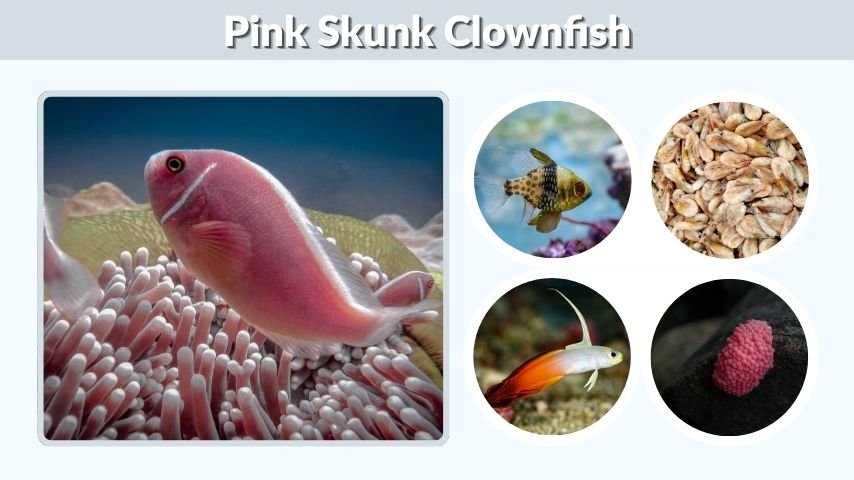
The pink skunk clownfish is a graceful, peaceful marine fish known for its soft pink-orange body and bright white stripe running from head to tail. Also called the pink anemonefish, this species is popular among reef aquarium hobbyists because of its gentle nature, attractive color, and fascinating relationship with sea anemones. With proper care, it can become a beautiful centerpiece in a saltwater tank.
What Is a Pink Skunk Clownfish?
The pink skunk clownfish, scientifically known as Amphiprion perideraion, is a species of anemonefish from the Indo-Pacific region. It belongs to the same broader clownfish group as the famous orange clownfish, but it has a softer appearance and a more delicate personality.
This fish is often called “skunk” clownfish because of the white stripe that runs along the top of its body. Unlike many clownfish that have bold vertical bands, the pink skunk clownfish has a slim dorsal stripe that begins near the mouth and continues toward the tail.
Appearance and Size
Pink skunk clownfish usually have a peach, salmon, or pink-orange body. Their fins are often pale or semi-transparent, giving them a light, elegant look. The most noticeable feature is the narrow white line along the back. Many also have a thin white vertical stripe behind the head.
Most adults reach about 3 to 4 inches in length. Females are usually larger than males, which is common among clownfish. In a bonded pair, the dominant fish becomes female, while the smaller fish remains male.
Natural Behavior
This species is generally calmer than many other clownfish. While some clownfish can become very territorial, pink skunk clownfish are usually more peaceful and shy. They often stay close to their chosen area in the aquarium, especially if they have a host anemone or coral substitute.
They do best when kept in pairs or small groups in suitable tanks. However, like all clownfish, they still have a social hierarchy. The largest fish becomes the dominant female, the next largest becomes the breeding male, and smaller individuals remain lower in rank.
Pink Skunk Clownfish Quick Care Table
Before adding this fish to your aquarium, it helps to understand its basic needs. Pink skunk clownfish are not extremely difficult to keep, but they do require a stable saltwater setup.
| Care Category | Recommendation |
|---|---|
| Scientific Name | Amphiprion perideraion |
| Common Names | Pink skunk clownfish, pink anemonefish |
| Adult Size | Around 3 to 4 inches |
| Temperament | Peaceful to semi-peaceful |
| Diet | Omnivore |
| Minimum Tank Size | 20 to 30 gallons for a pair |
| Reef Safe | Yes |
| Care Level | Easy to moderate |
| Best Tankmates | Peaceful reef fish |
| Host Anemone Needed? | Helpful but not required |
Natural Habitat and Distribution
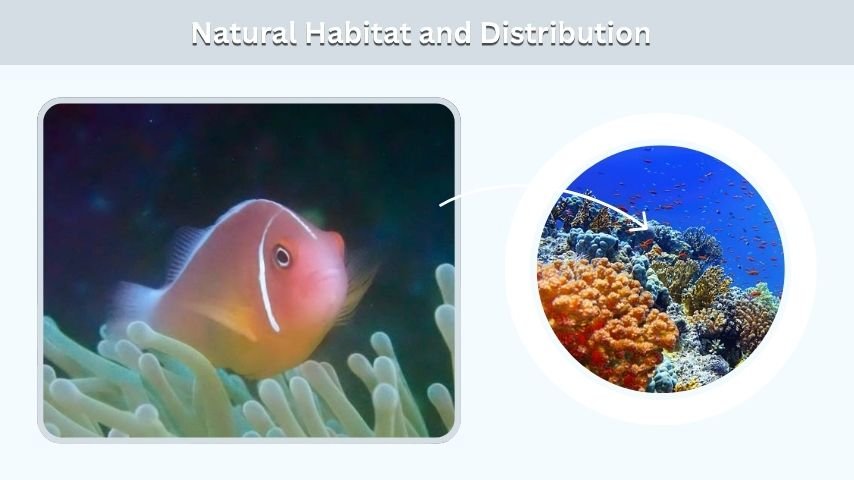
In the wild, pink skunk clownfish live across parts of the Indo-Pacific, including areas around northern Australia, Indonesia, the Malay Archipelago, Melanesia, and nearby reef regions. They are most often found in warm tropical waters where coral reefs and sea anemones are present.
Reef Lagoons and Slopes
These fish usually live in reef lagoons and outer reef slopes. They tend to stay close to host anemones because the anemone provides protection from predators. In return, clownfish help the anemone by bringing movement, nutrients, and sometimes food scraps.
Pink skunk clownfish are usually seen hovering near the tentacles of anemones. Their bodies are protected by a mucus coating that helps prevent the anemone from stinging them. This relationship is one of the most interesting parts of clownfish biology.
Host Anemones in the Wild
Pink skunk clownfish are commonly associated with large sea anemones, especially magnificent sea anemones. In aquariums, however, they do not always need an anemone to survive. Many captive fish adapt well to coral structures, rock caves, or even a quiet corner of the tank.
Still, a suitable host can help them feel more secure. The challenge is that anemones require strong lighting, stable water, and mature aquariums, so beginners should not rush to add one.
Tank Setup for Pink Skunk Clownfish
A successful tank starts with stability. Pink skunk clownfish are hardy compared to many marine fish, but they still need clean, well-maintained saltwater conditions.
Tank Size
A single pink skunk clownfish can live in a smaller marine aquarium, but a pair should have at least 20 to 30 gallons. A larger tank is always better because it keeps water conditions more stable and gives the fish more room to establish territory.
For community reef tanks, 40 gallons or more is ideal. This gives enough space for peaceful tankmates and reduces stress.
Water Conditions
Keep the water clean and stable. Sudden changes in salinity, temperature, or pH can stress the fish and make them more vulnerable to disease.
Good target conditions include:
- Temperature around 75°F to 80°F
- Specific gravity around 1.023 to 1.026
- pH around 8.1 to 8.4
- Low ammonia and nitrite at 0 ppm
- Nitrate kept as low as possible
Regular water changes, a quality filtration system, and careful feeding will help maintain healthy conditions.
Aquascaping
Pink skunk clownfish appreciate a tank with live rock, open swimming space, and sheltered areas. Live rock gives them places to retreat and helps support biological filtration. If you are not keeping an anemone, provide a calm area where the fish can settle.
Avoid overly aggressive aquascapes with limited hiding spots. These fish are peaceful and may become nervous if they feel exposed.
Diet and Feeding
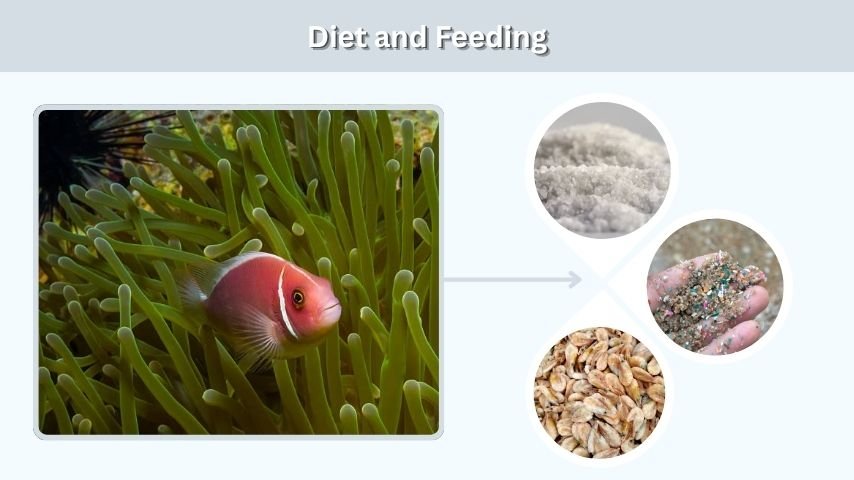
Pink skunk clownfish are omnivores, which means they eat both animal-based and plant-based foods. In the wild, clownfish may feed on plankton, algae, tiny invertebrates, and small particles floating near the reef.
Best Aquarium Foods
In captivity, they usually accept a wide range of foods. A varied diet keeps them healthy and helps maintain good coloration.
Good food options include:
- Marine flakes
- Small marine pellets
- Frozen mysis shrimp
- Enriched brine shrimp
- Finely chopped seafood
- Algae-based foods
- Vitamin-enriched frozen blends
Feed small portions once or twice per day. They should eat most of the food within a few minutes. Overfeeding can quickly reduce water quality in a saltwater aquarium.
Feeding Tips
Because pink skunk clownfish have small mouths, choose appropriately sized food. If pellets or frozen foods are too large, crush or chop them before feeding.
A mix of meaty and algae-based foods is better than feeding only one type of food. This balanced approach supports energy, immune health, and long-term color.
Temperament and Tankmates
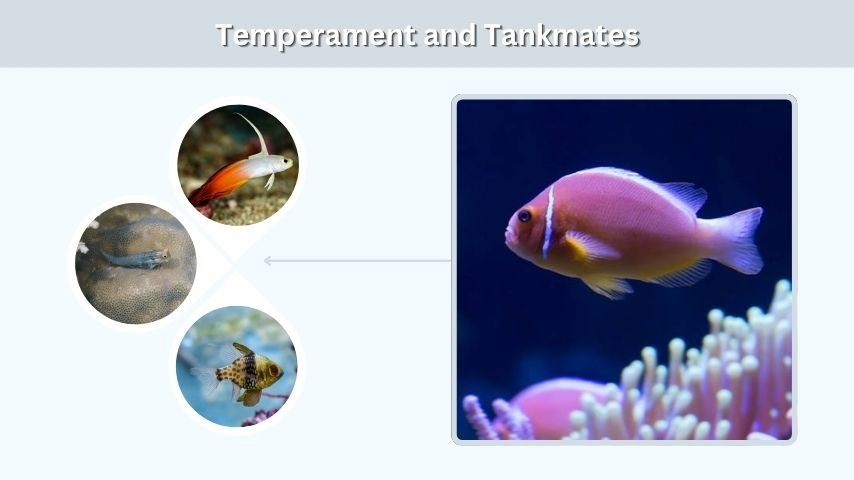
Pink skunk clownfish are among the more peaceful clownfish species. They are less aggressive than many maroon, tomato, or large ocellaris-type clownfish. This makes them a good choice for calm reef communities.
Best Tankmates
Choose peaceful fish that will not bully them. Suitable tankmates may include:
- Firefish
- Small gobies
- Cardinalfish
- Blennies
- Royal grammas
- Peaceful wrasses
- Small reef-safe invertebrates
They can also live with corals, shrimp, snails, and other reef-safe animals. Pink skunk clownfish do not eat corals and are generally considered reef safe.
Tankmates to Avoid
Avoid large aggressive fish that may intimidate or attack them. Very territorial clownfish species can also be a problem, especially in smaller tanks.
Fish to be careful with include:
- Large dottybacks
- Aggressive damsels
- Triggerfish
- Large hawkfish
- Maroon clownfish
- Predatory reef fish
Even peaceful fish can become stressed if the tank is too small or overcrowded, so stocking should be planned carefully.
Do Pink Skunk Clownfish Need an Anemone?
Pink skunk clownfish do not need an anemone in an aquarium. They can live healthy lives without one, especially if they are captive-bred and already used to aquarium conditions.
Benefits of an Anemone
A host anemone can make the fish feel secure and create a more natural display. Watching a clownfish interact with an anemone is one of the most rewarding sights in reef keeping.
However, anemones are more demanding than clownfish. They need strong lighting, excellent water quality, and a mature tank. Many anemones can move around the aquarium and sting corals, so they must be added with care.
Alternatives to Anemones
Some pink skunk clownfish may adopt soft corals, leather corals, mushrooms, or even a quiet rock area as a substitute host. Not every fish will do this, and it should not be forced.
If your tank is new, it is better to focus on stable water and healthy fish before attempting an anemone.
Breeding Pink Skunk Clownfish
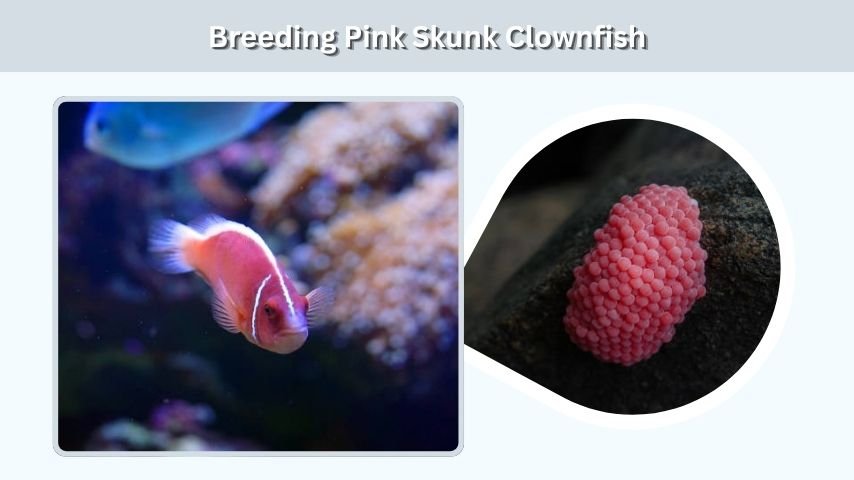
Pink skunk clownfish can breed in captivity, especially when kept as a stable pair. Like other clownfish, they are protandrous hermaphrodites. This means they begin life as males, and the dominant individual can become female.
Pair Formation
A pair usually forms when one fish becomes larger and dominant. The smaller fish accepts the male role. Once bonded, the pair may stay close together and defend a small territory.
To encourage pairing, many aquarists start with two young fish of different sizes. Adding two mature females can lead to fighting, so it is better to choose carefully.
Spawning Behavior
When ready to breed, the pair cleans a flat surface near their chosen territory. The female lays eggs, and the male fertilizes and guards them. The male often fans the eggs to keep them oxygenated and clean.
Raising the larvae is much harder than getting the pair to spawn. Baby clownfish require tiny live foods and a separate rearing system, so breeding is best suited for dedicated hobbyists.
Common Health Problems
Pink skunk clownfish are hardy, but they can still suffer from common marine fish diseases. Stress, poor water quality, and aggressive tankmates are often the main causes of illness.
Signs of Stress or Disease
Watch for changes in behavior or appearance. Early treatment is much easier than waiting until the fish is very weak.
Common warning signs include:
- Loss of appetite
- Heavy breathing
- White spots
- Cloudy eyes
- Torn fins
- Hiding constantly
- Scratching against rocks
- Faded color
Quarantining new fish before adding them to the main tank is one of the best ways to prevent disease. A quarantine period allows you to observe the fish, treat problems early, and avoid introducing parasites to a reef tank.
Keeping Them Healthy
Stable water, proper nutrition, and peaceful tankmates are the best defense. Avoid sudden salinity changes and do not add fish too quickly. A calm environment helps this species settle and show natural behavior.
Captive-Bred vs Wild-Caught Pink Skunk Clownfish
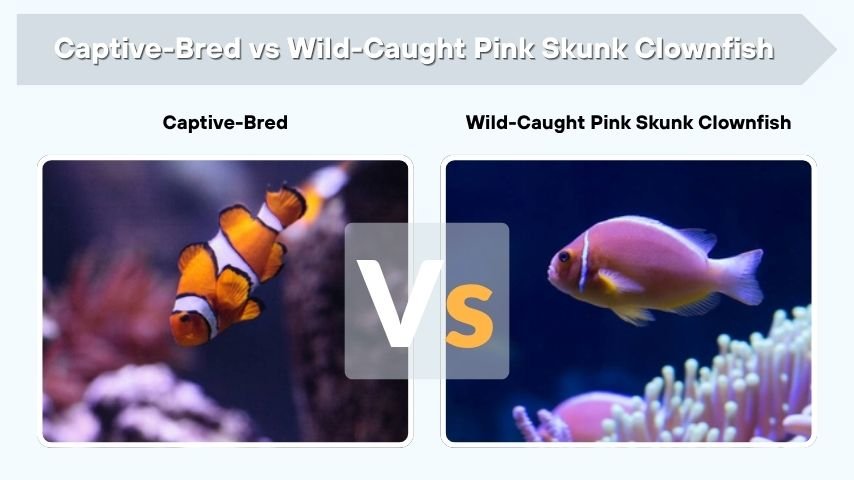
Whenever possible, choose captive-bred pink skunk clownfish. Captive-bred fish are usually better adapted to aquarium life, more likely to accept prepared foods, and less likely to carry wild parasites.
Why Captive-Bred Is Better
Captive-bred clownfish also reduce pressure on wild reef populations. Since clownfish depend on reef habitats and host anemones, responsible sourcing matters.
Captive-bred fish may cost a little more, but they are often worth it for beginners and experienced hobbyists alike. They usually adjust faster and are a more sustainable choice.
Are Pink Skunk Clownfish Good for Beginners?
Pink skunk clownfish can be good for beginners who already understand basic saltwater aquarium care. They are hardy, peaceful, and easy to feed, but they still need stable marine water conditions.
They are not as bold as some other clownfish, so they do best in calm tanks. A beginner who chooses peaceful tankmates, avoids overcrowding, and keeps up with maintenance can succeed with this species.
FAQs
Are pink skunk clownfish reef safe?
Yes, pink skunk clownfish are reef safe. They do not eat corals and usually ignore shrimp, snails, and other invertebrates. They may choose a coral or anemone-like area as a host, but they are not normally destructive in a healthy reef tank.
How big do pink skunk clownfish get?
Most pink skunk clownfish grow to around 3 to 4 inches. Females are usually larger than males. In a pair, the dominant fish becomes female, while the smaller fish stays male and takes a lower social position.
Do pink skunk clownfish need to be kept in pairs?
They do not have to be kept in pairs, but pairs often show more natural behavior. A single fish can live well in a suitable tank. If keeping two, it is best to introduce young fish or choose individuals of different sizes to reduce fighting.
What do pink skunk clownfish eat?
Pink skunk clownfish eat a mixed omnivorous diet. In aquariums, they usually accept marine flakes, pellets, mysis shrimp, enriched brine shrimp, chopped seafood, and algae-based foods. A varied diet is better than feeding only one food type every day.
Are pink skunk clownfish aggressive?
They are usually less aggressive than many other clownfish. However, they may still defend their territory, especially when paired or breeding. They should be kept with peaceful reef fish and not housed with large, aggressive, or overly territorial species in small tanks.