
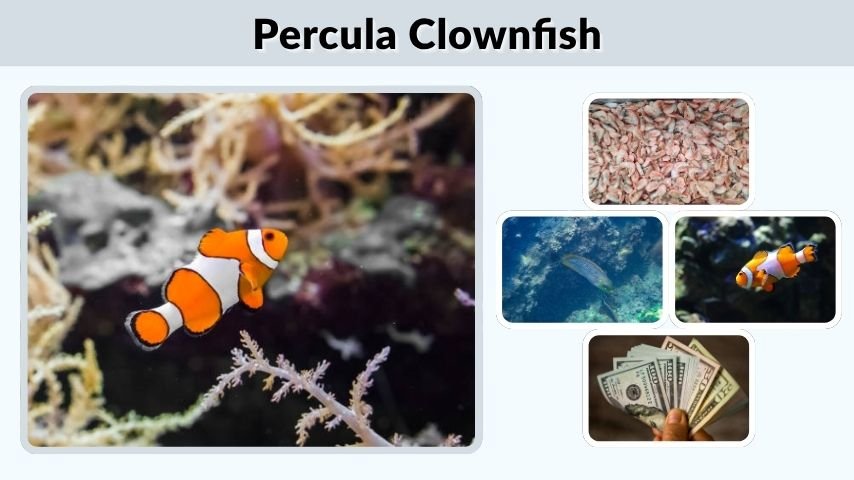
The percula clownfish is one of the most recognizable saltwater aquarium fish, loved for its bright orange body, white bands, and bold black outlines. Also called the true percula clownfish, this species is often confused with the ocellaris or false percula clownfish. Although both look similar, percula clownfish have their own care needs, personality, size, lifespan, and color varieties that every aquarium owner should understand.
What Is a Percula Clownfish?
The percula clownfish, scientifically known as Amphiprion percula, is a small marine fish from the damselfish family. It is best known for its orange body, three white vertical bars, and thick black markings around the white bands. Because of its classic clownfish appearance, it is one of the most popular fish in reef aquariums.
Percula clownfish are often called true percula clownfish to separate them from ocellaris clownfish, which are commonly called false percula clownfish. Both species are popular in the aquarium trade and can look almost identical at first glance.
Percula clownfish are generally hardy, reef-safe, and suitable for many saltwater aquariums. They are not the easiest marine fish in the world, but they are manageable for aquarists who understand basic saltwater tank care.
Percula Clownfish Facts
Here are some quick facts about the percula clownfish:
- Scientific name: Amphiprion percula
- Common names: Percula clownfish, true percula clownfish, orange clownfish
- Adult size: Around 3 inches
- Lifespan: Usually 10 to 15 years in captivity
- Diet: Omnivore
- Temperament: Peaceful to semi-aggressive
- Reef safe: Yes
- Minimum tank size: 20 to 30 gallons
- Care level: Easy to moderate
- Best kept as: Single fish or bonded pair
Percula clownfish are small, but they can become territorial. A pair may claim one area of the aquarium and defend it, especially if they are breeding or hosting an anemone.
True Percula Clownfish vs False Percula Clownfish
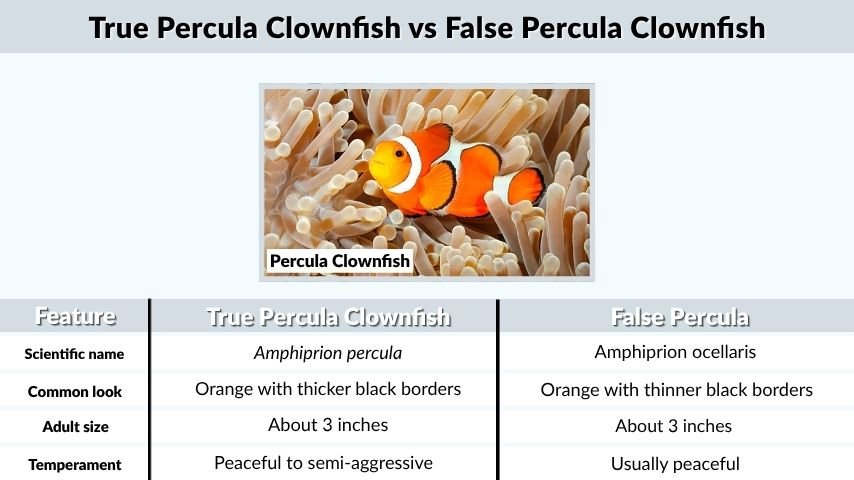
One of the most common questions is the difference between true percula clownfish and false percula clownfish. The true percula is Amphiprion percula. The false percula is Amphiprion ocellaris, also known as the ocellaris clownfish.
They are close relatives and have similar care needs, but there are a few differences.
| Feature | True Percula Clownfish | False Percula / Ocellaris Clownfish |
| Scientific name | Amphiprion percula | Amphiprion ocellaris |
| Common look | Orange with thicker black borders | Orange with thinner black borders |
| Adult size | About 3 inches | About 3 inches |
| Temperament | Peaceful to semi-aggressive | Usually peaceful |
| Care level | Easy to moderate | Easy |
| Common names | True percula, percula clownfish | False percula, ocellaris clownfish |
Difference Between Percula and Ocellaris Clownfish
The easiest visual difference is the black outline around the white bars. Percula clownfish usually have thicker black borders, while ocellaris clownfish often have thinner black outlines. Percula clownfish may also have a slightly brighter orange color.
However, color alone is not always reliable. Captive-bred designer clownfish can have unusual markings, so it may be difficult to identify them by appearance only. When buying one, check the scientific name or ask whether the fish is a true percula or ocellaris clownfish.
Percula vs Ocellaris Clownfish: Which Is Better?
For beginners, ocellaris clownfish are often considered slightly easier because they are very hardy and widely available as captive-bred fish. Percula clownfish are also hardy, but they may be slightly more sensitive depending on the individual fish.
Choose a percula clownfish if you like the thicker black markings and classic true percula appearance. Choose an ocellaris clownfish if you want a very common, beginner-friendly clownfish with many captive-bred morphs.
Can Ocellaris and Percula Clownfish Live Together?
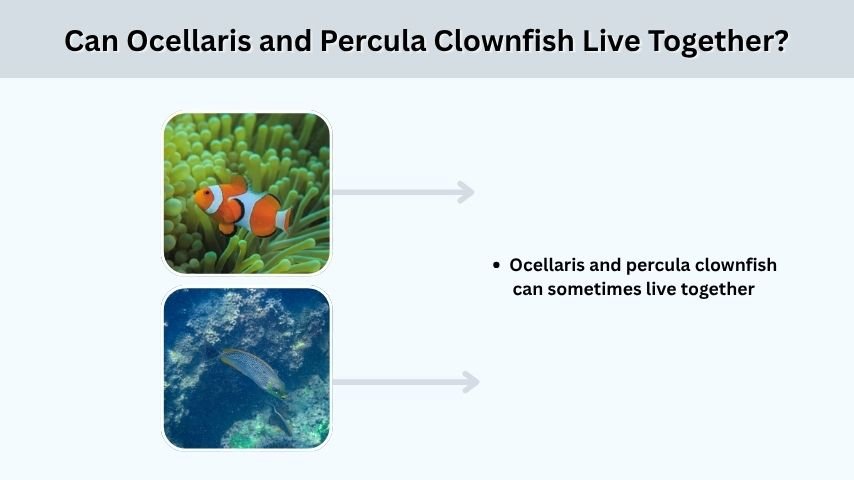
Ocellaris and percula clownfish can sometimes live together, especially if they are introduced young and form a pair. Because they are closely related, some aquarists keep them together successfully.
However, there is no guarantee. Clownfish can become territorial, and two similar clownfish may fight if they do not bond. Keeping more than two clownfish in a small tank is usually risky unless the aquarium is large and carefully managed.
For most hobbyists, the safest choice is to keep one clownfish species as a single fish or a bonded pair.
Percula Clownfish Size
Percula clownfish stay small compared with many marine fish. Most adults reach around 3 inches in length. Females are usually larger than males because clownfish live in a social hierarchy where the dominant fish becomes female.
Their small size makes them suitable for modest reef tanks, but small does not mean they should be crowded. Percula clownfish still need clean water, stable conditions, and enough space to establish territory.
Percula Clownfish Tank Size
A single percula clownfish can often be kept in a 20-gallon saltwater tank, but a 30-gallon tank or larger is better for a pair or community setup. More water volume helps keep conditions stable, which is important for long-term health.
A good percula clownfish tank should include:
- Fully cycled saltwater
- Stable temperature
- Proper salinity
- Good filtration
- Moderate water movement
- Live rock or hiding places
- Peaceful tank mates
- Regular water testing
Percula clownfish are reef-safe and can live in reef aquariums with corals. They usually do not harm corals, although some may try to host in certain soft corals if no anemone is available.
Percula Clownfish Care
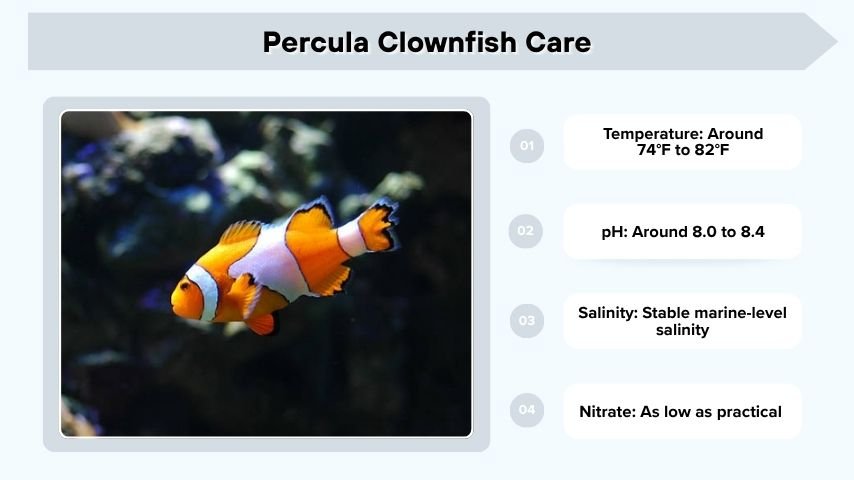
Percula clownfish care is straightforward when the aquarium is stable. The biggest mistake beginners make is adding clownfish to a new or uncycled tank. Like all marine fish, they are sensitive to ammonia and nitrite.
Before adding a percula clownfish, make sure the tank is fully cycled. Ammonia and nitrite should be zero, and nitrate should be kept low through water changes and maintenance.
Water Parameters
Percula clownfish do best in stable tropical marine conditions. Avoid sudden changes because rapid shifts in salinity, temperature, or pH can cause stress.
General care targets include:
- Temperature: Around 74°F to 82°F
- pH: Around 8.0 to 8.4
- Salinity: Stable marine-level salinity
- Ammonia: 0 ppm
- Nitrite: 0 ppm
- Nitrate: As low as practical
Stability is more important than chasing perfect numbers. A stable, clean aquarium helps percula clownfish live longer and resist disease.
Tank Mates
Percula clownfish can live with many peaceful reef-safe fish. Good tank mates may include small gobies, blennies, firefish, cardinalfish, royal gramma, and some peaceful wrasses.
Avoid aggressive fish that may bully them. Also avoid keeping several clownfish species together in a small aquarium. Clownfish may look cute, but they can be territorial once mature.
Percula Clownfish Diet
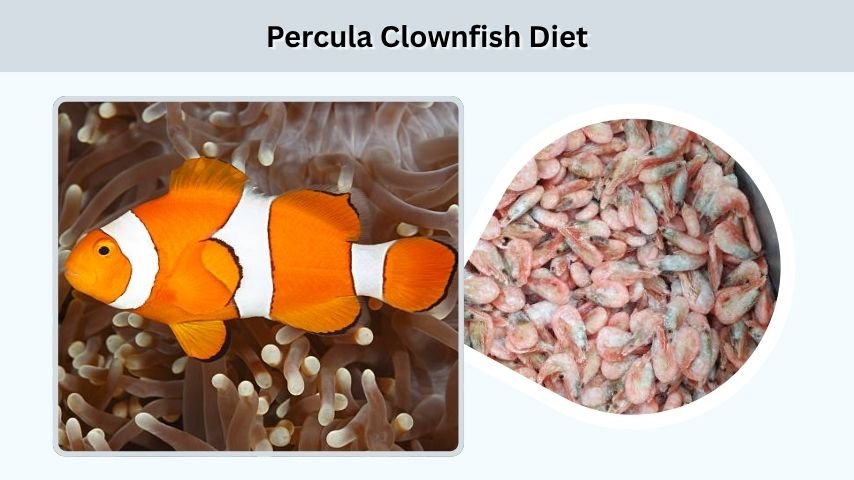
Percula clownfish are omnivores. In the wild, they eat small planktonic animals, algae, and leftover food from their host anemone. In aquariums, they usually accept many prepared foods.
A healthy diet may include:
- Marine pellets
- Quality flakes
- Frozen mysis shrimp
- Frozen brine shrimp
- Chopped seafood
- Spirulina-based foods
- Occasional vitamin-enriched foods
Feed small portions once or twice daily. Only give what the fish can eat quickly. Overfeeding can pollute the water and lead to nitrate problems.
What Do Percula Clownfish Eat?
Percula clownfish eat both meaty and plant-based foods. A mixed diet is best because it supports color, growth, energy, and immune health. They are not usually picky eaters, especially if they are captive-bred.
If a new percula clownfish refuses food, give it time to settle. Try frozen mysis shrimp or finely chopped marine foods to encourage feeding.
Percula Clownfish Lifespan
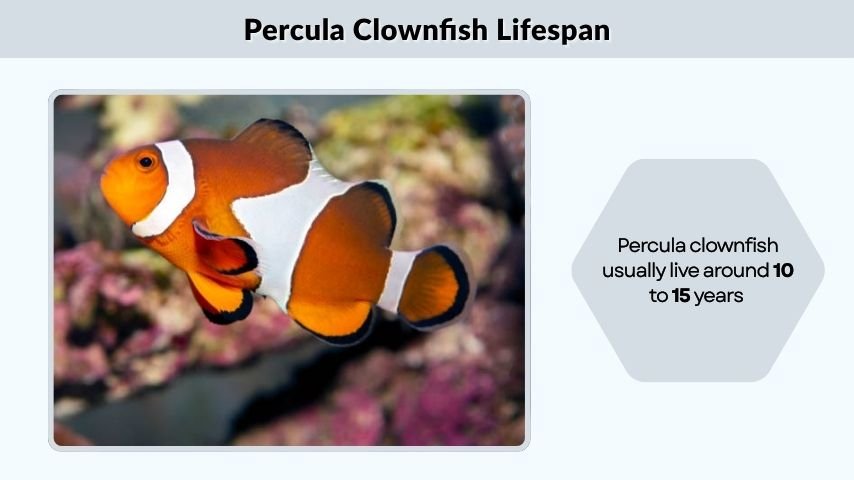
Percula clownfish usually live around 10 to 15 years in captivity with proper care. Some may live longer in excellent aquarium conditions. Their lifespan depends on water quality, diet, genetics, disease prevention, and stress levels.
A percula clownfish may live a shorter life if it is kept in poor water, bullied by tank mates, exposed to parasites, or fed a weak diet. Captive-bred percula clownfish are often a better choice because they are already adapted to aquarium life.
Percula Clownfish Anemone Compatibility
In the wild, clownfish and anemones have a mutual relationship. The anemone gives the clownfish protection, while the clownfish may help clean and defend the anemone. In an aquarium, however, a percula clownfish does not need an anemone to survive.
Percula clownfish may host in several anemone species, but results vary. Some captive-bred clownfish host quickly, while others ignore anemones completely.
Best Anemone for Percula Clownfish
Common host anemones for percula clownfish may include:
- Magnificent sea anemone
- Carpet anemone species
- Bubble tip anemone in some aquarium setups
Bubble tip anemones are popular in home aquariums because they are more available and generally easier than some natural host anemones. However, anemones are more demanding than clownfish. They need strong lighting, stable water, and a mature tank.
Beginners should not buy an anemone just because they want a clownfish. A percula clownfish can live a long, healthy life without one.
Percula Clownfish Breeding and Eggs
Percula clownfish can breed in captivity when kept as a healthy pair. Like other clownfish, they are protandrous hermaphrodites. This means the dominant fish becomes female, while the smaller breeding partner becomes male.
When a pair is ready to breed, they may clean a flat surface near their territory. The female lays eggs, and the male fertilizes and guards them. Percula clownfish eggs often hatch after several days, depending on water temperature.
Breeding is possible in a display tank, but raising the fry is much harder. Baby clownfish need special foods such as rotifers and careful nursery conditions. In many community tanks, eggs or fry do not survive without a separate rearing setup.
Percula Clownfish Types and Color Morphs
Captive breeding has produced many percula clownfish types and designer patterns. Some are natural-looking, while others have unusual stripes, extra white markings, or darker coloration.
Popular percula clownfish types include:
- True percula clownfish
- Onyx percula clownfish
- Black onyx true percula clownfish
- Picasso percula clownfish
- Misbar percula clownfish
- Platinum percula clownfish
- Orange percula clownfish
- Black and white percula clownfish
Onyx Percula Clownfish
The onyx percula clownfish is known for heavy black coloration between the white bands. Black onyx true percula clownfish can be especially attractive because the dark body contrasts strongly with the white stripes and orange face.
Picasso Percula Clownfish
The Picasso percula clownfish has irregular white bands that may connect or form unusual shapes. Picasso percula clownfish are designer morphs and often cost more than standard true percula clownfish.
Misbar Percula Clownfish
A misbar percula clownfish has incomplete or irregular white bars. Some aquarists like this unique look because no two misbar clownfish are exactly the same.
Platinum Percula Clownfish
Platinum percula clownfish have a mostly white body with reduced orange coloration. They are designer fish and may be more expensive than standard percula clownfish.
Percula Clownfish Price and Buying Tips
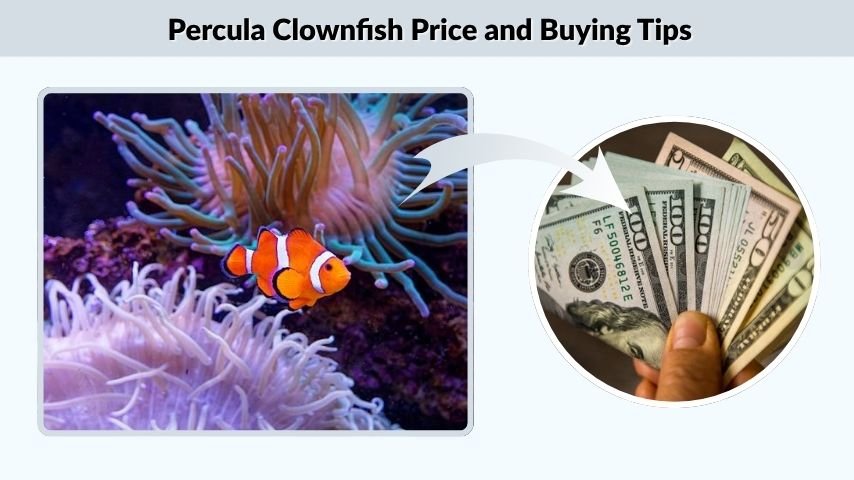
Percula clownfish price depends on the type, size, source, and color morph. A standard true percula clownfish is usually less expensive than rare designer morphs such as Picasso, onyx, or platinum varieties.
When looking for percula clownfish for sale, choose healthy captive-bred fish when possible. Captive-bred clownfish are usually hardier, more sustainable, and better adapted to prepared foods.
Before buying, check for:
- Clear eyes
- Smooth fins
- Active swimming
- Normal breathing
- No white spots
- No excess mucus
- No torn fins
- Strong feeding response
Avoid fish that are breathing heavily, hiding constantly, covered in spots, or refusing food.
Are Percula Clownfish Aggressive?
Percula clownfish are usually peaceful to semi-aggressive. They are less aggressive than maroon clownfish, but they can still defend their territory. A breeding pair may become more protective and chase other fish away from their chosen area.
Aggression is more likely in small tanks, overcrowded tanks, or when multiple clownfish are mixed. Providing space and hiding areas helps reduce conflict.
FAQs
Is a percula clownfish the same as a true percula clownfish?
Yes. A percula clownfish is commonly called a true percula clownfish. Its scientific name is Amphiprion percula. The word “true” is used to separate it from the false percula clownfish, which is actually the ocellaris clownfish.
What is the difference between percula and ocellaris clownfish?
Percula clownfish usually have thicker black borders around their white bars, while ocellaris clownfish often have thinner black outlines. Percula may also look slightly brighter orange. However, designer morphs can make identification harder, so checking the scientific name is best.
How big do percula clownfish get?
Percula clownfish usually grow to about 3 inches long. Females are generally larger than males. Even though they are small, they still need a stable saltwater aquarium with enough room to establish territory and avoid stress.
What size tank does a true percula clownfish need?
A single true percula clownfish can usually live in a 20-gallon tank, but 30 gallons or more is better for a pair or community setup. Larger tanks are easier to keep stable and help reduce territorial stress.
Do percula clownfish need an anemone?
No. Percula clownfish do not need an anemone in captivity. They can live long, healthy lives without one. Anemones require mature tanks, strong lighting, and stable water, so beginners should focus on clownfish care first.