
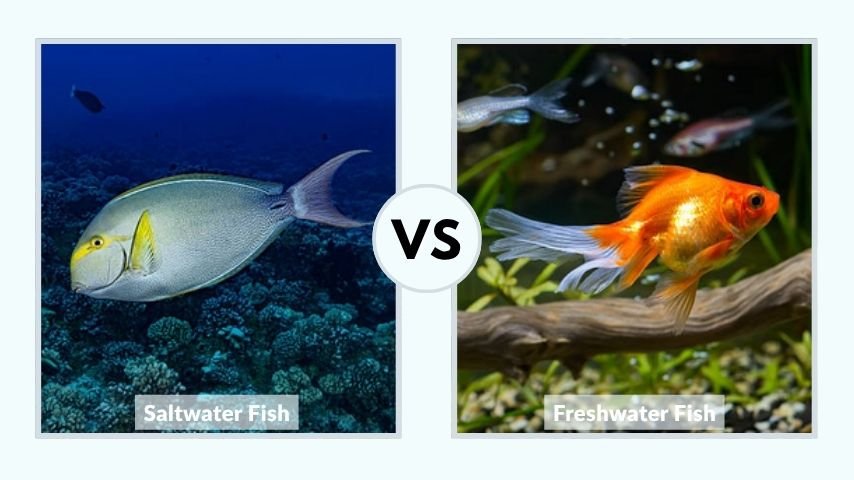
Saltwater vs freshwater fish is a common comparison for people interested in aquariums, fishing, nutrition, or seafood taste. These fish live in very different environments, which affects their bodies, behavior, care needs, and even flavor. Whether you want to choose fish for a tank, fishing trip, or dinner plate, understanding the differences helps you make a better decision.
Saltwater vs Freshwater Fish at a Glance
Saltwater fish live in oceans and seas, while freshwater fish live in rivers, lakes, ponds, and streams. Their habitats shape almost everything about them, from how they breathe and balance salt to how they taste and how difficult they are to keep in an aquarium.
| Feature | Freshwater Fish | Saltwater Fish |
| Natural habitat | Lakes, rivers, ponds, streams | Oceans, seas, coral reefs |
| Water salinity | Very low salt level | High salt level |
| Aquarium difficulty | Usually easier for beginners | Usually more advanced |
| Common examples | Betta, goldfish, catfish, bass, tilapia | Clownfish, tangs, snapper, tuna, grouper |
| Taste profile | Often mild, earthy, or clean | Often briny, rich, or ocean-like |
| Fishing style | Lakes, rivers, ponds | Coastal waters, oceans, bays |
| Maintenance cost | Usually lower | Usually higher |
Saltwater vs Freshwater Fish Habitat and Water Conditions
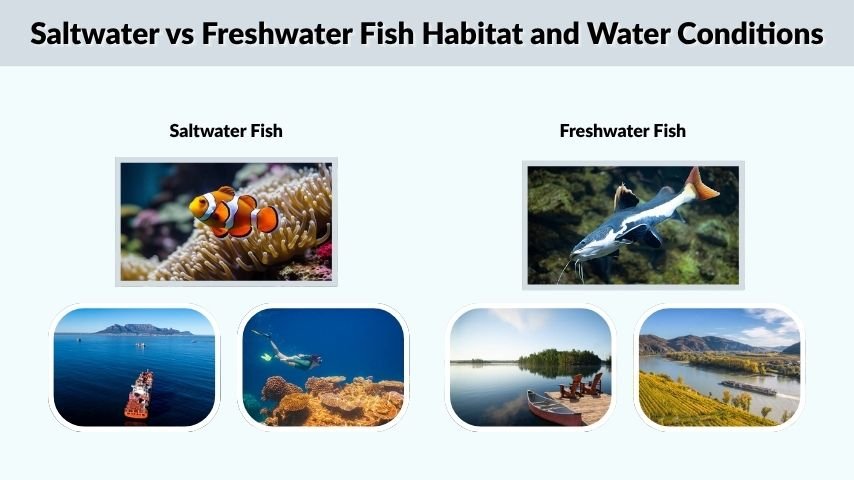
The biggest difference between freshwater and saltwater fish is the type of water they live in. Freshwater has very little dissolved salt, while saltwater contains a much higher concentration of minerals and salts.
Freshwater Environments
Freshwater fish live in places where salt levels are low. These environments can change quickly because of rain, drought, temperature shifts, pollution, and seasonal water movement.
Common freshwater habitats include:
- Rivers
- Lakes
- Ponds
- Streams
- Wetlands
- Reservoirs
Freshwater fish often adapt to changing water flow, temperature, and oxygen levels. For example, catfish and carp can survive in murkier water, while trout usually need cooler, cleaner, oxygen-rich water.
Saltwater Environments
Saltwater fish live in oceans, seas, reefs, bays, and coastal areas. These environments usually have more stable salinity but can still vary in temperature, depth, pressure, and current strength.
Common saltwater habitats include:
- Coral reefs
- Open ocean
- Coastal bays
- Estuaries
- Seagrass beds
- Rocky shorelines
Many saltwater fish are brightly colored, especially reef fish. Their colors help with camouflage, communication, and survival among coral, rocks, and marine plants.
Freshwater vs Saltwater Fish Biology
Freshwater fish and saltwater fish are built differently because their bodies must manage water and salt in opposite ways. This process is called osmoregulation.
Osmoregulation in Freshwater Fish
Freshwater fish live in water that is less salty than their body fluids. Because of this, water naturally moves into their bodies. To stay balanced, they must remove extra water and keep important salts inside.
Freshwater fish usually:
- Absorb salts through their gills
- Produce large amounts of diluted urine
- Avoid losing too many minerals
- Constantly regulate internal fluid balance
This is why freshwater fish cannot usually survive in saltwater. Their bodies are designed for low-salt environments.
Osmoregulation in Saltwater Fish
Saltwater fish face the opposite problem. They live in water that is saltier than their body fluids, so they tend to lose water and absorb extra salt. To survive, they drink seawater and remove excess salt through their gills and kidneys.
Saltwater fish usually:
- Drink water regularly
- Excrete extra salt through their gills
- Produce smaller amounts of concentrated urine
- Maintain water balance in a salty environment
This is one reason saltwater fish are often more sensitive to sudden water changes in aquariums.
Freshwater vs Saltwater Fish Aquarium Care
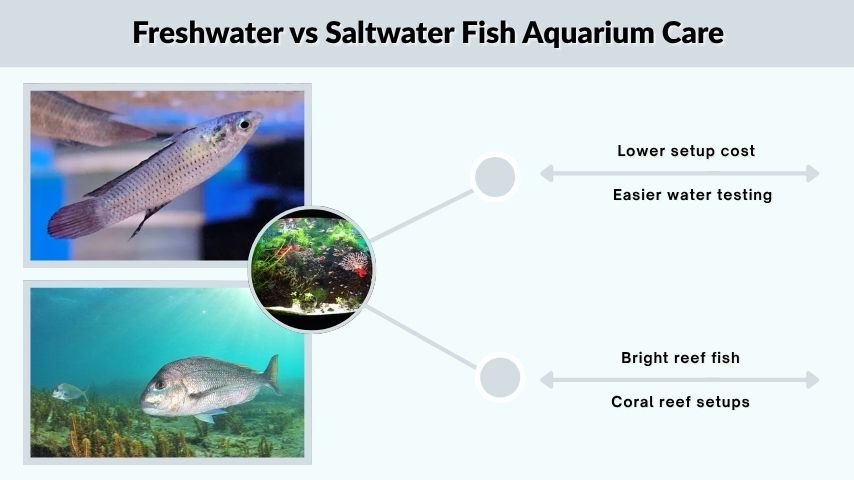
Many people search for freshwater vs saltwater fish tank comparisons because they want to start an aquarium. Both options can be beautiful, but they differ in cost, difficulty, equipment, and maintenance.
Freshwater Fish Tanks
Freshwater tanks are usually better for beginners. They are generally cheaper to set up and easier to maintain. The fish are often hardier, and the equipment is simpler.
Freshwater aquariums are a good choice if you want:
- Lower setup cost
- Easier water testing
- Beginner-friendly fish
- Simple maintenance
- More forgiving water conditions
Popular freshwater aquarium fish include bettas, guppies, tetras, mollies, goldfish, cichlids, and angelfish. Many of these fish are colorful, active, and suitable for home aquariums.
Saltwater Fish Tanks
Saltwater tanks are often more expensive and require more careful maintenance. They may need specialized equipment such as protein skimmers, marine salt mix, live rock, reef lighting, and stronger filtration.
Saltwater aquariums are a good choice if you want:
- Bright reef fish
- Coral reef setups
- Marine biodiversity
- A more advanced aquarium hobby
- Unique species like clownfish and tangs
A saltwater fish tank can be stunning, but beginners should expect a steeper learning curve. Water salinity, pH, nitrate levels, temperature, and filtration must be monitored carefully.
Saltwater vs Freshwater Fish Tank Cost
Freshwater tanks are usually more affordable than saltwater tanks. A basic freshwater setup may only need a tank, filter, heater, light, substrate, conditioner, and decorations. Saltwater tanks often require more advanced systems to keep water chemistry stable.
Saltwater tanks can cost more because of:
- Marine salt mix
- Specialized lighting
- Live rock or reef structures
- Protein skimmers
- More expensive fish
- Higher maintenance needs
- Coral care, if included
For most beginners, freshwater is the safer starting point. Saltwater is better for hobbyists who are ready to invest more time, money, and attention.
Freshwater vs Saltwater Fishing
Freshwater vs saltwater fishing is another popular comparison. The main differences are location, fish species, gear, bait, and fishing techniques.
Freshwater Fishing
Freshwater fishing usually happens in lakes, rivers, ponds, and streams. It is often more accessible because many people live near freshwater bodies. It can also be less expensive than saltwater fishing.
Common freshwater fish include:
- Bass
- Trout
- Catfish
- Crappie
- Pike
- Walleye
- Bluegill
Freshwater fishing can be done from the shore, a small boat, kayak, or dock. It is popular with beginners because the gear is usually simple and the locations are easier to access.
Saltwater Fishing
Saltwater fishing takes place in oceans, bays, beaches, piers, and offshore waters. It can involve larger fish, stronger currents, heavier gear, and more challenging conditions.
Common saltwater fish include:
- Tuna
- Snapper
- Grouper
- Mackerel
- Flounder
- Redfish
- Mahi-mahi
Saltwater fishing may require stronger rods, corrosion-resistant reels, heavier line, and specialized bait. Offshore fishing can also involve boats, navigation, weather planning, and safety equipment.
Saltwater vs Freshwater Fishing Gear
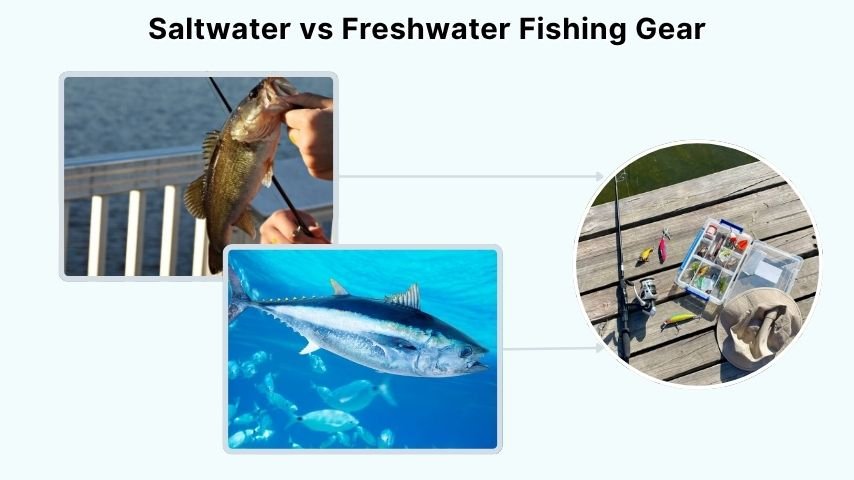
Fishing gear depends on the target species and environment. Freshwater gear is usually lighter, while saltwater gear must handle bigger fish, stronger drag, and corrosive salt.
For freshwater fishing, anglers commonly use:
- Light to medium rods
- Spinning reels
- Small hooks
- Soft plastics
- Worms, insects, or small baitfish
- Lightweight tackle boxes
For saltwater fishing, anglers often need stronger equipment. Saltwater rods and reels are usually built with corrosion-resistant materials because salt can damage metal quickly. After every saltwater trip, rods, reels, hooks, and lures should be rinsed with fresh water.
Freshwater Fish vs Saltwater Fish Taste
Taste is one of the most common reasons people compare freshwater fish vs saltwater fish. The flavor depends on species, diet, water quality, freshness, cooking method, and fat content.
Freshwater Fish Taste
Freshwater fish often have a mild, clean, or slightly earthy flavor. Some species, such as tilapia and trout, are mild and easy to cook. Others, such as catfish or carp, may taste stronger depending on the water they came from.
Freshwater fish are commonly used for frying, grilling, baking, and soups. Their mild taste makes them easy to season with lemon, garlic, herbs, pepper, or light sauces.
Saltwater Fish Taste
Saltwater fish often have a brinier, richer, or more ocean-like flavor. Species such as tuna, salmon, snapper, cod, and grouper are popular because of their texture and taste.
Saltwater fish can be flaky, firm, oily, or meaty depending on the species. Tuna and swordfish are dense and steak-like, while cod and snapper are lighter and flakier.
Freshwater vs Saltwater Fish Nutrition
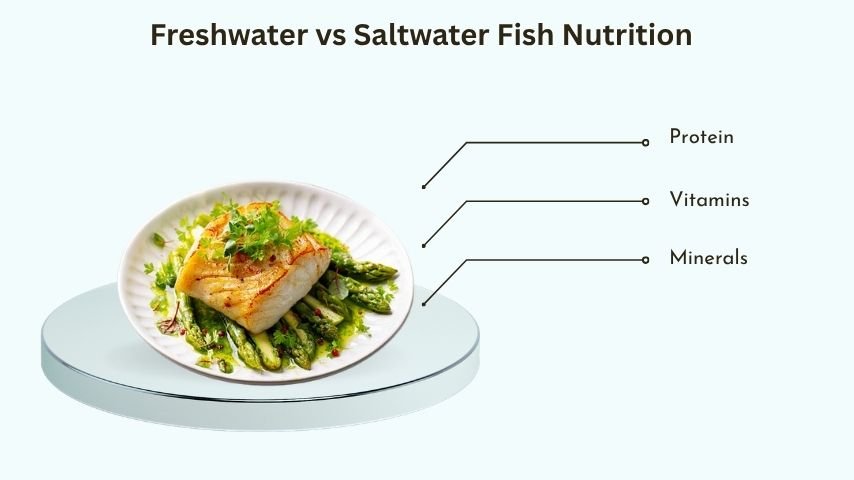
Both freshwater and saltwater fish can be healthy food choices. They provide protein, vitamins, minerals, and healthy fats. However, nutrition varies by species.
Saltwater fish are often known for omega-3 fatty acids, especially oily fish such as salmon, sardines, mackerel, and tuna. Freshwater fish such as trout, catfish, tilapia, and perch can also provide valuable nutrients.
When choosing fish to eat, consider:
- Protein content
- Omega-3 levels
- Mercury risk
- Cooking method
- Source and freshness
- Sustainability
- Local health advisories
Fried fish can be tasty, but baking, steaming, grilling, and broiling are usually healthier cooking methods.
Freshwater Fish vs Saltwater Fish Mercury
Mercury is an important concern when eating fish. Larger predatory fish usually contain more mercury because they eat smaller fish over time. This can happen in both freshwater and saltwater environments.
Saltwater fish such as shark, swordfish, king mackerel, and some tuna may have higher mercury levels. Freshwater fish can also contain contaminants depending on local water pollution.
To reduce risk, eat a variety of fish and follow local fish consumption advisories. Pregnant women, young children, and people who eat fish frequently should be especially careful with high-mercury species.
Are Saltwater Fish Harder to Keep Than Freshwater Fish?
In most cases, saltwater fish are harder to keep than freshwater fish. This is mainly because saltwater tanks require more stable water chemistry. Marine fish can be sensitive to changes in salinity, temperature, ammonia, nitrate, and pH.
Freshwater tanks are not maintenance-free, but they are usually more forgiving. A beginner can start with hardy freshwater species and learn the basics of filtration, feeding, water changes, and tank cycling.
Saltwater tanks are better for people who are ready to test water regularly, research species carefully, and maintain a more advanced system.
Which Is Better: Freshwater or Saltwater Fish?
The better choice depends on your purpose. For aquariums, freshwater fish are usually better for beginners because they cost less and are easier to care for. Saltwater fish are better for experienced hobbyists who want colorful reef species and marine setups.
For fishing, freshwater is often more accessible and affordable. Saltwater fishing can offer bigger species and more adventure, but it usually requires stronger gear and more planning.
For eating, both freshwater and saltwater fish can be excellent. The best choice depends on taste, nutrition, freshness, and safety.
FAQs
What is the main difference between saltwater and freshwater fish?
The main difference is the type of water they live in. Freshwater fish live in low-salt water such as rivers, lakes, and ponds. Saltwater fish live in oceans and seas with much higher salt levels. Their bodies are adapted differently to manage water, salt, and minerals.
Are freshwater fish easier to keep than saltwater fish?
Yes, freshwater fish are usually easier to keep, especially for beginners. Freshwater aquariums often cost less, need simpler equipment, and are more forgiving when water conditions change. Saltwater tanks can be beautiful, but they require more testing, careful maintenance, and a higher budget.
Do saltwater fish taste better than freshwater fish?
Saltwater fish often have a briny, rich, ocean-like taste, while freshwater fish are usually milder or slightly earthy. Taste depends more on the species, freshness, diet, and cooking method than water type alone. Some people prefer mild freshwater fish, while others enjoy stronger saltwater flavors.
Is saltwater fishing better than freshwater fishing?
Saltwater fishing is better if you want larger fish, ocean trips, and more challenging conditions. Freshwater fishing is better if you want easier access, lighter gear, and lower costs. Both can be enjoyable, so the best option depends on your location, budget, and fishing goals.
Which fish are healthier to eat: freshwater or saltwater?
Both freshwater and saltwater fish can be healthy. Many saltwater fish are rich in omega-3 fatty acids, while freshwater fish also provide lean protein and nutrients. The healthiest choice depends on the species, mercury level, freshness, and cooking method. Grilled, baked, or steamed fish is usually healthier than fried fish.