
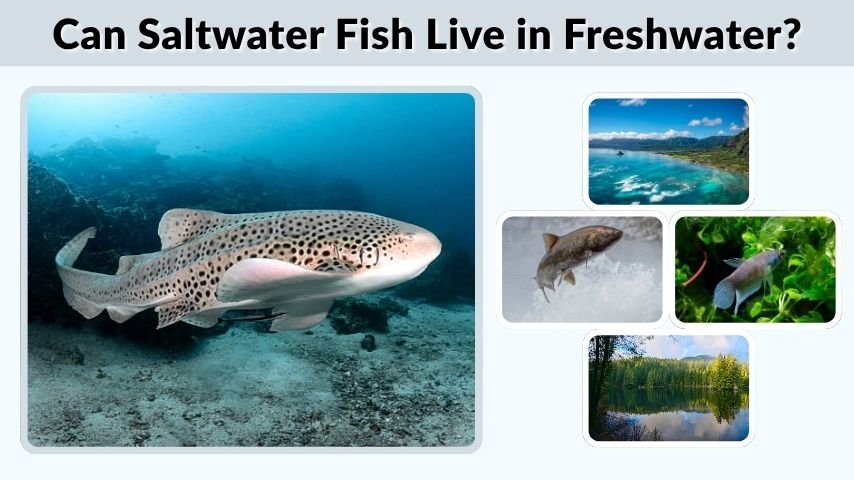
Saltwater fish usually cannot live in freshwater because their bodies are designed for ocean water, not low-salt environments. When a saltwater fish is placed in freshwater, water rushes into its body through osmosis, causing stress, swelling, organ failure, and often death. However, some special fish, such as salmon, eels, and certain pufferfish, can move between freshwater and saltwater because their bodies can adjust.
Understanding Saltwater and Freshwater Fish
Saltwater and freshwater fish may look similar, but their bodies work very differently. The main difference is how they handle salt and water. A fish’s body must keep the right balance of fluids and minerals to survive.
Saltwater fish live in water that contains a high amount of dissolved salt. Freshwater fish live in rivers, lakes, ponds, and streams where salt levels are much lower. Because of this, each type of fish has a different system for controlling water and salt inside the body.
Why Water Balance Matters
Fish are always exchanging water and minerals with their surroundings. This happens through their gills, skin, and waste system. If the surrounding water has the wrong salt level, the fish’s body struggles to maintain balance.
This process is called osmoregulation. It is one of the main reasons most saltwater fish cannot survive in freshwater, and most freshwater fish cannot survive in saltwater.
Can Saltwater Fish Live in Freshwater?
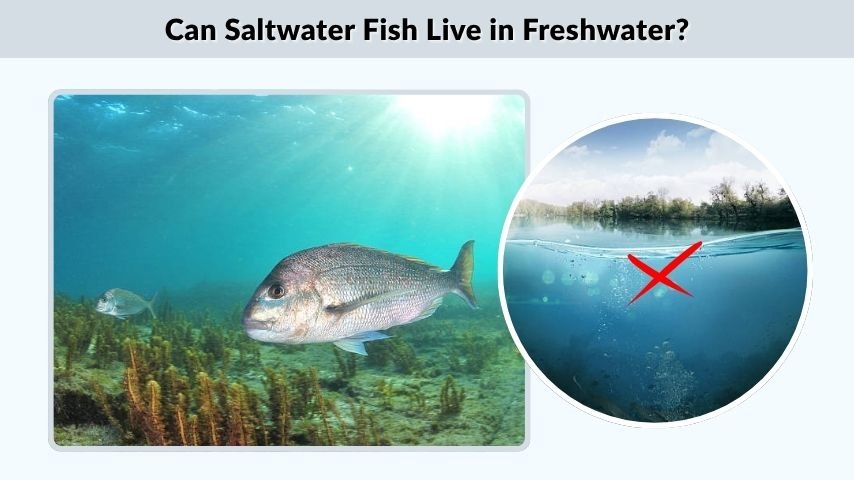
In most cases, no, saltwater fish cannot live in freshwater. Their bodies are adapted to salty ocean water. When they enter freshwater, the water outside their body has much less salt than the fluids inside their body. As a result, water moves into the fish too quickly.
This can cause the fish’s cells to swell. The fish may become weak, stressed, unable to breathe properly, and eventually die. Some saltwater fish may survive for a short time in freshwater, but they cannot live there permanently unless they are specially adapted.
What Happens to Saltwater Fish in Freshwater?
When a saltwater fish is placed in freshwater, several problems can happen quickly. The fish may absorb too much water, lose control of its salt balance, and experience serious internal stress.
Common effects include:
- Swelling of cells and tissues
- Trouble breathing through the gills
- Loss of energy and balance
- Organ stress or failure
- Death if the fish is not returned to proper saltwater
This is why aquarium owners should never put marine fish into freshwater tanks unless the species specifically requires temporary freshwater treatment under expert care.
Can Freshwater Fish Live in Saltwater?
Most freshwater fish cannot live in saltwater either. Their bodies are designed for low-salt water. When a freshwater fish is placed in saltwater, the water inside its body begins moving outward because the surrounding water is saltier.
This causes dehydration. The fish loses water too quickly, becomes stressed, and may die. Freshwater fish are not built to drink and process large amounts of saltwater like marine fish.
What Happens to Freshwater Fish in Saltwater?
A freshwater fish placed in saltwater may suffer from dehydration and salt shock. Its body loses water, and the fish cannot remove excess salt fast enough.
Signs of stress may include rapid breathing, unusual swimming, weakness, loss of color, and lying near the bottom. The damage can happen quickly, especially if the change in salinity is sudden.
Why Can’t Freshwater Fish Survive in Saltwater?
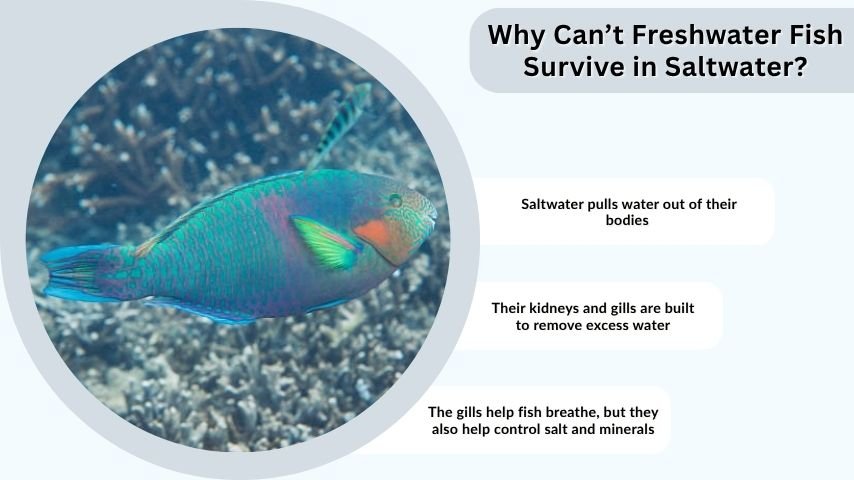
Freshwater fish cannot usually survive in saltwater because saltwater pulls water out of their bodies. Their kidneys and gills are built to remove excess water, not handle heavy salt levels.
In freshwater, fish constantly take in water naturally. Their bodies remove extra water through urine. But in saltwater, the opposite happens. They lose water and absorb too much salt. Their organs cannot keep up with the change.
The Role of Gills and Kidneys
The gills help fish breathe, but they also help control salt and minerals. The kidneys help remove waste and balance water levels. In freshwater fish, these systems work for a low-salt environment.
When freshwater fish are moved to saltwater, their gills and kidneys are suddenly forced to do a job they are not designed for. That is why many freshwater fish die in saltwater.
Why Can’t Saltwater Fish Survive in Freshwater?
Saltwater fish cannot usually survive in freshwater because freshwater enters their bodies too quickly. Marine fish normally lose water to the salty ocean around them, so they drink seawater and remove extra salt through their gills.
In freshwater, that system becomes a problem. The fish no longer needs to drink heavily, but water keeps entering its body. Its organs may not remove the extra water fast enough.
Saltwater Fish Are Built for the Ocean
Saltwater fish are adapted to a high-salt environment. Their bodies work hard to keep enough water and remove extra salt. When the fish is moved to freshwater, the balance is reversed.
This sudden change can cause shock. Even if the fish looks normal for a short time, internal damage may already be happening.
Fish That Can Live in Both Freshwater and Saltwater
Some fish can live in both freshwater and saltwater. These fish are called euryhaline fish. They can adjust their bodies to different salt levels. However, they usually need time to adapt gradually.
Examples include salmon, eels, bull sharks, striped bass, some pufferfish, and some mollies. These fish are exceptions, not the rule.
Anadromous and Catadromous Fish
Some fish move between freshwater and saltwater as part of their life cycle.
Anadromous fish are born in freshwater, live part of their adult life in saltwater, and return to freshwater to reproduce. Salmon are the best-known example.
Catadromous fish do the opposite. They live mostly in freshwater but migrate to saltwater to reproduce. Some eels follow this pattern.
Are Salmon Freshwater or Saltwater Fish?
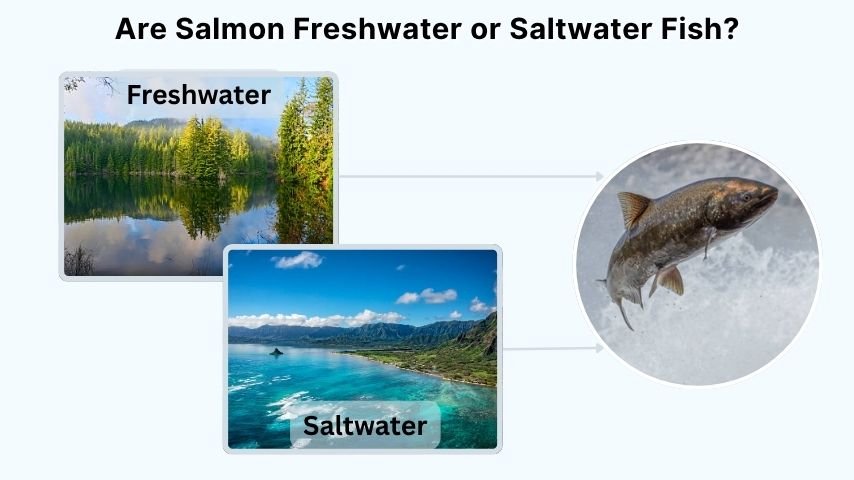
Salmon are both freshwater and saltwater fish during different stages of life. Most salmon hatch in freshwater rivers or streams. As they grow, they migrate to the ocean, where they spend much of their adult life.
Later, they return to freshwater to spawn. Their bodies can adjust from freshwater to saltwater and back again. This makes salmon one of the best examples of fish that can survive in both environments.
Why Salmon Are Special
Salmon have special osmoregulatory abilities. Their gills and kidneys change how they handle salt and water depending on where they live. This change does not happen instantly. It is a gradual biological adjustment.
That is why salmon can move between water types, while most aquarium fish cannot.
Is Tilapia Freshwater or Saltwater Fish?
Tilapia are mainly freshwater fish. They are commonly found in lakes, rivers, ponds, and fish farms. Some tilapia species can tolerate brackish water, which is a mix of freshwater and saltwater, but they are not true saltwater fish.
Tilapia are hardy and adaptable, but that does not mean they should be placed directly into full-strength seawater. Sudden salinity changes can still stress or kill them.
Are Koi Fish Freshwater or Saltwater?
Koi are freshwater fish. They are usually kept in ponds and outdoor freshwater systems. Koi cannot live in saltwater like marine fish.
Some pond keepers use small amounts of aquarium salt for specific health or water-quality reasons, but this is not the same as keeping koi in saltwater. High salinity can harm koi and should not be used without proper knowledge.
Are Betta Fish Saltwater or Freshwater?

Betta fish are freshwater fish. They naturally live in slow-moving freshwater habitats such as shallow streams, rice paddies, and ponds. They should never be kept in a saltwater aquarium.
Bettas need warm, clean freshwater with stable conditions. Adding too much salt or placing them in marine water can cause serious stress and health problems.
Are Clownfish Freshwater or Saltwater?
Clownfish are saltwater fish. They live in marine environments and are popular in saltwater aquariums. They cannot live in freshwater tanks.
A clownfish needs proper marine salinity, stable temperature, filtration, and water movement. Putting a clownfish in freshwater would cause severe stress and likely death.
Are Puffer Fish Freshwater or Saltwater?
Puffer fish can be freshwater, brackish, or saltwater depending on the species. This is why pufferfish questions can be confusing. Some puffers live in freshwater, while others require brackish or full marine water.
Before buying a puffer fish, it is important to identify the exact species. A freshwater puffer should not be placed in saltwater, and a saltwater puffer should not be kept in freshwater.
Freshwater vs Saltwater Fish: Main Differences
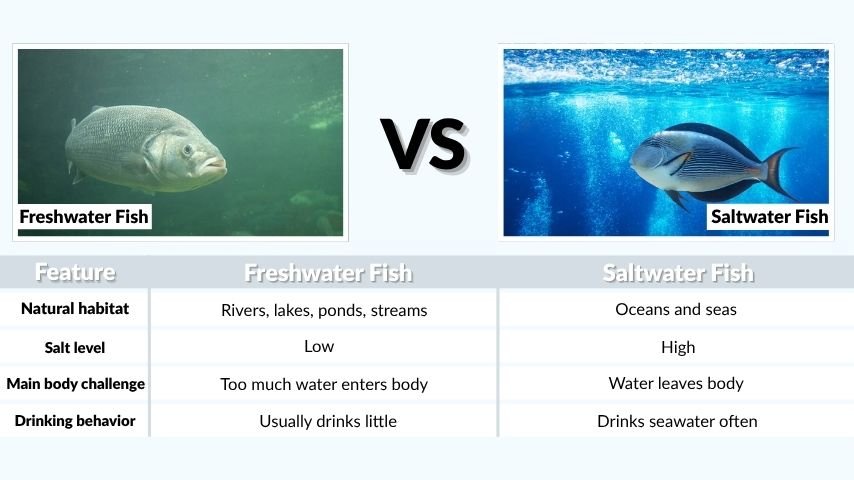
Freshwater and saltwater fish differ in how they manage salt, water, and waste. Their bodies are adapted to different environments, which is why switching them suddenly can be dangerous.
| Feature | Freshwater Fish | Saltwater Fish |
|---|---|---|
| Natural habitat | Rivers, lakes, ponds, streams | Oceans and seas |
| Salt level | Low | High |
| Main body challenge | Too much water enters body | Water leaves body |
| Drinking behavior | Usually drinks little | Drinks seawater often |
| Salt control | Keeps salts inside body | Removes extra salt |
| Example fish | Betta, koi, goldfish, tilapia | Clownfish, tangs, marine angelfish |
Can Aquarium Fish Be Converted from Freshwater to Saltwater?
Most aquarium fish cannot be converted from freshwater to saltwater. Some species can tolerate brackish conditions, but that does not mean they can live in full marine water.
Fish such as mollies may adapt to different salinity levels if changes are made gradually. However, species like bettas, goldfish, koi, tetras, oscars, and most catfish are freshwater fish and should not be moved to saltwater tanks.
Gradual Acclimation Matters
Even fish that can tolerate different salt levels need gradual acclimation. Sudden changes in salinity can cause shock. Aquarium owners should research the exact species and follow proper acclimation steps before changing water conditions.
FAQs
Can saltwater fish survive in freshwater?
Most saltwater fish cannot survive in freshwater for long. Their bodies absorb too much water in a low-salt environment, which can cause stress, swelling, organ failure, and death. Only special species that can regulate different salt levels can survive both.
Can freshwater fish survive in saltwater?
Most freshwater fish cannot survive in saltwater. Saltwater pulls water out of their bodies, causing dehydration and salt shock. Their gills and kidneys are not designed to remove large amounts of salt from the body.
What fish can live in saltwater and freshwater?
Fish that can live in both include salmon, eels, bull sharks, striped bass, some mollies, and some pufferfish. These fish are called euryhaline fish because they can tolerate a wide range of salinity levels.
Why do saltwater fish die in freshwater?
Saltwater fish die in freshwater because too much water enters their bodies through osmosis. Their bodies are adapted to salty ocean water, so they cannot remove the extra water fast enough in most cases.
Why do freshwater fish die in saltwater?
Freshwater fish die in saltwater because they lose water from their bodies too quickly. The salty water causes dehydration, and the fish cannot remove excess salt fast enough to survive.
Is salmon a freshwater or saltwater fish?
Salmon are both. They hatch in freshwater, migrate to saltwater as they grow, and return to freshwater to reproduce. Their bodies can adjust to both environments during different life stages.
Are clownfish freshwater or saltwater?
Clownfish are saltwater fish. They need a marine aquarium with proper salinity and stable water conditions. They cannot survive in a freshwater tank.