
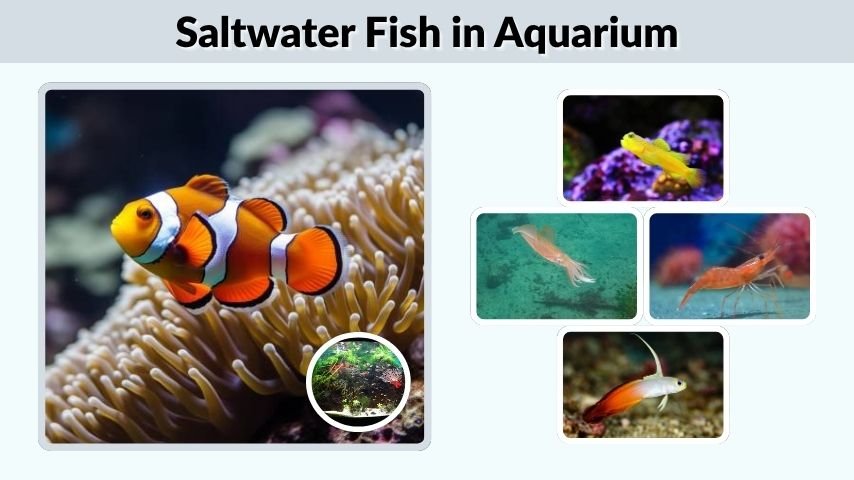
Keeping saltwater fish in aquarium setups can be exciting, colorful, and rewarding, but it requires planning before adding your first fish. Marine fish need stable water, proper filtration, careful acclimation, and compatible tank mates. From clownfish and gobies to puffers and algae-eating fish, choosing the right species helps beginners avoid stress, disease, and early fish loss.
Saltwater Fish in Aquarium Setups: What to Know First
Saltwater aquariums are different from freshwater tanks because marine fish depend on stable salinity, temperature, pH, and water quality. A small mistake in water chemistry can stress fish quickly, especially in newer tanks.
Before putting saltwater fish in a new aquarium, the tank should be fully cycled. This means beneficial bacteria must be established so they can process fish waste. Adding fish too early can cause ammonia spikes, which may lead to sickness or death.
A basic saltwater aquarium usually needs:
- A properly sized tank
- Marine salt mix
- Hydrometer or refractometer
- Heater and thermometer
- Filter or sump system
- Powerhead for water movement
- Test kits for ammonia, nitrite, nitrate, and pH
- Live rock or biological filtration
- Protein skimmer, especially for larger systems
A fish-only saltwater aquarium is usually easier than a reef tank because it does not require coral lighting, calcium balance, or coral-safe livestock choices. Beginners often start with a fish-only or fish-only-with-live-rock setup before moving into coral care.
Best Saltwater Fish to Have in an Aquarium
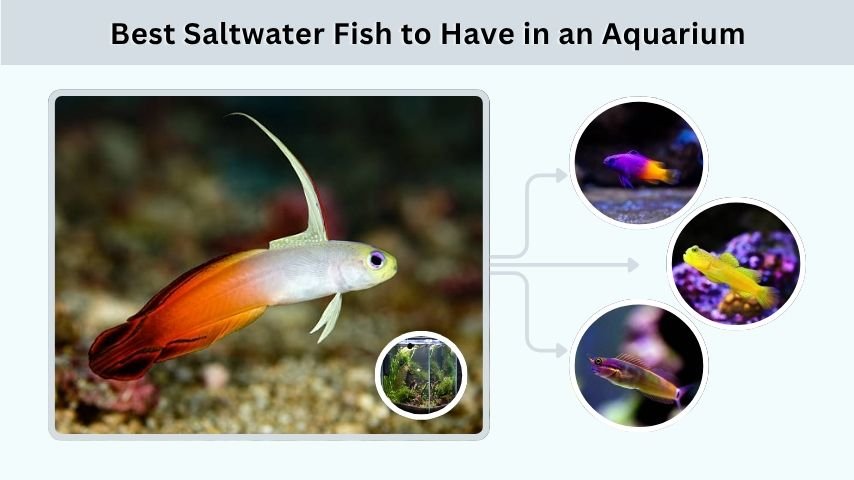
The best fish to put in a saltwater aquarium are hardy, peaceful, and suitable for the tank size. Beginners should avoid aggressive, delicate, or expert-only species at first.
Good First Fish for Saltwater Aquarium
A good first fish should tolerate normal beginner mistakes better than sensitive species. It should also eat prepared foods and adapt well to aquarium life.
Popular beginner-friendly saltwater fish include:
- Clownfish
- Firefish
- Royal gramma
- Yellow watchman goby
- Tailspot blenny
- Pajama cardinalfish
- Banggai cardinalfish
- Azure damselfish, with caution
- Ocellaris clownfish
- Neon goby
Clownfish are often the first fish in saltwater aquarium setups because they are hardy, active, and easy to feed. However, even clownfish should only be added after the tank has completed its cycle.
Fish Beginners Should Avoid at First
Some marine fish look attractive but are not ideal for new aquariums. They may need large tanks, live foods, perfect water conditions, or peaceful tank mates.
Beginners should be careful with:
- Mandarin fish
- Moorish idols
- Copperband butterflyfish
- Seahorses
- Large angelfish
- Most tangs in small tanks
- Lionfish in community tanks
- Aggressive damsels
- Difficult butterflyfish
Mandarin fish in saltwater aquarium setups are beautiful, but they usually need mature tanks with a strong copepod population. They are not ideal for brand-new tanks.
Saltwater Aquarium Fish Stocking Guide
Many people ask how many fish in saltwater aquarium setups are safe. The answer depends on tank size, filtration, fish behavior, adult size, oxygen level, and maintenance routine.
| Tank Size | Beginner Stocking Idea | Notes |
| 10 gallons | 1 small fish | Best for nano species only |
| 20 gallons | 2–3 small fish | Good for clownfish pair or goby mix |
| 40 gallons | 4–6 small fish | More stable than nano tanks |
| 55 gallons | 6–8 small/medium fish | Good beginner size |
| 75 gallons | 8–10 fish | Allows more variety |
| 100 gallons | 10–16 fish | Depends heavily on species and filtration |
A common mistake is adding too many fish too quickly. Even if the tank looks empty, the biological filter needs time to adjust to new waste levels.
How Many Fish in a 20 Gallon Saltwater Aquarium?
A 20 gallon saltwater aquarium can usually support two to three small fish if filtration and maintenance are good. A pair of clownfish, one goby, or one small blenny may work well.
Good choices for a 20 gallon tank include:
- One clownfish pair
- One clownfish and one goby
- One firefish and one small blenny
- One royal gramma with peaceful tank mates
- One watchman goby and pistol shrimp pair
Avoid large fish, active swimmers, tangs, puffers, and aggressive species in a 20 gallon aquarium.
Can You Keep 16 Saltwater Fish in a 100 Gallon Aquarium?
Sixteen saltwater fish in a 100 gallon aquarium may be possible, but only with careful planning. The species must be small or moderately sized, compatible, and added gradually. A tank with large predators, tangs, or messy eaters may support fewer fish.
For a 100 gallon saltwater aquarium, stocking should focus on adult size rather than the size of fish at purchase. Many fish are sold young and become much larger later.
How to Acclimate Saltwater Fish in Aquarium Water
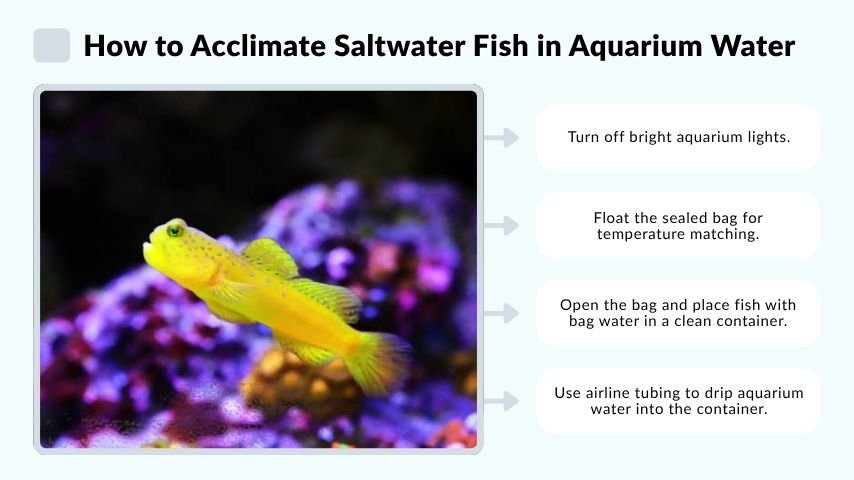
Acclimation is one of the most important steps when adding new fish. Fish can become shocked if temperature, salinity, or pH changes too quickly.
Step-by-Step Acclimation Process
The safest method for many saltwater fish is drip acclimation. This slowly mixes aquarium water with the water in the fish bag or container.
Basic acclimation steps:
- Turn off bright aquarium lights.
- Float the sealed bag for temperature matching.
- Open the bag and place fish with bag water in a clean container.
- Use airline tubing to drip aquarium water into the container.
- Continue for 30 to 60 minutes, depending on sensitivity.
- Gently transfer the fish with a net or container.
- Do not pour store water into the display tank.
- Watch the fish closely after release.
Some fish need shorter acclimation if ammonia is high in the shipping bag. For shipped fish, it is important not to expose bag water to air for too long before transferring, because ammonia can become more toxic as pH rises.
How Far Apart to Add New Fish
New fish should usually be added slowly, often one or two at a time. Waiting two to four weeks between additions gives the biological filter time to adjust and lets you observe fish for disease or aggression.
Adding fish too quickly can cause ammonia spikes, territorial fighting, and stress. In saltwater aquariums, patience is one of the best ways to prevent problems.
Puffer Fish in Saltwater Aquarium Setups
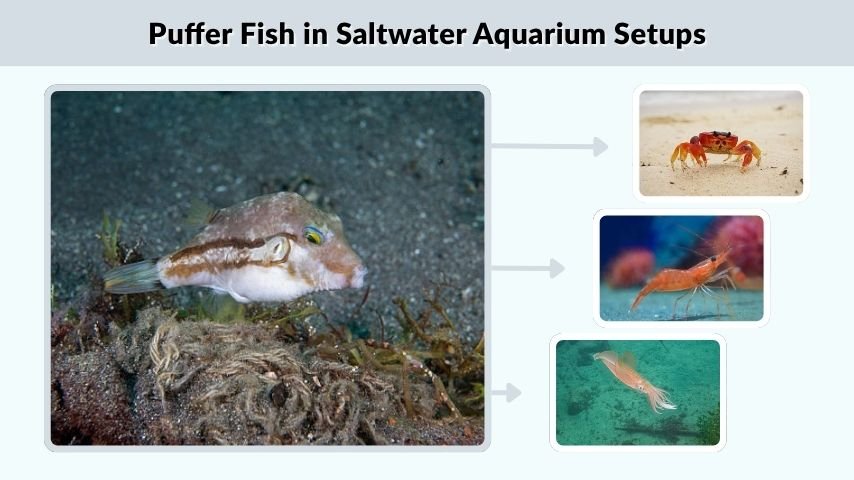
Puffer fish in saltwater aquarium setups can be fascinating, but they are not always beginner-friendly. Many puffers are messy eaters, need larger tanks, and may nip at invertebrates or smaller tank mates.
Are Puffers Good for Fish-Only Tanks?
Puffers are often better for fish-only or fish-only-with-live-rock aquariums than reef tanks. Many species may eat shrimp, crabs, snails, clams, or other invertebrates. Some may also damage coral or decorative life.
Common saltwater puffers include:
- Valentini puffer
- Blue spotted puffer
- Dogface puffer
- Porcupine puffer
- Stars and stripes puffer
Smaller puffers may work in medium tanks, but large puffers need spacious aquariums. A porcupine puffer or dogface puffer should not be placed in a small tank.
What to Feed Saltwater Puffers
Puffers need a varied diet. Many require hard-shelled foods to help wear down their beak-like teeth. If their teeth overgrow, eating becomes difficult.
Good puffer foods include:
- Clams
- Mussels
- Shrimp
- Squid
- Krill
- Crab pieces
- Snails, when appropriate
- Quality frozen marine foods
Puffers produce a lot of waste, so strong filtration and regular water changes are important.
Molly Fish in Saltwater Aquarium Conditions
Mollies are usually known as freshwater or brackish fish, but some can be adapted to saltwater gradually. A molly fish in saltwater aquarium conditions may survive if acclimated slowly over time.
However, mollies should not be moved directly from freshwater to full marine saltwater. The transition must be gradual to avoid shock.
Mollies can be useful in some saltwater tanks because they may eat algae and are hardy when properly adapted. Still, they are not a replacement for proper cleanup crew members, and they may not suit every marine setup.
Fish That Eat Algae in a Saltwater Aquarium
Algae growth is common in saltwater tanks, especially newer systems. Some fish help control algae, but they should not be added only as cleaning tools. Every fish still needs proper food, space, and care.
Best Algae-Eating Saltwater Fish
Some saltwater fish are known for grazing on algae. The right choice depends on tank size and algae type.
Helpful algae-eating fish include:
- Lawnmower blenny
- Tailspot blenny
- Kole tang
- Yellow tang
- Foxface rabbitfish
- Sailfin blenny
- Molly, if adapted to saltwater
Tangs and rabbitfish need larger tanks because they are active swimmers. For smaller aquariums, blennies are usually better choices.
Best Fish to Clean Sand in Saltwater Aquarium
Some fish and animals help stir the sand bed, but they should be chosen carefully. Sand-sifting fish may starve in small or immature tanks if there is not enough natural food.
Sand-cleaning options include:
- Diamond watchman goby
- Sleeper goby
- Nassarius snails
- Conch snails
- Certain wrasses, depending on tank size
A diamond watchman goby can move a lot of sand, but it may also bury corals or decorations. Make sure rock structures are stable before adding digging fish.
Fish Diseases in Saltwater Aquarium Systems
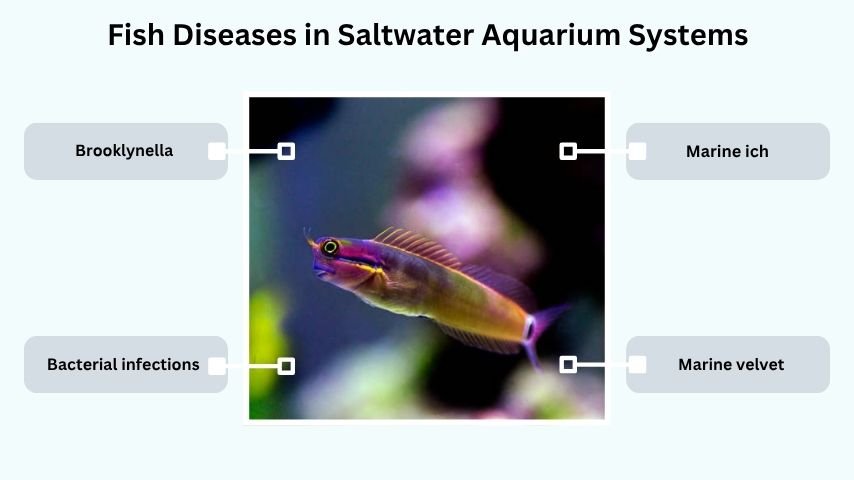
Fish diseases in saltwater aquarium setups often appear when fish are stressed, poorly acclimated, overcrowded, or exposed to infected livestock. Early action can prevent major losses.
Common signs of disease include white spots, cloudy eyes, torn fins, rapid breathing, scratching against rocks, hiding, loss of appetite, and unusual swimming.
Common Saltwater Fish Diseases
Saltwater fish can suffer from several common problems. Identifying symptoms early is important.
Common diseases and issues include:
- Marine ich
- Marine velvet
- Fin rot
- Brooklynella
- Flukes
- Bacterial infections
- Internal parasites
- Stress from poor water quality
Spots all over fish in aquarium saltwater systems may be a sign of ich or velvet. Velvet can kill quickly and needs urgent treatment. A quarantine tank is the safest place to treat sick fish because many medications are not safe for display tanks with invertebrates or live rock.
Why Fish Are Dying in a Saltwater Aquarium
If fish are dying in saltwater aquarium conditions, the first step is to test the water. Ammonia, nitrite, low oxygen, wrong salinity, sudden temperature swings, and high nitrate can all cause problems.
Common causes of fish death include:
- Uncycled tank
- Ammonia spike
- Poor acclimation
- Overstocking
- Aggressive tank mates
- Disease outbreak
- Low oxygen
- Contaminants
- Sudden salinity change
- Poor-quality source water
Dead fish should be removed quickly. A trapped dead fish in a saltwater aquarium can increase ammonia and pollute the water.
Can Freshwater Fish Live in a Saltwater Aquarium?
Most freshwater fish cannot live in a saltwater aquarium. Their bodies are designed for low-salt water, so full-strength marine water can cause severe stress or death.
Some fish can tolerate both freshwater and saltwater at different stages or with gradual acclimation. These are often called euryhaline fish. Mollies are one example, and some species naturally move between fresh, brackish, and saltwater environments.
However, common freshwater aquarium fish should not be placed in saltwater. Goldfish, bettas, tetras, guppies, and most freshwater cichlids are not suitable for marine tanks.
How Long Do Saltwater Fish Live in an Aquarium?
Saltwater fish can live for many years in a well-maintained aquarium. Lifespan depends on species, diet, tank size, water quality, disease prevention, and stress levels.
Some small saltwater fish may live three to five years, while clownfish can live much longer with proper care. Larger marine fish, such as tangs and angelfish, may live for many years in suitable tanks.
To improve lifespan, provide stable water, avoid overcrowding, feed a varied diet, quarantine new fish, and choose species that fit your aquarium size.
FAQs
What fish should I put in my saltwater aquarium first?
Good first fish include clownfish, firefish, royal gramma, watchman goby, pajama cardinalfish, and tailspot blenny. These fish are usually hardy, peaceful, and easier to feed. Add them only after the tank is fully cycled and water tests show zero ammonia and zero nitrite.
How many fish can I keep in a saltwater aquarium?
The number depends on tank size, filtration, species, adult fish size, and maintenance. A 20 gallon tank may hold two or three small fish, while a 100 gallon tank can hold more. Add fish slowly and avoid stocking based only on how empty the tank looks.
Can puffer fish live in a saltwater aquarium?
Yes, many puffers can live in saltwater aquariums, but they need proper space, strong filtration, and a suitable diet. They are messy eaters and may bite invertebrates, so they are usually better for fish-only tanks than reef aquariums with coral and shrimp.
Why are fish dying in my saltwater aquarium?
Fish may die because of ammonia, nitrite, poor acclimation, disease, low oxygen, unstable salinity, aggression, or an uncycled tank. Test the water immediately and check for symptoms like spots, rapid breathing, hiding, or torn fins. Remove dead fish quickly to prevent more pollution.
Can freshwater fish live in a saltwater aquarium?
Most freshwater fish cannot live in a saltwater aquarium because their bodies are not designed for marine salinity. Some fish, such as mollies, can be slowly adapted to saltwater, but common freshwater fish like bettas, goldfish, tetras, and most cichlids should not be placed in saltwater.