
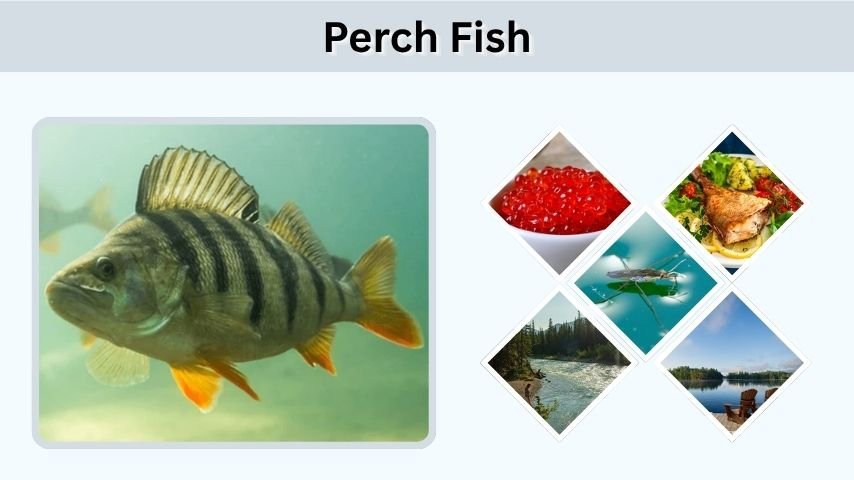
Perch fish are popular freshwater and coastal fish known for their firm texture, mild flavor, and active feeding behavior. Anglers target them for sport, while home cooks enjoy them fried, baked, or grilled. The name “perch” can refer to several fish, including yellow perch, white perch, ocean perch, and surf perch. Understanding their habitat, diet, appearance, and fishing methods helps identify and catch them more easily.
What Is a Perch Fish?
Perch fish are usually small to medium-sized fish with spiny dorsal fins, a laterally compressed body, and a strong appetite for insects, small fish, and aquatic invertebrates. They are often found in lakes, rivers, ponds, bays, and coastal waters, depending on the species.
In North America, the yellow perch is one of the best-known freshwater perch. White perch are also common, especially in brackish and coastal river systems. Ocean perch and surf perch are different groups but are often included in common perch discussions because of their similar names and food value.
Perch are valued for three main reasons: they are fun to catch, good to eat, and widely available in many fishing areas.
Common Types of Perch Fish
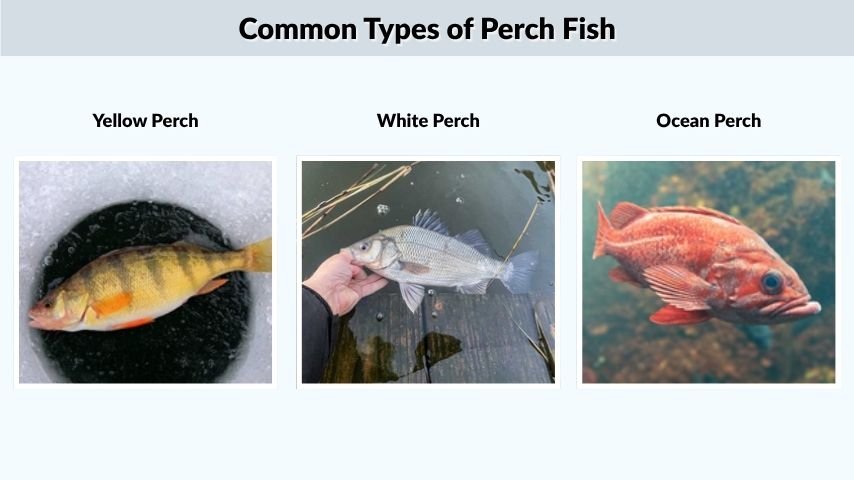
Different fish are called perch, but not all belong to the same scientific group. Some live in freshwater, while others live in saltwater or brackish environments.
| Type of Perch | Habitat | Key Feature |
| Yellow Perch | Lakes, ponds, slow rivers | Yellow body with dark vertical bars |
| White Perch | Bays, rivers, brackish water | Silvery body and mild taste |
| Ocean Perch | Cold marine waters | Red or orange body color |
| Surf Perch | Coastal surf zones | Often caught from beaches |
| Nile Perch | Large African lakes and rivers | Very large predatory fish |
Yellow perch and white perch are the most common targets for freshwater anglers. Surf perch and ocean perch are more important for coastal fishing. Nile perch is much larger than most other perch and is known as a powerful predator.
Yellow Perch Fish
Yellow perch are among the most recognized perch species. They have a golden-yellow to olive body, dark vertical bars, and orange-tinted lower fins. Their shape is slim but slightly deep-bodied, making them easy to identify.
Identification
- Golden-yellow or olive body
- Dark vertical stripes along the sides
- Spiny first dorsal fin
- Orange or reddish pelvic and anal fins
- Usually small to medium in size
- Often found in schools
Yellow perch usually live in lakes, reservoirs, ponds, and slow-moving rivers. They prefer clear or moderately clear water with vegetation, sandy bottoms, gravel areas, or submerged structure. Young yellow perch often stay in shallow areas, while larger adults may move deeper during hot or cold conditions.
They feed on insect larvae, small crustaceans, worms, minnows, and fish eggs. Because they move in schools, anglers often catch several from the same area once they find them.
White Perch Fish
White perch are silvery fish often found in brackish water, estuaries, rivers, and lakes. Despite the name, white perch are more closely related to temperate bass than true perch. However, anglers and cooks commonly treat them as a perch-type fish.
White perch have a deeper body than yellow perch and lack the bold dark stripes. Their sides are silver-gray, and their back may look darker green or gray. They are active feeders and often gather in schools.
White perch eat small fish, shrimp, worms, insects, and plankton. They are especially popular in areas near bays and coastal rivers. Many anglers target them from shore, piers, bridges, and small boats.
Their meat is mild, white, and flaky. Smaller white perch are often fried whole or as fillets, while larger ones can be baked or pan-seared.
Where Do Perch Fish Live?
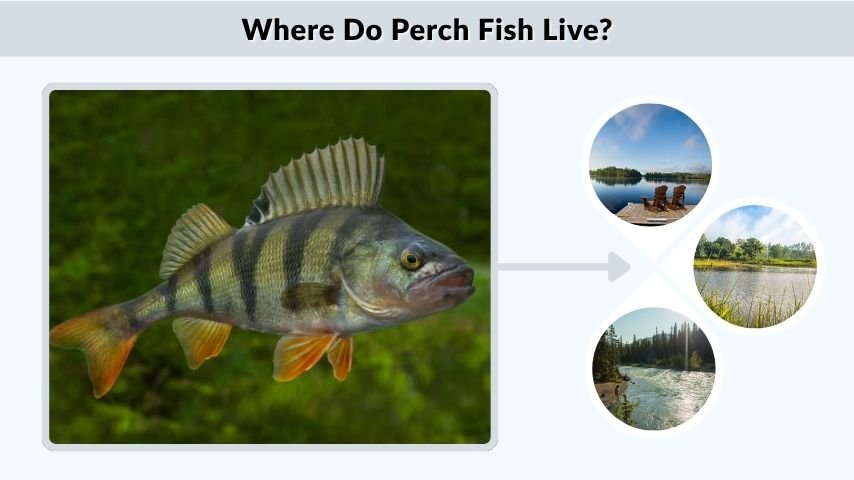
Perch habitat depends on the species, but many perch prefer water with structure, food, and moderate cover. Freshwater perch often live in lakes, ponds, rivers, and reservoirs. Coastal perch may live near beaches, bays, reefs, and estuaries.
Best Places to Find Perch
- Weed edges in lakes and ponds
- Docks, piers, and bridge pilings
- Drop-offs near shallow flats
- Sandy or gravel bottoms
- River mouths and creek channels
- Deep holes during winter
- Bays and brackish rivers for white perch
- Surf zones for surf perch
Yellow perch often move between shallow and deep water depending on season and temperature. In spring, they may gather near shallow spawning areas. In summer, they often stay near weed beds, docks, and deeper edges. In winter, they may school in deeper basins where ice anglers target them.
White perch may move with tides in coastal areas. They often feed actively around current breaks, bridge pilings, and channel edges.
What Do Perch Fish Eat?
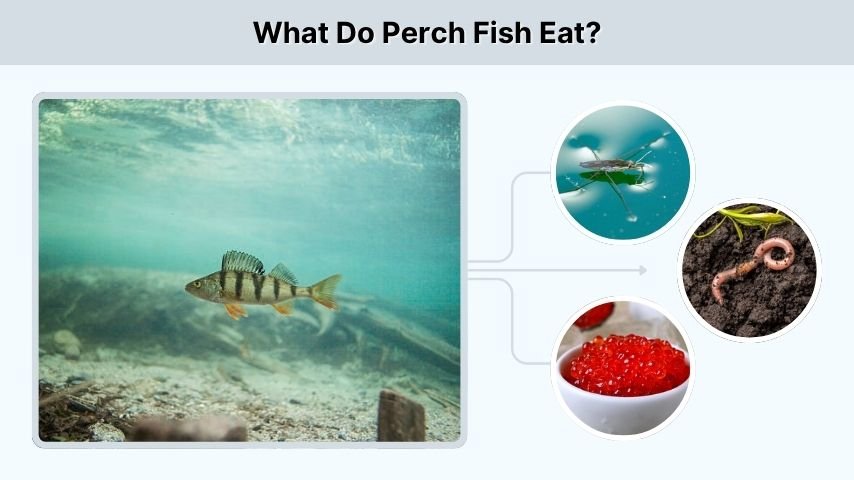
Perch are opportunistic feeders. They eat whatever small prey is available in their environment. This makes them easier to catch because they respond to many natural baits and small artificial lures.
Young perch mostly eat tiny aquatic organisms, insect larvae, and small crustaceans. Larger perch feed on minnows, worms, small crayfish, fish eggs, and other small animals.
Natural Food Sources
- Aquatic insects
- Worms
- Minnows
- Small crayfish
- Shrimp in brackish water
- Fish eggs
- Zooplankton
- Small snails
- Larvae and nymphs
Because perch often feed near the bottom or around vegetation, anglers usually do well with small hooks, light tackle, and bait presented near structure. When perch are actively chasing minnows, small jigs and spinners can work very well.
How to Fish for Perch
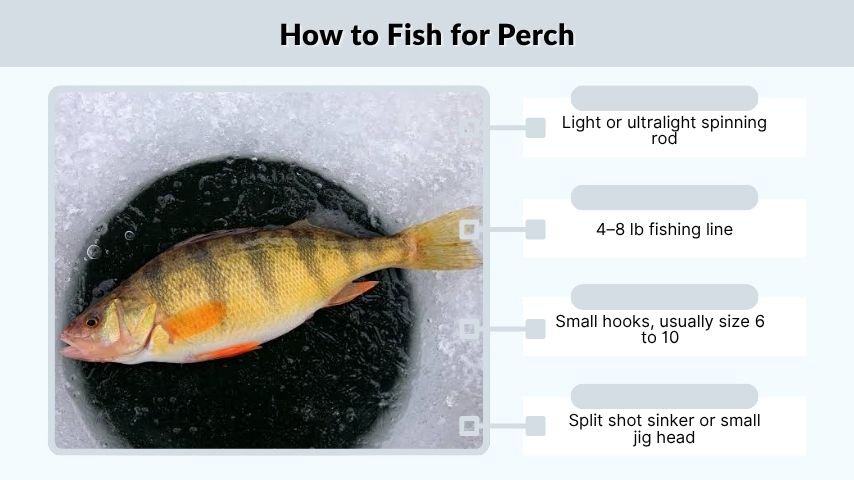
Perch fishing is beginner-friendly, but good technique still matters. The best method is to use light tackle, small bait, and a slow presentation. Perch have smaller mouths than many game fish, so oversized hooks and large lures can reduce bites.
Start by locating likely holding areas such as weed edges, docks, drop-offs, rocky bottoms, or schools of baitfish. If you catch one perch, stay in that spot for a while because others are usually nearby.
Simple Perch Fishing Setup
- Light or ultralight spinning rod
- 4–8 lb fishing line
- Small hooks, usually size 6 to 10
- Split shot sinker or small jig head
- Bobber for shallow water
- Worms, minnows, or small pieces of bait
- Small bucket or livewell if keeping fish
A bobber rig works well in shallow water. A small hook tipped with worm or minnow can be suspended just above weeds or near the bottom. For deeper water, a drop-shot rig, small jig, or bottom rig can keep bait in the strike zone.
Perch often bite lightly. Watch the bobber, line, or rod tip carefully. When the fish taps the bait, lift the rod gently instead of setting the hook too hard.
Best Bait for Perch Fishing
Natural bait is one of the most reliable choices for perch. Worms and minnows are classic options because they match what perch already eat. Small pieces of bait can also work better than large chunks because perch have small mouths.
Live bait is useful when perch are feeding slowly. Artificial lures are better when they are chasing or when you want to cover more water.
Good perch bait includes nightcrawlers, red worms, wax worms, small minnows, maggots, shrimp pieces, and small insect larvae. For white perch in brackish water, bloodworms, grass shrimp, and small fish strips can be effective.
Use fresh bait whenever possible. Perch rely on scent and movement, so lively minnows and natural-looking worms often attract more strikes.
Best Lures for Perch Fishing
Perch fishing lures should be small, simple, and easy to control. Bright or natural colors can both work depending on water clarity. In clear water, natural minnow or perch-like colors are useful. In stained water, brighter colors may help fish locate the lure.
Effective Perch Lures
- Small jigs
- Tiny spoons
- Inline spinners
- Soft plastic grubs
- Ice fishing jigs
- Micro crankbaits
- Drop-shot minnows
- Small blade baits
Jigging is one of the best methods for perch. Cast or drop the jig near the bottom, then use small hops and pauses. Perch often strike when the lure falls or stops.
For ice fishing, small tungsten jigs, spoons, and live bait combinations are common. A slow lift-and-drop motion can attract fish without scaring them away.
Perch Fishing by Season
Perch behavior changes throughout the year. Knowing seasonal movement helps you find them faster.
In spring, perch move shallow to spawn. They may gather near vegetation, gravel, brush, and protected shorelines. This is one of the best times to catch them from shore.
In summer, perch spread out. Smaller fish may stay shallow, while larger ones often move to deeper weed edges, shaded docks, or cooler water. Early morning and evening can be productive.
In fall, perch feed heavily before winter. They often chase minnows and gather in schools. This is a good time to use small jigs and spinners.
In winter, perch may hold in deeper basins or near bottom structure. Ice anglers often search with electronics or drill multiple holes until they locate a school.
Is Perch Fish Good to Eat?
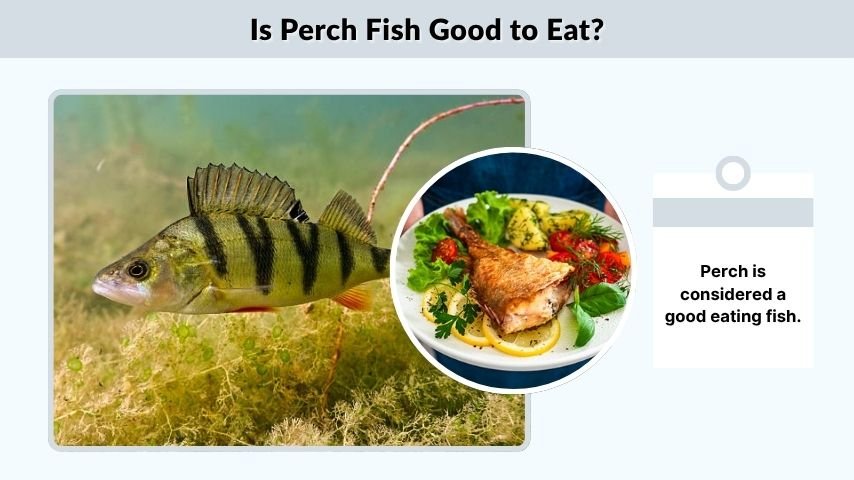
Perch is considered a good eating fish. It has mild, slightly sweet, white flesh that cooks quickly. The texture is firm enough for frying but still tender when baked or pan-seared.
Yellow perch is especially popular for fish fries. White perch also tastes mild and works well in many recipes. Ocean perch has a slightly different flavor but is commonly used for fillets.
Perch does not usually have a strong “fishy” taste when fresh and properly cleaned. Smaller perch can be fried whole after scaling and cleaning, while larger fish are often filleted.
How to Cook Perch Fish
Perch is easy to cook because the fillets are thin and tender. Overcooking can make them dry, so use moderate heat and short cooking times.
Popular Cooking Methods
- Pan-frying with light breading
- Deep-frying for crispy fillets
- Baking with lemon and herbs
- Grilling in foil
- Sautéing with butter or oil
- Making fish tacos
- Adding to chowder or stew
For a simple fried perch recipe, coat fillets in seasoned flour or cornmeal, then fry until golden and flaky. Serve with lemon, tartar sauce, coleslaw, or fries.
For a healthier option, bake the fillets with olive oil, garlic, lemon juice, black pepper, and parsley. Since perch fillets are usually small, they may cook in only a few minutes.
Perch Fish vs Bluegill and Crappie
Perch, bluegill, and crappie are all popular panfish, but they are not the same. Yellow perch have long bodies with vertical bars. Bluegill are deeper-bodied sunfish with a dark ear flap. Crappie are usually silvery with speckles and a larger mouth.
Perch often feed near the bottom and in schools. Bluegill commonly stay near weeds, docks, and shallow cover. Crappie often suspend around brush, timber, and deeper structure.
In taste, all three are mild and good for frying. Perch is often described as slightly firmer and sweeter, while crappie is softer and flaky. Bluegill has a rich panfish flavor and is also excellent when fresh.
Are Perch Fish Safe to Eat?
Perch are safe to eat when caught from clean waters and cooked properly. However, fish safety can depend on the waterbody. Some lakes and rivers may have advisories for mercury, PCBs, or other contaminants.
Check local fish consumption guidelines before eating large amounts of wild-caught perch, especially for children, pregnant women, and people who eat fish often. Smaller fish usually have lower contaminant levels than larger predatory fish, but local conditions matter.
Clean fish soon after catching them and keep them cold. Fresh perch should smell clean, not sour or overly fishy. Cook until the flesh turns opaque and flakes easily with a fork.
FAQs
What does perch fish taste like?
Perch fish has a mild, clean, slightly sweet flavor. The flesh is white, flaky, and tender, but still firm enough for frying. Yellow perch is especially popular because it does not usually taste too fishy when fresh. It works well with simple seasoning, lemon, herbs, and light breading.
What is the best bait for perch fishing?
The best bait for perch fishing includes worms, small minnows, wax worms, maggots, and insect larvae. For white perch in brackish water, bloodworms and grass shrimp can also work well. Use small hooks because perch have small mouths. Fresh, lively bait usually gets more bites than oversized bait.
Where is the best place to catch perch?
Good perch spots include weed edges, docks, drop-offs, sandy bottoms, gravel areas, river mouths, and deeper basins. Yellow perch often school in lakes and ponds, while white perch may gather near bridges, channels, and tidal rivers. Once you catch one perch, keep fishing nearby because more are often close.
Is yellow perch the same as white perch?
No, yellow perch and white perch are different fish. Yellow perch usually have a yellow body with dark vertical bars. White perch are more silvery and do not have bold stripes. Yellow perch are true perch, while white perch are related to temperate bass, even though both are commonly called perch.
Can you catch perch from shore?
Yes, perch can be caught from shore, especially during spring, early summer, and fall. Look for docks, weed lines, bridges, piers, rocky banks, and shallow areas near deeper water. A small hook with worm or minnow under a bobber is one of the easiest shore-fishing methods for perch.