
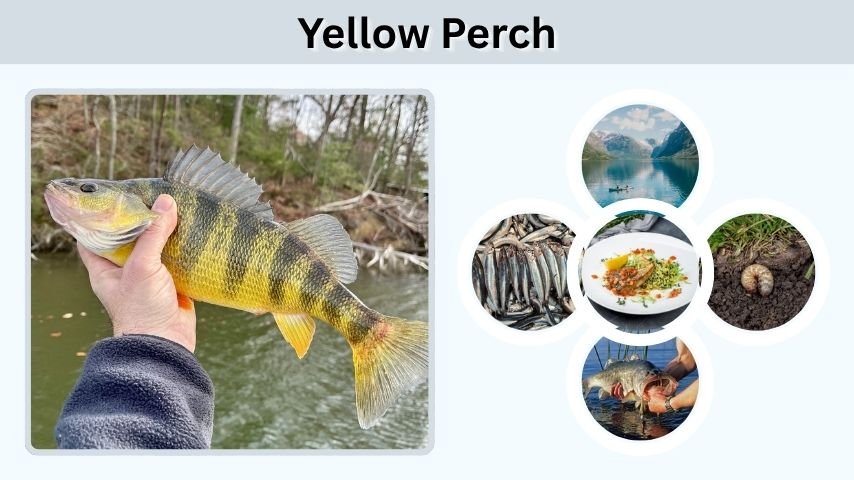
Yellow perch are one of the most recognizable freshwater fish in North America. Their golden-yellow body, dark vertical bars, and tasty white flesh make them popular with anglers, wildlife enthusiasts, and home cooks. They live in lakes, rivers, ponds, and reservoirs, often forming schools near vegetation, sand, gravel, or soft-bottom areas. This guide explains how to identify yellow perch, where they live, what they eat, how they spawn, and how anglers commonly catch them.
What Is a Yellow Perch?
Yellow perch are freshwater fish known for their striped sides, spiny dorsal fin, and schooling behavior. They are members of the perch family and are closely related to walleye and sauger. Although they are not usually huge fish, they are valued because they are fun to catch, widely distributed, and excellent to eat.
The scientific name of the yellow perch is Perca flavescens. The word “flavescens” refers to its yellowish color, which is one of the easiest field marks. A healthy adult yellow perch often has a golden or olive-yellow body with six to nine dark vertical bars along the sides.
Identification
- Color: Yellow, golden, or olive body with dark vertical bands.
- Body shape: Long, slightly compressed body with a rounded belly.
- Fins: Two dorsal fins; the front dorsal fin is spiny.
- Mouth: Small mouth compared with larger predators like bass or walleye.
- Size: Many adults measure 6–12 inches, though larger fish can exceed this range.
- Markings: Distinct bars on the sides help separate them from many other panfish.
Yellow Perch Size and Growth
Yellow perch are usually considered small to medium-sized freshwater fish. Many fish caught by anglers are around 7–10 inches long, while larger adults may reach 12 inches or more in productive waters. Growth depends on food availability, water temperature, habitat quality, and population density.
In lakes with too many perch and limited food, individuals may remain small because of competition. In better-balanced waters with abundant insects, minnows, and crustaceans, yellow perch can grow faster and reach larger sizes. Anglers often call larger individuals “jumbo perch,” especially when they are thick-bodied and over 12 inches long.
Average and Large Yellow Perch
Most yellow perch caught for sport are not record-breaking fish, but size still matters for anglers. Smaller perch are often released or used as part of local harvest limits, while larger fish are preferred for fillets. A large yellow perch has a deeper body, heavier shoulders, and brighter coloration than younger fish.
Yellow perch can live several years, but their growth rate varies widely between regions. Northern lakes with cooler water may produce slower-growing fish, while rich lakes with plenty of forage can produce larger adults.
Yellow Perch Habitat and Range
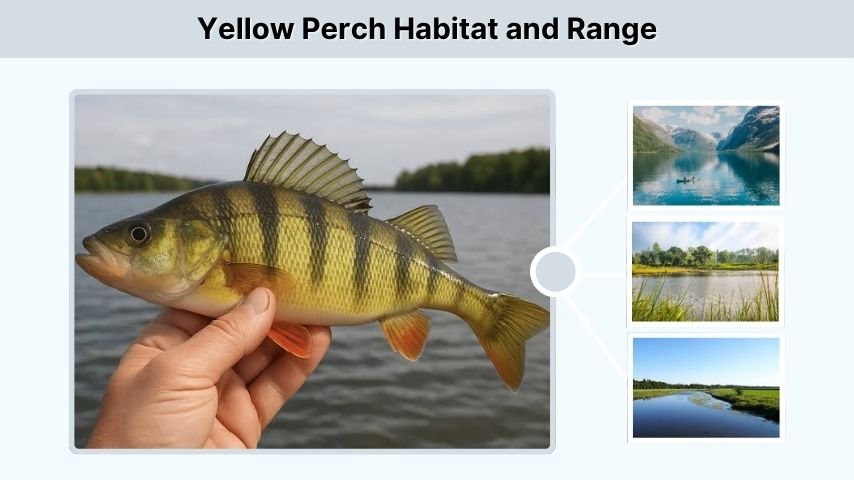
Yellow perch live in many freshwater habitats, including lakes, ponds, reservoirs, slow rivers, and backwaters. They usually prefer clear to moderately stained water with enough cover for feeding and protection. Aquatic vegetation, submerged wood, rocky edges, sandy flats, and drop-offs can all hold perch at different times of the year.
They are especially common in the northern United States and Canada, but they have also been introduced to other areas. Because they tolerate a range of conditions, yellow perch can thrive in both natural lakes and man-made reservoirs.
Where Yellow Perch Live
Yellow perch often move in schools. In spring, they may gather in shallow water to spawn. In summer, they can spread across weed edges, flats, and deeper structures. In winter, they are commonly targeted through the ice in northern regions.
Their preferred depth changes with season, temperature, oxygen levels, and food movement. In warm months, smaller perch may stay around vegetation, while larger perch often move between shallow feeding areas and deeper resting zones.
Yellow Perch Diet
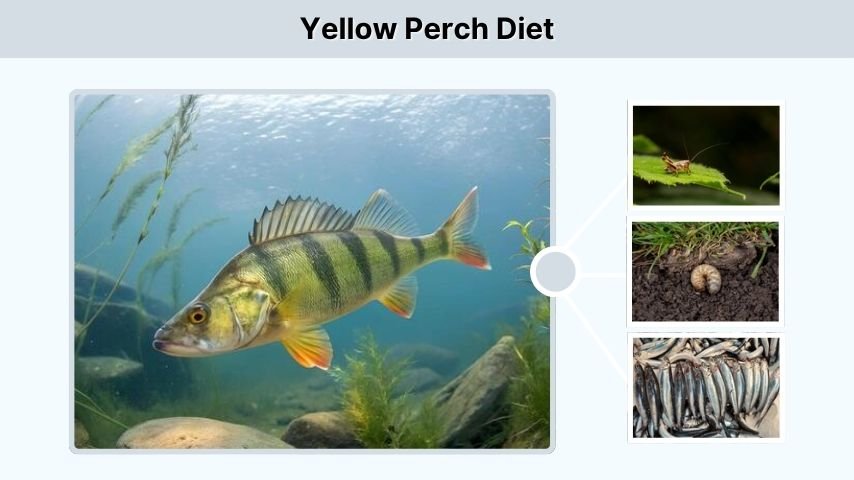
Yellow perch are opportunistic feeders. Young perch feed heavily on tiny aquatic organisms, while adults eat insects, larvae, small fish, crustaceans, worms, and fish eggs. Their diet changes as they grow and as seasonal food sources become available.
Because their mouth is relatively small, yellow perch usually target smaller prey. This feeding style is one reason small hooks, light jigs, worms, minnows, and compact lures work well when fishing for them.
What Do Yellow Perch Eat?
Adult yellow perch commonly eat aquatic insects, mayfly nymphs, midge larvae, small crayfish, freshwater shrimp, tiny minnows, and other small invertebrates. They often feed near the bottom but may rise into the water column when baitfish or insects are active.
In many lakes, yellow perch are both predator and prey. They eat small organisms, but they are also eaten by walleye, northern pike, bass, muskellunge, birds, and larger fish. This role makes them important in freshwater food webs.
Yellow Perch Spawning
Yellow perch usually spawn in spring when water temperatures rise. They move into shallow areas such as marsh edges, flooded vegetation, gravel zones, and near submerged branches. Unlike some nest-building fish, yellow perch do not guard nests.
Females release long, jelly-like egg ribbons that attach to vegetation, sticks, or other underwater structure. Males fertilize the eggs, and the adults leave soon afterward. The eggs develop naturally until they hatch, depending on water temperature and conditions.
Eggs and Young Fish
Yellow perch eggs are usually laid in strands or ribbons. This egg mass protects developing embryos and helps keep them attached in shallow habitat. Once the eggs hatch, young perch begin life by feeding on tiny plankton and aquatic organisms.
As they grow, they gradually shift to larger prey. Young yellow perch often form schools, which helps protect them from predators. Schooling also allows them to find food more efficiently in open water and near vegetation.
How to Catch Yellow Perch
Yellow perch are popular because they are active feeders and often gather in schools. Once an angler finds one perch, more are usually nearby. Light tackle is best because perch have small mouths and are not usually large fish.
Good yellow perch fishing often depends on finding the right location. Weed edges, drop-offs, sandy flats, rocky points, docks, and deeper basins can all hold perch. The best spot changes by season, so anglers often move until they find an active school.
Best Bait for Yellow Perch
- Live minnows: One of the most reliable choices for bigger perch.
- Worms: Easy to use and effective in many lakes and ponds.
- Waxworms or spikes: Common for ice fishing and small jigs.
- Small crayfish pieces: Useful where perch feed near rocky bottoms.
- Insect larvae: Natural food that works well with small hooks.
- Fish eggs or small soft baits: Can work when perch are feeding actively.
Best Lures for Yellow Perch
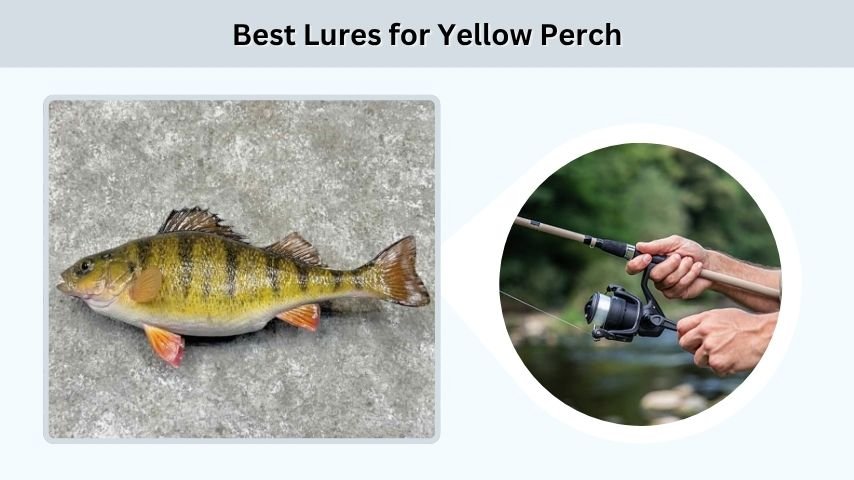
Yellow perch often respond well to small lures because they feed on compact prey. Small jigs, spoons, spinners, and soft plastics can all catch perch when matched to the depth and mood of the fish. Natural colors often work in clear water, while brighter colors can help in stained water or low light.
During ice fishing season, tiny jigging spoons and tungsten jigs are especially popular. In open water, small curly-tail grubs, inline spinners, and micro crankbaits can be effective when perch chases baitfish.
Simple Yellow Perch Fishing Tips
Use light lines, small hooks, and sensitive rods. Perch often bite quickly, but they may also peck lightly at bait before taking it. If bites stop, move around until you find another school. In deeper water, keep your bait close to the bottom because perch often feed there.
When fishing with bait, a simple hook, split shot, and bobber can work in shallow water. In deeper areas, a drop-shot rig or small jig can keep the bait near the strike zone. For schooling fish, vertical jigging is often effective.
Yellow Perch Ice Fishing
Yellow perch are one of the most popular ice fishing species in northern lakes. During winter, they often gather in schools and move across flats, basins, and weed edges. Finding them may require drilling several holes and checking different depths.
Small jigs tipped with waxworms, spikes, or minnow heads are common ice fishing setups. Jigging spoons can attract fish from a distance, while smaller jigs help catch perch that are less aggressive.
Winter Locations
Early in the ice season, perch may remain near green weeds and shallow flats. As winter progresses, many fish move deeper. Late in the season, they may return toward shallower areas as oxygen, light, and spawning movement change.
Electronics can help locate schools, but anglers can also rely on structure, depth changes, and local knowledge. Once a school is found, quick action matters because perch may move through an area and disappear.
Are Yellow Perch Good to Eat?
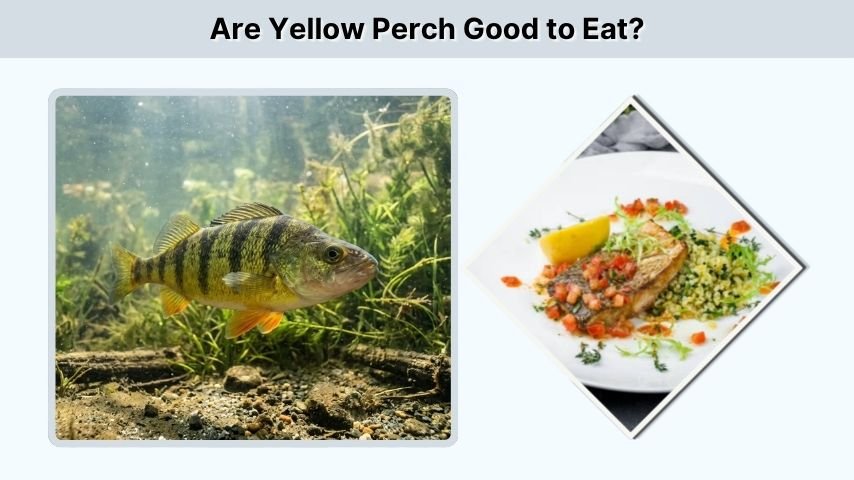
Yellow perch are considered excellent table fish. Their meat is mild, white, flaky, and slightly sweet. Many anglers rank yellow perch among the best-tasting freshwater fish, especially when the fillets are fresh and properly cleaned.
They are commonly fried, baked, grilled, or used in fish tacos. Because the fillets are usually small, many people prepare them whole as boneless fillets or lightly breaded pieces. Their mild flavor also makes them suitable for simple recipes.
Cooking Yellow Perch
Yellow perch fillets cook quickly. Overcooking can make them dry, so a short cooking time is best. Pan-frying with light breading is one of the most popular methods. Baking with butter, lemon, herbs, and seasoning is another simple option.
Before eating fish from any local waterbody, anglers should check local fish consumption advisories. Some waters may have limits or warnings due to mercury, PCBs, or other contaminants.
Yellow Perch vs White Perch
Yellow perch and white perch are often compared, but they are not the same fish. Yellow perch are true perch in the family Percidae, while white perch are actually temperate bass related to striped bass. They differ in body shape, color, markings, and habitat preferences.
| Feature | Yellow Perch | White Perch |
| Scientific group | True perch | Temperate bass |
| Body color | Yellow to olive with dark bars | Silvery-white to gray |
| Side markings | Dark vertical bands | Usually no bold bars |
| Mouth size | Small | Slightly larger |
| Common habitat | Freshwater lakes, ponds, rivers | Freshwater and brackish waters |
| Eating quality | Mild, sweet, flaky | Mild, firm, also good to eat |
Yellow perch are easier to identify because of their vertical bars and yellow body. White perch usually look more silvery and lack the bold striped pattern.
Predators and Ecological Role
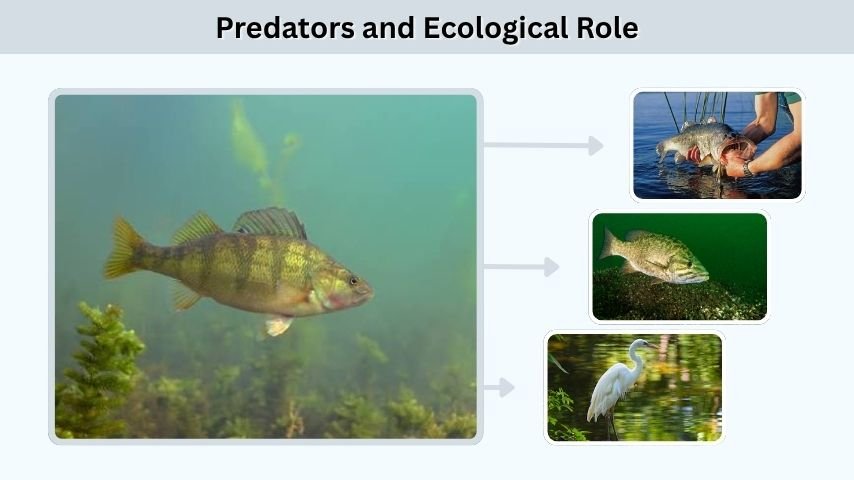
Yellow perch are important prey for many larger animals. Walleye, northern pike, largemouth bass, smallmouth bass, muskellunge, herons, loons, and other predators may feed on them. Young perch are especially vulnerable because they are small and often gather in schools.
At the same time, yellow perch help control populations of insects, larvae, and small aquatic animals. Their feeding habits connect lower food-chain organisms with larger game fish. In balanced lakes, they are an important part of a healthy fish community.
Schooling Behavior
Yellow perch often travel in groups. Schooling helps them avoid predators and find food. Smaller perch may form larger schools, while bigger adults may group more loosely. Anglers use this behavior to their advantage because catching one perch often means more fish are close by.
School size and movement can change throughout the day. Perch may feed actively in the morning and evening, then move deeper or become less active during bright midday conditions.
World Record and Big Yellow Perch
Large yellow perch attract attention because most perch are modest in size. A “jumbo” yellow perch can be a memorable catch, especially in lakes known for producing thick, heavy fish. Record fish are rare and usually come from waters with excellent food supply and strong habitat conditions.
Anglers looking for bigger perch often target deeper edges, offshore flats, weed lines, and areas with abundant minnows or insects. Using slightly larger minnows or small spoons can sometimes help avoid tiny fish and attract larger adults.
Why Some Perch Grow Bigger
Yellow perchs grow larger when they have plenty of food, suitable temperatures, and less competition. Lakes with too many small perch may produce stunted populations. On the other hand, lakes with balanced predator populations may have fewer but larger perch because predators reduce overcrowding.
This balance is one reason fisheries managers often monitor perch populations carefully. Harvest limits, size rules, and habitat protection can all influence the quality of a perch fishery.
FAQs
What is the scientific name of yellow perch?
The scientific name of yellow perch is Perca flavescens. It is a freshwater fish in the true perch family. The species is known for its yellow body, dark vertical bars, small mouth, and schooling behavior in lakes, ponds, rivers, and reservoirs.
How big do yellow perch get?
Many yellow perch are around 6–12 inches long, though larger fish can grow beyond that in productive waters. Size depends on habitat, food supply, water temperature, competition, and age. Larger adults are often called jumbo perch by anglers.
What is the best bait for yellow perch?
Live minnows, worms, waxworms, spikes, and insect larvae are all effective yellow perch baits. Small bait works best because yellow perch have small mouths. In deeper water, anglers often use bait on jigs, drop-shot rigs, or simple bottom rigs.
Are yellow perch good to eat?
Yes, yellow perch are widely considered excellent eating fish. Their fillets are mild, white, flaky, and slightly sweet. They are commonly fried, baked, or grilled. Always check local fish consumption advisories before eating fish from a specific lake or river.
Where do yellow perch live?
Yellow perch live in freshwater lakes, ponds, reservoirs, slow rivers, and backwaters. They often use weed edges, sandy flats, gravel areas, submerged wood, and deeper structures. Their location changes with season, temperature, spawning activity, oxygen levels, and food availability.