
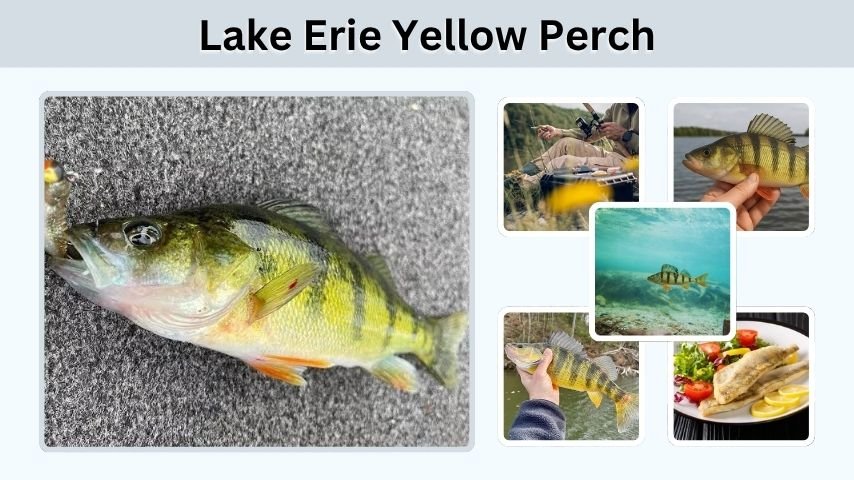
Lake Erie yellow perch are among the most popular freshwater fish in the Great Lakes. Anglers value them for their schooling behavior, steady action, and mild white fillets. Lake Erie also has a long history of yellow perch fishing, from family pier trips to charter boats. This guide explains where they live, how to catch them, what bait works best, and how to cook them.
What Is Lake Erie Yellow Perch?
Yellow perch in Lake Erie are the same species found across many northern lakes, but Lake Erie has one of the most famous perch fisheries in North America. These fish are known for their golden sides, dark vertical bars, small mouth, and spiny dorsal fin. They often move in schools, which makes them exciting to target once an active group is found.
Lake Erie perch are important because they support both recreational fishing and commercial harvest. Their popularity comes from two main reasons: they are enjoyable to catch, and they are excellent to eat. A fresh plate of Lake Erie yellow perch is a regional favorite around Ohio, Pennsylvania, Michigan, New York, and Ontario.
Identification
- Color: Golden-yellow to olive body with dark vertical bands.
- Shape: Slim but deep-bodied compared with many small panfish.
- Fins: Spiny first dorsal fin and softer second dorsal fin.
- Mouth: Small mouth suited for insects, minnows, and small bait.
- Size: Common catches are often 7–11 inches, with larger fish called jumbo perch.
- Pattern: Bold bars along the sides help separate them from white perch.
Why Lake Erie Is Good for Yellow Perch
Lake Erie is shallow, productive, and rich in food compared with many other Great Lakes. These features help support large numbers of baitfish, insects, larvae, and other small aquatic animals that yellow perch eat. The lake’s western and central basins are especially known for perch activity because they include productive waters, reefs, flats, and feeding zones.
Yellow perch need suitable spawning areas, nursery habitat, and food-rich waters to produce strong year classes. Their numbers can rise or fall depending on weather, water clarity, predator pressure, harvest, food supply, and survival of young fish. Because of this, perch fishing can be excellent in some years and more difficult in others.
Lake Erie Perch Habitat
Lake Erie yellow perch use different habitats throughout the year. In spring, they move toward shallower areas for spawning. In summer, they may spread across flats, rocky areas, and deeper basins. In fall, many perch feed heavily and may move closer to harbors, shorelines, and baitfish schools.
They often stay near the bottom, especially when feeding on insects and small invertebrates. However, they can also suspend in the water column when chasing minnows. Anglers often find them near transition zones where sand, mud, rock, and vegetation meet.
Lake Erie Yellow Perch Fishing Seasons
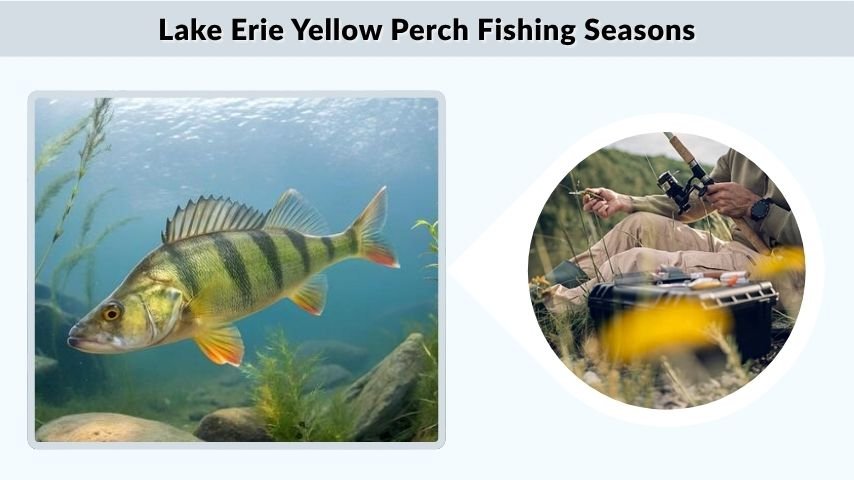
Yellow perch can be caught in different seasons, but the best time depends on location and conditions. Spring can be productive around spawning areas, although weather and water temperature play a big role. Summer fishing often focuses on deeper water, where schools may gather near bottom structure. Fall can be one of the best times because perch feed actively before winter.
Winter perch fishing is also popular in colder regions when safe ice forms. However, ice conditions on large waters like Lake Erie can be dangerous and change quickly. Anglers should always check local reports, weather, wind, and ice safety before planning a trip.
Best Time to Fish for Lake Erie Yellow Perch
Morning and evening are often productive because perch may feed more actively during low-light periods. Cloudy days can also keep fish feeding longer. In bright midday conditions, perch may move deeper or become less aggressive.
Fall is especially important for many anglers because larger adult perch often gather near baitfish. In some areas, late-season fishing near harbors and deeper edges can produce good catches. Still, perch schools move often, so successful anglers adjust quickly.
How to Catch Yellow Perch in Lake Erie
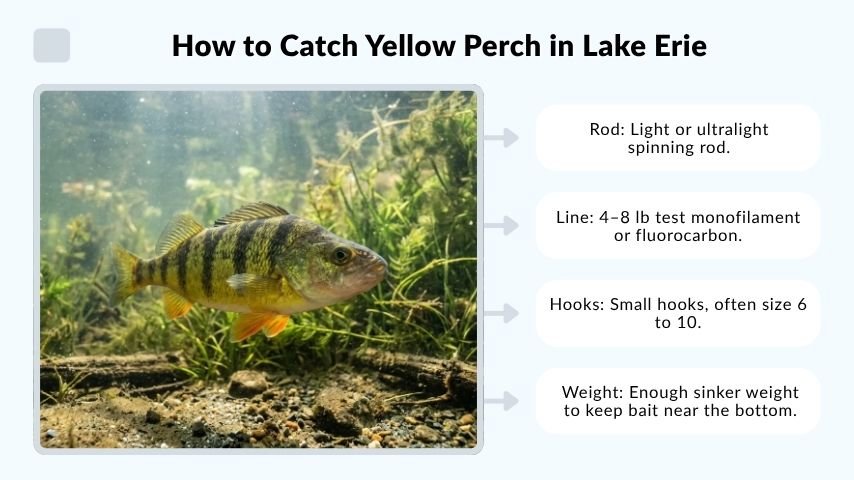
Catching Lake Erie yellow perch starts with finding schools. Because perch move in groups, one bite can lead to many more. Boat anglers often drift or anchor over schools after locating fish with electronics. Shore and pier anglers look for areas where perch move within casting distance.
Light tackle is usually best. A sensitive rod helps detect soft bites, and light line allows small bait or jigs to move naturally. Yellow perch have small mouths, so hooks and lures should not be too large.
Simple Fishing Setup
- Rod: Light or ultralight spinning rod.
- Line: 4–8 lb test monofilament or fluorocarbon.
- Hooks: Small hooks, often size 6 to 10.
- Weight: Enough sinker weight to keep bait near the bottom.
- Rig: Spreaders, crappie rigs, drop-shot rigs, or simple bottom rigs.
- Bait: Minnows, worms, spikes, waxworms, or small pieces of nightcrawler.
Best Bait for Lake Erie Yellow Perch
Live bait is one of the most reliable choices for Lake Erie yellow perch. Emerald shiners are a classic favorite where available, but small minnows, worms, and insect larvae can also work. The best bait often depends on season, water clarity, and what perch are naturally eating.
Minnows are effective when perch are feeding on small fish. Worms and larvae work well when perch are feeding near the bottom. If fish are biting lightly, downsizing bait can help. Sometimes a small piece of worm or a tiny minnow will catch more fish than a large bait.
Best Lures for Yellow Perch
Small lures can be useful when perch are active. Tiny jigging spoons, small soft plastics, ice jigs, and micro crankbaits can catch fish when matched to the depth and mood of the school. In deeper water, vertical jigging is often more effective than casting.
For finicky perch, tip a small jig with live bait. This gives the lure movement, scent, and a natural profile. Bright colors can help in stained water, while natural colors often work better in clear water.
Lake Erie Yellow Perch Limits and Rules
Lake Erie yellow perch regulations can change by state, zone, and year. Ohio, Pennsylvania, Michigan, New York, and Ontario may have different rules depending on where you fish and where you land your catch. Anglers should always check the latest official regulations before keeping fish.
In Ohio waters, yellow perch limits may differ by Lake Erie management zone. Pennsylvania also sets Lake Erie creel limits for yellow perch. These rules help protect fish populations and keep the fishery sustainable for future seasons.
| Area or Topic | What Anglers Should Check |
| Ohio waters | Zone-based daily limit and current map |
| Pennsylvania waters | Daily creel limit for Lake Erie and Presque Isle Bay |
| Michigan waters | Statewide and Great Lakes perch regulations |
| New York waters | Lake Erie harvest rules and seasonal updates |
| Ontario waters | License zone, possession limit, and local rules |
| Charter trips | Where the boat fishes and where the catch is landed |
Lake Perch vs Yellow Perch
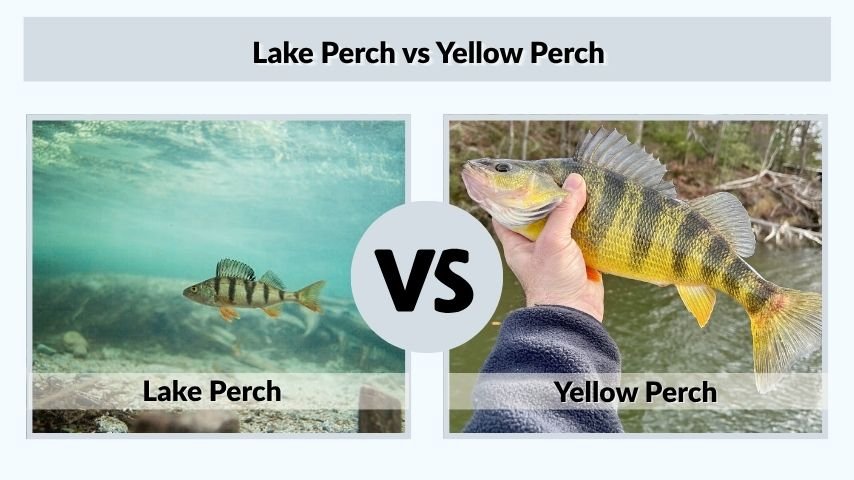
The phrase “lake perch” is often used as a common food name for yellow perch, especially around the Great Lakes. In many restaurants and fish markets, “Lake Erie perch” or “yellow lake perch” usually refers to yellow perch fillets. However, names can vary by region, so it is useful to know the species.
Yellow perch are true perch. White perch, despite the name, are not true perch; they are related to temperate bass. This is why “lake perch vs yellow perch” can be confusing. In most Great Lakes food and fishing contexts, lake perch means yellow perch.
Yellow Perch vs White Perch
Yellow perch have golden sides and dark vertical bars. White perch are usually more silver or gray and do not have the same bold barred pattern. Yellow perch also have a classic perch body shape with a spiny dorsal fin and smaller mouth.
Both fish can be eaten, but yellow perch are often more famous as a table fish in the Great Lakes region. Their fillets are mild, flaky, and slightly sweet.
Are Lake Erie Yellow Perch Good to Eat?
Lake Erie yellow perch are widely known as one of the best-tasting freshwater fish. The meat is white, mild, and delicate. It does not usually have a strong “fishy” flavor when cleaned and cooked fresh. This makes it popular with people who do not normally enjoy stronger-tasting fish.
Perch fillets are usually small, so they cook quickly. They are commonly fried, baked, grilled, or used in sandwiches and tacos. Fried Lake Erie perch is especially popular in restaurants near the lake.
How to Cook Yellow Lake Perch
The most traditional method is pan-frying. Lightly coat the fillets in seasoned flour, cornmeal, or breadcrumbs, then fry until golden. Because the fillets are thin, they only need a short cooking time.
Baked yellow perch is another easy option. Add butter, lemon juice, garlic, black pepper, and parsley, then bake until the fish flakes easily. For a lighter recipe, perch can also be grilled in foil with herbs and vegetables.
Lake Erie Yellow Perch Recipes
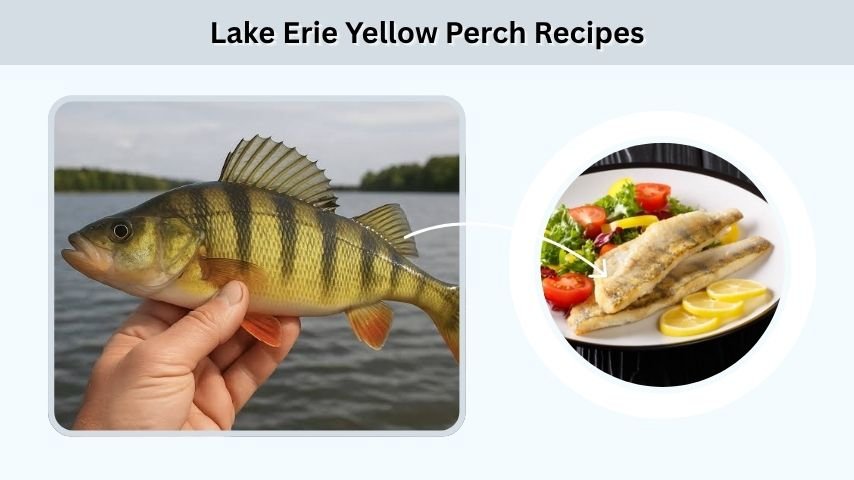
Yellow perch works well in simple recipes because the flavor is mild. Heavy sauces are not necessary. A little salt, pepper, lemon, and butter can be enough. The goal is to protect the delicate texture rather than cover it.
Popular recipe ideas include fried perch sandwiches, baked perch with lemon butter, perch tacos, perch chowder, and crispy perch bites. Fresh fillets are best, but frozen fillets can also be good if they are handled properly and thawed slowly.
Cooking Tips
- Pat fillets dry before frying so the coating sticks better.
- Use medium-high heat for a crisp crust without overcooking.
- Do not overcrowd the pan.
- Cook thin fillets only until they flake easily.
- Add lemon after cooking for a fresh flavor.
- Check local fish consumption advisories before eating wild-caught fish.
Yellow Perch in the Great Lakes
Yellow perch are found across the Great Lakes, including Lake Erie, Lake Michigan, Lake Huron, Lake Superior, and Lake Ontario. However, each lake has different habitat, water temperature, food availability, and population trends. Lake Erie is especially famous because it is productive and has supported major perch fisheries for generations.
Lake Michigan yellow perch have had well-known recruitment challenges in some areas. Recruitment means the number of young fish that survive long enough to join the fishable population. When recruitment is weak, future fishing can decline because fewer young perch grow into adults.
Yellow Perch Recruitment
Recruitment depends on spawning success, egg survival, larval survival, food supply, predators, water conditions, and weather. A strong hatch does not always guarantee strong adult numbers because young fish face many challenges.
This is why fisheries agencies monitor perch populations carefully. They study surveys, harvest numbers, age classes, and catch rates to understand whether the fishery is improving, stable, or declining.
Buying Lake Erie Yellow Perch
Some people look for Lake Erie yellow perch fillets at fish markets, grocery stores, restaurants, and wholesalers. Availability can depend on harvest, regulations, season, location, and supplier. Fresh fillets may be easier to find near the Great Lakes, while frozen fillets may be more common farther away.
When buying perch, check the label and ask where the fish came from. True yellow perch is prized, and the name “perch” can sometimes be used loosely in markets. Good fillets should smell clean, look moist, and have firm flesh.
Fresh vs Frozen Fillets
Fresh yellow perch is excellent when handled properly, but frozen perch can also be high quality. The key is proper freezing and thawing. Vacuum-sealed fillets usually hold quality better than loosely wrapped fish.
Thaw frozen fillets in the refrigerator rather than at room temperature. After thawing, pat them dry before cooking. This helps improve texture and makes frying or baking easier.
FAQs
What is the best bait for Lake Erie yellow perch?
Small minnows, especially emerald shiners where available, are among the best baits for Lake Erie yellow perch. Worms, waxworms, spikes, and small pieces of nightcrawler also work well. The best choice depends on season, water depth, and whether perch are feeding on minnows or bottom insects.
How do you catch yellow perch in Lake Erie?
Use light tackle, small hooks, and bait near the bottom. Boat anglers often drift or anchor after finding schools with electronics. Shore anglers target piers, harbors, and areas where perch move close to structure. Once you catch one, keep fishing the same area because perch often travel in schools.
What is the Lake Erie yellow perch limit?
The limit depends on where you fish and where you land your catch. Lake Erie is managed by different states and zones, so anglers should check current official regulations before fishing. Ohio, Pennsylvania, Michigan, New York, and Ontario may have different rules.
Are Lake Erie yellow perch good to eat?
Yes, Lake Erie yellow perch are excellent to eat. Their fillets are mild, white, flaky, and slightly sweet. They are popular fried, baked, grilled, or served in sandwiches. Always check local fish consumption advisories before eating wild-caught fish from any lake.
What is the difference between lake perch and yellow perch?
In many Great Lakes markets and restaurants, “lake perch” usually means yellow perch. Yellow perch are true perch with golden sides and dark vertical bars. The term can vary by region, so it is best to confirm the species when buying fillets or reading menus.