
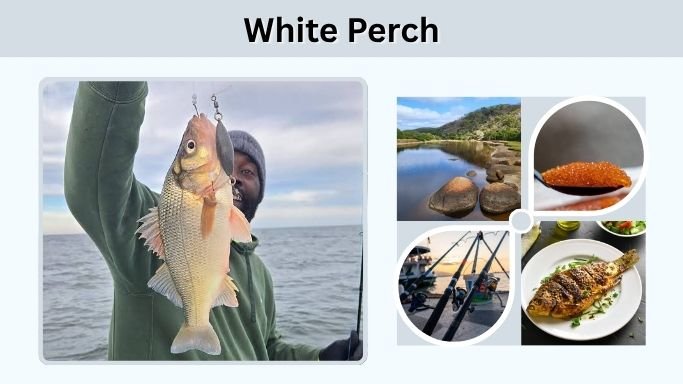
White perch is a popular small game fish known for its silvery body, mild flavor, and strong fight on light tackle. Many anglers catch it in rivers, lakes, tidal creeks, and brackish waters. However, this fish can also cause problems outside its native range. This guide explains how to identify white perch, where they live, what they eat, how to catch them, and whether they are good to eat.
What Is a White Perch?
White perch is a small, silvery fish from the temperate bass family. Although its name includes “perch,” it is not a true perch like yellow perch. It is more closely related to striped bass and white bass. This difference matters because many anglers confuse white perch with other silver-sided fish.
Scientific Name and Basic Identity
The scientific name of white perch is Morone americana. It usually has a deep, compressed body, a slightly forked tail, and two connected dorsal fins. The back may look gray, olive, or dark silver, while the sides are lighter and the belly is pale.
White perch are often found in schools. When one fish bites, more are usually nearby. This schooling behavior makes them exciting for anglers because a good spot can produce many fish in a short time.
Why the Name Can Be Confusing
The word “perch” creates confusion because white perch is not in the same group as yellow perch. In some areas, people also use local names for crappie, white bass, or other panfish. For example, in parts of Louisiana, “white perch” may refer to crappie. That is why identification is important before comparing size limits, recipes, or fishing methods.
White Perch Identification
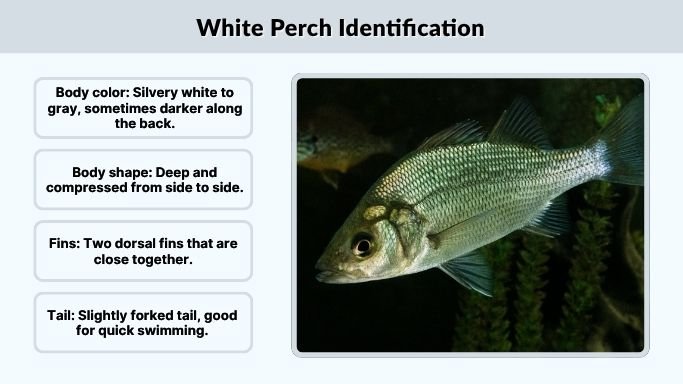
White perch can look plain at first, but several details help separate it from similar fish. Look at the body shape, fin structure, color, and mouth. A quick check can prevent confusion with white bass, yellow perch, or crappie.
Key Identification Features
- Body color: Silvery white to gray, sometimes darker along the back.
- Body shape: Deep and compressed from side to side.
- Fins: Two dorsal fins that are close together.
- Tail: Slightly forked tail, good for quick swimming.
- Mouth: Moderate mouth size, not as large as crappie.
- Stripes: Usually lacks the strong horizontal stripes seen on white bass.
- Size: Often small to medium, but larger adults can be thick-bodied.
White Perch vs Similar Fish
| Fish | Main Difference | Common Confusion Point |
| White perch | Silvery body, no bold horizontal stripes | Often confused with white bass |
| White bass | Strong horizontal stripes on body | Similar shape and color |
| Yellow perch | Yellow-green body with dark vertical bars | Both are called “perch” |
| Crappie | Larger mouth and spotted pattern | In some regions, crappie is called white perch |
What Does a White Perch Look Like?
A white perch usually looks like a bright silver panfish with a slightly raised back. The upper body may appear darker, especially in stained water or older fish. The sides are shiny and pale, making the fish easy to recognize in sunlight. Young white perch are often slimmer, while adults look deeper and more rounded.
White Perch Habitat and Range
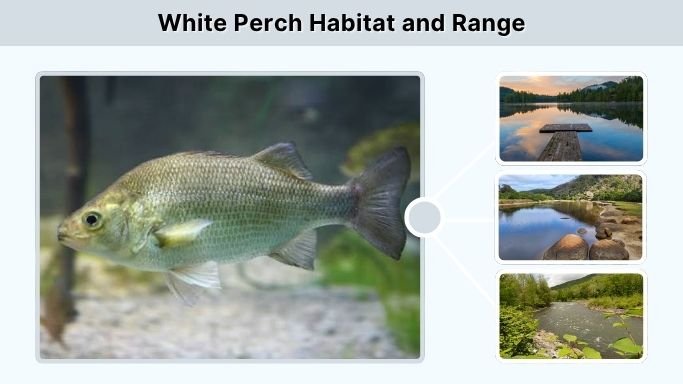
White perch can live in fresh, brackish, and coastal waters. In native areas, they are common in estuaries, tidal rivers, bays, and connected freshwater systems. In introduced waters, they may spread through canals, reservoirs, and large lake systems.
Native and Introduced Waters
White perch are native to parts of the Atlantic coastal region of North America. They are especially associated with estuaries and river systems where freshwater and saltwater mix. Over time, they have also spread outside their native range. In some inland lakes and Great Lakes waters, they are considered invasive because they compete with native fish and eat fish eggs.
Freshwater or Saltwater?
White perch can tolerate a wide range of salinity. This means they may be found in freshwater lakes, tidal rivers, brackish creeks, and bays. They are not purely saltwater fish and not purely freshwater fish. Their flexible habitat use is one reason they can become abundant in many places.
Chesapeake Bay White Perch
The Chesapeake Bay region is strongly connected with white perch fishing. Anglers often catch them around tidal creeks, bridge pilings, docks, grass beds, marsh edges, and shallow shoreline structure. In spring, they may move into freshwater or low-salinity areas to spawn. During warmer months, they often spread through creeks and open-water edges.
White Perch Diet and Behavior
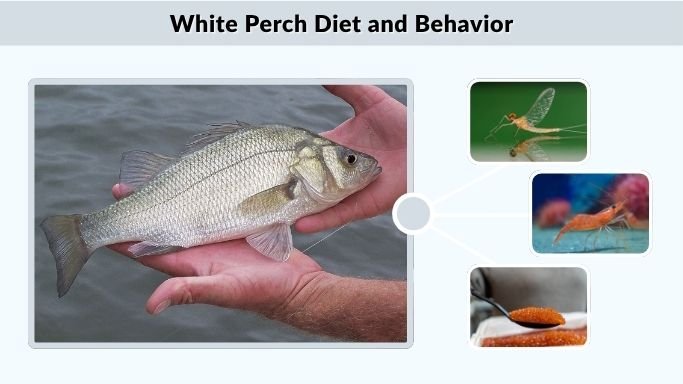
White perch are active feeders and can eat many small aquatic animals. Their diet changes with age, season, and habitat. Because they feed in schools, they can quickly gather around baitfish, insects, and other food sources.
What Do White Perch Eat?
White perch commonly eat small fish, aquatic insects, shrimp, worms, tiny crustaceans, and fish eggs. Young fish often feed on smaller invertebrates, while larger adults may take minnows and other small prey. In some introduced waters, their habit of eating eggs from other fish can create ecological problems.
Feeding Patterns
White perch often feed most actively during low light, moving water, and comfortable temperatures. Early morning and late afternoon can be productive. In tidal areas, moving tides often trigger bites because current pushes food past structure. In lakes, they may follow schools of baitfish or gather near drop-offs.
Spawning Season
White perch generally spawn in spring. In native estuarine systems, adults may move toward freshwater portions of rivers and streams. Spawning movement makes them easier to locate in some areas, especially around creeks, tributaries, and shallow zones with suitable conditions.
How Big Do White Perch Get?
White perch are usually not huge fish, but they can be chunky for their length. Many fish caught by anglers are small panfish size, while bigger adults can be strong fighters on light tackle. Size depends on location, food supply, water quality, and fishing pressure.
Average Size White Perch
A common white perch may be around 6 to 10 inches long. Larger ones can reach 12 inches or more in good habitat. A thick 10-inch white perch can still provide a fun fight and a nice fillet. Anglers often target them because they are abundant, easy to catch, and tasty.
Big White Perch
A big white perch is usually one that stands out from the school. These fish are deeper-bodied, heavier, and often found near better feeding zones. Larger fish may stay around deeper edges, bridge structure, channel turns, and areas with baitfish. Light tackle makes even medium-sized white perch enjoyable.
World Record White Perch
Anglers often search for the world record white perch because the species can grow larger than many people expect. Record information may vary by organization and location, so anglers should check official record-keeping sources in their state or region. For most fishermen, a thick, healthy local fish is already a good catch.
How to Catch White Perch
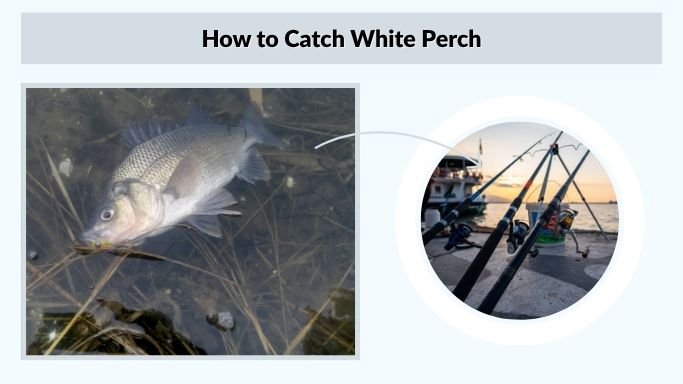
White perch are beginner-friendly but still fun for experienced anglers. They respond well to simple bait, small lures, and light tackle. The best strategy is to find schools, keep the bait near the right depth, and move if the bite slows.
Best Bait for White Perch
- Bloodworms: Very popular in tidal and brackish areas.
- Earthworms: Easy to find and effective in freshwater.
- Grass shrimp: Excellent around creeks, docks, and marsh edges.
- Small minnows: Good for larger white perch.
- Fish bites or scented baits: Useful when natural bait is hard to get.
- Tiny pieces of cut bait: Can work when fish are feeding aggressively.
Best Lures for White Perch
Small lures are usually better than large ones. White perch have small to medium mouths, so compact presentations work well. Try small jigs, inline spinners, beetle spins, small spoons, or tiny soft plastics. White, chartreuse, silver, and natural baitfish colors are common choices.
Simple White Perch Rig
A basic bottom rig works well with bait. Use a light sinker, small hooks, and enough leader to let the bait move naturally. In shallow water, a float rig can be very effective because it keeps bait above grass, rocks, or soft bottom. For lure fishing, use light spinning gear and slow, steady retrieves.
Where to Fish for White Perch
Good places include docks, bridge pilings, creek mouths, grass edges, riprap banks, oyster bars, marsh drains, and channel edges. In lakes, look for points, drop-offs, submerged structure, and baitfish schools. In tidal water, moving water is often more important than exact location.
White Perch Fishing Tips
White perch fishing is often about timing and mobility. If you are not getting bites, change depth, bait, or location. Small adjustments can make a big difference because the fish often hold in tight schools.
Practical Tips for Better Results
- Use light tackle for better sensitivity.
- Keep hooks small because white perch have small mouths.
- Fish around structures where bait gathers.
- Try different depths before leaving a spot.
- Watch birds, surface activity, and bait movement.
- During tides, focus on moving water.
- Use fresh bait when the bite is slow.
- If you catch one, cast back to the same area quickly.
White Perch Jig Fishing
Jig fishing is one of the most enjoyable ways to catch white perch. Use small jig heads with soft plastics, hair jigs, or tiny grub tails. Cast near structure, let the jig sink, and retrieve slowly with small lifts. If fish are suspended, count the jig down and keep it in the strike zone.
Fishing From Shore
White perch can be caught from shore in many areas. Public piers, bridges, creek banks, and marina edges can all produce fish. A simple bait rig is usually enough. Shore anglers should move along the bank until they find active schools instead of waiting too long in one dead spot.
Are White Perch Good to Eat?
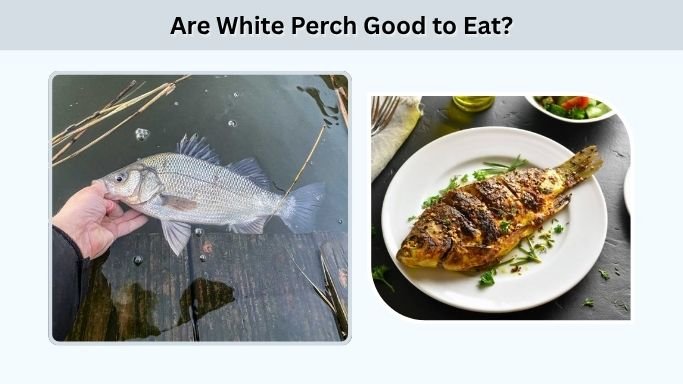
White perch are good to eat when taken from clean, legal waters. The meat is mild, light, and suitable for pan-frying, baking, or making fish sandwiches. Because they are usually small, many people cook them as fillets or whole dressed fish.
Taste and Texture
White perch has a mild flavor that is not overly fishy. The flesh is firm enough for frying but delicate enough for simple cooking. Fresh fish taste best when cleaned quickly and kept cold. Like most fish, flavor depends on water quality, handling, and cooking method.
How to Cook White Perch
Pan-fried white perch is one of the most popular methods. Coat the fillets with seasoned flour, cornmeal, or breadcrumbs, then fry until golden. You can also bake the fillets with lemon, butter, garlic, and herbs. Smaller fish can be cooked whole after scaling and cleaning.
Simple Cooking Ideas
- Pan-fried fillets: Crispy outside, mild inside.
- Baked white perch: Good for a lighter meal.
- Fish tacos: Use fried or grilled pieces with slaw.
- Fish sandwiches: Great with tartar sauce and lettuce.
- Whole fried fish: Works well for smaller catches.
Why White Perch Can Be a Problem
White perch are valued as a food and sport fish in many places, but they can become a problem outside their native range. Their ability to reproduce quickly, eat fish eggs, and compete with other species can affect local ecosystems.
Invasive Concerns
In introduced waters, white perch may compete with native fish for food and space. They may also eat eggs of sport fish such as walleye or white bass. This can reduce recruitment when egg predation is heavy. Because of these impacts, some states classify white perch as an invasive or prohibited species.
Follow Local Rules
Fishing rules for white perch can vary widely. Some states encourage harvest in invasive waters, while others have size or possession rules in managed fisheries. Always check local regulations before keeping, moving, or using white perch as bait. Never transport live fish between water bodies.
FAQs
What is a white perch?
A white perch is a silvery fish with the scientific name Morone americana. Despite its common name, it is not a true perch. It belongs to the temperate bass family and is related to striped bass and white bass. Anglers often catch it in rivers, bays, lakes, and brackish waters.
Are white perch good to eat?
Yes, white perch are good to eat when caught from safe, clean waters. Their meat is mild, light, and pleasant for frying, baking, or making fish sandwiches. Many anglers like them because they are easy to catch in numbers and provide small but tasty fillets.
What is the best bait for white perch?
The best bait often includes bloodworms, earthworms, grass shrimp, small minnows, and tiny pieces of cut bait. In tidal waters, bloodworms and grass shrimp are especially popular. In freshwater, worms and minnows are simple and effective choices for both beginners and experienced anglers.
How do you tell white perch from white bass?
White bass usually has stronger horizontal stripes along the sides, while white perch looks plainer and more silvery. White bass may also have a more obvious striped pattern across the body. Because they can look similar, check body markings, fin shape, and local species guides.
Why are white perch considered invasive in some places?
White perch are considered invasive in some waters because they can spread quickly, compete with native fish, and eat fish eggs. In areas where they are not native, this behavior may harm sport fish populations and change the food web. Local regulations may restrict possession or transport.