
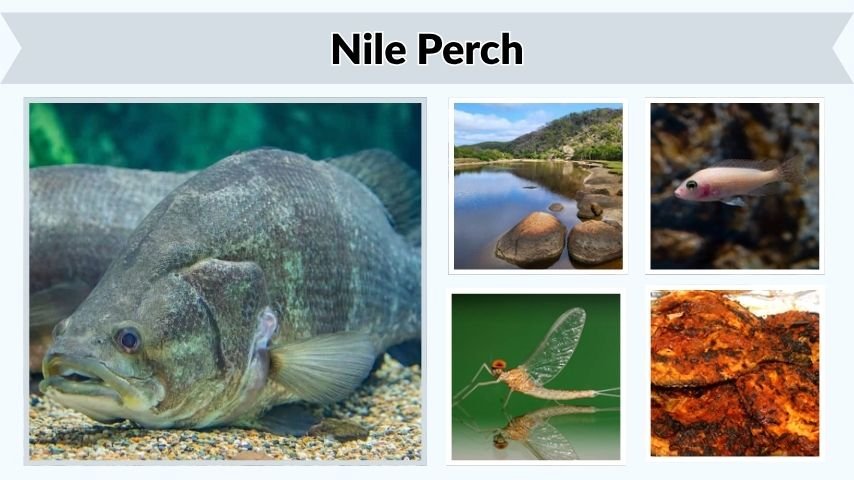
Nile perch is one of the largest and most famous freshwater fish in Africa. It is known for its huge size, strong predatory nature, mild white flesh, and major impact on Lake Victoria. Many people search for Nile perch as a food fish, fishing target, invasive species, and cooking ingredient. This guide explains its habitat, diet, size, fishing, recipes, and ecological problems.
What Is a Nile Perch?
Nile perch is a large freshwater predator with a powerful body, wide mouth, and silvery-gray color. Its scientific name is Lates niloticus. It belongs to the family Latidae and is also called African snook, Victoria perch, Goliath perch, or African barramundi in some places. It is native to several African river and lake systems, including the Nile, Congo, Senegal, Niger, Lake Chad, and Lake Turkana areas.
Nile Perch Identification
Nile perch is easy to recognize when mature because it has a long, heavy body and a large predatory head. The body is usually silver, gray, or greenish-gray, with a pale underside. Its mouth is broad, and the lower jaw may look slightly forward. The eyes are large, helping it hunt in deep or dim water.
Young Nile perch may look slimmer and less impressive, but adults become thick and powerful. Their strong tail, broad fins, and muscular body allow them to chase prey fish. In photos, Nile perch often look similar to barramundi because both belong to the same broader group of lates-like fishes.
Quick Features
- Large freshwater predator
- Scientific name: Lates niloticus
- Silvery-gray body with pale belly
- Big mouth and strong jaw
- Can grow to very large size
- Popular food fish in Africa and export markets
- Important commercial fishery species
- Invasive and harmful in some introduced waters
Nile Perch Habitat and Range
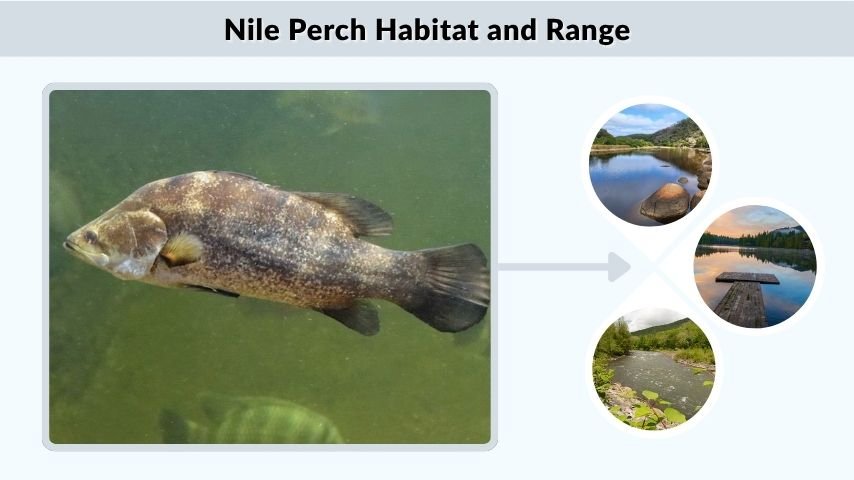
Nile perch lives in warm freshwater systems. It is found in large lakes, rivers, reservoirs, and slow-moving waters with enough oxygen. Adults may use deeper lake zones, while young fish often stay closer to shallow or nearshore habitats. Animal Diversity Web notes that adults can occupy many lake habitats if oxygen levels are suitable, while juveniles are more restricted to shallow areas.
Where Do Nile Perch Live?
Nile perch is native to many African waters, especially tropical river basins and lakes. It occurs in the Nile system, Congo Basin, Niger system, Senegal River, Lake Chad, Lake Turkana, and other connected waters. It is strongly associated with large freshwater environments where it can grow, hunt, and reproduce successfully.
One of the most famous places for Nile perch is Lake Victoria, but the fish was introduced there. Its introduction changed the lake’s ecosystem and created one of the best-known invasive fish stories in the world.
Nile Perch in Lake Victoria
Nile perch was introduced to Lake Victoria in the 1950s and became abundant later. The goal was to improve fish production, but the result was complicated. It created a major commercial fishery and supported exports, yet it also contributed to the decline of many native cichlid fish. National Geographic explains that the introduction produced an economic boom but nearly drove native cichlids to extinction.
Nile Perch in Florida
Many people search for “Nile perch Florida,” but Nile perch is not a normal Florida freshwater game fish like bass, bluegill, or crappie. Confusion may happen because Florida has many nonnative fish and because barramundi-like fish can look similar. Before believing reports of Nile perch in Florida, anglers should check official state fish records or wildlife agency updates.
Nile Perch Food and Diet
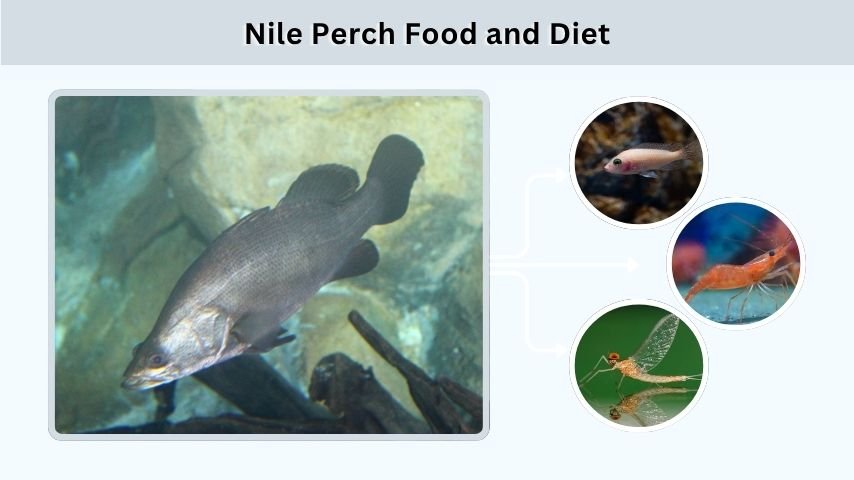
Nile perch is a strong predator. Its diet changes as it grows. Young fish eat smaller aquatic animals, while adults mainly feed on fish and other available prey. This feeding habit helps Nile perch grow quickly and dominate waters where prey is abundant.
What Does Nile Perch Eat?
Nile perch can eat fish, crustaceans, mollusks, insects, and even smaller individuals of its own species. Adult Nile perch are known for eating other fish, including cichlids and other small to medium fish. Juveniles may feed on zooplankton and small invertebrates before shifting toward larger prey.
Common Nile Perch Food
- Small fish
- Cichlids
- Tilapia
- Catfish
- Freshwater shrimp
- Crustaceans
- Aquatic insects
- Mollusks
- Smaller Nile perch
- Zooplankton for young fish
Why Its Diet Matters
The diet of Nile perch matters because it affects the entire ecosystem. In Lake Victoria, heavy predation on native cichlids helped reduce many species. Some cichlids had special roles, such as feeding on algae, detritus, or small organisms. When predator pressure increased, the food web changed. New research has also linked Nile perch invasion with long-term genetic bottlenecks in Lake Victoria cichlids.
Nile Perch Size and Growth
Nile perch is famous for its size. It is one of the largest freshwater fish targeted by anglers. This is a major reason people search for giant Nile perch, monster Nile perch, biggest Nile perch, and world record Nile perch.
How Big Do Nile Perch Get?
Nile perch can grow very large, especially in big lakes with enough food. Many mature fish are already impressive, but exceptional individuals can become massive. Some sources report that Nile perch may reach around 2 meters in length and very heavy weights under ideal conditions.
Large fish are not common everywhere. Size depends on habitat, food supply, fishing pressure, and age. In heavily fished waters, smaller and medium-sized Nile perch may be more common than true giants.
Giant Nile Perch
A giant Nile perch is a dream fish for many anglers. These large predators are powerful, heavy, and difficult to land. They usually require strong tackle, experienced handling, and good local knowledge. Big fish may stay around deeper water, rocky structure, drop-offs, or places where prey fish gather.
World Record Nile Perch
Searches for “world record Nile perch” and “biggest Nile perch ever caught” are popular because of the fish’s monster reputation. Record claims can vary depending on whether the catch is verified by an official angling organization, local record book, or media report. For accurate records, anglers should check official sport-fishing record databases.
Nile Perch Fishing
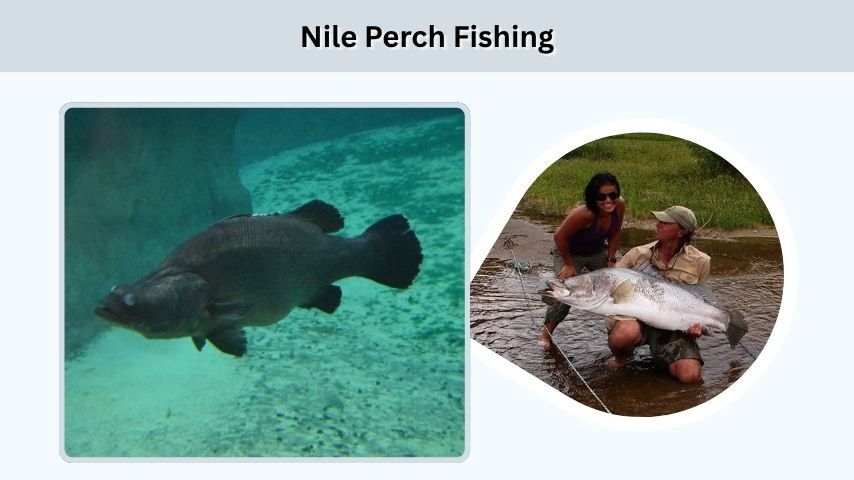
Nile perch fishing attracts both local and international anglers. The fish is powerful, heavy, and aggressive when hooked. It can be caught with live bait, dead bait, trolling lures, casting lures, and sometimes fly-fishing methods in suitable areas.
How to Catch Nile Perch
The best method depends on the water body. In large lakes, trolling deep-diving lures or bait near structure can be effective. In rivers, anglers may target current edges, deep pools, and rocky areas. In Lake Nasser and other trophy locations, fishing guides often use heavy tackle because large Nile perch can break weak gear.
Best Bait and Lures
- Live baitfish
- Dead baitfish
- Large soft plastics
- Deep-diving crankbaits
- Heavy spoons
- Swimbaits
- Strong trolling lures
- Large flies in suitable shallow zones
Fishing Tips
Use strong rods, quality reels, and tough line because Nile perch can be extremely powerful. Check hooks, knots, and leaders before fishing. Focus on places where prey fish are active. Early morning, late evening, and low-light periods can be productive. Local guides are helpful because big Nile perch often follow seasonal patterns.
Nile Perch as Food
Nile perch is an important food fish. It has mild white flesh, few small bones compared with some other freshwater fish, and a firm texture. It is sold fresh, frozen, and as fillets in many markets. A food science review describes Nile perch as having white meat that is widely accepted in many markets, though handling and hygiene are important for safety.
Is Nile Perch Good to Eat?
Yes, Nile perch is good to eat when it is fresh, properly handled, and cooked well. It has a mild taste that works with many recipes. People who dislike strong fishy flavors may enjoy Nile perch because the flesh is usually lighter and less oily than some stronger-tasting fish.
Nile Perch Taste and Texture
Nile perch has white, flaky, mild flesh. It is often sold as fillets or steaks. The texture is firm enough for grilling and frying but still soft enough for baking. Because it is a large fish, thick cuts can be cooked like fish steaks.
Is Nile Perch Healthy?
Nile perch can be a healthy protein source when eaten as part of a balanced diet. It provides protein and useful nutrients. Some nutrition sources describe it as a high-protein fish with omega-3 fatty acids and other nutrients. However, like all fish, safety depends on where it was caught, how it was stored, and whether local advisories mention contaminants.
How to Cook Nile Perch
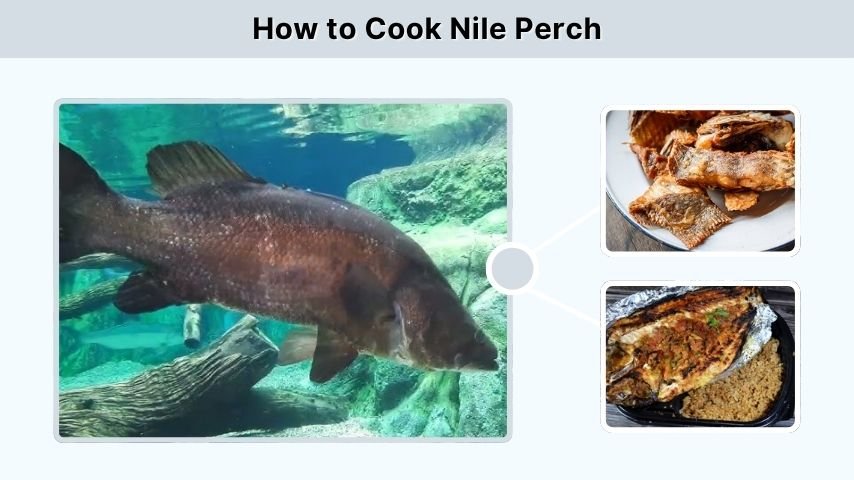
Nile perch is easy to cook because the flesh is mild and versatile. It can be baked, fried, grilled, steamed, or cooked in curry. The best method depends on the cut. Thin fillets cook quickly, while thick steaks need more time.
Popular Nile Perch Recipes
- Fried Nile perch fillet
- Grilled Nile perch steak
- Baked Nile perch with lemon
- Nile perch fish curry
- Pan-seared Nile perch
- Spicy African-style fish stew
- Nile perch with garlic butter
- Crispy breaded fish strips
Simple Baked Nile Perch
Season the fillet with salt, pepper, lemon juice, garlic, and a little oil or butter. Place it in a baking dish and bake until the flesh flakes easily. Serve it with rice, vegetables, salad, or potatoes. Because Nile perch has a mild flavor, lemon, herbs, chili, and garlic work very well.
Fried Nile Perch
For fried Nile perch, cut the fillet into smaller pieces. Coat with flour, cornmeal, or breadcrumbs. Fry until golden and crisp outside. Keep the heat medium so the outside does not burn before the inside cooks. Serve with sauce, salad, or flatbread.
Nile Perch vs Tilapia
Nile perch and tilapia are both important African food fish, but they are very different. Nile perch is a large predator, while tilapia is usually smaller and more plant-based or omnivorous. Tilapia is commonly farmed, while Nile perch is strongly linked to wild capture fisheries in large lakes.
| Feature | Nile Perch | Tilapia |
| Scientific group | Latidae | Cichlidae |
| Feeding type | Predator | Mostly omnivore |
| Size | Can become very large | Usually smaller |
| Taste | Mild, white, firm | Mild, white, softer |
| Farming | Less common | Very common |
| Ecological role | Top predator | Lower food-web feeder |
Is Nile Perch the Same as Tilapia?
No, Nile perch and tilapia are not the same fish. They differ in body shape, diet, size, family, and ecological role. Tilapia are cichlids, while Nile perch is a large predatory lates fish. In markets, both may be sold as white fish, but they are not identical.
Nile Perch vs Barramundi
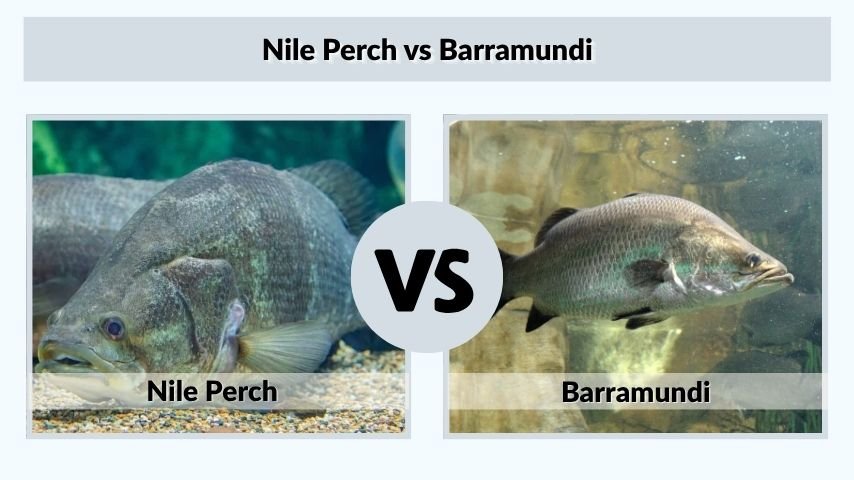
Nile perch and barramundi are related in a broad sense because both are lates-type fish from the family Latidae. This is why Nile perch is sometimes called African barramundi. However, they are different species with different natural ranges and market identities.
Main Differences
Barramundi is often associated with Australia and Indo-Pacific regions, while Nile perch is African. Barramundi can live in fresh and saltwater environments, while Nile perch is mainly a freshwater fish. Both have mild white flesh and are popular for cooking, but they are not the same fish.
Why Is the Nile Perch Dangerous?
Nile perch is not usually “dangerous” to people in the way sharks or crocodiles may be feared. It does not normally attack humans. The danger mostly refers to its ecological impact as a large invasive predator in places where it was introduced.
Ecological Danger
In Lake Victoria, Nile perch became dangerous to native biodiversity because it preyed heavily on endemic cichlids. Many of those fish lived only in that lake. When Nile perch populations grew, native fish communities suffered badly. The American Museum of Natural History highlights Lake Victoria as a major biodiversity crisis involving extinct and endangered cichlids.
Economic Benefit and Environmental Cost
The story is not simple. Nile perch created jobs, export income, and food resources for many people. At the same time, it caused serious ecological damage. That is why Nile perch is often discussed as both a valuable fishery species and a harmful invasive species.
Nile Perch Fisheries
Nile perch fisheries are important in East Africa, especially around Lake Victoria. The fish supports commercial processing, local markets, export trade, and fishing communities. It is sold as fresh fish, frozen fillets, and processed products.
Fishery Importance
The growth of the Nile perch fishery changed local economies. It created income for fishers, processors, traders, and exporters. However, heavy fishing pressure, ecosystem changes, and management challenges have also created concerns. Sustainable fishing rules are important to protect future catches and reduce damage to aquatic ecosystems.
Can Nile Perch Be Farmed?
Nile perch aquaculture is discussed in some regions, but it is not as common globally as tilapia farming. Farming a large predator is more difficult because it requires suitable feed, space, water quality control, and careful management. Tilapia is usually easier and cheaper to farm, which is why it is more common in aquaculture.
FAQs
What is Nile perch?
Nile perch is a large freshwater fish from Africa with the scientific name Lates niloticus. It is a powerful predator with a silvery body, big mouth, and strong tail. It is famous as a food fish, sport fish, and invasive species in Lake Victoria.
What does Nile perch eat?
Nile perch eats fish, crustaceans, insects, mollusks, and sometimes smaller Nile perch. Young fish may feed on zooplankton and small aquatic animals. Adults are strong predators and often hunt cichlids, tilapia, catfish, shrimp, and other available prey.
Is Nile perch good to eat?
Yes, Nile perch is good to eat when fresh and properly cooked. It has mild white flesh with a firm, flaky texture. It can be fried, baked, grilled, or cooked in curry. Like all fish, it should come from safe waters and be handled hygienically.
Is Nile perch the same as tilapia?
No, Nile perch and tilapia are different fish. Nile perch is a large predator from the Latidae family, while tilapia are cichlids and are usually smaller. Tilapia is commonly farmed, while Nile perch is strongly known from wild fisheries in large African lakes.
Why is Nile perch invasive?
Nile perch is considered invasive in Lake Victoria because it was introduced outside its original ecological balance and preyed heavily on native cichlid fish. This caused major biodiversity loss. It also changed the food web, although it became economically important for fisheries.