
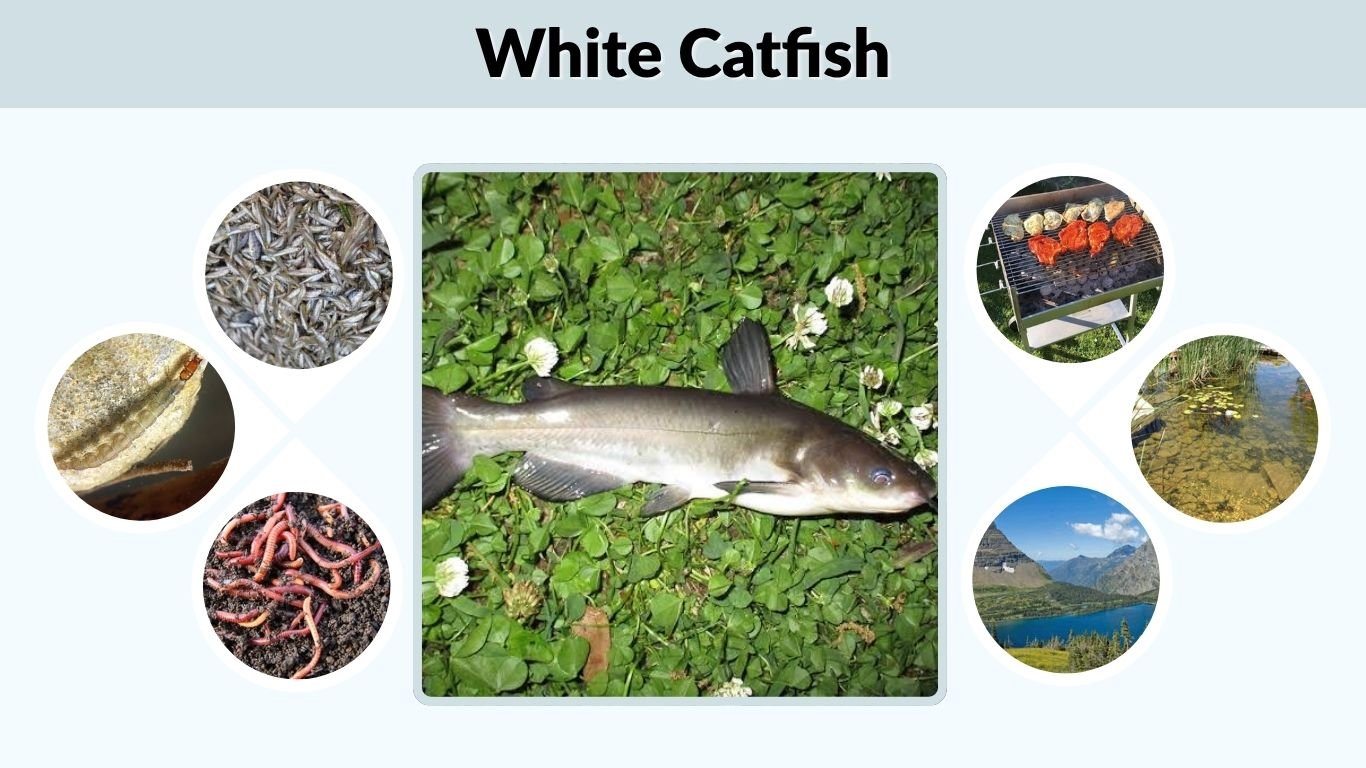
The white catfish is a North American freshwater fish recognized by its broad head, pale belly, light-colored chin barbels and moderately forked tail. Despite its name, the fish is not completely white; its back is usually blue-gray, olive or dark gray. White catfish are members of the bullhead group and are commonly found in slow rivers, lakes, reservoirs and backwaters. They are also valued by anglers because they feed aggressively, accept several types of bait and are considered good table fish.
White Catfish Quick Facts
| Feature | Details |
| Scientific name | Ameiurus catus |
| Family | Ictaluridae |
| Other name | White bullhead |
| Native region | Atlantic and Gulf drainages of the United States |
| Maximum documented length | About 62 cm or 24 inches |
| Typical color | Blue-gray above and white below |
| Habitat | Rivers, lakes, reservoirs and backwaters |
| Diet | Fish, insects, crustaceans and other aquatic foods |
| Tail shape | Moderately or shallowly forked |
| Lifespan | Up to at least 14 years |
The species belongs to Ameiurus, the genus containing North American bullheads. Unlike most other bullheads, however, the white catfish has a visibly forked tail.
What Is a White Catfish?
The white catfish, Ameiurus catus, is a scaleless freshwater fish with a muscular body, broad head and whisker-like sensory barbels around its mouth. The barbels help it detect food in dark or muddy water.
Its common name comes partly from its pale underside and white or yellowish chin barbels. The upper body is usually gray, blue-gray, olive or nearly black rather than pure white. Large adults may become especially dark across the back while retaining a pale belly.
Identification Features
A white catfish can be identified by its:
- Broad, rounded head
- Smooth body without scales
- Blue-gray or dark upper body
- White or pale yellow belly
- White or yellow chin barbels
- Upper jaw extending slightly beyond the lower jaw
- Moderately forked tail with rounded lobes
- Short, rounded anal fin
- Dusky or black adipose fin
- Sharp spines in the dorsal and pectoral fins
Its fin spines can cause painful punctures, so anglers should handle the fish carefully and avoid gripping it directly around the raised dorsal or pectoral spines.
How Big Do White Catfish Get?
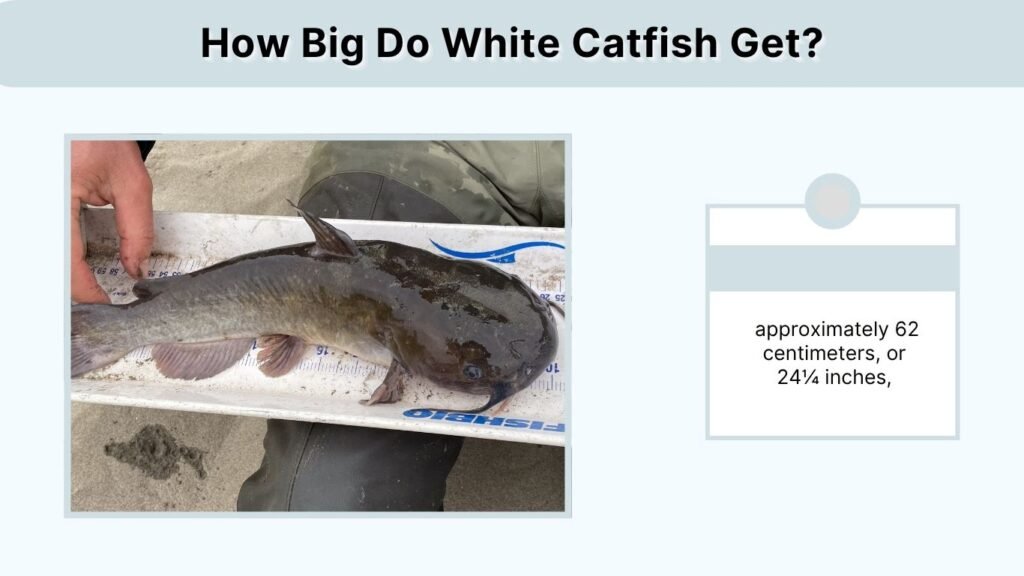
White catfish are generally smaller than blue, flathead and large channel catfish. The maximum documented length reported by the USGS and Florida Museum is approximately 62 centimeters, or 24¼ inches, although many individuals caught by anglers are considerably smaller.
Growth depends on water temperature, food availability, habitat quality and population density. Because young white catfish resemble juvenile channel catfish, larger-looking specimens are sometimes misidentified.
White Catfish vs. Channel Catfish
White and channel catfish have similar body colors and both possess forked tails. Head width, spotting and fin shape provide the most useful differences.
| Feature | White catfish | Channel catfish |
| Head | Broad and rounded | Narrower and more streamlined |
| Body spots | Usually absent | Common on young and medium fish |
| Tail | Moderately forked | More deeply forked |
| Anal fin | Shorter with a rounded edge | Longer with more rays |
| Chin barbels | Usually white or yellow | White to dusky gray |
| Adipose fin | Often dusky or black | Usually similar to body color |
The absence of spots alone is not always enough for identification because older channel catfish may lose their spots. Head shape, tail depth and anal-fin structure should be examined together.
White Catfish vs. Blue Catfish
Blue catfish usually develop a longer, more streamlined body and a deeply forked tail. Their anal fin has a straighter outer edge, whereas the white catfish has a shorter anal-fin base with a rounded outline.
Blue catfish also grow much larger. The more modest size, broad head, shallow tail fork and rounded anal fin generally indicate a white catfish.
Where Do White Catfish Live?
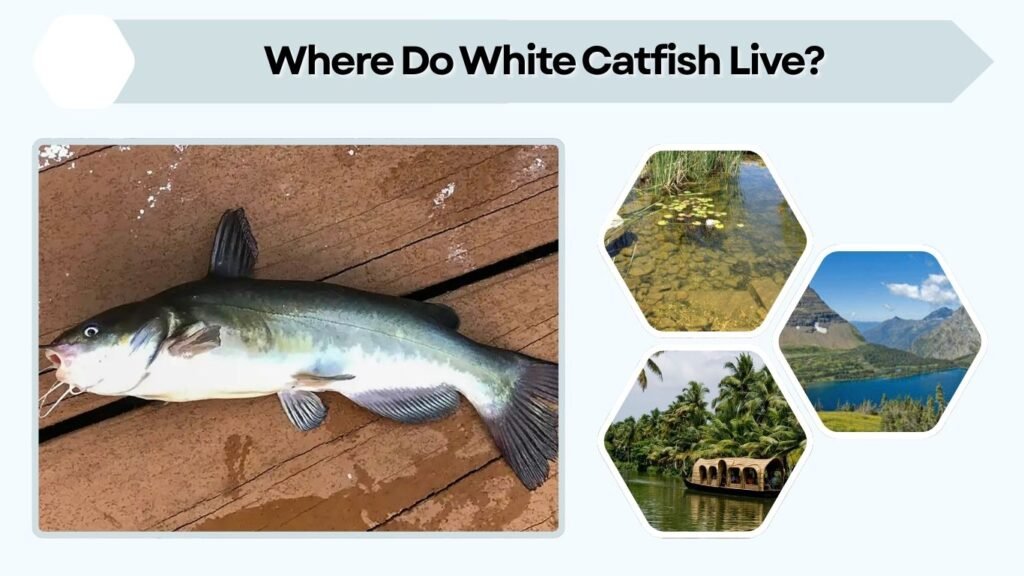
The native range of the white catfish includes Atlantic and Gulf coastal drainages from the lower Hudson River in New York south through Florida and west to parts of the northern Gulf Coast. The species has also been introduced into numerous waters outside its original range for recreational fishing and food production.
White catfish prefer relatively warm, slow-moving water. Common habitats include:
- Mud-bottomed river pools
- Backwaters and side channels
- Lakes and reservoirs
- Coastal rivers
- Large streams
- Flooded areas
- Brackish estuaries
They tolerate some salinity and can enter coastal or estuarine environments more readily than many freshwater catfish. Research has also documented substantial seasonal movement by tagged white catfish in an estuary, showing that some individuals travel considerable distances rather than remaining in one small area.
What Do White Catfish Eat?
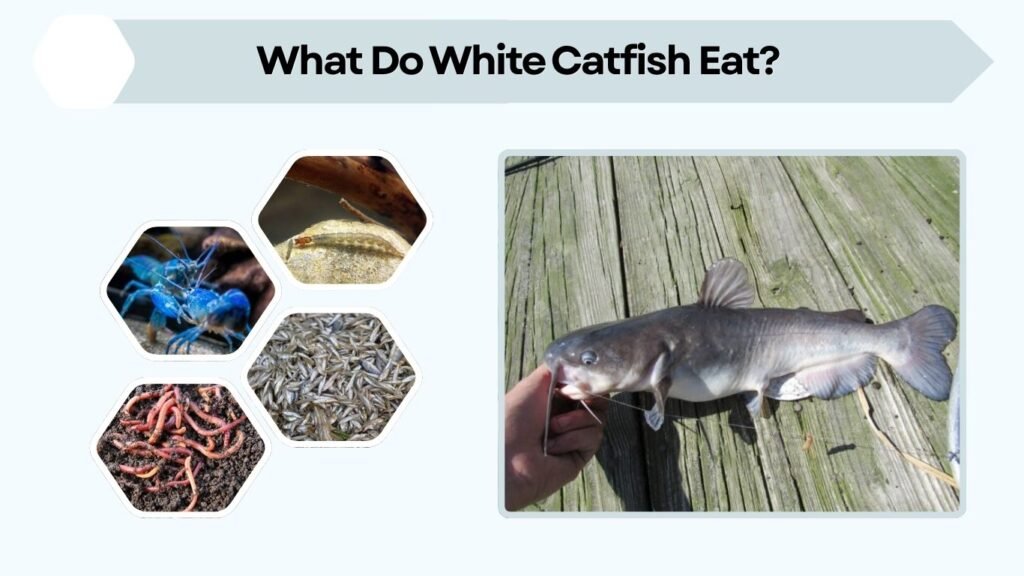
White catfish are opportunistic omnivores and predators. They search around the bottom using their barbels to detect edible material in muddy or poorly lit water.
Their natural diet includes:
- Aquatic insects and larvae
- Small fish
- Fish eggs and fry
- Crayfish and other crustaceans
- Mollusks
- Worms
- Plant and animal debris
- Carrion
Diet changes according to the fish’s size and available prey. Larger individuals can consume more fish and sizable invertebrates, while younger fish rely heavily on insects and other small organisms.
White catfish can feed during both day and night. North Carolina wildlife authorities note that they tend to feed during daylight more frequently than several other catfish species, although low-light periods may still produce good fishing.
How to Catch White Catfish
White catfish are commonly caught by presenting scented natural bait on or near the bottom. They possess an excellent sense of smell and readily investigate food in muddy water.
Best Baits
Effective bait choices include:
- Nightcrawlers and other worms
- Live or cut minnows
- Shrimp
- Insect larvae
- Hellgrammites
- Prepared catfish bait
- Other strongly scented baits
A simple bottom rig with a sinker, leader and suitable hook works in many locations. Cast toward drop-offs, deep pools, creek mouths, submerged structures or transitions between open water and muddy flats.
Fishing rules differ by state and water body. Anglers should check current licenses, size restrictions and daily possession limits before keeping fish.
White Catfish Spawning and Life Cycle
Spawning time varies with climate and latitude. In Virginia, reproduction has been recorded from late May through July. Both parents may help construct a nest depression in sand or gravel, and one or both adults guard the eggs.
Young white catfish grow within protected shallow habitats before moving into deeper pools and channels. They may require approximately three to four years to reach reproductive maturity. Their maximum lifespan is at least 14 years, although survival varies significantly between populations.
Are White Catfish Good to Eat?
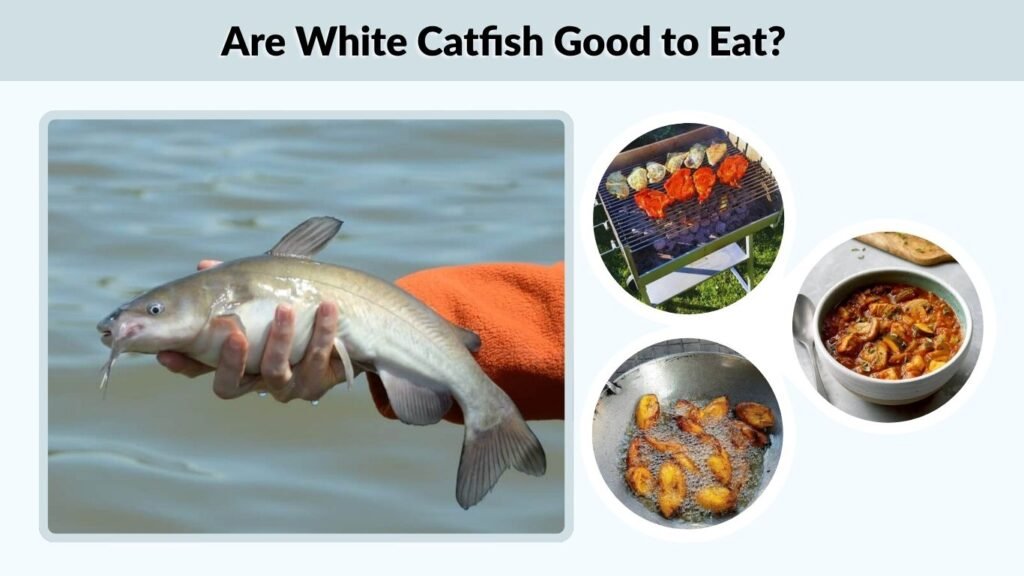
White catfish are considered good table fish. Like other commonly eaten catfish, they produce mild, pale flesh that can be fried, baked, grilled or used in stews. North Carolina wildlife authorities describe the species as excellent table fare.
The phrase white fish can also describe fish with pale, mild flesh. Therefore, catfish may be categorized as white-fleshed fish in a culinary context, but “white catfish” specifically refers to Ameiurus catus, not simply any catfish with white meat.
Before eating a wild-caught fish, consult local consumption advisories. Recommendations may differ according to the water body, fish size and possible contaminant levels.
Black-and-White Catfish Are Not Always White Catfish
A black-and-white catfish seen in an aquarium is not necessarily Ameiurus catus. Many unrelated aquarium species have stripes, spots or contrasting black-and-white patterns, including some corydoras, Synodontis, pictus and pleco species.
Similarly, an all-white or albino catfish may belong to almost any of several species. Albinism and leucism affect pigmentation but do not transform the fish into the species known as the white catfish. Accurate identification requires examining its body structure, fins and scientific name rather than color alone.
FAQs
Is a white bullhead the same as a white catfish?
The name white bullhead is commonly used for the white catfish because it belongs to the bullhead genus Ameiurus. It differs from typical black, brown and yellow bullheads by having a moderately forked rather than square or rounded tail.
Why is it called a white catfish?
The fish is named for its white or pale belly and light-colored chin barbels. Its back is normally blue-gray, olive or dark gray, so a healthy white catfish is not expected to have an entirely white body.
How can you tell a white catfish from a channel catfish?
Look for a broad head, a shallow tail fork, white chin barbels and the absence of body spots. Channel catfish normally have narrower heads, more deeply forked tails and dark spots when young, although several features should be checked together.
What is the best bait for white catfish?
Worms, minnows, hellgrammites and scented prepared baits are effective. Present the bait close to the bottom around muddy pools, backwaters, creek mouths or submerged structure where the fish naturally searches for food.
Do white catfish have white spots?
Natural white catfish do not usually have prominent white spots. White patches or grain-like spots on a captive fish may indicate an injury, pigmentation change or health problem rather than normal coloration and should not be used to identify the species.