
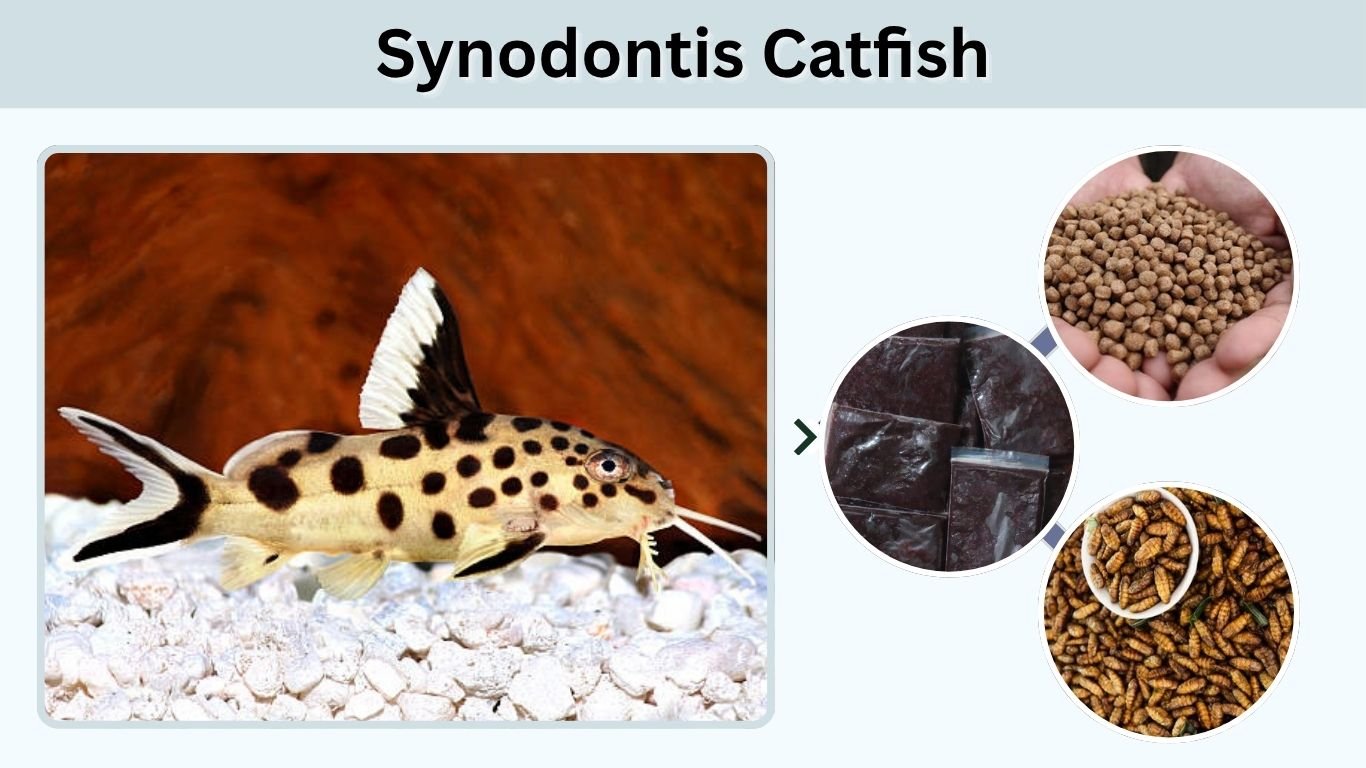
Synodontis catfish are distinctive African freshwater fish known for their spotted patterns, long barbels, strong fin spines and unusual swimming behavior. Popular species include the featherfin catfish, cuckoo catfish, Synodontis petricola and Synodontis lucipinnis. Although many are hardy aquarium residents, their adult size and water requirements vary considerably. Choosing the correct species is therefore essential before setting up a tank or selecting companions.
What Is a Synodontis Catfish?
Synodontis is a genus of African catfish belonging to the family Mochokidae, commonly called squeakers or upside-down catfishes. They are bottom-associated freshwater fish equipped with sensory barbels that help them locate food around rocks, wood and substrate.
Some species occasionally swim upside down while feeding beneath surfaces. Their strong dorsal and pectoral spines also require careful handling, as the spines may become caught in fine aquarium nets. Synodontis eupterus, for example, is documented as an upside-down swimmer that naturally feeds on insect larvae and algae.
| Feature | General information |
| Origin | Africa |
| Family | Mochokidae |
| Activity | Often most active in dim light |
| Diet | Generally omnivorous |
| Adult size | Varies greatly by species |
| Swimming area | Bottom and lower levels |
| Temperament | Peaceful to territorial |
| Distinctive traits | Barbels, spots and strong fin spines |
Popular Types of Synodontis Catfish
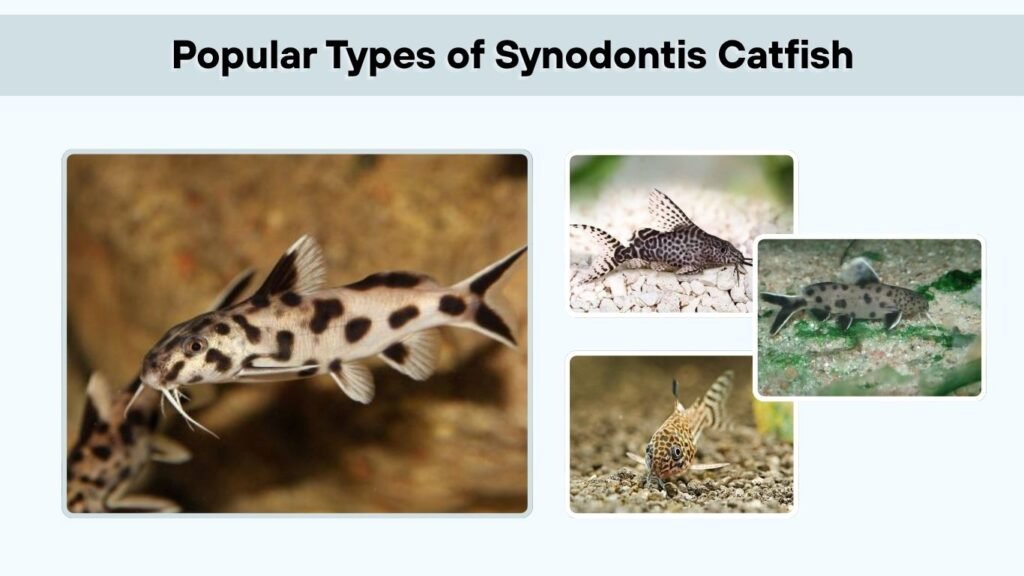
Different species sold under the Synodontis name can have very different adult sizes and environmental requirements. Buyers should confirm the scientific name rather than relying only on labels such as “spotted catfish” or “lace catfish.”
Featherfin Synodontis
The featherfin catfish, Synodontis eupterus, develops an impressive dorsal fin with long, feather-like rays. Its body is usually brownish with dark spots, while the tall dorsal fin becomes increasingly dramatic as the fish matures.
This is one of the larger commonly sold species. FishBase records a maximum standard length of approximately 30 centimetres. It occurs naturally in several African river systems, including the White Nile, Niger, Volta and Chad basins.
Synodontis Petricola
Synodontis petricola is a smaller spotted species native to Lake Tanganyika. It has a pale body covered with dark spots and contrasting dark-and-light fin markings.
FishBase records a maximum length of approximately 10.2 centimetres. It naturally inhabits rocky areas and prefers hard, alkaline water, making it particularly suitable for Tanganyikan aquarium setups.
Synodontis Lucipinnis
Synodontis lucipinnis is another small Lake Tanganyika species that is sometimes confused with S. petricola. It has attractive spotted markings and contrasting pale areas at the base of its dark fins.
Its recorded maximum standard length is approximately 7.9 centimetres, making it one of the smaller Synodontis options for aquarists. It is endemic to Lake Tanganyika and was described from the Zambian portion of the lake.
Cuckoo Synodontis
The cuckoo catfish, Synodontis multipunctatus, is famous for its unusual breeding strategy. It places its eggs among those of mouthbrooding cichlids. The cichlid collects both sets of eggs and unknowingly provides parental care for the catfish young.
Research identifies the cuckoo catfish as an obligate brood parasite. Its young hatch quickly and may consume the host’s eggs or fry while being carried in the cichlid’s mouth.
Synodontis Catfish Size
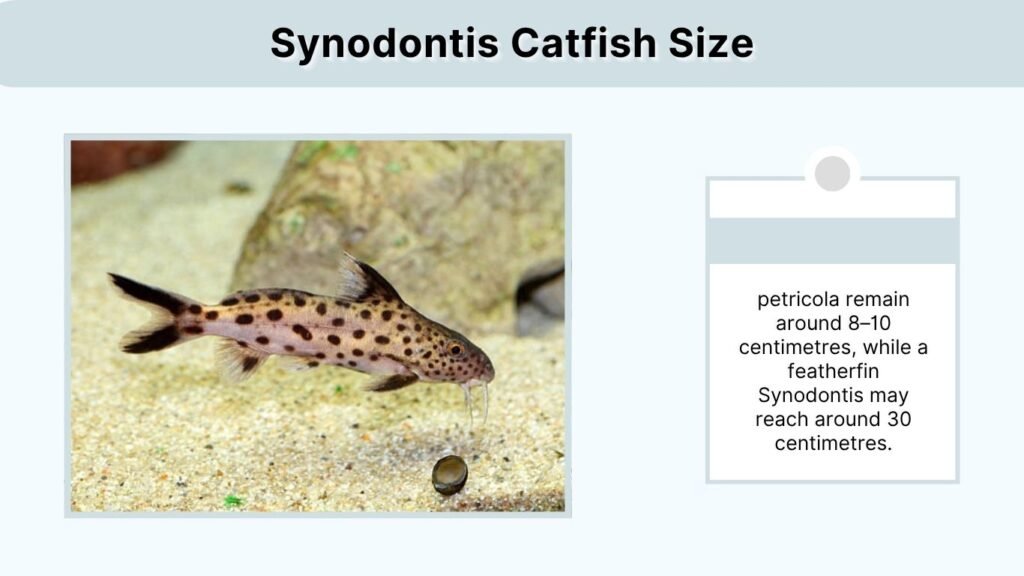
There is no single full-grown size for all Synodontis catfish. Small species such as S. lucipinnis and S. petricola remain around 8–10 centimetres, while a featherfin Synodontis may reach around 30 centimetres.
This difference makes correct identification extremely important. A juvenile featherfin may look suitable for a small aquarium at the store but eventually requires considerably more swimming room than a dwarf Tanganyikan species.
As a practical guideline:
- Small Synodontis species need enough floor space for a group and several caves.
- Medium-sized species need a spacious aquarium with open routes between shelters.
- Large featherfins require a substantially larger tank built around their adult size.
- Long tanks are generally more useful than tall tanks because these fish spend much of their time near the bottom.
Tank Setup and Water Conditions
A Synodontis aquarium should combine open foraging space with secure hiding areas. Rocks, smooth caves, driftwood and sturdy decorations help the fish feel protected during daylight hours.
Use smooth sand or rounded gravel that will not damage their barbels. Decorations must be stable because larger individuals can push beneath loose rocks or wood.
Temperature and pH
Water conditions depend on the species. There is no universal Synodontis water range.
Synodontis eupterus is associated with tropical water around 22–26°C and a pH of approximately 6.2–7.5. By contrast, Lake Tanganyika’s S. petricola is recorded from harder, more alkaline water around pH 8.0–9.0 and 22–25°C.
This difference means a featherfin should not automatically receive the same setup as a Tanganyikan Synodontis. Match the aquarium to the exact species and keep conditions stable rather than continually adjusting the pH.
Filtration and Maintenance
Synodontis catfish eat substantial meals and may produce considerable waste. Strong biological filtration and regular partial water changes help prevent the accumulation of ammonia, nitrite and excess nitrate.
Provide moderate water movement without creating a current so powerful that the fish cannot rest. Dim areas, caves and floating cover may encourage shy individuals to appear more frequently.
What Do Synodontis Catfish Eat?
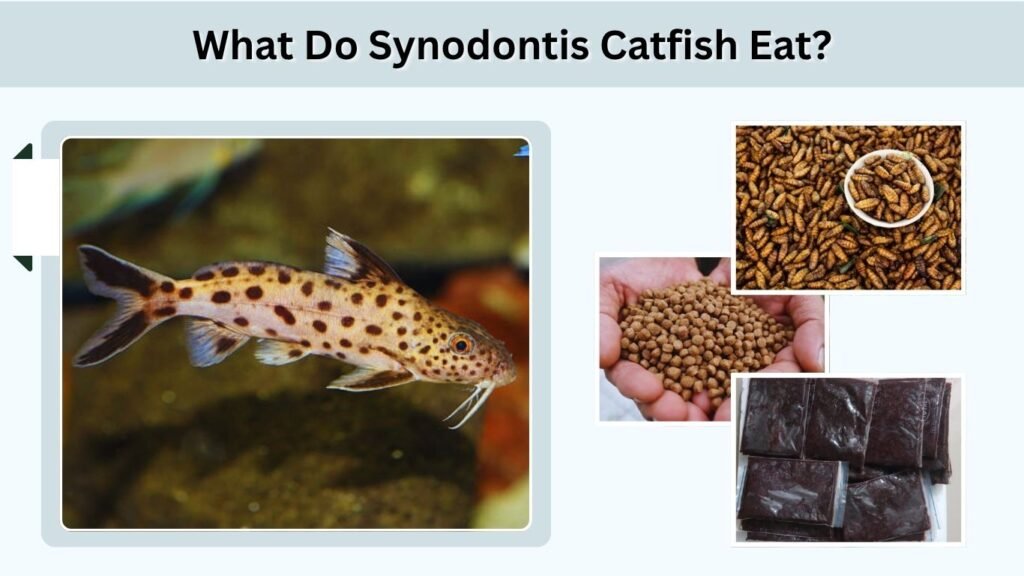
Most Synodontis are omnivorous and should receive both animal-based and plant-based foods. Their diet can include:
- Sinking catfish pellets
- Insect-based foods
- Frozen bloodworms
- Brine shrimp
- Mysis shrimp
- Chopped earthworms
- Spirulina-based wafers
- Blanched vegetables
The natural diet of S. eupterus includes mainly insect larvae as well as algae, demonstrating why a mixed diet is more appropriate than feeding only meat or only algae wafers.
Feed after the aquarium lights begin dimming, when many Synodontis become more active. Ensure food reaches the bottom instead of allowing faster surface-feeding fish to consume everything.
Do Synodontis Catfish Eat Algae?
Some species graze on algae, but they should not be purchased as dedicated algae cleaners. Algae may form only one part of a much broader diet. They still require complete sinking foods and appropriate protein sources.
Do They Eat Other Fish?
A Synodontis may eat eggs, fry or very small fish that fit into its mouth. Larger species create a greater risk for tiny tank mates. This is usually opportunistic feeding rather than active aggression, so companions should be too large to swallow.
Temperament and Tank Mates
Synodontis temperament varies by species, age and available space. Smaller Tanganyikan species are often kept socially, while some large Synodontis become more territorial around caves as they mature.
Suitable companions may include:
- African cichlids with compatible water requirements
- Medium-sized rainbowfish
- Robust barbs
- Peaceful cichlids too large to swallow
- Other compatible Synodontis
- Medium-sized African community fish
Avoid tiny fish, slow long-finned species and aggressive predators capable of injuring the catfish. Tank mates must share similar temperature, pH and hardness requirements.
Synodontis With African Cichlids
Tanganyikan species such as S. petricola, S. lucipinnis and S. multipunctatus are natural candidates for Lake Tanganyika cichlid aquariums because they originate from the same lake environment. S. petricola, for example, naturally inhabits rocky areas in hard, alkaline water.
However, not every African cichlid setup is identical. Lake Malawi, Lake Tanganyika and riverine African species may require different conditions and display different aggression levels.
How Many Should Be Kept Together?
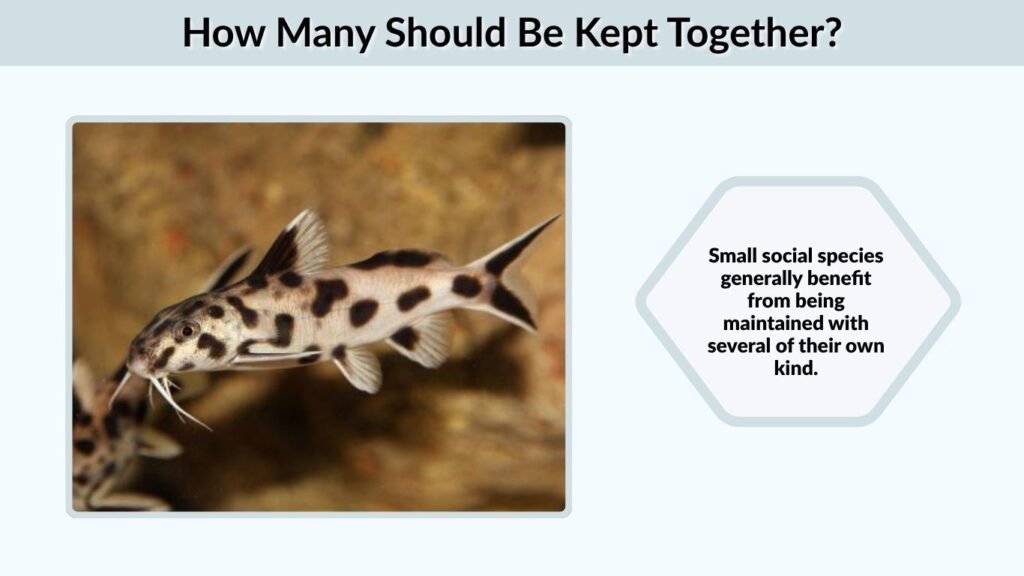
Small social species generally benefit from being maintained with several of their own kind when the aquarium provides enough room, caves and food. A group can encourage more natural activity and reduce excessive hiding.
Large or territorial species may require more individual space. Do not assume that every Synodontis should be kept in the same group size. Research the exact scientific name and monitor for chasing, damaged fins or one fish being excluded from shelter.
Synodontis Catfish Breeding
Most Synodontis are egg layers, but breeding behavior differs by species. FishBase describes both S. eupterus and S. petricola as oviparous fish that form distinct pairs during reproduction.
The cuckoo catfish is the major exception in aquarium discussions because of its brood-parasitic relationship with mouthbrooding cichlids. Breeding this species requires suitable hosts and careful planning rather than a standard spawning tank.
A swollen abdomen does not necessarily mean a Synodontis is “pregnant.” These fish lay eggs rather than giving birth to live young. Abdominal swelling can also result from heavy feeding, constipation, eggs or illness.
FAQs
Are Synodontis catfish aggressive?
Most are not relentless predators, but temperament varies. Larger adults may defend caves, chase bottom-dwelling fish or eat very small tank mates. Adequate space, multiple shelters and appropriately sized companions reduce conflict.
How big do Synodontis catfish get?
Adult size depends on the species. S. lucipinnis reaches about 7.9 centimetres, S. petricola about 10.2 centimetres and S. eupterus may reach approximately 30 centimetres. Correct identification is essential before choosing a tank.
How long do Synodontis catfish live?
Reliable maximum-age information is limited and differs among species. They should be treated as long-term aquarium pets rather than temporary additions. Stable water, suitable food and enough space greatly influence their survival.
Can Synodontis catfish live with cichlids?
Yes, certain species can live with compatible cichlids. Tanganyikan Synodontis are especially appropriate for Lake Tanganyika communities, but the fish must be large enough to avoid predation and have access to secure hiding places.
Do Synodontis catfish swim upside down?
Some species occasionally swim upside down while feeding beneath rocks, wood or other surfaces. This behavior can be normal and does not automatically indicate illness. Synodontis eupterus is among the species documented displaying upside-down behavior.