
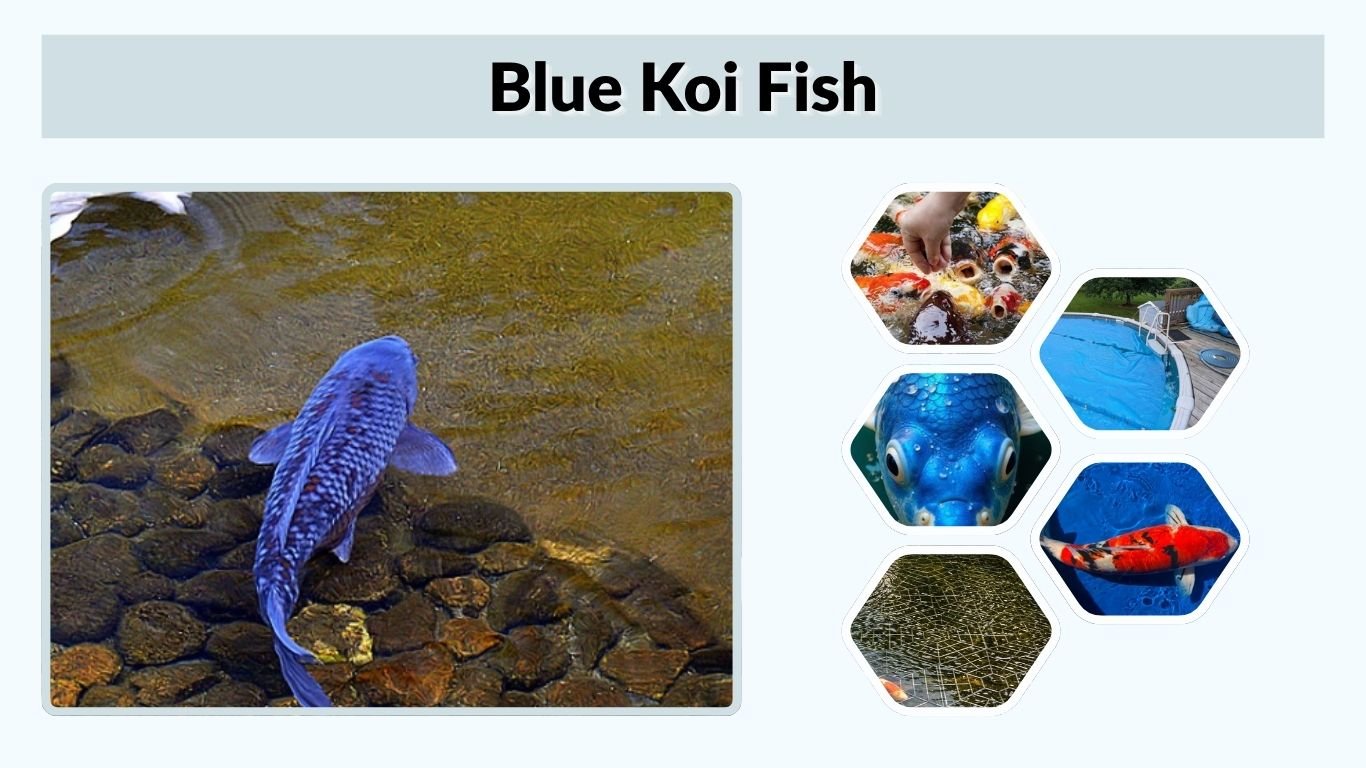
Blue koi fish are among the most eye-catching koi because true blue and blue-gray shades are less common than red, white, black, or yellow. Several Japanese koi varieties can display beautiful blue, slate, indigo, or bluish-gray coloration, especially Asagi and Shusui. Some butterfly koi may also show attractive blue tones combined with white, black, orange, or red. Understanding which blue koi are real, how rare they are, what they symbolize, and how to choose and care for them can help koi enthusiasts appreciate these unusual fish.
Are Blue Koi Fish Real?
Yes, blue koi fish are real, although most are not bright electric blue. Natural koi coloration tends to produce shades such as slate blue, steel blue, gray-blue, indigo, or bluish silver. Pictures showing intensely neon blue koi may sometimes be heavily edited or affected by lighting, water conditions, or camera processing.
What Makes a Koi Look Blue?
Blue coloration can result from the arrangement of pigment cells within the skin and scales. In varieties such as Asagi, dark pigment beneath pale scales creates a blue or bluish-gray appearance.
Several factors influence how blue a koi looks:
- Genetics
- Scale structure
- Skin quality
- Age
- Water clarity
- Lighting
- Background color
- Overall health
- Bloodline
Young koi may also change in appearance as they mature, so the final shade can differ from what is visible in a small juvenile.
Are Blue Koi Rare?
Blue koi are less common than many traditional red-and-white varieties, particularly when the fish displays clean, attractive, and stable blue coloration.
However, not every blue-looking koi is extremely rare or valuable. Price and rarity depend on the variety, bloodline, body shape, pattern, skin quality, size, and overall condition.
A well-bred blue koi with balanced markings can be significantly more valuable than an ordinary pond-grade fish.
Types of Blue Koi Fish
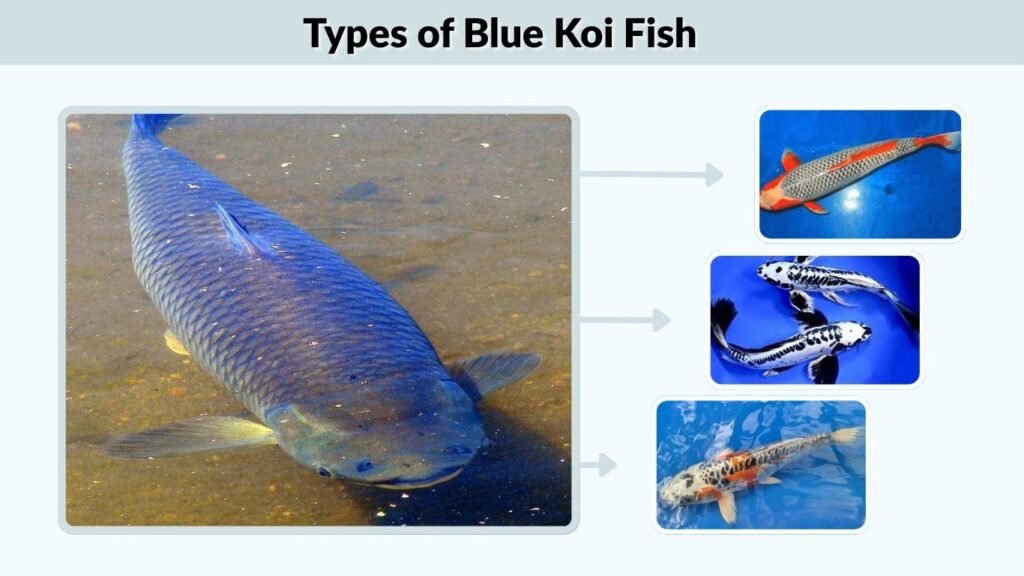
Several koi varieties can display blue coloration. Some are recognized Japanese varieties with established patterns, while others may simply be selectively bred ornamental koi showing blue-gray shades. Knowing the variety is important when evaluating a fish for appearance, breeding, or purchase.
Asagi Koi
The Asagi koi is probably the best-known traditional blue koi.
Asagi typically has a blue or bluish-gray net-like pattern over the back. Red or orange coloration appears along the sides, belly, cheeks, and sometimes the fins.
A high-quality Asagi generally shows:
- Even blue scales
- Clean net-like pattern
- Clear head
- Balanced red coloration
- Strong body shape
- Symmetrical appearance
Asagi is considered one of the oldest established koi varieties.
Shusui Koi
The Shusui koi developed from Asagi but has very few scales because it belongs to the Doitsu, or scaleless, group.
Its smooth blue or gray-blue body usually has a line of darker scales running along the back.
Common features include:
- Blue or pale gray body
- Dark dorsal scales
- Red or orange markings
- Smooth, largely scaleless skin
- Strong contrast between colors
A blue Shusui can be especially striking when the dorsal scale pattern is clean and symmetrical.
Blue Butterfly Koi
Blue butterfly koi are popular because their long flowing fins make blue and silver tones even more dramatic.
Butterfly koi may appear:
- Blue and white
- Blue and black
- Blue and orange
- Blue and yellow
- Blue-gray and silver
Their long fins distinguish them from traditional short-finned koi.
Blue and White Koi Fish
Blue and white koi can create a calm, elegant appearance in a pond. Depending on genetics, the blue may appear as a true slate-blue tone or as dark pigment seen through pale skin.
Blue and White Color Patterns
Desirable blue-and-white koi often have:
- Clean white areas
- Clearly defined blue sections
- Minimal muddy coloration
- Balanced pattern distribution
- Healthy, reflective skin
The contrast becomes especially noticeable in clear water and against a dark pond background.
Blue and White Koi Meaning
Blue and white koi are often associated symbolically with peace, calmness, harmony, loyalty, and personal growth.
Symbolic interpretations are cultural and personal rather than biological characteristics of the fish. Many people choose blue koi artwork or tattoos because the color blue creates a peaceful and spiritual impression.
Blue and Orange Koi Fish
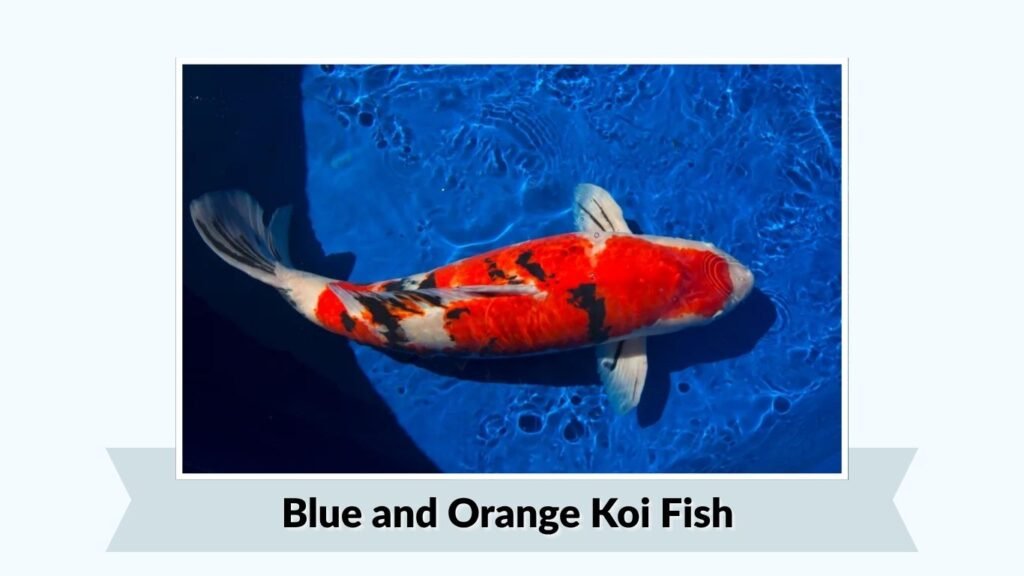
Blue and orange are a natural combination seen prominently in Asagi and Shusui. The cool blue upper body contrasts with warm red-orange markings along the lower body.
Why Blue and Orange Koi Are Popular
This combination is attractive because it offers:
- Strong color contrast
- Traditional Japanese appearance
- Easy visibility in ponds
- Changing visual effect as the fish swims
- Distinctive scale patterns
In quality Asagi, the red coloration should complement rather than overwhelm the blue net pattern.
Black and Blue Koi Fish
Some koi appear dark blue or blue-black, particularly under certain lighting. Black pigment can combine visually with bluish-gray skin to produce a deep indigo effect.
What to Look for
When choosing a black and blue koi, consider:
- Clear separation between dark and light areas
- Healthy skin without dull patches
- Balanced body shape
- Even scale alignment
- Strong fins
- Active swimming
Very dark koi can appear almost black in shaded water but show blue-gray highlights under bright natural light.
Blue Koi Fish Size and Lifespan
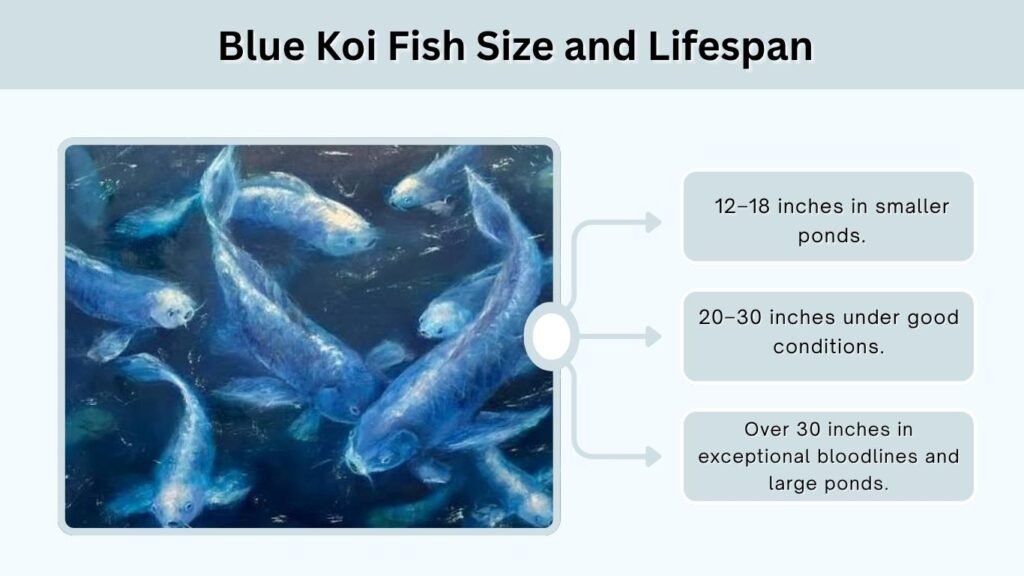
Blue koi varieties generally grow in the same way as other koi. Their final size depends more on genetics, diet, pond dimensions, water quality, and husbandry than on coloration.
How Big Do Blue Koi Get?
Many koi can grow approximately:
- 12–18 inches in smaller ponds
- 20–30 inches under good conditions
- Over 30 inches in exceptional bloodlines and large ponds
High-quality Japanese koi are often bred for strong body development and may become impressive adults when given adequate space.
How Long Do Blue Koi Live?
Well-cared-for koi can live for several decades.
Their longevity depends heavily on:
- Stable water quality
- Proper filtration
- Balanced nutrition
- Adequate pond space
- Disease prevention
- Protection from predators
- Appropriate seasonal care
Color does not significantly determine lifespan.
Blue Koi Fish Care
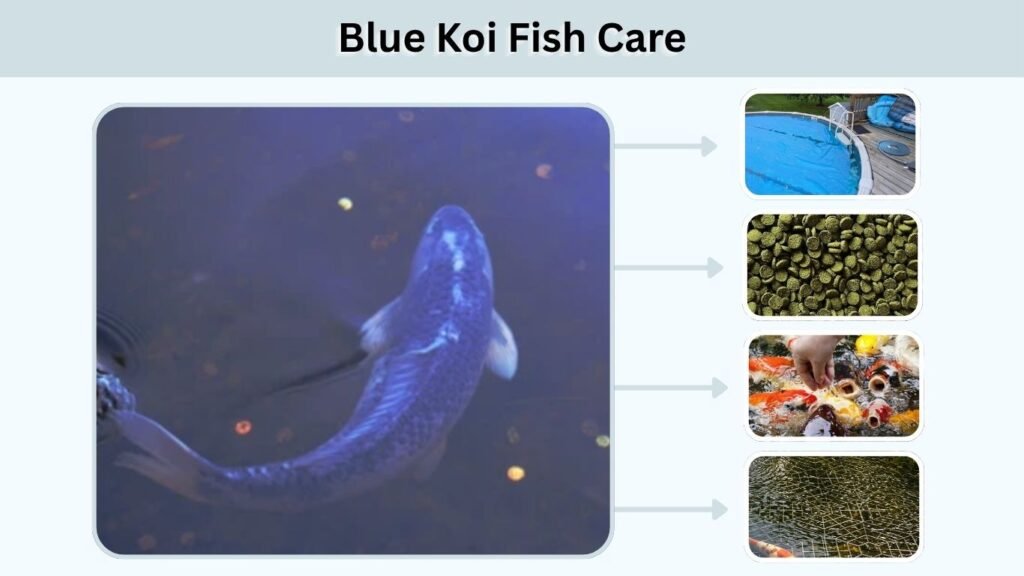
Blue koi require the same essential care as other koi varieties. A clean, properly filtered pond with adequate oxygen and stable water parameters is far more important than trying to enhance coloration with unusual treatments.
Pond Requirements
A suitable koi pond should provide:
- Strong biological filtration
- Good water circulation
- Adequate aeration
- Stable water quality
- Sufficient swimming depth
- Protection from predators
- Regular water testing
- Space for adult growth
Overcrowding should be avoided because poor water quality can quickly affect koi health.
Blue Koi Diet
Feed a balanced food specifically formulated for koi.
Useful nutritional components include:
- Quality protein
- Healthy fats
- Vitamins
- Minerals
- Easily digestible carbohydrates
- Natural color-supporting ingredients
Avoid excessive feeding. Uneaten food decomposes and can increase ammonia and other water-quality problems.
Blue Herons and Koi Fish
Blue herons are important predators of outdoor pond fish. A heron may stand at the pond edge and quickly capture koi, particularly in shallow areas.
Protecting Blue Koi From Herons
Consider using:
- Deeper pond areas
- Pond netting
- Fishing-line barriers
- Covered hiding areas
- Plants providing shelter
- Motion-activated deterrents
- Steep pond edges
Valuable or rare blue koi deserve particularly strong predator protection.
Blue Koi Fish Meaning and Symbolism
Koi have a long association with perseverance, strength, transformation, and success. Blue koi specifically are often interpreted as symbols of peace, calmness, masculinity, loyalty, or personal development.
What Does a Blue Koi Fish Represent?
Common symbolic meanings include:
- Peace and tranquility
- Strength during difficult times
- Personal growth
- Loyalty
- Confidence
- Wisdom
- Emotional balance
- Determination
The exact interpretation can vary greatly depending on culture and personal belief.
Blue Koi Fish Tattoo Meaning
Blue koi tattoos are popular because koi imagery combines strong symbolism with flowing shapes that work well in body art. Direction, accompanying colors, flowers, waves, and other elements can change the intended meaning.
Popular Blue Koi Tattoo Combinations
Common designs include:
- Blue and black koi
- Blue and red koi
- Blue and white koi
- Blue and orange koi
- Blue koi with lotus flowers
- Blue koi swimming through waves
- Two koi arranged in a circular pattern
A blue koi swimming upstream is often interpreted as persistence or overcoming challenges, while other designs may represent peace, family, balance, or transformation.
Blue Koi Fish Price and Buying Tips
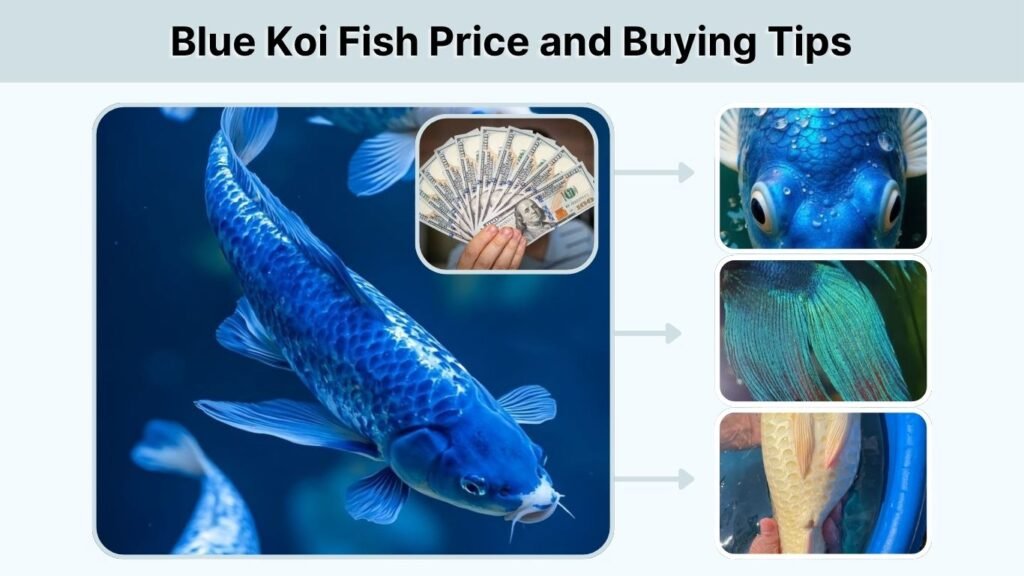
Blue koi prices vary dramatically. Pond-grade juveniles can be relatively affordable, while exceptional Japanese koi from recognized breeders may cost hundreds or thousands of dollars. Truly elite show-quality koi can reach much higher prices.
What Determines Blue Koi Price?
Major price factors include:
- Variety
- Breeder
- Bloodline
- Size
- Age
- Sex
- Body shape
- Skin quality
- Pattern
- Color stability
- Show potential
Claims about a “million-dollar rare blue koi” should be treated cautiously. Extremely expensive koi exist, but price depends on exceptional individual quality and pedigree rather than simply being blue.
Buying Blue Koi for Sale
Before purchasing, check:
- Whether the seller identifies the variety
- Fish activity and swimming behavior
- Body symmetry
- Clear eyes
- Healthy fins
- Absence of visible sores or parasites
- Quarantine procedures
- Breeder or farm reputation
- Shipping conditions for live fish
New koi should ideally be quarantined before introduction to an established pond.
FAQs
Are there real blue koi fish?
Yes. Several genuine koi varieties can show blue or blue-gray coloration, especially Asagi and Shusui. Naturally occurring blue is usually more slate, steel, or indigo than bright electric blue.
What is the rarest blue koi fish?
There is no single variety universally classified as the rarest blue koi. Exceptional Asagi, Shusui, and other blue-toned koi can be rare when they combine outstanding coloration, pattern, body shape, and pedigree.
How much does a blue koi fish cost?
Prices vary from relatively inexpensive pond-grade juveniles to hundreds or thousands of dollars for high-quality Japanese specimens. Size, bloodline, variety, and pattern strongly influence cost.
What does a blue koi fish symbolize?
Blue koi commonly symbolize peace, loyalty, strength, tranquility, wisdom, and personal development. Tattoo interpretations may differ depending on the design.
Can blue koi live with other koi?
Yes. Blue koi can live peacefully with other koi varieties when the pond provides enough space, proper filtration, suitable water quality, and adequate food.