
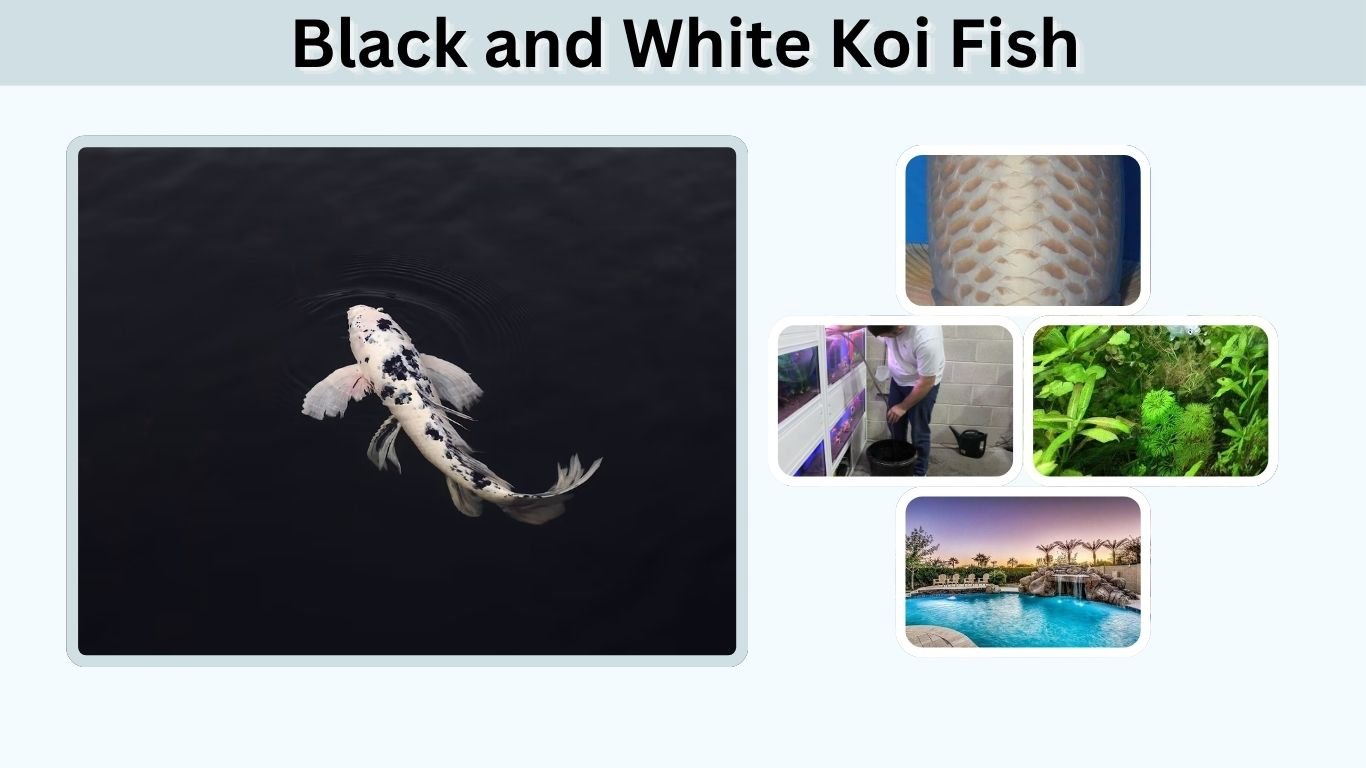
Black and white koi fish are among the most striking koi varieties, combining deep black markings with bright white scales in unique patterns. These Japanese ornamental carp are popular among pond keepers because every fish develops a slightly different appearance. Some varieties display bold black bands, while others have scattered spots or changing patterns. Beyond their beauty, black and white koi are sometimes associated with balance, perseverance, and transformation. Understanding their varieties, coloration, size, care requirements, and symbolism can help you appreciate these distinctive koi.
What Is a Black and White Koi Fish?
Black and white koi are ornamental carp selectively bred to display contrasting black and white coloration. Several recognized koi varieties can produce this appearance, so “black and white koi” does not refer to only one breed.
The exact pattern, body shape, and distribution of color help determine which variety a fish belongs to.
Common Black and White Koi Varieties
Some of the best-known black and white koi include:
- Shiro Utsuri: White-bodied koi with large black markings wrapping around the body.
- Shiro Bekko: White koi with smaller black spots primarily along the upper body.
- Kumonryu: A scaleless or mostly scaleless koi famous for dramatic black-and-white patterns that may change over time.
- Kikokuryu: A metallic koi that often combines silver-white coloration with dark black markings.
- Doitsu varieties: Some scaleless koi can also display attractive combinations of black and white.
Among these, Shiro Utsuri is probably the variety most people picture when they think of a traditional Japanese black and white koi.
What Does a Black and White Koi Look Like?
A high-quality black and white koi usually has strong contrast between its two colors. The white areas should appear clean and bright, while the black markings should look deep and defined.
Patterns vary considerably. Some koi have large black bands crossing the back, while others display irregular patches or smaller markings.
The fins may also contain black pigmentation depending on the variety.
Shiro Utsuri vs Shiro Bekko
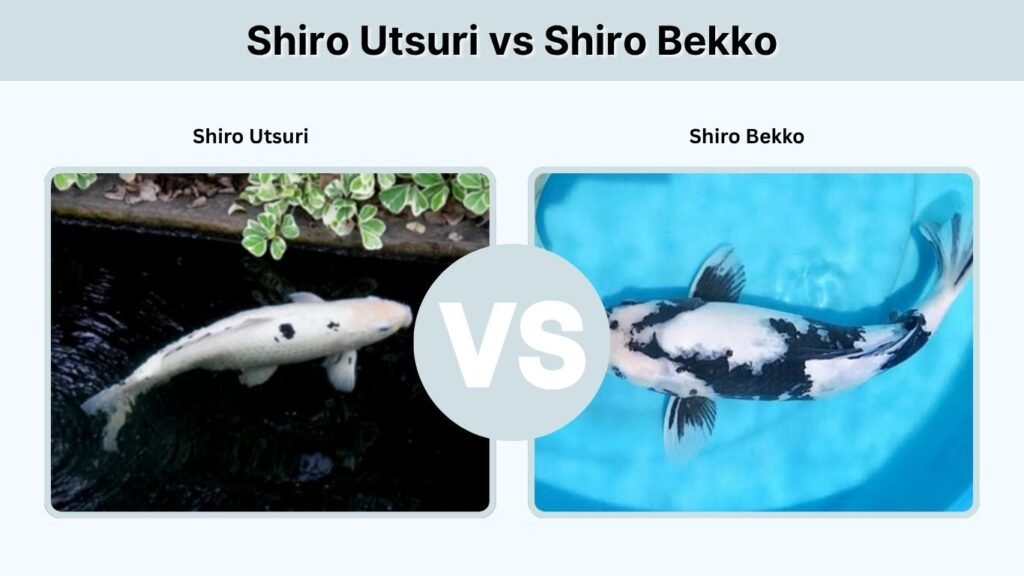
Shiro Utsuri and Shiro Bekko can appear similar to beginners because both feature black and white coloration. However, their pattern arrangement is noticeably different once you know what to look for.
Shiro Utsuri belongs to the Utsurimono group, while Shiro Bekko belongs to the Bekko group.
Shiro Utsuri
Shiro Utsuri typically has:
- Large black markings
- Black coloration that may wrap around the body
- Black patterns extending below the lateral line
- Black markings around or near the head
- Strong contrast between black and white
Its appearance is usually bold and dramatic.
Shiro Bekko
Shiro Bekko generally has a white base with smaller black spots positioned over the body.
Unlike Shiro Utsuri, the black markings typically do not wrap extensively around the koi’s body. The head should also generally remain white without prominent black markings.
This gives Shiro Bekko a lighter and more spotted appearance.
Why Do Black and White Koi Change Color?
Koi coloration is influenced by genetics, age, water conditions, nutrition, temperature, and overall health. Some black pigmentation may become stronger or weaker as the fish matures.
Certain varieties, especially Kumonryu, are particularly famous for changing patterns throughout their lives.
Genetics and Age
Young koi do not always show the exact pattern they will have as adults.
Black pigmentation known as sumi may appear, disappear, or deepen as the fish matures. A young koi with relatively light markings can sometimes develop much darker patterns later.
This is one reason experienced koi keepers often evaluate not only current coloration but also the fish’s genetic background and development potential.
Water Quality and Environment
Poor water quality can make koi appear dull or stressed. Maintaining stable conditions allows their natural coloration to look its best.
Important conditions include:
- Zero ammonia
- Zero nitrite
- Controlled nitrate levels
- Stable pH
- Good oxygen levels
- Clean, well-filtered water
Water chemistry can also influence how certain pigments appear.
Diet and Nutrition
Good nutrition supports healthy skin and coloration.
Quality koi foods usually contain balanced proteins, fats, vitamins, and minerals. Some foods also include natural ingredients intended to support color development.
However, food cannot completely change a koi’s genetic pattern. Genetics remain the primary factor determining whether the fish develops strong black and white coloration.
How Big Do Black and White Koi Fish Get?
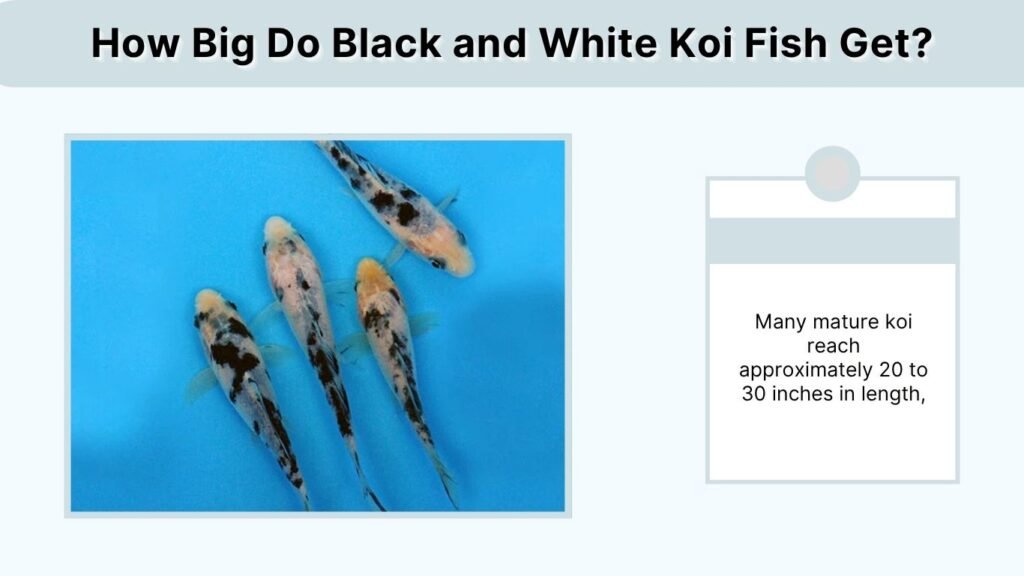
Black and white koi grow similarly to other varieties of common koi. Their final size depends on genetics, food, water quality, stocking density, and available space.
Healthy koi provided with excellent conditions can become surprisingly large.
Typical Adult Size
Many mature koi reach approximately 20 to 30 inches in length, although some can become even larger.
Growth is normally fastest during the first several years of life. Large ponds with excellent filtration, adequate oxygen, and nutritious food tend to support better growth than small, overcrowded environments.
Koi should never be intentionally kept in a tiny tank in an attempt to restrict their size.
How to Care for Black and White Koi Fish
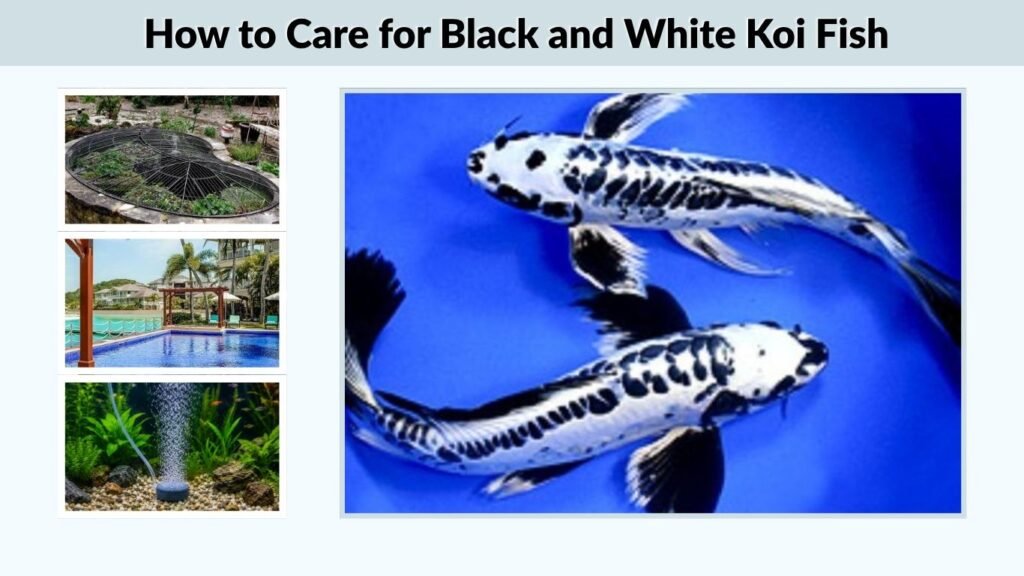
Black and white koi do not require fundamentally different care from other koi varieties. They need clean water, strong filtration, plenty of oxygen, sufficient swimming space, and an appropriate diet.
Because koi produce a considerable amount of waste, maintaining water quality is particularly important.
Pond Requirements
A good koi environment should provide:
- Plenty of swimming space
- Strong biological filtration
- Mechanical filtration
- Good water circulation
- Adequate aeration
- Stable water parameters
- Protection from predators
- Shaded areas during hot weather
A properly designed pond is generally preferable to a standard aquarium for adult koi.
Feeding
Feed black and white koi a high-quality koi pellet appropriate for their size and the water temperature.
You can occasionally supplement their diet with suitable foods such as leafy vegetables, peas, watermelon, shrimp, or other koi-safe treats.
Feed only what the fish can consume within a few minutes. Excess food sinks into the pond, decomposes, and can increase ammonia and other waste.
Tank or Pond?
Juvenile black and white koi can temporarily live in large indoor tanks, but adult koi are usually much better suited to ponds.
Koi are active swimmers and can become more than two feet long. An ordinary home aquarium rarely provides sufficient room once they mature.
Black, White, and Orange Koi Fish
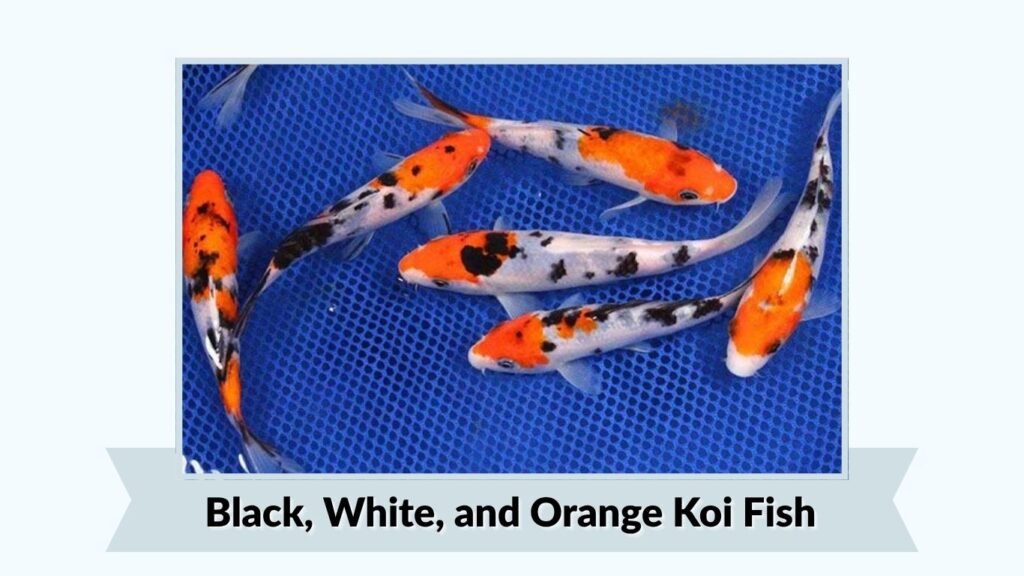
Not every koi with black and white markings belongs to a purely two-colored variety. Many popular koi combine black, white, red, or orange coloration.
Two famous examples are Showa and Sanke.
Showa Koi
Showa koi commonly display black, white, and red or orange patterns.
Black is an important part of the fish’s appearance and can occur prominently on the head and body. Large black patterns may wrap around the body, creating a bold appearance similar in some ways to Shiro Utsuri.
Sanke Koi
Sanke also combines white, red, and black, but typically has a predominantly white body with red patches and smaller black markings.
Traditionally, strong black markings are less prominent on the head than they are with Showa.
Black and White Koi Fish Meaning
Koi have long been associated with determination, perseverance, success, and strength because of their ability to swim strongly against currents.
Black and white koi are also commonly interpreted as representing balance because of their contrasting colors.
Symbolism of the Colors
In modern art and symbolism, the colors are sometimes interpreted as:
- Black: Strength, overcoming difficulty, or transformation
- White: Purity, peace, or new beginnings
- Black and white together: Balance, harmony, and opposing forces
These interpretations can vary by culture and individual belief. There is no single universal meaning assigned to every black and white koi.
Yin Yang Koi Fish
Two koi arranged in a circular pattern are frequently used to represent yin and yang.
One dark and one light koi swimming together can symbolize balance between opposing but complementary forces. This imagery has become especially popular in artwork, jewelry, and tattoos.
Choosing a Healthy Black and White Koi
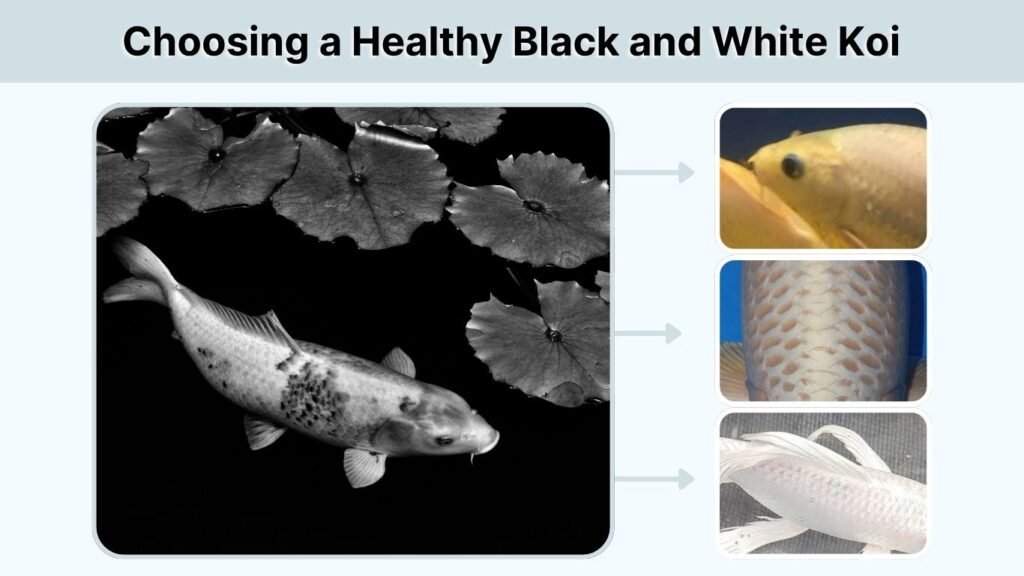
Color pattern is important when selecting ornamental koi, but health should always come first. A beautiful pattern has little value if the fish is weak or unhealthy.
Observe a koi carefully before buying it.
Signs of a Healthy Koi
Look for:
- Active, balanced swimming
- Clear eyes
- Smooth scales and skin
- Intact fins
- Regular breathing
- Strong appetite
- No open wounds or ulcers
- No unusual lumps
- No persistent flashing or rubbing
A healthy koi should respond normally to its surroundings and swim comfortably with other fish.
FAQs
What Is a Black and White Koi Fish Called?
Several koi varieties are black and white. Shiro Utsuri is one of the most famous, while Shiro Bekko, Kumonryu, and some Kikokuryu can also display black and white patterns.
Are Black and White Koi Rare?
Some black and white koi are widely available, but exceptionally high-quality specimens with excellent body shape, skin quality, and balanced patterns can be valuable and difficult to find.
Why Is My Black and White Koi Turning More Black?
Black pigmentation may develop as koi mature. Genetics, age, water conditions, temperature, and seasonal changes can all influence the appearance of black coloration.
What Does a Black and White Koi Symbolize?
Black and white koi are commonly associated with balance, perseverance, harmony, transformation, and overcoming challenges, although symbolic interpretations differ between cultures and individuals.
Can Black and White Koi Live in a Fish Tank?
Young koi can temporarily live in a sufficiently large, filtered aquarium, but adult koi usually need a spacious pond or purpose-built indoor koi system because of their large size and high waste production.