
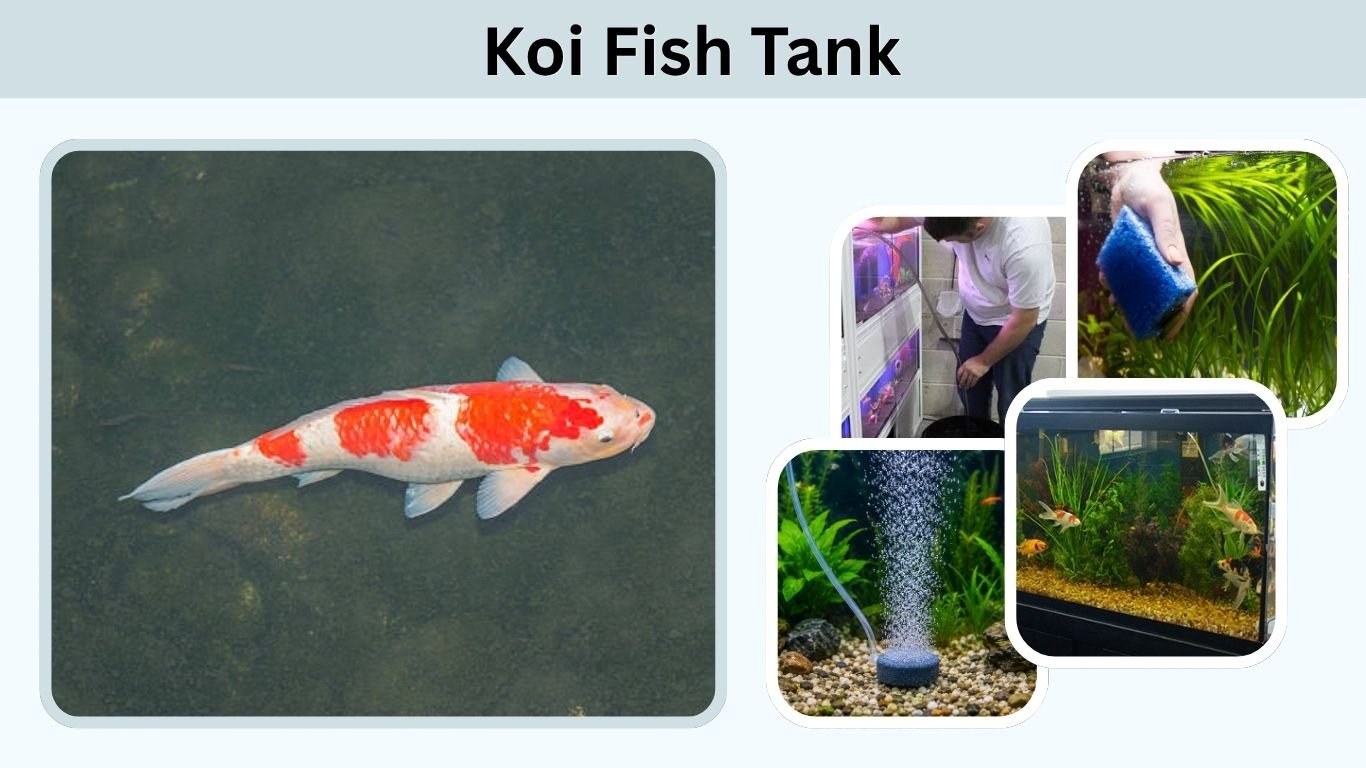
Koi fish are famous for their bright colors, graceful swimming, and long lifespans. Although they are traditionally raised in outdoor ponds, young koi can sometimes live in a properly designed indoor koi fish tank. The challenge is that koi grow quickly, produce considerable waste, and require much more space than typical aquarium fish. Choosing the correct tank size, filtration system, water conditions, and tank mates is therefore essential. This guide explains how to set up and care for koi fish in a tank while keeping them healthy and comfortable.
Can Koi Fish Live in a Tank?
Koi fish can live in a tank, particularly when they are young, but a normal home aquarium is rarely suitable for an adult koi. These carp are active swimmers and can eventually become very large. A tank is therefore best used for juveniles, temporary housing, quarantine, breeding, or situations where an exceptionally large indoor system is available.
How Long Can Koi Live in a Fish Tank?
With excellent water quality, sufficient swimming space, proper nutrition, and strong filtration, koi can live for many years. However, keeping a mature koi permanently in an undersized aquarium can cause chronic stress and poor water quality.
A spacious pond generally provides better long-term conditions because it offers greater water volume and swimming room.
Do Koi Grow to the Size of Their Tank?
No. Koi do not safely stop growing simply because their tank is small.
Restricted conditions may slow growth, but this is often associated with poor water quality, inadequate nutrition, or chronic stress rather than healthy size control. Depending on genetics and care, many koi can eventually reach around 20–30 inches or more.
Therefore, owners should plan for the koi’s adult size rather than buying a tank based only on its current size.
What Size Tank Do Koi Fish Need?
Tank size is one of the most important considerations when keeping koi indoors. These fish need substantial swimming space, oxygen, and water volume to dilute their waste.
Small aquariums may temporarily accommodate juvenile koi, but they quickly become inadequate as the fish grows.
Minimum Koi Fish Tank Size
There is no single perfect tank size because requirements depend on the number, age, and size of the koi. However:
- Very small juvenile koi may temporarily stay in a large aquarium.
- Larger juveniles require significantly more water volume.
- Multiple koi need considerably more space than one fish.
- Adult koi generally belong in a large pond or purpose-built indoor tank.
- Long, wide tanks are usually more useful than tall, narrow aquariums.
A tank of only 5 or 10 gallons is unsuitable for koi except for extremely brief emergency situations.
Can a Koi Fish Live in a 20-Gallon Tank?
A 20-gallon tank is also too small for permanent koi housing. A tiny juvenile might fit physically, but waste can accumulate quickly and swimming space becomes restricted.
If a young koi is being raised indoors before moving to a pond, it is better to start with the largest practical tank rather than repeatedly upgrading small aquariums.
Butterfly Koi Tank Size
Butterfly koi have long, flowing fins and require plenty of open swimming space. Their bodies can grow similarly to standard koi, so they should not be treated as small aquarium varieties.
Large indoor holding systems or ponds are much more appropriate as butterfly koi mature.
How to Set Up a Koi Fish Tank
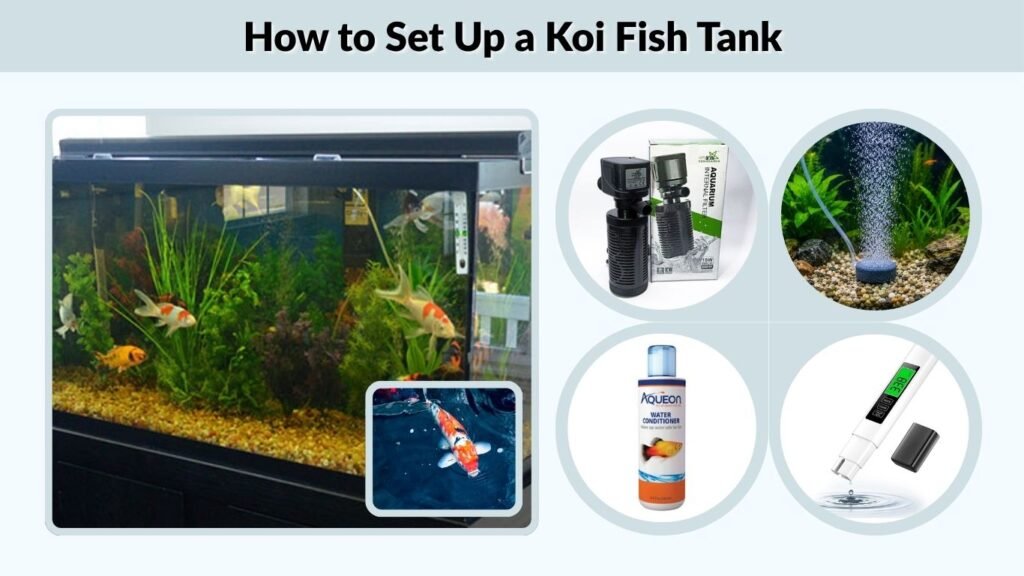
Setting up a koi tank involves more than filling an aquarium with water. Because koi produce considerable waste, the system must provide strong biological filtration, good oxygenation, stable water parameters, and enough swimming room.
The aquarium should also be fully cycled before koi are introduced whenever possible.
What to Put in a Koi Fish Tank
A basic koi tank setup should include:
- Powerful mechanical and biological filtration
- Air pump and air stones for extra oxygen
- Water conditioner for tap water
- Thermometer
- Water-testing kit
- Smooth substrate or bare bottom
- Secure tank cover where appropriate
- Enough open swimming space
Avoid sharp rocks or decorations that could injure koi while they swim.
Best Filter for a Koi Fish Tank
Filtration is especially important because koi are heavy waste producers.
A good filter should remove solid debris while providing plenty of surface area for beneficial bacteria. These bacteria convert toxic ammonia into nitrite and then into less harmful nitrate.
Many keepers use oversized filters because a system rated exactly for the aquarium’s volume may struggle with a heavily stocked koi tank.
Do Koi Fish Need a Heater?
Koi are cold-water fish and generally do not require the warm temperatures used for tropical aquariums.
Indoor temperatures are often sufficient as long as sudden fluctuations are avoided. A heater may occasionally be useful when maintaining stable temperatures for young, sick, or quarantined koi, but overheating the water should be avoided because warmer water contains less dissolved oxygen.
How to Care for Koi Fish in a Tank
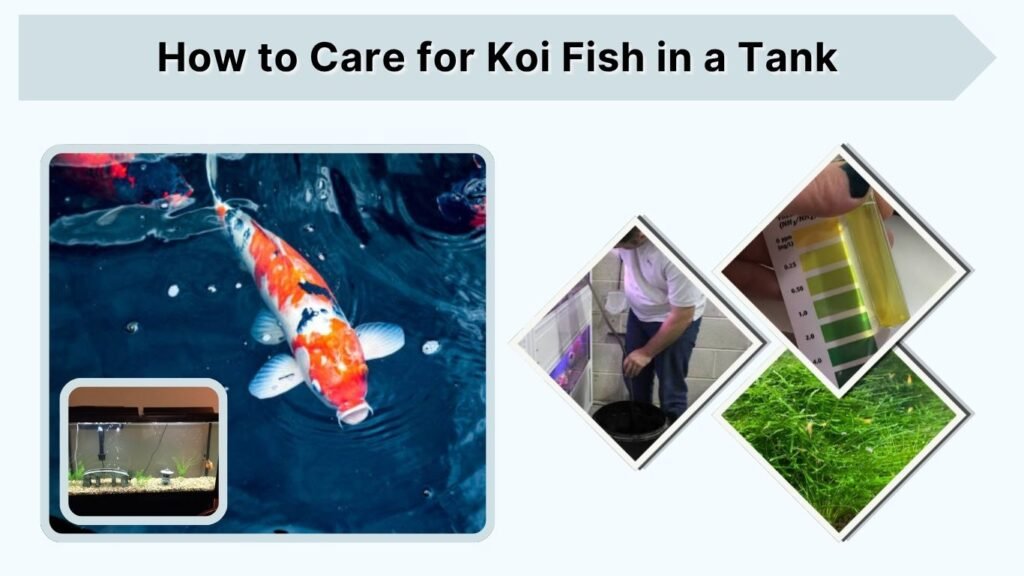
Successful koi fish tank care primarily depends on maintaining clean, oxygen-rich water. Waste accumulates much faster in an aquarium than in a large pond, so regular maintenance becomes especially important.
Testing water frequently helps identify problems before they seriously affect the fish.
Maintain Healthy Water Conditions
Important aspects of koi tank maintenance include:
- Keep ammonia at 0 ppm.
- Keep nitrite at 0 ppm.
- Maintain stable pH.
- Control nitrate through water changes.
- Remove uneaten food and waste.
- Provide strong aeration.
- Perform regular partial water changes.
Never replace all the aquarium water unnecessarily because sudden changes in water chemistry can stress the fish.
How Often Should You Feed Koi?
Young koi may be fed small portions several times per day when water temperatures and conditions are appropriate. Adult koi generally need less frequent feeding.
Offer only as much food as the fish can consume within a few minutes. Overfeeding creates unnecessary waste and can quickly reduce water quality in an indoor tank.
Use a high-quality koi pellet as the main food and supplement it occasionally with suitable vegetables or other koi-safe foods.
Why Is My Koi Sitting at the Bottom of the Tank?
Koi occasionally resting near the bottom is not necessarily a problem. However, persistent bottom sitting may indicate stress.
Possible causes include:
- Poor water quality
- High ammonia or nitrite
- Low oxygen
- Sudden temperature changes
- Illness or parasites
- Recent transportation
- Overcrowding
Check water parameters first whenever a koi suddenly becomes inactive.
Best Tank Mates for Koi Fish
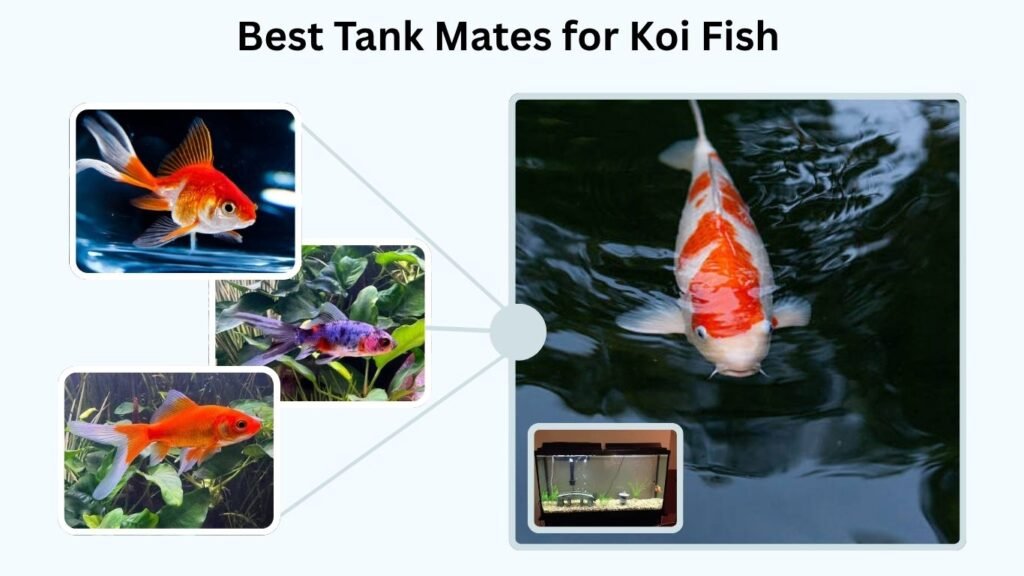
Koi are generally peaceful, but choosing tank mates can be difficult because koi grow large and require cool, highly oxygenated water. Small fish may eventually be swallowed, while tropical species may need temperatures that do not suit koi.
Tank size must also be considered before adding additional fish.
Fish That Can Live With Koi
Depending on the size of the system and local conditions, possible companions may include:
- Other koi of similar size
- Goldfish
- Shubunkins
- Comet goldfish
- Certain compatible cold-water species
Goldfish are among the most commonly considered companions because their environmental requirements are relatively similar.
Even compatible fish should not be added if doing so would overcrowd the aquarium.
Can Koi Live in a Community Tank?
A conventional community aquarium is generally not ideal for koi. Typical community tanks contain smaller tropical species and operate at warmer temperatures.
Koi may accidentally eat small fish as they grow, and their large size and heavy waste production can overwhelm aquarium filtration.
A dedicated koi system is usually a safer choice.
Indoor Koi Fish Tank vs Outdoor Pond
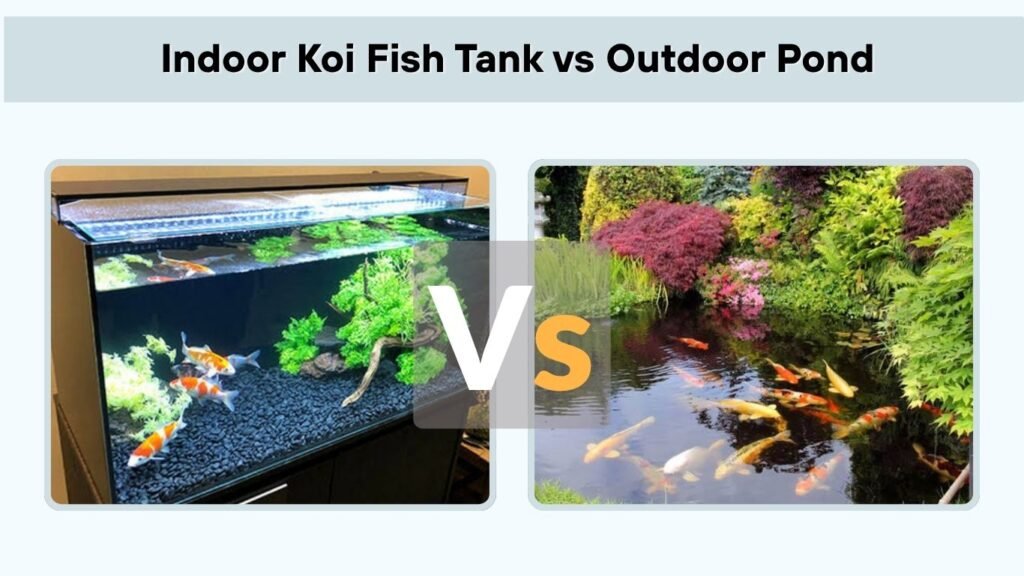
An indoor koi fish tank can provide excellent viewing opportunities and makes it easier to observe feeding, behavior, and health. It can also be useful for growing juveniles or protecting sick fish.
However, ponds are usually better for mature koi because they provide vastly more swimming space and water volume.
When an Indoor Tank Works Best
Indoor koi tanks are particularly useful for:
- Raising juvenile koi
- Quarantining new fish
- Treating sick or injured koi
- Temporary winter housing
- Breeding projects
- Holding koi before pond introduction
If you intend to keep koi indoors permanently, consider a purpose-built large tank rather than a standard glass aquarium.
Koi Fish Quarantine and Breeding Tanks
Separate tanks can be extremely useful for experienced koi keepers. A quarantine tank prevents newly purchased fish from immediately introducing diseases or parasites into an established collection.
Breeding tanks provide better control over spawning and early fry development.
Koi Quarantine Tank
A quarantine system should contain excellent filtration and aeration while remaining easy to clean. Decorations are generally unnecessary.
Observe new koi carefully before introducing them to established fish. Watch for abnormal swimming, sores, damaged fins, flashing, appetite loss, or unusual breathing.
Koi Fish Breeding Tank
Koi can breed in large tanks, although spacious ponds are often easier for natural spawning.
Breeding systems typically require:
- Mature male and female koi
- Clean, oxygenated water
- Sufficient swimming room
- Spawning brushes or suitable spawning material
- Separate space for eggs and fry
Adult koi may eat eggs, making separation important after spawning.
FAQs
Can You Keep Koi Fish in a Fish Tank?
Yes. Young koi can be kept in a sufficiently large, well-filtered tank, but mature koi usually require a pond or very large purpose-built indoor system.
How Big Do Koi Fish Get in a Tank?
Koi commonly grow well beyond typical aquarium-fish sizes and may reach around 20–30 inches or more depending on genetics and care. A small tank should never be used to intentionally restrict growth.
Can Koi Live in a 10-Gallon Tank?
No, a 10-gallon aquarium does not provide enough long-term swimming space or water volume for koi. Even juvenile koi can quickly outgrow it.
What Is the Best Tank for Koi Fish?
The best tank is a long, wide, high-volume system with strong biological filtration, mechanical filtration, excellent aeration, and plenty of open swimming space.
Can Koi Fish Live Indoors Permanently?
Yes, but only when provided with a very large indoor koi tank capable of supporting their adult size and waste production. For most keepers, an outdoor pond remains the more practical permanent home.