
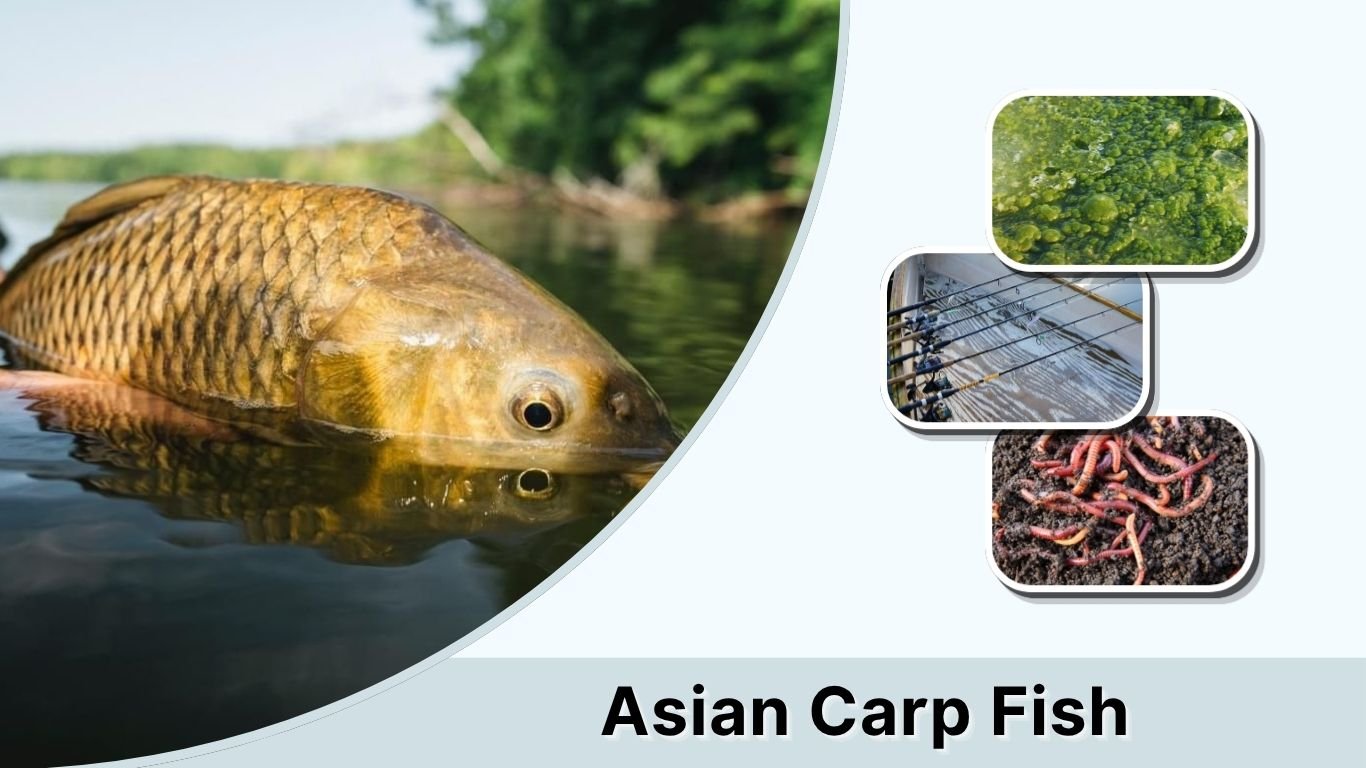
Asian carp fish are large freshwater fish known for fast growth, strong feeding habits, and their ability to establish substantial populations outside their native range. In the United States, the term “Asian carp” is commonly associated with bighead, silver, grass, and black carp. Some are famous for jumping from the water, while others are important food fish in many parts of Asia. This guide covers Asian carp identification, major species, diet, size, fishing methods, edibility, and their impact on freshwater ecosystems.
What Is an Asian Carp Fish?
Asian carp is a broad name used for several carp species native primarily to Asia. These fish were introduced to other countries for aquaculture, vegetation control, and water-management purposes. Some later escaped into natural waterways and established wild populations.
Asian carp are freshwater fish and can occur in rivers, reservoirs, lakes, backwaters, and connected waterways. Their appearance, feeding habits, and behavior vary depending on the species.
Asian Carp Identification
Common characteristics differ by species, but Asian carp can often be identified by:
- Large, elongated or deep-bodied shape
- Silver, gray, olive, or dark coloration
- Large scales on most species
- Strong, forked tail
- Relatively large head in bighead carp
- Low-set eyes in silver and bighead carp
- Lack of barbels around the mouth
- Adult sizes that can reach several feet in favorable conditions
Correct identification is important because Asian carp can be confused with native buffalo fish and other large freshwater species.
Four Main Types of Asian Carp
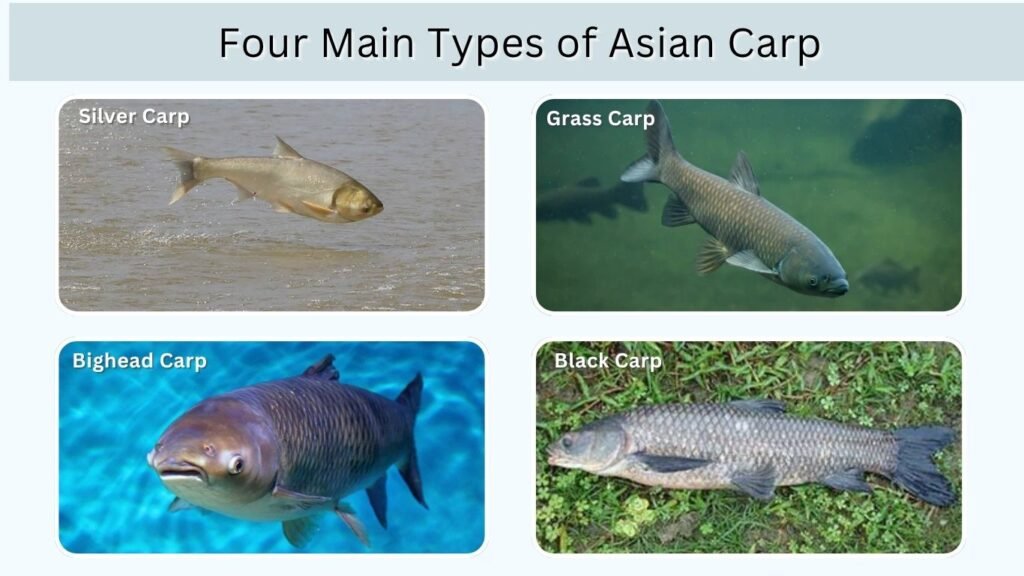
The term Asian carp traditionally includes four major species in North America. Each has a different feeding strategy and ecological role.
1. Silver Carp
Silver carp are among the most recognizable Asian carp because of their unusual jumping behavior. They have silver sides, a compressed body, and eyes positioned low on the head.
They are filter feeders that mainly consume plankton suspended in the water.
Silver carp may leap several feet into the air when startled by boat motors or other disturbances. This behavior has earned them nicknames such as “flying carp.”
2. Bighead Carp
Bighead carp have very large heads, low-set eyes, and dark blotches along their bodies.
Like silver carp, they are filter feeders. They consume plankton and other tiny organisms from the water column. Their efficient feeding and large body size allow them to compete for resources in waters where they become abundant.
3. Grass Carp
Grass carp have long, streamlined bodies and large scales. Their appearance is considerably different from the deeper-bodied bighead and silver carp.
They mainly consume aquatic vegetation. Because of this diet, grass carp have been intentionally stocked in ponds and reservoirs to control unwanted aquatic plants.
4. Black Carp
Black carp are darker than the other major Asian carp species and can grow extremely large.
Their diet includes snails, mussels, clams, and other mollusks. Strong structures in the throat help them crush hard shells before swallowing their food.
Why Are Asian Carp Called Flying Fish?
The “flying Asian carp” reputation mainly belongs to silver carp.
When startled by vibrations, particularly those created by passing boats, silver carp may suddenly jump out of the water. In areas with large populations, many fish can jump almost simultaneously.
Do Asian Carp Attack People?
Asian carp do not normally jump because they are trying to attack humans. Their jumping is primarily a reaction to disturbance.
However, large silver carp can accidentally collide with boaters. Because some individuals are heavy and travel quickly through the air, collisions can potentially cause injuries.
Keeping a safe speed in areas known for jumping silver carp can reduce the risk.
What Do Asian Carp Eat?
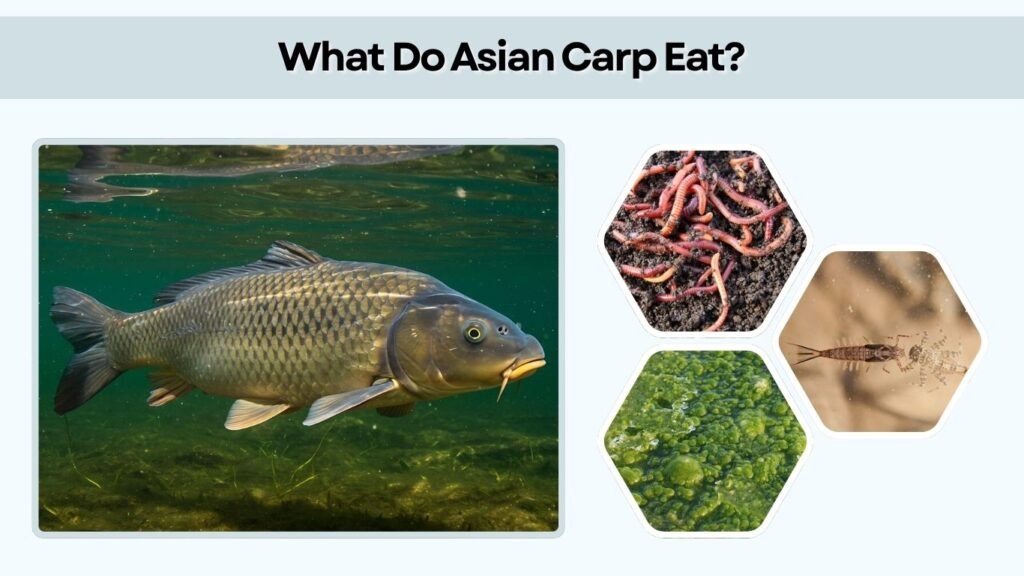
Diet depends heavily on the species. One reason Asian carp can have substantial ecological effects is that different species exploit different food sources.
Feeding Habits
Silver carp mainly consume phytoplankton and other microscopic organisms.
Bighead carp primarily filter zooplankton and other small organisms from the water.
Grass carp consume aquatic vegetation, grasses, and other plant material.
Black carp feed largely on mollusks, including snails and mussels.
Most Asian carp are therefore not major predators of other fish.
Do Asian Carp Eat Other Fish?
Generally, Asian carp are not active fish-eating predators.
Silver and bighead carp are primarily filter feeders, grass carp eat plants, and black carp specialize largely in mollusks. They can still affect native fish indirectly by competing for food or altering habitat.
Asian Carp Fish Size
Asian carp can become very large when food and habitat conditions are favorable.
Silver carp commonly reach substantial sizes, while bighead carp can become even heavier. Grass carp and black carp are also capable of growing several feet long.
Their combination of large size, rapid growth, and high reproductive potential makes managing established populations difficult.
Asian Carp Fish in the USA
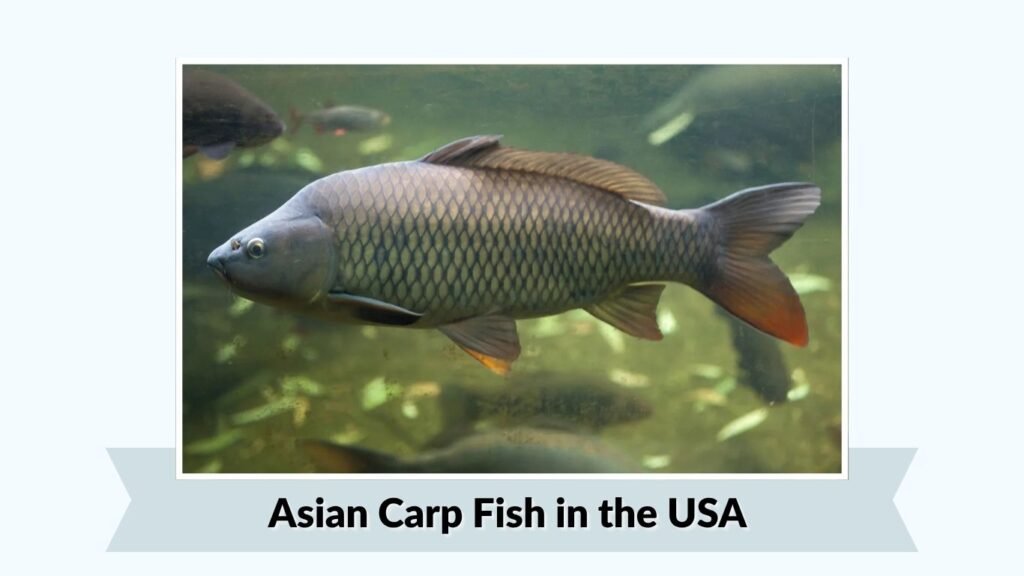
Asian carp were brought to the United States for practical uses such as aquaculture, algae management, and vegetation control. Some eventually escaped or entered connected river systems.
Populations became particularly well known within portions of the Mississippi River basin.
Asian Carp and the Great Lakes
Preventing invasive carp from establishing breeding populations in the Great Lakes has been a major management concern.
Authorities use monitoring programs and multiple control strategies to reduce the risk of invasive carp moving into sensitive waterways. Management efforts can include barriers, targeted harvesting, tracking, and environmental monitoring.
Are Asian Carp an Invasive Species?
Some Asian carp species are considered invasive where they have established populations outside their native ranges.
Their potential impact differs by species and location.
Why Asian Carp Can Cause Problems
Large populations may:
- Compete with native fish for plankton and other food
- Alter aquatic vegetation
- Affect food-web relationships
- Place pressure on native mussels and snails
- Interfere with recreational boating
- Require expensive monitoring and management programs
The effects are especially concerning when populations become large and reproduce successfully over wide areas.
How to Fish for Asian Carp
Fishing methods depend on which species you are targeting. A technique effective for grass carp may be ineffective for silver carp because their feeding behaviors are completely different.
Fishing for Grass Carp
Grass carp can sometimes be caught using:
- Sweet corn
- Bread
- Dough bait
- Vegetables
- Fruit
- Plant-based prepared baits
Because grass carp can be cautious, light presentation and patient fishing can improve success.
Fishing for Bighead and Silver Carp
Bighead and silver carp are more challenging to catch using conventional hook-and-line methods because they primarily filter microscopic food from the water.
Specialized legal methods may be used in areas where these fish are abundant. Fishing and harvesting regulations vary considerably, so anglers should always check local rules before using nets, bows, specialized tackle, or alternative methods.
Where to Fish for Asian Carp
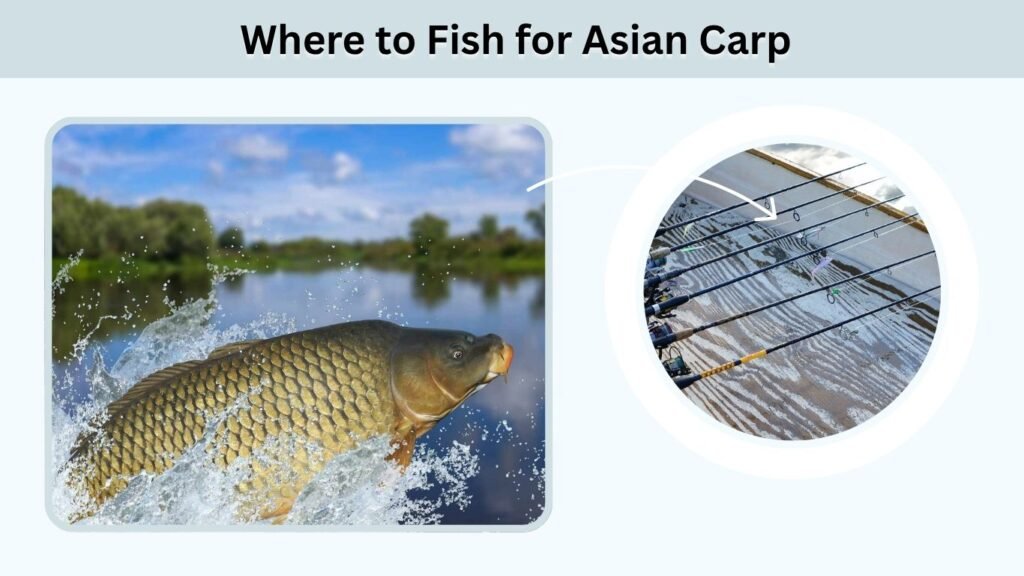
In the United States, invasive carp are especially associated with the Mississippi River basin and some connected rivers.
Anglers may encounter different species depending on the state and waterway. Large rivers, backwaters, reservoirs, and connected tributaries can provide suitable habitat.
Before targeting Asian carp, check current state fishing regulations because requirements concerning possession, transport, bait use, and harvesting may differ.
Can You Eat Asian Carp Fish?
Yes. Asian carp are edible, and several species have a long history as food fish in Asian cuisines.
Their reputation as invasive fish does not mean the meat itself is unsuitable for eating.
What Does Asian Carp Taste Like?
Properly handled Asian carp can have mild, white flesh. Flavor varies according to species, habitat, freshness, and preparation.
One challenge is the presence of numerous small bones. Skilled processing or cooking methods can make the fish much easier to eat.
Asian carp can be prepared as fish cakes, soups, fried dishes, baked fillets, smoked fish, or ground fish products.
Asian Carp Fish Nutrition
Asian carp can provide protein and other nutrients commonly found in freshwater fish. Exact nutritional values vary by species and preparation method.
People harvesting wild fish should follow local fish-consumption advisories, particularly in waters where contaminants may be a concern.
Asian Carp vs Buffalo Fish
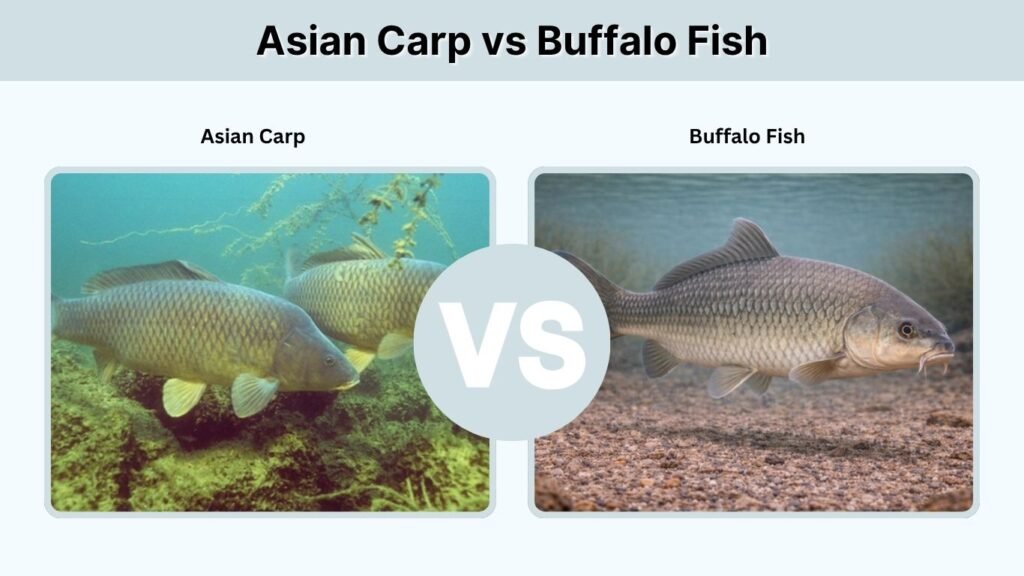
Asian carp and buffalo fish can appear similar, but they are different groups of fish.
Buffalo fish are native to North America, while the Asian carp species discussed here originated in Asia. Buffalo fish generally have deeper bodies and different head and mouth structures.
Careful identification is important because regulations may treat native buffalo fish and invasive carp differently.
Why Asian Carp Are Sometimes Called Copi
The name “Copi” has been promoted in the United States as an alternative market name for invasive carp used as food.
The idea is to make the fish more appealing to consumers while encouraging commercial harvesting. Turning abundant invasive fish into food products may help remove more individuals from affected waterways.
FAQs
Are Asian carp freshwater fish?
Yes. Asian carp are freshwater fish that inhabit rivers, lakes, reservoirs, ponds, and other freshwater systems.
Are Asian carp fish edible?
Yes. Bighead, silver, grass, and other carp have been eaten for generations. Proper cleaning and preparation are particularly important because the meat can contain numerous small bones.
Why do Asian carp jump out of the water?
Silver carp may jump when startled by vibrations, including those generated by boat motors. They are not normally jumping specifically to attack people.
Do Asian carp eat other fish?
Most do not regularly hunt other fish. Silver and bighead carp filter plankton, grass carp primarily eat vegetation, and black carp mainly consume mollusks.
What is the best way to fish for Asian carp?
It depends on the species. Grass carp can respond to corn, bread, and plant-based baits, while plankton-feeding silver and bighead carp are much harder to catch with ordinary hook-and-line techniques. Always follow local fishing and harvesting regulations.