
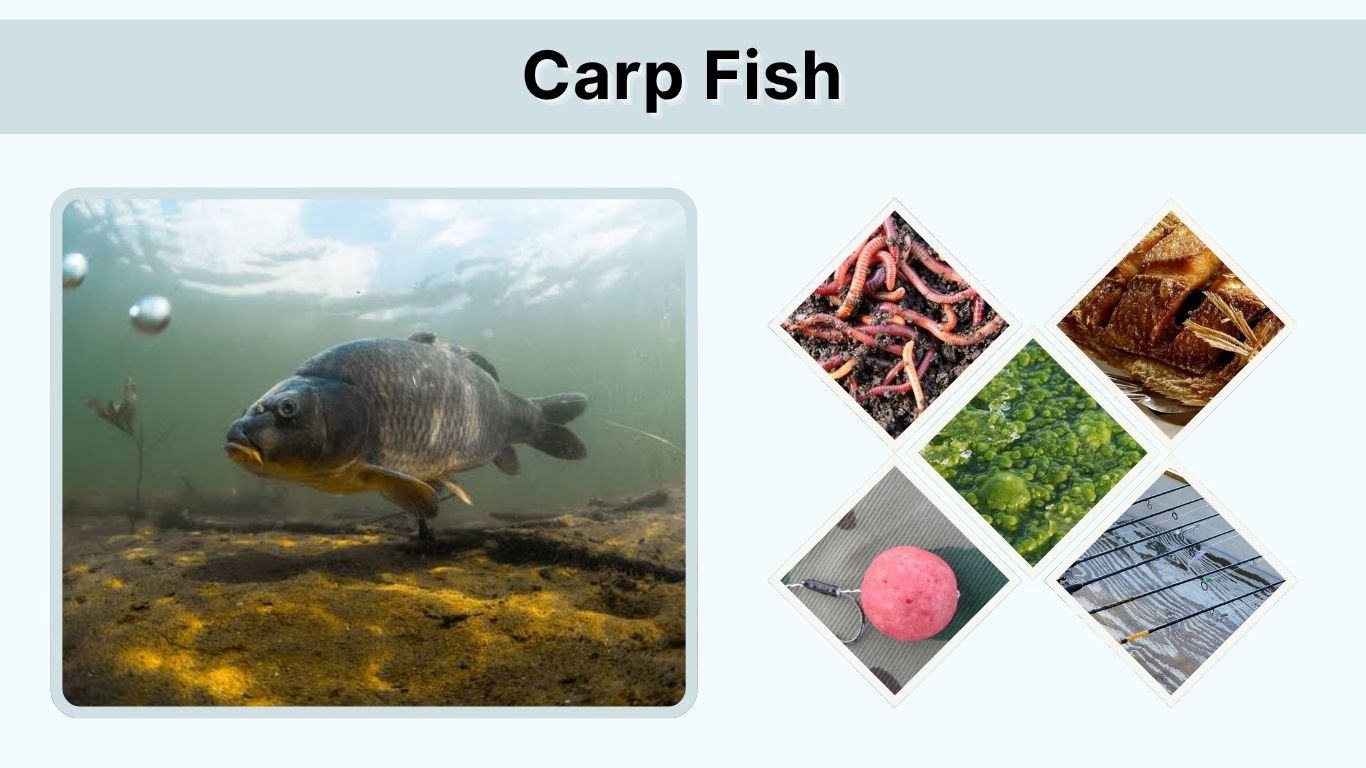
Carp fish are hardy freshwater fish found in rivers, lakes, ponds, reservoirs, and canals around the world. Some species are popular targets for anglers, while others are raised for food, ornamental ponds, or aquatic vegetation management. From common carp and grass carp to colorful koi, these fish vary considerably in appearance and behavior. This guide explains how to identify carp, what they eat, the major carp species, how to fish for carp, the best baits and rigs, and whether carp are good to eat.
What Is a Carp Fish?
Carp belong to the large minnow family, Cyprinidae. Several different fish are commonly called carp, although they do not all belong to the same genus. Carp are generally adaptable fish capable of living in slow-moving rivers, lakes, reservoirs, and other freshwater habitats. Their ability to tolerate a variety of conditions has helped some species spread far beyond their original ranges.
Carp Fish Identification
Common carp can usually be recognized by several noticeable features:
- Large, deep-bodied freshwater fish
- Golden-brown, bronze, olive, or gray coloration
- Large, clearly visible scales
- Long dorsal fin along the back
- Two pairs of small barbels near the mouth in common carp
- Downward-facing mouth adapted for bottom feeding
- Powerful tail and thick body
- Adults commonly reach several pounds, although exceptionally large individuals can become much heavier
Color and body shape vary between species. Grass carp, for example, generally have a longer, more streamlined body than common carp.
What Do Carp Fish Look Like?
A typical common carp has a broad body, rounded belly, large scales, and a slightly arched back. The back is normally darker than the sides, while the belly is lighter.
Carp living in muddy water may appear darker, while fish from clearer environments sometimes have brighter bronze or golden coloration.
Koi look similar in body structure because they are domesticated forms of common carp, but selective breeding has produced striking combinations of white, red, orange, yellow, black, and other colors.
Common Types of Carp Fish
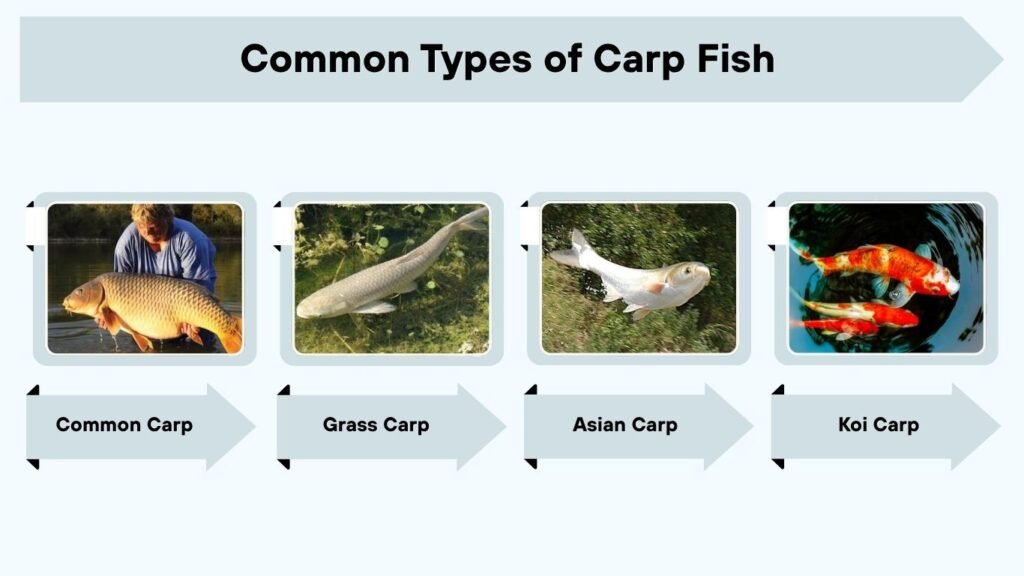
The word “carp” describes several freshwater fish with different diets, habitats, and appearances. Understanding the species is particularly important for anglers because fishing methods that work well for common carp may not be as effective for grass carp or other species.
Common Carp
Common carp are among the most recognizable carp species. They usually feed near the bottom, searching through mud and vegetation for insects, worms, crustaceans, seeds, plant material, and other food.
Their strong fighting ability makes common carp popular sport fish. Large specimens can make powerful runs after being hooked, which is one reason specialized carp fishing gear has developed.
Grass Carp
Grass carp have long, torpedo-shaped bodies and large scales. Unlike common carp, they feed heavily on aquatic plants.
They have been introduced into many ponds and lakes to help manage excessive vegetation. Grass carp can grow exceptionally large, making them an exciting target for anglers.
Because vegetation forms such an important part of their diet, anglers sometimes use corn, fruit, vegetables, bread, or plant-based baits when fishing for grass carp.
Asian Carp
“Asian carp” is a broad term commonly applied to several carp species introduced outside their native ranges. These can include silver carp, bighead carp, grass carp, and black carp.
Some populations have attracted significant attention because they can reproduce rapidly and affect native aquatic ecosystems. Silver carp are particularly famous for sometimes jumping from the water when disturbed by boats.
Koi Carp
Koi are ornamental varieties developed from common carp. They are primarily kept in decorative ponds rather than targeted as sport or food fish.
Despite their elaborate coloration, koi and common carp share many biological characteristics. Given sufficient space, good water quality, and proper nutrition, koi can also grow surprisingly large.
What Do Carp Fish Eat?
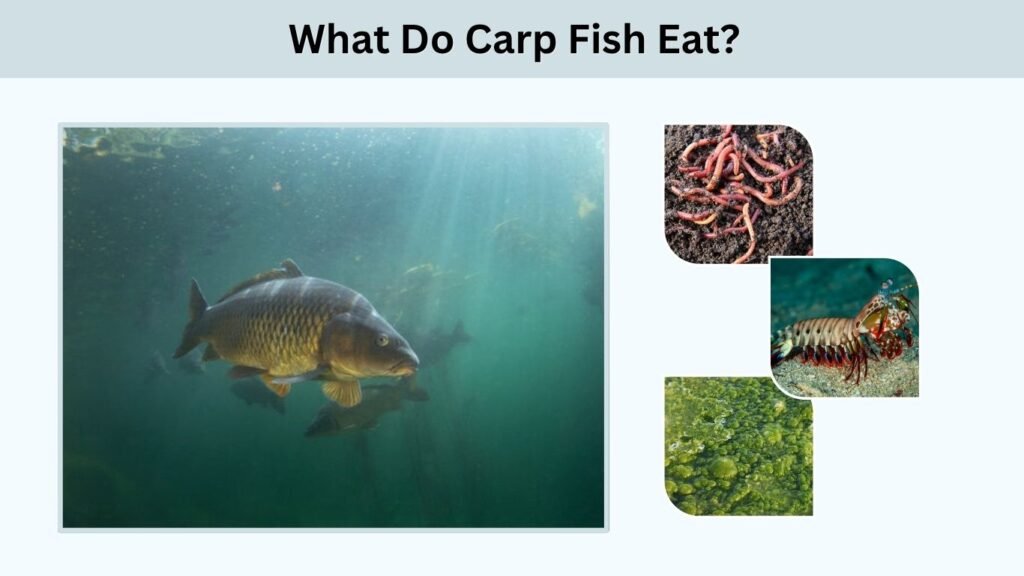
Carp are opportunistic feeders, although diet varies between species. Common carp frequently search along the bottom, disturbing sediment while looking for edible material. This flexible feeding behavior is one reason so many different carp fishing baits can be successful.
Natural Carp Diet
Common carp may consume insect larvae, worms, small crustaceans, snails, seeds, algae, plant material, and other organic matter.
They use their sensitive mouths to investigate food on or beneath the bottom. Although carp do not have conventional teeth along their jaws, they possess pharyngeal teeth farther back in the throat that help crush and process food.
Grass carp have a much stronger preference for vegetation and consume substantial amounts of aquatic plants.
Best Bait for Carp Fishing
Choosing good fishing bait for carp depends on the location, season, fish population, and available natural food. Carp have an excellent sense of smell and can become cautious in heavily fished waters, so presentation can be just as important as bait selection.
Sweet Corn for Carp Fishing
Sweet corn is one of the easiest carp baits to use. Its bright color, soft texture, and sweet scent can attract common carp.
Several kernels can be placed directly on a hook, although many anglers prefer presenting corn on a hair rig. Corn is inexpensive and particularly convenient when fishing ponds or lakes where carp regularly encounter similar foods.
Boilies
Boilies are round, prepared carp baits available in numerous flavors and sizes. They are widely used by dedicated carp anglers because they stay on a hair rig effectively and can remain in the water for extended periods.
Different boilies contain ingredients such as fishmeal, grains, milk proteins, seeds, or sweet flavorings.
Bread and Dough Baits
Bread is another simple option. It can be compressed around a hook or used as floating bait when carp are feeding near the surface.
Homemade dough mixtures may contain flour, cornmeal, cereal, flavorings, or other ingredients. The best mixture should remain firm enough to stay attached while releasing attractive scents into the water.
Carp Fishing Rigs and Setup
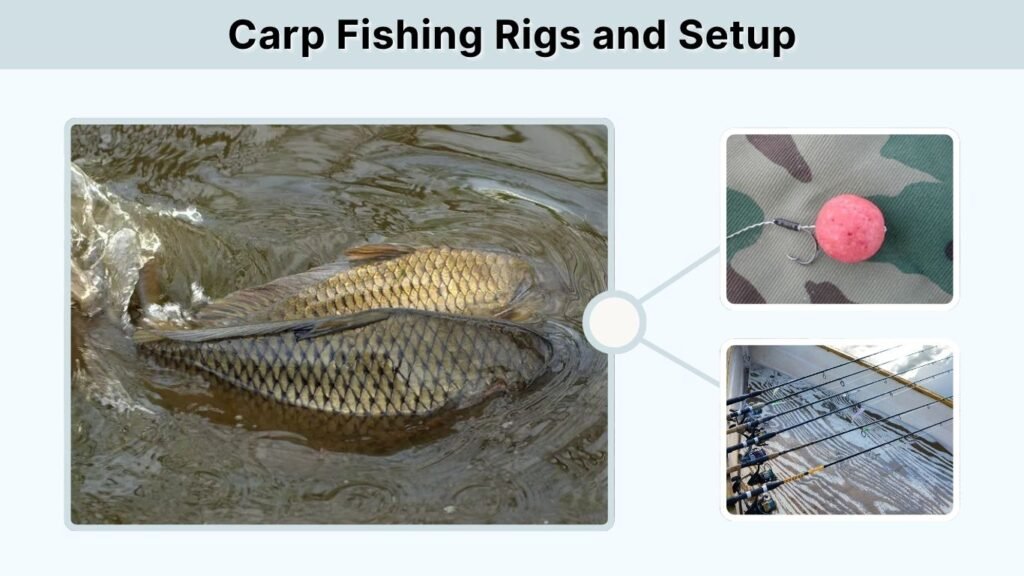
A good carp fishing setup must provide enough strength to control a powerful fish while presenting bait naturally. Although sophisticated equipment is available, beginners can catch carp using relatively straightforward tackle.
Hair Rig for Carp Fishing
The hair rig is one of the best-known carp fishing rigs. Instead of placing the bait directly on the hook, the bait sits on a short piece of line extending behind it.
This arrangement leaves the hook exposed and allows carp to take the bait naturally. Boilies and corn are commonly presented this way.
Rod, Reel, Line, and Hooks
A medium-heavy or appropriately rated carp fishing rod provides the casting distance and control needed for larger fish. A reel with a smooth drag is especially valuable because carp can make powerful runs.
Line strength should match the size of fish and fishing conditions. Stronger tackle may be necessary around weeds, branches, rocks, or other obstacles.
Carp hooks should be strong and sharp. Extremely oversized hooks are usually unnecessary because a compact hook can provide a more natural bait presentation.
How to Fish for Carp
Successful carp fishing is often based on locating feeding fish rather than repeatedly casting into random areas. Look for bubbles, muddy patches, moving reeds, jumping fish, or visible carp cruising near the surface.
Choose the Right Location
Carp frequently visit shallow margins, weed edges, islands, drop-offs, submerged structures, and areas where natural food accumulates.
Early morning and evening can be productive, although carp may feed throughout the day when water temperature and conditions are favorable.
Introduce Bait Carefully
Small amounts of corn, pellets, boilies, or other bait can encourage carp to remain in an area.
Avoid excessive feeding. Putting too much food into the water can allow carp to become full without taking the bait attached to your rig.
Once a carp takes the bait, allow the rod and reel’s drag system to absorb sudden runs rather than trying to overpower the fish immediately.
Can You Eat Carp Fish?
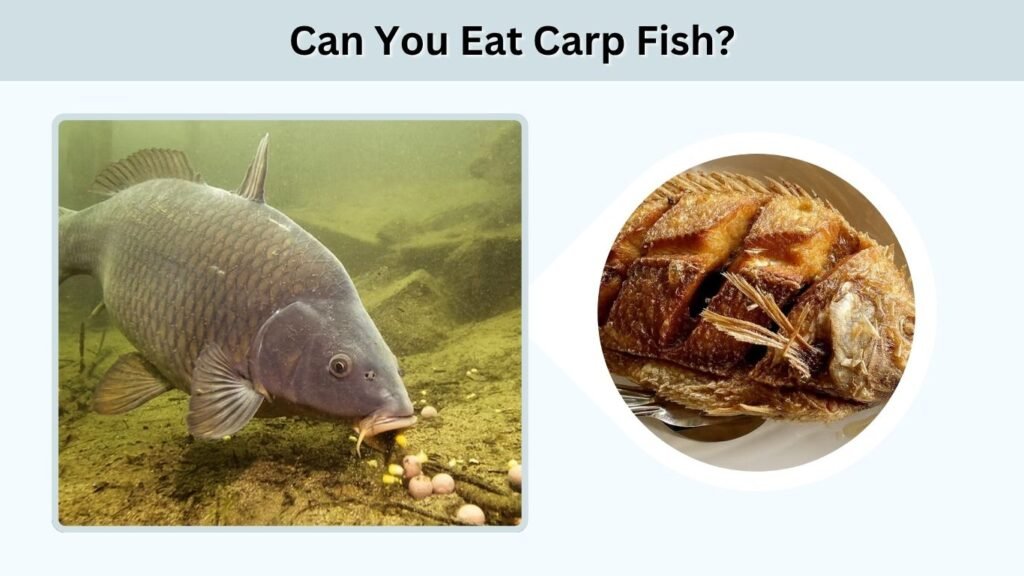
Yes, carp are edible and are eaten in many parts of the world. Opinions about their flavor differ considerably, partly because taste and texture can be influenced by the fish’s habitat, diet, preparation, and freshness.
Is Carp Fish Good to Eat?
Properly handled carp can provide firm, flavorful meat. Fish from clean water generally provide a better dining experience than fish taken from polluted or poor-quality environments.
Carp contain many small bones, so careful cleaning and preparation are important. Depending on local cooking traditions, carp may be fried, baked, grilled, smoked, or used in soups.
Always check local fishing regulations and fish-consumption advisories before keeping wild carp for food.
Are Carp an Invasive Species?
The answer depends on the species and location. Carp are native to parts of Europe and Asia, but several species have been introduced into other regions.
When introduced carp reproduce successfully and become extremely abundant, they may alter habitats or compete with native species. Common carp can disturb bottom sediment while feeding, potentially increasing water turbidity and affecting aquatic vegetation.
However, not every carp population should automatically be considered invasive. Classification and management rules vary by region.
Carp Fish vs Koi Fish
Koi and common carp are closely related because koi were selectively bred from common carp. Their biggest visible difference is coloration.
Common carp usually have natural bronze, brown, olive, or gray coloring. Koi have been selectively bred for distinctive patterns involving colors such as red, white, orange, yellow, and black.
Both can grow large, live for many years under suitable conditions, and consume a varied diet. Koi, however, are primarily valued as ornamental pond fish.
FAQs
How big can carp fish get?
Size varies significantly by species, habitat, food availability, and age. Common carp can grow into very large fish, while grass carp can also reach impressive sizes when conditions are favorable.
What is the best bait for carp fishing?
Sweet corn, boilies, bread, pellets, and dough baits are popular choices. The most effective bait depends on what carp are accustomed to eating in the specific water being fished.
Can you catch carp with corn?
Yes. Sweet corn is widely used for carp fishing. It can be placed directly on the hook or presented using a hair rig.
Do carp fish have teeth?
Carp do not have prominent jaw teeth like many predatory fish. Instead, they have pharyngeal teeth located deeper in their throat, which are used to crush and process food.
Are koi fish carp?
Yes. Koi are domesticated ornamental varieties derived from common carp. Selective breeding created the bright colors and patterns that distinguish koi from typical wild common carp.