
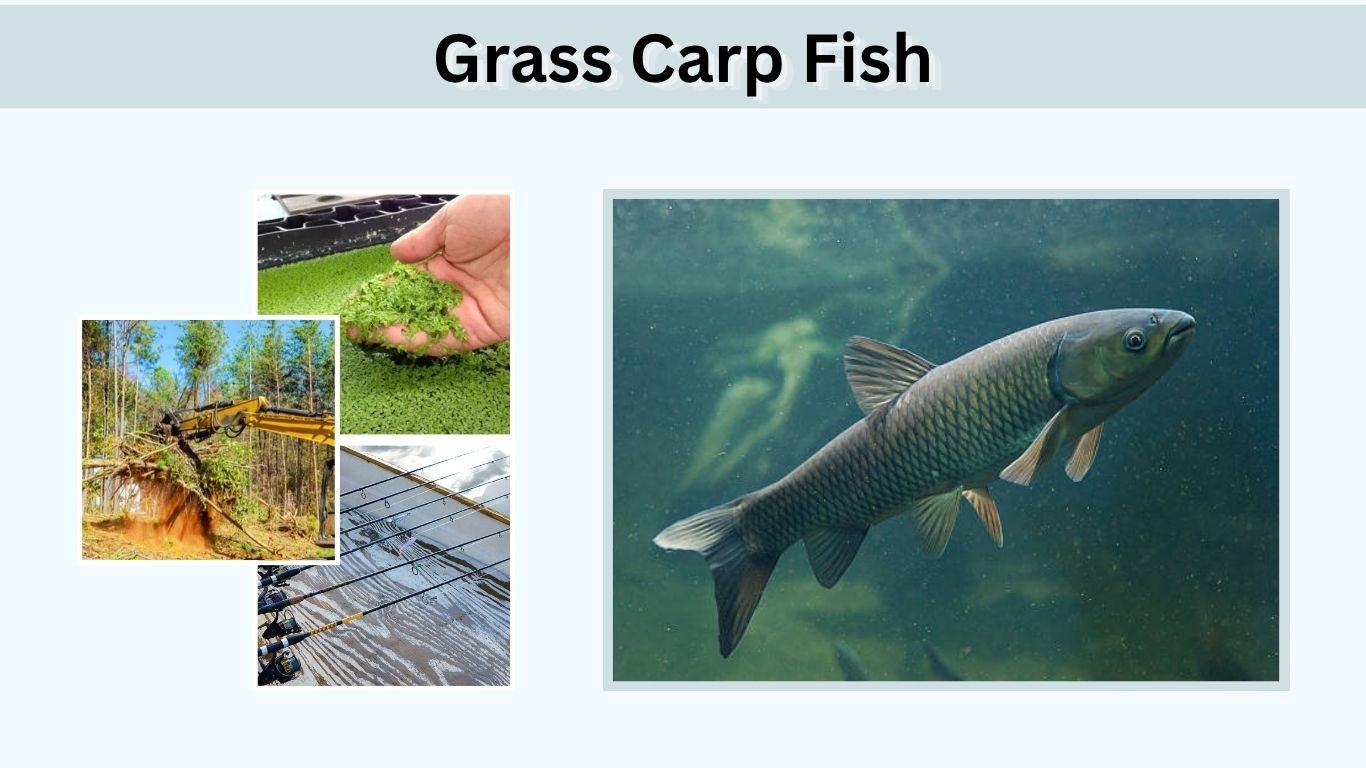
The grass carp fish (Ctenopharyngodon idella) is a large freshwater fish originally native to eastern Asia and widely introduced elsewhere for aquatic vegetation control and aquaculture. Also called the Chinese grass carp, it is primarily herbivorous and can consume large amounts of aquatic plants as it grows. Grass carp are raised on fish farms, stocked in managed ponds, caught by anglers, and eaten in many countries. Their rapid growth, large adult size, feeding habits, and usefulness in pond management make them an economically important carp species.
What Is a Grass Carp Fish?
Grass carp belong to the carp family Cyprinidae but look different from the deeper-bodied common carp. They have elongated bodies, large scales, blunt heads, and relatively short dorsal fins. Despite their name, they do not live in grasslands. The word “grass” refers to their strong preference for aquatic vegetation and other plant material.
Grass Carp Fish Identification
Typical characteristics include:
- Scientific name: Ctenopharyngodon idella
- Family: Cyprinidae
- Body: Long and cylindrical
- Color: Olive, gray, or brownish on the back
- Sides: Silvery to yellowish
- Belly: Pale or whitish
- Scales: Large with darker edges
- Head: Broad with a blunt snout
- Mouth: Terminal and without barbels
- Diet: Primarily herbivorous
- Habitat: Freshwater rivers, lakes, reservoirs, and ponds
Large scales with dark margins can give the body a slightly crosshatched appearance.
Grass Carp Size and Growth Rate
Grass carp are capable of becoming very large.
Adults commonly reach 2–3 feet long, while exceptional individuals can grow beyond 4 feet and weigh many tens of pounds.
Young grass carp can grow quickly when water temperature, plant food, and other environmental conditions are favorable.
Their rapid growth is one reason they are valuable in aquaculture and vegetation-management programs.
What Do Grass Carp Fish Eat?
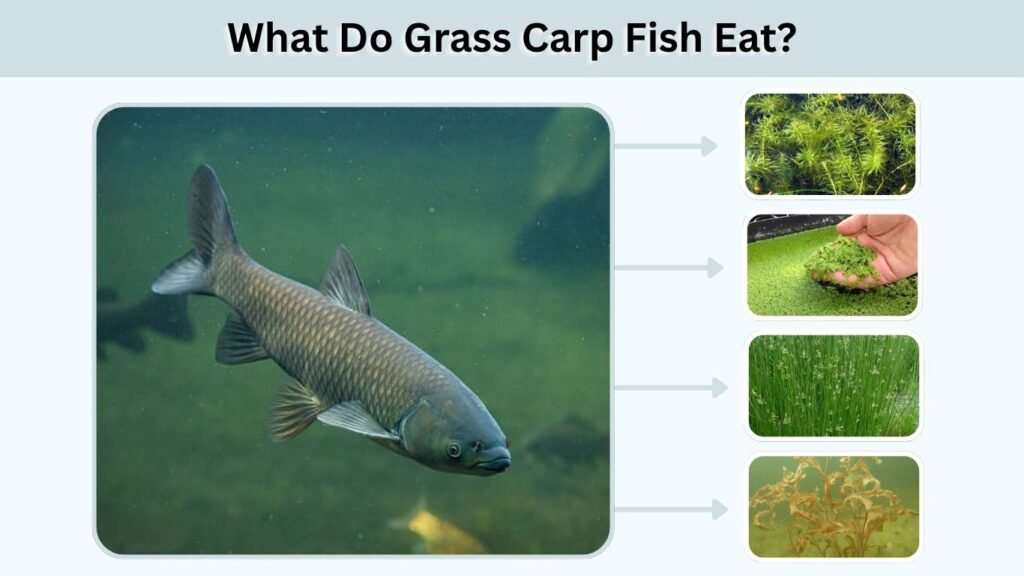
Grass carp are best known as plant eaters. Juveniles may consume more small animals when young, but larger fish increasingly depend on vegetation. They can eat substantial quantities of aquatic plants each day during warm conditions. This strong appetite has made grass carp useful for controlling excessive vegetation, although inappropriate stocking levels can remove too much plant cover.
Grass Carp Fish Food
Common foods include:
- Hydrilla
- Duckweed
- Pondweed
- Elodea
- Naiad
- Coontail
- Soft aquatic grasses
- Young reeds
- Algae
- Tender terrestrial grasses
- Commercial plant-based fish feed
Not every aquatic plant is equally attractive to grass carp. They often select soft, easily digested vegetation before tougher plants.
Do Grass Carp Eat Other Fish?
Grass carp are not normally predatory fish.
They do not typically hunt bass, bluegill, catfish, or other pond fish. Their diet is primarily vegetation.
Young individuals may accidentally consume small insects, zooplankton, crustaceans, or other animal matter while feeding.
They may occasionally ingest fish eggs or very small animals, but other fish are not a normal major part of their diet.
Grass Carp in Ponds and Fish Farming
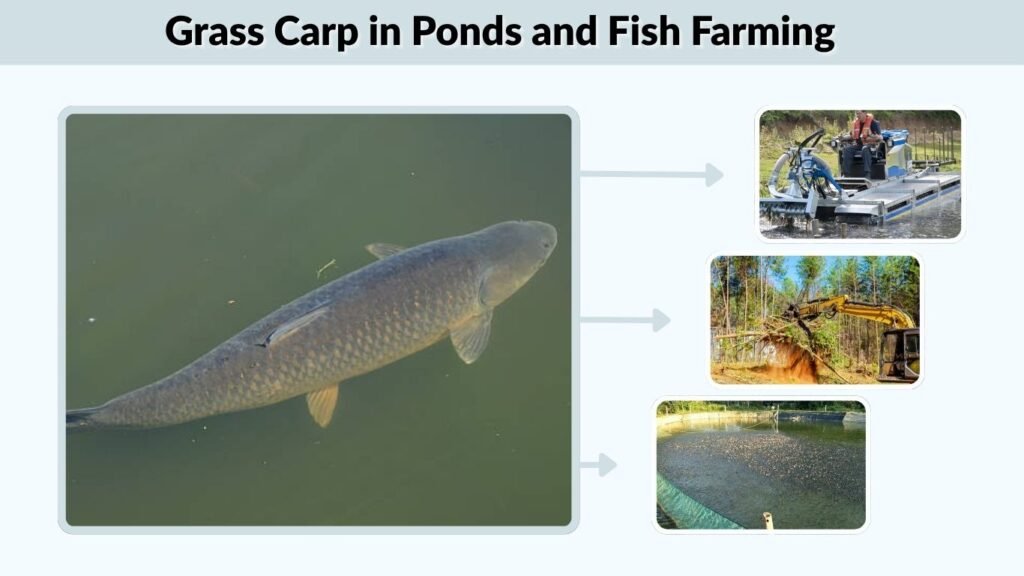
Grass carp are widely stocked in ponds because they can provide biological control of unwanted aquatic vegetation. They are also an important farmed food fish, particularly in Asia. Successful use depends on stocking the correct number of fish and managing their food supply carefully. Too many grass carp can drastically reduce aquatic vegetation and alter habitat for other organisms.
Grass Carp Pond Benefits
Potential benefits include:
- Reducing excessive aquatic weeds
- Keeping open areas available for fishing
- Improving access around pond margins
- Reducing some mechanical vegetation removal
- Converting plant material into fish biomass
- Providing an additional harvestable fish species
Grass carp should not be viewed as a solution for every aquatic plant problem because they prefer certain species over others.
Grass Carp Fish Farming
Grass carp are extensively farmed in China, India, Bangladesh, and many other countries.
Farmers may provide natural vegetation along with cultivated grasses and formulated feeds.
Young fish are raised in nursery ponds before being transferred into larger grow-out ponds.
Because grass carp grow rapidly and efficiently consume plant foods, they are frequently used in polyculture systems alongside other carp species that feed at different levels of the pond.
Grass Carp Breeding and Life Cycle
Grass carp naturally reproduce in large flowing rivers rather than ordinary small ponds. Adults migrate into suitable river sections when temperature, water flow, and other conditions trigger spawning. Their eggs remain suspended while drifting downstream. This reproductive requirement explains why grass carp stocked in many isolated ponds cannot successfully reproduce naturally.
Grass Carp Eggs and Breeding
The general reproductive process includes:
- Adults reach sexual maturity.
- Spawning occurs in moving river water.
- Females release large numbers of eggs.
- Eggs are fertilized externally.
- Fertilized eggs drift downstream.
- Larvae hatch while moving with the current.
- Young fish enter calmer nursery habitats.
- Juveniles begin feeding and growing rapidly.
Commercial hatcheries can produce grass carp through controlled breeding techniques.
Triploid Grass Carp
Some regions stock triploid grass carp, which are produced to be functionally sterile.
Sterile fish can control vegetation without establishing reproducing populations.
Regulations differ considerably by location, and permits may be required before grass carp can be purchased or stocked.
Pond owners should always check local fisheries laws before introducing them.
How to Fish for Grass Carp
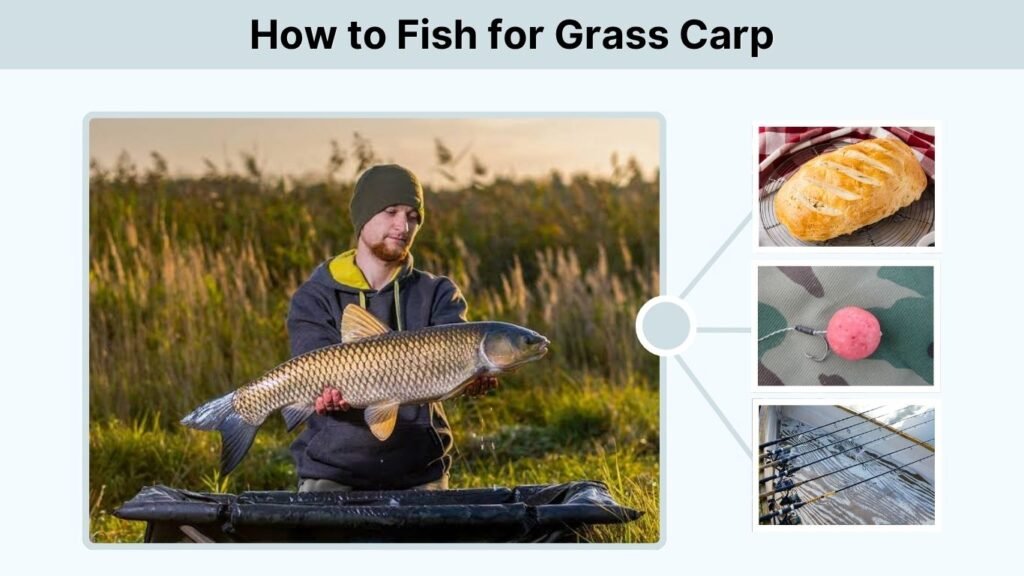
Catching grass carp can be challenging because they are cautious, powerful, and primarily plant eaters. Anglers often see them cruising near vegetation or feeding at the surface. Quiet approaches, relatively light tackle, and plant-based baits can be more effective than conventional predatory-fish lures.
Best Baits for Grass Carp
Popular baits include:
- Sweet corn
- Bread
- Dough balls
- Fresh grass
- Mulberries
- Cherry tomatoes
- Vegetables
- Fruit pieces
- Specialized carp bait
Where fishing regulations allow, pre-baiting an area with small amounts of corn or other suitable food may encourage grass carp to feed confidently.
Best Time to Catch Grass Carp
Warm months are often productive because grass carp feed more actively when water temperatures rise and vegetation is growing.
Early morning and evening can be especially useful when fish move into shallow areas.
Approach quietly because grass carp can be easily frightened by footsteps, shadows, and sudden movements.
Once hooked, large individuals can make powerful runs, so adequately strong tackle is important.
Can You Eat Grass Carp Fish?
Yes. Grass carp are edible and are widely consumed in many parts of Asia and elsewhere. Their flesh is generally white, mild, and relatively firm. Large grass carp contain numerous intramuscular bones, so careful preparation is important. They can be steamed, fried, grilled, braised, baked, or used in soups and traditional fish dishes.
Grass Carp Taste
Grass carp generally have a mild flavor rather than an extremely strong “fishy” taste.
Taste and texture depend partly on water quality, fish size, freshness, and preparation.
Fish raised or caught in clean water often have more appealing flavor than individuals living in muddy or poorly oxygenated environments.
Removing the fish from the water and chilling it promptly helps preserve quality.
Grass Carp Nutritional Value
Grass carp can provide:
- Protein
- Dietary fats
- Omega fatty acids
- Phosphorus
- Potassium
- B vitamins
- Other minerals and micronutrients
The exact nutritional profile varies according to age, diet, farming conditions, and cooking method.
Fish should be cooked and handled safely, and local consumption advisories should be checked when eating wild-caught fish from waters with possible contaminants.
Grass Carp Fish in Asia
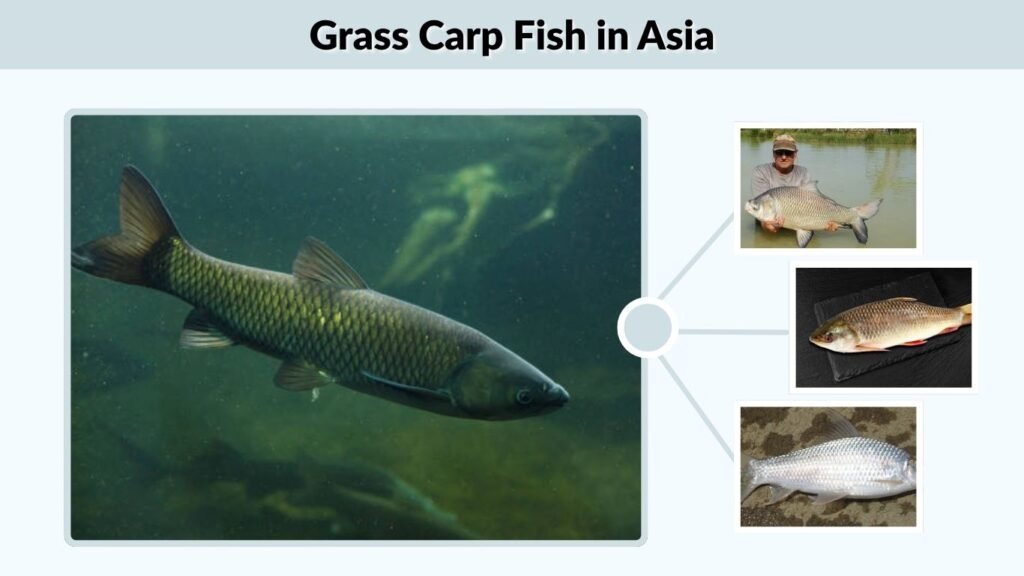
Grass carp originated in eastern Asia and became one of the major freshwater fish used in aquaculture. It is particularly important in China and is also widely farmed in India and neighboring countries. Its ability to grow on plant material makes it useful in systems where farmers want to reduce dependence on expensive high-protein feeds.
Grass Carp in India
Grass carp were introduced into India for freshwater aquaculture and are now used in composite carp farming.
Farmers commonly raise them alongside species such as:
- Catla
- Rohu
- Mrigal
- Common carp
- Silver carp
These species have different feeding habits, allowing several ecological feeding zones within one pond to be used efficiently.
Grass Carp as an Introduced Fish
Grass carp have been introduced far beyond their native Asian range. In some places they are intentionally stocked for weed control, while fisheries managers are careful about the possibility of environmental impacts. Heavy grazing can remove vegetation used by native fish, amphibians, insects, and waterfowl.
Potential Environmental Concerns
Possible problems include:
- Excessive removal of aquatic plants
- Reduced shelter for small fish
- Changes to spawning habitat
- Increased suspended sediment
- Altered nutrient cycling
- Effects on native plant communities
For these reasons, grass carp stocking is regulated in many areas.
Using sterile triploid fish and carefully calculated stocking rates can reduce some risks.
FAQs
Grass carp are unusual because the same fish can be viewed as a food species, farm animal, sport fish, and biological vegetation-control tool. Questions commonly concern their diet, whether they eat other fish, their enormous potential size, and whether their flesh is suitable for eating. The following answers cover five common questions.
What Is the Scientific Name of Grass Carp?
The scientific name of the grass carp is Ctenopharyngodon idella.
Do Grass Carp Eat Other Fish?
Usually no. Grass carp are primarily herbivorous and mainly eat aquatic vegetation rather than hunting other fish.
Can You Eat Grass Carp?
Yes. Grass carp are edible and are widely eaten. Their flesh is mild and white, although the fish contains many small intramuscular bones.
How Big Can a Grass Carp Get?
Large adults can exceed 4 feet in length and weigh many tens of pounds, although most individuals encountered are smaller.
Are Grass Carp Good for a Pond?
They can be useful for controlling certain aquatic weeds when stocked appropriately. Too many fish, however, can remove excessive vegetation and reduce valuable habitat.